REVIEW · SEVILLE
Guided Premium eBike Tour Sevilla | native speakers EN • DE • FR
Book on Viator →Operated by nosiesta · Bookable on Viator
Seville is easier to enjoy at bike speed. This premium e-bike tour lets you cover a lot of ground without the punishment of Seville’s cobblestones, while still getting guided stops like Real Alcázar and Plaza de España. You’ll roll through historic lanes where cars can’t go, so the city feels more like itself and less like a parade of buses.
I especially like two things: the high-quality e-bikes that make the ride smooth over uneven stone, and the small group format that keeps the tour feeling personal instead of rushed. You’ll get short, guided looks at major landmarks across different neighborhoods, plus the kind of practical commentary that helps you understand what you’re seeing.
One thing to keep in mind is that the schedule is tight. It’s built around quick stops (often about 5–15 minutes), so if you love lingering, you may feel a little “on the move.” Also, the tour details note that Huevo de Colón admission is not included, so plan for that extra cost if you want to go inside.
In This Review
- Key highlights worth knowing before you go
- Why a guided eBike beats a walking tour in Seville
- Your ride setup: smooth power for Seville’s cobblestones
- Time on the bike: 2 hours 45 minutes done the smart way
- Stop 1 to 3: Cartuja, Alamillo, and the Birth of a New Man
- Monasterio de la Cartuja (Stop 1)
- Parque del Alamillo (Stop 2)
- Huevo de Colón (Stop 3)
- Stop 4 and 5: Basilica de la Macarena and Setas de Sevilla
- Basilica de la Macarena (Stop 4)
- Setas de Sevilla / Metropol Parasol (Stop 5)
- Stop 6 and 7: Plaza de San Francisco to Seville Cathedral and Giralda
- Plaza de San Francisco (Stop 6)
- Catedral de Sevilla and Giralda (Stop 7)
- Stop 8 and 9: Alcázar gardens and Parque de María Luisa
- Real Alcázar de Sevilla (Stop 8)
- Parque de María Luisa (Stop 9)
- Plaza de España on wheels: ceramics, bridges, and the canal scene
- Plaza de América (Stop 10)
- Plaza de España (Stop 11)
- End stop: Triana’s vibe from Puente de Isabel II
- Puente de Isabel II (Puente de Triana) (Stop 12)
- Guides make it: Marco and Tom’s Seville tips and flexibility
- Price and value: what $46.29 buys you in real time
- Weather, pace, and who should choose this tour
- Should you book this Seville eBike tour?
- FAQ
- What languages are offered?
- How long is the eBike tour?
- How big is the group?
- How much does it cost?
- Where does the tour start and end?
- Which major sights are included?
- Is admission included for all stops?
- Do I need good weather?
- Is there a mobile ticket?
- What is the cancellation window?
Key highlights worth knowing before you go
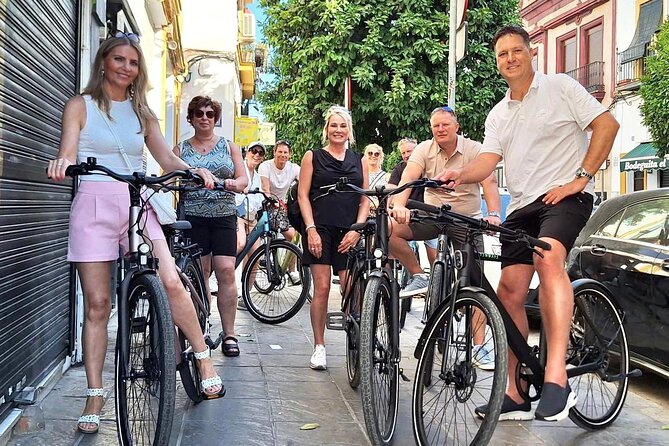
- Native EN/DE/FR guiding for smoother explanations and easier Q&A
- Top sights grouped by area, so you see more than one “Seville zone”
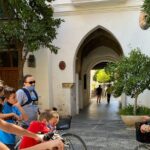
- Go where cars can’t, which makes narrow historic streets feel safer and calmer
- E-bike comfort on cobblestones, a big deal in Seville
- Metropol Parasol and Giralda views without needing a full-day plan
- Small group size (max 12) for a more flexible pace
Why a guided eBike beats a walking tour in Seville
Seville is one of those cities that can exhaust you fast. Not because it’s hard, but because it’s packed: historic centers, long distances, and surfaces that feel designed to slow you down. An e-bike changes the math. You still get the “street-level” experience of being in the thick of it, but you’re not arriving to each stop already drained.
This tour is built for momentum without turning sightseeing into a sprint. You ride, you stop, you learn, you ride again. The “premium” part here isn’t just marketing; it shows up in how smoothly you move between key areas—especially when the route heads into places cars can’t access.
You can also read our reviews of more tours and experiences in Seville.
Your ride setup: smooth power for Seville’s cobblestones
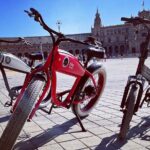
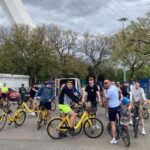
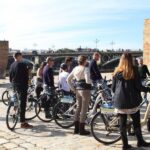
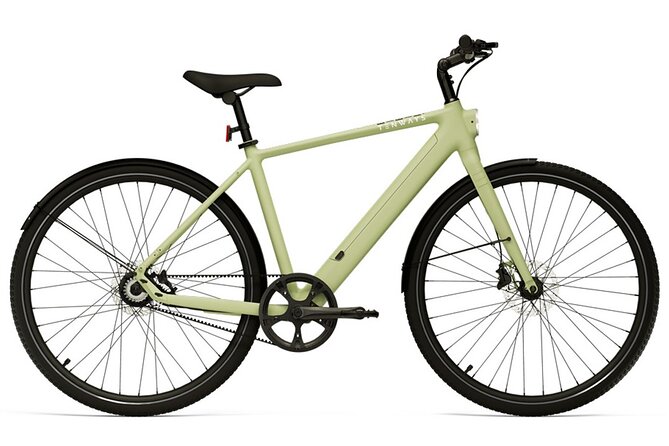
The itinerary is packed with landmark stops, so you’ll want a bike that stays comfortable. The tour uses high-quality e-bikes designed for a smoother ride over Seville’s cobblestones. That matters because Seville isn’t flat like some cities where walking is effortless. The city’s stonework can feel like it’s designed to test your patience, and the e-bike motor takes the edge off.
Practically, you can expect a ride that feels manageable even if you’re not a daily cyclist. Most travelers can participate, and the pace is set up for short visits at each highlight rather than a long endurance ride. If you’re traveling with limited time, it’s a good way to stretch your day.
Time on the bike: 2 hours 45 minutes done the smart way
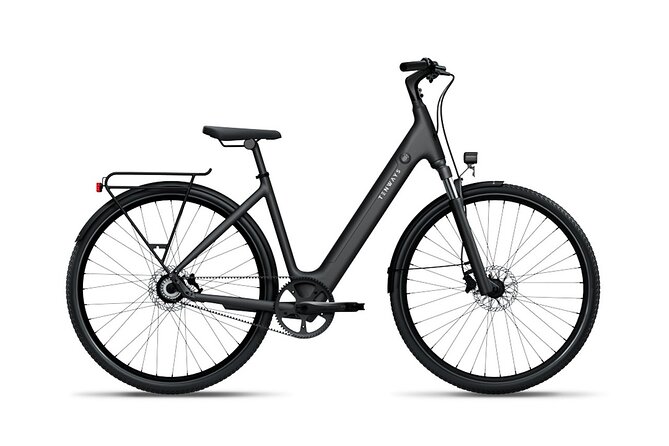
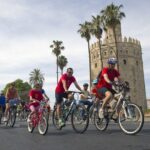
The tour runs about 2 hours 45 minutes and caps at 12 travelers. That duration is long enough to cover multiple neighborhoods, but short enough that it still feels like a “half-day plan.” The benefit of the small group is simple: fewer people means fewer bottlenecks at famous photo spots, and you can actually hear what your guide is pointing out.
One small drawback: because every stop is timed, you won’t have hours at any single site. This is a highlights-and-context ride, not a slow museum day. If you know you’ll want longer time at one place—Alcázar or the Cathedral—this tour works best as a first pass, then you go back later on your own.
Stop 1 to 3: Cartuja, Alamillo, and the Birth of a New Man
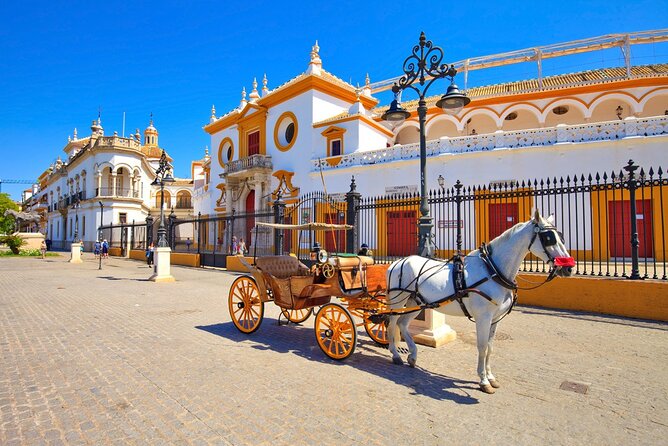
Monasterio de la Cartuja (Stop 1)
You start at the Monasterio de la Cartuja, a former Carthusian monastery now used as a modern art museum. Even with the short stop time, the setting is the point: it’s peaceful, it’s by the Guadalquivir river, and it mixes old stone with contemporary culture. Admission is listed as free, and the time given is about 10 minutes.
If you like contrasts, this stop is a nice warm-up. You’re not jumping straight into the big-ticket monuments; you’re easing into Seville’s layers.


Parque del Alamillo (Stop 2)
Then you get a breather in Parque del Alamillo. This is Seville’s largest urban park, with lakes and open spaces across more than 120 hectares. The tour schedules another quick 10-minute stop, and admission is listed as free.
This is one of those “quiet wins” that makes the overall ride better. After historic stone streets, you feel the change immediately. It’s also a chance to see more greenery and wildlife than you’d notice from inside a car or on a walking-only plan.
Huevo de Colón (Stop 3)
Next is the Huevo de Colón, officially called Birth of a New Man. It’s a tall bronze sculpture (45 meters) in San Jerónimo Park, shaped like an egg with Columbus inside. The tour gives about 10 minutes here, and admission is listed as not included.
This is where you decide how you want to experience it. If you only want exterior views and quick context, you’re fine. If you want full access, you’ll likely need to factor in the ticket yourself.
Stop 4 and 5: Basilica de la Macarena and Setas de Sevilla
Basilica de la Macarena (Stop 4)
The Basilica de la Macarena is a neo-Baroque church completed in 1949, and it houses the statue of the Virgen de la Esperanza Macarena—an important figure for Holy Week processions, especially around early Good Friday hours. Admission is listed as included, and the tour allocates about 10 minutes.
Even if you’re not an expert in Andalusian religious traditions, the significance comes through. It’s one of the places where Seville’s identity shows up in real, living tradition rather than just architecture.
Setas de Sevilla / Metropol Parasol (Stop 5)
Then you hit the Setas de Sevilla, also known as the Metropol Parasol. This is the world’s largest wooden structure, designed by Jürgen Mayer, and it’s famous for its mushroom-like shape (often called Las Setas). You get about 10 minutes here, and admission is listed as free.
The big practical attraction is the observation deck for panoramic city views. The tour also mentions the Antiquarium beneath the structure, with Roman and Moorish ruins discovered during construction. If you like city “overview moments,” this is one. It also breaks the rhythm after older neighborhoods with something clearly modern.
Stop 6 and 7: Plaza de San Francisco to Seville Cathedral and Giralda
Plaza de San Francisco (Stop 6)
Plaza de San Francisco is in the historic center, named after the nearby San Francisco Church. The tour points out Seville’s Renaissance-style city hall at the square, and it uses the square as a launch point toward the Cathedral area. This stop is listed as about 10 minutes and admission is free.
The Cathedral doesn’t feel far from here, and the plaza setting helps you understand how locals move through the center day-to-day.
Catedral de Sevilla and Giralda (Stop 7)
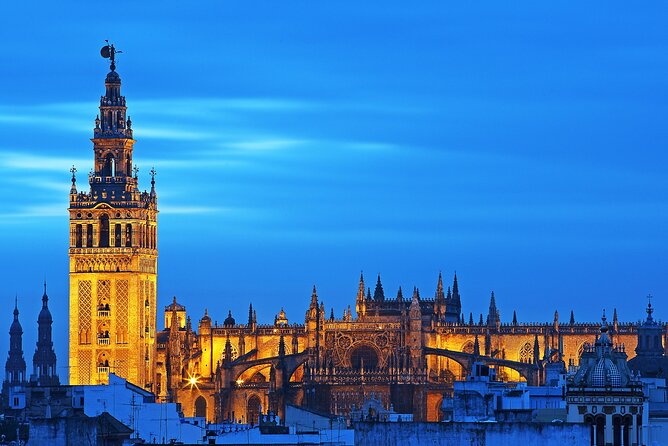
The Catedral de Sevilla sits on the former Great Mosque of Seville, so it’s a symbol of Seville’s shift from Moorish rule to Christian dominance. The Gothic cathedral is described as the world’s largest and is a UNESCO World Heritage site. Construction started in the 15th century and continued for over a century.
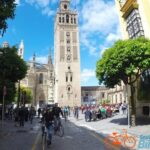
The standout connection is the Giralda Tower. You’ll climb its ramps (designed for horseback riders), and the payoff is panoramic views over Seville. The tour notes highlights like the Capilla Mayor with the altarpiece, and the Tomb of Christopher Columbus nearby. This stop is listed as about 5 minutes with admission ticket free.
A quick note: 5 minutes is truly short for a site like this. What makes the time work is your guide’s focus—enough to orient you, show you what to notice, and help you decide whether you want a longer return visit later.
Stop 8 and 9: Alcázar gardens and Parque de María Luisa
Real Alcázar de Sevilla (Stop 8)
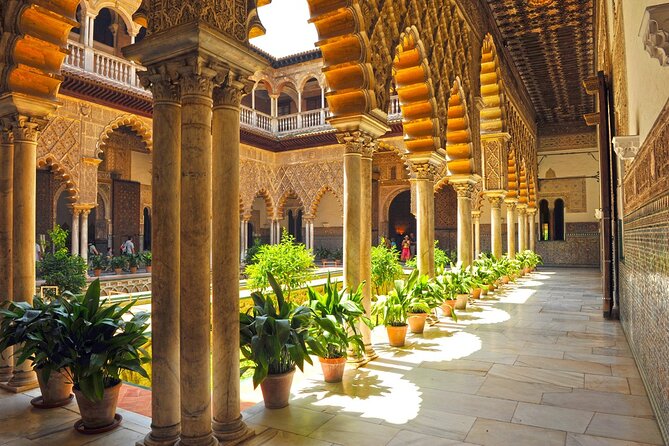
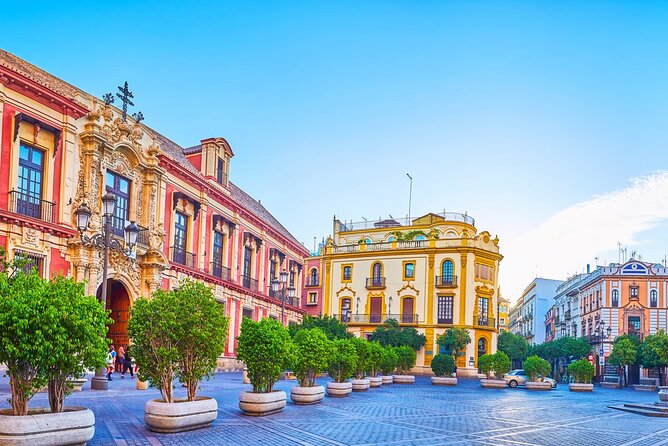
Real Alcázar de Sevilla is a palace complex with Moorish, Gothic, Renaissance, and Baroque influences. It started as a Moorish fortress and later became a royal residence. You’ll spend about 5 minutes here, with admission listed as free.
Even in a short visit, the “shape” of the place comes through: intricate tilework, stucco details, gardens with fountains and orange trees, and courtyards that feel designed for wandering. The tour specifically calls out places like the Palacio de Don Pedro, noted for Mudejar architecture and the Hall of Ambassadors, plus the Baths of Maria de Padilla.
This stop is ideal for two kinds of visitors:
- you want to recognize the Alcázar’s signature sights fast
- you’re planning a longer self-guided visit later
Parque de María Luisa (Stop 9)
Parque de María Luisa is Seville’s big public park and one of the city’s most pleasant pauses. It’s named after Infanta María Luisa Fernanda, and the tour highlights the palm trees, orange groves, flower beds, and 19th-century garden design with winding paths, ponds, and pavilions. This stop is about 15 minutes, with admission listed as free.
If you’ve had enough “stone and lines,” this is your reset. It also sets up what comes next: the iconic Plaza de España.
Plaza de España on wheels: ceramics, bridges, and the canal scene
Plaza de América (Stop 10)
Inside Parque María Luisa, the tour includes Plaza de América and points out the Palace of Arts and Industry. It’s described as a blend of Moorish and Renaissance Revival styles built for the Ibero-American Exposition of 1929. The tour also mentions two nearby museums: the Museum of Popular Arts and Traditions and the Archaeological Museum of Seville. Time here is about 5 minutes, with admission listed as free.
This works as a shortcut to the park’s “cultural campus” without getting stuck too long.
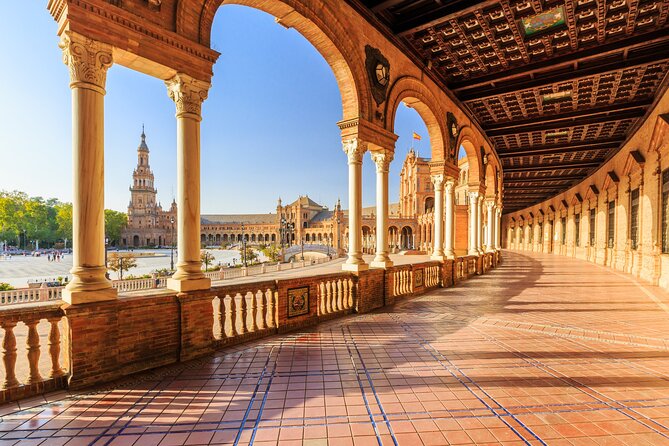
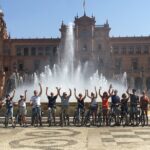
Plaza de España (Stop 11)
Now for the reason so many people come to Seville: Plaza de España. The tour calls it one of Seville’s most iconic landmarks and highlights its semi-circular Renaissance Revival design, colorful ceramic tilework, ornate bridges, and towers. It even explains the symbolism: the semi-circle represents Spain embracing former colonies, and the canal represents the Guadalquivir River flowing through the center.
You also get a quick orientation to the tiled alcoves and the bridges decorated with ceramic balustrades. This stop is about 20 minutes and listed as admission free.
Here’s the practical reality: 20 minutes can feel short if you want to take photos in every direction. But it’s plenty to walk the main edges, understand the layout, and get those “how did they build this” views that make the place iconic.
End stop: Triana’s vibe from Puente de Isabel II
Puente de Isabel II (Puente de Triana) (Stop 12)
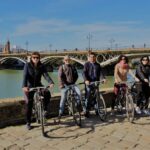
You finish by crossing Puente de Isabel II, also called Puente de Triana. The tour describes it as late 19th-century and says it connects Triana with the historic center. Expect views over the Guadalquivir and surrounding cityscape, plus the feeling that you’re moving into a different mood.
Triana is described as lively, with flamenco tradition and street life. The tour encourages you toward Calle Betis with tapas bars and cafes nearby. Time is about 10 minutes, with admission listed as free.
This ending is well-chosen. You’ve seen the palace, the Cathedral area, the park, and the big postcard square. Crossing the river into Triana helps the city feel like two connected halves instead of one checklist.
Guides make it: Marco and Tom’s Seville tips and flexibility
A standout theme from guide reports is how the tour staff handle people. Names you may hear include Marco and Tom, and the common thread is a friendly, helpful approach. People mention guides explaining highlights clearly without drowning you in a wall of dates.
You can also get practical local help beyond the “tour script.” Some guests report Marco going beyond the route with recommendations for local eateries and even helping with a reservation at a neighborhood restaurant. That’s the kind of extra value that turns the tour from a sightseeing ride into a start point for your Seville day.
There’s also evidence of contingency thinking. One note mentions a plan for Easter parades if the usual route became blocked. You’re still going to see the key areas, but it helps you trust the operator when the city gets crowded.
Price and value: what $46.29 buys you in real time
At $46.29 per person for about 2 hours 45 minutes, this is not a bargain-style walking tour. It’s priced like a guided premium experience. The value comes from three places:
- You cover more than one neighborhood without spending your whole day in transit.
- You get e-bike comfort for cobblestones, which makes the itinerary actually enjoyable.
- You keep a small group limit (max 12), which improves the guide-to-you ratio and reduces stop-and-start chaos.
The only “value caution” is that several stops are short. You’ll get orientation and highlights, not full deep study time. If you’re the type who wants to read every plaque, budget time for a second visit somewhere afterward.
Given that the tour is commonly booked about 35 days in advance on average, it’s also a popular way to see Seville quickly. If you’re traveling in peak season, booking earlier helps you lock in your language option (EN, DE, or FR).
Weather, pace, and who should choose this tour
The tour requires good weather. If conditions are poor, you’ll be offered a different date or a full refund. That’s important because it’s an e-bike ride through multiple outdoor areas, including parks and viewpoints.
Pace-wise, expect to ride between stops and take short guided breaks. It works well if you:
- want a quick, guided overview of Seville’s top monuments
- prefer less strain than walking, especially on cobblestones
- enjoy learning while you move
It’s also a solid match for first-timers. You’ll leave with a mental map of how Seville is organized: the river area, the Cathedral zone, the park/Plaza de España axis, and then Triana.
If you’re a slow traveler who needs long stops, you might get more out of booking this and then pairing it with longer independent time at one or two favorites.
Should you book this Seville eBike tour?
I think you should book it if you want a guided, efficient way to see Seville’s biggest hits without arriving exhausted. The e-bikes help a lot, the group size keeps it human, and the stop selection covers major sights in different parts of town instead of repeating the same streets.
Skip it or at least plan a backup if you hate short stop times. This is designed for highlights and context, not for long lingering. And if you care about Huevo de Colón access specifically, remember that admission is listed as not included, so factor that into your decision.
If you’re trying to squeeze Seville into a tight schedule, this is one of the smarter ways to do it.
FAQ
What languages are offered?
The tour is listed as guided in native speakers with options in EN, DE, and FR.
How long is the eBike tour?
It runs about 2 hours 45 minutes.
How big is the group?
The tour has a maximum of 12 travelers.
How much does it cost?
The price is $46.29 per person.
Where does the tour start and end?
It starts at C. Castilla, 15, 41010 Sevilla, Spain, and the activity ends back at the meeting point.
Which major sights are included?
The tour includes stops connected with Monasterio de la Cartuja, Setas de Sevilla (Metropol Parasol), Catedral de Sevilla, Real Alcázar de Sevilla, and Plaza de España, plus other nearby highlights.
Is admission included for all stops?
Admission details vary by stop. For example, the Basilica de la Macarena is listed as admission ticket included, while Huevo de Colón is listed as admission ticket not included. Several other stops are listed as admission ticket free.
Do I need good weather?
Yes. The experience requires good weather, and if it’s canceled due to poor weather you’ll be offered a different date or a full refund.
Is there a mobile ticket?
Yes. Mobile ticket is listed as a feature.
What is the cancellation window?
Free cancellation is offered up to 24 hours in advance for a full refund. If you cancel less than 24 hours before, the amount paid is not refunded.