REVIEW · SEVILLE
Seville Bike Tour
Book on Viator →Operated by Sevilla Bike Tour · Bookable on Viator
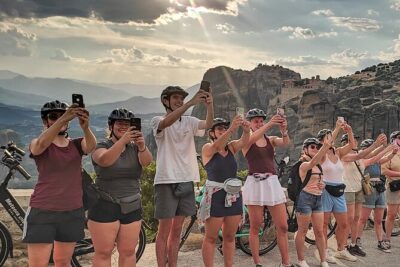
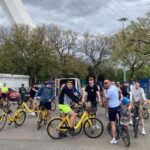
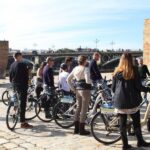
A great way to see Seville fast. This bike tour strings together Seville’s biggest landmarks in a smart loop, so you get big views without wasting hours in slow transfers. I especially love the coverage—from the Giralda and Cathedral area to Plaza de España and Santa Cruz—and I also like how the route hits both landmark architecture and lived-in neighborhoods. The only catch: it’s mostly an outside experience, and some monuments still require separate entry tickets.
You’ll feel how Seville connects—mosque-meets-cathedral stories, royal palaces, and riverfront neighborhoods—while you roll from stop to stop. The plan also calls out which sights are free for your time there and which are not, so you can decide on the fly. One consideration: this tour needs good weather, and if conditions are rough it may shift dates or be refunded.
In This Review
- Key things I’d plan around
- A 3-hour route that gets you bearings fast
- Where it starts: the C. Arjona meeting point
- Stop 1: Torre Giralda and the ramp-top story
- Stop 2: Catedral de Sevilla’s mosque footprint and scale
- Stop 3: Real Alcázar—fortified palace, film set, royal use
- Stop 4: Plaza de España—1929 pavilion magic
- Stop 5: Parque de Maria Luisa—San Telmo gardens in full postcard form
- Stop 6: Torre del Oro—gold storage with Almohade roots
- Stop 7: Barrio Santa Cruz—patios, legends, and the old Jewish quarter vibe
- Stop 8: Real Fábrica de Tabacos—Spain’s first tobacco factory, now a university
- Stop 9: Río Guadalquivir—Andalucía’s biggest river, navigable in Spain
- Stop 10: Triana across the river—flamenco, ceramics, and literature
- Stop 11: Real Maestranza—cavalry school roots and bullfighting arena scale
- What’s the value of a $36.05 bike tour?
- Who this tour fits best
- Should you book the Seville Bike Tour?
- FAQ
- How long is the Seville Bike Tour?
- Where does the tour start and end?
- What’s included in the price?
- Are monument tickets included?
- Is this tour done from the inside or outside?
- What if the weather is bad or I need to cancel?
Key things I’d plan around
- Horse-friendly Giralda ramps: a minaret built starting in 1184, with ramps designed for riding to the top.
- Cathedral scale on the original site: built on the old mosque footprint, with UNESCO recognition.
- Real Alcázar focus: a fortified palace that’s also linked to major film sets.
- Plaza de España + Maria Luisa Gardens combo: architecture inside huge, landscaped grounds.
- River and neighborhood variety: Guadalquivir views plus Santa Cruz and Triana flavor.
- Outside-only viewing with ticket notes: you’ll see a lot without committing to long entries.
A 3-hour route that gets you bearings fast
Seville is easy to get turned around in. Streets braid together, landmarks spread out, and “I’ll just walk there” can turn into a long afternoon. This tour solves that by acting like a moving orientation board: you follow a loop and keep moving, so you slowly build a mental map of where things sit.
The timing is also realistic. The tour is listed at about 3 hours, with short stops built into the ride. That means you don’t feel trapped watching other people study every corner for an hour, but you still get enough time to take photos, read the vibe, and decide if you want to return later on your own.
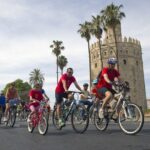
The group size stays small—up to 15 travelers—which usually helps with pacing and keeping the ride comfortable. And since it’s offered in English, you’re not stuck guessing at key details while you’re rolling.
You can also read our reviews of more tours and experiences in Seville.

Where it starts: the C. Arjona meeting point
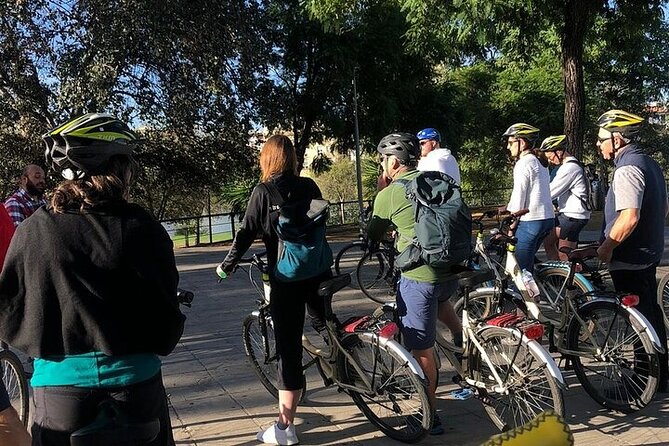
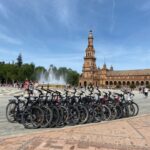
You’ll meet at C. Arjona, 8 in the Casco Antiguo (old town). That’s a helpful choice because you’re already in the zone where Seville’s most photogenic stuff starts clustering.
The tour ends back at the meeting point, so you don’t have to solve “How do I get home from the far side of the river?” at the end. If you’re arriving by public transportation, the meeting area is noted as near public transportation, which keeps your pre-ride stress low.
Stop 1: Torre Giralda and the ramp-top story
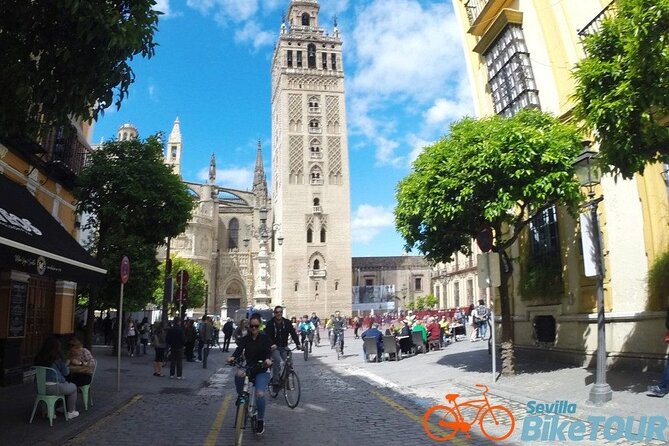
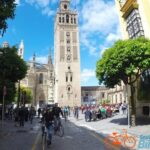
Your first big hit is Torre Giralda, Seville’s most iconic monument. What makes it more than a pretty tower is the origin story: it was the minaret of the original mosque, with construction beginning in 1184. The height is listed as 117.5 meters, and it was once the tallest building in Europe.
Here’s the detail I like best for first-timers: the Giralda has no stairs in the way many people expect. Instead, it uses ramps thick enough for riding, originally to allow ascension on horseback while supporting the call to prayer five times a day.
Practical note: your stop here is timed at around 15 minutes, and the plan indicates the admission ticket is not included. Also, since the tour is outside oriented, think of this as time to orient and absorb, not a long “go deep inside” visit.
Stop 2: Catedral de Sevilla’s mosque footprint and scale
From the Giralda area, you move to Catedral de Sevilla. After Fernando III conquered Seville from the Muslims, there’s a legend that the cathedral was built so big that anyone who sees it will think the builders are crazy men. Whether you take the legend literally or not, the cathedral’s scale is the point.
The plan also notes something that matters for how you interpret the building: it sits on the original mosque site, and it still preserves some parts of the earlier structure. UNESCO recognized it as World Heritage, which gives you extra reason to slow down and notice how layers of Seville’s past stack in one place.
Again, this stop is short—about 15 minutes—and the admission ticket is not included. If you later decide you want an interior visit, you’ll know it’s not part of the core “ride and pause” experience.
Stop 3: Real Alcázar—fortified palace, film set, royal use
Next up is Real Alcázar de Sevilla, one of those places that turns “I’ll see it quickly” into “Wait, I need ten more photos.” It’s described as a fortified palace, and it’s still tied to the living city: it remains the official residence of the Royal Family when they visit Seville.
The most useful context for your visit is the build period. It’s built during the Muslim period, so when you look at the chambers and gardens, you’re seeing a style shaped by that era. The plan also calls out pop-culture connections: it’s been a scenario for famous productions like Game of Thrones and Lawrence of Arabia. Even if you’re not a film person, that means it’s designed to look cinematic—so you’ll spot why people remember it.
This stop is also timed at about 15 minutes. The plan marks admission as free for this stop. Since the tour is still outside-focused, treat this as a viewing and orientation stop first. If you want the full palace experience later, you can plan your entry time separately.
Stop 4: Plaza de España—1929 pavilion magic
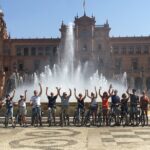
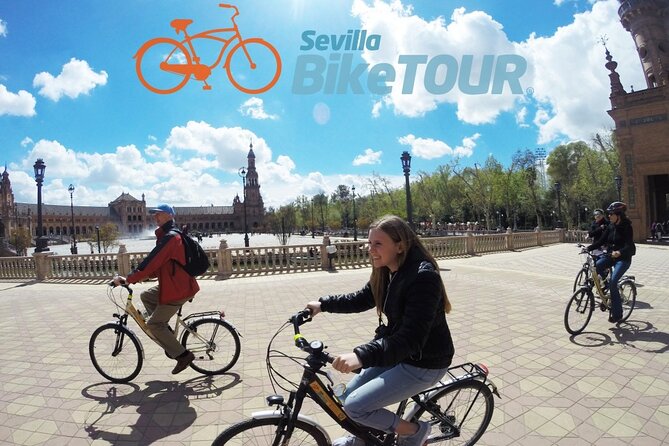
Then you’ll roll into Plaza de España, and it’s hard not to feel a little wowed. This square was built as the Spanish pavilion for the Iberoamerican Exhibition of 1929. The architect credited here is Ánibal González, and the plan frames it as his masterpiece.
What I find practical about Plaza de España is the way it helps you understand Spanish regional identity. The plaza includes references to all of the provinces of Spain, including different styles. That’s more than decoration—it’s a visual map you can walk around later if you want.
The stop is around 20 minutes, and the plan notes admission is free. If you only have one shot at it, use those minutes to scan the long views and the details in the architecture, then decide whether you want to come back at a calmer time for slower wandering.
Stop 5: Parque de Maria Luisa—San Telmo gardens in full postcard form
Right beside Plaza de España is Parque de Maria Luisa, and this is where the tour softens the pace. The plan explains that these gardens originally belonged to the San Telmo palace, and they were donated in 1893 by María Luisa Fernanda de Orleans to the city.
It’s also tightly connected to the two big plaza features: the plan notes that the park includes Plaza América and Plaza de España, which means you’re not just looking at isolated attractions. You’re seeing one designed landscape that links the architecture and the water-and-path feeling.
The stop is about 20 minutes, and the plan marks entry as free. Since it’s outdoors, this part works great even if the rest of the tour keeps you mentally busy—you can reset here with fountains and open shade.
Stop 6: Torre del Oro—gold storage with Almohade roots
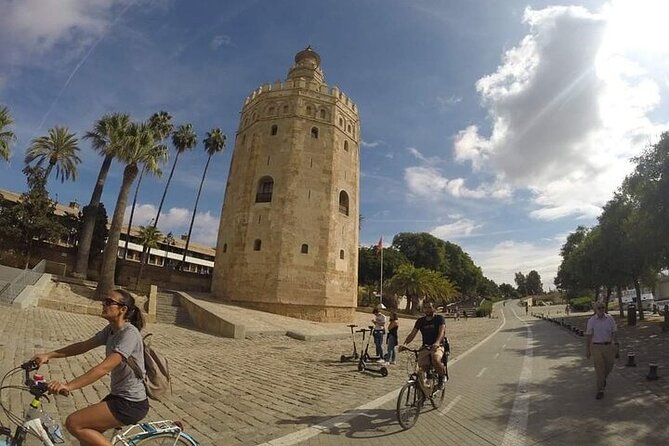
Next is Torre del Oro. It’s described as built during the Muslim Almohade reign in Seville, and later it served a very specific economic purpose: storing gold coming from the colonies in the so-called Indias Occidentales (South America).
That kind of detail matters because it changes how you look at the tower. You’re not just seeing a tower; you’re seeing a structure tied to trade and empire. You’ll get about 10 minutes here, with admission not included per the plan.
If you’re the type who likes “why is this here?” facts, this stop pays off quickly. If you want only major landmarks, it still works as a pleasant change of pace between the bigger palace-plaza blocks.
Stop 7: Barrio Santa Cruz—patios, legends, and the old Jewish quarter vibe
Now you pivot to neighborhood atmosphere in Barrio Santa Cruz. The plan frames it as a maze-like old center area that used to be the Jewish quarter. That’s the kind of background you should keep in mind while you’re looking at houses and courtyards.
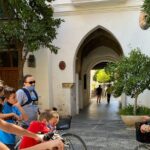
This stop is described as full of old houses, patios, and palaces, with legends, romance, and mystery woven into the street feel. In a short bike-tour pause, you won’t “solve” a neighborhood, but you can absolutely capture its mood. Those minutes are a chance to notice how Seville’s beauty often lives at the scale of doorways and inner courtyards, not just huge monuments.
The stop is about 15 minutes, and the plan marks it as free. It’s one of the best proof points that this tour isn’t only about famous structures; it’s also about place.
Stop 8: Real Fábrica de Tabacos—Spain’s first tobacco factory, now a university
You’ll pass by the Real Fabrica de Tabacos, a stone building from the 18th century. The plan credits it as the first tobacco factory in Europe. That’s an unexpected detail, because many people first see a building like this as “just another big historic structure.”
Today, it’s noted as the main building of the University of Seville. So you can read it two ways: as an industrial-era statement from the past, and as a living educational space in the present.
The stop is short—about 10 minutes—and it’s marked free. Even in a quick view, it helps you understand that Seville’s history isn’t only royal and religious. It’s also economic and everyday.
Stop 9: Río Guadalquivir—Andalucía’s biggest river, navigable in Spain
Then comes the river. The Río Guadalquivir is described as the biggest river in Andalucía, and it’s also one of the few in Spain that allows navigation. The plan adds origin context: it begins in the Sierras de Cazorla y Segura Natural Park.
There’s also a neat historical detail: the river was called Betis in Roman times. When you know that, you start to see how Seville sits on layers of geography and settlement history, not just modern city planning.
Your stop is about 20 minutes, marked free. This portion is valuable because it gives your eyes a wider horizon after dense architecture and narrow streets.
Stop 10: Triana across the river—flamenco, ceramics, and literature
On the far side of the river you reach Triana, described as an iconic neighborhood and the cultural heart of Spain. The plan also links Triana to the origins of flamenco music, plus mastery with ceramics and literature.
If you’re trying to understand Seville beyond the postcards, this kind of neighborhood stop helps. Triana isn’t presented here as only a pretty district; it’s framed as a creative engine. The plan also notes that many Spanish explorers and conquerors originated there—so you’re looking at a place tied to movement, craft, and storytelling.
It’s a 20-minute stop and marked free. In this short window, you’ll mostly be absorbing the setting and feel, not interviewing locals. Still, it’s often where people start to say, “Okay, Seville is more than monuments.”
Stop 11: Real Maestranza—cavalry school roots and bullfighting arena scale
You finish at Real Maestranza de Caballeria de Sevilla, a site with two strong identity clues. First: it started as a military and cavalry school for the nobility in the 17th century. Second: it’s considered one of the most important bullfighting arenas in the world, with the plan saying many people claim it’s the most.
This stop is about 15 minutes, and the plan indicates the admission ticket is not included. Even if you don’t follow bullfighting, this is a useful cultural snapshot. It shows how power, tradition, and public gatherings shaped big architectural spaces.
What’s the value of a $36.05 bike tour?
At $36.05 per person for roughly three hours, the value comes from two things: you’re covering multiple major sights without doing a lot of backtracking, and you’re not paying separately for the core ride setup.
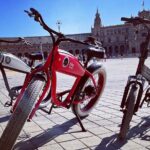
The tour includes a bottle of water and use of a bicycle. That combo matters in Seville, where heat and walking fatigue can creep up fast. The small group size also makes the ride feel more manageable than bigger hop-on options.
The part to watch is monument entry. The plan clearly labels which stops have admission tickets not included, so you won’t be surprised if you want to go inside and need to plan that separately. Still, the tour is designed for outside viewing, so you get a satisfying first look at a lot of places.
Who this tour fits best
This is a strong choice if you want a first-day Seville orientation. It’s also ideal if you like a bit of structure: you have stops, context, and timing so you don’t spend half your day just deciding where to go next.
It can be less ideal if you’re the type who needs long indoor visits at every major monument. Since the tour is outside-focused and some entries aren’t included, you’ll likely want to pair this with separate ticketed visits later.
Good weather is required, and the tour runs with a minimum traveler count. If conditions are poor, you may be offered another date or a full refund.
Should you book the Seville Bike Tour?
I think it’s worth booking if you want an efficient, outside-oriented tour that covers Seville’s biggest icons and a couple of neighborhood layers—without making you fight traffic or crisscross the map. The best “yes” signal is your interest in seeing how different eras overlap: mosque origins at the Giralda and Cathedral site, a fortified palace at Real Alcázar, and the broad cultural feel of Santa Cruz and Triana.
If you’re only interested in interiors and long museum time, you might feel limited by the outside-only format. But if you want to get oriented, get moving, and build a shortlist for what to revisit, this is a smart purchase.
FAQ
How long is the Seville Bike Tour?
The tour lasts about 3 hours.
Where does the tour start and end?
It starts at C. Arjona, 8, Casco Antiguo, 41001 Sevilla, Spain, and ends back at the same meeting point.
What’s included in the price?
The price includes a water bottle and use of a bicycle.
Are monument tickets included?
No. Some monuments are marked as ticket not included (for example, Torre Giralda and Catedral de Sevilla), while others are marked as free for this tour’s visit time (for example, Real Alcázar, Plaza de España, and Parque de Maria Luisa).
Is this tour done from the inside or outside?
It’s listed as tour only from the outside.
What if the weather is bad or I need to cancel?
The tour requires good weather. If it’s canceled due to poor weather, you’ll be offered a different date or a full refund. You can cancel for a full refund up to 24 hours before the experience starts.