REVIEW · BERLIN
Berlin Wall and Cold War Bike Tour in Small Groups
Book on Viator →Operated by Berlin on Bike · Bookable on Viator
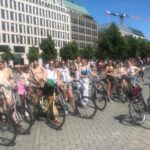
Pedal through Berlin’s Cold War line. This small-group bike tour threads the story of the Wall through key sights, from the Brandenburg Gate to Checkpoint Charlie, with an easy ride and a guide who turns dates into real street-level scenes. Guides I’d especially watch for include Giovanni, Peter (Liverpool Pete), George, Gilles, and Monti—each known for making the history land. You’ll use a bike and helmet, and you’ll cover ground that’s tough to stitch together on your own in a short afternoon.
I also like that the cycling is straightforward and the pacing includes stops for viewpoints and photos, so you’re not stuck grinding for hours. One drawback to plan for: it’s outdoors for about 3.5 hours, and food or drinks aren’t included, so you may want to bring a snack plan and dress for real weather (the route keeps going, rain or shine).
In This Review
- Key highlights worth planning for
- A 3.5-hour Berlin Wall bike ride that feels like street history
- Where you start at Berlin on Bike in Kulturbrauerei
- Brandenburg Gate: the West-facing symbol you ride past for context
- Memorial of the Berlin Wall: the pause where the story turns personal
- Mauerpark: where the old border shows up in the park name and the ground
- Kulturbrauerei stops again: Berlin’s industrial shell around history
- The GDR watch tower at Kieler Eck: surveillance made visible
- Checkpoint Charlie and Tear Palace: where East and West met under pressure
- How the easy cycling works (and what to bring)
- Price and value: $43.54 for bike, helmet, and guided interpretation
- What makes the guide style matter on a Wall tour
- Who should book this Berlin Wall and Cold War bike tour
- Should you book it? My decision guide
- FAQ
- How long is the Berlin Wall and Cold War bike tour?
- What is the price per person?
- How many people are in the group?
- Does the tour include a bike and helmet?
- What language is the tour offered in?
- Where does the tour start and end?
- Is hotel pickup or drop-off included?
- Is admission required for the main stops?
- What should I do about food and drinks?
- Does the tour run in bad weather?
Key highlights worth planning for
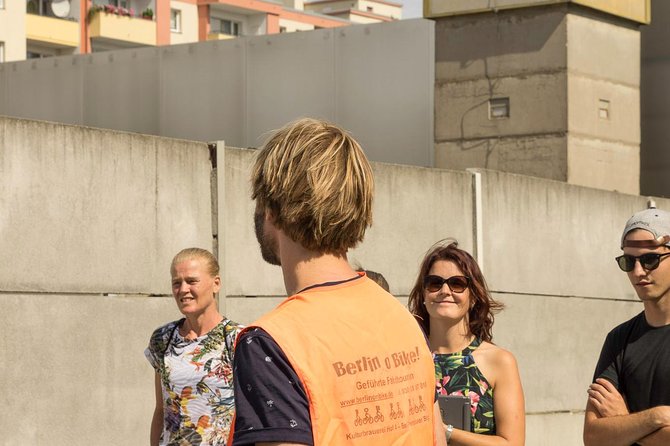
- Small group size (max 15) means more time with your guide and fewer traffic hassles.
- Easy, practical cycling makes this a nice swap from walking tours when your legs (or attention span) get tired.
- Berlin Wall storytelling at the exact spots where division and border-crossing life happened.
- Brandenburg Gate + Wall Memorial + Mauerpark gives you both the big symbol and the human cost.
- Kieler Eck GDR watch tower adds the surveillance angle that most Wall tours skip.
- Checkpoint Charlie and Tear Palace connect the Cold War clash to the everyday reality of crossing checkpoints.
A 3.5-hour Berlin Wall bike ride that feels like street history
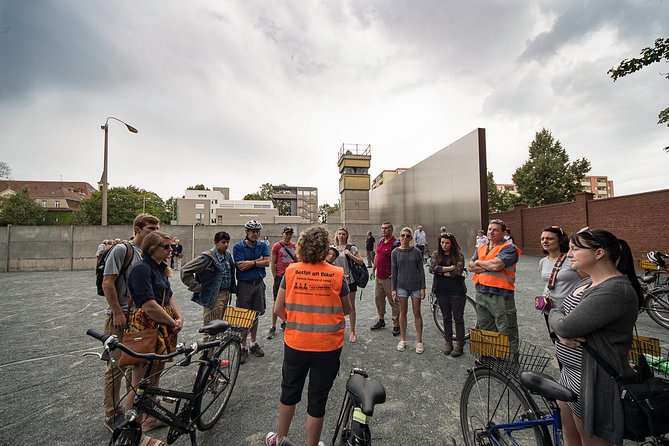
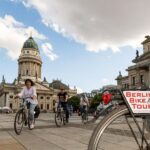
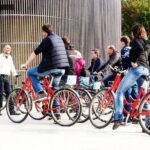
This is the kind of tour where the Wall stops being an idea and starts behaving like a map you can ride. In about 3 hours 30 minutes, you move through central Berlin using provided bicycles and helmets, hitting major landmarks tied to how the city was split and how that split was enforced.
What makes it work is the format. Instead of only standing and listening, you’re also riding between stops. That means the story changes pace with the city: landmark first, then memorial, then the places where daily life bent around borders. It’s a smart way to learn without turning your afternoon into one long lecture.
You can also read our reviews of more tours and experiences in Berlin.
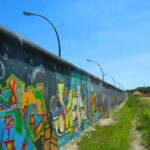
Where you start at Berlin on Bike in Kulturbrauerei
You meet back at Berlin on Bike’s shop near Kulturbrauerei (Knaackstraße 97, in Berlin). The route is designed as a round-trip that ends back at the same meeting point, so you don’t have to think about how to get yourself home at the end.
This starting area matters because Kulturbrauerei is more than a meeting point. It’s a large 19th-century industrial ensemble (listed building since 1974) with courtyards and preserved architecture, and it helps ground the day in Berlin’s layers: old industry, later cultural use, and all the history squeezed around it.
Brandenburg Gate: the West-facing symbol you ride past for context
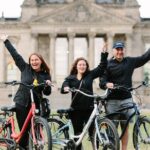
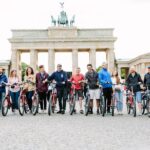
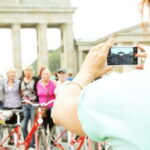
You’ll make your way first to the Brandenburg Gate, a classicist triumphal gate on the western flank of Pariser Platz in Mitte. The practical win here is that you see the gate in its modern setting while your guide frames it with the Cold War reality around it.
Even if you’ve seen photos of the gate before, this stop is about learning how a major symbol sits next to a divided city. You get a short time on location—about 10 minutes—and it’s enough for photos and a clear “here’s what to look for” briefing before you roll to the next stop.
One thing to consider: this is a famous spot, and it can be a bit busy. Going with the group keeps you from losing time trying to figure out the best angles on your own.
Memorial of the Berlin Wall: the pause where the story turns personal
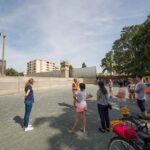
Next comes the Memorial of the Berlin Wall, where the focus shifts from famous architecture to the division and the deaths associated with the Wall. Admission there is free, and you’ll spend about 10 minutes.
This stop is valuable because it changes the emotional temperature of the tour. The guide stories you hear later can be intense, but here you get the reminder that the border wasn’t abstract. You’re seeing the Wall’s consequences in a place made for remembrance, not just sightseeing.
If you’re sensitive to heavy topics, give yourself permission to take it at a slower pace during this segment. The tour keeps moving, but you can still take a moment before you ride on.
Mauerpark: where the old border shows up in the park name and the ground
Then you hit Mauerpark, a park whose name ties directly back to the Wall erected in 1961. In this area, the Wall formed a border between the former districts of Prenzlauer Berg and Wedding, and it still lines up with today’s district boundary between Prenzlauer Berg and Gesundbrunnen.
What I like about this stop is the “where you are matters” lesson. You’re not just hearing about borders—you’re seeing how they shaped where things ended up. A park is a soft setting, but the meaning comes from the boundary running underneath it.
Time is short here (around 5 minutes), so your guide’s job is to point you to what you can actually notice quickly: the sense of place, the location of the old division, and how Berlin’s layout carries that memory forward.
Kulturbrauerei stops again: Berlin’s industrial shell around history
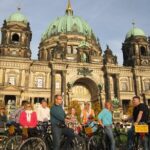
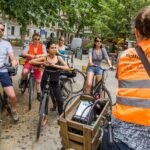
You’ll pass through the KulturBrauerei area again during the ride. It’s only a short stop (about 5 minutes), but it’s a useful breather that keeps the tour from feeling like a straight line of memorials.
Why it matters: the Wall era didn’t happen in an empty box. Berlin was working, building, and changing in real time. The preserved industrial architecture helps you remember that Cold War life was also about jobs, neighborhoods, and physical spaces being repurposed over time.
If the weather is gloomy, this kind of stop also gives you a chance to regroup—stand, look, and re-center—before you start rolling again.
The GDR watch tower at Kieler Eck: surveillance made visible
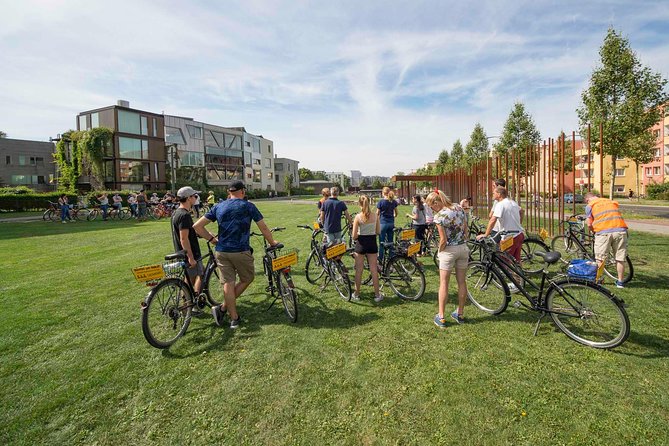
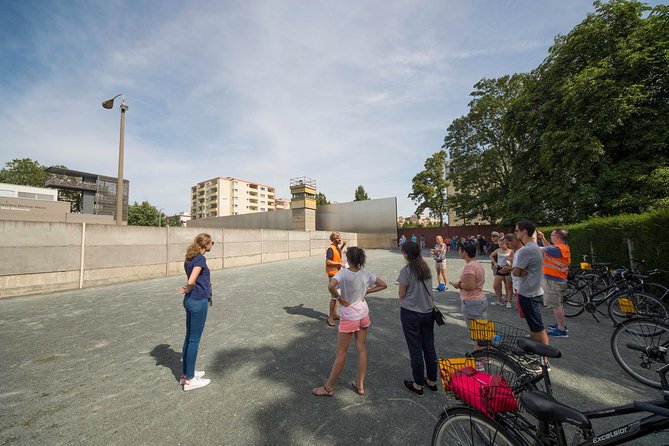
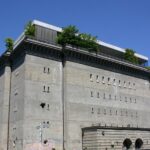
One of the more interesting segments is the GDR Watch Tower at Kieler Eck, and the admission here is included. This is the kind of stop that adds a different angle: not just freedom and escape stories, but how control worked through observation.
The practical value is that you’re not left with only political concepts. A watch tower is a simple object with a job, and once your guide explains what it was for, you start noticing how many parts of border life were about seeing and being seen.
This stop is also a good moment to ask questions if you’re curious about daily restrictions and how border enforcement changed what people felt comfortable doing.
Checkpoint Charlie and Tear Palace: where East and West met under pressure
Toward the later part of the tour, you reach Checkpoint Charlie, one of the best-known border crossings through the Wall between 1961 and 1990. Your guide will frame it as the crossing that connected the Soviet and American sectors in Friedrichstraße between Zimmerstraße and Kochstraße, linking East Berlin’s Mitte with West Berlin’s Kreuzberg.
Then you’ll hear about the Tear Palace, the colloquial name for the former exit hall of the border crossing point at Bahnhof Friedrichstraße in the divided city of Berlin between 1961 and 1989.
This is where the tour earns its reputation for making the Cold War feel real. You’re looking at a place people associate with dramatic moments, but the guide’s stories keep it grounded in human experience—how crossings worked, what separation looked like, and how stress shaped daily choices.
A good way to get more out of these stops is to watch how Berlin’s present-day streets feel compared with the past purpose of the crossing. Your brain will naturally try to bridge that gap, and that’s exactly what the guide is helping you do.
How the easy cycling works (and what to bring)
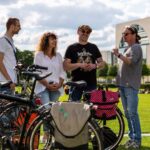
This tour is designed for most travelers and it’s paced for a small group. The cycling itself is meant to be manageable, so it’s a strong option if you want to see Berlin without stacking walking time on top of itself.
Still, you’re riding outdoors on a bike, so treat it like an active sightseeing day:
- Wear layers. Berlin weather can change quickly, even when the day starts mild.
- Bring a rain layer if there’s any chance of wet weather.
- Plan for a snack or drink since food and drinks aren’t included.
If you’ve got a kid or teen who usually tunes out on foot tours, this format can be a lifesaver. The movement helps, and the guide often uses different angles so the story doesn’t become one-note.
Price and value: $43.54 for bike, helmet, and guided interpretation
At $43.54 per person for about 3 hours 30 minutes, the price works out to solid value for what you’re getting. You’re not just paying for route coverage—you’re paying for interpretation that connects each stop to how the Wall shaped Berlin’s layout and daily life.
Here’s the practical breakdown you can feel good about:
- Bike and helmet are included, so you don’t need to rent or shop for gear.
- You get a local guide, and the payoff is how they connect the Wall’s story across multiple neighborhoods.
- Several stops have free entry, which helps keep the day from turning into a hidden ticket-cost exercise.
The one area to think about is that food is on you. The tour is built to be educational and ride-focused, not restaurant-paced. If you want a longer break for lunch, you’ll likely want to plan that around the end of the tour rather than assuming you’ll be fed during it.
What makes the guide style matter on a Wall tour
Across the guide names people remember—Giovanni, Peter, George, Gilles, Monti—the common thread is clear: strong communication and a tone that respects the seriousness of what happened while still keeping the day moving.
That’s not fluff. On a Wall-focused tour, your guide’s job is to help you hold two truths at once:
1) This place is emotionally heavy.
2) This place is also geography—there are streets, borders, distances, and sightlines.
When the guide does that well, you leave with a mental map, not just a pile of dates.
Also, I like that this tour style seems to invite conversation. In some cases, guides even help with small practical requests like capturing a video while you’re at a stop. That kind of flexibility makes the experience feel more personal without turning it into something chaotic.
Who should book this Berlin Wall and Cold War bike tour
This is a great fit if you:
- Want an organized way to see major Wall-era sites without stitching together separate tickets and transit.
- Prefer biking over walking to keep energy up.
- Like history told through locations, not just timelines.
- Are traveling with kids or teens who need movement to stay engaged.
It’s also a strong choice if you’re already seeing Berlin’s big sights and you want the missing layer: how borders shaped everyday life, not just monuments.
If you’re only into light, casual sightseeing, the subject matter can feel intense. But the pacing and multiple angles usually make it more manageable than you might expect.
Should you book it? My decision guide
I’d book this tour if you want the Berlin Wall story to snap into place through a real route you can picture later. The combination of small-group size, easy cycling, and guide-led interpretation at exact border-linked locations makes it one of the better ways to learn in a single afternoon.
Skip it or reconsider only if:
- You can’t handle emotionally heavy topics for a few stops.
- You dislike being outdoors for roughly 3.5 hours.
- You’d rather spend your time on independent wandering with no guide steering the story.
If you’re in the middle—curious, open-minded, and ready to learn while moving—this is a worthwhile booking. It’s the kind of tour where you end up seeing Berlin differently when you step off the bike.
FAQ
How long is the Berlin Wall and Cold War bike tour?
It runs for about 3 hours 30 minutes.
What is the price per person?
The price listed is $43.54 per person.
How many people are in the group?
The maximum group size is 15 travelers.
Does the tour include a bike and helmet?
Yes. Bike and helmet use are included, along with a local guide.
What language is the tour offered in?
The tour is offered in English.
Where does the tour start and end?
It starts at Berlin on Bike (Knaackstraße 97, 10435 Berlin) and ends back at the same meeting point.
Is hotel pickup or drop-off included?
No. Hotel pickup and drop-off are not included.
Is admission required for the main stops?
Some stops listed are free (including the Brandenburg Gate, the Memorial of the Berlin Wall, and Mauerpark). The GDR Watch Tower at Kieler Eck is included, but the data does not specify entry costs for every site.
What should I do about food and drinks?
Food and drinks aren’t included, so plan on having something on your own during or after the tour.
Does the tour run in bad weather?
It operates in all weather conditions, but if it’s canceled due to poor weather, you’ll be offered a different date or a full refund.