REVIEW · VIENNA
Vienna by Bike 3-Hour All-In-One City Bike Tour in English
Book on GetYourGuide →Operated by Vienna Explorer · Bookable on GetYourGuide
Vienna looks different from the saddle. I like how this ride compresses big imperial highlights into a 3-hour loop, with time for photos and stories rather than nonstop racing. Two stops I always want to relive are the Ringstrasse boulevard views and the playful shock of the Hundertwasserhaus.
You get that classic Vienna blend: grand architecture up close, plus a fun park finish at the Prater Ferris wheel. The pace is set for comfortable city biking on well-surfaced routes, with multiple photo stops where you can actually look at what you’re seeing.
One consideration: you’re not doing museum time here. With a short 3-hour format, indoor exploring and long lingering at any one building is limited.
In This Review
- Key highlights worth your time
- Meeting at Franz Josefs Kai: where the ride really starts
- What you’ll pedal: Vienna’s Ringstrasse corridor
- Tip on pace
- The Opera House to City Hall stretch: architecture you can read
- Parliament buildings and the Austro-Hungarian storyline
- Heroes’ Square (and the 1938 Anschluss speech stop)
- Hundertwasserhaus: the playful pivot that keeps Vienna from feeling stuck in the past
- Karlskirche on Karlsplatz: domes, columns, and a clean photo moment
- Prater Park and the Ferris wheel: the fun ending you’ll remember
- Danube canal banks: the calm pedal back
- How long is this, really, and how much work it feels like
- Price and value: is $55 for 3 hours a fair deal?
- Guides make or break it: what the best ones do
- Weather reality: how the tour handles rain
- Who this tour is best for
- Should you book Vienna by Bike’s 3-hour tour?
- FAQ
- What is the duration of the Vienna by Bike tour?
- How much does it cost?
- Is the tour offered in English?
- Where do I meet the guide?
- What subway station is closest to the meeting point?
- Does the tour run in bad weather?
- Are rain ponchos provided?
- What should I bring?
- What’s included in the tour?
- Is there free cancellation?
- Is pay later available?
Key highlights worth your time
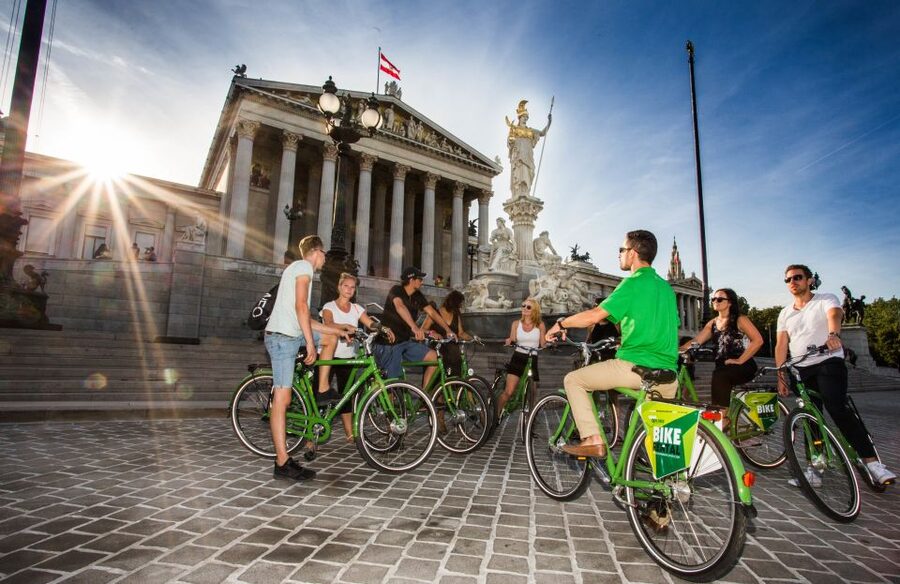
- Ringstrasse imperial boulevards in a short, photo-friendly ride
- Opera House to Rathaus views of Neo-Renaissance and Gothic facades from the street
- Heroes’ Square history stop tied to the 1938 Anschluss speech
- Hundertwasserhaus as the funky, colorful break from the grand façades
- Karlskirche on Karlsplatz with its columns and domes right on your route
- Prater Park and the giant Ferris wheel as the fun ending
Meeting at Franz Josefs Kai: where the ride really starts
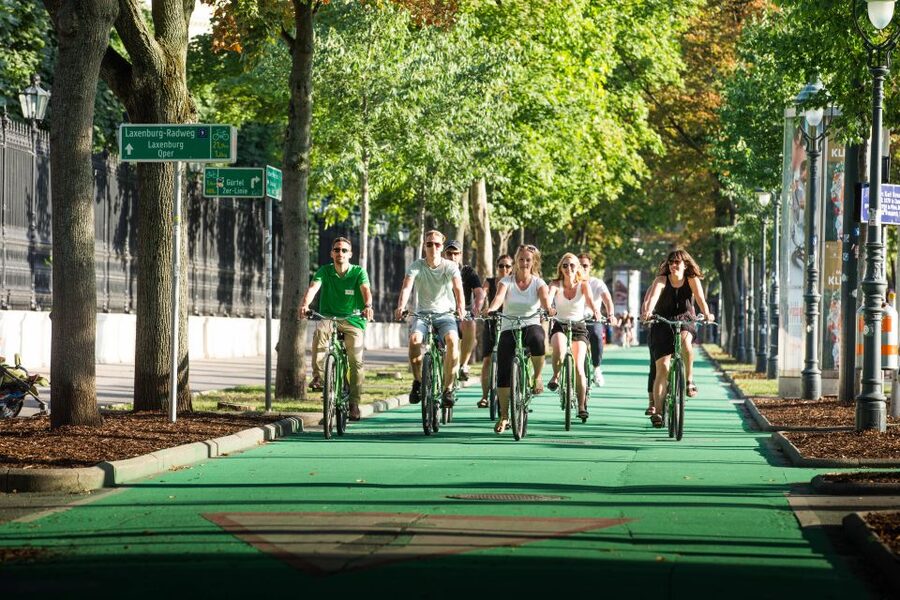
The tour meets at Franz Josefs Kai 45, 1010 Vienna. This is a practical spot because you’re already near the river area, and the ride quickly gets you into the city’s “easy-on-a-bike” rhythm.
If you’re using the subway, the nearest station is Schottenring (lines U4 and U2). On a 3-hour tour, getting to the start smoothly matters—one missed piece of your morning or afternoon can throw off the whole day.
You’ll be set up with modern city bikes, and the routes are chosen for safety and decent surfaces. In wet weather, rain ponchos are provided, which is a big deal in Vienna when plans meet sudden clouds.
You can also read our reviews of more tours and experiences in Vienna.
What you’ll pedal: Vienna’s Ringstrasse corridor
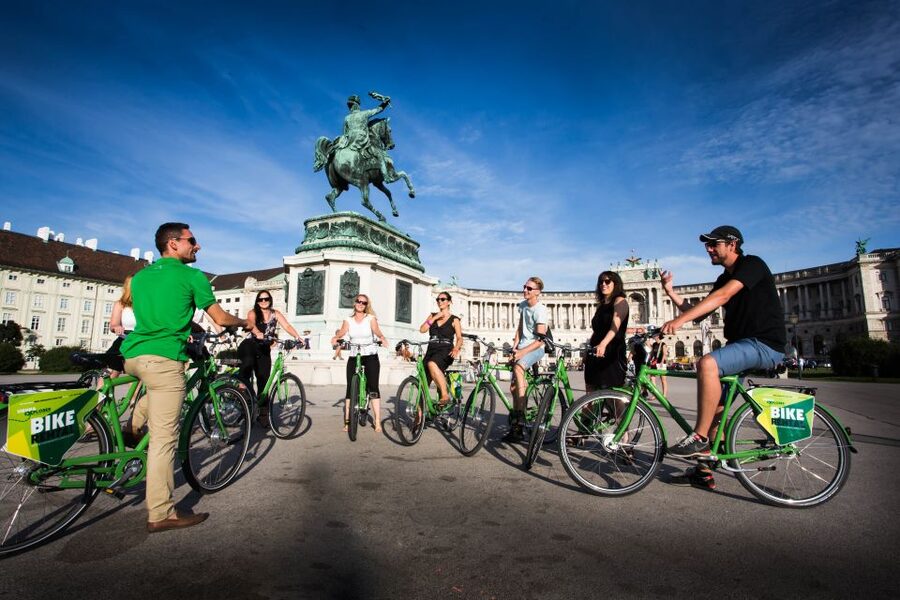
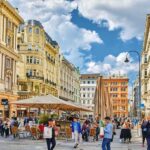
The heart of the experience is cycling along the Ringstrasse, Vienna’s famous grand boulevard. This is where Vienna shows off: not a tiny historic lane, but a wide imperial stage with major buildings lined up for a slow, steady look.
I like how a guided bike approach makes the boulevard feel immediate. On foot, you can get stuck in crowds or feel like you’re “passing by.” On a bike, you glide, your guide points out what to notice, and you can take photos without constantly stopping and restarting.
The route doesn’t just aim at one sight. It threads through the big-name architectural beats you’d expect from the former Habsburg capital, including the Vienna Opera House, City Hall (Rathaus), Vienna University, the House of Parliament, and the Imperial Palace (seen along the boulevard). You’ll get a sense of how these buildings relate to each other across the imperial layout.
Tip on pace
In real terms, the pace is set so you’re riding enough to feel like you did something, but stopping often enough to learn what you’re looking at. Several guides across the season seem to run with an energetic, story-led style; on one tour, guides like Lisa and Marco were singled out for enthusiasm and speed-control that still keeps the group engaged.
The Opera House to City Hall stretch: architecture you can read
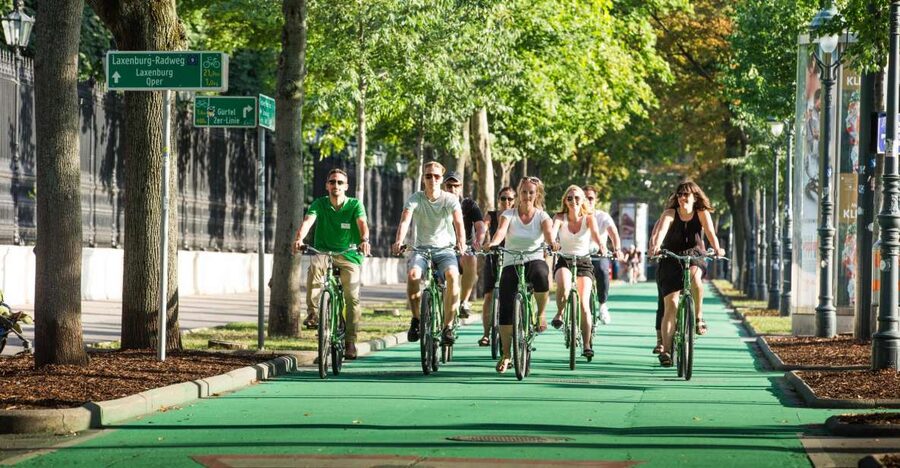
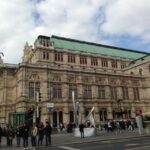
A highlight for many first-timers is the visual jump from the Opera House area to the Rathaus. The tour description emphasizes the Neo-Renaissance look of the Vienna Opera House and the Gothic façade of the Rathaus, and riding past them is the right way to understand the contrast.
From the saddle, these façades aren’t just “pretty buildings.” They become landmarks you can frame, compare, and remember. You’ll get those big, dramatic details at close street level, then roll onward without the friction of finding seats, lines, or ticket windows.
What I appreciate most here is the guide’s role in making the architecture make sense. When the commentary is timed right, you start seeing patterns—where the style shifts, why the building was built as it was, and how the imperial state wanted to be represented.
One practical note: if you’re the kind of person who likes quiet, uninterrupted looking, you may still prefer to take a bit more time at the best photo stop. This tour is built around multiple stops, but it’s still a moving route.
Parliament buildings and the Austro-Hungarian storyline
As you cycle past the 19th-century parliament buildings tied to the Austro-Hungarian Empire, you get a political and cultural layer to the skyline. Vienna isn’t only opera and palaces; it’s also governance, empire, and the architecture of authority.
This part of the route works especially well on a bike tour because the commentary can connect the dots. You see the building façades, then your guide can explain why that era mattered, how the city grew, and what it meant to build such institutions in this setting.
You’ll likely notice that the tour keeps the story moving rather than turning it into a lecture. That matters for a 3-hour format, and multiple guides described in the feedback—like Wenke, Clemens, and Robert—were praised for keeping information clear and paced.
Heroes’ Square (and the 1938 Anschluss speech stop)
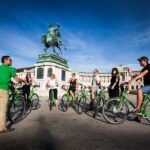
One of the most serious stops is Heroes’ Square, where Hitler made his infamous Anschluss speech in 1938. The tour includes this moment specifically, so you’re not just cycling for pretty views—you’re also learning how modern European history played out here.
I think this kind of stop can be powerful because you’re in the real public space tied to the event, not reading it off a plaque from far away. Your guide will set the context, and you can decide how long you want to take it in during the stop.
Still, it helps to be aware: this is heavy history in the middle of a bike outing. If you prefer lighter commentary most of the time, treat this segment as a thoughtful pause rather than something to rush through.
Hundertwasserhaus: the playful pivot that keeps Vienna from feeling stuck in the past
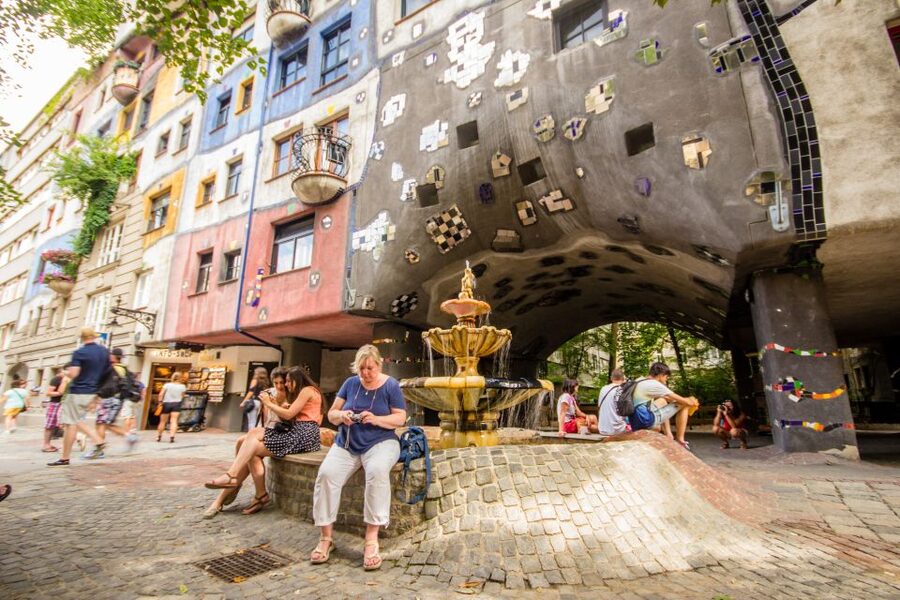
Then comes one of the most fun tonal shifts on the route: the Hundertwasserhaus. The tour calls it Vienna’s “funkiest apartment building,” and after the imperial grandeur, it’s a refreshing change in color, shape, and attitude.
I like this stop because it shows you Vienna’s creative side without needing a separate museum plan. From the street, the building reads as sculpture-like and slightly chaotic—in a good way—and it’s the sort of architecture you remember even if you forget a detail or two from the earlier commentary.
If your group includes kids or anyone who finds grand history a bit dry, this is the moment that usually resets the energy. Even in reviews where people loved the political and imperial story, the Hundertwasserhaus got called out as a highlight for a reason.
Karlskirche on Karlsplatz: domes, columns, and a clean photo moment
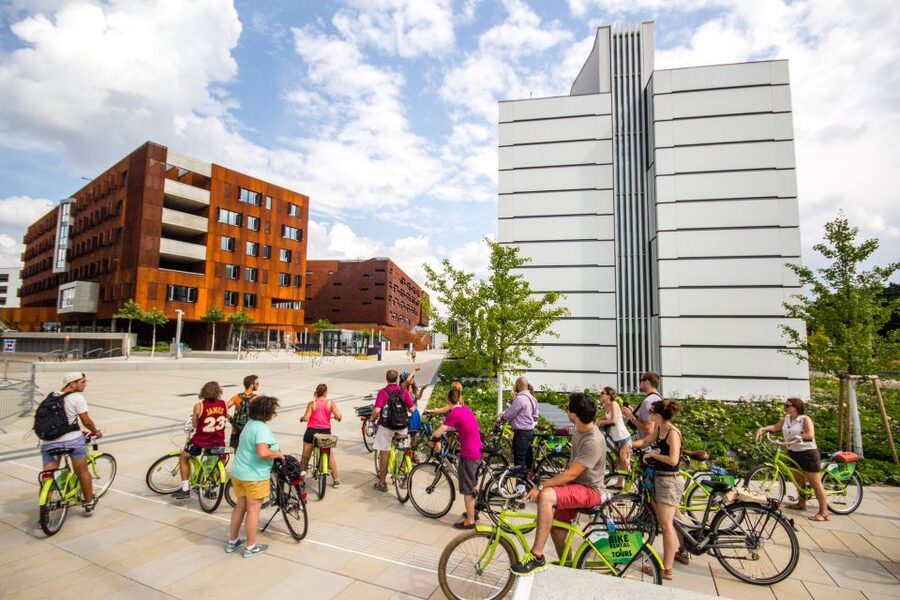
Next up is Karlskirche on Karlsplatz, highlighted for its columns and domes. This is a sight that photographs well, but the bike route makes it more than a single viewpoint.
You can circle it mentally as you ride past—seeing how the church sits in its urban setting, not just how it looks in a single iconic angle. It’s also a nice “breather” stop between the more intense history note and the final run toward the park.
If you enjoy architecture, this is a great place to slow down mentally. Watch the big shapes, then let the guide’s explanation put that visual pattern into words.
Prater Park and the Ferris wheel: the fun ending you’ll remember
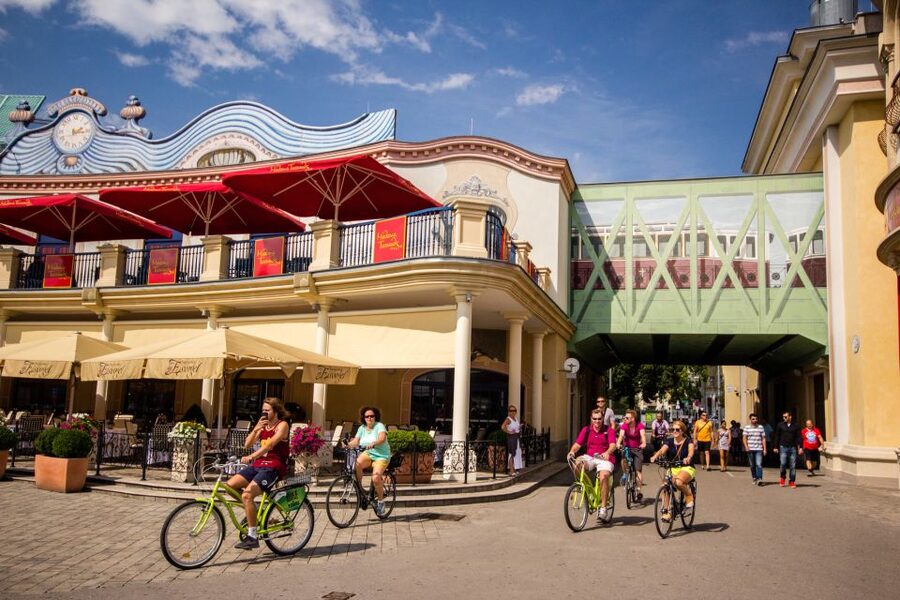
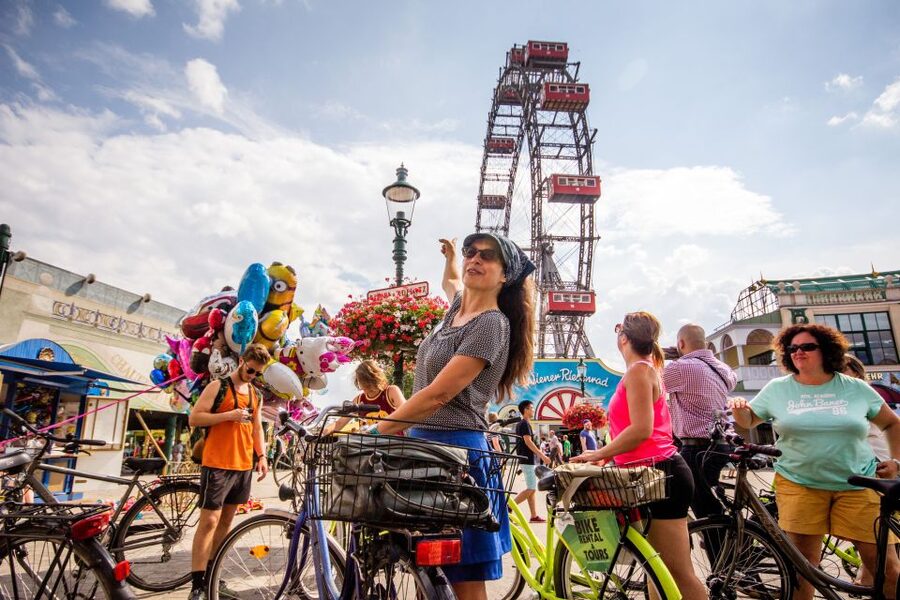
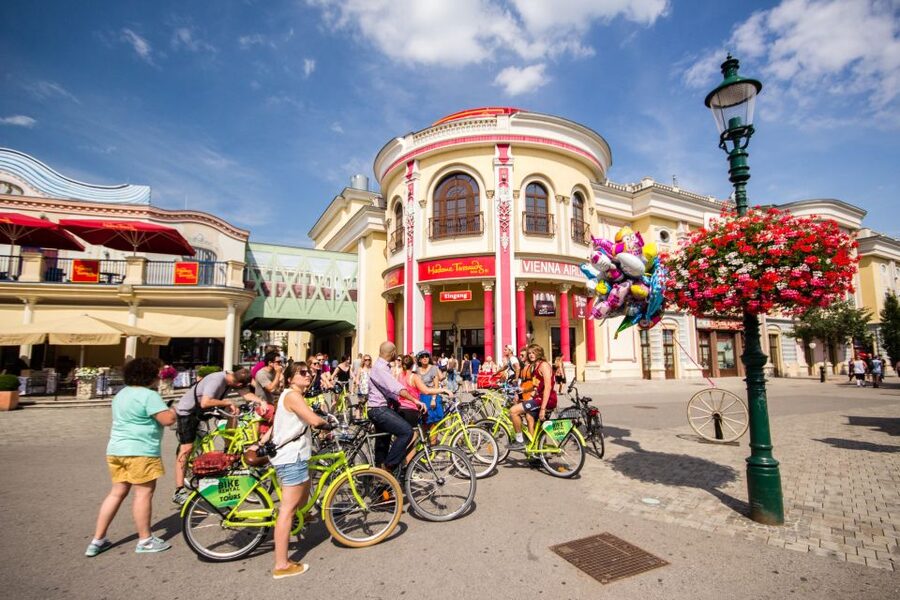
You’ll bike to Prater Park for the giant Ferris wheel. This is a smart finish because it’s a change of pace: less palace and state, more leisure and public space.
The Ferris wheel works as a destination and a landmark. Even if you don’t ride it, seeing it from the bike route gives you an instant sense of where you are in Vienna’s “go have fun” side.
I also like that the tour doesn’t end right at the end of the city story. After Prater, you keep moving toward a calmer river-area finish, which helps the whole experience feel like a loop rather than a checklist.
Danube canal banks: the calm pedal back
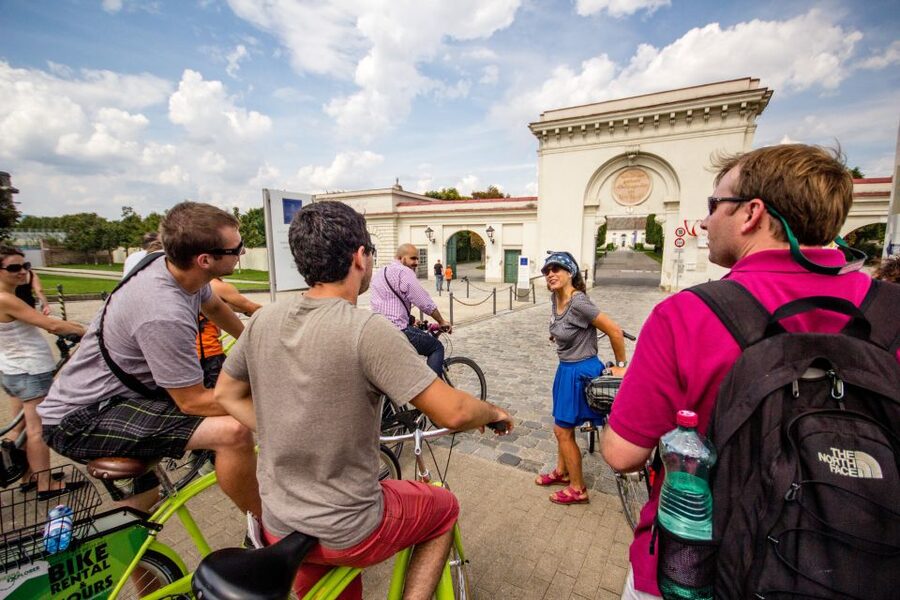
After the big visual payoff at Prater, you pedal back along the banks of a sidearm of the River Danube (the tour specifically mentions the Danube canal). This portion feels like a reward: you’ve done the highlights, now you get a smoother stretch to absorb the city.
It’s also a practical cycling moment. By the time you reach this area, you’re likely warmed up, familiar with the bike, and riding feels natural. Several guides described safe, leisurely routes, and that matches what you’d want in a ride that’s both scenic and educational.
How long is this, really, and how much work it feels like
This tour is 3 hours, which is enough time to see multiple major districts without turning your day into a full-day marathon. If you’re trying to get your bearings fast, this kind of guided cycle loop is efficient.
Some feedback mentioned routes running over 10 km, which gives you a clue that you will feel like you rode. At the same time, other notes emphasize the route is set up with bike lanes and tends to feel manageable; one review called it largely flat ground.
Your exact energy level will depend on how much you stop for photos and how your group moves, but the structure is designed to balance riding time with breaks. That balance is a big reason this tour gets such high marks.
Price and value: is $55 for 3 hours a fair deal?
At $55 per person for a 3-hour guided bike tour, the value comes from three things you don’t have to plan yourself: a modern city bike, a guide (English and German-speaking), and a route that stitches together major sights safely.
If you priced this out as bus/subway hopscotch plus bike rental plus someone to explain what you’re seeing, the total usually grows quickly. Here, the guide function is doing heavy lifting: turning landmarks into understanding, not just scenery.
Also, the tour includes rain ponchos in wet conditions. That small detail can save your day when Vienna decides to test your umbrella habits.
In short: if you want an efficient first-day orientation to imperial Vienna plus a fun architectural stop, $55 is a solid “buy time” option.
Guides make or break it: what the best ones do
A bike tour rises or falls on how the guide handles pace, group attention, and storytelling. The feedback for this tour repeatedly points to guide energy and careful group management.
Examples you’ll see in the guide patterns:
- Lisa stood out for enthusiasm, humor, and keeping people enjoying the ride even with weather changes.
- Marco was praised for detailed answering of questions and entertaining delivery.
- Horst was described as funny and consistently sharp on facts, plus good after-tour recommendations.
- Wenke and Clemens were noted for informative guidance and taking care of the group.
- Robert and Marko came up for a balanced style that covered politics and daily-life snippets without turning into overload.
Even when weather interrupt issues popped up, people reported quick fixes and good follow-through. That tells me the company tries to keep the experience running smoothly rather than shutting down when conditions change.
Weather reality: how the tour handles rain
The tour operates in all weather conditions. If it’s wet, you’ll get rain ponchos. That doesn’t make rain fun, but it reduces the risk that your whole plan collapses.
If you’re traveling in shoulder season, pack comfortable clothes and expect you’ll be wearing a poncho for at least part of the ride. The bike route and short stops help you keep moving instead of getting stuck under umbrellas.
One small mental shift: treat this tour as a city ride first, museum plan second. That mindset makes the weather less stressful.
Who this tour is best for
This is a strong pick if:
- you want a first-day or first-half-day overview of central Vienna
- you like architecture, but also want the city to feel alive
- you’d rather spend 3 hours moving and learning than standing in a line somewhere
- you’re comfortable biking in normal urban traffic-adjacent settings (helmets are provided, and routes are described as safe and well-surfaced)
It’s also a good family option in practice. One review mentioned the guide being patient with a 12-year-old trying wheelies—proof that the group can include energetic riders without the vibe going sour.
Should you book Vienna by Bike’s 3-hour tour?
I’d book it if you want an efficient Vienna highlight circuit that still feels human: paced riding, real landmarks, and enough stops to connect the story. The combination of imperial boulevards, the serious history stop at Heroes’ Square, and the playful turn at Hundertwasserhaus makes the tour more than just a scenic loop.
Skip it only if you want deep museum time or long quiet contemplation at one site. This tour is designed for motion and context, not for lingering.
If you have limited time in Vienna, this is one of the easier ways to get your bearings fast while still leaving room for the rest of your day.
FAQ
What is the duration of the Vienna by Bike tour?
The tour lasts 3 hours.
How much does it cost?
The price is $55 per person.
Is the tour offered in English?
Yes, the live guide leads in English (and the guide is also described as German and English-speaking).
Where do I meet the guide?
Meet your guide at Franz Josefs Kai, 45, 1010 Vienna.
What subway station is closest to the meeting point?
The nearest subway is Schottenring (lines U4 and U2).
Does the tour run in bad weather?
Yes, it operates in all weather conditions.
Are rain ponchos provided?
Yes. Rain ponchos are provided in wet weather.
What should I bring?
Wear comfortable clothes.
What’s included in the tour?
You get a comfortable modern city bike and a live guide.
Is there free cancellation?
Yes. You can cancel up to 24 hours in advance for a full refund.
Is pay later available?
Yes. There is a reserve now and pay later option, so you can book and pay nothing today.