REVIEW · VIENNA
Vienna Small Group E-Bike Tour
Book on Viator →Operated by Vienna Explorer · Bookable on Viator
Kahlenberg views, powered by pedal strokes. This Vienna small-group e-bike ride is a smart way to see more than the city center: you glide along the Danube Canal toward quiet bike routes, then earn a big panoramic payoff at Kahlenberg. I love that the route mixes famous Vienna sights with greener, calmer stretches where you can actually feel the city at bike speed.
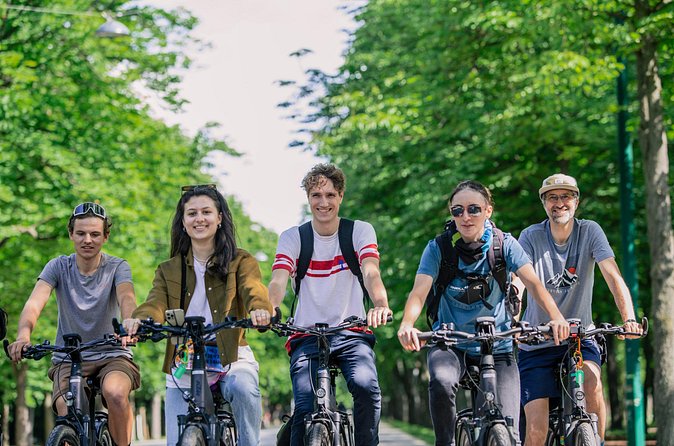
What you’ll likely love next is how the electric assist changes the whole experience. You get a comfortable fatbike setup, you’ll stop for food along the way, and the guide keeps the group moving at an easy-to-manage pace for a group of up to 12. One consideration: this tour is recommended for experienced riders, and fat e-bikes can feel heavy when you need to stop, maneuver, or walk the bike around.
Key things I’d bet you’ll care about
- Small group (max 12) means less waiting and easier “keep up” pacing
- Electric fatbikes help you tackle hills like Kahlenberg with less strain
- Danube Canal + Donau Island area give you a break from traffic and a different view of Vienna
- Bratwurst and radler stop is built into the experience, not tacked on at the end
- Major sights from a bike lane like the Ringstrasse and Hundertwasserhaus keep it varied
- Helmets and guide support make this feel more like a guided ride than a self-tour
In This Review
- Meeting Vienna Explorer and Getting Comfortable on Fat e-Bikes
- Danube Canal to Kahlenberg: the View That Makes the Whole Ride Click
- Prater, Belvedere, and Ringstrasse: Big Sights Without the Tour-Bus Feel
- Belvedere Museum Area Stop
- Prater Park Stop
- Ringstrasse Viewing Stop
- Donauinsel Bratwurst and Radler: the Most Viennese Break on Two Wheels
- Hundertwasserhaus and the Color-Coded Side of Vienna
- Pace, Distance, and Skill Level: Why This One Isn’t for Everyone
- Price and What $77.89 Actually Buys You in Vienna
- Weather, Stops, and Real-World Expectations (Snacks, timing, and photos)
- Should You Book This Vienna Small-Group E-Bike Tour?
Meeting Vienna Explorer and Getting Comfortable on Fat e-Bikes
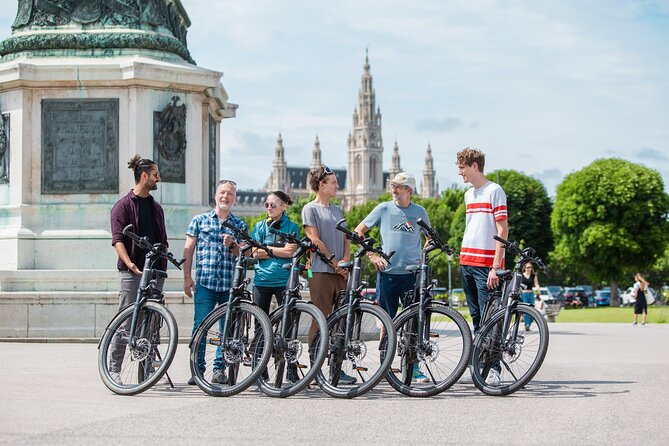
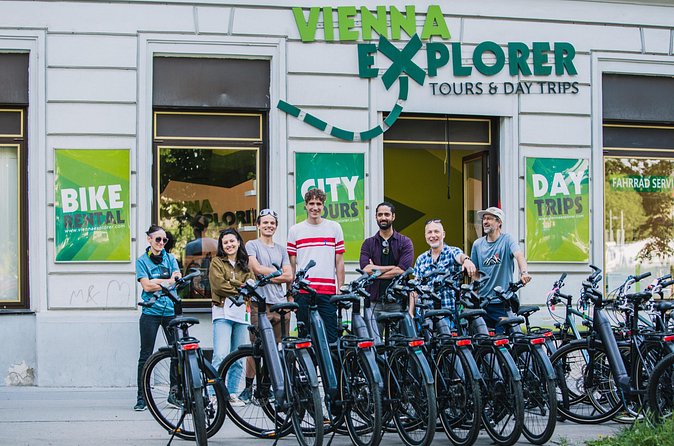
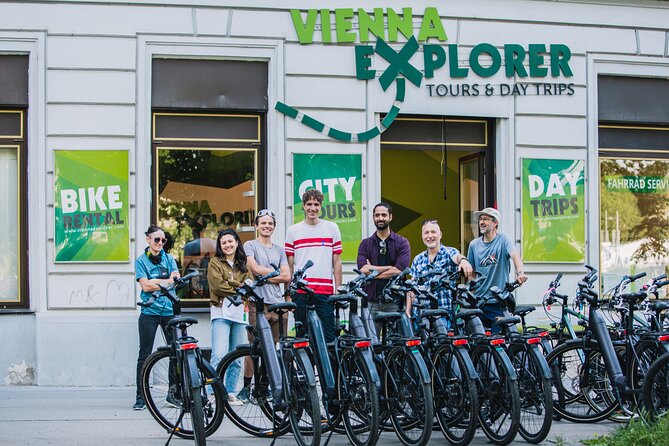
You meet at Vienna Explorer at Franz-Josefs-Kai 45, 1010 Wien. It’s central, and the tour notes that it’s near public transportation, so you’re not stuck planning a whole day around a specific ride pickup point. You also get a mobile ticket, which is handy in a city where you’ll be bouncing between trams, trains, and walking.
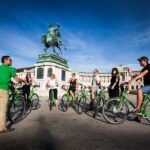
Before you go anywhere, you’ll do two essential things: you get fitted with the bike and you learn how the electric assist works. That step matters more than you might think. On a normal bike, you can feel every hill and every headwind. On an e-bike, you still feel the road, but you can choose how hard you want to work—especially on the longer, slightly rolling segments.
The bike itself is a fatbike-style e-bike. That usually means stable and grippy, great for comfort and control on mixed surfaces. But it can also mean the bike feels bulkier than a skinny-tire city bike when you’re standing still. One practical tip from the vibe of past rider experiences: practice a smooth start and controlled stopping before the group rolls forward, so you don’t get surprised by weight when you’re trying to move the bike around the parking area or at a stop.
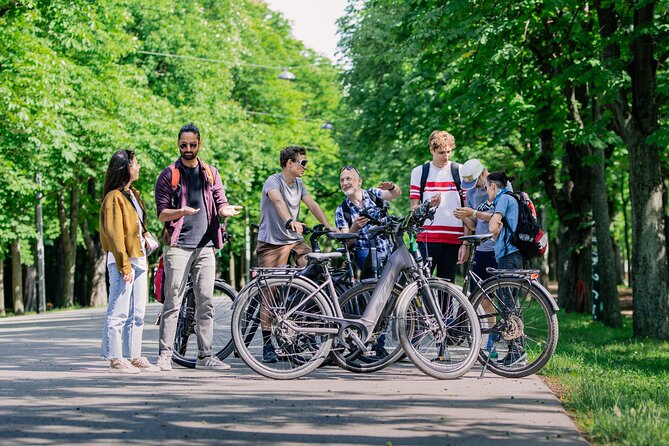
You’ll ride with a local guide in English, with a group size capped at 12 travelers. In the comments from named guides like Robert, Karl, Horst, Jaime, Sina, Taz, Miguel, and Paul, the common thread is that the best moments often come from the guide’s explanations and the pacing choices—so pay attention during the orientation. If you’ve been off a bike for a while, I’d plan on an early calm mindset. The tour is built for you to enjoy the ride, not battle it.
Danube Canal to Kahlenberg: the View That Makes the Whole Ride Click
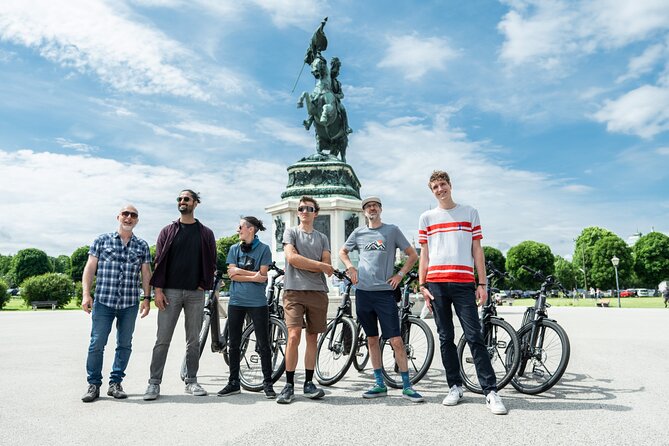
The heart of this experience is the route that pushes you out of the usual “walk-and-stop” rhythm. From the central meeting point, you’ll follow the fortified walls of the Danube Canal and work your way up toward Kahlenberg, Vienna’s tallest hill. The key here is that the e-assist helps you climb without arriving at the viewpoint looking like you just finished a marathon. You still pedal, but the power smooths the effort.
Once you get to Kahlenberg, you’re there for a reason: you get a panoramic overview of Vienna. This is one of those places where the bike tour format beats the bus format. On a bus, you look. On a bike, you arrive as part of the view—plus you can take in the green stretches and river angles that you’d miss on a quick drive-by.
You’ll also have a light break and snack time at the top. That matters because you’re not just burning energy to “reach the top.” You’re also learning the city’s geography by watching it. In Vienna, where districts can feel disconnected when you’re walking, that “from-here” perspective is a big part of why this tour works.
Then comes the payoff: the route continues downhill toward quieter areas (including the direction of Nussdorf). This is a real advantage for tired legs. After climbing, the downhill segments help you reset—so you can enjoy the ride instead of just surviving it.
You can also read our reviews of more tours and experiences in Vienna.
Prater, Belvedere, and Ringstrasse: Big Sights Without the Tour-Bus Feel
After the hill and early Danube-area momentum, the tour shifts into classic Vienna territory. Expect guided sight stops where you’ll get time to look, take photos, and connect landmarks with the neighborhoods you’re riding through.
Belvedere Museum Area Stop
One of the stops is Schloss Belvedere, a baroque palace complex made up of the Upper and Lower Belvedere in a landscaped park. You’ll have about 30 minutes there. Admission is not included, so this is mostly a “see the place and enjoy the grounds” moment rather than a full museum day. Still, it’s a strong choice because the palace architecture looks good from angles you’d never bother seeking on foot.
If you do care about art museums, plan around your own pace: with a limited stop time, you’ll likely choose either quick exterior views and park time, or buy museum tickets if you want to go deeper. Either way, the bike tour keeps it from turning into a long waiting line day.
Prater Park Stop
Next is Prater, one of Vienna’s big public parks. It’s scheduled for about 30 minutes, and admission is free. Prater is famous for its recreation and its iconic Wiener Riesenrad Ferris wheel. Even if you don’t go up in the wheel (tickets would be on your own), the park stop gives you a breather. You get the feeling of locals using space for strolling and hanging out—not just sightseeing on rails.
Ringstrasse Viewing Stop
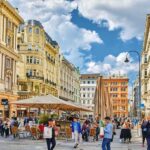
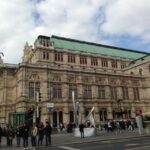
Then you ride into Ringstrasse, the grand boulevard that circles the historic center. You’ll have around 30 minutes here, and many major landmarks are along that ring—places like the Vienna State Opera, Hofburg Palace, and the Austrian Parliament Building. From a bike, this works well because you don’t have to crane your neck while standing in one spot. You’re moving slowly enough to take it in, but you’re still getting the sense of the boulevard’s scale.
This combination—Belvedere, Prater, Ringstrasse—does something useful for your trip planning. It shows you what Vienna looks like both when it’s formal and monumental and when it’s everyday and park-based. If you like city variety, this is one of the tour’s strengths.

Donauinsel Bratwurst and Radler: the Most Viennese Break on Two Wheels
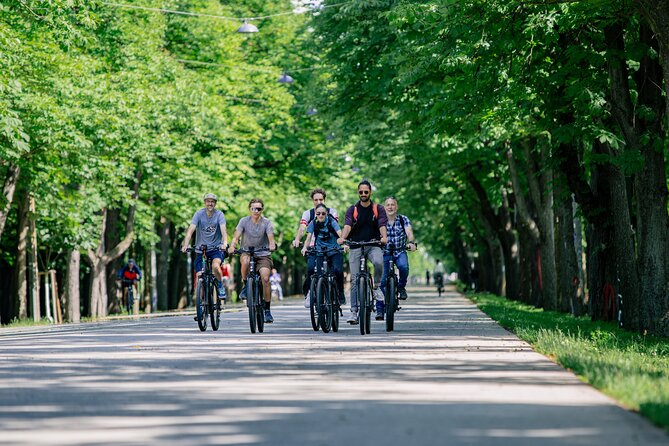
The most “you are actually in Vienna” moment is the stop at Donauinsel (the Danube Island area). You’ll spend about 1 hour there, and it’s described as a place where Vienna’s recreational life shows up strongly in summer—people hang out, and if conditions are right, you might even cool off.
The standout detail: a traditional Austrian biking snack, typically bratwurst plus a radler. A radler is that classic mix of lemonade and beer, and it’s a great choice after time on the bike because it’s refreshing without being a heavy meal.
From a value perspective, this stop is doing more than feeding you. It turns the ride into a mini-culture lesson. You’re not just cycling past food. You’re stopping in the right setting, where the smell of grilled sausage and the casual island vibe make sense. That’s the kind of memory that sticks longer than a single photo.
That said, keep one expectation balanced: some riders have flagged that included items like snacks or drinks don’t always show up exactly as described, especially when it’s busy or when weather runs hot. My practical advice is simple: if something is supposed to be included, check early. Ask the guide at the beginning or immediately at the next stop so you can get sorted without waiting until the end.
Hundertwasserhaus and the Color-Coded Side of Vienna
Toward the end of your route, you’ll stop at the Hundertwasserhaus. This is the apartment building designed by Austrian artist Friedensreich Hundertwasser, known for its unusual shapes and the way nature is mixed into the architecture. Expect time for photos and a close-up look at the design features described for this building—undulating floors, a rooftop covered with earth and grass, and trees growing from inside.
You’ll have about 30 minutes here, and the stop is free in terms of admission. The bike tour approach helps because you’re not just getting a quick drive-by view. You get time to walk around your chosen angle, see how the colors and forms break the normal “Vienna is all straight lines” perception, and then get back on the bike while your brain is still fresh.
This stop also gives the ride a nice contrast. After major boulevards and formal palace spaces, Hundertwasserhaus feels like Vienna with its elbows out. It’s playful, weird in a good way, and it makes the whole tour feel less like a checklist.
Pace, Distance, and Skill Level: Why This One Isn’t for Everyone
The tour covers about 21 miles (35 kilometers). The description says 3 hours approx., and other parts describe it as closer to a four-hour experience. Either way, you’re looking at a meaningful chunk of time outside, on a bike route, with multiple stops.
Fitness-wise, the tour notes moderate physical fitness and says it’s recommended for experienced riders only. That recommendation isn’t there to be picky. It’s there because e-bike fatbikes still require basic control skills—especially around traffic-free intersections, quick turns, or when you need to stop smoothly and get moving again with a heavier machine.
A few practical pacing notes to keep you comfortable:
- If you haven’t ridden much lately, I’d plan for extra attention during the fitting and assist instructions.
- Fat e-bikes can feel harder to handle if you need to walk them. Get your footing and practice slow maneuvers early.
- You can ask for your preferred pace. Some guides are described as flexible, including accommodating riders who want to go slower and avoid big climbs.
Also, the tour is designed as a small-group ride. That means you’ll likely move together, and the guide will manage the group so nobody gets left behind. The tradeoff is you may not get endless wandering time at every stop, so treat each stop as a “best use of time” moment rather than a free-form city exploration.
Price and What $77.89 Actually Buys You in Vienna
At $77.89 per person, you’re paying for more than a bike. You’re paying for:
- A professional local guide
- Bike and helmet
- Route planning that connects major sights with river-and-park sections
- Snacks and beverages included as described (including the bratwurst and radler-style pause)
For a city like Vienna, where walking can eat your day and transit between districts adds friction, the value is in efficiency. You’re getting a broad overview: classic monuments, palace territory, a big park break, and a Danube Island moment—all in one ride. The e-bike component also helps you keep your energy for later museum time, dinner, or a night stroll.
Is it a bargain if you only care about one or two landmarks? Probably not. If your goal is a city-wide orientation that feels active, the price starts to make sense. You’re not just paying for “getting from A to B.” You’re paying for the way the ride stitches together Vienna’s layout—particularly the way the Danube green spaces reshape the city’s mood.
My take: for first-timers who want a guided overview, this price sits in the reasonable zone. For people who want a deep museum day, you’ll likely want to pair this with separate ticketed time at places like Belvedere.
Weather, Stops, and Real-World Expectations (Snacks, timing, and photos)
This experience requires good weather. If conditions aren’t right, you’ll typically be offered a different date or a full refund, based on the tour’s stated policy.
Even with good weather, expect that the “flow” of time can change. Your route includes multiple stops (Belvedere, Prater, Donauinsel, Ringstrasse, Hundertwasserhaus), and the pace depends on how quickly the group rolls, how long people take at photo points, and how breaks are handled.
Here’s the balanced way to plan:
- If you want lots of photos, build that into your mental schedule. Some stops are short by design, especially near the center.
- If you’re picky about included food items, confirm quickly at the relevant point. There have been mismatches reported for included items like drinks and other small extras, even though the core snack idea is consistent.
- Bring a sporty attitude. The tour asks for sporty, active dress, and that’s correct. You’ll be outdoors and moving.
The big upside is that small-group cycling tends to feel more human than bus tours. When it’s going well, you’ll remember the combination: the river air, the quiet bike lanes, the hill view, then the classic Vienna snack stop.
Should You Book This Vienna Small-Group E-Bike Tour?
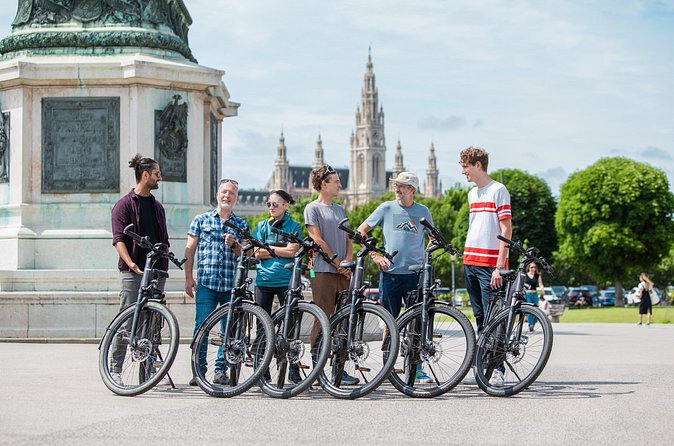
Book it if you want:
- A high-effort, low-stress way to see Vienna beyond the immediate old center
- A Danube-heavy experience with a real sense of parks and river life
- An active introduction that helps you place major sights like Belvedere, Ringstrasse, Prater, and Hundertwasserhaus on a mental map
- A local guide experience in English, where named guides like Robert, Karl, Horst, Jaime, Sina, Taz, Miguel, and Paul have been singled out for making the ride fun and informative
Skip it (or at least rethink it) if:
- You don’t feel confident riding a bike for a sustained time, even with electric assist
- You expect long, unstructured museum-style stops at every major attraction
- Your schedule is extremely tight and you need guaranteed exact minutes for every photo
If you’re open to a guided ride that trades “museum depth” for “city overview,” I think this is a strong Vienna choice. It’s one of those tours where the best part is not any single stop—it’s how the route teaches you how Vienna spreads out from the center, especially along the Danube.