REVIEW · PARIS
Best of Paris Bike Tour
Book on GetYourGuide →Operated by Blue Fox Travel · Bookable on GetYourGuide
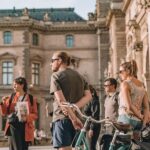
Paris looks different when you’re pedaling. This Best of Paris Bike Tour stitches together the city’s biggest landmarks in one relaxed half-day ride, with stop-and-stories guidance from locals like Irving. I really like how the route is built for time: you cover serious ground without feeling rushed.
Two things I value a lot: the insider shortcuts and timing tips (like a Louvre entry move that can save hours of waiting), and the personal feel of a small group guided experience. Guides such as Joe and Aaron have a way of making stops feel useful, especially for first-timers.
One consideration: Paris traffic can be chaotic, and you’ll want to stay sharp the whole time. The guide helps with safety and pace, but this tour still asks you to ride attentively on real streets.
In This Review
- Key things I’d plan around
- Why the Best of Paris Bike Tour is such a smart first move
- Meeting at Fontaine Saint-Michel: start easy, stay oriented
- Notre-Dame area to Musée d’Orsay: a classic Paris intro with quick context
- Down the Seine and over Pont Alexandre III: views that are hard on foot
- Place de la Concorde setup: Eiffel Tower views without the full-tour crush
- Champs-Élysées to the Louvre: the glass pyramids and the timing tip
- The Rue Cler snack break: a pause that keeps the tour human
- The bike setup and pacing: comfortable wheels, real streets
- What to watch for: hearing the guide in busy areas
- Who this tour is best for (and who might want a different option)
- Should you book the Best of Paris Bike Tour?
- FAQ
- How long is the Best of Paris Bike Tour?
- How much does it cost?
- Where do we meet the guide?
- What’s the closest public transit stop?
- Are food and drinks included?
- Are the bikes e-bikes?
- What’s provided for weather?
- Is the tour guide English-speaking?
Key things I’d plan around
- Louvre time-saver included: you’ll learn a practical way to reduce long waits later.
- Seine + bridge views: you get landmark photos without treating them like a parking lot.
- Small-group guidance: frequent stops and short explanations keep the tour from feeling like a bus.
- Weather support: rain gear, warm gloves, and a scarf are provided if conditions call for it.
- Not an e-bike: it’s a real bike (single gear), but the route is mostly manageable.
Why the Best of Paris Bike Tour is such a smart first move
If Paris is your first stop on a European trip, this is the kind of activity that gives you a working mental map fast. In about four hours, you hit the places you’ll see in postcards and then learn how they connect on the ground.
I like that it’s not just a highlight reel. You also pick up practical tactics for later wandering, like where to go for the easiest Louvre entry path so you don’t burn half your day in a line.
The tour is priced at $53 per person, and that price makes sense when you compare it to what you’d spend on multiple separate attractions plus time lost to transit and queues. Here, the bike acts like the “transport ticket,” and the guide acts like the time-saving filter.
You can also read our reviews of more tours and experiences in Paris.

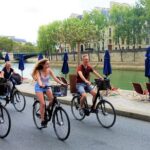
Meeting at Fontaine Saint-Michel: start easy, stay oriented
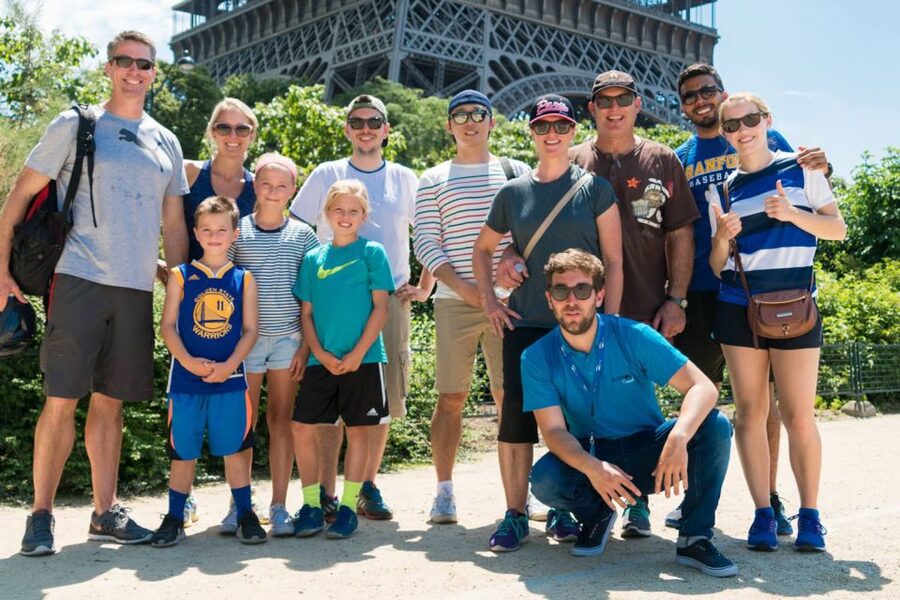
You meet your guide by Fontaine Saint-Michel in central Paris, looking for a guide standing next to a bright blue bike. The area is convenient because it’s well connected by transit, so you’re not stuck solving complicated local navigation before you even ride.
The closest stops listed are Saint-Michel-Notre-Dame (Metro line 4 and RER line C) and Cluny (Metro line 10). In summer, there can be maintenance on the RER C route through central Paris, so it’s worth planning your approach using the Metro line 4 or line 10 if needed.
The practical takeaway: give yourself a few extra minutes at the meeting point. Even in a busy area, the bike color and guide position make it fairly straightforward once you’re there.
Notre-Dame area to Musée d’Orsay: a classic Paris intro with quick context
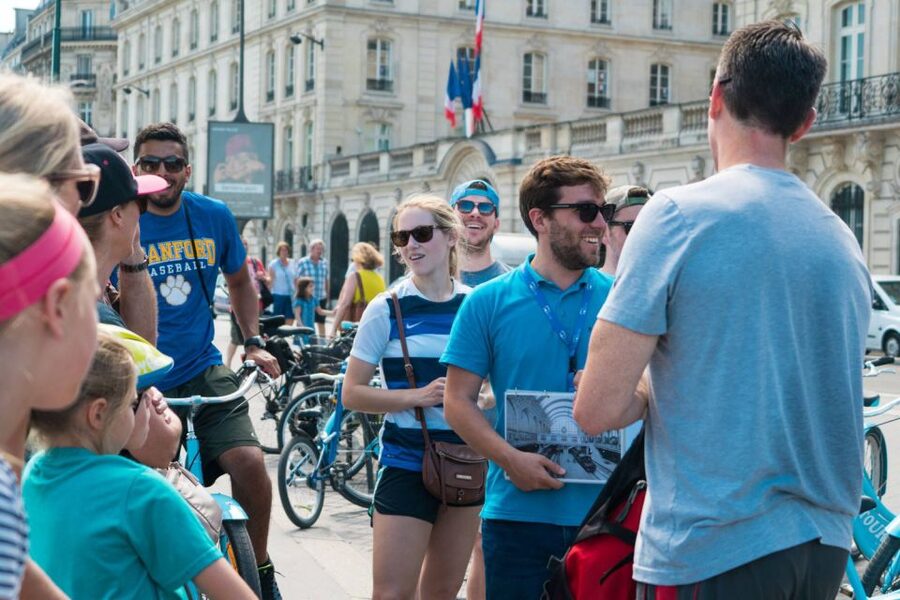
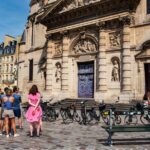
The ride starts with a warm, central feel—very “Paris on wheels.” You’ll make stops around Notre-Dame Cathedral and then continue toward the Musée d’Orsay.
What makes this section work is the rhythm: short bike moves, then time at the viewpoint while the guide puts the sights into context. This is especially helpful around Notre-Dame, where it’s easy to stare at the front and miss the reason the area matters historically and visually.
At Orsay, the emphasis is more than “here’s a museum.” The guide explains the impressionist angle so the building and collections feel less abstract when you later decide whether you want to book time inside.
A small drawback to know: you’ll be moving through active city space. Keep your phone stored while you’re cycling, and plan for photos at stops rather than mid-turns.
Down the Seine and over Pont Alexandre III: views that are hard on foot
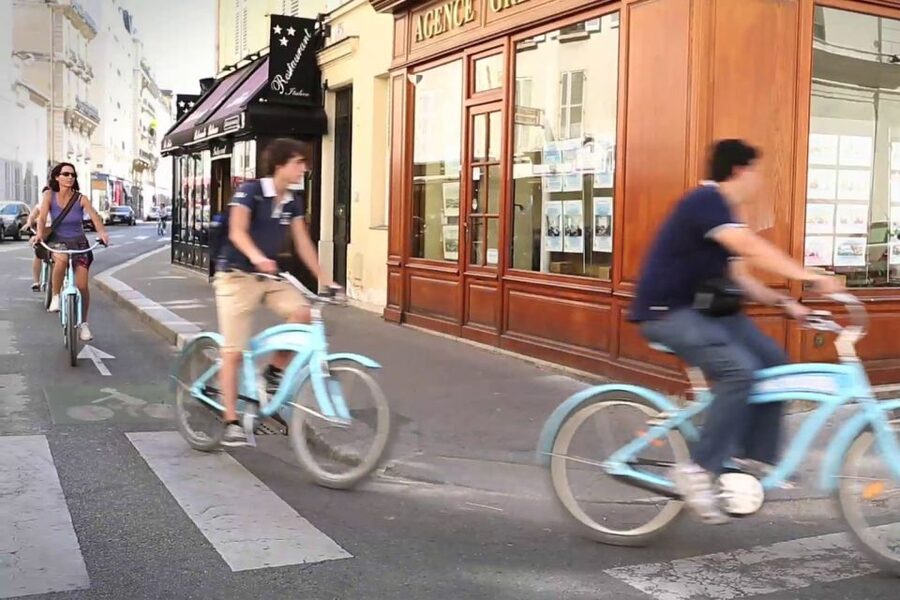
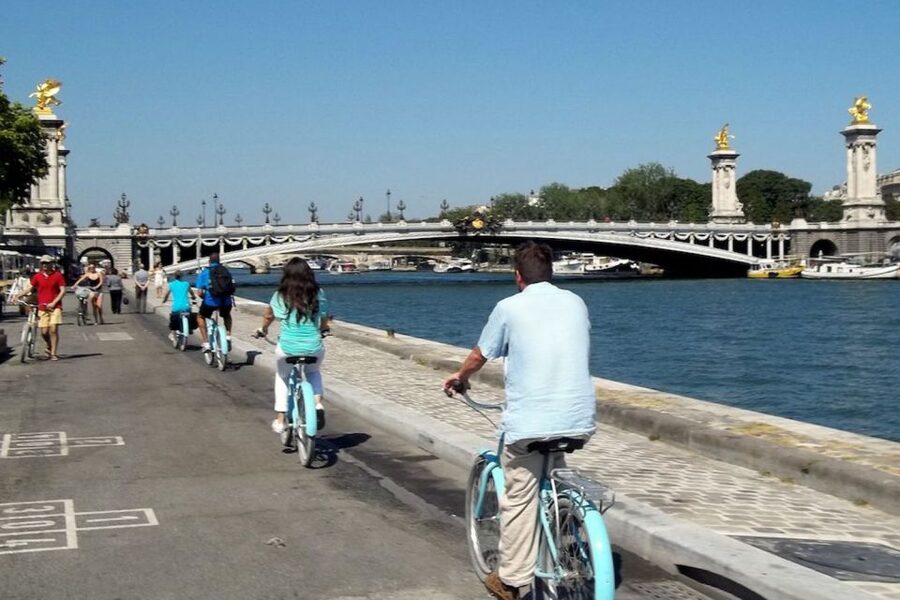
This is one of the tour’s biggest advantages: you ride along the banks of the Seine and pass iconic viewpoints with a sense of flow. On foot, the same areas can feel like you’re squeezed between crowds. On bike, you move through the scene instead of battling it.
A key moment is the stop at Pont Alexandre III, where you get a wide, postcard-friendly look that’s hard to reproduce quickly from sidewalks. The guide also ties these bridges and river bends into the broader story of how Paris grew and why these locations became ceremonial and cultural magnets.
If you like photos, bring a lens-friendly plan: take your main shot when you stop, not when you’re rolling. Road noise and traffic can make it tough to hear every detail, so think of the narration as the “bonus layer” rather than the whole experience.
Place de la Concorde setup: Eiffel Tower views without the full-tour crush
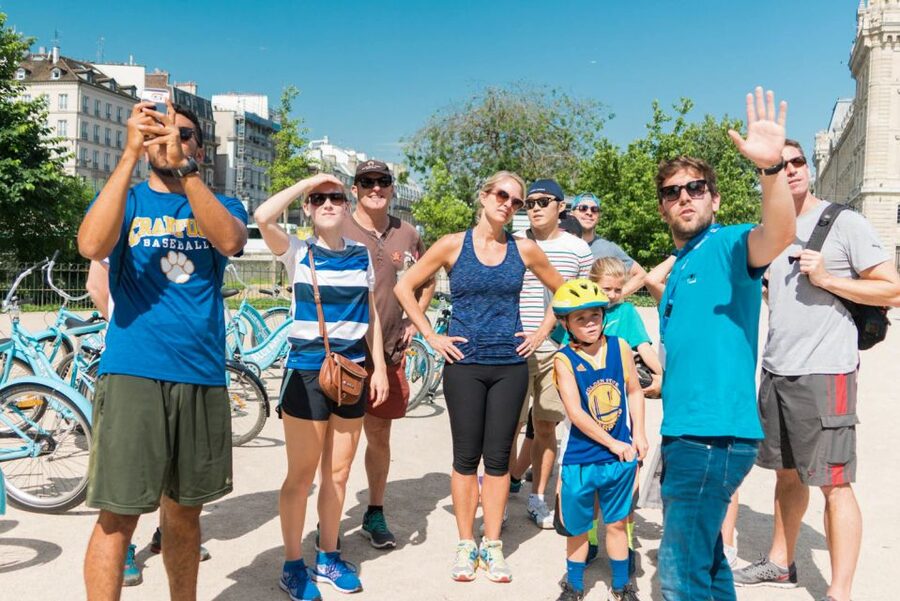
After the river and bridge sequence, the route continues through the area around the Army Museum, then heads toward the big skyline markers.
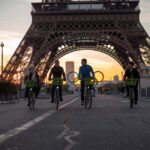
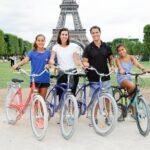
When you reach the Eiffel Tower area, the tour is set up to help you see the tower as part of a wider composition, not as a single isolated stop. You’ll also pass by Grand Palais and make your way toward Champs-Élysées, which means you’re getting the grand-axis feel of Paris as you ride.
Then comes a standout viewpoint: the tour gets you into the middle of Place de la Concorde for the amazing view toward the Champs-Élysées and the Arc de Triomphe. This is one of those moments where being on bike helps you position yourself for the scene without spending extra time crisscrossing streets.
One more practical note: this part of Paris can feel intense while you’re riding. Keep the distance the guide asks for, avoid sudden swerves, and let others pass when you need to.


Champs-Élysées to the Louvre: the glass pyramids and the timing tip
The tour’s later stretch is where you start seeing how Paris is layered. As you move toward Place de la Concorde and then toward the Louvre Museum, you’re not just approaching a building—you’re entering a zone where routes, entrances, and lines matter.
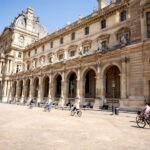
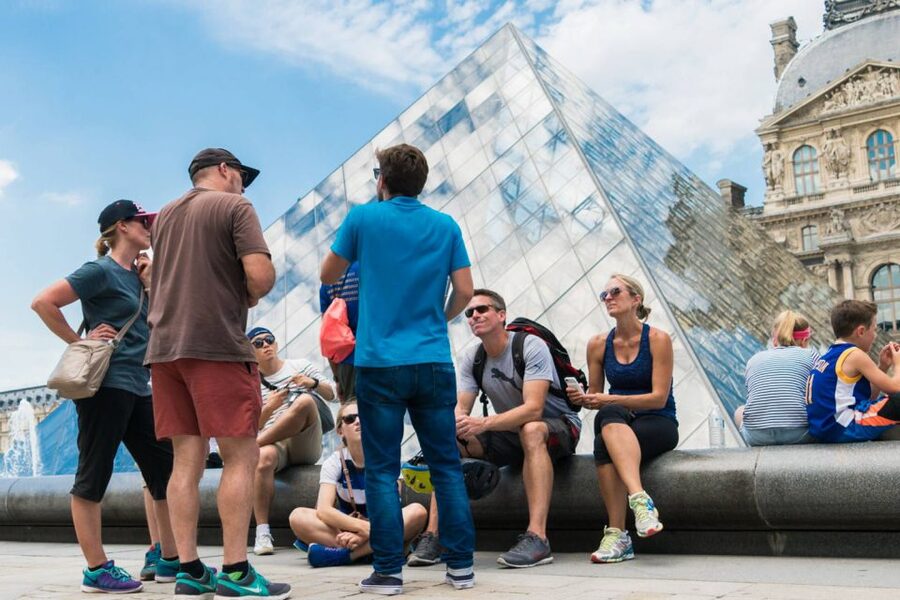
The highlight is the Louvre courtyard area where you cycle around the glass pyramids. It’s a great photo opportunity and a strong way to understand the layout before you ever decide to go inside.
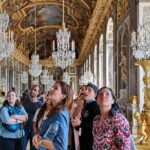
But the most valuable piece here is the guide’s insider knowledge about the Louvre shortcut that can save you about two hours of waiting. That’s the kind of tip that changes your entire day. Instead of spending your limited time standing still, you can trade that time for an extra gallery wing, a longer lunch, or a less-stressed museum visit.
If you plan to see specific things at the Louvre, use this tour to build a route in your head. You’ll likely feel more confident picking what to prioritize afterward.
The Rue Cler snack break: a pause that keeps the tour human
This tour includes a break built for energy, not for stopping just to stop. You’ll have a chance for a snack break at the Rue Cler outdoor market, with about half an hour to explore stalls and try local treats.
Food isn’t included, so you’re choosing your own snack and setting your own vibe. But the value here is that you’re in a lively spot with options, and you’re not scrambling later to find something convenient.
In hot or rainy weather, this break also helps reset the group. Guides tend to use that half hour to get everyone back together and ready for the final stretch.
The bike setup and pacing: comfortable wheels, real streets
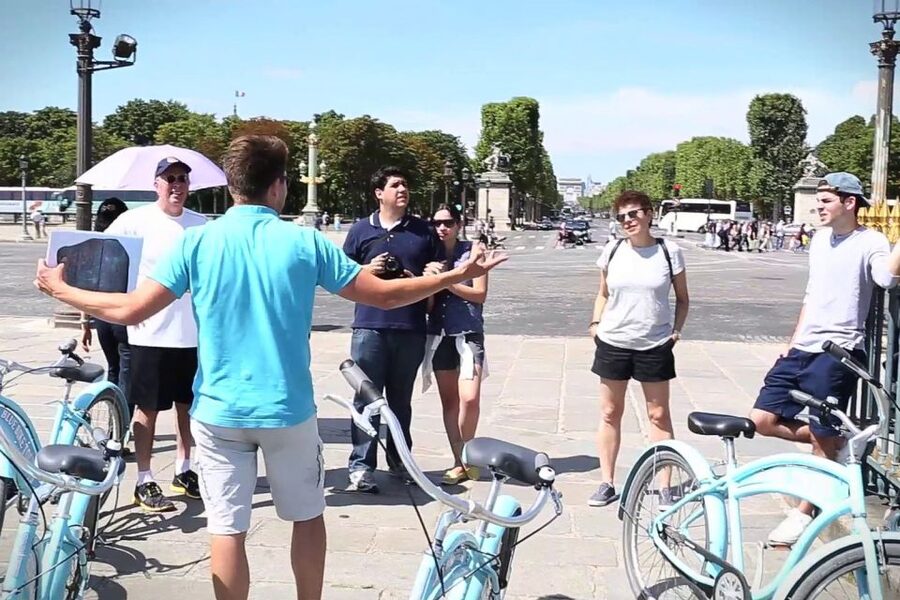
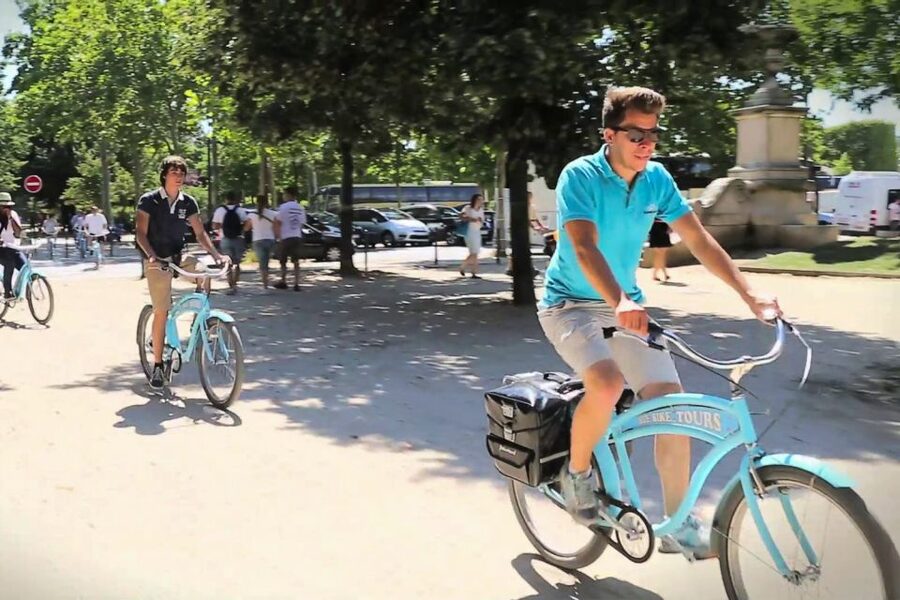
You ride a comfortable aluminum-framed bike with a helmet. If the weather turns, the tour includes quality rain gear, plus warm gloves and a scarf when it’s cold.
One detail that matters: the bikes are not e-bikes, and they use a single gear setup. The good news is that the route is mostly manageable on a normal bike because it’s a central Paris loop rather than a long hill climb.
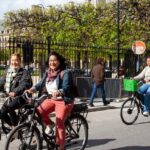
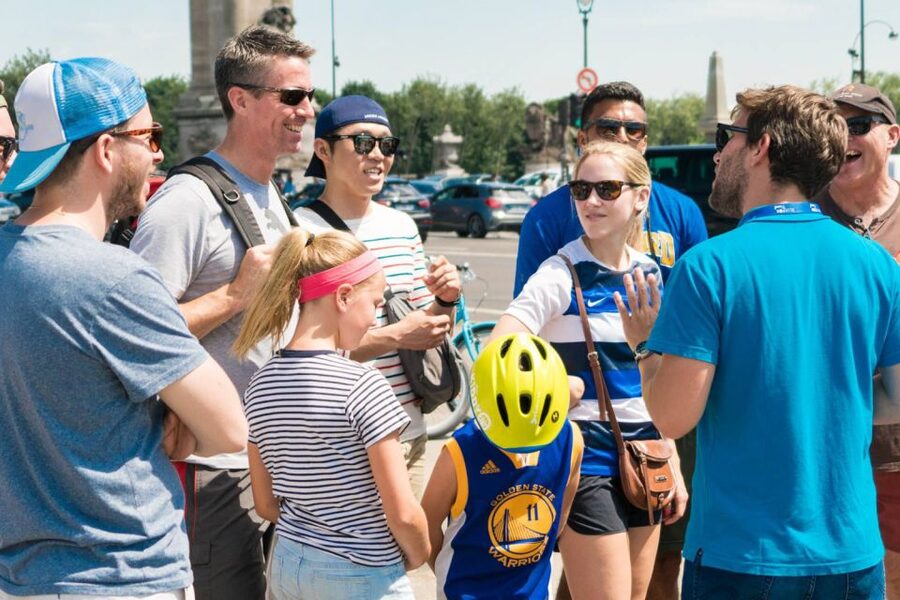
Pacing is built around short rides and frequent stops. In the guide examples shared from real experiences, people like Irving and Joe are repeatedly praised for keeping the group comfortable. Some guides also handle real-world “city weirdness” by making an unplanned stop when something worth seeing pops up.
One more reality check: traffic in central Paris is heavy and chaotic. You should expect to be actively alert, not relaxed like you’re riding a paved park path. The guide helps a lot, but your job is to stay present and follow instructions.
What to watch for: hearing the guide in busy areas
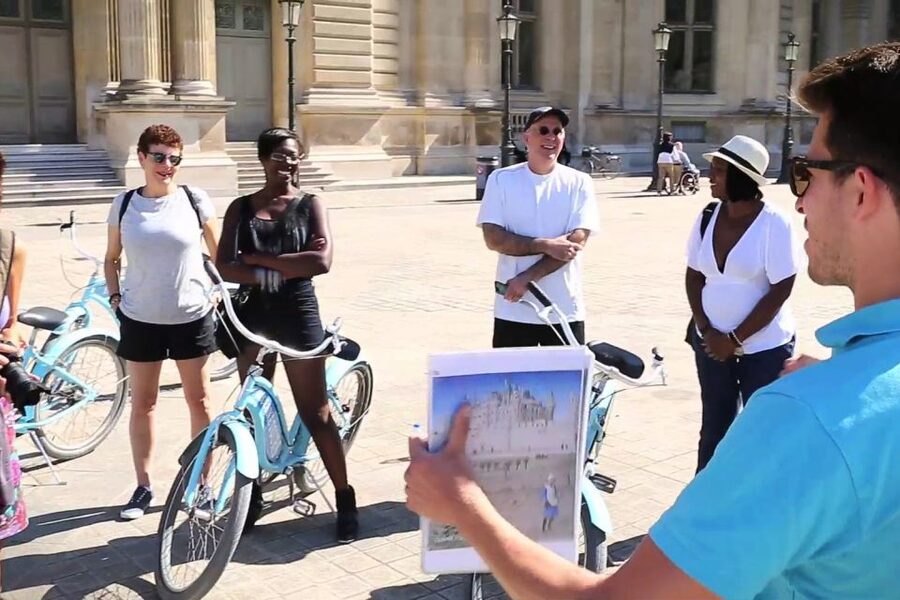
The tour does a lot in four hours, so you’ll spend time in loud places—major intersections, tourist zones, and wide boulevards. In those areas, the guide’s voice can sometimes be harder to catch over street sounds.
So I’d treat the narration as “what you can hear clearly,” then use your photos and quick questions during stops to fill the gaps. The good part is that stops are frequent, so you get multiple chances to ask and reconnect with the story.
Who this tour is best for (and who might want a different option)
This guided bike route is a strong fit if you:
- want to see top landmarks in one morning/afternoon block
- like city context and short explanations at stops
- want a practical first-day plan that reduces decision fatigue
It also works well for families, especially when kids like movement and photo stops. One of the most frequent praises in the experiences shared is how guides manage children thoughtfully and keep them engaged.
You might choose something else if you:
- don’t feel comfortable riding in busy urban traffic
- prefer long museum time over “views and orientation”
- need totally quiet sightseeing where you can take in details without city noise
And remember: you’re not paying for food here. You’ll be stopping for an included break, but you’ll buy what you want to eat during it.
Should you book the Best of Paris Bike Tour?
I’d book it if Paris is new to you and you want a smart “first map” day. For $53 and around four hours, you get a guided sweep through the sites that are otherwise spread across the city, plus practical timing tips you can use immediately—especially the Louvre approach that can save you major waiting time.
I’d skip it if you hate bikes in traffic or you’re aiming for a slow, museum-only day. This tour is about motion, angles, and orientation, with short stops that help you decide what to do next.
If you do book it, plan your day around photos and questions during stops, keep your phone secure while riding, and dress for the forecast—because Paris weather can change fast, even when the schedule stays tight.
FAQ
How long is the Best of Paris Bike Tour?
The tour lasts about 4 hours.
How much does it cost?
The price is listed as $53 per person.
Where do we meet the guide?
Meet your guide in front of Fontaine Saint-Michel. Look for the guide standing next to a bright blue bike.
What’s the closest public transit stop?
The closest Metro stop is Saint-Michel-Notre-Dame (Metro line 4 and RER line C). It’s also near Metro line 10 at Cluny. Note that during summer, RER line C may be undergoing maintenance and not running through central Paris.
Are food and drinks included?
Food and drink are not included. You do get a snack break at the Rue Cler outdoor market where you can explore and try local treats.
Are the bikes e-bikes?
No. The bikes are not e-bikes and use a single gear.
What’s provided for weather?
The tour includes quality rain gear if it rains. Warm gloves and a scarf are provided if it’s cold.
Is the tour guide English-speaking?
Yes, the live tour guide provides the tour in English.