REVIEW · PARIS
Paris: Guided Private E-bike Sightseeing Tour
Book on GetYourGuide →Operated by GO GO TOURS SARL · Bookable on GetYourGuide
Two wheels cut the stress fast. This private e-bike tour lets you roll past Paris icons and calmer neighborhoods with a guide who ties in art, design, culture, and history as you go.
I especially like the mix of big-name sights and everyday Paris. You’ll see the Eiffel Tower area and the Louvre from the bike route, but you also get a look at residential streets and viewpoints most people miss.
One thing to consider: most stops are “pass by” moments, not long, ticket-based visits. If you want hours inside major museums, you’ll need to plan that separately.
In This Review
- Key highlights worth booking for
- Why a 2.5-hour private e-bike tour makes sense in Paris
- Meeting at Go Go Tours Office and getting rolling
- Les Invalides to Pont Alexandre III: where the route shows off big-city architecture
- The Champs-Élysées corridor: Concorde to Vendôme to Louvre views
- Louvre to Arc de Triomphe: Flame of Liberty and the “grand axis” feeling
- Champs de Mars and Eiffel Tower: your final big views without the workout
- Residential Paris design lessons: the part most people skip
- The river break and coffee reset
- Guides make or break the storytelling
- Price and value: what $100 buys you (and what it doesn’t)
- Who should book this e-bike tour, and who should skip it
- Should you book this Paris private e-bike sightseeing tour?
- FAQ
- Where is the meeting point for the tour?
- How long is the Paris private e-bike tour?
- Is this tour private or shared?
- What’s included in the price?
- What language is the live guide?
- What should I bring and wear?
- Is the tour suitable for kids?
- What is the cancellation policy?
Key highlights worth booking for
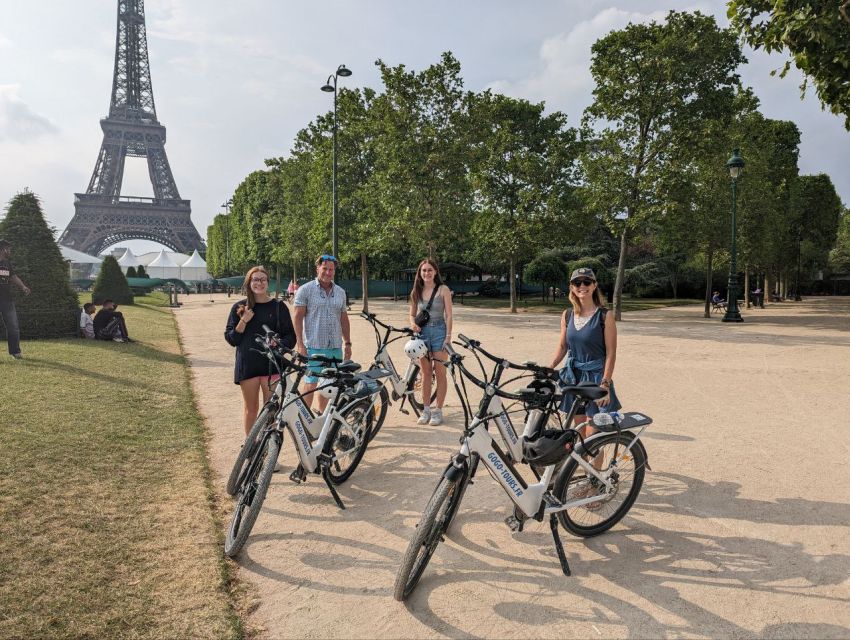
- Effort-light riding: the e-bike keeps the pace comfortable for 150 minutes
- Icon route, smart angles: Eiffel Tower, Louvre, Champs-Élysées, Arc de Triomphe on the move
- More than monuments: you’ll also cycle through picturesque residential neighborhoods with design talk
- River break for recovery: there’s time to pause and grab coffee near the water
- Guide storytelling varies: the best tours depend a lot on your guide’s style and depth
- Small group feel: it’s a private group format, not a crowded mass ride
Why a 2.5-hour private e-bike tour makes sense in Paris

Paris is easy to overplan. You show up ready to see everything, then you spend hours in line-shaped reality. This tour is built to do the opposite: cover a lot of ground quickly, without turning your day into a sore-feet contest.
At $100 per person for 150 minutes, the value comes from what you avoid. You avoid the time cost of walking between far-apart landmarks, and you avoid the energy drain of trying to “power through” the city on foot. The e-bike does the heavy lifting so your brain can stay on sightseeing and the guide’s explanations.
That said, it’s not a museum day. The route is mostly about what you can see from the street—plus short passing moments—so you get breadth more than depth. Think of it as a fast, organized way to get your bearings and find the areas you’ll want to return to later.
You can also read our reviews of more tours and experiences in Paris.

Meeting at Go Go Tours Office and getting rolling
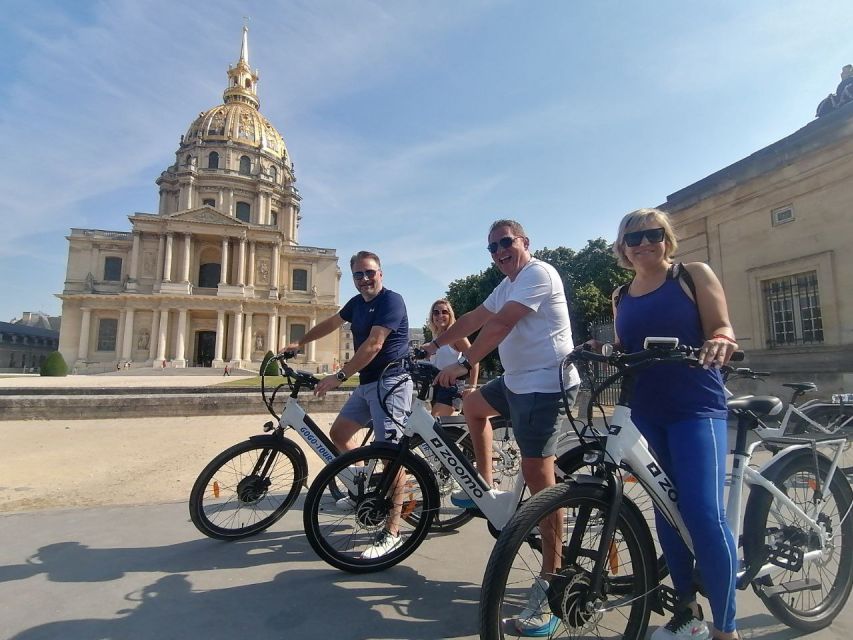
You’ll meet at 101 Avenue Bourdonnais, 75007. From there, expect a quick briefing on the itinerary and how the ride will work. This kind of up-front orientation matters because an e-bike tour is part riding, part navigating. When you know what to expect, you relax.
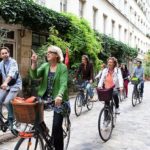
Right away, the big perk is how smoothly you can glide through Paris streets. That matters on a day when sidewalks are crowded and intersections feel like a test of patience. With the electric assist, you can keep a steady pace and actually look around, not just survive the commute.
You’ll also spend time hearing about the city as you ride. This tour is explicitly about learning—not just “look, Eiffel Tower” photo stops. The guide’s job is to connect what you’re passing to the city’s art, design choices, culture, and history so the route feels like a guided story instead of random sights stitched together.
And yes, you’ll likely want comfy clothes. This isn’t formal. It’s practical sightseeing on two wheels.
Les Invalides to Pont Alexandre III: where the route shows off big-city architecture
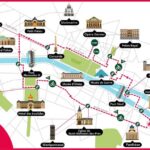
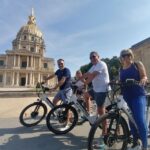
After you start, the tour moves into the central highlights zone. You’ll pass Les Invalides and the Army Museum area, then glide toward Pont Alexandre III.
This stretch is useful because it’s all about scale and sight lines. Even without stopping for long, you get a feel for Paris’s “this is where we flex” energy—large landmark areas and wide views that look great from a bike because you can move smoothly without fighting crowds on foot.
From the Pont Alexandre III area, you’ll pass Grand Palais and Petit Palais. This is a good moment to pay attention to the architectural details the guide points out—these buildings are the kind of places where the art and the stonework are part of the story, not just background.
One small practical note: since you’re passing by, weather can affect how long you linger with your camera. If it’s gray or windy, keep moving, but don’t rush your eyes. A good guide will time explanations so you can listen while also taking in what’s in front of you.
The Champs-Élysées corridor: Concorde to Vendôme to Louvre views
Next, the route threads through some of Paris’s most recognizable showpieces. You’ll pass the Champs-Élysées, Place de la Concorde, and Place Vendôme, then continue toward the Louvre Museum.
This section is classic for a reason. It’s wide, it’s iconic, and it gives you an instant sense of how Paris organizes space around major monuments. Riding here on an e-bike is a cheat code: instead of doing a long walk where you arrive tired, you arrive with energy and a plan.
The Louvre pass-by moment is about seeing the site in context from the street rather than treating it like a separate day. If the Louvre is a top priority for you, you’ll get enough of a visual cue here to help you decide what you want most later—paintings, sculpture, or simply the building and courtyard atmosphere (which you can explore on your own).
As you keep moving, look for how the route sets up sightlines toward the next big landmark. The tour keeps you from getting stuck only in one zone. You get a flow: royal-feeling squares, major avenues, and then the art-and-empire symbolism of the Louvre area.
Louvre to Arc de Triomphe: Flame of Liberty and the “grand axis” feeling
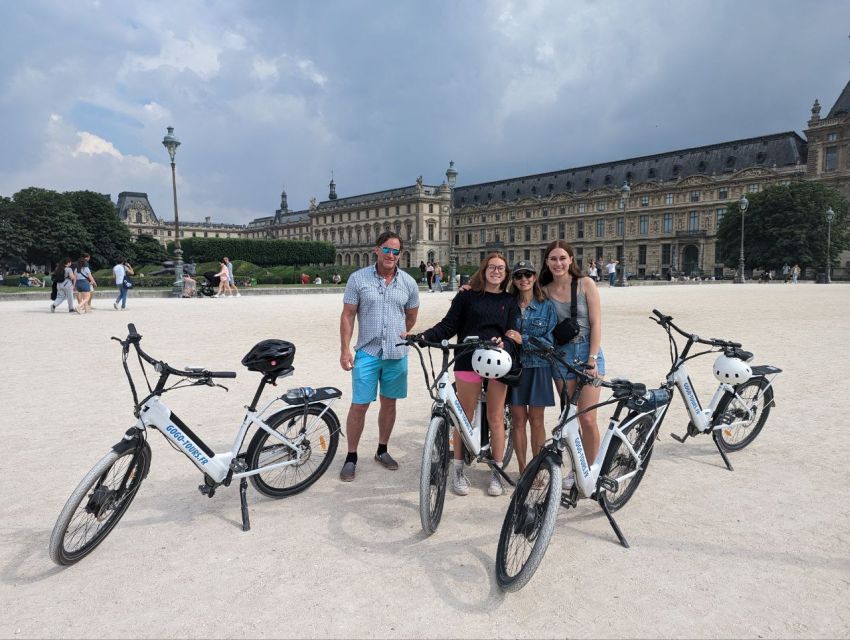
After the Louvre, you’ll pass Flame of Liberty and then continue toward the Arc de Triomphe.
This is the part of the ride where Paris starts to feel more like a designed system than just a collection of famous spots. The guide’s value here is turning what you’re seeing into meaning—how landmarks, public space, and urban planning work together to shape how the city feels.
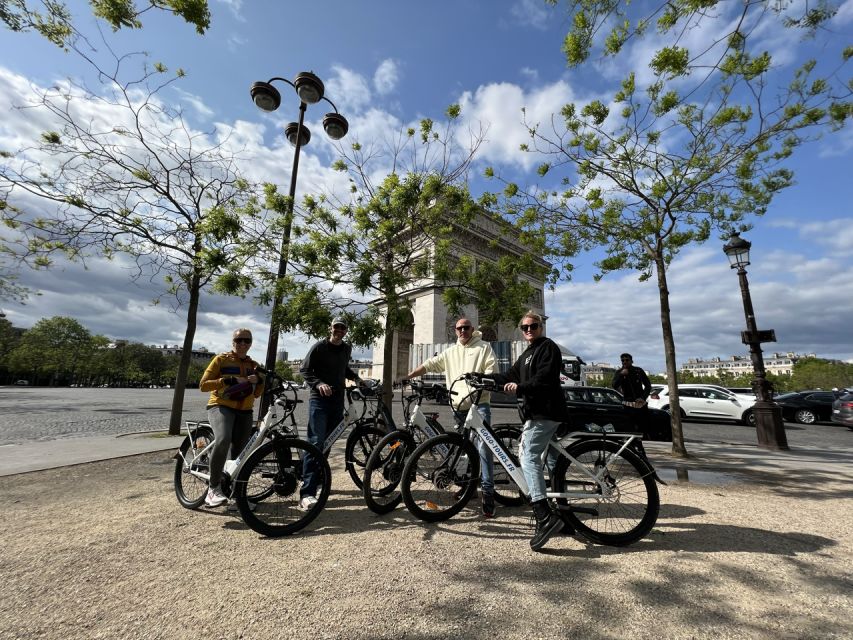
The Arc de Triomphe is one of those places where you’ll notice even small changes in angle from the bike route. You don’t need to stop long to get the scale. If you’re the type who likes to understand why a city looks the way it does, this segment is a strong match: the ride gives you a moving perspective, and the guide can connect it to what Paris chooses to emphasize.
If your main goal is photos, you’ll be happy. If your main goal is story, you’ll be extra happy with the right guide. One review experience highlighted how much better it felt when the guide’s French history framing landed naturally—another experience said a guide relied on memorized dates and filled quiet moments with less relevant info. In other words: this part matters most when your guide can make it human.



Champs de Mars and Eiffel Tower: your final big views without the workout
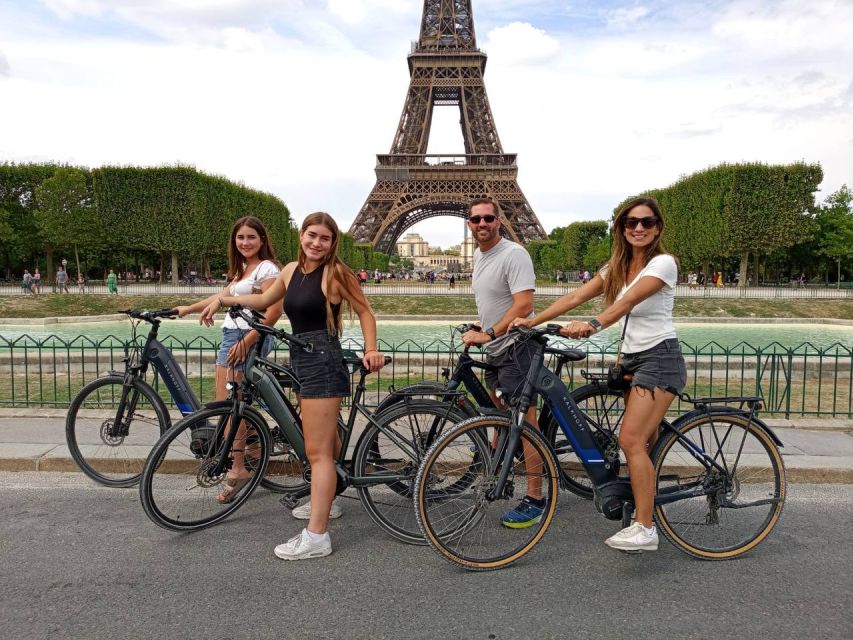
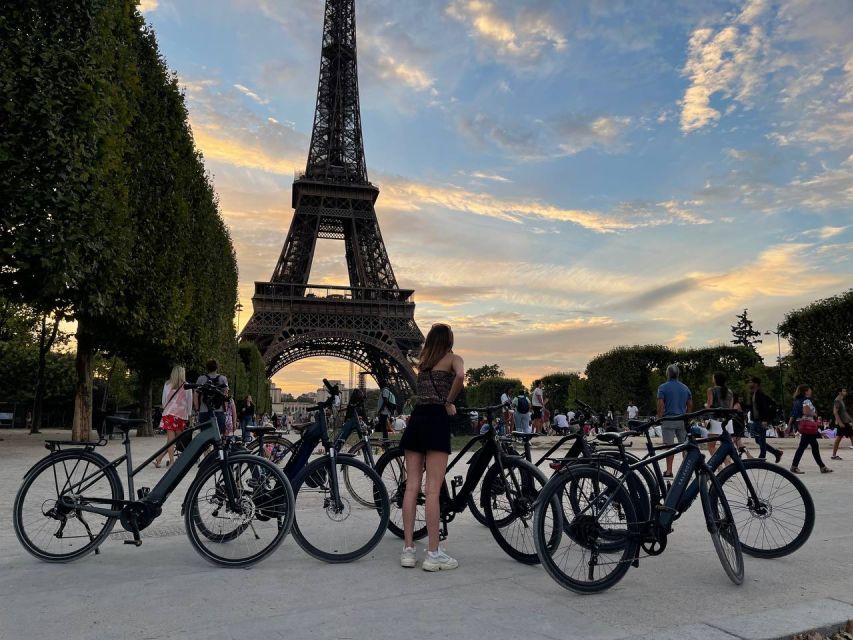
As the tour winds down, you’ll head into Parc du Champs de Mars and pass by the Eiffel Tower area, finishing back at Go Go Tours Office.
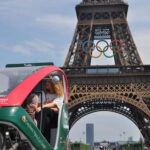
This closing stretch is about payoff. You’ve already covered the major monuments, so the Eiffel Tower moment feels like a final “yes, this is really Paris” checkmark. But it also comes at the right time in a 150-minute format: by then, you’re not starting the Eiffel viewing tired from an all-day walk.
Parc du Champs de Mars is also a smart stop to pass through because it gives you a sense of open space next to the dense monument scene. You can take a breath—literally and visually—and let the skyline land.
In short: the ride ends like a victory lap. Not a long stop. Not a full museum plan. Just a clean, satisfying view sequence.
Residential Paris design lessons: the part most people skip
Here’s what makes this tour stand out from a simple “greatest hits” ride: you also cycle through picturesque residential neighborhoods.
You’ll learn about Paris’s urban design as you go—how streets connect, how viewpoints appear, and how neighborhoods create atmosphere beyond the postcard monuments. This is valuable because Paris can feel like two different cities: the showpiece core and the everyday fabric. Residential sections help you understand how the city lives when there’s no Eiffel Tower in the frame.
This is where the guide can turn the ride from sightseeing into understanding. If you like architecture, street layout, and how culture shapes public space, you’ll get more out of those quieter stretches than you might expect.
And if you’re trying to decide where to stay later, this section helps. You start to notice which areas feel walkable, which streets feel open, and where you’d happily spend an afternoon without a plan.
The river break and coffee reset
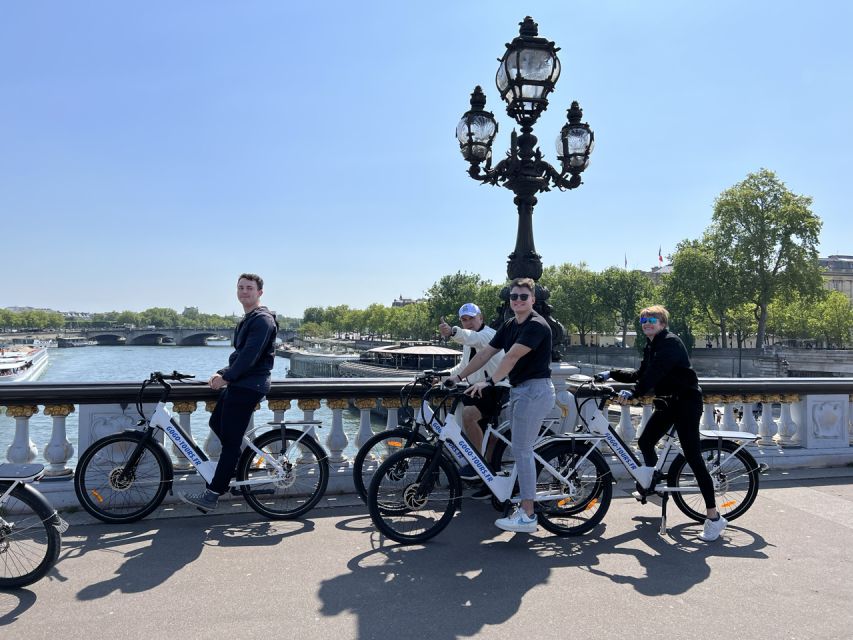
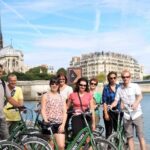
Mid-ride, there’s a break near the river bank. The plan is simple: sit back, relax, and enjoy a coffee.
Two practical benefits come from this. First, it gives you a chance to recharge without feeling like the tour is dragging. Second, it keeps the group together and your head clear for the final monument run.
Even though food and drinks aren’t listed as included, you can still treat this moment as a chance to grab something and refuel. Think of it as a buffer against cold mornings, late-afternoon light changes, or just the general mental load of seeing a lot fast.
Guides make or break the storytelling
This is a private tour, so you’re not listening to a recorded script. The guide is the point. Reviews show examples of strong guide energy, including guides named George and Pablo, who were praised for friendly, informative storytelling and for covering key parts of French history.
You’ll want a guide who can do two things at once:
1) explain what you’re seeing in plain language
2) keep the ride flowing so you don’t feel stuck waiting for the narration
A couple of experiences also suggested that guide depth can vary. One account described a guide who relied on memorized dates and didn’t connect the sites to bigger themes. That doesn’t mean the tour is unreliable, just that the “learn” part depends on who’s leading that day.
If you care about history and design, arrive ready with one question you want answered. Something like: What should I notice about the way Paris plans these spaces? A good guide will run with it.
Price and value: what $100 buys you (and what it doesn’t)
At $100 per person for 150 minutes, you’re paying for three big items:
- the e-bike
- the guided route through central sights and neighborhoods
- a private group experience format
The value is strongest for people who want to see many places without spending the day commuting on foot. In 2.5 hours, you can stitch together a mental map of Paris: landmarks, main avenues, plus residential streets, all in one logical flow.
What it doesn’t replace: long museum visits, food tours, or deep architectural walks where you stop repeatedly to study details. Food and drinks aren’t included, so plan to manage meals on your own. Also, because many stops are pass-by moments, you shouldn’t expect a “time in the building” experience.
If you’re the kind of traveler who wants a shortcut to understanding Paris and a reason to return later, this price can feel fair.
Who should book this e-bike tour, and who should skip it
This tour fits best if you want:
- a fast way to see major highlights like Eiffel Tower and Louvre
- a guided mix of monuments and residential neighborhood design
- an activity that’s easier on your legs than walking the same route
It’s not ideal if you want long museum time at every stop. The tour is built to move, not camp.
It’s also not suitable for children under 10, and it comes with basic riding rules like comfortable clothing and no alcohol/drugs. You’ll want comfortable shoes since you’ll be on and off the bike.
If you’re traveling as a couple, a small group, or anyone who prefers a calmer, private pace, this is a strong match.
Should you book this Paris private e-bike sightseeing tour?
Book it if you want a guided, effort-light way to get oriented fast. The biggest win is the combination of iconic sights and design-focused neighborhood riding, plus the rhythm of passing landmarks without wasting hours walking.
Skip it (or plan around it) if you need deep, slow museum experiences. This is a “see it, understand it a bit, then go back if you want more” format.
My practical suggestion: if you book, make space afterward for exploration. Use what you learned on the ride to choose one area to revisit on foot—especially a residential zone you liked. That’s how this tour becomes more than a quick highlight reel.
FAQ
Where is the meeting point for the tour?
The meeting point is 101 Avenue Bourdonnais, 75007.
How long is the Paris private e-bike tour?
The tour duration is 150 minutes (2.5 hours).
Is this tour private or shared?
It’s a private group tour.
What’s included in the price?
The tour includes the e-bike, a sightseeing tour, and a guide. Food and drinks are not included.
What language is the live guide?
The live tour guide provides English language commentary.
What should I bring and wear?
Bring comfortable shoes and comfortable clothes.
Is the tour suitable for kids?
It’s not suitable for children under 10.
What is the cancellation policy?
You can cancel up to 24 hours in advance for a full refund.
If you tell me your travel dates and fitness level, I can help you decide whether this timing and e-bike format fits your day plan.