REVIEW · PARIS
Best of Paris Private Rickshaw bike Tour with guide
Book on GetYourGuide →Operated by GoTurtle · Bookable on GetYourGuide
Paris by rickshaw feels like cheating traffic. In a short ride, you get a tight, private hit of classic sights plus an onboard audio guide. I especially liked how the route covers both “big postcard” landmarks and day-to-day street scenes, and I also liked that you can adjust where you spend time when you want a photo or a slower look. One consideration: if roads are blocked, the driver may swap in smaller back-street routes, so not every stop may be reachable in every situation.
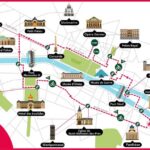
Starting from the 99 Rue de Rivoli area (near the Carrousel du Louvre) and ending back there, this tour typically runs around 2 hours but can be 45 minutes to 3 hours depending on your start time. You’ll ride through some of Paris’s most famous stretches—including the Seine riverfront—without sitting in the worst congestion.
In This Review
- Key things that make this rickshaw tour work so well
- How the rickshaw format changes your Paris day
- Where you start and how the timing usually feels
- Hôtel de Ville and Notre-Dame: first iconic anchors
- Latin Quarter power: La Sorbonne and the Pantheon
- Luxembourg Gardens and Saint-Sulpice: Paris with softer edges
- Saint-Germain-des-Prés to the Seine: street Paris to postcard Paris
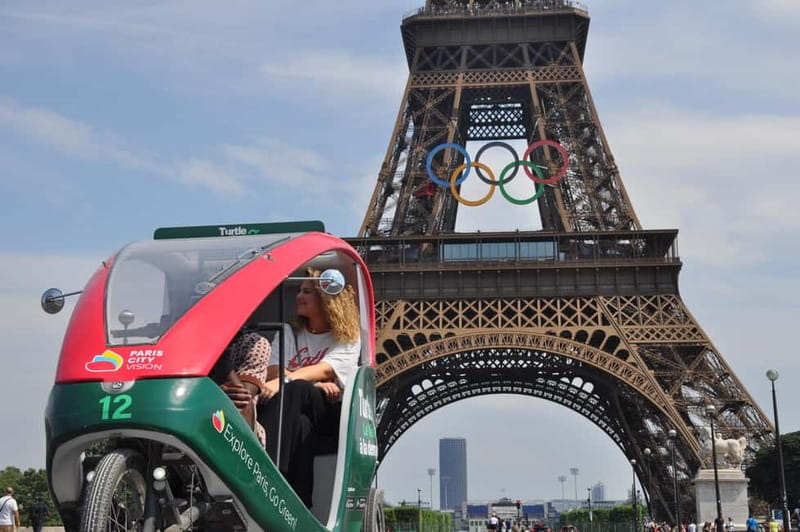
- Eiffel Tower and the Seine bridges: the views people actually remember
- Arc de Triomphe to Champs-Élysées: the grand axis feeling
- Pont Alexandre III, Assemblée Nationale, and Place Vendôme: a cleaner storyline
- Palais Garnier to the Louvre: art-and-classics finish
- Sacré-Cœur: topping off Paris at a higher vantage
- When the route needs to change: what to expect in real Paris
- Who this tour suits best (and who should choose something else)
- Value check: why this feels like good use of time
- Should you book the Best of Paris Private Rickshaw bike Tour?
- FAQ
- Where does the tour start and end?
- How long is the tour?
- Is this tour private?
- What languages are available for the onboard audio guide?
- Is alcohol allowed on the tour?
- What if roads are blocked during the tour?
Key things that make this rickshaw tour work so well
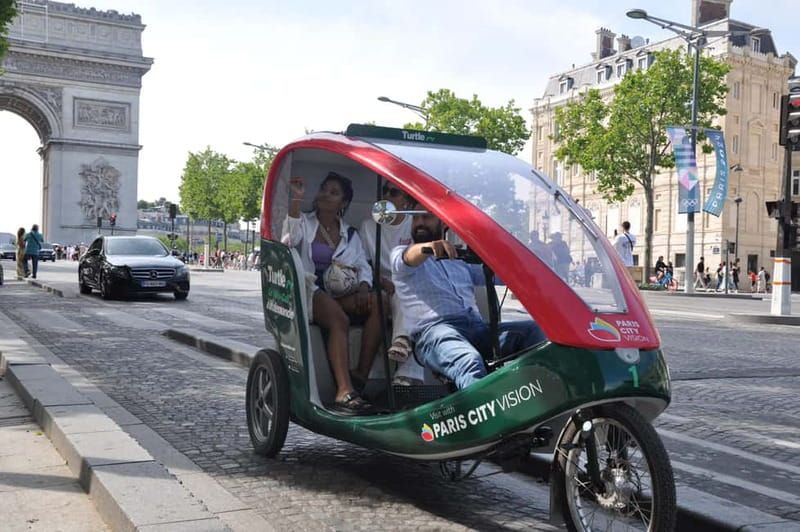
- Private group comfort: you aren’t squeezed into a big crowd, and the pace is easier to manage
- Onboard audio in many languages: English, French, Dutch, German, Italian, Spanish, Japanese, and Chinese are supported
- Photo-stop strategy: you get great views at landmarks like Notre-Dame, the Pantheon, and the Eiffel Tower without burning your whole day on lines
- Seine + bridges route: you’ll pass iconic crossings like Pont de l’Alma, Pont Alexandre III, and Pont de Bir-Hakeim
- Driver flexibility when streets change: during a major Paris event, guide Ibrahim handled detours and still delivered satisfying sights
- Guides who actually guide: multiple reviews highlighted guides like Chayo, Ama, and Ibrahim for clear explanations and helpful pacing
How the rickshaw format changes your Paris day
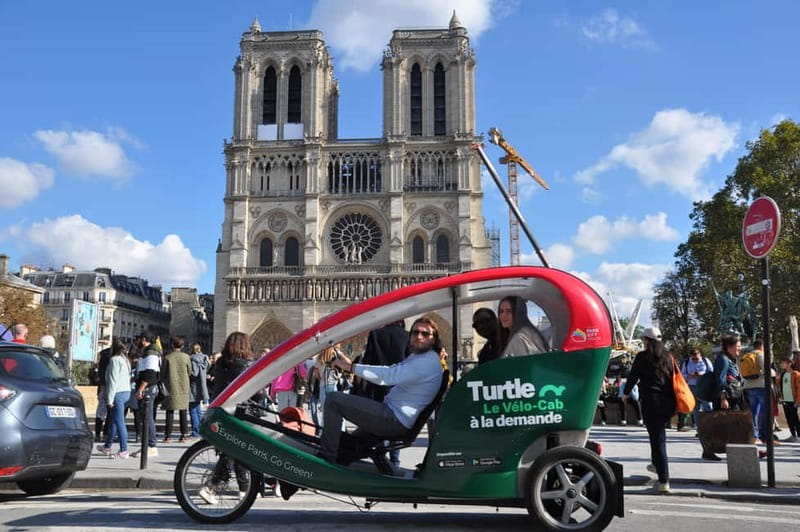
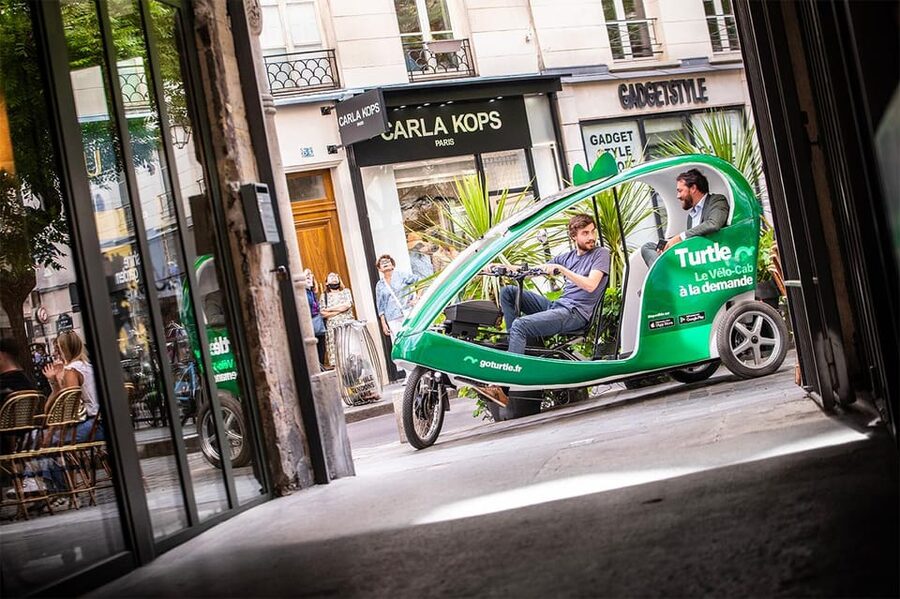
Paris is gorgeous, but it’s also a city where delays can steal your schedule. The biggest advantage here is the movement style: you cruise through the city by rickshaw (instead of long waits in traffic), then pause at key points for photos and explanations.
Because it’s private, the experience feels less like a bus tour and more like a guided “greatest hits” ride with room to breathe. Guides such as Vince (patient and focused on Eiffel visuals) and Ama (known for making the stops feel intentional) are the kind of people you want when you’re trying to understand why each landmark matters, not just where it is.
You can also read our reviews of more tours and experiences in Paris.
Where you start and how the timing usually feels
You’ll start near 99 Rue de Rivoli, 75001 Paris, with an option tied to the Carrousel du Louvre area, and you’ll return to the same general spot. Depending on what you book, your exact meeting point can vary, and the welcome is handled in English or French.
Timing-wise, plan for a ride that’s long enough to see a lot, but not long enough to do everything inside major monuments. Many stops are listed as photo stops, so think of this as a high-impact “see it from the outside, get the story, take the best photos” tour.
If you want the full Louvre experience or deep interior cathedral time, you’ll still need museum or site-specific tickets later. This tour is the fast, guided way to get your bearings.
Hôtel de Ville and Notre-Dame: first iconic anchors
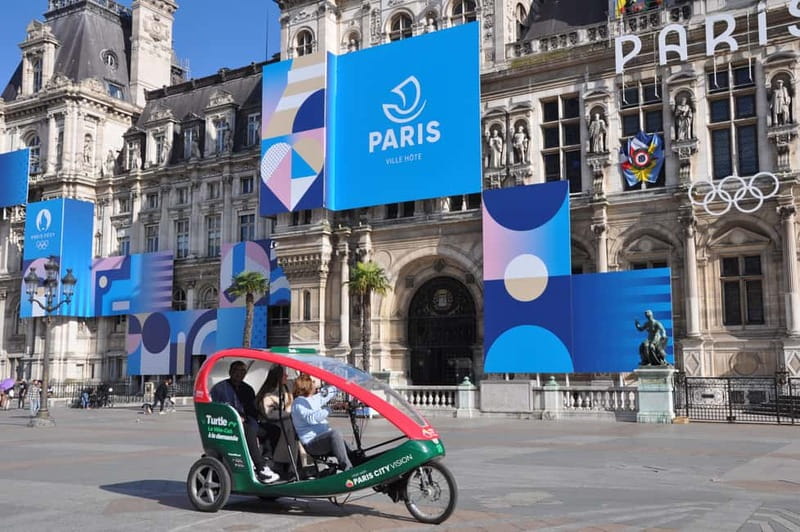
Your tour’s rhythm starts in central Paris with Hôtel de Ville for a photo stop. This area is a reminder that Paris isn’t only about romance—it’s also about civic power and the city’s political center.
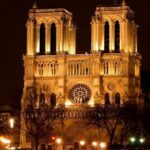
Then you’re on to Notre-Dame Cathedral for another photo stop. Even if you’re seeing it from a distance, this stop helps you understand why the Île de la Cité became the symbolic heart of Paris. You’ll likely look at the facade, but the guide’s job is to connect the cathedral to the wider Paris story of ambition and dreams—how the city’s architecture became its public identity.
Practical note: because these are photo stops, you’ll want to be ready with your camera before you arrive. You don’t get long “stand around” time in the middle of a busy traffic pattern.
Latin Quarter power: La Sorbonne and the Pantheon
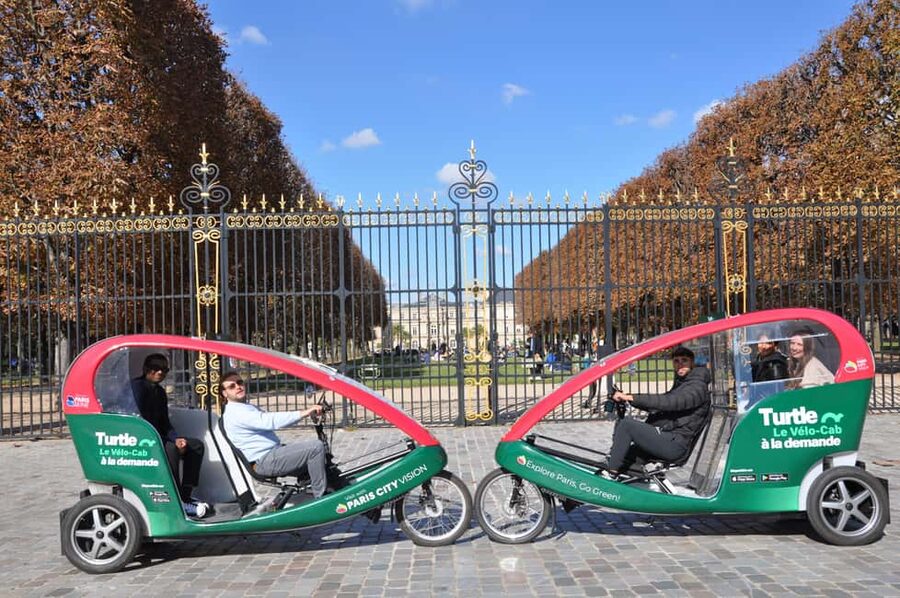
Next comes La Sorbonne, which makes a lot of sense early in the tour. It’s one of those places where students, scholarship, and Paris’s intellectual reputation collide in real streetscape form.
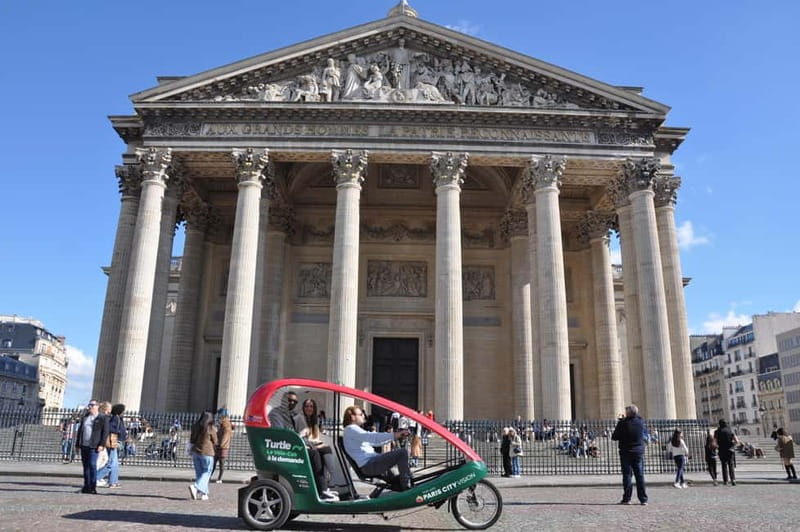
Then you’ll reach the Pantheon for a photo stop. The Pantheon is a strong lesson in how France uses monuments as a public message. It’s not just beautiful—it’s a statement about who gets remembered.
This is also a great zone for photos because it’s tied to wider views of the neighborhood streets. One of the reasons rickshaw tours work is that you don’t spend the day charting routes on foot. Your guide handles the path, and you get to focus on what you’re seeing.
Luxembourg Gardens and Saint-Sulpice: Paris with softer edges
After the bigger landmark stops, you shift to calmer, more scenic areas.
Luxembourg Gardens is a classic Paris pause. Even when you’re only stopping for photos, the setting helps you “zoom out” from the intense monument focus and remember Paris has long been a city of leisure and everyday culture—especially around garden spaces.
Then you’ll visit Church of Saint-Sulpice for a photo stop. This is one of those churches that doesn’t always get the same attention as Notre-Dame, but it’s visually satisfying and gives you a different architectural angle. If you like Paris for its layers—big famous moments plus quieter masterpieces—this is one of your payoff stops.
Saint-Germain-des-Prés to the Seine: street Paris to postcard Paris
Saint-Germain-des-Prés is next, and it matters because it shifts you from “monument tour” mode into more human scale Paris. This neighborhood vibe is why so many people fall in love with the city: cafes, classic streets, and the feeling that Paris isn’t just staged for tourists.
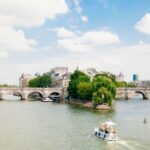
Then you reach the Seine River itself, followed by Pont de l’Alma for a photo stop. Riding and photographing along the Seine is where a lot of the tour’s magic lands. The river acts like a visual highway—linking neighborhoods, monuments, and viewpoints without you having to fight for the perfect walking route.
Expect to spend more time looking outward than inward here. The guide’s explanations help you connect what you see on the banks with the bigger geography of Paris.
Eiffel Tower and the Seine bridges: the views people actually remember
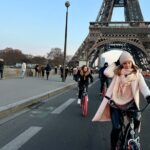
One of the most talked-about moments is the approach to the Eiffel Tower for a photo stop. Guides in the group have been praised for making this moment feel clear and intentional—one guide was specifically noted for being patient and showing the Eiffel sights.
From there, you’ll pass Pont de Bir-Hakeim and continue toward the Statue of Liberty, Paris for a photo stop. That statue is a fun curveball compared to the usual Eiffel-to-Arc routine. It adds variety and gives you an easy comparison point between Paris’s global symbolism and its local identity.
Then comes Place du Trocadéro, one of the best viewpoints in town for “Eiffel moment” photos. If you’re chasing that crisp, iconic angle, this is where you’ll want your camera ready and your posture set.
Potential drawback here: if you’re sensitive to loud city noise or you’re relying on audio, you might find it harder to hear explanations in the busiest sections. One review flagged difficulty hearing the guide, so if you know you struggle with audio, you may want to stand closer to your guide at stops.
Arc de Triomphe to Champs-Élysées: the grand axis feeling
Now you move into what feels like the classic Paris parade route.
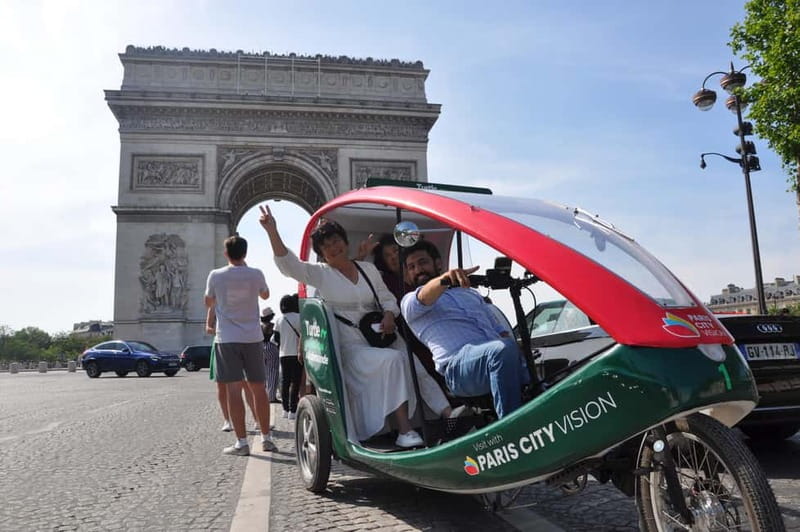
You’ll stop for photos at the Arc de Triomphe, then continue to the Champs-Élysées. The Champs-Élysées segment is where Paris looks like its postcards: broad boulevard, intense visual energy, and a lot of people watching.
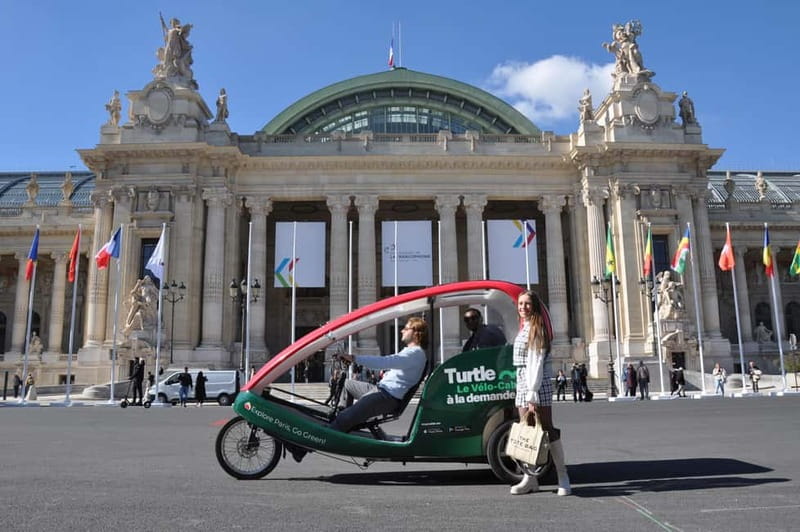
After that, there’s a Grand Palais photo stop. This is useful because it adds a grand “event space” vibe—Paris as a stage for art, exhibitions, and big public moments.
If you like Paris for its scale, this is your stretch. If you don’t, I’d still recommend it—because it gives context to why the city’s most famous avenues look the way they do, and it sets up the later stops across the Seine.
Pont Alexandre III, Assemblée Nationale, and Place Vendôme: a cleaner storyline
Next you’ll travel over Pont Alexandre III—another major bridge stop where the architecture and the river views work as both a photo opportunity and a geography lesson. Ponts in Paris are like “chapters.” Each one frames the city differently.
Then you’ll reach l’Assemblée Nationale for a photo stop. This is one of those “wait, there’s more to Paris than monuments” moments. The political center here helps you read the city as a place where power, culture, and public life overlap.
After that comes Place Vendôme. It’s a compact, elegant stop that helps you reset visually before heading into the theater and museum zones later.
Palais Garnier to the Louvre: art-and-classics finish
You’ll pass Palais Garnier (photo stop). This is the opera house everyone recognizes, and even without going inside, it helps you understand how Paris built its identity around performance and spectacle.
Then you reach Louvre Museum for a photo stop. This stop works best if you treat it as a “here’s what you’re going to want later” moment. The Louvre is so big that a quick view isn’t a replacement for a museum ticket—but it’s an excellent way to orient yourself on a first trip and decide what you want to prioritize.
Sacré-Cœur: topping off Paris at a higher vantage
The final featured stop is Sacré-Cœur Basilica for a photo stop. This is a strong ending because it feels like the city rising up behind you. Even if your day is packed, ending with Sacré-Cœur gives a sense of arrival and closure.
If you started near the Louvre area, this arc—from central Paris through the Seine and major landmarks back toward higher viewpoints—gives your photos a clean storyline. Your guide’s route choices help make the day feel like one cohesive walkthrough rather than random spot-hopping.
When the route needs to change: what to expect in real Paris
Paris isn’t predictable in the way smaller cities can be. Road closures happen, and sometimes even a well-planned route has to shift.
One review described a situation where major streets were blocked due to an event near the Louvre area and additional closures tied to a women’s march. In that case, guide Ibrahim couldn’t reach half of the listed sights directly, but he compensated with detours through smaller streets and scenic spots that many tourists miss.
So here’s the practical advice: go in expecting a plan, not a guarantee. The upside is that the guide can often turn detours into good outcomes instead of letting you sit frustrated.
Who this tour suits best (and who should choose something else)
This rickshaw tour is ideal if you want:
- A fast, guided hits tour of major Paris monuments
- A comfortable way to see both sides of the city without getting stuck in long traffic
- A private experience with an onboard audio guide in multiple languages
- Lots of photo stops plus enough explanation to make the sights click
You might want a different option if you’re hoping for:
- Extended time inside museums or major religious sites
- A walking-first experience
- A strict itinerary where every landmark is guaranteed regardless of road closures
For first-time visitors, this tour can help you decide where to return. For return visitors, it’s a fun way to reconnect with Paris’s layout without re-planning routes all day.
Value check: why this feels like good use of time
Even without a stated price here, the value logic is clear. You’re paying for:
- Private guiding through a long string of landmarks
- A route designed to reduce time lost to traffic
- Onboard audio so you’re not relying only on spoken explanations
- A sweep that connects iconic places into a readable city story
The real value shows up if you have limited days. A 45-minute to 3-hour window means you can slot it in for a “welcome to Paris” session or as a “see it all quickly” day. And if your guide is attentive—like the guides praised for patient, helpful, or visually focused guiding—you’ll come away understanding the monuments beyond their postcard status.
Should you book the Best of Paris Private Rickshaw bike Tour?
Yes, if you want an efficient, private way to see a lot of top Paris sights in one go—especially if you like the Seine route and you want guided context without full-on museum days.
Book it if:
- You prefer photo stops with explanation over long indoor visits
- You want audio support in your language (English, French, and many others are available)
- You’d rather glide through central streets than fight your way across town on foot
Skip or compare if:
- You need guaranteed access to specific sites regardless of street closures
- You want a quiet, low-audio environment (busy stops can make audio harder to catch)
- You’re mainly interested in deep interior history and artwork sessions rather than views
If your goal is to get your bearings fast and leave with photos and clear mental connections, this tour is a strong choice.
FAQ
Where does the tour start and end?
The tour starts and ends at 99 Rue de Rivoli, 75001 Paris (with an option near the Carrousel du Louvre). The exact meeting point can vary depending on which starting option you book.
How long is the tour?
The duration ranges from 45 minutes to 3 hours, depending on the starting time you select.
Is this tour private?
Yes. It’s listed as a private group experience.
What languages are available for the onboard audio guide?
The onboard audio guide is available in Dutch, German, English, French, Italian, Spanish, Japanese, and Chinese.
Is alcohol allowed on the tour?
No. Alcohol and drugs are not allowed.
What if roads are blocked during the tour?
The city can have changes due to street activity. In past situations, the guide has adjusted the route when certain landmarks couldn’t be reached, using alternative streets to keep the experience moving.