REVIEW · PARIS
Paris Guided Bike Tour
Book on GetYourGuide →Operated by ParisCityVision · Bookable on GetYourGuide
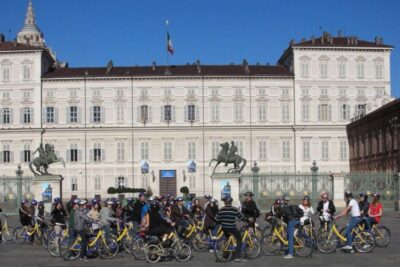
Paris by bike feels like cheating time. In just 3 hours you get big sights (hello Louvre and Arc de Triomphe) plus quieter Paris streets, with an expert guide who keeps the ride smooth and the stories useful. It’s also a fun way to collect practical ideas for what to eat and where to wander next.
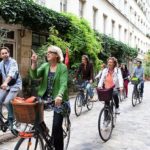
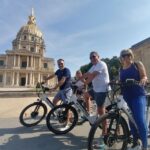
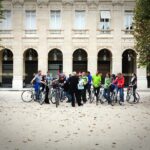
Two things I really like: the small group size (max 12) makes the pace relaxed, and the guide focuses on what matters—history, local habits, and street-level details you can actually use. If you’re the type who asks questions, the guide is happy to answer them and even point out things like filming spots and daily Paris rhythms.
One consideration: this is not a freewheel stroll. You need a certain cycling ability, and there are no monument entrances included—so you’ll be seeing a lot from the outside and from the bike, with photos and viewpoints doing the heavy lifting.
In This Review
- Key highlights worth planning for
- Price and timing: what $43 buys you in 3 hours
- Starting near Place des Pyramides: getting on the right street at the right moment
- Palais-Royal and the Louvre area: fast orientation, real photo angles
- Pont Neuf, Place Dauphine, and the Île de la Cité loop: Paris’ river spine
- Latin Quarter and Saint-Michel: the vibe changes, and the guide steers you
- Les Invalides and the Seine quays: a calmer stretch before the big hits
- Eiffel Tower to Pont d’Alma to the Arc de Triomphe: iconic, but with motion
- Champs-Élysées to Place de la Concorde: seeing the formal side of Paris
- Saint-Germain-des-Prés and Comédie-Française: the quieter finish with real character
- Ending back at the Louvre: a tidy close to a three-hour loop
- The guide makes or breaks it: Andrea and Hugo are proof of the concept
- Bike comfort and pacing: why max 12 people feels like the right size
- What you won’t get: entrances and tastings
- Who should book this bike tour (and who should skip it)
- Should you book it? My honest take
- FAQ
- How long is the Paris Guided Bike Tour?
- What is the price per person?
- Where is the meeting point?
- Which languages are available with the guide?
- How big are the groups?
- Are monument entrance tickets included?
- What is the minimum age for this tour?
- Is the tour suitable for wheelchair users?
- When should I arrive before departure?
- What is the cancellation policy?
Key highlights worth planning for
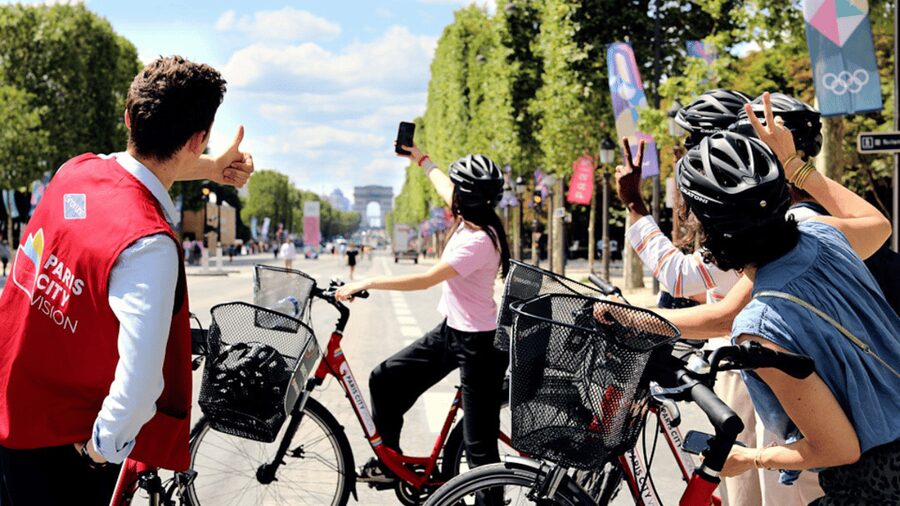
- Max 12 people means less waiting, more riding, and a calmer feel through busy central Paris
- Expert guide storytelling mixes facts, anecdotes, and local habits without turning it into a lecture
- Stop timing is flexible so the group can catch their breath and regroup when needed
- Classic monuments + confidential streets gives you both the postcard and the lived-in Paris
- Food ideas from the guide includes pointers for sweets like croissants and ice cream (tasting not included)
Price and timing: what $43 buys you in 3 hours
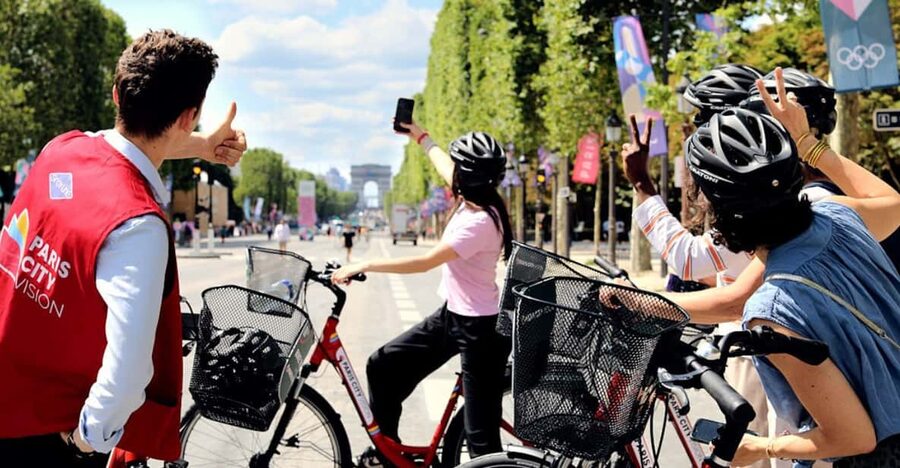
At about $43 per person for a 3-hour guided ride, this tour hits a sweet spot. You’re not paying for museum entry or a long day of transport—you’re paying for time-efficient access to the city’s most recognizable landmarks, plus a guide to explain what you’re seeing while you’re moving.
Because the route is structured around major stops, you’ll cover a lot of ground without turning the day into a gear-shift parade of metro lines and walking detours. The flip side is that you won’t spend long inside any major site. If you want deep museum time, you’ll treat this as your “Paris map with motion,” then build the rest of your day with independent tickets.
The tour also runs with live guide support in English, Spanish, and French, so it’s easy to match your comfort level. And if you want a future-proof plan, it offers free cancellation up to 24 hours in advance and a reserve-now/pay-later option.
You can also read our reviews of more tours and experiences in Paris.

Starting near Place des Pyramides: getting on the right street at the right moment
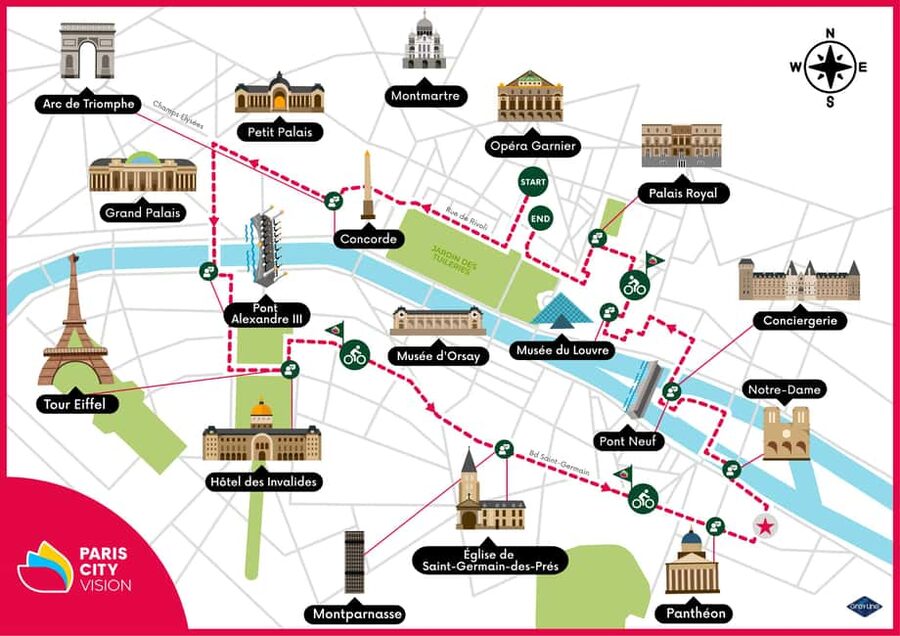
You meet at Paris City Vision, 3 Place des Pyramides, 75001 Paris. That location is convenient because it places you close to the Louvre area right at the start, when you still have fresh energy and you haven’t been stuck in lines all morning.
Arrive 15 minutes early. This matters more than you’d think because you want time to get set up, meet your guide, and get rolling before the group starts to compress. The better your first few minutes feel, the more relaxed the whole tour is.
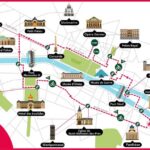
Then the ride shifts right into the center of Paris, starting with the Palais-Royal area and moving toward the Louvre Museum. Even though you’re on a bike, the guide makes sure you’re oriented—what you should notice, how the streets relate to each other, and where you’ll be turning next.
Palais-Royal and the Louvre area: fast orientation, real photo angles
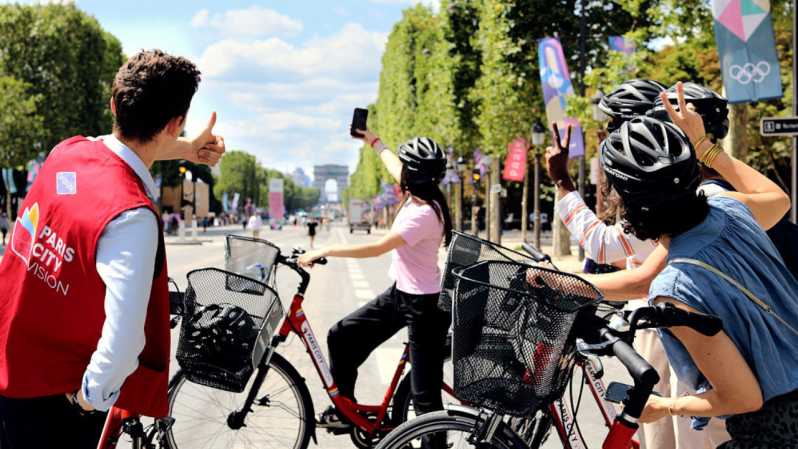
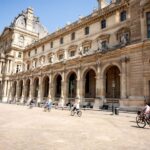
The Palais-Royal area is a smart opener. It gives you a taste of Paris elegance without starting you immediately in the busiest landmark crowd. From there you pass by the Louvre Museum, and the bike format helps: you’re not just staring at a single facade. You can see how the building sits within the surrounding streets and boulevards, and you get a sense of scale quickly.
This is also where the guide’s role really clicks. You get context as you move—so when you later pass bridges, churches, and other major sites, you’re not just collecting names. You’re understanding how the city pieces fit together.
From here the tour starts building momentum toward the river crossings. That’s your key transition from “old-world sightseeing” into “ride through Paris like it’s one continuous story.”
Pont Neuf, Place Dauphine, and the Île de la Cité loop: Paris’ river spine
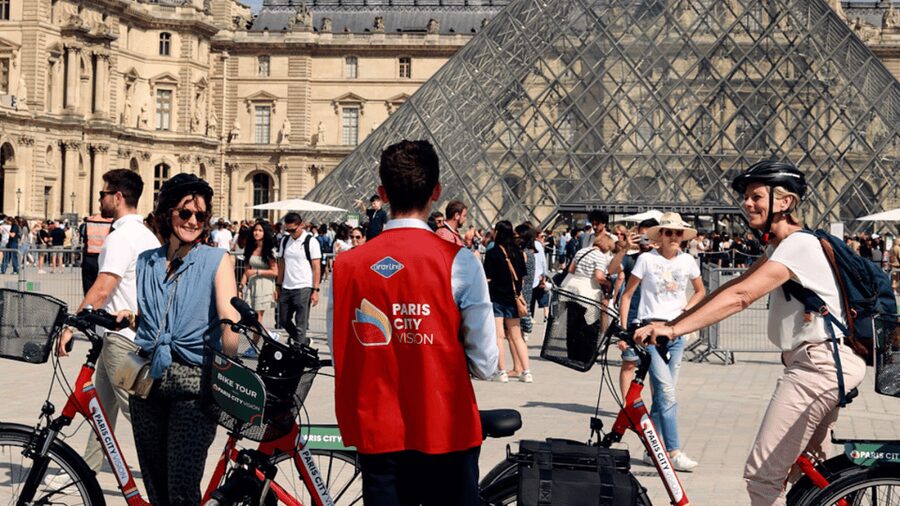
Next up is Pont Neuf, one of those classic Paris bridges you see in photos but never fully understand until you travel along the river. Cycling past it gives you a more human perspective: you get angles that feel slightly off the typical walking route, and you can spot the city’s geometry—banks, roads, and sightlines.
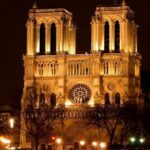
You then pass by Place Dauphine, followed by Notre-Dame de Paris and the Île de la Cité area. The key value here is that the guide connects landmarks to what was happening around them historically. You’re not just hearing dates. You’re getting the why behind the city’s layout and how people moved through this zone.
A tour like this is also good for photos, because you can stop briefly, shoot from a stable viewpoint, and then keep riding. If you’ve ever done landmark-hopping on foot, you know how quickly walking distances kill your stamina and patience. Here, the bike keeps you steady.
Latin Quarter and Saint-Michel: the vibe changes, and the guide steers you
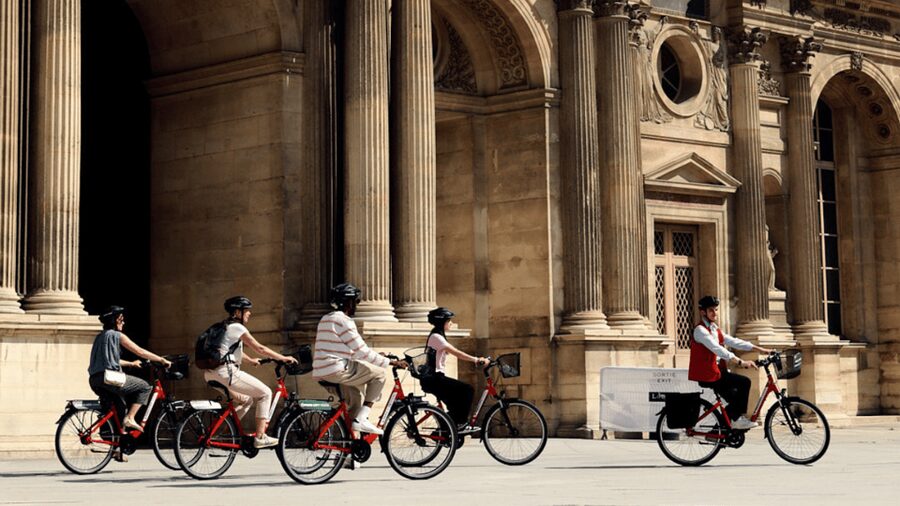
Once you reach the Latin Quarter, the feel shifts. The streets and corners start to feel more “lived-in,” and you get that closer-to-everyday-Paris texture that many sightseeing days miss.
On the route you pass the Sorbonne and the area around the Fontaine Saint-Michel. This zone works especially well on a bike because you can move between perspectives quickly—wide views one moment, then tight street energy the next.
There’s also a stop point where you pass by Restaurant La Fontaine Saint Michel. Even if you’re not eating there on the tour, it’s useful because it reinforces the idea of the area: this isn’t just academic postcard Paris. It’s neighborhood Paris, where people actually go for meals and normal routines.
If you like when a guide adds practical color, this is a good section. You’ll hear the kind of local habits and street logic that help you navigate later—like how neighborhoods “feel” different and why certain streets draw crowds while others don’t.

Les Invalides and the Seine quays: a calmer stretch before the big hits
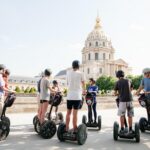
Next come Les Invalides and a Seine quay stretch (quai de la Seine). This part is nice because it often feels less frantic than the busiest center points, even though you’re still in core Paris.
Passing near Les Invalides gives you a chance to see how monumental buildings sit in broader urban space. Then the bike ride along the river gives you long sightlines—perfect for the moments when you want to pause, snap a picture, and keep moving without turning the day into a stop-and-start crawl.
This section also helps set up what comes next: the push toward the Eiffel Tower area and the dramatic viewpoints around the river and bridges.
Eiffel Tower to Pont d’Alma to the Arc de Triomphe: iconic, but with motion
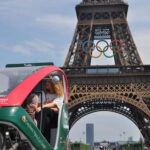
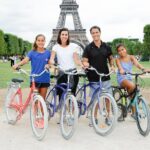
Yes, you pass by the Eiffel Tower, and you also ride through the area connecting river views to grand monuments. You’ll go along Pont d’Alma (a bridge that helps you understand how the city channels sightlines and traffic patterns).
Then the route climbs into one of the most photogenic sequences in Paris: Arc de Triomphe de l’Etoile, the Champs-Élysées, and the major “grand building” stops like Grand Palais and Petit Palais.
Here’s why the bike format matters: the scale of these landmarks can feel overwhelming when you approach them on foot from one direction. On a bike, you see more of the surrounding street grid and can take photos from angles that feel more natural. You also keep the day moving, which helps if you want energy left for dinner plans afterward.
And in this stretch, the guide’s facts really pay off. You’ll get historical and cultural context that makes these places more than names on a map.
Champs-Élysées to Place de la Concorde: seeing the formal side of Paris
Once you hit Champs-Élysées, you’re in the classic “Paris boulevard” zone—wide, ceremonial, and busy. The advantage of the bike tour is that you experience it without losing an hour to crossing streets and negotiating crowds.
You also pass by Place de la Concorde, which is one of those places where the space itself is part of the story. Seeing it by bike helps you understand how the city opens up around major junctions and why certain views work the way they do.
If you’re the kind of person who likes to connect what you see to what you’ll do later—shopping streets, photo spots, or evening stroll ideas—this is where your guide’s local knowledge can steer you.
Saint-Germain-des-Prés and Comédie-Française: the quieter finish with real character
After the big monuments and long boulevards, the tour turns toward Saint-Germain-des-Prés and then passes La Comédie-Française. This is a smart shift because it ends the ride with a more classic, neighborhood-rich Paris vibe.
Saint-Germain-des-Prés tends to feel different from the main landmark corridors. Even from a bike, you can sense the change: smaller streets, more “this is where people live and meet” energy, and that older Paris atmosphere.
Passing the Comédie-Française adds cultural weight too. It’s a reminder that Paris isn’t only monuments—it’s also performance, tradition, and the daily rhythms that keep the city feeling like a city, not a museum set.
Ending back at the Louvre: a tidy close to a three-hour loop
The tour finishes back at the Louvre Museum area. Ending near where you started is practical. You don’t need a complicated commute plan to get home or to your next activity.
It also helps you keep your bearings for the rest of the day. If you’re planning a museum visit, a walk through the Tuileries, or a Seine stroll afterward, you’ll already have a mental map of how the routes connect.
The guide makes or breaks it: Andrea and Hugo are proof of the concept
The biggest recurring theme from the experience is the guide quality—friendly, attentive, and genuinely into Paris. I’ve seen guides who can quote facts but don’t connect with the group. This isn’t that.
In recent tours, guides named Andrea and Hugo have led rides with a mix of facts and fun stories that stay focused. One rider praised the way Andrea’s oral commentary went to the essential points with anecdotes, not filler. Another highlighted Hugo’s combination of history, past-and-present knowledge, and good company at a calm pace.
That matters because a bike tour can turn into a blur if the guide doesn’t pace it well. Here, the guide also adjusts how often you stop, so the group can rest, regroup, and keep enjoying the ride rather than watching the clock.
Bike comfort and pacing: why max 12 people feels like the right size
The tour limits groups to a maximum of 12, and that’s not a minor detail. In a city like Paris, you want room for safe passing, quick regrouping, and stopping for photos without a traffic-jam situation.
A smaller group also makes the guide’s attention more consistent. You’re not just a number to herd. You can ask questions and get answers while the tour stays on track.
Also, you need cycling ability. The tour is described as for everyone in spirit, but it still requires a certain comfort level on a bike. If you’re new to riding or your confidence is low, you should think carefully. The route includes regular urban riding in central Paris, where you’ll be balancing focus with traffic awareness.
What you won’t get: entrances and tastings
This tour is a great sightseeing ride, but it’s not a museum ticket. Entrance to monuments is not included, so don’t plan on going inside Notre-Dame or stepping into the Louvre during the tour.
Also, tasting is not included. That said, one of the fun parts is that the guide shares good-address ideas for sweets—things like where to hunt for the best croissant or a Parisian artisan ice cream. You’re getting the planning tools; you’re just doing the actual bite later on your own.
Who should book this bike tour (and who should skip it)
This is a strong fit if:
- You want a 3-hour overview of central Paris with a guide
- You like the idea of big monuments plus quiet streets
- You want practical context while you’re moving (not only at the curb)
- You’re a confident cyclist and can handle urban riding
You might want to skip (or choose a different tour) if:
- You need wheelchair accessibility (this one is not suitable for wheelchair users)
- You’re not comfortable cycling yet (the tour requires a certain level of ability)
- You specifically want museum entry time and long interior visits
It also has a minimum age of 13, and children’s bikes are mentioned for ages 13–17 or when a rider meets the approximate 130 cm (4’2”) height and cycling ability.
Should you book it? My honest take
If you’re spending limited time in Paris and you want your first days to feel efficient without losing charm, this bike tour is an easy yes. The value comes from the combo: expert guide + classic sights + smaller-street atmosphere in a short window.
Book it when you want a guided “Paris framework” you can build on later. Skip it if you’re chasing long indoor experiences or you’re not comfortable riding a bike in central city traffic.
If you do book, come ready to pedal, arrive a few minutes early, and use the guide’s food and street tips right after the tour. That’s when the ride turns into a full Paris plan, not just a photo stop.
FAQ
How long is the Paris Guided Bike Tour?
The tour lasts 3 hours.
What is the price per person?
The price is $43 per person.
Where is the meeting point?
You meet at PARISCITYVISION Agency, 3 Place des Pyramides, 75001 Paris.
Which languages are available with the guide?
The live guide is available in English, Spanish, and French.
How big are the groups?
Groups are reduced to a maximum of 12 people for a better experience.
Are monument entrance tickets included?
No. Entrance to the monuments is not included.
What is the minimum age for this tour?
The minimum age is 13.
Is the tour suitable for wheelchair users?
No. It is not suitable for wheelchair users.
When should I arrive before departure?
Please arrive at the meeting point 15 minutes before the scheduled departure time.
What is the cancellation policy?
You can cancel up to 24 hours in advance for a full refund.