REVIEW · PARIS
Paris: Famous Monuments Cycling Tour
Book on GetYourGuide →Operated by Bike About Tours · Bookable on GetYourGuide
One great way to see Paris is from the saddle. This 3.5-hour loop takes you through the city’s biggest hits in a way that feels efficient and cinematic, with bike lanes helping you glide between landmarks. I especially love the up-close moment with the Eiffel Tower and the smart stop inside the Louvre courtyards. One thing to consider: the tour leans pretty hard into narration and historic context, so if you want nonstop highlight photos, you might feel the storytime goes long.
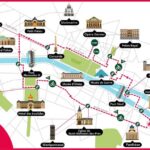
You’ll start in the Marais at Le Peloton Café, get fitted with a bike and helmet (if you want one), then follow your English-speaking guide across rivers and through major sights without the usual museum-and-metro hassle. The route is flat, about 13 kilometers, and built around frequent photo stops. If you can’t ride a bike comfortably, though, skip this one—this is not a walking tour.
In This Review
- Key Points I’d Prioritize Before Booking
- Marais Start at Le Peloton Café and Getting Rolling
- Île de la Cité Highlights: Notre Dame, Palais de Justice, and Pont des Arts
- Back Door Louvre Courtyards and the Pyramid Moment
- Tuileries and Orsay Views That Turn Movement Into Sightseeing
- Les Invalides via Place de la Concorde and the Alexander Bridge
- Rue Cler Snack Break and the Road to the Eiffel Tower
- Riding Back Across the Seine: Grand and Petit Palais, Arc de Triomphe, and Champs-Élysées
- Two Tunnels and a Riverside Finish That Feels Like a Little Reward
- How the 3.5 Hours Feels: Flat Route, Photo Stops, and Realistic Expectations
- Price and Value: What $113,875 Per Person Means for Your Decision
- Who This Tour Best Fits (and Who Should Pass)
- Should You Book This Paris Monument Cycling Tour?
- FAQ
- Where does the tour start?
- How long is the cycling tour?
- What is the route like in terms of difficulty?
- How far will we cycle?
- Are bikes and helmets included?
- Is food or drinks included?
- What language is the tour guide?
- What should I bring?
- Where does the tour end?
Key Points I’d Prioritize Before Booking
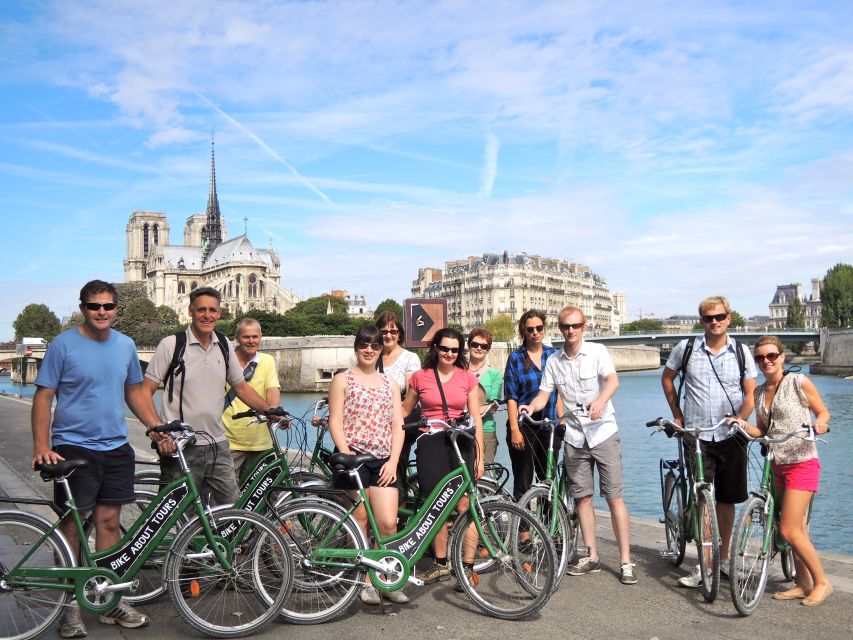
- Marais meet-up at Le Peloton Café makes for a classic start and easy logistics.
- Notre Dame and Pont des Arts give you postcard moments plus real context on Paris bridges.
- The Louvre via the back entrance means courtyards and architecture without feeling like you’re just queueing.
- Rue Cler snack break is a practical fuel stop in the middle of the ride.
- Eiffel Tower alongside biking is the best kind of close-up: you actually roll past it, not just stare from afar.
- Two tunnels + riverside return add a fun change of scenery on the way back.
Marais Start at Le Peloton Café and Getting Rolling
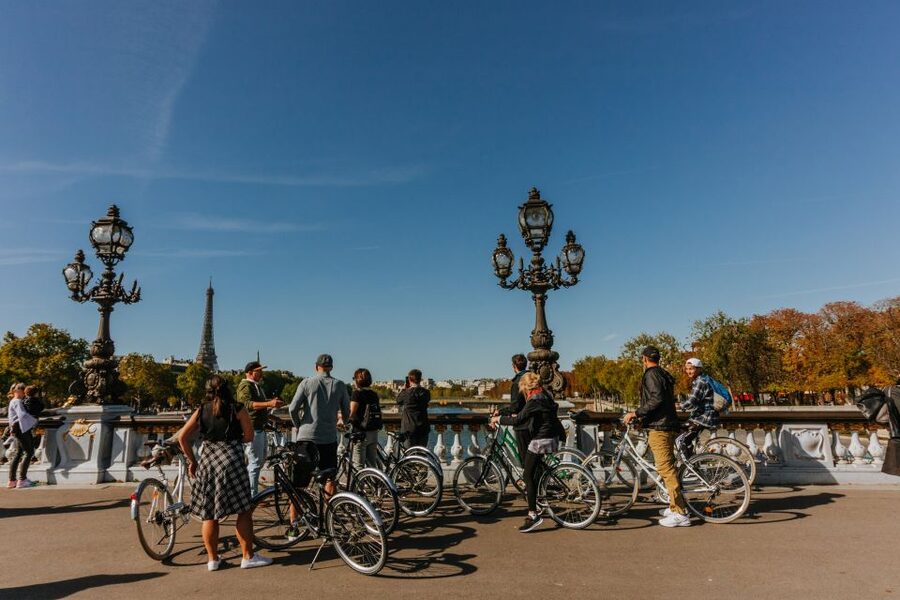
The tour kicks off at Le Peloton Café in the Marais, at 17 rue du Pont Louis-Philippe. That’s a smart choice because the Marais is charming and central, and you’ll feel like you’ve already entered Paris mode before the wheels even turn.
After you meet your group and your English guide introduces the plan, you’ll get your bike fitting. Helmets are provided if you want them, which I appreciate—Paris cycling can be very manageable, but you should still treat safety like part of the experience, not a chore.
Then comes the best part: you’re not spending this time wrestling with transit. You’re moving. And because the route is mostly on bike paths, the tour keeps your energy for the sights, not for logistics. Pack layers and consider a hat and gloves, especially in colder months—your ride can get breezy even when the day feels mild.
You can also read our reviews of more tours and experiences in Paris.

Île de la Cité Highlights: Notre Dame, Palais de Justice, and Pont des Arts
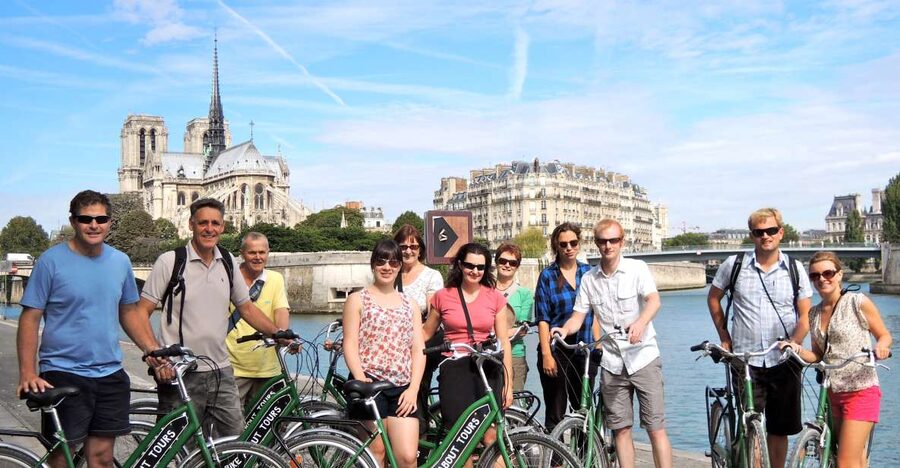
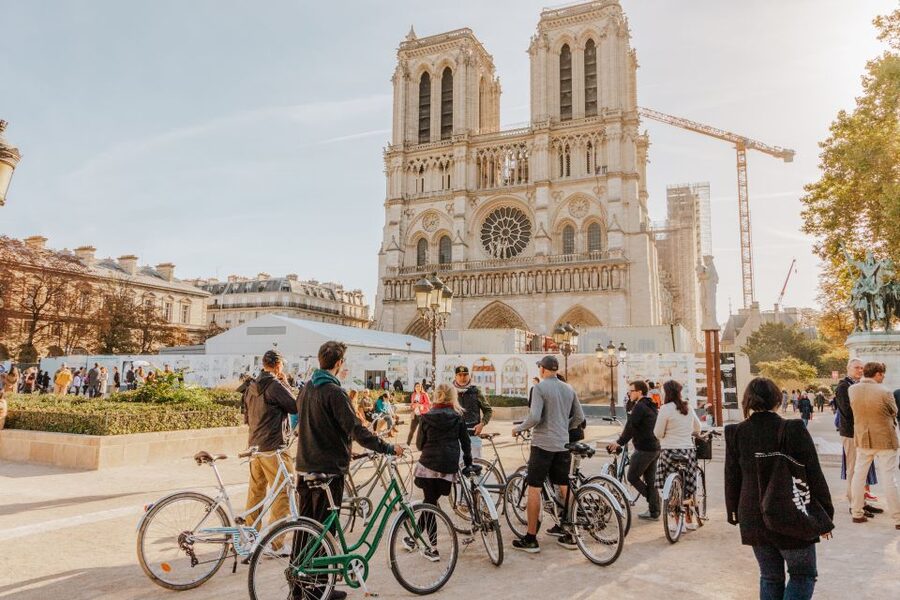
The first major wow happens early. Your guide points out Notre Dame, including its history and the ongoing story of reconstruction. Whether you’re a history nerd or just want to understand what you’re seeing, you’ll get the kind of basics that make the cathedral feel less like a backdrop and more like a living part of the city.
Next, you swing around the island and pass a local flower market. This is a small detail, but it gives you a real-sight rhythm—Paris isn’t only grand stone. It’s also everyday stalls and people doing normal things right next to monuments.
You then head to the Palais de Justices area, which is a big shift from romantic cathedral vibes into official, storied Paris. After that, you ride past the Fontaine Saint-Michel in the Latin Quarter. That fountain sits on a busy axis of the city, and being able to glide through here on a bike lane is far smoother than trying to fight foot traffic.
One of my favorite “how Paris works” stops is Pont des Arts, described as Paris’s first lock bridge. Your guide also connects it to the importance of Paris bridges and the Institute of France. Even if you’re not obsessed with institutional history, it helps you notice how bridges tie together neighborhoods and ideas—not just sides of a river.
Back Door Louvre Courtyards and the Pyramid Moment
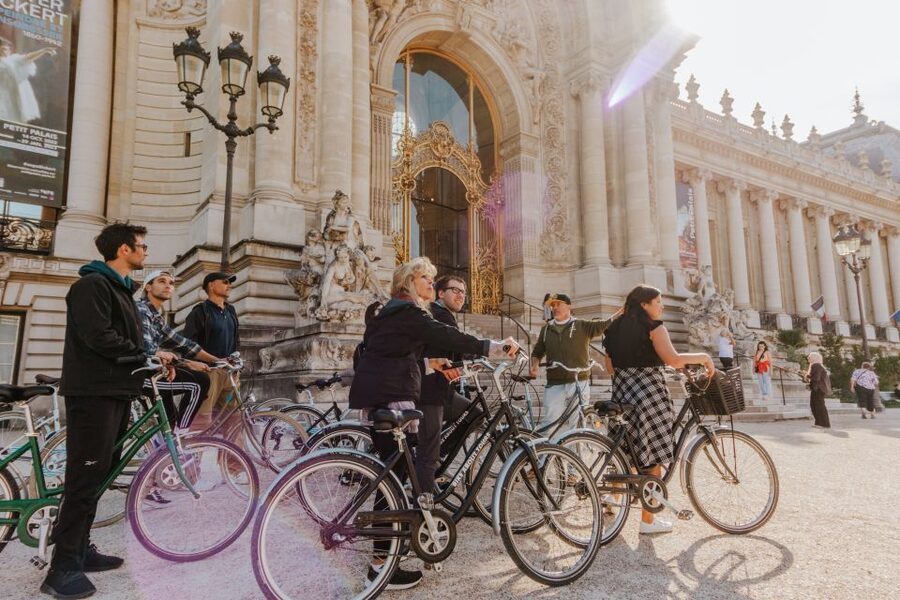
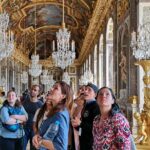
Instead of treating the Louvre like a single massive destination, this tour uses a different strategy: you enter through a back entrance, then meander through courtyards. That’s valuable because it changes the pace. You’re not trapped inside a giant museum labyrinth for hours. You’re seeing the Louvre’s setting—the architecture, the spaces, and how the buildings frame views.
You’ll start with the older courtyard—cobblestones, classic stone textures, and the kind of atmosphere that makes the Louvre feel like a whole world, not just a ticket price and a crowd line. Then the route guides you through archways into the larger courtyard, where the Louvre pyramid sits in the view.
You’ll have time for family photos, which matters if you’re traveling with kids or just want a moment where everyone looks up and you don’t feel rushed. And with views toward the Tuileries Garden and the Musée d’Orsay along the way, you get a bigger picture of how these cultural icons line up.
If you’re the type who wants inside-the-museum highlights, this won’t fully replace a Louvre visit. But it does a lot better than a quick pass-by, because it gives you the Louvre’s bones and geometry.
Tuileries and Orsay Views That Turn Movement Into Sightseeing
There’s a quiet genius in how this tour handles the middle stretch. You don’t just jump from one landmark to the next like a checklist. You travel through sections where you can actually see the city’s layout—the way gardens, museums, and avenues relate to each other.
When you’re getting views toward the Tuileries Garden and the Orsay Museum, you’re seeing Paris as a connected system. And since you’re cycling, you get that “moving viewpoint” that walking can’t quite replicate. It’s especially good if you’ve already toured museums earlier in your trip and want something scenic and architectural instead of another indoor marathon.
Les Invalides via Place de la Concorde and the Alexander Bridge
Next up is Les Invalides, and the ride there is part of what makes it satisfying. You’ll pass Place de la Concorde, which was once the site of a monarch-executing guillotine. Today, that same square anchors around an Egyptian obelisk. Your guide’s job here is to help you read the place: same space, different meaning across time.
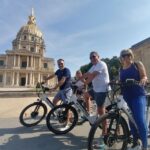
Crossing the Alexander Bridge gives you a clean approach toward Les Invalides, and you’ll see it head-on. It’s famous for Napoleon Bonaparte’s resting place, and that detail helps you understand why people treat this stop like more than “yet another church or building.”
This section works well because it’s not only sightseeing. It’s context. The tour takes you from the shock of Place de la Concorde’s historical references to the heavier, more personal story attached to Napoleon’s tomb.



Rue Cler Snack Break and the Road to the Eiffel Tower
At some point, you’ll be grateful you planned for fuel, and that’s where Rue Cler fits in. It’s a pedestrian street loaded with snack options, and your guide builds in a pit stop so you can grab something like a crêpe or an éclair.
Two practical tips here:
- Since food or drinks aren’t included, decide what you’re buying before you start browsing so you don’t lose time.
- If you’re riding with kids, this is the moment to reset their patience.
After the snack stop, you pedal through smaller streets toward the Eiffel Tower. Then comes the major highlight: you bike alongside Paris’s most famous landmark until you connect back to your reliable bike path and cross the river.
An Eiffel Tower stop always has a risk: it can turn into a photo-only moment with no real feeling of place. This tour avoids that because you’re actively moving past it, seeing it from multiple angles as the city unfolds around you.
Riding Back Across the Seine: Grand and Petit Palais, Arc de Triomphe, and Champs-Élysées
On the return, you pick up more big-name sights without losing momentum. You’ll pull into the Grand and Petit Palais area and learn about the World’s Fairs that once took place in Paris. That’s an extra layer worth paying attention to, because it explains why so many of these monumental buildings feel grand in a specific, promotional way—they were designed to impress the world.
Then you’ll get a photo op at the Arc de Triomphe and ride along Champs-Élysées. This is where the “you’ll see a lot” nature of the tour becomes very real. You’ll cover iconic avenues and squares, but because the route is built around bike paths and safe movement, some areas may be passed more than once as you loop through the city.
If what you want most is variety—like Montmartre climbs or less-touristed neighborhoods—this ride is mainly tuned to core central landmarks, not side quests. In other words, it’s designed to make Paris look coherent and classic, not to send you hunting for every offbeat district.
Two Tunnels and a Riverside Finish That Feels Like a Little Reward
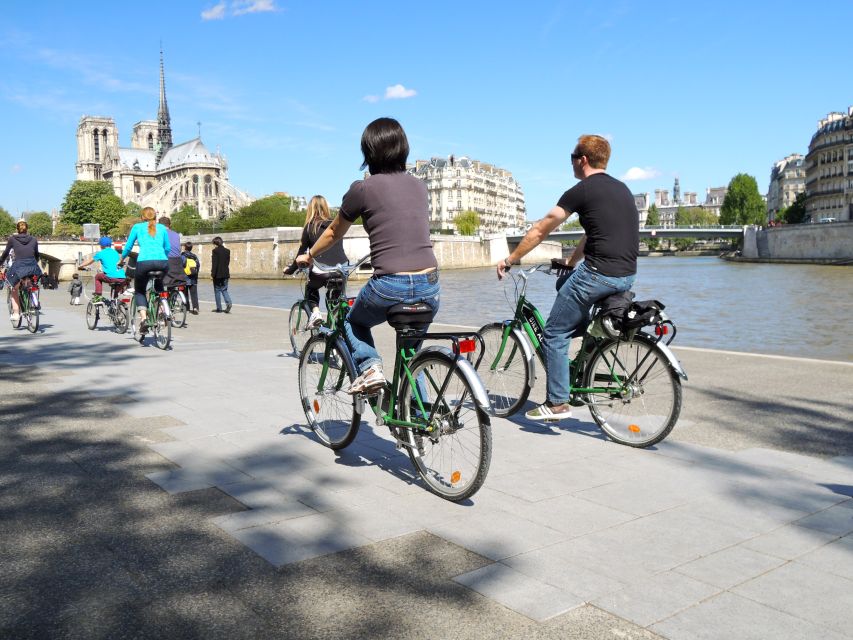
The final stretch ends back near the meeting point, and it doesn’t fizzle out. You’ll ride along the Paris riverside and include two fun tunnels, which is exactly the kind of “small surprise” that helps a tour feel memorable rather than like a long series of straight lines.
This finishing section is a good mental reset. By the time you hit the riverside, you’ve already seen the biggest monuments. Now you’re back to that Paris feeling of motion—water, reflections, and the sense that the city is wide open in front of you.
How the 3.5 Hours Feels: Flat Route, Photo Stops, and Realistic Expectations
The route is described as straightforward, with most of the journey on bike paths, and it stays flat. That’s huge. When a tour is flat, you can focus on steering clear of tourists and enjoying the views instead of wondering how your legs will hold up.
It runs for about 13 kilometers, with plenty of stops for photos and history. Stops are where you’ll decide if the tour is your style. If you like learning while you walk through a place—great. If you want shorter explanations and faster photo turns, plan to keep your own questions handy and treat the guide’s storytelling like the bonus layer, not the main event.
One more expectation check: the pacing assumes you can ride a bike confidently. This is not recommended if you don’t know how to ride. And even if you’re an experienced cyclist, bring gloves if you get sore hands—stop-and-start city riding can still add up.
Price and Value: What $113,875 Per Person Means for Your Decision
The listed price is extremely high for a 3.5-hour group cycling tour, and that’s exactly why you should think about value before you book. At that number, you should be sure you’re getting what you came for: a guided ride, bikes, and a structured route that hits major monuments efficiently.
Here’s what is included:
- Tour guide
- Bikes and helmets (if desired)
And what is not included:
- Food or drinks
So you’re paying primarily for access, route planning, and the guide’s knowledge, not for meals or museum entries. If you’re traveling as a family and you’ll actually use the bike time to see multiple major sights in one go, the value can start to make sense—especially compared with coordinating separate taxis, metros, and timed entrances.
If you mostly want a few iconic photos and you prefer to wander independently, you may decide this isn’t worth the premium. If you want a guided “big hits” Paris run with less stress and better bike-lane flow, it’s more compelling—just double-check that the price you’re seeing matches what you’re comfortable paying for a short ride.
Quick practical note: you get free cancellation up to 24 hours in advance and a reserve & pay later option, which is helpful if you’re still shaping the rest of your Paris days.
Who This Tour Best Fits (and Who Should Pass)
This is a strong fit if you:
- Can ride a bike well and want a mostly flat, bike-lane route
- Want to see Notre Dame, the Louvre courtyards, Les Invalides, Rue Cler, and the Eiffel Tower in one outing
- Appreciate history context but still want frequent photo stops and movement
It’s not the best fit if you:
- Don’t ride bikes confidently (this one is not designed for that)
- Want lots of time for wandering into neighborhoods beyond the core monuments
- Prefer shorter storytelling and quicker stops with less explanation
Also, because it’s in English, it works best if you want guided explanations in English rather than a multilingual or self-guided approach.
Should You Book This Paris Monument Cycling Tour?
I’d book it if you want one efficient, high-impact ride that hits the classic Paris lineup without making you stitch together transit plans. The combination of bike lanes, a Marais start, and stops built around courtyards, bridges, and riverside views makes the day feel like more than a walking route.
I’d think twice if the goal is to avoid storytelling and just maximize photos fast. And with the price sitting at a very premium level, you should make sure you’re comfortable paying for the guided planning plus bike convenience—because meals aren’t included and the ride is still only about 3.5 hours.
If you’re looking for a classic, organized Paris overview on wheels, this tour delivers. If you want a looser, neighborhood-hopping day, build your own route instead.
FAQ
Where does the tour start?
It starts at Le Peloton Café, 17 rue du Pont Louis-Philippe in the Marais.
How long is the cycling tour?
The tour runs for 3.5 hours.
What is the route like in terms of difficulty?
The route is described as flat and straightforward, with most of the journey on bike paths. It is not recommended for people who do not know how to ride a bike.
How far will we cycle?
The route runs for about 13 kilometers.
Are bikes and helmets included?
Yes. Bikes and helmets (if desired) are included.
Is food or drinks included?
No. Food or drinks are not included, so you’ll want to plan purchases during stops like Rue Cler.
What language is the tour guide?
The live guide provides the tour in English.
What should I bring?
Bring a hat and gloves. If you ride in colder months, pack layers.
Where does the tour end?
The tour ends back at the meeting point in the Marais.
If you tell me your dates and whether you’re riding with kids or a non-rider, I can help you decide if this specific 3.5-hour format matches your Paris plan.