REVIEW · BUDAPEST
Budapest Highlights Bike Tour with a local guide
Book on Viator →Operated by Budapest Bike Breeze · Bookable on Viator
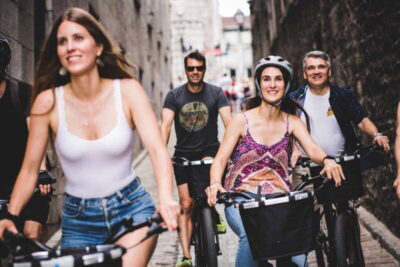
Budapest feels different when you pedal it. This highlights-focused bike tour is fun and eco-friendly, and it gets you into streets cars can’t reach while a local guide connects the city’s story to what you’re seeing. I especially like the intimate size and the way the route mixes big landmarks with small details. The main thing to consider is the traffic feel on major bridges, where space can feel tight and you’ll share the area with buses and pedestrians.
You’ll glide along famous boulevards like Andrassy Avenue at an easy pace, then cut through tighter inner-city areas for quicker views and more story time. Guides such as Balázs, Katy, Dany, and Bowlash come up in the experience history for being clear, professional, and safety-minded, with pacing that doesn’t rush you. At 3 hours 30 minutes for about $42.05, the value is strong if you want a guided overview without spending the whole day on transit.
One more practical note: several stops are marked with admission not included (like the Opera House, Széchenyi Baths, St. Stephen’s Basilica, the House of Terror, and the Parliament), so plan for optional entry choices. Still, even when tickets aren’t included, you’re set up to see plenty up close—and the guide’s recommendations help you decide what’s worth your time later.
In This Review
- Key things that make this tour worth your time
- Why this bike tour is a smart way to get bearings in Budapest
- Meeting point at Rumbach Sebestyén u. 10: what to expect before you roll
- Elizabeth Square and the Danube-watching start
- Andrassy Avenue: riding a UNESCO boulevard at an easy pace
- Opera House exterior stop and why the details matter
- Heroes’ Square to Vajdahunyad Castle: big monuments and storybook scenery
- The castle lake in winter and the House of Music in summer tones
- Széchenyi Baths: thermal culture without the long soak
- City Park riding and the lake pause: a break from monuments
- St. Stephen’s Basilica and the House of Terror: faith and fracture
- Szabadság tér and the Parliament: from Soviet memory to national power
- Bridges and Danube panoramas: the views are worth it
- Castle Garden stop: terraces, fountains, and a handoff to your next walk
- How much time and money you’re really spending
- Who should book this bike tour (and who might want a different plan)
- Quick FAQ for planning your ride
- FAQ
- What time does the Budapest Highlights Bike Tour start?
- Where does the tour meet, and does it end nearby?
- Is the tour offered in English, and how big is the group?
- Are entrance tickets included for every stop?
- What kind of physical fitness do I need?
- Will I get a mobile ticket?
- What if my plans change—can I cancel for a refund?
- Should you book this bike tour?
Key things that make this tour worth your time
- Car-light sightseeing: You ride down narrow streets and squares that cars and buses can’t access.
- Small group energy: With a maximum of 12 people, you get a more personal rhythm with your guide.
- Real “see it, then understand it” history: Each stop is tied to Hungarian culture and how modern Budapest formed.
- Great landmark coverage in one ride: Elizabeth Square, Heroes’ Square, City Park, and the Parliament area all get covered.
- Guides praised for safety and calm pacing: People highlight smooth bike handling and not feeling rushed.
- Ticket choices you control: Some sites are exterior-focused or optional for paid entry, so you can budget your day.
Why this bike tour is a smart way to get bearings in Budapest
If Budapest is your first stop on a trip, this type of tour gives you fast context. You start at Elizabeth Square, then move through key corridors and city parks, picking up names, timelines, and connections as you ride.
I like that the tour doesn’t just point and zoom. You stop often enough to absorb the scene—then you’re back in motion, so the tour stays fun instead of turning into museum pacing.
The small-group limit matters more than it sounds. With fewer riders, you get less accordion traffic at corners, easier listening during mini-talks, and more room to ask questions when something clicks.
You can also read our reviews of more tours and experiences in Budapest.

Meeting point at Rumbach Sebestyén u. 10: what to expect before you roll
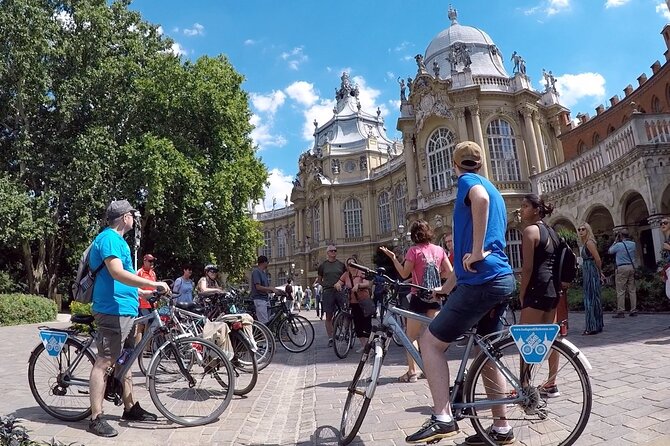
The tour starts at 10:00 am at Budapest, Rumbach Sebestyén u. 10, 1075 Hungary, and it ends back at the same meeting point. That round-trip setup is handy because you can plan lunch or your next stop without guessing where you’ll finish.
The meeting area is near public transportation, which makes it easier to combine this with the rest of your day. You’ll also get a mobile ticket, and confirmation comes at booking time, so you’re not scrambling for paperwork.
Because the tour lists moderate physical fitness as the baseline, I suggest bringing water and staying honest about your comfort level. Even with a relaxed pace, you’re still doing a steady ride for a few hours.
Elizabeth Square and the Danube-watching start
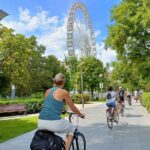
Elizabeth Square (Erzsébet tér) sets the tone right away. You get a quick overview of Budapest’s history and the surrounding area, with visual anchors like the Budapest Eye Ferris wheel and the historic Danube Fountain.
This first stop works because it’s lush, open, and easy to orient yourself. You’ll be able to connect later views of the river and major city spaces to the story your guide is telling.
It’s also a short stop, which keeps the momentum. About 10 minutes gives you context without turning the ride into a waiting game.
Andrassy Avenue: riding a UNESCO boulevard at an easy pace
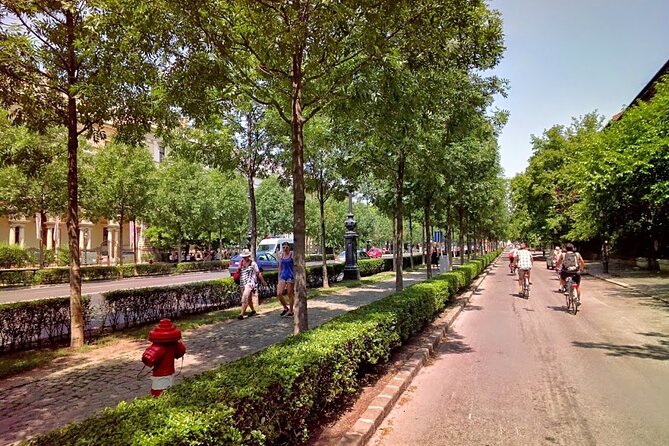
Next comes Andrassy Avenue, known for its elegant neo-Renaissance architecture and UNESCO World Heritage status. You’ll ride along the boulevard at a light pace with relatively few stops—perfect for settling into the flow of the bike tour.
I like this segment because it balances straight-line sightseeing with guide commentary. The avenue is prestigious, but from a bike you also catch the street rhythm that you’d miss on foot.
Andrassy Avenue is also linked to big “firsts,” including the tour’s mention of the first subway line on the continent. That kind of context makes the city feel more connected instead of like a list of photos.
Opera House exterior stop and why the details matter
You’ll stop by the Hungarian State Opera House (Magyar Állami Operaház). Even if you’re not going inside, the building’s rich ornamentation and acoustics are part of the pitch the guide brings to the street.
This stop is brief (around 5 minutes), and admission here is not included. So it’s really more about seeing the façade and learning why it’s a landmark on Andrassy Avenue.
If you’re the type who likes to plan your day with intention, you can use this stop as a trigger. You might decide whether an Opera House visit is worth adding later, since your guide points out what makes it special.


Heroes’ Square to Vajdahunyad Castle: big monuments and storybook scenery
Heroes’ Square is surrounded by the Millennium Monument and statues of key Hungarian historical figures. The guide uses this space to explain Hungarian history and statesmen in a way that feels tied to the actual symbols you’re standing near.
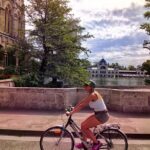
Then you head into City Park and the fairy-tale vibe of Vajdahunyad Castle. This stop is both scenic and educational: the castle showcases different architectural styles from Hungarian history, and it also houses the Museum of Hungarian Agriculture.
There’s time to absorb the look of the place, which is crucial in Budapest because so many buildings feel like they belong to different eras. From the bike, you get quick angles that make the castle feel more dimensional than a single viewpoint on foot.
The castle lake in winter and the House of Music in summer tones
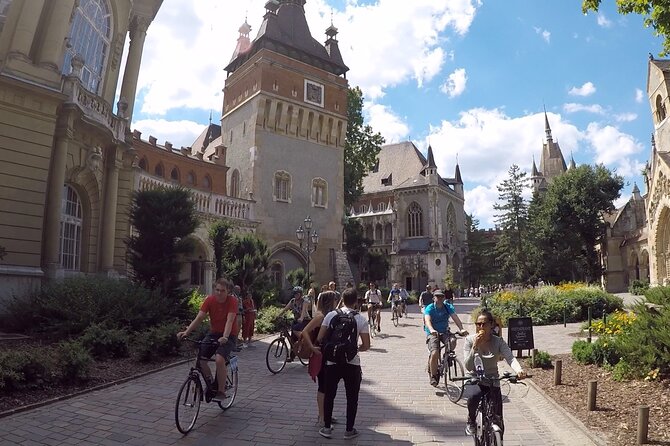
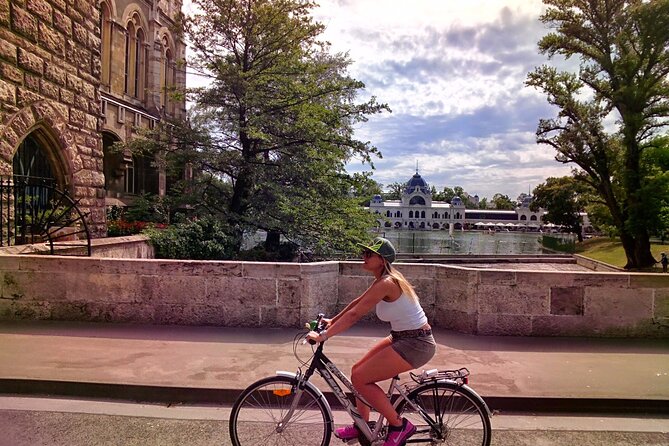
You’ll also pass the lake that surrounds Vajdahunyad Castle. In winter, it’s used as the scenic ice-rink of Budapest, which gives you a seasonal detail that’s easy to remember for later.
Right after that, the route includes a stop at the House of Music Hungary in City Park. The focus here is music history paired with innovative interactive exhibitions, which is a nice change of pace from purely architectural stops.
Admission is free at this point in the tour flow, so you’re not being pushed toward another ticket purchase just to justify time. Even if you don’t enter, it’s a strong landmark stop that helps balance the day: monuments and then a modern cultural venue.
Széchenyi Baths: thermal culture without the long soak
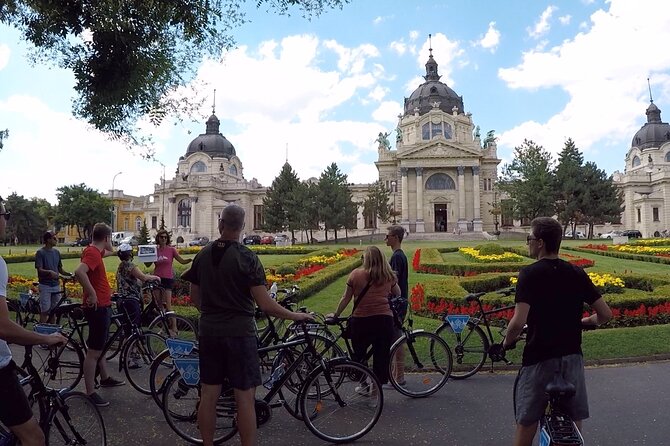
One of the most recognizable moments in the ride is the stop at Szechenyi Baths and Pool. The tour frames it as Budapest’s most fabulous thermal bath experience and explains the local bathing culture.
This is also one of Europe’s largest and best-known thermal bath complexes, with the classic neo-Baroque architecture as part of the appeal. The big practical point: admission for this stop is not included, so this is more for learning and spotting the place than for a full bath session.
If you’re thinking about actually going in later, this stop helps you gauge whether you want a morning soak or an evening visit. And you’ll understand what makes the setting feel so iconic before you ever buy a ticket.
City Park riding and the lake pause: a break from monuments
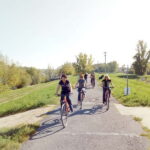
From Széchenyi, the route shifts back into relaxed riding through Varosliget/City Park. You get a lush stretch of green space—plus another stop at its lake area—before the tour starts turning toward more intense history and government landmarks.
I like this because it prevents “sightseeing fatigue.” The bike pace keeps it moving, but the setting is calmer than the squares and monumental buildings.
It’s also a good time to reset your eyes and your legs. By the time you reach the next cultural and historical sites, you’ll feel less drained.
St. Stephen’s Basilica and the House of Terror: faith and fracture
St. Stephen’s Basilica (Szent István Bazilika) is next, with a stop that focuses on the origin and religions of Hungarians and the mention of the holy right hand. Admission is not included here, so the moment is about understanding what the basilica represents and why it’s central.
Then comes a heavier pivot: the House of Terror Museum area. The building was used by the Gestapo and Communist secret police headquarters, and you’ll also see a piece of the Berlin wall.
This stop centers on Hungary’s struggle under fascist and communist regimes, with exhibits that are meant to commemorate victims of oppression. It’s one of those parts of the day where you’ll want a moment of quiet—because the information hits harder when you’re not rushing.
Admission is not included, so you’ll need your own decision later if you want deeper time inside. Either way, it helps to see the setting first so the museum’s themes land faster.
Szabadság tér and the Parliament: from Soviet memory to national power
At Szabadság tér, the tour points out the last standing Soviet army memorial in Budapest. The square is surrounded by grand historic buildings and monuments, but it’s presented with a peaceful atmosphere—so you can look without feeling surrounded.
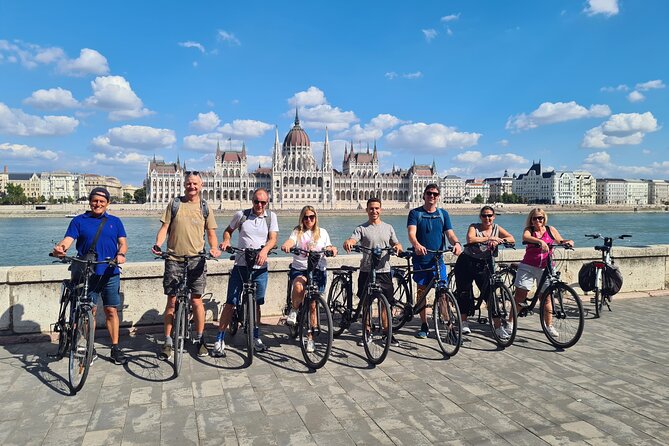
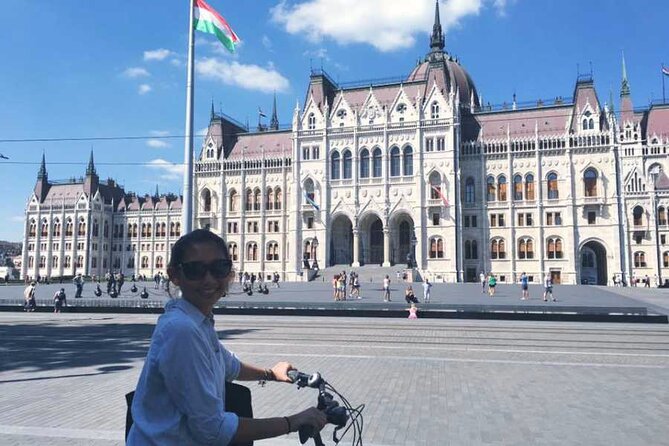
From there, you ride to the Hungarian Parliament Building. This neo-Gothic landmark is highlighted for being the 3rd largest Parliament building in the world and as the home of Hungary’s National Assembly and the Holy Crown.
Admission is not included for this stop, which often means you’ll be viewing it from the outside or in a guided orientation moment. Even so, it’s a big “wow” site, and the guide’s explanation gives you enough background to appreciate why it’s so central to national identity.
Bridges and Danube panoramas: the views are worth it
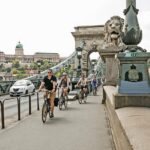
The route includes a ride along one of Budapest’s first bridges, plus Danube panoramas. You’ll get views over the river and across toward Buda as you roll along, and the guide also provides recommendations for what to walk around later.
This is where the day becomes more photo-friendly. From a bike you can catch angles quickly, and you’re positioned at street level for the kind of perspective that feels more real than a viewpoint from a distance.
There is one caution, though, and it came up for a reason: the chain-bridge area can be tight. It’s narrow, with buses moving in both directions and no dedicated bike lane, so you’ll be sharing space with traffic and pedestrians. If you’re nervous around tight road conditions, it’s smart to say so to your guide before you approach that section.
Castle Garden stop: terraces, fountains, and a handoff to your next walk
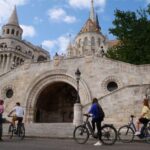
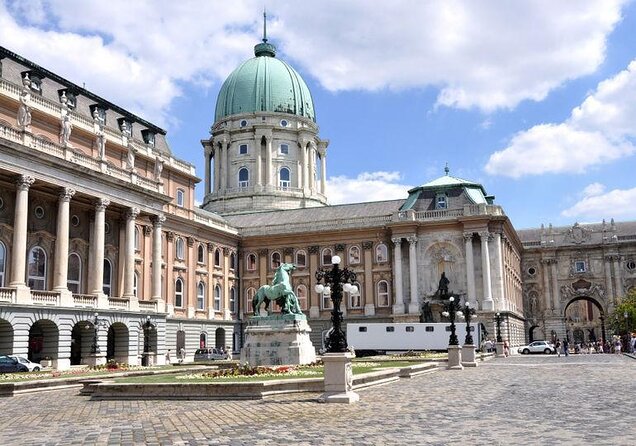
You’ll finish up near Castle Garden, a beautifully restored neo-Renaissance park with views down toward the Danube. The guide’s stop here focuses on the Buda Castle and the Royal palace, plus it includes recommendations about what to visit there on your own.
Castle Garden is a great wrap-up because it’s calm and scenic. You get a sense of where to wander without feeling like you’ve run out of energy.
The final ride along the bridge gives one last panorama, helping you connect the castle area to the river route you just traveled. When you’re done, you return to the meeting point, so you can pivot right into exploring on foot.
How much time and money you’re really spending
The price—about $42.05 per person—buys you a guided overview plus bike time across multiple major city areas. Since many landmark stops have admission not included, you’re not paying entry fees for everything.
That can be a good value if your goal is orientation and story, not stacking ticketed experiences all in one day. If you do choose to add paid entries later, this tour helps you pick the right ones by matching what you saw to what you might care about most.
The tour lasts about 3 hours 30 minutes, which is long enough to feel like a day-travel highlight, but short enough to still keep your evening flexible.
Who should book this bike tour (and who might want a different plan)
This is a strong fit if you want a guided tour that covers Budapest’s top landmarks without turning your day into a bus-and-wait schedule. It’s also great if you like learning as you go—history that connects to places you can see right in front of you.
It’s less ideal if you have concerns about riding in areas where bridge traffic can feel narrow and shared with buses and pedestrians. If you fall into that category, talk to the operator ahead of time or plan to be selective about what parts of the route feel comfortable.
Quick FAQ for planning your ride
FAQ
What time does the Budapest Highlights Bike Tour start?
It starts at 10:00 am and runs for about 3 hours 30 minutes.
Where does the tour meet, and does it end nearby?
You meet at Budapest, Rumbach Sebestyén u. 10, 1075 Hungary, and the tour ends back at the same meeting point.
Is the tour offered in English, and how big is the group?
The tour is offered in English. It has a maximum group size of 12 travelers.
Are entrance tickets included for every stop?
No. Some stops are free to view in the tour flow, while others list admission not included, including the Hungarian State Opera House, Széchenyi Baths, St. Stephen’s Basilica, the House of Terror Museum, and the Hungarian Parliament Building.
What kind of physical fitness do I need?
The tour lists a moderate physical fitness level. You should be comfortable riding for several hours with some movement between stops.
Will I get a mobile ticket?
Yes. You’ll receive a mobile ticket, and confirmation is received at booking time.
What if my plans change—can I cancel for a refund?
Free cancellation is available up to 24 hours in advance for a full refund. If you cancel less than 24 hours before the experience starts, the paid amount is not refunded.
Should you book this bike tour?
Yes, if you want a high-sight-density Budapest primer with the kind of guidance that turns monuments into stories. The small group size, the emphasis on key landmarks, and the calm, safety-minded bike handling make it a practical way to learn the city fast.
Book it especially if you’re the type who likes to walk more after the tour. The guide’s recommendations around the Castle area and what to explore on foot help you turn this 3.5-hour ride into a longer, better day.