REVIEW · TOKYO
Tokyo Great Cycling Tour
Book on Viator →Operated by 東京グレートサイクリングツアー · Bookable on Viator
Tokyo is big. This tour lets you move through it fast on two wheels. You get bike access to spots that buses can’t comfortably reach, and you pack in major sights with real context as you pedal. The main thing to consider is the day still moves at a cycling pace, so moderate fitness matters—especially if it’s hot.
What I like most is how the route connects very different parts of Tokyo in one smooth day: market energy, temple calm, and the Imperial Palace area. I also love the small-group setup (max 12), which makes it easier to ask questions and stay together. One practical caution: the tour runs in good weather, and on very hot days plans may shift (a picnic turned into izakaya lunch in one account I read).
In This Review
- Key Things to Know Before You Ride
- Cycling Tokyo Like a Local, Not Like a Checklist
- Meeting Point and Timing: Start Clean, Finish Close
- Price and Value: Why $99.49 Can Work
- The Route’s Real Magic: From Old Traditions to City Power
- Stop 1: Tsukiji Jogai Market Energy in 15 Minutes
- Stop 2: Zojo-ji Temple and the Tokyo Tower Contrast
- The Middle Stretch: High-Rise Tokyo and an Unexpected Cemetery
- Stop 3: Meiji Jingu Shrine and a Breath of Calm
- Stop 4: Imperial Palace Area and the Sense of Place
- Guides, Safety, and the Human Touch
- What to Expect With Heat: Plans Can Shift
- How to Prepare: Simple Stuff That Makes or Breaks the Day
- Who Should Book This Tokyo Great Cycling Tour?
- Final Call: Should You Book It?
- FAQ
- How long is the Tokyo Great Cycling Tour?
- What is the maximum group size?
- Where does the tour start and what time does it begin?
- What fitness level do I need?
- Are there admission fees for the stops?
- Do I get a ticket on my phone?
- When will I receive confirmation after booking?
- What happens if the weather is poor or I cancel?
Key Things to Know Before You Ride
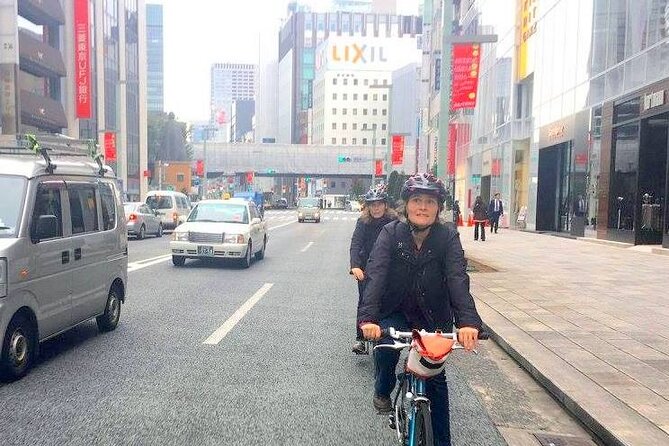
- Max group size of 12 keeps the ride personal and easier to manage on city streets.
- Free admission stops at Tsukiji Jogai Market, Zojo-ji, Meiji Jingu, and the Imperial Palace area help your budget.
- Bike access means you spend less time stuck in routes buses can’t take as well.
- Multiple guide names show a real team: Toshi, Naoko, and Nick are mentioned in rider accounts.
- About 6 hours is long enough to cover a lot, so plan on being active most of the day.
Cycling Tokyo Like a Local, Not Like a Checklist
This is the kind of Tokyo day that feels efficient without feeling rushed. Instead of hopping on and off trains and disappearing into crowds, you stay moving. The big win is that biking lets you reach areas you’d struggle to cover on foot in a single afternoon.
And Tokyo rewards pacing. The city changes block by block. One minute you’re near market buzz, the next you’re looking at old temple architecture beside an ultra-modern skyline. Riding keeps you in that flow.
You can also read our reviews of more tours and experiences in Tokyo.
Meeting Point and Timing: Start Clean, Finish Close
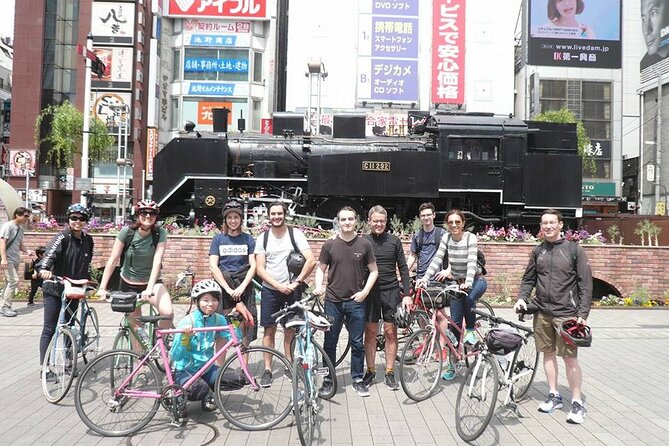
The tour meets at Tokyo Great Tours, 1-chōme-3-2 Shinkawa, Chuo City (near public transportation). It starts at 9:00 am and ends back near the meeting point.
That start time is smart. You get your main sightseeing before the day gets too heavy. Also, ending back at the start area saves you the final “now what?” scramble.
If you like having a plan, this schedule gives you one: about 6 hours on the bike with short stops at each highlight.
Price and Value: Why $99.49 Can Work
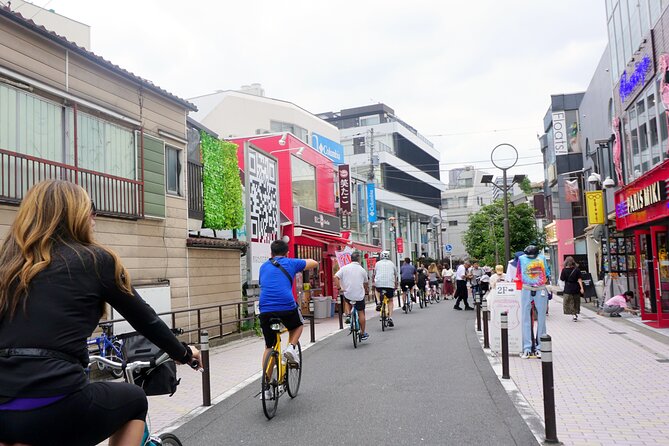
At $99.49 per person, this bike tour costs roughly what you might spend on one major attraction plus transit and a couple of meals. The value comes from the combination: multiple landmark stops, a guided route, and transportation that’s built for Tokyo’s layout.
You’re not paying for entrance tickets at the stops listed. Tsukiji Jogai Market, Zojo-ji, Meiji Jingu, and the Imperial Palace area are noted as free admission. That means your money goes toward the guide, the bike experience, and saving time.
Also, small-group touring matters. With a maximum of 12 people, you’re more likely to get real answers instead of hearing information that’s meant for a mass group. In one rider account, the guides took extra care for safety and wellbeing, especially on a long hot day.
The Route’s Real Magic: From Old Traditions to City Power
This tour connects four major anchors—market, temple, shrine, palace—plus two in-between Tokyo textures that are easy to miss if you’re only doing major sites.
Even without naming every street, the pacing tells you something about Tokyo:
- you see where people shop and live (Tsukiji area energy),
- you contrast ancient religious architecture with modern engineering (Zojo-ji with Tokyo Tower in the background),
- you get a quick look at upscale high-rise Tokyo (shopping, offices, expensive apartments),
- then you notice something unexpected: a cemetery tucked inside fashionable neighborhoods,
- and finally you shift into major spiritual and imperial spaces (Meiji Jingu, Imperial Palace).
That whiplash-from-scene-to-scene is exactly why biking works. You can actually watch Tokyo change as you move.
Stop 1: Tsukiji Jogai Market Energy in 15 Minutes
You begin at Tsukiji Jogai Market, which is still busy even after the Inner Market moved to Toyosu. This stop is short (about 15 minutes), so the goal isn’t a deep food tour. It’s more like orientation: you get the atmosphere right away.
Why it’s worth it:
- You see Tokyo’s daily shopping rhythm, not just photo targets.
- You get a feel for the kind of crowds and street life that set the mood for the rest of the day.
A drawback: because it’s only 15 minutes, you won’t cover everything. If you want to eat your way through Tsukiji, you’ll need a separate plan after the tour.

Stop 2: Zojo-ji Temple and the Tokyo Tower Contrast
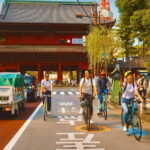
Next up is Zojo-ji Temple, described as an old Buddhist temple. The standout detail is the contrast: traditional temple buildings with Tokyo Tower in the background.
This is one of those Tokyo moments that’s hard to appreciate fully from inside a train window. On a bike, you can slow down just enough to take it in without feeling stuck behind a wall of people.
Admission is listed as free, and the stop is about 15 minutes. That means you get the visual impact and a bit of context, without eating up the day.
Consideration: temple areas can be crowded, and the ride pace means you’ll want comfortable shoes and a willingness to step off and back onto your bike quickly.
The Middle Stretch: High-Rise Tokyo and an Unexpected Cemetery
After Zojo-ji, the route shifts through an area with high-story, expensive apartments, shopping, and office buildings. This part works as a reality check. Tokyo isn’t only temples and history; it’s also money, logistics, and constant reinvention.
Then the tour slows your attention again with a surprising stop: a cemetery located in the middle of fashionable areas. That’s not the kind of place most sightseeing plans automatically include. It’s the sort of contrast that makes Tokyo feel honest rather than curated.
You might find this section especially interesting if you like Tokyo beyond landmarks—if you want the city’s “everyday weird” in the same day as its famous icons.
Stop 3: Meiji Jingu Shrine and a Breath of Calm
Meiji Jingu Shrine is next, and it’s noted as Tokyo’s most popular Shinto shrine. Your time here is about 20 minutes, with free admission.
This stop tends to work for two types of travelers:
- If you want spiritual and cultural context, you’ll get it as you ride through the neighborhoods and then step into the shrine space.
- If you’re mostly chasing the atmosphere, the shrine grounds offer a break from the urban intensity.
Tip for your enjoyment: take a moment to notice how quickly your pace changes once you’re inside. That contrast is part of the experience.
Short stop length note: 20 minutes is enough for a first look, but it’s not a linger-all-day shrine visit. If you’re deeply into shrine details, you’ll probably want a return trip.
Stop 4: Imperial Palace Area and the Sense of Place
The final major highlight is the Imperial Palace, where the Emperor and Empress live (as described in the tour info). The stop is about 15 minutes, again with free admission.
This isn’t a museum-type stop. It’s more about setting: the space, the presence, and the feel of Tokyo’s political and historical center from the outside.
One practical note: the palace area can change how it feels depending on crowd density and what’s happening that day. Since your time is limited, think of this as your guided orientation moment—not a deep historical study.
Guides, Safety, and the Human Touch
One of the most praised aspects of this tour is the way guides look after you. Rider accounts specifically call out guides Toshi and Nick, and also mention Naoko and Nick. The repeated theme is care around safety and wellbeing.
That matters on a cycling tour in a dense city. Even if you’re confident riding, Tokyo streets can feel like a constant flow of moving parts. A good guide keeps the group together, manages turns, and helps you understand what you’re seeing as you go.
If you’re nervous about biking in traffic, the small group size (max 12) is a comfort. It’s easier for a guide to keep track of everyone.
What to Expect With Heat: Plans Can Shift
Tokyo weather can be intense, and one thing I’d take seriously is how the tour handles heat. In a hot-day situation, a rider noted the planned picnic was changed to a lunch at a izakaya.
So, even if you show up expecting one kind of break, be ready for a substitution that keeps the experience comfortable. The day is designed for movement first, and comfort second—but it looks like the team still tries to keep you fed and sane.
How to Prepare: Simple Stuff That Makes or Breaks the Day
You only need moderate physical fitness, but you’ll still be cycling for a good chunk of the tour. Do yourself a favor:
- Wear breathable clothes and comfortable shoes.
- Bring sun protection since you’re outdoors most of the time.
- If you don’t love heat, consider packing a water strategy for the day.
Also, the tour uses a mobile ticket, so have it ready on your phone before you meet. That’s a small detail, but it cuts down stress when you’re trying to find the right spot.
And yes, bicycles are central here. If you can ride a bike confidently, you’ll likely enjoy this far more than someone who treats biking as a giant new project.
Who Should Book This Tokyo Great Cycling Tour?
Book it if you want:
- a high-sightseeing Tokyo day that doesn’t rely on trains nonstop,
- the chance to see major sights like Zojo-ji, Meiji Jingu, and the Imperial Palace area in one run,
- a small-group vibe with a guide who explains what you’re seeing,
- and an experience that helps you understand neighborhoods, not just monuments.
You might skip it if:
- you’re not comfortable riding for hours,
- you want a slow, deep museum-style pace,
- or you’re only interested in one single iconic stop and don’t care about the rest of the route’s contrasts.
This is best for people who like their travel days active and guided—efficient, but not cold or mechanical.
Final Call: Should You Book It?
If you want one afternoon that gives you a lot of Tokyo texture, this bike tour is a strong choice. The route hits major landmarks, but the best part is the connections between them: market energy, temple tradition with Tokyo Tower in the frame, high-rise Tokyo, then a cemetery in the middle of fashionable areas, finishing at Meiji Jingu and the Imperial Palace area.
At $99.49 for a ~6-hour small-group ride, the value is real—especially because the featured stops are free to enter and the guide experience is the main “product” you’re buying.
If you’re comfortable riding a bike and you’re traveling during good weather, I’d say go for it. It’s one of the smarter ways to see Tokyo quickly without turning the day into pure transit math.
FAQ
How long is the Tokyo Great Cycling Tour?
It lasts about 6 hours.
What is the maximum group size?
The tour has a maximum of 12 travelers.
Where does the tour start and what time does it begin?
It starts at Tokyo Great Tours, 1-chōme-3-2 Shinkawa, Chuo City, Tokyo 104-0033 and begins at 9:00 am. It ends back at the meeting point.
What fitness level do I need?
You should have a moderate physical fitness level.
Are there admission fees for the stops?
The tour lists the featured stops as free admission: Tsukiji Jogai Market, Zojo-ji, Meiji Jingu, and the Imperial Palace area.
Do I get a ticket on my phone?
Yes. The tour includes a mobile ticket.
When will I receive confirmation after booking?
Confirmation is received within 48 hours of booking, subject to availability.
What happens if the weather is poor or I cancel?
The experience requires good weather. If it’s canceled due to poor weather, you’ll be offered a different date or a full refund. You can cancel for a full refund if you cancel up to 24 hours in advance of the start time.