REVIEW · MARSEILLE
From Marseille: Guided E-Bike Tour to Calanque de Sormiou
Book on GetYourGuide →Operated by EVTT PROVENCE · Bookable on GetYourGuide
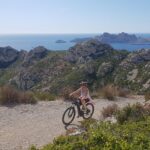
Sormiou feels worlds away from Marseille traffic. This guided e-bike tour puts you in Calanques National Park fast, then guides you to the inlet of Calanque de Sormiou for cliff-and-sea scenery plus a calm ride away from cars. I love the combo of easy electric climbing and wild, close-to-town scenery, and I also like how the guides manage the group pace. One consideration: the route still includes real hills, rocky bits, and some winding descents, so you’ll want decent bike comfort.
The setup is simple and practical: meet near Pointe Rouge Beach, get helmet and gloves, and roll out on a modern electric mountain bike with modes that help you pedal or cruise. It’s also a small group (max 10), which matters in a place where attention and spacing keep everyone safer. The main drawback to plan around is that the meeting garage has no toilets, so you’ll want to handle that before you arrive.
If you’re going between May and October, you’ll also have time to swim or at least cool off at the water’s edge, which is a big part of why Sormiou is so satisfying. Just bring what you need for heat and salt-air—comfortable shoes, sunscreen, sunglasses—and expect to spend most of the morning (about 3 hours total) riding and stopping for views.
In This Review
- Key things that make this e-bike tour click
- Sormiou From Pointe Rouge: why this ride feels “close to the wild”
- How the e-bike experience really works (it’s not cheating)
- Calanques National Park: small roads, big scenery, and the restricted-zone feel
- Calanque de Sormiou: that steep winding descent and the swim payoff
- The terrain reality check: who this fits best (and who should rethink)
- What you’ll learn: ecology stories plus the coast’s strategic “why”
- Guides make the difference: names you’ll likely hear, plus what that signals
- Timing, duration, and what the day feels like
- Logistics that matter: where to meet and how to get there
- What to bring (and what to skip)
- Price and value: why $70 can make sense here
- Should you book this Calanque de Sormiou e-bike tour?
- FAQ
- Where is the meeting point for the tour?
- How long is the guided e-bike tour?
- What’s included in the price?
- Is swimming included, and when can I swim?
- How much does it cost from the cruise port?
- How big is the group?
- What languages are the guides?
- What should I bring and wear?
- How can I get to Pointe Rouge from central Marseille?
- What if I’m late to the start?
Key things that make this e-bike tour click
- Small group (up to 10 riders): easier pacing and more time at photo stops.
- Pointe Rouge start means less city hassle: you ride toward the Calanques without crossing all of Marseille.
- Electric mountain bikes with modes: you can pedal hard, cruise, or mix both on different grades.
- Sormiou’s dramatic descent: a steep, winding downhill is a highlight on a hot day.
- Swim time when conditions allow (May–October): a real payoff, not just a quick photo.
- Guides who adjust to the group: riders with slower speeds and families have reported extra support and safety checks.
Sormiou From Pointe Rouge: why this ride feels “close to the wild”
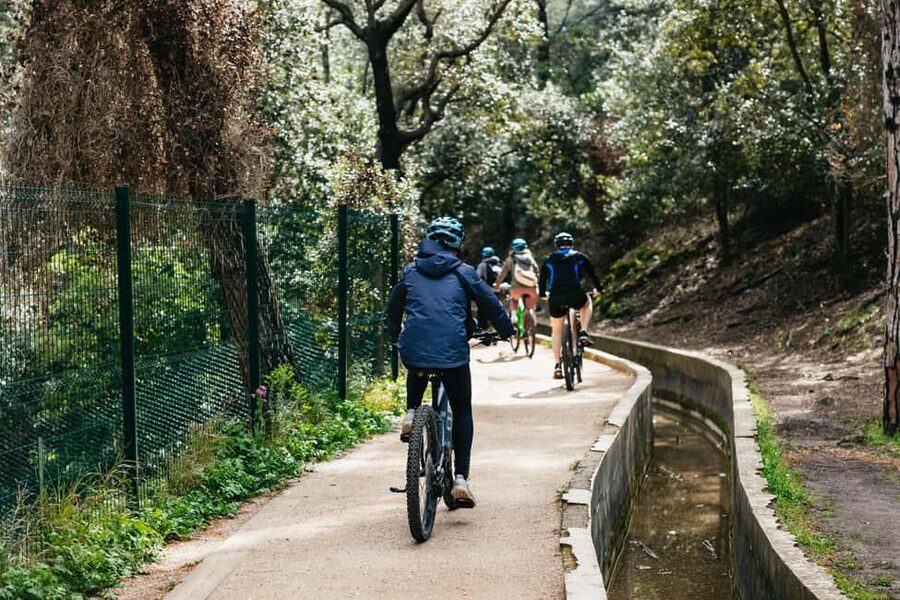
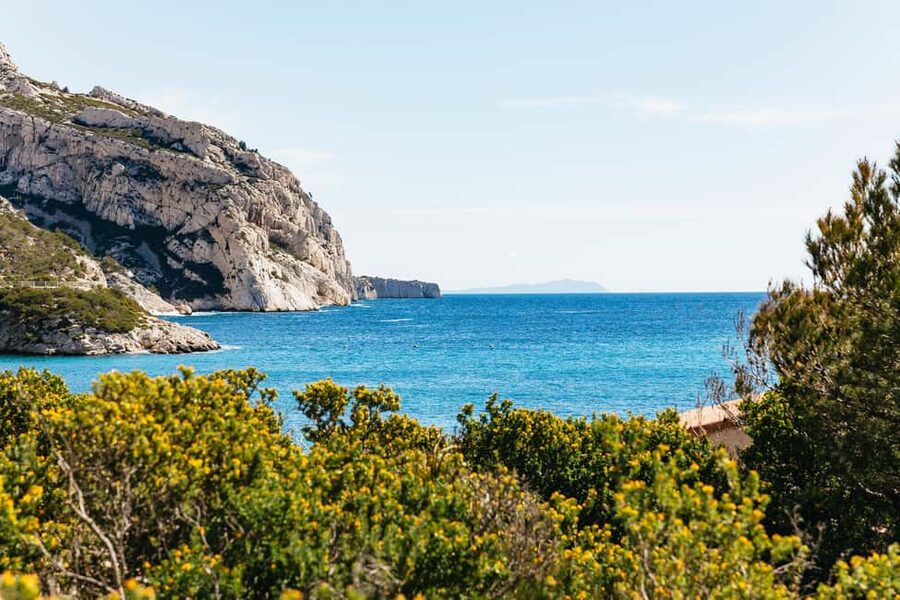
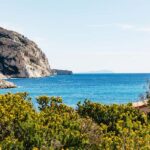
Marseille can be loud and busy, but the Calanques system is one of the fastest ways to feel the opposite. This tour starts at Pointe Rouge, then takes you into the Calanques National Park toward Calanque de Sormiou, a spot famous for limestone walls dropping toward the Mediterranean. The value here is timing: you’re not spending half your day commuting. You’re riding.
What makes it special is how quickly the scenery changes once you leave the main road. You go from coastal views to a quieter massif feeling where traffic fades and the air turns cooler as you gain elevation. Several riders specifically call out the sense of calm that comes when the route stays inside restricted areas where general traffic doesn’t belong. That’s a real quality-of-experience win.
And then there’s the ending: Sormiou’s inlet gives you a classic Calanques payoff. You don’t just look at it from afar. You ride down toward it, with views of the limestone mountains and the sea along the way.
You can also read our reviews of more tours and experiences in Marseille.
How the e-bike experience really works (it’s not cheating)
You ride an electric mountain bike, and you’ll get helmet and gloves at the start. The bikes are described as modern and well maintained, and they’re set up for smooth riding on mixed surfaces. In practice, that means you’ll get help on climbs, but you still have to ride. This isn’t a motorbike. It’s a bike with assistance, and your legs still do their share when the grade turns.
I like that the guides talk you through the bike setup and help you choose what mode makes sense for each stretch. In one praised example, the guide explained which riding mode to use and held back for safety. Another rider noted that the guide used gear settings to keep the group together without turning the ride into a race. When you’re in a small group, that “no one gets lost or left behind” mindset matters.
Also, don’t ignore the detail that some bikes may lack a convenient water-bottle holder. If you tend to drink often, plan for that by packing water in a small backpack. Even if the tour includes a swim break, you’ll still want fluids for the ride.
Calanques National Park: small roads, big scenery, and the restricted-zone feel
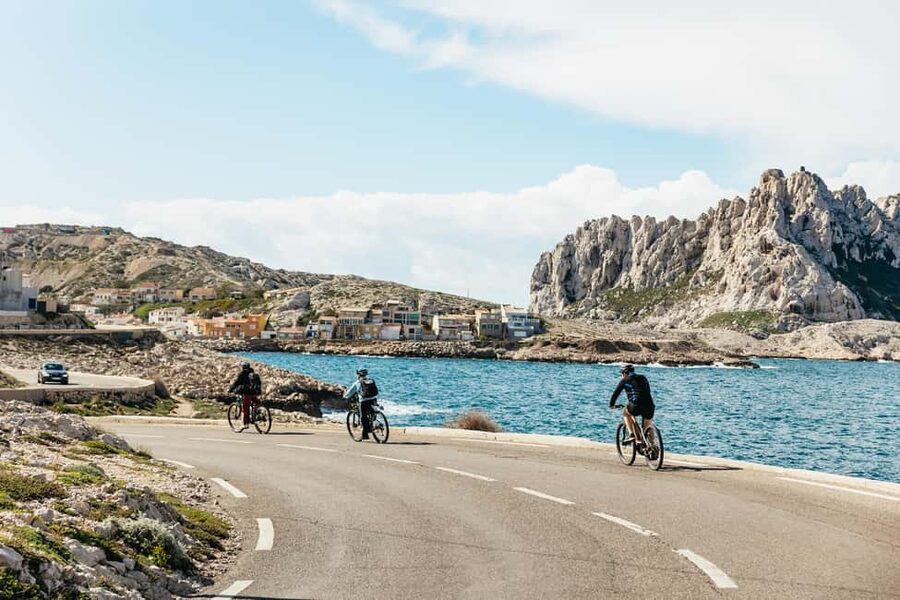
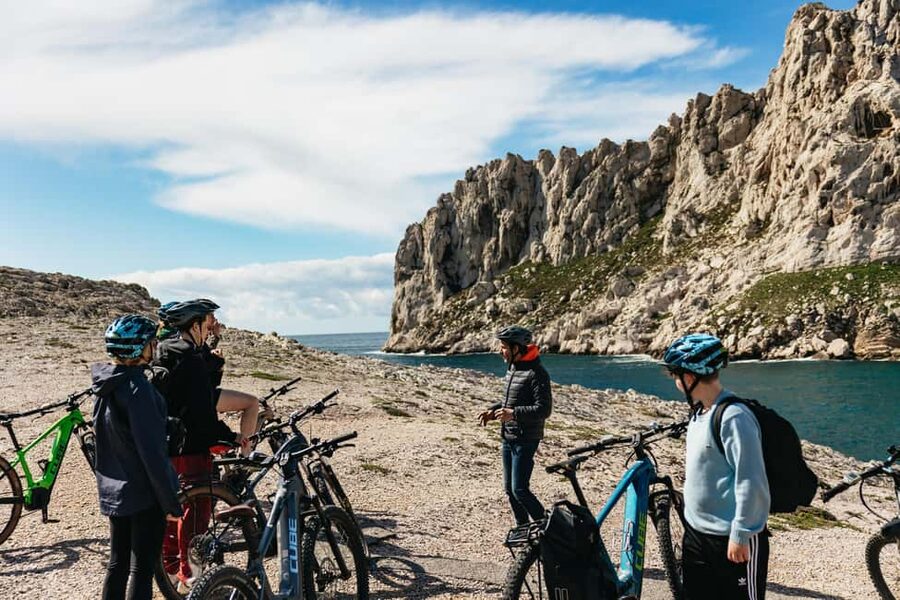
After meeting near Pointe Rouge Beach, you’ll roll along small roads inside the Calanques National Park. A key point here is that you’re headed toward areas of high ecological importance restricted to general traffic. That’s why the day feels different from a standard sightseeing drive-by. You’re in the park, moving at a human pace, with stops that actually let you look.
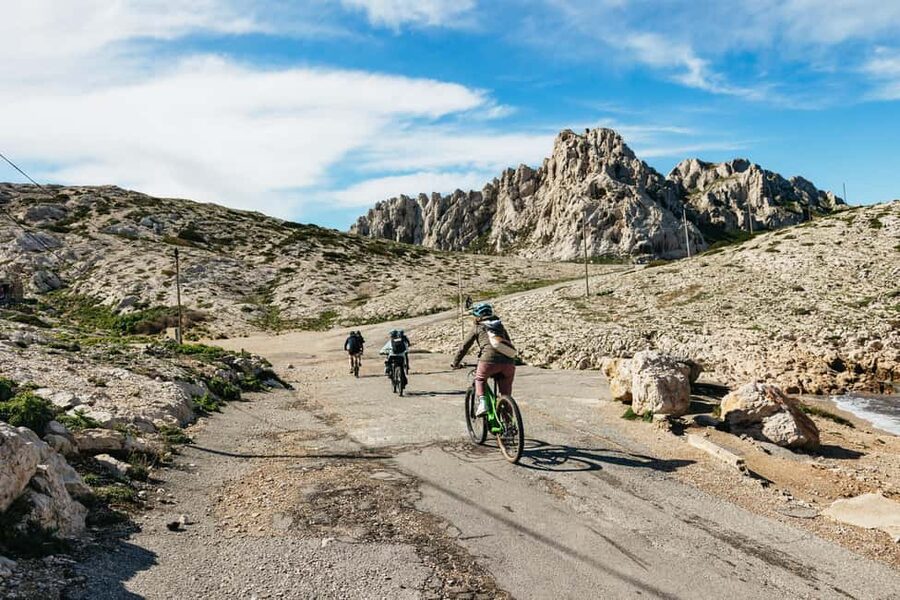
The route has a mix of surfaces: some paved, some unpaved, and some rocky sections. Riders also describe mixed terrain that includes rolling hills plus loose spots. Translation: you’ll want sturdy shoes and careful hands on the handlebars, especially near rockier edges.
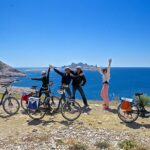
One of the best parts is that the scenery keeps changing as the elevation shifts. You get viewpoints above the cliffs and then the sense of moving “down toward the water.” Several riders highlight how the ride alternates between easier stretches and more work segments, so the day doesn’t feel flat or repetitive.
Calanque de Sormiou: that steep winding descent and the swim payoff
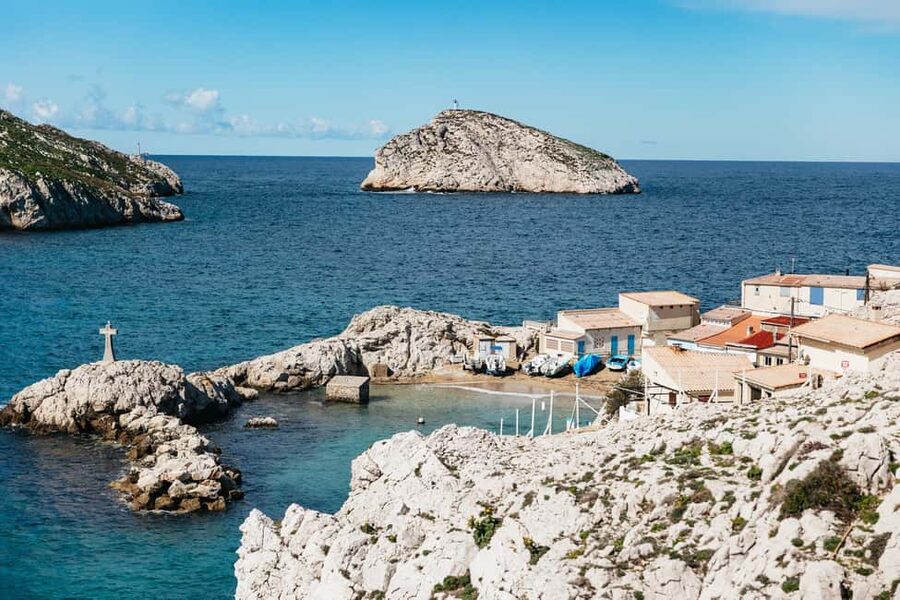
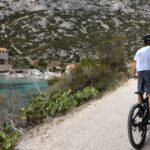
If you want one moment to center your whole morning around, it’s the approach into Sormiou. Multiple riders mention the thrill of descending into the calanque via a steep, winding downhill road. On a hot summer day, that cool breeze effect is real, and it turns the ride into more than just transport.
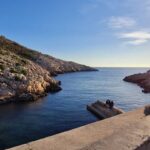
Once you reach Calanque de Sormiou, you’ll have guided time at the inlet. The guide also covers why the spot mattered strategically (this is a coastal geography story, not just a casual history stop). Then you get natural-curiosity moments: bright wildflowers, Mediterranean plants, and the general “look closer” vibe that makes the Calanques more interesting than they seem from a distance.
Between May and October, you should expect the chance to swim or at least spend time resting at the beach area. One thing I’d take seriously from rider feedback: don’t show up empty-handed for a beach moment. Bring swimwear under your day outfit. And if you want to dry off fast, a small towel is worth packing.
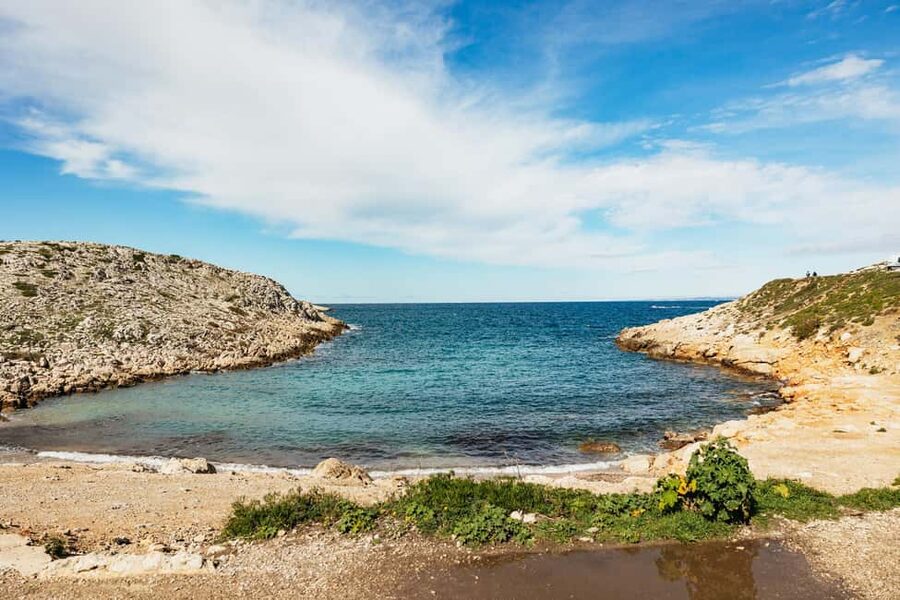
If you’re not swimming, the inlet is still the payoff. Even just sitting and watching the limestone walls and sea line up is a good use of the time here.
The terrain reality check: who this fits best (and who should rethink)
This tour is suitable for ages 12 to 70, but suitability isn’t the same as comfort. You’ll want to be in good physical shape and genuinely comfortable on a bike. Riders call out that it’s doable on e-bikes, but it’s not a Sunday cruise.
Expect:
- Steep climbs and rolling hills: the e-bike helps, but you still pedal on tougher sections.
- Rocky and loose patches: you’ll need careful footing and stable bike handling.
- Winding descents: especially the steep downhill into Sormiou, where braking and control matter.
- Road-edge cautions: one rider noted that some sections run near cliffs and that you should watch for incoming cars.
If you’re a strong rider, the day can feel like a fun adventure loop around the park. If you’re less confident, the guides can help you pace—several reviews mention the guide supporting slower riders and even allowing someone to briefly disembark and walk part of the way.
So my rule for you: if you’re comfortable controlling a bike on hills and uneven ground, you’ll enjoy this a lot. If you want something completely flat and easy, this probably isn’t your best match.
What you’ll learn: ecology stories plus the coast’s strategic “why”
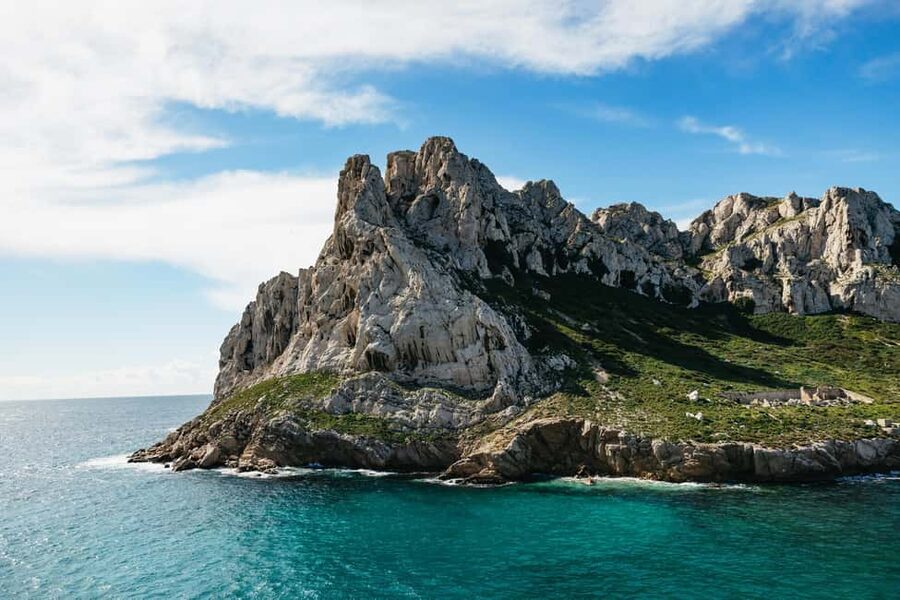
This is where a guided ride beats solo biking. You don’t just move through a pretty place; you understand what you’re seeing. The guide focuses on the natural importance of the area and points out features like wildflowers and local plant life. It’s also not only ecology—there’s a history angle tied to the strategic location of the inlet.
In practical terms, this means you get frequent “pause and look” moments. Guides also seem tuned to safety and timing: one rider emphasized that the guide double-checked for everyone and kept the group safe while also allowing photo breaks.
If you care about learning something without turning the day into a lecture, this tour hits that balance. You’ll get enough context to notice more, but you still spend most of your time outside riding and stopping for sea-and-cliff views.
Guides make the difference: names you’ll likely hear, plus what that signals
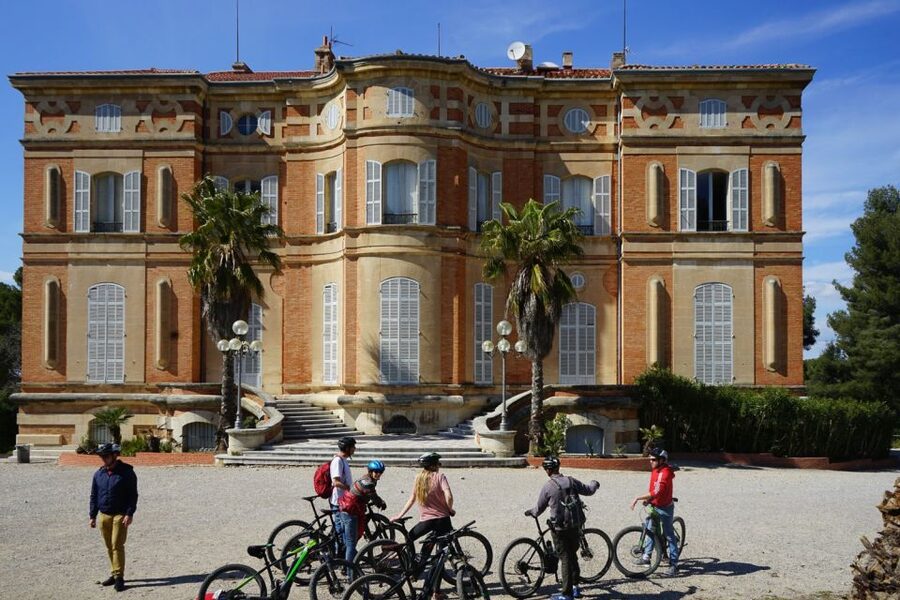
It’s clear from rider feedback that the guides are a major part of the success. You’ll see names like Martin, Thomas, Vincent, Iris, Cyrill, Kevin, Nicholas, and Jake referenced in positive ways.
What those names have in common in feedback is not just friendliness—it’s active management:
- Slower riders get support and a pace that keeps them included.
- Guides check in between tricky segments.
- The bike orientation and gear use get explained so you don’t feel lost.
If you’re traveling with family, that guide attention matters even more. One review specifically praised guides for being attentive to kids while still keeping the group moving safely.
Timing, duration, and what the day feels like
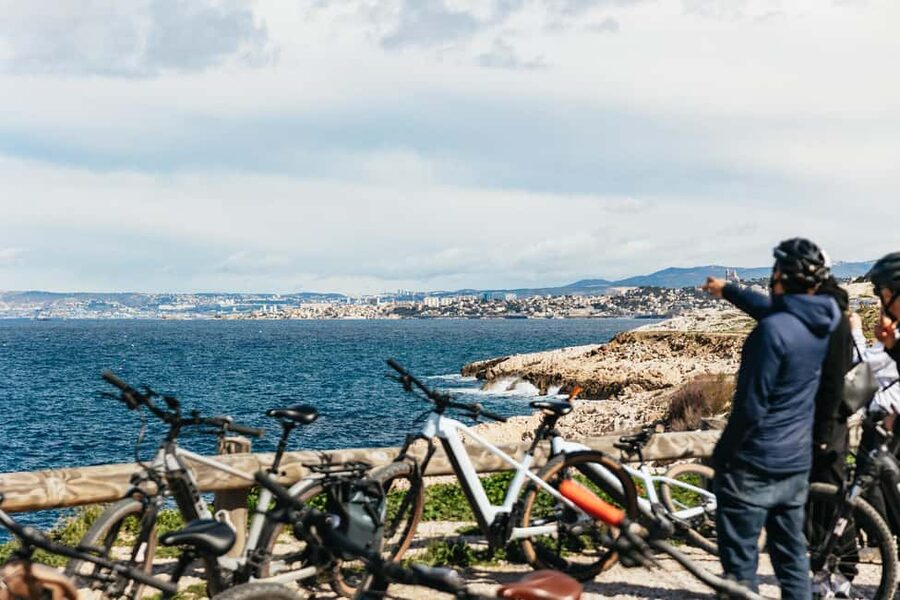
The tour is listed as about 3 hours, and it’s built around a short ride to the park, guided time toward Sormiou, and return back toward Pointe Rouge. You’ll also get time for swimming during the May–October window, plus photo stops along the way.
One rider reported a ride around 30 km, and other feedback suggests that the day includes both rolling and more challenging sections. So while the time looks “half day,” the effort can feel more like a real workout than a quick sightseeing lap.
My advice: plan this for a day when you can leave some energy for the rest of your Marseille evening. You’ll likely want to shower and eat soon after, not immediately squeeze in another long activity.
Logistics that matter: where to meet and how to get there
Meeting point is EVTT PROVENCE at 3 Avenue d’Odessa, 13008 Marseille, in front of the Avia Gas Station across the road from Restaurant Le Carré. It’s inside the garage with the door wide open. There are signs in the street and on the door, and hot coffee is available. There are no toilets.
That last part is worth repeating for your planning. Arrive early enough to sort your needs before you start.
Getting there:
- You can use public transportation, with bus 19 from Castellane, Vélodrome, and Prado.
- There’s also a shuttle boat from Marseille Vieux Port (RTM) to Pointe Rouge for 5 EUR, open from May to September.
- If you’re coming from a cruise port, taxi or Uber is recommended (about 25 minutes, around 40 EUR), and you can ask your guide for the best way back.
What to bring (and what to skip)
For a day in the Calanques, your packing list is straightforward.
Bring:
- Comfortable shoes (closed-toe)
- Sunglasses
- Sunscreen
- Swimwear if you’re traveling May–October
- A small towel if you want to dry off quickly
- Water (and snacks if you tend to get hungry; some riders recommend bringing your own)
Skip:
- Pets (not allowed)
- Open-toed shoes (not allowed)
Also consider bringing a small backpack just in case you want water handy during rocky or uneven stretches.
Price and value: why $70 can make sense here
The tour is priced at $70 per person and includes the electric mountain bike, helmet and gloves, a professional instructor, and guide insurance. That’s not just bike rental. You’re paying for a guided route inside the national park, bike safety management for a small group, and the added value of someone who can explain ecology and history while keeping everyone together.
If you’re doing this from a cruise port, note the extra pricing for round-trip arrangements: 100 € round trip for 1–4 persons and 180 € for 5–8 persons. So check your total cost based on your group size and how you’re getting to Pointe Rouge.
Is $70 “cheap”? No. But it’s reasonable for a guided e-bike day in a protected coastal area when you factor in equipment, instruction, and the fact you’re getting to Sormiou without wrestling with local navigation on your own.
Should you book this Calanque de Sormiou e-bike tour?
Book it if you want:
- A small-group e-bike day with real park time
- The chance to ride above and down toward the sea
- A guided mix of ecology plus the inlet’s history
- A swim option during May–October
Skip it if you:
- Want a flat, low-effort ride
- Don’t feel comfortable on bikes over mixed surfaces and hills
- Hate steep winding descents near cliffs
If you’re the type who likes short adventures with big scenery and doesn’t mind getting a little workout in, this is a strong choice for Marseille. It’s one of those trips where the time feels well used: you leave the city, you ride into the Calanques, and you end at Sormiou where the effort pays off.
FAQ
Where is the meeting point for the tour?
You meet at EVTT PROVENCE, 3 Avenue d’Odessa, 13008 Marseille, in front of the Avia Gas Station across the road from Restaurant Le Carré. It’s inside the garage, with the door wide open. There are hot coffees, but no toilets.
How long is the guided e-bike tour?
The tour duration is listed as 3 hours.
What’s included in the price?
Included items are the electric mountain bike, helmet and gloves, a professional instructor, and guide insurance.
Is swimming included, and when can I swim?
Swimming is part of the experience, and between May and October you’ll have the chance to swim or rest on the beach.
How much does it cost from the cruise port?
Round-trip pricing from the cruise port is 100 € for 1–4 persons and 180 € for 5–8 persons.
How big is the group?
The ride starts with a small group with a maximum of 10 people.
What languages are the guides?
The live tour guide speaks Spanish, English, and French.
What should I bring and wear?
Bring comfortable shoes, sunglasses, and sunscreen. If swimming is an option for your dates, bring swimwear. Open-toed shoes are not allowed.
How can I get to Pointe Rouge from central Marseille?
Public transportation options include bus 19 from Castellane, Vélodrome, and Prado. There is also an RTM shuttle boat from Marseille Vieux Port to Pointe Rouge for 5 EUR from May to September.
What if I’m late to the start?
The guide will wait for you to start the tour if you let them know that you’re running a little late.