REVIEW · HIROSHIMA
Hiroshima: Best of Hiroshima Guided Bike Tour
Book on GetYourGuide →Operated by InKansai Ltd · Bookable on GetYourGuide
A ride through Hiroshima’s Peace Park hits different. This guided bike loop blends calm cycling with respectful storytelling at some of the city’s most important sites. The big win is that you can see far more than walking, without turning your day into a navigation exercise.
What I love most is the pace: it’s leisurely, with frequent stops for questions and photos, so the information lands instead of rushing past. I also like how the tour moves beyond the headline sights—Hiroshima Castle grounds and Shukkei-en Garden give you a fuller sense of the city’s past and present in the same 3.5 hours.
The main drawback to consider is the weather requirement. If conditions aren’t good, the tour can be canceled and you’ll need to move your plans or get a refund.
In This Review
- Key things to know before you pedal
- Why this Hiroshima bike tour works so well
- Getting set up at Cycle Hiroshima HQ (and why timing matters)
- Peace Memorial Park: the Atomic Bomb Dome and what you should pay attention to
- What to watch out for here
- Gokoku Jinja and Hiroshima Castle grounds: history beyond the headline
- Shukkei-en Garden: the calm ending that makes the day feel complete
- Bikes, helmets, and the ride itself: comfortable cycling for many abilities
- How much value you really get for the $70 price
- Who should book this, and who should skip it
- Should you book the Hiroshima Best of Hiroshima Guided Bike Tour?
- FAQ
- Where does the Hiroshima bike tour meet?
- How long is the tour?
- How much does it cost?
- Is the tour guided in English?
- What sights will we see?
- Is the cycling difficult?
- What bike options are available?
- What is included in the price?
- What should I bring?
- Is the tour dependent on weather?
Key things to know before you pedal
- Flat route that keeps the ride friendly for anyone who can ride a bike
- English-speaking guide with strong storytelling around 1945 and Hiroshima’s recovery
- Top landmarks in one half-day, including the Peace Memorial Park area and Hiroshima Castle grounds
- Safe-feeling cycling setup, with helmet rental and bike options for different riders
- A peaceful garden ending at Shukkei-en Garden after the heavier museum-like stops
- Small group size capped at 8, which makes the ride feel personal rather than crowded
Why this Hiroshima bike tour works so well
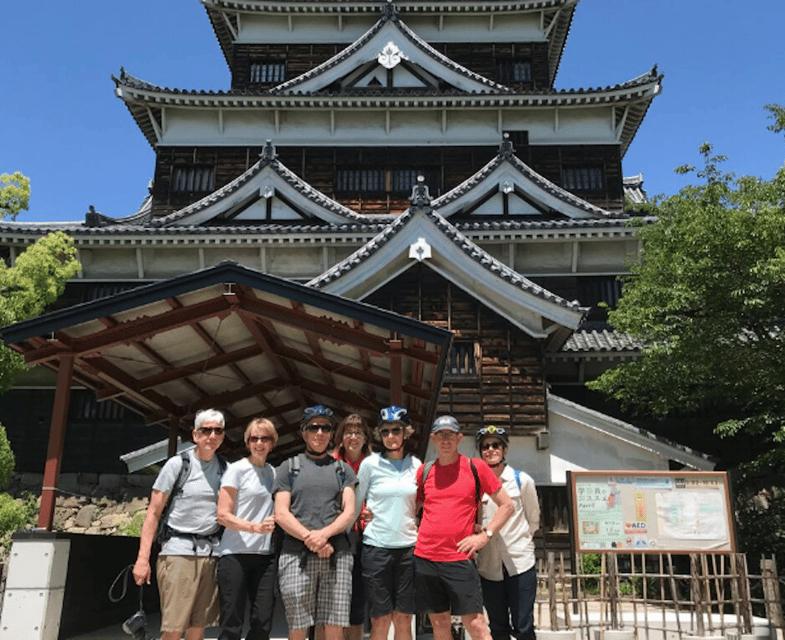
Hiroshima is compact enough that you can cover a lot in a single outing. The trick is doing it without spending the whole day stuck in transit lines, or wearing out your legs before you even reach the important places.
This tour solves that with a simple formula: flat cycling + tight, well-chosen stops. You get the freedom of moving under your own power, but with the guidance of someone who knows where to go and how to pace the day. Guides like Miyu, James, Ehsan (spelled a few ways depending on the booking), and Aimee are repeatedly praised for explaining what matters, while keeping the ride relaxed and safe.
And yes, it’s not a party tour. This is a thoughtful experience. You’ll spend time with the commemorations at Peace Memorial Park, then shift gears into shrines, samurai-era atmosphere, and a classic Edo-period garden. It’s a smart flow.
You can also read our reviews of more tours and experiences in Hiroshima.
Getting set up at Cycle Hiroshima HQ (and why timing matters)
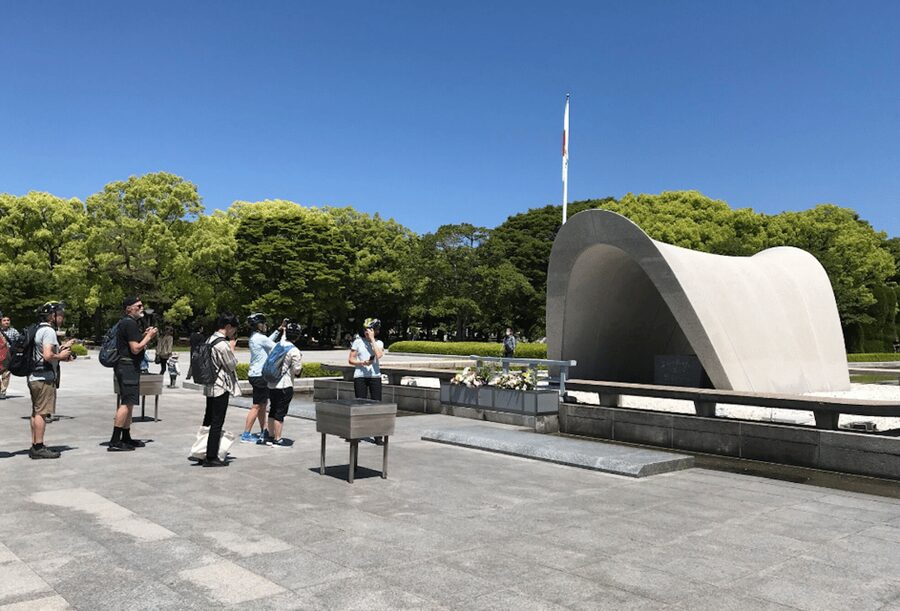
The meeting point is Cycle Hiroshima HQ, clearly marked with a large sign on the front. Plan to arrive a bit early so you can get through the bike fitting calmly. That little window matters more than people think, because once you’re rolling, you’ll want everything to feel stable and comfortable.
Before you head out, you get:
- a short orientation
- bike fitting
- helmet rental
- bottled water
The bikes are described as high quality Trek models, and there’s a range of sizes. If you don’t want a traditional frame, you can choose step-through options. There are also e-bikes if you want extra help, plus child-sized bikes for younger riders who meet the height requirement.
One practical note: the tour doesn’t list hotel pickup and drop-off. So you’re doing the morning on your own transportation to the shop, then cycling your way back. For many visitors, that’s still faster than trying to coordinate buses while also making time for the Peace Park area.
Peace Memorial Park: the Atomic Bomb Dome and what you should pay attention to
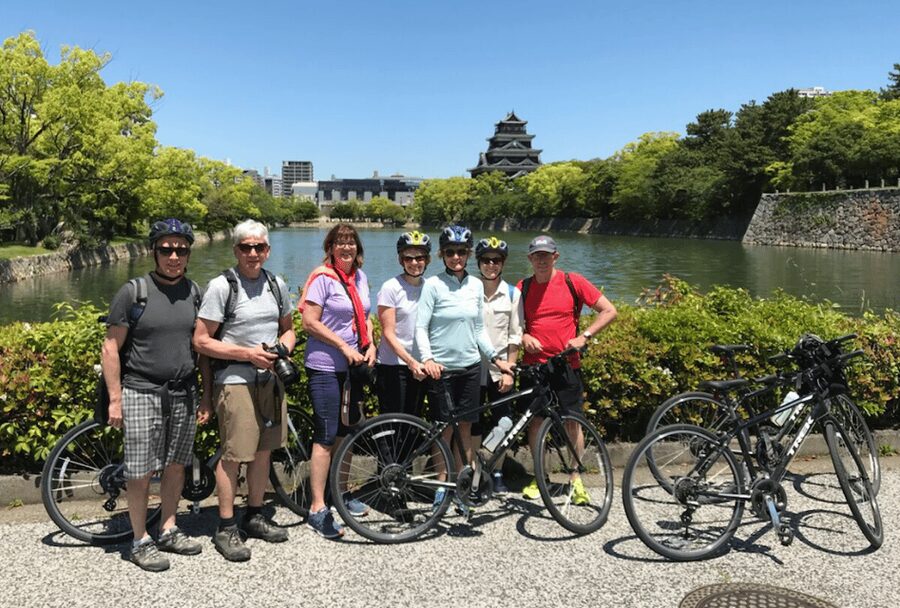
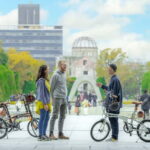
The ride begins with a relaxing riverside stretch before you reach Peace Memorial Park. This part of Hiroshima is powerful, and the tour handles it with care: you’re not just seeing monuments—you’re learning what each site represents and how the city rebuilt itself into a place devoted to peace.
At Peace Memorial Park, you visit several iconic stops commemorating the atomic bombing of August 6th, 1945. The Atomic Bomb Dome is part of the experience and is a UNESCO World Heritage Site. Guides are consistently praised for their storytelling style—clear, respectful, and designed to help you ask questions.
What makes this section valuable for your day is that the tour doesn’t treat the park like a checklist. You’ll have time to absorb the setting, ask questions, and connect the physical sites to the human impact. That’s the difference between reading facts and actually understanding the meaning of the place.
Also, don’t assume this will feel purely solemn in a way that shuts you down. One of the strengths is that guides often give space for photo moments and follow-up questions, so you can process without feeling rushed.
If you like context, you’ll probably appreciate the way guides connect August 6 to the broader cultural memory of Hiroshima. Some guides may bring in stories like Sadako and the paper-crane connection to explain how remembrance has evolved over time.
What to watch out for here
This is the emotional core of the tour, so pace yourself. If you tend to get overwhelmed in museum-like settings, give yourself permission to pause and breathe during transitions between stops. The bike part helps—moving slowly by bike can feel gentler than walking—but the subject matter still lands hard.
Gokoku Jinja and Hiroshima Castle grounds: history beyond the headline
After the Peace Park stops, the tour continues north to Gokoku Jinja, described as the most popular Shinto shrine in Hiroshima. This is a change of tone, and that’s a good thing. You’re shifting from memorial reflection to something more living—an active spiritual space with a different kind of meaning.
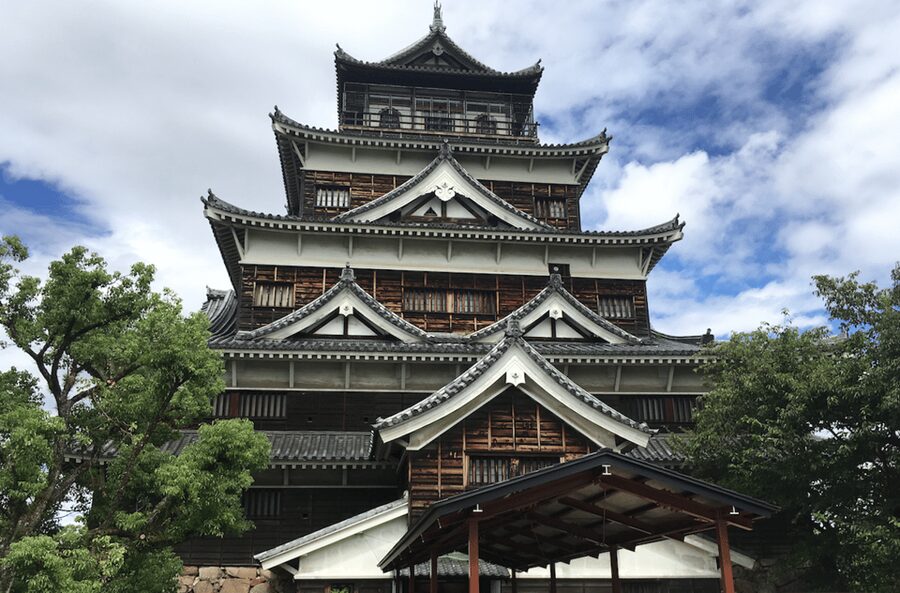
Next comes Hiroshima Castle grounds. Even if you don’t go deep into exhibits, the guided glance helps you picture what the area meant in samurai-era days. You’re seeing Hiroshima not only as a turning point in 1945, but also as a city with older layers of identity.
The practical advantage of cycling between these areas is speed. Hiroshima’s sights are close enough that a bike route is efficient, but the guided route is also designed to reach places that can be hard to hit smoothly by bus or by car. And because the route is largely flat, you’re not burning energy just to get from A to B.
Shukkei-en Garden: the calm ending that makes the day feel complete
A standout moment for many people is finishing at Shukkei-en Garden, built in the Edo Period. The tour includes entry to the garden, which matters because you’re not stuck figuring out tickets after you’ve already spent the morning cycling.
Why this ending works: it gives you a quiet counterweight. You start with intense historical commemoration, then you end in a space meant for slow observation. One of the most frequent good-comments themes is that the garden timing feels right—like the tour is gently helping you come down from the emotional peak.
In this setting, you’ll notice how the guide frames the garden’s significance as one of the most beautiful traditional gardens in Western Japan. Even if gardens aren’t your main interest, the contrast is the point. It turns the half-day into a more rounded story: remembrance, resilience, then beauty.
Bikes, helmets, and the ride itself: comfortable cycling for many abilities
The tour emphasizes that the route is completely flat and suitable for anyone who can ride a bike. In practice, that means fewer “am I going to struggle?” moments. You’re free to focus on what you’re seeing, rather than concentrating on hills or steep turns.
Helmet rental is included, and that’s a big deal for comfort and safety. Trek bikes are also repeatedly mentioned as being in good condition and easy to ride.
Another small but important detail: the group size is capped at 8 participants. With fewer people, guides can keep things organized without turning every stop into a traffic jam. You’ll get more chances to ask questions and more time for photos. Some people even mention that their small-group atmosphere felt casual in the best way.
If you’re worried about comfort, stick with the practical basics:
- wear comfortable shoes (not new sneakers that still need breaking in)
- wear clothes you can move in
- bring layers if it’s chilly, because weather can change quickly
How much value you really get for the $70 price
At $70 per person for about 210 minutes, this tour sits in a reasonable price zone for guided experiences in Japan—especially because you’re getting more than sightseeing narration.
You’re paying for:
- an English-speaking guide
- a high-quality bike and helmet rental
- bottled water
- garden entry at Shukkei-en
Then there’s the hidden value: time. You’re covering multiple major sites in a compact loop, which is hard to match if you’re doing it solo. Buses and trains help, but they don’t solve the “how do I efficiently reach all these places without losing half my day” problem—especially around the Peace Memorial Park area.
This is also a tour where the guide’s skill matters. People highlight respectful, detailed explanations of 1945 and Hiroshima’s transformation into a City of Peace. When a guide can turn a few monuments into understanding, the cost starts to feel more like paying for clarity than paying for transportation.
Who should book this, and who should skip it
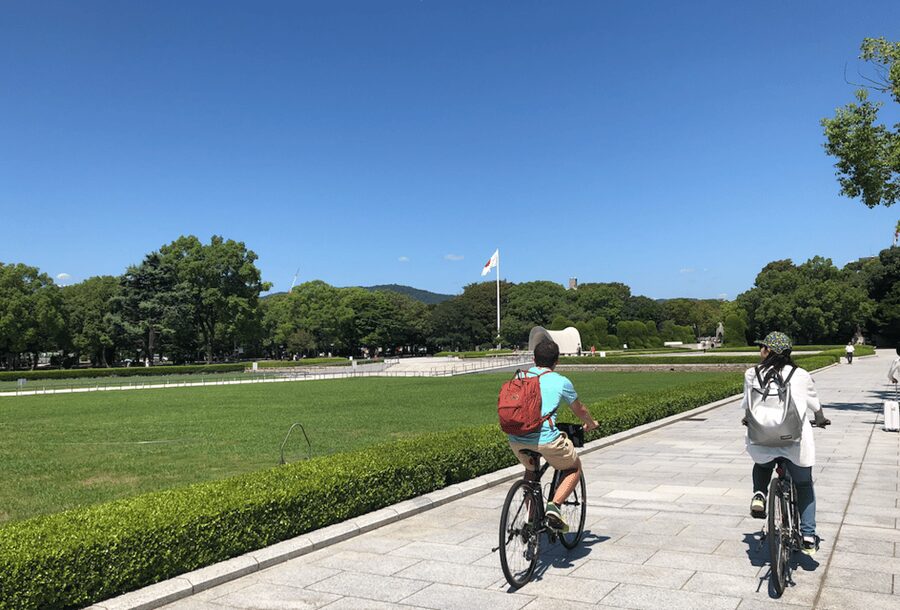
This is a good fit if you:
- want a fast, easy way to see multiple Hiroshima highlights
- prefer cycling over walking when your legs need to save energy
- like guided context at Peace Memorial Park, not just quiet self-tour time
- enjoy small-group interactions and photo stops
It may not be the right match if you fall into the tour’s limitations. It’s not suitable for:
- children under 12
- pregnant women
- people with back problems
- people with heart problems
- people under 4 ft 6 in (140 cm)
- people with pre-existing medical conditions
Also remember: it runs best in good weather. If conditions are poor, it can be canceled with a different date offered or a full refund.
Should you book the Hiroshima Best of Hiroshima Guided Bike Tour?
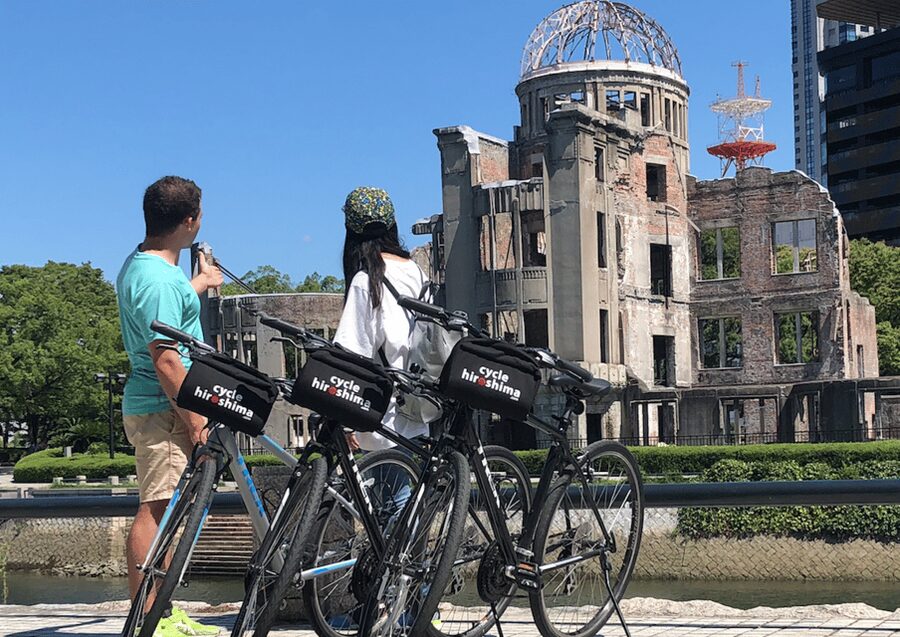
If you’re doing Hiroshima on a tight schedule and you want your half-day to cover the most important sights with less effort, I think this is a smart booking. The flat, safe-feeling cycling plus the thoughtful, English-guided storytelling makes the experience feel both accessible and meaningful.
I’d especially recommend it if you want the Peace Memorial Park area without turning the day into a long walk session. The garden finish is a strong bonus that helps the whole outing feel complete.
If you know you’re sensitive to emotional sites, plan your pace accordingly. And if weather is unreliable during your dates, keep a flexible plan so you’re not stressed if the tour has to shift or cancel.
FAQ
Where does the Hiroshima bike tour meet?
You meet at Cycle Hiroshima HQ. The shop has a big sign saying Cycle Hiroshima at the front.
How long is the tour?
The tour duration is 210 minutes, about 3.5 hours.
How much does it cost?
The price is $70 per person.
Is the tour guided in English?
Yes. The tour includes an English-speaking live guide.
What sights will we see?
You’ll cycle to Hiroshima’s Peace Memorial Park area, including the Atomic Bomb Dome, then to Gokoku Jinja, Hiroshima Castle grounds, and finally Shukkei-en Garden (which includes entry).
Is the cycling difficult?
No hills are involved in the route design. The cycling route is described as completely flat and suitable for anyone who can ride a bike.
What bike options are available?
You’ll ride Trek brand bikes in a range of sizes. Options include step-through bikes, e-bikes, and child-sized bikes (as long as you meet the height requirement).
What is included in the price?
The tour includes the English guide, high-quality bike and helmet rental, bottled water, and entry to Shukkei-en Garden.
What should I bring?
Bring comfortable shoes and comfortable clothes.
Is the tour dependent on weather?
Yes. It requires good weather. If it’s canceled due to poor weather, you’ll be offered a different date or a full refund.