REVIEW · HIROSHIMA
Okunoshima Rabbit Island Cycling Tour with Local Guide
Book on Viator →Operated by 竹原DMO · Bookable on Viator
A bicycle ride over Okunoshima turns a cute detour into real perspective. You get a guided loop of the Rabbit Island sights plus a direct look at the island’s wartime secrecy and aftermath, all paced for easy sightseeing. The wild rabbits are the fun hook, but the guide-led context is the part that sticks.
I like that the tour keeps you moving without rushing: about 2 hours with planned stops, plus a local expert who explains what you’re seeing. I also appreciate that several key sites have clear safety limits, so you’re not left wondering what you’re allowed to enter (you usually can’t). The main consideration is the island’s history includes sites you can only view at a distance, which may feel less hands-on if you’re hoping for full access.
In This Review
- Key highlights you’ll actually care about
- Okunoshima Rabbit Island by Bike: cute animals meet honest history
- Starting at KYUKAMURA OHKUNOSHIMA: simple meeting point, one key extra cost
- Your 2-hour route: what you see at each stop
- Stop 1: Okunoshima Lighthouse (view only)
- Stop 2: Okunoshima Island (your main riding/sightseeing block)
- Stop 3: Okuno Shrine (rabbits around a quiet spiritual spot)
- Stop 4: Nagaura Poison Gas Storage Ruins (look at what you can’t enter)
- Stop 5: Power Plant Ruins (another prohibited-access stop)
- Stop 6: Northern Cannon Battery Remnants (closest access on the route)
- Why the guide matters: Junko’s storytelling energy
- Rabbits on Okunoshima: how to enjoy them without turning it into chaos
- Bike time and fitness: what moderate fitness really means
- Weather and cancellations: plan for the Seto Inland Sea mood swings
- Value check: is $59.12 a fair deal?
- Who should book this cycling tour?
- Should you book Okunoshima Rabbit Island Cycling Tour?
- FAQ
- FAQ
- How long is the Okunoshima Rabbit Island Cycling Tour?
- What’s included in the price?
- Is food included?
- Do I need to pay a ferry fee to get to Okunoshima?
- Where does the tour start and end?
- What’s the group size?
- What’s the weather policy?
- Do I need good mobility to ride the bike?
- Is this tour ticketed digitally?
Key highlights you’ll actually care about
- Small group size (up to 5) keeps the ride calm and questions easy.
- Bike + fees included makes the $59.12 price feel more straightforward.
- Rabbits at multiple stops, including around the shrine area.
- Wartime ruins with safety boundaries, so you see what matters without going where you shouldn’t.
- A local guide with real storytelling power (Junko comes up in the best feedback).
- Weather-based cancellation rules protect the experience when rain hits.
Okunoshima Rabbit Island by Bike: cute animals meet honest history
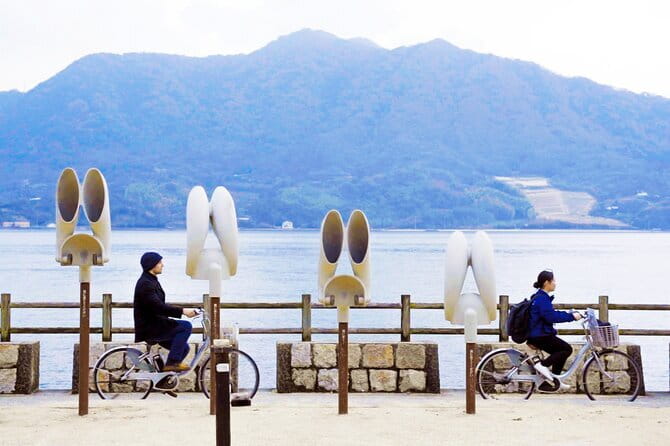
Okunoshima sits in the Seto Inland Sea, the kind of area known for lots of small islands. On paper, it sounds like a simple nature break. On the ground, it’s a strange mix: peaceful paths and free-roaming rabbits, paired with the memory of poison gas storage and production from World War II.
This is exactly why the cycling tour works. The route gives you a gentle way to circle the island while a local guide ties the scenes together. You’re not just taking photos of bunnies—you’re building a mental map of what this place was and why it mattered, even after it started being forgotten.
You can also read our reviews of more tours and experiences in Hiroshima.

Starting at KYUKAMURA OHKUNOSHIMA: simple meeting point, one key extra cost
The tour starts and ends at KYUKAMURA OHKUNOSHIMA (休暇村大久野島), so you’re not hunting for a weird roadside rendezvous. The ride is built around being on the island for sightseeing rather than burning time on transfers.
One practical note: the ferry fee (Tadanoumi → Okunoshima) is not included, listed at 360 yen. That’s a small add-on, but it matters for your planning so your budget doesn’t surprise you at the last minute. The rest of the essentials—bicycle use, all fees and taxes, and travel insurance—are included in the tour price.
Also, this is a shared group tour. The maximum group size is 5 travelers, but other participants may join the same departure as long as the tour operates (minimum 2 people required).
Your 2-hour route: what you see at each stop

This tour is timed to stay enjoyable: roughly 2 hours total with short stops for each sight. Some places are short looks from the outside because entry is prohibited for safety reasons, while one area lets you see gun battery remnants more closely.
Stop 1: Okunoshima Lighthouse (view only)
You’ll visit the lighthouse area for a short scenic viewing. Entry is prohibited right now, so you’ll view it from a nearby distance rather than walking right up to the base.
Why this stop works: it gives you a visual anchor for the island. Even from outside restrictions, you can still read the island’s geography—how water wraps around it and how small it really is.
Potential drawback: if your ideal lighthouse stop is getting close and lingering, this will feel brief.
Stop 2: Okunoshima Island (your main riding/sightseeing block)
This is the heart of the experience: about 1 hour on the island. The route is designed for easy pacing and rabbit-spotting while the guide explains the island’s story in a way that doesn’t feel like a lecture you have to survive.
You’ll also get a sense of scale. Okunoshima is described as having a circumference of about 4 km, which means you can cover a lot of “why this mattered” without spending the whole day cycling.
What to watch for: rabbits are the obvious draw, but the guide’s pointing out details is what changes the experience from cute to meaningful.
Stop 3: Okuno Shrine (rabbits around a quiet spiritual spot)
You’ll stop at Okuno Shrine for about 10 minutes. It’s the island’s only shrine, and it’s also home to rabbits.
This is one of those moments where the island’s mood shifts from “historical sites” to “everyday island life.” The shrine gives you a calm pause in the middle of heavier information.
Practical tip: keep your pace gentle here. If you move too fast, it’s easy to scare rabbits away and miss that slower, serene feeling.
Stop 4: Nagaura Poison Gas Storage Ruins (look at what you can’t enter)
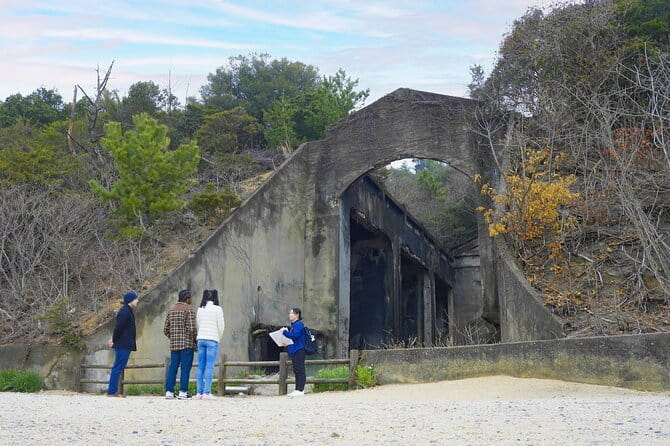
Next is the Nagaura Poison Gas Storage Ruins area. Again, entry is prohibited for safety reasons, so you’ll view the ruins from a short distance for about 10 minutes.
Why it’s powerful: even without walking inside, the guide frames what these facilities were for and why the island became secretive. The outside viewing still communicates purpose—you’re not getting vague “history trivia,” you’re seeing functional remnants.
Possible drawback: you don’t get tactile access. If you want full exploration of structures, you’ll have to accept viewing boundaries on this tour.
Stop 5: Power Plant Ruins (another prohibited-access stop)
The Power Plant Ruins are similar in structure: used when poison gas was secretly made here, but entry is currently prohibited. You’ll view it from a short distance for about 10 minutes.
This stop matters because it connects the dots. The story is bigger than storage. It includes what supported production—how systems worked, not just what happened to prisoners or materials.
Stop 6: Northern Cannon Battery Remnants (closest access on the route)
The final stop is the Northern Cannon Battery Remnants. Unlike several other areas, you can see these closely. Time here is about 15 minutes.
If you like physical remnants—angles, positioning, and the shape of defense sites—this is often the most satisfying stop of the “view only” sequence. It gives you a different kind of historical evidence than buildings you can’t enter.
Why the guide matters: Junko’s storytelling energy

One reason this tour gets such high marks is the guide’s role. In the best feedback, Junko gets praised for kindness and for being passionate about educating people about the island’s terrible past.
That kind of guide turns a route with restrictions into something clearer. You’re not left guessing what a fenced-off ruin once was. You’re not just counting rabbits and hoping someone gives context. Junko’s approach, as reflected in comments, seems to combine compassion with straight talk—so the tour doesn’t feel like a theme park with bunnies, and it doesn’t feel like bleak history without a break.
If you care about understanding what you’re looking at—especially when parts are off-limits—this tour’s guide focus is a big part of the value.
Rabbits on Okunoshima: how to enjoy them without turning it into chaos
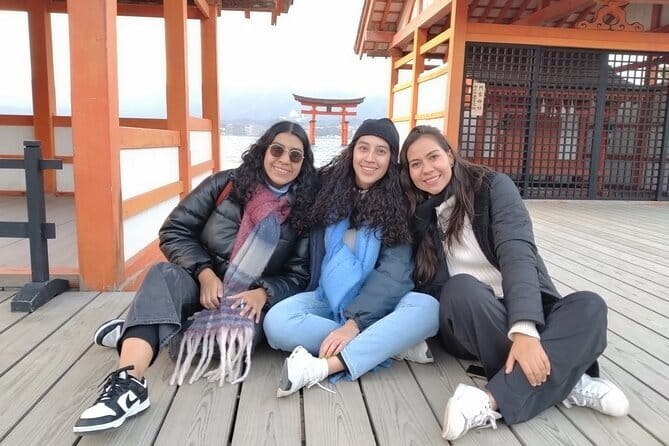
The rabbits are the headline, but they’re also where you can make the experience better with small choices. Here’s how to treat them well and still get great moments:
- Slow down at the shrine and around viewing areas. Rabbits react to movement.
- Expect rabbits to be more visible at different stops rather than everywhere at once.
- Bring a patient mindset. This island’s charm is that it feels like it belongs to the rabbits, not to your camera.
Also, remember the bigger picture. Okunoshima is peaceful now, but the history is heavy. The tour balances those sides, and you’ll enjoy it more if you let both parts be real.
Bike time and fitness: what moderate fitness really means
The tour requires moderate physical fitness level. The good news is the island is small (about 4 km circumference), so you’re not signing up for a long mountain ride. The time structure is also friendly: short segments and repeated stops.
Still, cycling tours don’t like stiff legs. If you have trouble with sustained pedaling for even a short stretch, you might want to slow your expectations or choose a slower option. It’s not described as extreme—but it is cycling, and you’ll want your body to cooperate.
Weather and cancellations: plan for the Seto Inland Sea mood swings
This experience is tied to the weather. The policy says it may be cancelled with no cancellation fees if the Japan Meteorological Agency forecasts a 60% or higher chance of rain by 12:00 PM the day before.
You’ll feel the impact of rain on an island cycling route quickly—wet paths, lower visibility, and less comfortable stops. The good side: the weather rule is specific, so you’re not left guessing forever.
Value check: is $59.12 a fair deal?

At $59.12 per person, this isn’t priced like a “luxury private tour.” It’s positioned as a straightforward, small-group experience.
Here’s what makes it feel like decent value:
- Bicycle use is included, so you’re not paying separately for the ride itself.
- All fees and taxes are included.
- Travel insurance is included.
- The itinerary is built around a compact island with multiple themed stops, from lighthouse views to poison gas-related ruins and cannon battery remnants.
The one cost to remember is the ferry. It’s listed separately (360 yen). Even with that, the total tends to stay reasonable compared with paying for bikes plus a guided route plus insurance.
If your goal is bunnies only, this may feel “more history than you expected.” If your goal is bunnies plus a meaningful island story delivered by a real guide, the price looks like a fair trade.
Who should book this cycling tour?
I think this tour is a great fit if you:
- Want to see Okunoshima’s rabbits but also understand why the island’s story is complicated.
- Like guided explanations, especially where parts of the site have safety-based viewing limits.
- Prefer a small group (max 5) where you can ask questions without feeling lost in a crowd.
- Enjoy a short cycling outing without long day travel.
You might want to skip or adjust expectations if:
- You strongly dislike cycling for even moderate distances.
- You expect to enter every ruin site. Several key areas are prohibited to enter, so access is mostly visual.
Should you book Okunoshima Rabbit Island Cycling Tour?
Yes, if you want the full Okunoshima package: rabbits, shrine calm, and wartime remnants connected by a guide with real energy. The small group size and included bike make it easy to justify the price. And if you appreciate seeing history without theatrics—especially from places where access is restricted for safety—this tour handles the balance well.
If you’re only chasing bunnies and nothing else, you may find some stops emotionally heavy or visually limited. In that case, consider whether you’d rather do a self-guided rabbit-focused visit instead of a structured story tour.
FAQ
FAQ
How long is the Okunoshima Rabbit Island Cycling Tour?
It runs for about 2 hours.
What’s included in the price?
The tour includes bicycle use, all fees and taxes, and travel insurance.
Is food included?
No, food and beverages are not included.
Do I need to pay a ferry fee to get to Okunoshima?
Yes. The ferry fee (Tadanoumi → Okunoshima) is listed as 360 yen and is not included.
Where does the tour start and end?
It starts and ends in front of KYUKAMURA OHKUNOSHIMA (休暇村大久野島) at 5476-4 Tadanoumichō, Takehara, Hiroshima 729-2311, Japan.
What’s the group size?
This is a shared group tour with a maximum of 5 travelers. A minimum of 2 participants is required for it to operate.
What’s the weather policy?
If the Japan Meteorological Agency forecasts a 60% or higher chance of rain by 12:00 PM the day before, the tour will be cancelled with no cancellation fees.
Do I need good mobility to ride the bike?
You should have a moderate physical fitness level, as it’s a cycling tour.
Is this tour ticketed digitally?
Yes. It uses a mobile ticket, and confirmation is received within 48 hours of booking subject to availability.