REVIEW · HIROSHIMA
Hiroshima: Peace Cycling Tour with Local Guide
Book on GetYourGuide →Operated by Attractive JAPAN · Bookable on GetYourGuide
Pedaling through peace hurts and heals at once. This Hiroshima Peace Cycling Tour connects you to what locals felt decades after the blast, while you glide around town on a comfortable e-bike and see how the city rebuilt. I love that the route stays tied to the bombing story, especially sites inside the 2.5km area that was devastated. I also love the way guides bring it to life with personal, passed-down family context (I’ve heard names like Shin and Kana come up a lot), so the facts don’t stay stuck behind glass.
One drawback to consider: this is a shared small-group ride (up to 10), so the pace can slow if someone needs it—especially families with kids who are less used to cycling.
In This Review
- Key things I’d plan around
- Why an e-bike peace tour feels different in Hiroshima
- Meeting at the Peace Park area and setting the tone
- Atomic Bomb Dome and Peace Park: facts plus the local lens
- How the A-bombed streetcars connect tragedy to daily life
- The 3-hour route: Hiroshima Castle to Peace Boulevard by e-bike
- Hiroshima Castle and the shrine gate (your first shift from memorial to city)
- Central Park and the bridge links (where movement helps you understand space)
- Atomic Bomb Dome (the emotional center) then into rebuilt neighborhoods
- Railway, bridges, and a surviving tree (where resilience becomes visual)
- The shorter 2-hour course: smart if you want Peace Park plus suburb context
- What guides do best: personal stories that keep the tone honest
- Comfort, safety, and who this ride suits
- Price and value: what $52 buys you in time and meaning
- Should you book the Hiroshima Peace Cycling Tour with a local guide?
- FAQ
- How long is the Hiroshima peace cycling tour?
- Is there an English-speaking guide?
- How big is the group?
- What’s included in the price?
- Is food or drinks included?
- Where do I meet the tour?
- What should I bring?
- Are high-heeled shoes allowed?
- What happens if I’m late for the meeting time?
- Can children join?
Key things I’d plan around
- E-bikes for easy pacing so you can focus on the story, not your legs
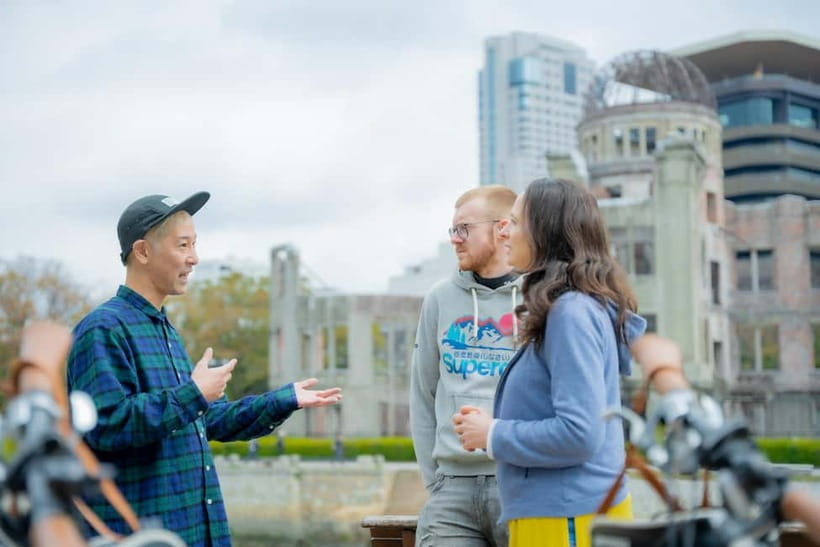
- Local guide storytelling with family connection that makes the sites feel human
- Peace Park plus real neighborhoods, not just the most famous postcard stops
- A-bomb heritage sites within a tight radius, including bridges, parks, and memorial-linked landmarks
- A surviving streetcar connection, where history meets daily movement
- Photo data provided after the ride, so you’re not stuck juggling your phone
Why an e-bike peace tour feels different in Hiroshima
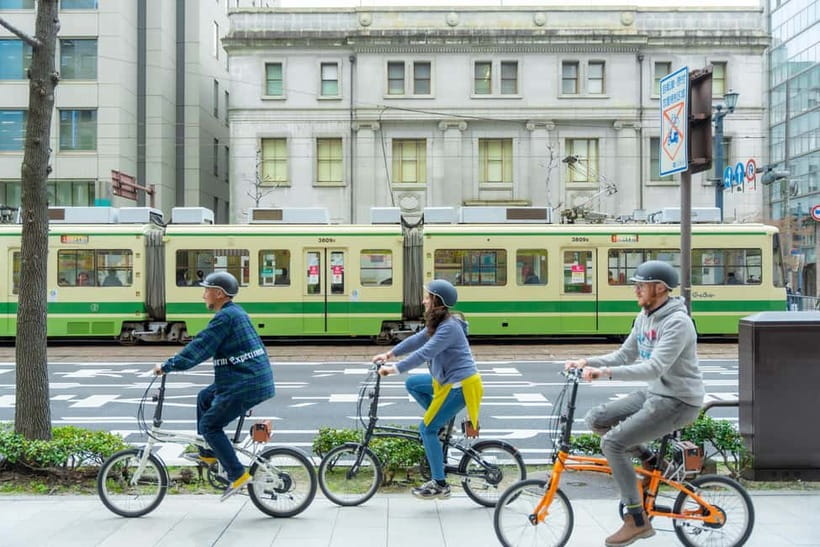
Hiroshima is compact enough that walking can work, but biking changes how the city lands on you. With an electric bicycle, you cover more ground without arriving “done” before the meaning fully sinks in. You’re still moving at a human speed—stopping when the guide points out why a place matters.
This tour keeps the focus where it should be: the destruction caused by the atomic bomb and what happened afterward. You’ll also get that striking contrast the city is known for now—areas that were devastated are still full of life and greenery. Seeing it from a bike seat helps you notice the rebuild in a practical way, not just as an idea.
You can also read our reviews of more tours and experiences in Hiroshima.
Meeting at the Peace Park area and setting the tone
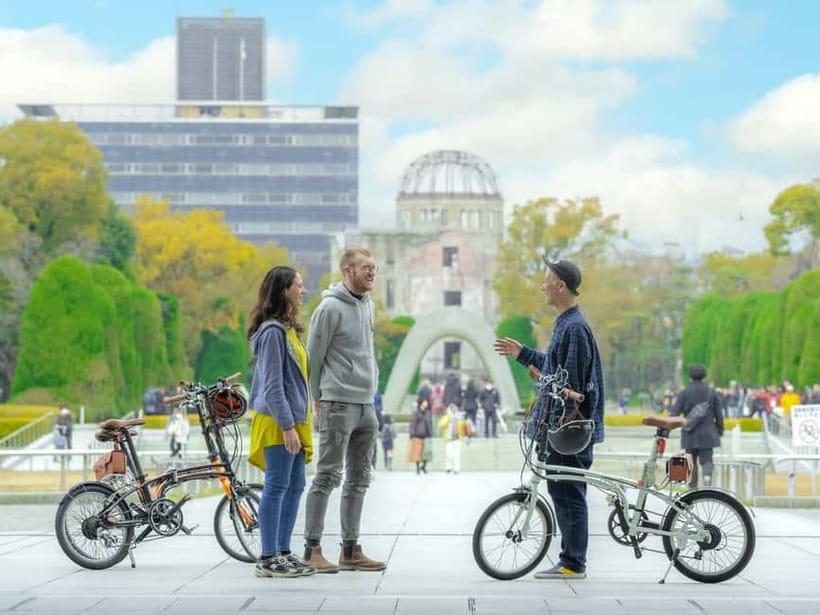
You meet at the Rest House of Hiroshima Peace Park. It’s an easy hop from Hiroshima Station by train: get on the Hiroshima Electric Railway, ride about 20 minutes to Atomic Bomb Dome Station, then walk about 5 minutes.
Right away, the guide frames what you’re about to see. At Peace Memorial Park, you learn how the monuments hold memory, and you connect those markers to what happened around 70 years ago. The Atomic Bomb Dome area is a major visual anchor, and your guide helps you read it as a survivor—something that still carries the blast’s reality.
One practical benefit: because the tour is built around explanation at specific stops, you don’t have to guess what to do or what to look at first. You’ll also get time for questions, which matters because people often leave the Peace Memorial Park with more thoughts than photos.
Atomic Bomb Dome and Peace Park: facts plus the local lens
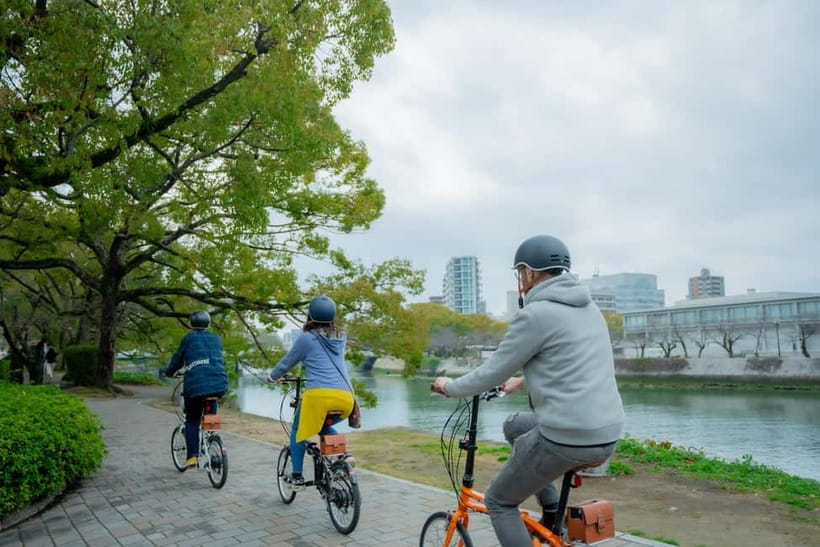
The Atomic Bomb Dome and nearby Peace Memorial Park stops are where the tour becomes more than sightseeing. Your guide explains the memories contained in the monuments and what happened that day, then ties the present-day city to the aftermath.
What I’d watch for as you listen: how your guide talks about local feelings toward Peace Park from decades ago. The details are not just dates and distances. They’re about how Hiroshima carried this event in everyday life, even as the city changed.
A note for your expectations: this tour isn’t only about seeing the famous sights. It’s about why those sights exist and what they mean to the people who grew up with the stories. That’s also why the better guides often share family references—names you might hear include Shin and Kana, who bring strong personal context from within Hiroshima.
How the A-bombed streetcars connect tragedy to daily life
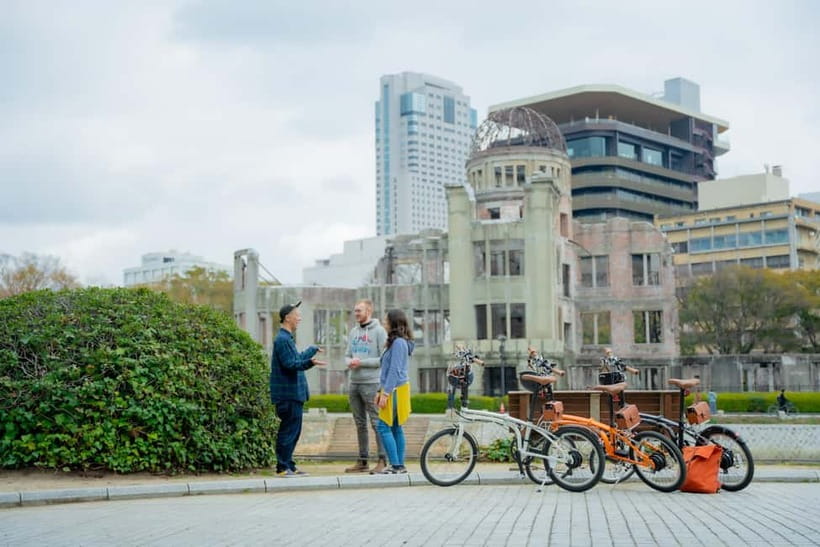
One of the most memorable parts is the stop where you learn about a train that’s still running today—surviving the atomic bombing. It’s commonly described as the A-Bombed Streetcars connection, and your guide shows you the townscape in Hiroshima’s suburbs away from the busiest tourist zone.
This is the moment the tour really earns its “cycling” format. When you move through streets on an e-bike, you start seeing how the city’s layout and daily rhythm came back. The guide also points you toward A-bomb heritage sites you might otherwise walk past without understanding why they matter.
I like this approach because it keeps you from treating Hiroshima as frozen history. You’re not only looking at what was destroyed. You’re seeing where people live now, and how the story is woven into ordinary streets.
The 3-hour route: Hiroshima Castle to Peace Boulevard by e-bike
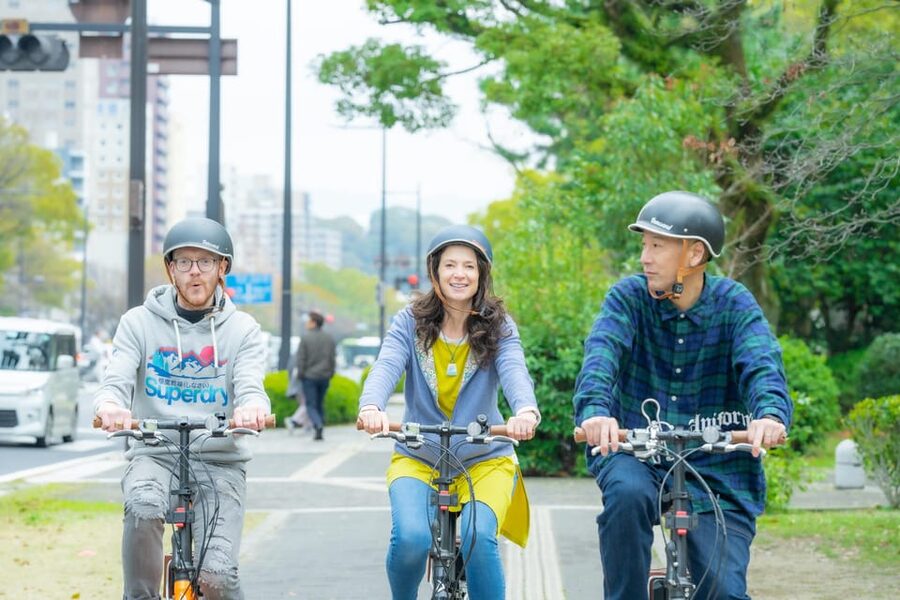
If you have time for the longer option, the 3-hour route is built like a guided walk stretched into a smooth ride across linked landmarks. The stops below are included on the 3-hour course, and the guide will connect each one to the bombing story and the city’s change afterward.
Hiroshima Castle and the shrine gate (your first shift from memorial to city)
You start with Hiroshima Castle, then head to Hiroshima Gokoku Shrine and its shrine gate. On this part, the guide’s job is to show how Hiroshima’s identity includes more than the bombing zone. You’ll get context that places the atomic story inside a broader city narrative, not as a single museum-grade moment.
Central Park and the bridge links (where movement helps you understand space)
Next comes Hiroshima Central Park, then Aioi Bridge, followed by the Motoyasu River and the Peace Bridge. Bridges and rivers are helpful stops on a bike tour because they give you a sense of scale and location—your route makes it easier to understand what’s near what, and why certain points became landmarks.
At the bridge-linked stops, your guide typically explains episodes tied to what happened there and how people remember it. Since the tour stays focused on the bombing-linked area, you’re not bouncing around Hiroshima with no thematic thread.
Atomic Bomb Dome (the emotional center) then into rebuilt neighborhoods
You then cycle to the Atomic Bomb Dome, one of the strongest emotional anchors on any Hiroshima itinerary. From there, the route keeps going through areas connected to the bombing’s impact and the rebuilding that followed.
After that, you’ll see Higashisenda Park, then move to key historical-linked sites like the Hiroshima Red Cross Hospital area. The pattern is consistent: stop, listen, look around, then roll on while the meaning is fresh.
Railway, bridges, and a surviving tree (where resilience becomes visual)
Further along, you visit the Hiroshima Railway area and cross past Miyuki Bridge and Kobayashi River. After that, there’s the Surviving Weeping Willow Tree, a stop that naturally shifts the tone from shock toward survival.
The last stretch includes Peace Boulevard. This section is a good place to let the tour’s main idea settle: yes, the blast was catastrophic, but the city rebuilt itself, and memory is now part of the streetscape—not just a single monument.
The shorter 2-hour course: smart if you want Peace Park plus suburb context
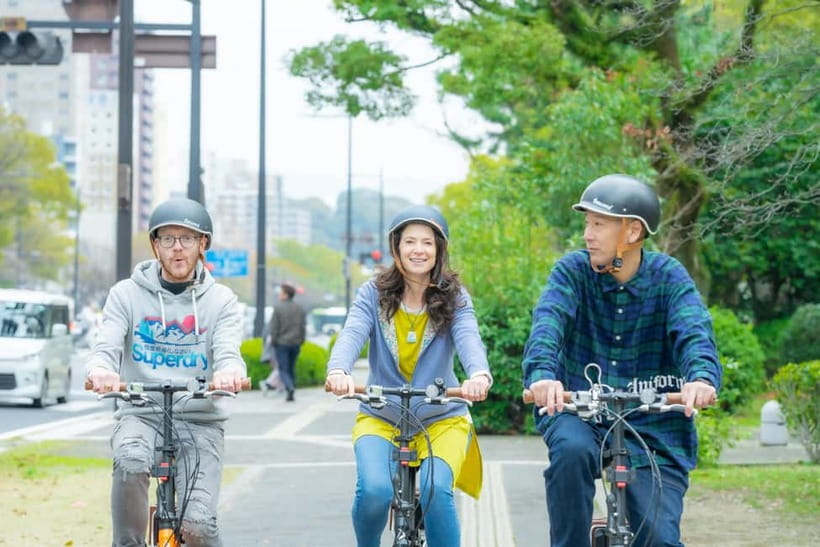
If your time is tight, the 2-hour course still hits the tour’s core. You meet, then start at Peace Memorial Park, where the guide explains what happened and how the monuments carry memory.
From there, you go to the surviving streetcar connection idea—A-Bombed Streetcars—and then you ride through more residential-town scenery in Hiroshima’s suburbs. Your guide helps you spot and understand A-bomb heritage sites with stories attached, without turning the trip into a long marathon.
This is also a good fit if you’re doing Hiroshima as a stop between other locations. It’s heavy subject matter, so compressing it can be a kindness. You get the meaning without feeling like you’re spending your whole day in one emotional lane.
What guides do best: personal stories that keep the tone honest
Across the experience, the biggest repeat praise has one theme: the guides bring an intimate Hiroshima view. Names you may hear include Shin, Kana, Moe, Mai, and Bella—and the consistent point is that their stories often connect to family experiences and how the city learned to live with the memory.
You’ll feel that difference right away in how they structure the stops. They don’t just tell you what to look at. They explain why it matters, then connect it to what people carried forward. Some guides add humor to keep the group comfortable, while still holding the subject with respect.
This matters because Hiroshima demands careful listening. A good guide prevents two extremes: turning it into pure facts, or turning it into pure emotion. The better balance is what helps you walk away with both understanding and something forward-looking.
Comfort, safety, and who this ride suits
The cycling part is handled with comfort in mind. You’ll use rental electric bicycles, and the tour is designed so you don’t need to be a fitness athlete. E-bikes also help when your group includes a mix of ages and cycling comfort levels.
Your guide adjusts the pace if the group includes people who aren’t accustomed to cycling, including children. So the ride is flexible, even though it stays structured by stops.
Safety-wise, the tour includes insurance for bicycle accidents, and the e-bike setup is meant to feel stable for most riders. Still, you should know the limits:
- If you’re under 145 cm (4 ft 8 in), this tour isn’t suitable.
- You’ll want comfortable shoes. High-heeled shoes aren’t allowed.
- Bring a towel and drinks, and wear comfortable clothes.
A practical tip from how guides operate: plan to arrive ready for heat and stop-and-go listening time. Some guides have ways to help with comfort during warmer days, so don’t show up without water.
Price and value: what $52 buys you in time and meaning
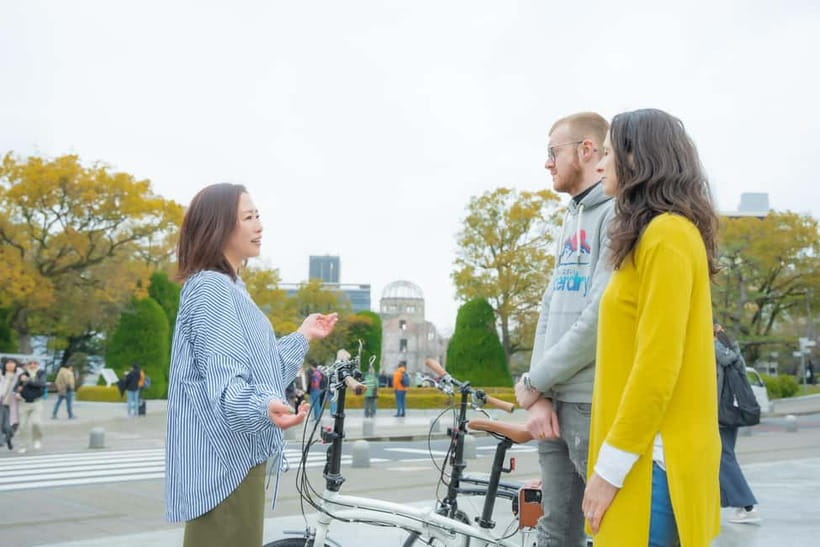
At about $52 per person for roughly 2 to 3 hours, this isn’t just “rent a bike and go.” You’re paying for:
- the English-speaking guide
- the e-bike rental
- insurance for bicycle accidents
- a guided route built around Hiroshima’s bombing-linked sites
- and, in some cases, photo data taken during the day
That value hits hardest if you want both breadth and interpretation. Without a guide, it’s easy to see famous landmarks and miss the connecting threads—especially the lesser-known heritage sites tied to the bombing. With the guide, you move through a compact geography (including the heavily affected 2.5km area) while understanding why each stop was placed where it was.
Also, because it’s a small group (up to 10), you’re more likely to get real questions answered instead of waiting your turn at the end.
Should you book the Hiroshima Peace Cycling Tour with a local guide?
I think this is a strong choice if you want an experience that’s both moving and practical. Book it if you like the idea of seeing the Peace Park context, then rolling out into the suburbs to understand Hiroshima beyond the most famous memorial cluster. The e-bike format is the main reason I’d pick this over a purely walking-based day—it helps you cover more linked ground without burning out.
Choose the 2-hour course if you’re short on time but still want the streetcar connection and the suburb heritage-site context. Choose the 3-hour course if you want the extra stops—like Hiroshima Castle, bridge and river areas, hospital-linked points, the surviving weeping willow, and Peace Boulevard—so the story lands as a wider city map.
One final sanity check: this is a heavy subject. The ride can feel emotional. If you’re looking for something lighthearted, you’ll likely find it too serious. If you’re looking for a respectful way to understand Hiroshima’s memory and resilience in the real streets, this tour is worth your time.
FAQ
How long is the Hiroshima peace cycling tour?
The duration is listed as 2–3 hours, depending on which course you choose.
Is there an English-speaking guide?
Yes. The tour is an English guided tour.
How big is the group?
It’s a small group, mixed tour, limited to up to 10 participants.
What’s included in the price?
Included are rental bicycles, an English-speaking guide, and insurance for bicycle accidents.
Is food or drinks included?
No. Food and drinks are not included.
Where do I meet the tour?
Meet at the Rest House of Hiroshima Peace Park. From Hiroshima Station, take the Hiroshima Electric Railway to Atomic Bomb Dome Station, then walk about 5 minutes.
What should I bring?
Bring comfortable shoes, a towel, drinks, and comfortable clothes.
Are high-heeled shoes allowed?
No. High-heeled shoes are not allowed.
What happens if I’m late for the meeting time?
If you are late without prior notice, the tour will be cancelled, and a 100% cancellation fee will be incurred on the day of the tour and is non-refundable.
Can children join?
Yes. Reservations are available for children aged 1 and older. There are child bicycle options and specific weight/height limits for riding seats.