REVIEW · PARIS
Paris Bike Tour: Eiffel Tower, Place de la Concorde & More
Book on GetYourGuide →Operated by Fat Tire Tours - Paris · Bookable on GetYourGuide
Pedal past Paris icons, minus the museum fatigue. This Paris bike tour stitches together a big-picture loop of the city, from the left bank toward the Louvre and over to the Eiffel Tower and Invalides. You also get a planned stop at Place de la Concorde, where the streets and plazas feel like stage sets.
I especially like the setup: a comfortable cruiser bike plus a live guide, with helmets included. I also like how the ride is managed in a group—clear safety instructions at the start, and hand-signal reminders that keep things orderly when the streets get busy. One thing to keep in mind: lunch isn’t included, and some sightseeing stops can be more “photo-and-go” than “linger forever,” so come ready for short windows and quick questions.
In This Review
- Key Things That Make This Paris Bike Tour Worth Your Time
- Starting at Fat Tire Tours: Where the Ride Begins and How Easy It Is to Find
- Safety on Paris Streets: What the Guide Briefing Really Changes
- Left Bank to the Louvre Crossing: Why This Part Feels Like a Shortcut to Understanding Paris
- Eiffel Tower Photo Stop: A Classic Moment Done the Bike-Tour Way
- Invalides and the Dome Church: Napoleon’s Story Meets Real Architecture
- Place de la Concorde: The Stop That Feels Big, Open, and Very Paris
- What to Bring (and What to Skip) for a 3.5-Hour Bike Tour
- Pace, Terrain, and Group Size: Who This Ride Fits Best
- Guides Make the Difference: What You Should Expect From the Live Commentary
- Value Check: Is $44 Worth It for a 210-Minute Paris Highlights Ride?
- Should You Book This Paris Bike Tour?
- FAQ
- How long is the Paris bike tour?
- Where do I meet for the tour?
- What’s included in the price?
- Is lunch included?
- Is the tour guided in English?
- What should I wear or bring?
- What options are available for children?
- Can I cancel or change plans?
Key Things That Make This Paris Bike Tour Worth Your Time
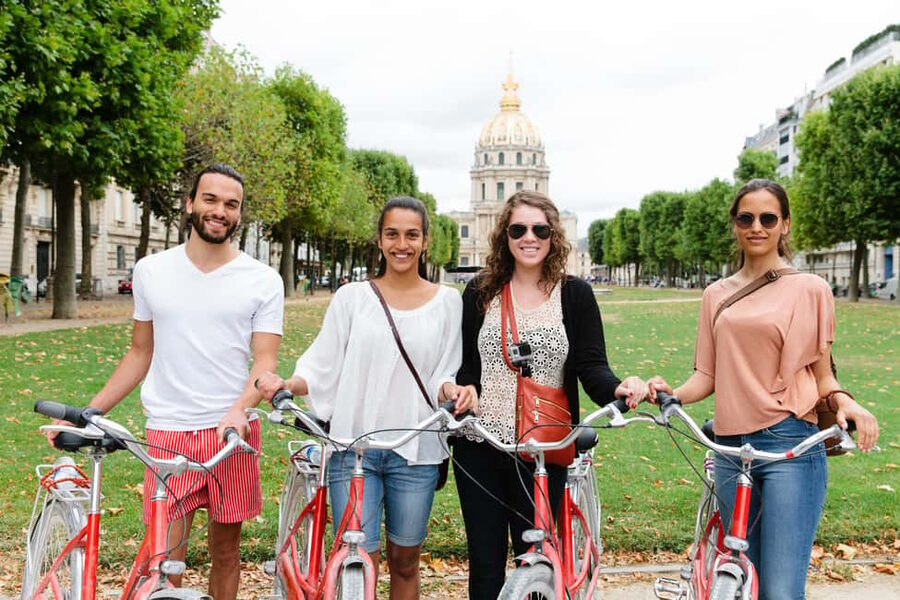
- A 210-minute loop that hits major landmarks without burning a whole day on transit and walking
- Eiffel Tower time that’s built for photos and orientation, not just a quick drive-by
- Left bank to the Louvre-side crossing, which helps you understand how Paris lines up geographically
- Invalides and the Dome church connection to Napoleon, plus museum time if your schedule allows
- Place de la Concorde for big views and classic Paris monument geometry
- English live guiding with bike controls and group riding handled from the start
Starting at Fat Tire Tours: Where the Ride Begins and How Easy It Is to Find
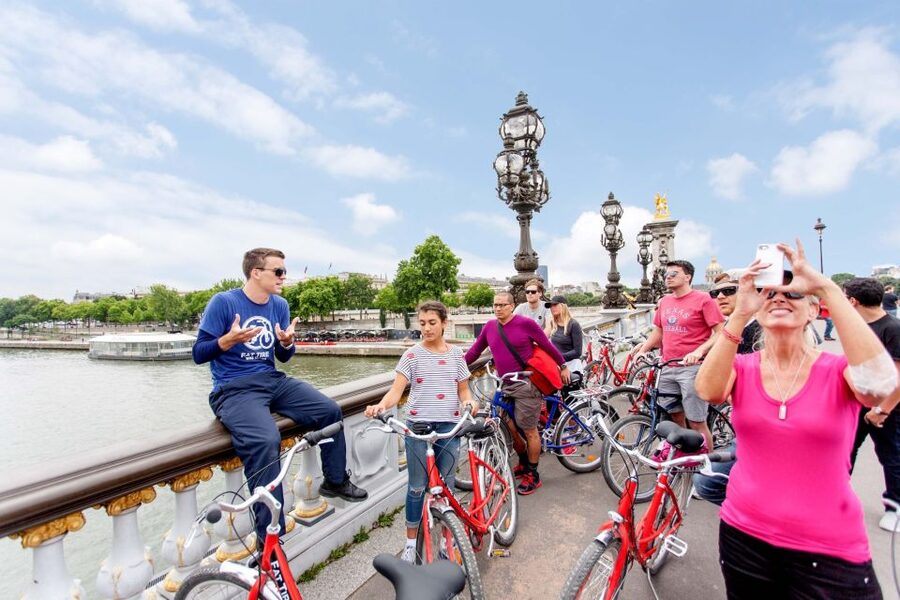
This tour meets at the Fat Tire Tours office at 24 rue Edgar Faure, 75015, with a big Fat Tire Tours sign and bikes waiting outside. The closest Metro stop is Dupleix. It’s the kind of meeting point that reduces stress, because you’re not hunting for a tiny storefront or a vague landmark.
Once you’re in, the rest of the experience usually feels smooth. In the tour setup, there’s often a comfortable pre-ride buffer—people can get geared up, helmets are provided, and the bikes are adjusted so you’re not fighting the seat height the whole way.
Practical tip: wear comfortable shoes, because even though you’re biking, you’ll still do some standing and short walks at stops.
You can also read our reviews of more tours and experiences in Paris.

Safety on Paris Streets: What the Guide Briefing Really Changes
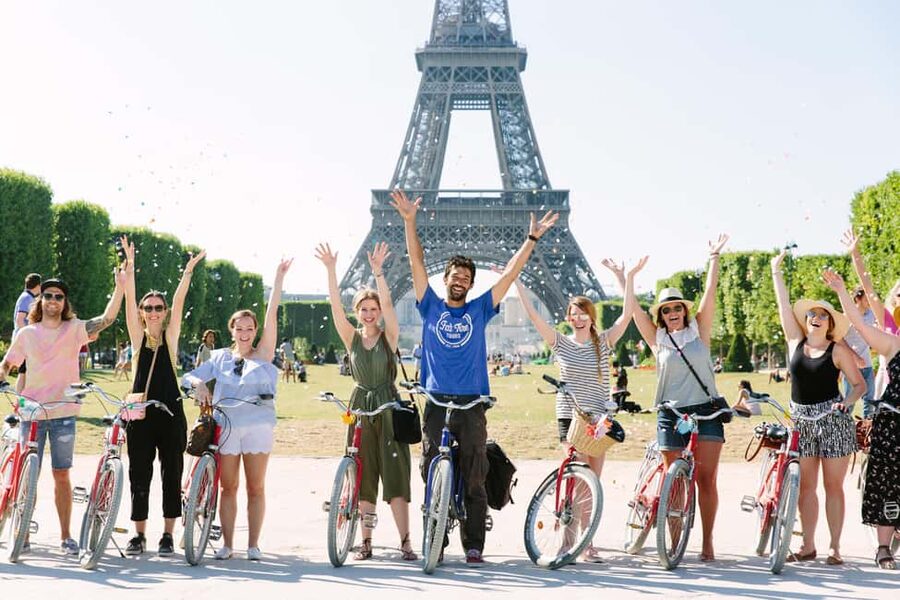
Riding a bike in Paris can feel intimidating until you see how a good guide runs the group. The best moments of this tour are usually the first few minutes: the guide explains how the group moves together, what to watch for, and how to handle turns and stops as a unit.
You’ll get helmets (included), and the guide typically checks your brakes and adjusts the bike so you can ride confidently. One review noted the important detail that the right-side brake is the one to use to avoid getting thrown off—small detail, big help if you’re not used to cruiser-style braking.
Also, Paris weather is always a wildcard. If it’s cold or rainy, the tour has handled it with practical gear like ponchos, rather than forcing the group to skip the whole day. You’ll still ride.
Possible consideration: there can be more time on busier roads than you expect, especially if you’re imagining bike paths only. The route is still managed for the group, but keep your expectations realistic.
Left Bank to the Louvre Crossing: Why This Part Feels Like a Shortcut to Understanding Paris
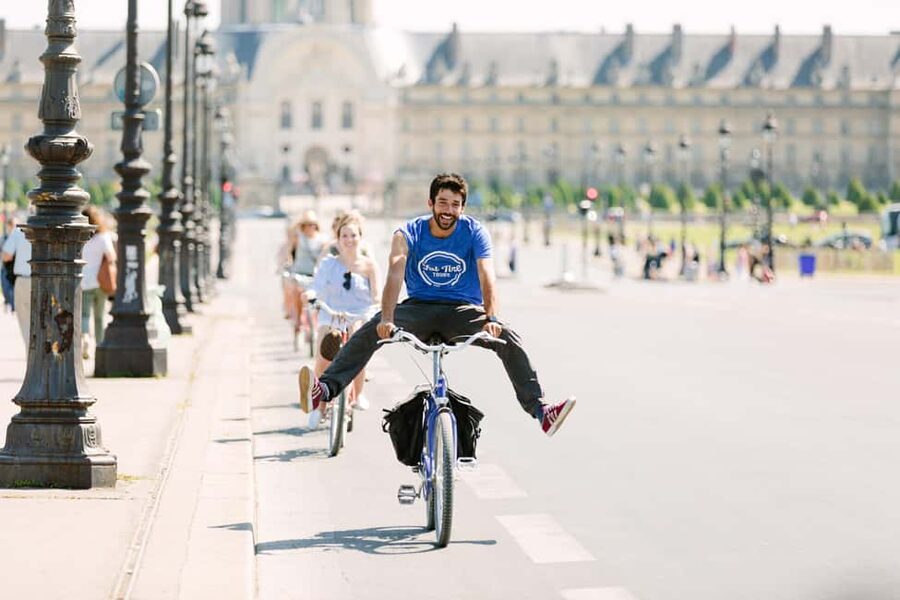
One of the smartest parts of this tour is how it builds your mental map early. You cross from the left bank over toward the Louvre area, and that matters because Paris landmarks aren’t evenly spaced. When you bike the distance instead of walking it, the scale clicks into place fast.
This also changes how you enjoy the rest of your day. After this crossing, you’ll usually feel less lost when you later visit museums or browse neighborhoods on your own. You’ll know which direction the major sights sit, and how the big boulevards connect.
What you’ll like here: you’re up close, moving at a steady pace, and getting views at human speed—not from a bus window. Even if the exact route details vary day to day, the “orientation by bike” concept is consistent.
Eiffel Tower Photo Stop: A Classic Moment Done the Bike-Tour Way
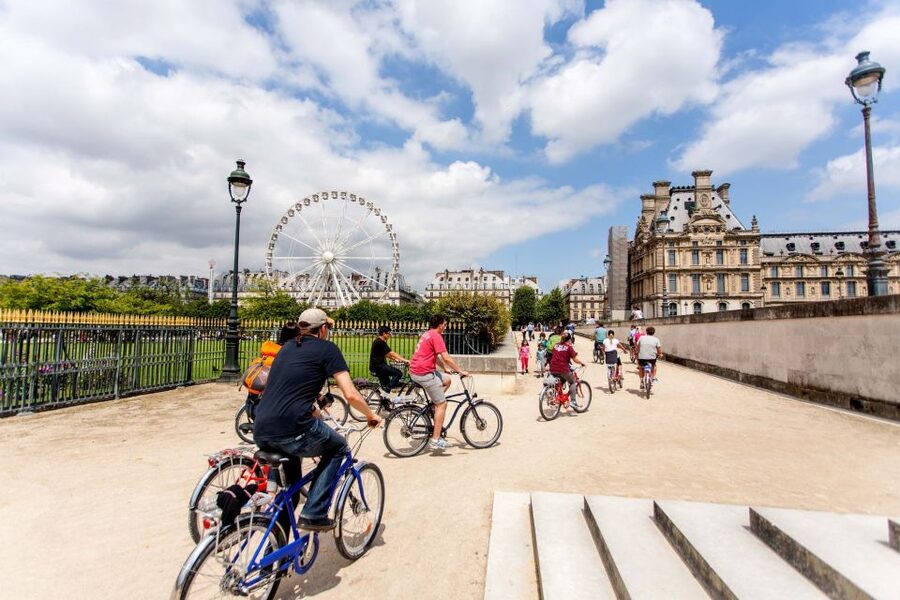
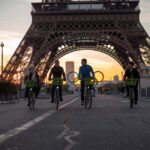
The Eiffel Tower stop is one of the big reasons people book. You get a picturesque pause that feels designed for pictures and quick appreciation. The tower is close enough to see details clearly, but the stop is structured so you don’t lose the whole rhythm of the ride.
What I like about doing Eiffel Tower by bike is pacing. You’re not stuck in a long, one-place-only loop. You’re cycling through the city, then dropping into a famous scene, then moving on again—so the experience stays varied and you don’t feel like you’ve been waiting in line by the time you arrive.
Photo tip: bring your phone fully charged before you roll. People sometimes end up taking more photos here than anywhere else because the viewpoint angles are dramatic and the tower dominates everything in the frame.
Invalides and the Dome Church: Napoleon’s Story Meets Real Architecture
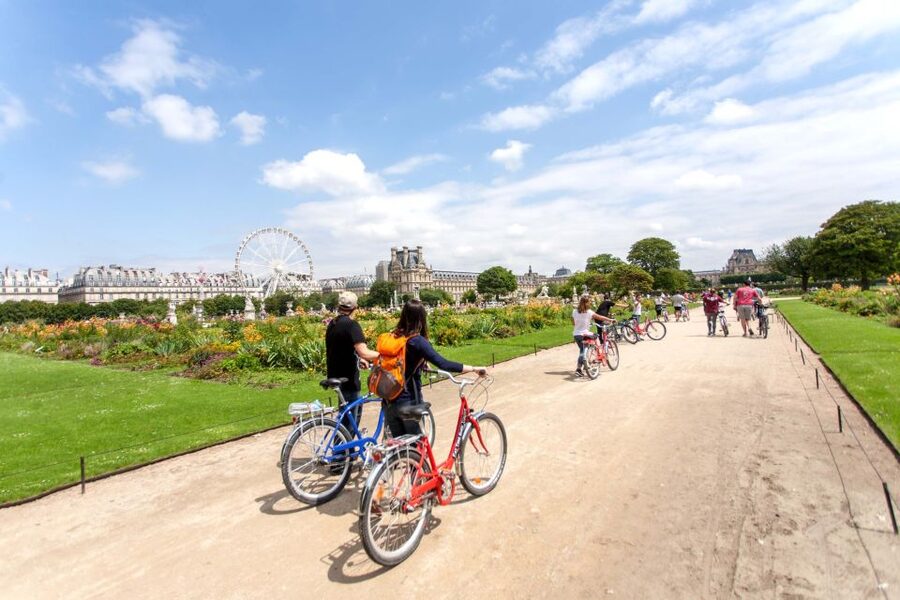
This tour includes a stop at the Dome church area, tied to Napoleon’s burial, and it also notes the Invalides museum. Even if you don’t go deep into every interior exhibit, the value is that you connect a key historical figure to a place you can actually see.
The Dome church area gives you a “why it looks this way” moment. Paris monument design often feels abstract until you connect it to the people and politics that shaped it. This is the kind of stop where the guide’s storytelling helps the landmark feel less like a postcard and more like a specific moment in time.
The Invalides museum reference matters too, because it helps you decide what to do next. If you enjoy what you see from outside, you’ll know exactly what you want to prioritize later—rather than guessing.
Possible drawback: museum time can be a choice rather than a long sit-down experience. If you’re the type who wants hours inside, you may still want to plan a separate visit on another day.


Place de la Concorde: The Stop That Feels Big, Open, and Very Paris
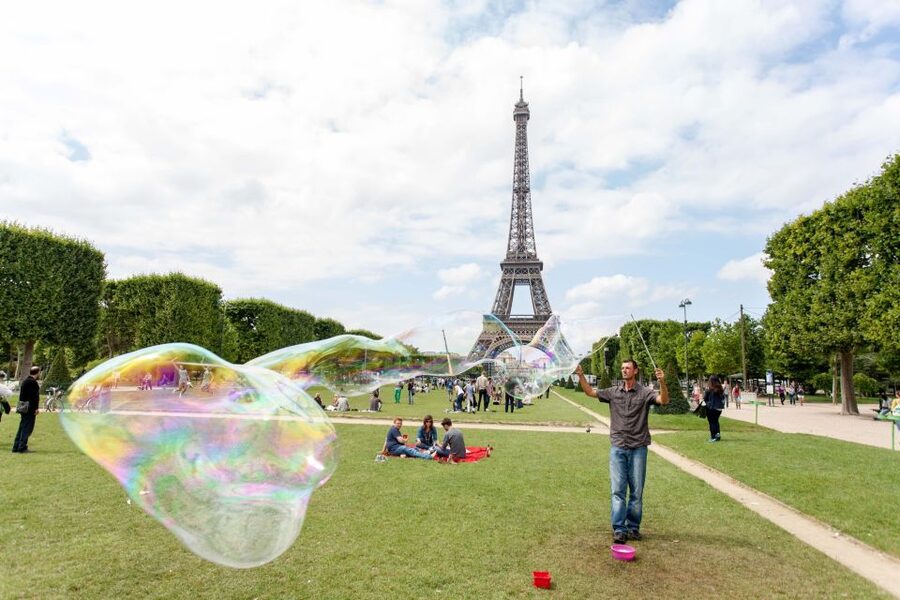
Place de la Concorde is a smart inclusion because it’s not just a pretty square—it’s also a “city scale” moment. From the vibe of a wide landmark square, you can feel how Paris organizes space, traffic flow, and monuments in the same visual system.
This stop can also help your brain switch from “tour mode” to “wander mode.” After you’ve already seen the Eiffel Tower and made your way through other central sights, Concorde often gives you a calmer, open-air breathing space—ideal for photos, stretching, and recalibrating before the ride continues.
Practical tip: if your timing is tight later in the day, this is a good landmark to use as a reference point for planning nearby walking routes.
What to Bring (and What to Skip) for a 3.5-Hour Bike Tour
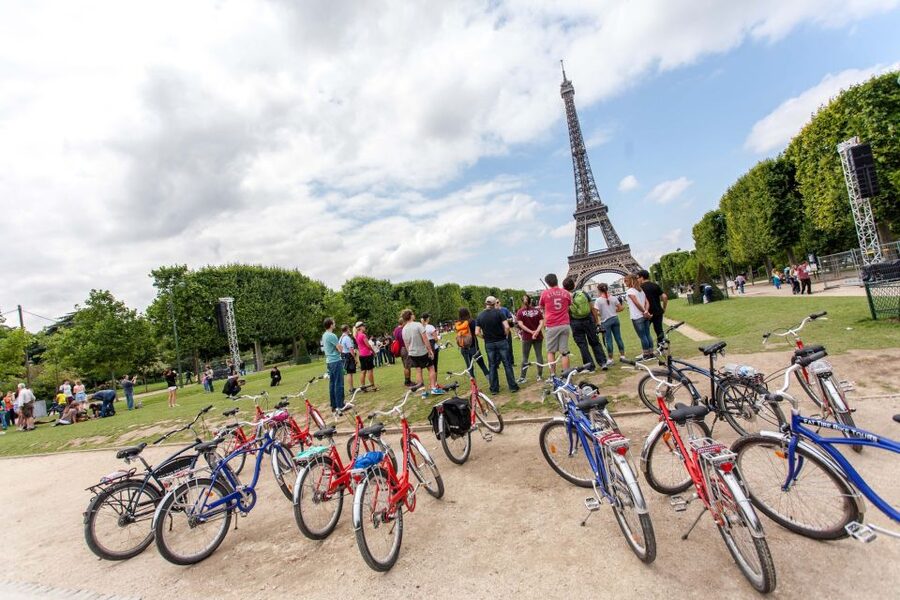
This tour keeps the focus on riding and landmarks, so your packing list should match that.
Bring:
- Comfortable shoes (you’ll stand and walk at stops)
- Water, since the tour doesn’t include lunch
- A light layer for weather swings, even in calmer seasons
Skip:
- Bulky bags. You’ll want a plan for what you carry while biking.
One nice part of the tour setup: at the office, there’s typically a place to leave bags while you ride, and you may find extra conveniences like refreshments and toilets on site. A review also mentioned the ability to charge a phone while waiting—helpful if you arrive early or your battery is low.
Pace, Terrain, and Group Size: Who This Ride Fits Best
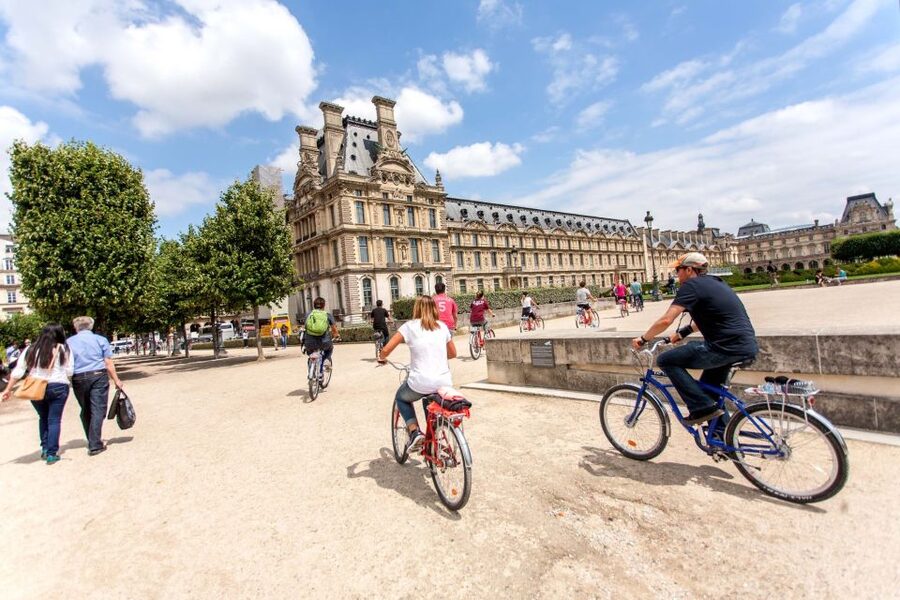
This ride is generally described as doable without being a fitness test. Areas explored are often mainly flat, and the pace is steady. That’s a big deal in Paris, where “walking a lot” can quietly turn your day into soreness.
Group size can vary. One review mentioned about 20 riders, which is a workable number for guided bike routes, especially when the guide keeps tight spacing. Another note suggested that busy-road riding can come sooner than expected, so if you’re very anxious about traffic, it’s worth choosing calm timing (and keeping your focus on the guide’s directions).
Families are often well-served here too. The tour offers children’s equipment:
- 20″ or 24″ bikes for kids who can ride on their own
- Tag-along tandems for children under 70 lbs / 32 kg
- Trailers for up to 2 children, with a combined max weight of 88 lbs / 40 kg
- Baby seats with a max weight limit of 48 lbs / 22 kg
So if you’re traveling with kids, this tour is built for real logistics, not just an adult “plus one” idea.
Guides Make the Difference: What You Should Expect From the Live Commentary
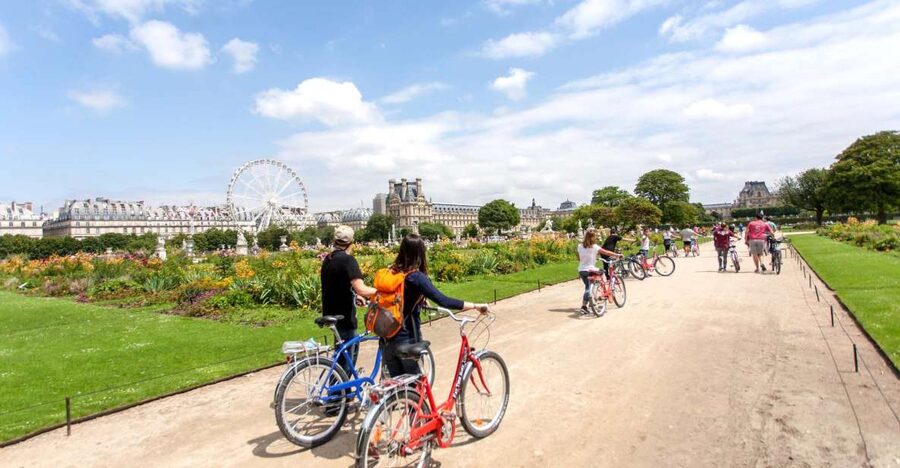
The tour lives or dies by the guide’s ability to connect movement with meaning. The most praised guides are described as engaging and fun, with a strong focus on safety early on and stories at every stop.
You’ll hear names in the mix such as Dave, Fergus, Amir, Dovi, Evelyn, Kim, Will, Arin, George, and others. The common thread is the same: guides explain what you’re seeing and why it matters, while also keeping the group moving so you don’t lose momentum.
You don’t have to be a history buff. The style that works best here is the kind that gives you enough context to make your later choices smarter. After the tour, you’ll usually know where you want to spend more time—whether that’s a museum, a neighborhood, or just a specific view angle you want again.
Value Check: Is $44 Worth It for a 210-Minute Paris Highlights Ride?
At $44 per person for about 210 minutes, this price often makes sense for three reasons.
First, you’re buying time. Paris highlights are scattered. Biking the loop is a way to compress “see a lot” into a half-day without turning it into a walking marathon. In a city where time is expensive, 3.5 hours can be a smart investment.
Second, your main costs are already handled: bicycle, guide, and helmet are included. That saves you both planning effort and extra rental steps.
Third, you get structure. You’re not guessing how to connect the Eiffel Tower, Louvre-area crossing, Invalides/Dome, and Concorde into a single coherent day. A guided route turns those famous stops into a connected story you can actually use.
One consideration on value: lunch is not included. If you’re trying to build a tight budget, plan for snacks or a separate meal stop after the tour.
Should You Book This Paris Bike Tour?
Book it if you want a high-confidence first pass at Paris landmarks without overloading your feet or your brain with endless museum time. It’s also a great choice for families and mixed-experience groups because the riding is managed, the pace is generally easy, and children’s gear is available with specific weight and sizing options.
Skip it (or consider a different style of tour) if you want long interior time at museums, because this tour is designed around riding and short stop moments. Also, if you strongly dislike any traffic exposure, keep in mind that bike touring in central Paris can include busier roads, even when the guide handles the group well.
If you’re aiming for a fun, practical “get your bearings” day, this one is a solid pick—and the Eiffel Tower plus Invalides combo gives you enough big-name payoff to feel like you made real progress on day one.
FAQ
How long is the Paris bike tour?
The tour lasts 210 minutes.
Where do I meet for the tour?
Meet directly at the Fat Tire Tours office at 24 rue Edgar Faure, 75015. The closest Metro station is Dupleix.
What’s included in the price?
The tour includes a bicycle, a guide, and a helmet.
Is lunch included?
No, lunch is not included.
Is the tour guided in English?
Yes, the live tour guide is English.
What should I wear or bring?
Wear comfortable shoes.
What options are available for children?
Children’s equipment is available, including 20″ or 24″ bikes for kids who can ride on their own, tag-along tandems for children under 70 lbs / 32 kg, trailers for up to 2 children with a combined max weight of 88 lbs / 40 kg, and baby seats with a max weight limit of 48 lbs / 22 kg.
Can I cancel or change plans?
There is free cancellation up to 24 hours in advance for a full refund. You can also reserve now and pay later.