REVIEW · PISA
Pisa Self-Guided Bike Tour: Leaning Tower & Square of Miracles
Book on Viator →Operated by Smile & Ride · Bookable on Viator
Pisa looks better when you’re pedaling. This self-guided bike tour turns the city into a choose-your-own-pace loop, with an app that steers you from church to church and past the river. I love that it’s efficient (you see a lot in about 3 hours) and that you get practical help finding great food and even free-beverage spots along the way. The main catch: the app can feel a bit clunky, so take a few minutes to get used to the directions before you roll out.
You start right at the train-station area and end back there, which makes the whole thing easy to fit into a Pisa day. You’ll be on your own team—just your group—with a smartphone app guiding the route, plus a phone holder on the bike. If you’re prone to getting lost easily on your own, plan to slow down at the first couple of turns and confirm you understand the map.
In This Review
- Key things I’d plan around
- Price and what you actually get for it
- Where the ride starts (and why it matters)
- How the app-guided self tour feels on the ground
- The itinerary on wheels: stops that make Pisa feel real
- Stop 1: Smile & Ride (the start)
- Stop 2: Santo Sepolcro (optagonal church)
- Stop 3: Giardino Scotto (San Gallo fortress)
- Stop 4: The second leaning tower angle (San Miche degli Scalzi)
- Stop 5: Medicean aqueduct
- Stop 6: Chiesa di San Zeno (Roman marble)
- Stop 7: Piazza Santa Caterina (Galileo’s reference point)
- Stop 8: Piazza dei Cavalieri (Knights’ Square)
- Stop 9: Leaning Tower of Pisa (photo moment)
- Stop 10: Piazza dei Miracoli (Square of Miracles)
- Stop 11: Orto e Museo Botanico di Pisa (botanical institute)
- Stop 12: Chiesa di San Frediano (Romanesque)
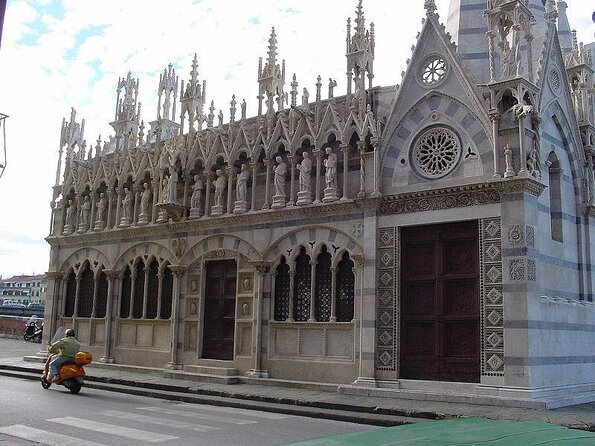
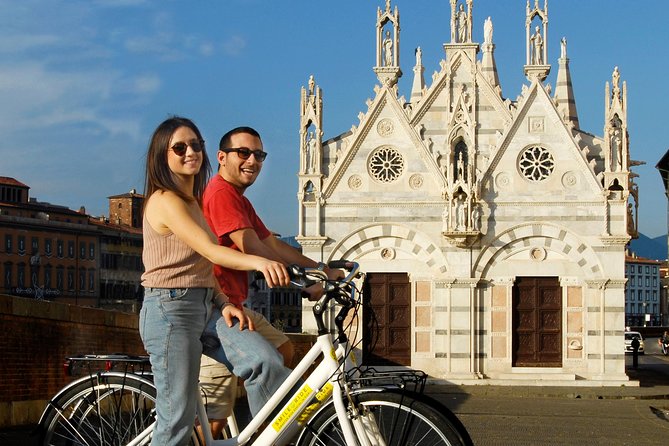
- Stop 13: Chiesa di Santa Maria della Spina (river Gothic)
- Stop 14: Chiesa Parrocchiale di San Paolo (medieval velodrome story)
- Stop 15: Murale Tuttomondo di Keith Haring
- Navigation tips that make the ride smoother
- Tickets, timed priorities, and how to avoid regret
- Best for which kind of traveler
- Should you book this Pisa self-guided bike tour?
- FAQ
- How long is the Pisa self-guided bike tour?
- How much does the tour cost?
- Is this tour guided by a person?
- What’s included with the booking?
- Are tickets for the Leaning Tower or Piazza dei Miracoli included?
- Are any other attractions on the route ticketed?
- Where does the bike tour start and end?
- What is the minimum age to ride?
- Do I need to pay extra for accessories like helmets?
- Can I cancel for a full refund?
Key things I’d plan around
- App-led route: follow the phone directions at your own speed, with a phone holder included
- A tight 3-hour loop: you hit big Pisa sights without spending your whole day stuck in transit
- Touring beyond the obvious: you’ll pass optagonal churches, forts, aqueducts, and Romanesque details
- Square of Miracles time: long enough to orient yourself around the Cathedral, Baptistry, and more
- Major tickets not included: Leaning Tower and Piazza dei Miracoli admissions aren’t part of the price
- Bike-friendly stop timing: lots of quick photo and viewpoint moments, plus a couple longer pauses
Price and what you actually get for it
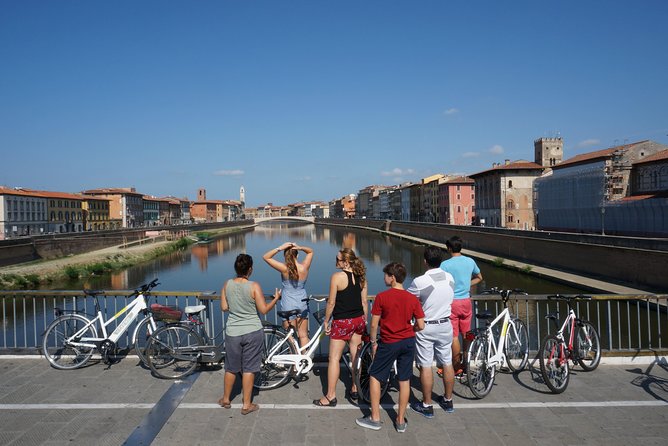
This Pisa bike tour costs $29.63 per person and is built around one simple idea: independent sightseeing with wheels. For that price, you get the bike and the mobile setup—specifically the app plus a phone holder system designed so you can keep riding while you check directions.
What’s also valuable is how it’s structured for real-life travel. Instead of one rigid walking route, you’re given a plan of stops, then you control the pace. That matters in Pisa, where sun and crowds can change hour to hour. The route is also designed so you can do more than a walking loop in the same amount of time.
You should also budget for a couple extras. Food and drinks are not included, and accessories like bags or a helmet cost €3.00 per person. Also, some of the big-ticket areas you’ll visit are not included—most notably the Leaning Tower of Pisa and the Piazza dei Miracoli.
Where the ride starts (and why it matters)
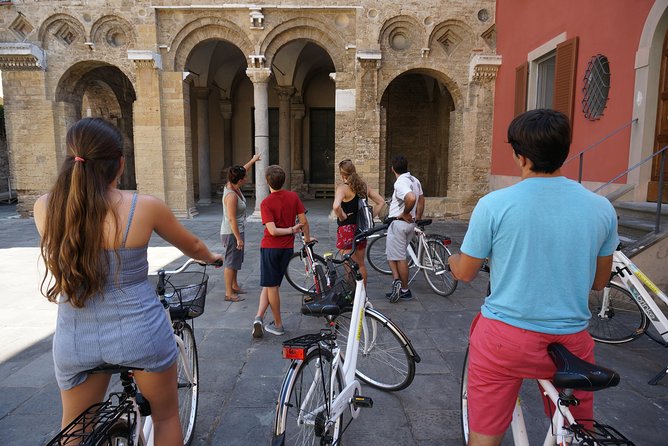
Meet at Smile & Ride, Piazza della Stazione, 7, Pisa. The tour ends back at the same meeting point, which is handy if your next plan is dinner near the station or you need to catch a train.
You’re also close to public transportation, so this works even if you’re not starting your day exactly in the historic center. In practice, that reduces “Pisa dead time”—the time you’d otherwise spend shuttling from the train area to sights you want to see.
The minimum age is 10 to ride a bicycle, and children must ride with an adult. If you’re traveling with kids, this setup can be easier than many walking tours because you’re not stuck pacing other people—your group can move together at a calmer speed.
How the app-guided self tour feels on the ground
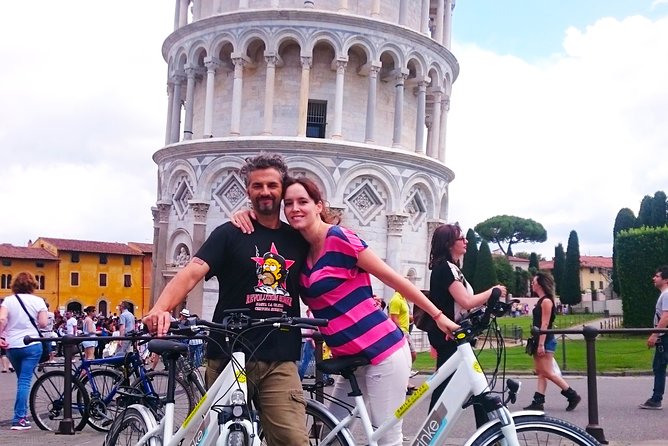
The tour is private, meaning it’s only your group. You’ll use a smartphone app to follow the route stop to stop. The phone holder is included, which makes a big difference compared to trying to balance your screen while you pedal.
Still, the app experience is the biggest variable. Some riders find it a bit clunky and the navigation arrow not always perfect. My advice: before you leave, spend a few minutes getting comfortable with how the app shows turns and how it updates your position. At the beginning, don’t rush. The first few minutes are where you set yourself up for smooth riding.
Language support is listed as English, which helps if you’re trying to interpret place names and directions quickly. And since the whole tour is self-guided, you’re not waiting for a group to catch up—just follow what your phone says and stop where you want.
The itinerary on wheels: stops that make Pisa feel real
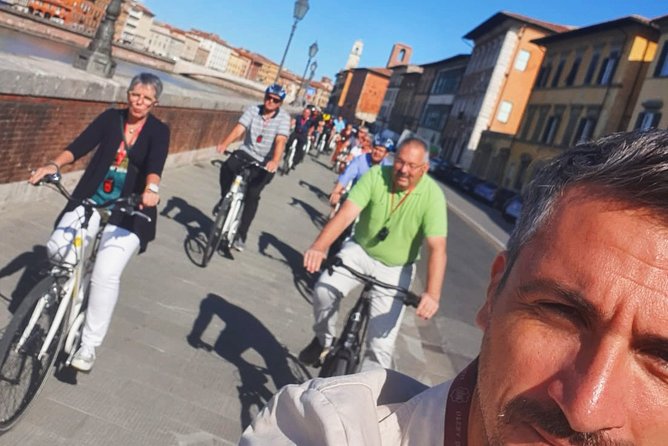
This ride is built around a sequence of short, purposeful stops. Many are described as free admission, and many are quick photo pauses—ideal when you’re traveling on limited time.
Stop 1: Smile & Ride (the start)
You begin right at the bike rental area. The purpose here is practical: get rolling, confirm your phone mount is secure, and start your loop with confidence. This is also where you can reset mentally—Pisa is a “look up and look around” city, and you want your first minutes to feel easy.
Stop 2: Santo Sepolcro (optagonal church)
Next comes Santo Sepolcro, notable for its optagonal shape. Even if you’re not the type to tour every church, this kind of architectural oddity is exactly what makes a self-guided bike route better than a straight landmark dash.
Stop 3: Giardino Scotto (San Gallo fortress)
Then you’ll reach Giardino Scotto, tied to the San Gallo fortress story. This stop is a nice change of pace from the usual Pisa postcard views. It also gives you a sense of the city as a place that evolved beyond medieval religious power.
Stop 4: The second leaning tower angle (San Miche degli Scalzi)
You’ll see the second Leaning Tower of Pisa experience: Chiesa San Miche degli scalzi. It’s described as leaning one degree more than the Leaning Tower. If you’re going to the famous one later anyway, this is a fun comparison moment—more playful, less overwhelming, and great for photos when the main tower area gets busy.
Stop 5: Medicean aqueduct
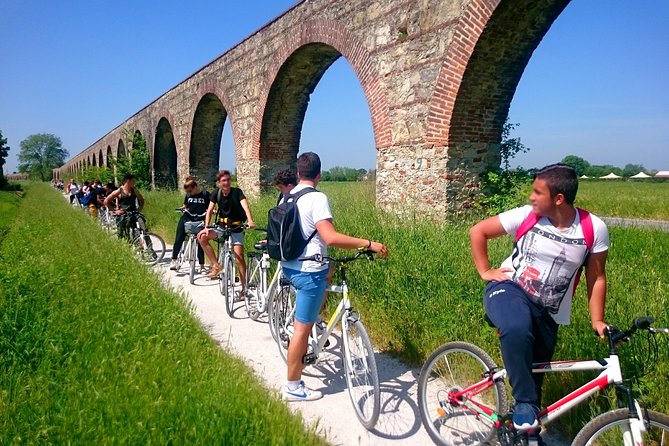
From there, the route points out the Medicean aqueduct. Aqueducts aren’t always on people’s Pisa lists, but they help you connect the city’s beauty to engineering and everyday life. It’s also a good “ride break” stop—quick, visual, and easy to fit in.
Stop 6: Chiesa di San Zeno (Roman marble)
Chiesa di San Zeno is described with Roman marble details. This is the kind of stop where you can slow down and actually look at surfaces and stonework. On a bike tour, those moments feel like a gift because you’re not stuck doing a full guided lecture—you can take in what you care about.
Stop 7: Piazza Santa Caterina (Galileo’s reference point)
Piazza Santa Caterina has a bell tower used as a reference for Galileo. That detail is a perfect example of why this ride is more than just monuments: it connects Pisa to science and timekeeping, not only religion and architecture.
Stop 8: Piazza dei Cavalieri (Knights’ Square)
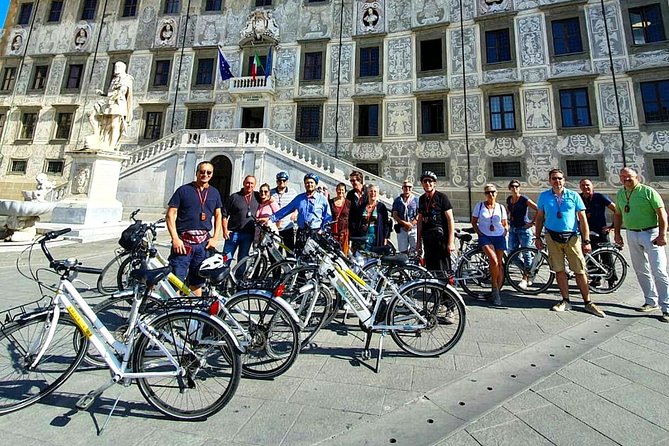
Piazza dei Cavalieri is a major square in its own right, described as the second most famous in Pisa after the Square of Miracles. The key context here is the contrast in power—its role as a civil center versus Church power. If you like your city history grounded in places, this stop gives you a quick mental framework for what you’re seeing later.
Stop 9: Leaning Tower of Pisa (photo moment)
Then comes the headline: the Leaning Tower of Pisa. You’re stopping for pictures (admission is not included), so treat this as a “see it, frame it, snap it” moment rather than a long ticketed visit.
Practical tip: aim for photos from a couple angles while you’re there, because the tower’s tilt looks different depending on your position. With a bike tour, you have limited time—so make the most of the minutes you’re given.
Stop 10: Piazza dei Miracoli (Square of Miracles)
Piazza dei Miracoli is the big one, and it’s also where the route spends the most time: about 1 hour. The square is described as a sacred Catholic complex dominated by four religious edifices—the Pisa Cathedral, the Pisa Baptistry, the Leaning Tower, and the monumental cemetery.
You’ll also notice it’s arranged with grassy lawns and paved walkways, which makes it feel open even when the architecture is dense. The New Hospital of the Holy Spirit is mentioned here as well, and it houses the Sinopia Museum and the Cathedral Museum. Admission isn’t included for this stop, so you’ll likely choose between a longer exterior orientation and optional museum time based on your budget and energy.
If you want one simple way to make this hour work: walk the perimeter first for orientation, then slow down where the Cathedral and Baptistry lines meet your favorite viewpoints.
Stop 11: Orto e Museo Botanico di Pisa (botanical institute)
Next is Orto e Museo Botanico di Pisa, described as an institute with exotic species and decorative “Grotesque” style in ceramical shells. Admission is not included here either, so use your time based on what your group wants—quick visual appreciation from the outside, or a ticketed visit if you decide it’s worth the extra cost.
Stop 12: Chiesa di San Frediano (Romanesque)
Chiesa di San Frediano is called Romanic, with wooden cross icons. This is a good mid-route palate cleanser: after the giant-bigness of the Piazza dei Miracoli area, you can appreciate smaller details and craftsmanship.
Stop 13: Chiesa di Santa Maria della Spina (river Gothic)
Santa Maria della Spina is described as a Gothic church along the river. A river-side church stop tends to feel more calm than the main square areas. It’s also a nice visual payoff after you’ve been riding—your eyes get a different kind of perspective.
Stop 14: Chiesa Parrocchiale di San Paolo (medieval velodrome story)
Chiesa Parrocchiale di San Paolo is tied to a medieval velodrome story for the old square. Even if you don’t know the details, the concept helps you see Pisa as layered: the same space can shift from sport to religion to today’s city rhythm.
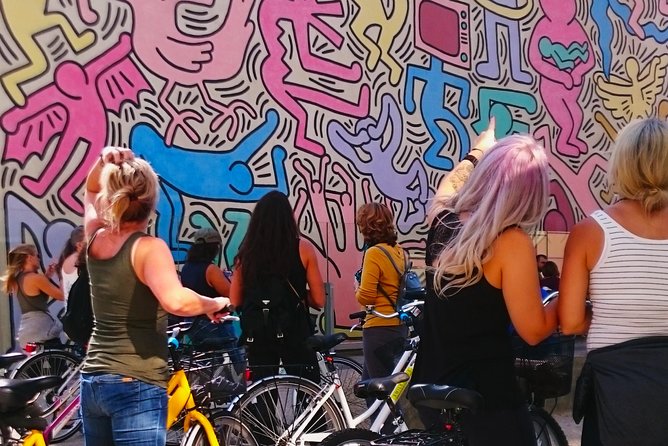
Stop 15: Murale Tuttomondo di Keith Haring
Finally, you’ll reach Murale Tuttomondo by Keith Haring. The mural’s origin is described as a meeting between a young student from Pisa and the artist in New York. It includes 30 figures across 180 square meters on the south wall of the church of Saint Anthony.
This stop is a big reason to do the ride rather than just walk from one monument to another. You get modern art’s footprint in an old city, and the scale is hard to fully appreciate without being there in person.
Navigation tips that make the ride smoother
Because the route relies on your phone, tiny habits matter:
- Start by learning how the app indicates turns and when it expects you at each stop.
- If you ever feel uncertain, slow down for 30 seconds and check instead of trying to “guess” from memory.
- For photos, park yourself on a safe straight section of sidewalk or curb area before you stop fully.
If you want to ride with confidence, make your first priority stable phone setup. The tour includes a phone holder, but you still need to secure your phone properly before movement.
Tickets, timed priorities, and how to avoid regret
Here’s the honest planning angle: your money will mostly be spent on what you choose to enter. Leaning Tower of Pisa ticketing isn’t included, and Piazza dei Miracoli admissions aren’t included either. Orto e Museo Botanico of Pisa also isn’t included.
So your best strategy is to decide before you arrive at the big sites:
- If you want maximum landmark viewing with minimal extra costs, focus on exterior views and museums only if they interest your group.
- If your group strongly wants interior access, you can plan your timing around buying those tickets while knowing the bike tour itself won’t cover them.
Best for which kind of traveler
This tour works well if you want:
- Independent pacing (nobody’s dragged along at someone else’s speed)
- A quick way to cover Pisa without exhausting your feet
- A mix of famous monuments and smaller architectural stops
It’s also a solid option in hot weather because cycling can reduce the fatigue that comes from repeated walking. For families, the age rule (10+ with an adult) makes it a workable way to keep kids engaged with constant “new stops.”
If you strongly prefer guided explanations throughout, this isn’t that format. It gives you the route and stops, then your group decides how much time to spend at each place.
Should you book this Pisa self-guided bike tour?
Book it if you like independent travel, want a sensible way to see Pisa in a short window, and you’re comfortable following an app route at your own speed. The value is strongest when you treat the visit as a route—using the bike to connect landmarks, then choosing carefully where to add paid entries like the tower area and museums.
Skip it (or be ready to adjust) if you rely heavily on perfectly working navigation. You’ll want a few calm minutes at the start to understand the phone directions, and you should plan for the fact that some stops are photo-fast rather than long ticketed experiences.
If you want Pisa that feels personal instead of rushed, this bike + app setup is a very practical way to do it.
FAQ
How long is the Pisa self-guided bike tour?
It takes about 3 hours.
How much does the tour cost?
The price is $29.63 per person.
Is this tour guided by a person?
No. It’s self-guided. You use a smartphone app to follow the route.
What’s included with the booking?
The included items are use of the bicycle, the app plus 1 phone holder, and a phone holder.
Are tickets for the Leaning Tower or Piazza dei Miracoli included?
No. Admission tickets for the Leaning Tower of Pisa and Piazza dei Miracoli are not included.
Are any other attractions on the route ticketed?
Orto e Museo Botanico di Pisa has admission not included. Some churches and stops list admission ticket free, but the big-ticket areas above are not included.
Where does the bike tour start and end?
It starts at Smile & Ride, Piazza della Stazione, 7, 56121 Pisa, Italy, and ends back at the same meeting point.
What is the minimum age to ride?
The minimum age is 10 years. Children must be accompanied by an adult.
Do I need to pay extra for accessories like helmets?
Accessories such as bags and helmets are listed as €3.00 per person and are not included in the price.
Can I cancel for a full refund?
Yes, you can cancel for a full refund if you cancel at least 24 hours in advance. If you cancel less than 24 hours before the start time, the amount paid is not refunded.