REVIEW · TOKYO
Tokyo downtown bicycle tour Tokyo Backstreets Bike Tour
Book on Viator →Operated by 東京下町自転車ツアー Tokyo Backstreets Bike Tour · Bookable on Viator
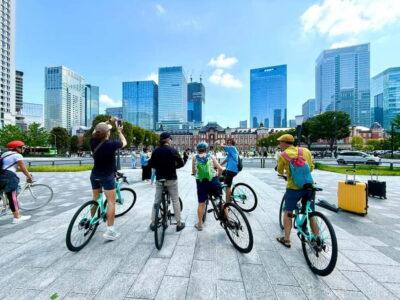
Tokyo on two wheels beats walking every time. This small-group backstreets bicycle tour links classic Asakusa sights with calmer neighborhood life, and it does it at a pace where the city actually makes sense. You cycle off main roads with a guide so you can see more without spending your whole day studying maps.
I love two things most: the small-group attention that keeps the ride comfortable, and the food-and-culture rhythm built into the stops. One guide I saw praised often is Takeshi, and people liked how he explains what you’re seeing while still keeping the day flexible.
One thing to plan for: this experience requires good weather, and the bikes are folding models sized for a specific height range (140–180 cm). If you’re outside that range, tell them ahead so you get the right setup.
In This Review
- Key things I’d circle in your planning
- Starting in Higashimukōjima, then easing into Tokyo rhythm
- What 4 hours on folding bikes feels like
- Stop 1: Yamamotoya and the sakuramochi you’ll remember
- Stop 2: Honryuin Matsuchiyama Shoden within the Sensoji orbit
- Stop 3: Imado Shrine and the power-spot angle
- Stop 4: Edo Taito Traditional Crafts Center for hands-on culture
- Stop 5: Cycling to Senso-ji, then leaving bikes to walk
- Stop 6: Kyu Yasuda Garden for calm after the crowds
- Stop 7: Ryogoku Kokugikan for sumo-stadium photos
- Stop 8–9: Oyokogawa Water Park toward Tokyo Skytree
- Stop 10: Kyojima Minami Park and daily-life shopping streets
- Price and value: why $65.41 can make sense in Tokyo
- Who this tour fits best
- Weather, timing, and how to get the most out of your ride
- Should you book Tokyo Backstreets Bike Tour?
- FAQ
- How long is the Tokyo downtown bicycle tour?
- What is the price per person?
- How many people are in a group?
- What’s included in the tour?
- Are helmets mandatory?
- What kind of bike do you use, and what height range fits?
- Can I ride a tandem bike?
- Can the itinerary be customized?
- Where does the tour start and end?
- What happens if the weather is bad or I need to cancel?
Key things I’d circle in your planning
- Small-group size (max 6) means fewer bottlenecks and more personal pacing.
- Folding bikes + provided helmets make it easier to travel light, though helmets aren’t required.
- Local stops that mix big names with quieter corners lets you see Tokyo beyond the usual photo lines.
- Sakuramochi and a traditional snack turn the ride into a food story, not just sightseeing.
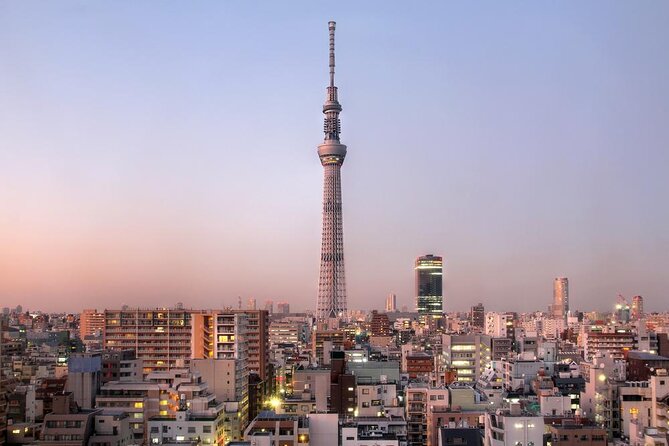
- A ride route that runs toward Skytree keeps the day moving and gives you that skyline moment.
- Flexible itinerary means you can spend extra time where your interests lean.
Starting in Higashimukōjima, then easing into Tokyo rhythm
The meeting point is in Sumida City, Higashimukōjima: inside the shared office called シェアオフィス「シナプス」 (Synapse), at 2-chōme 24-14. It’s listed as being near public transportation, which matters in Tokyo where “close” can still be a long walk if you get turned around.
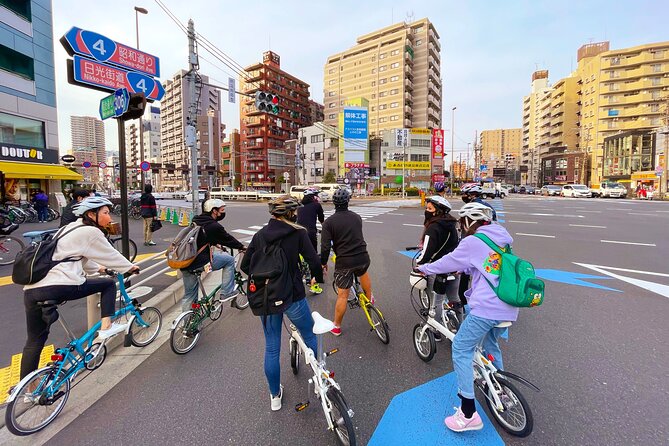
What I like about this kind of start is that it sets you up to feel local fast. You roll out from a neighborhood setting rather than from a major tourist hub, and you immediately start learning how Tokyo behaves when cars, bikes, and pedestrians share space. Even when you’re not an experienced cyclist, the tour is designed for most participants, with an easy-to-follow route guided by someone who knows the roads.
Also, you’re not thrown into the ride without support. Helmets are provided (and riders can choose to use them since they’re not mandatory), and you get water and a snack from a traditional sweet shop early on. That might sound small, but it’s the difference between enjoying the day and trying to “power through” after a morning commute.
You can also read our reviews of more tours and experiences in Tokyo.
What 4 hours on folding bikes feels like
This tour runs about 4 hours, and the style is half sightseeing, half neighborhood ride. People in past tours noted they covered around 15 km in that time, which helps you set expectations. You’re not just cruising for views—you’ll feel the movement, but it’s not a hardcore training session.
The bikes are folding models with 14–20 inch size, aimed at heights between 140 and 180 cm. If you’re over 180 cm, you should inform them priorly so you can get a bike that fits. That’s a big deal. A bike that’s slightly too small can make turns awkward and make the ride feel more tiring than it needs to.
Tokyo is often described as cycle-friendly, and this route uses that reality. You’ll spend time on roads where the driving pattern is predictable, and your guide manages the flow so you’re not constantly stopping to figure out what’s safe or where to turn. In practice, that means less stress and more attention on the actual sights.
One small practical note: since you’re leaving a few stops on foot, wear shoes you’re comfortable walking in. You’ll also want a light layer if you’re riding in cooler months, because the wind can change your comfort level once you’ve started moving.
Stop 1: Yamamotoya and the sakuramochi you’ll remember
Your first stop is Yamamotoya (Chōmeiji Sakuramochi). Sakuramochi is one of Japan’s most famous seasonal sweets, and this one is described as a cherry cake wrapped in a salt-pickled cherry leaf and filled with red bean paste.
I like this opening because it gives you a Tokyo texture you won’t get from simply staring at landmarks. Instead of waiting until the end for a snack, you start by tasting a local tradition and learning the basic components right away. It also makes the rest of the tour easier to enjoy—your brain is already in sightseeing mode, not “where do we eat later?”
One consideration: any sweet stop is a chance to pace yourself. It’s a snack, but if you’re the type who turns dessert into a full meal, you might feel a little too full later. Just take a normal bite and keep the ride in mind.
Stop 2: Honryuin Matsuchiyama Shoden within the Sensoji orbit
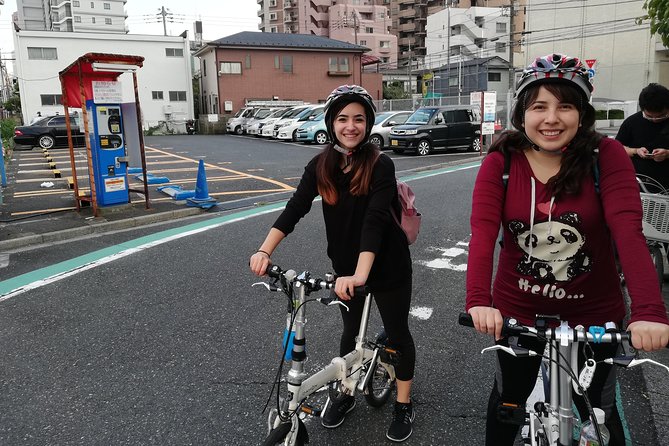
Next comes Honryuin Matsuchiyama Shoden, described as part of Sensoji, with roots in 595. The details you’ll hear here focus on symbolic imagery—especially mentions of a daikon (Japanese radish) and a pouch.
Temples can feel like the same set of buildings if you don’t get the story. Here, the tour’s value is that you get meaning: why certain images show up, how they’re interpreted, and how they connect to the larger Sensoji tradition. Admission is free, so you’re not paying to enter a box—you’re paying (through the tour) for the interpretation and the ease of getting there.
Typical drawback at stops like this: time on foot is limited. You get enough to look and learn, but you won’t have hours to wander like you would if you visited solo. If you’re the type who wants to linger for deep photos or long prayers, tell your guide early and see if you can add a few minutes.
Stop 3: Imado Shrine and the power-spot angle
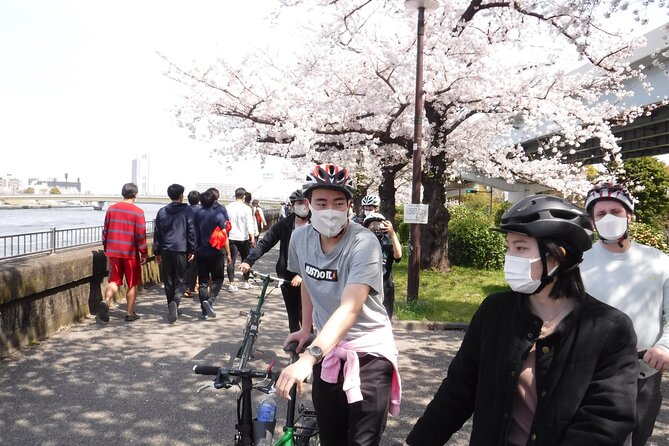
Imado Shrine is next, founded in 1063. It’s framed as a power spot popular for people seeking lovers or marriage partners. You’ll also see references to the beckoning cat and fortune cat.
This stop is a great example of how the tour mixes “famous Tokyo” with “Tokyo beliefs and everyday hopes.” You’re not just collecting sights; you’re seeing how spiritual symbolism actually appears in public life. And because the route is built around bike travel, you experience this section as a sequence rather than isolated attractions.
Timing is about 15 minutes here. That’s enough time to walk the grounds at a comfortable speed, read what you can, and take a few photos—without turning it into a long detour.
Stop 4: Edo Taito Traditional Crafts Center for hands-on culture
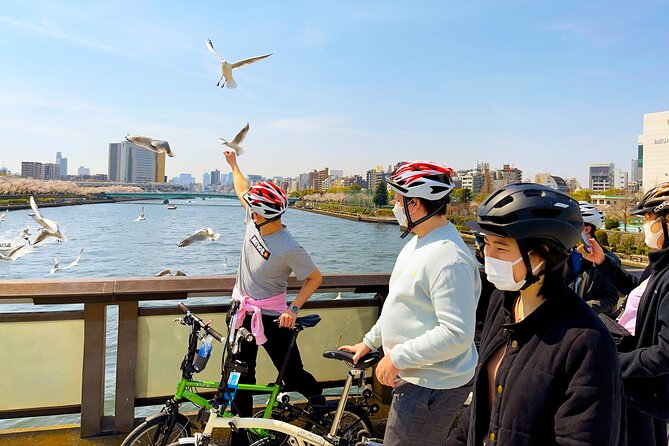
The Edo Taito Traditional Crafts Center (also called the Edo Shitamachi Traditional Crafts Museum) is where the tour slows down in a good way. You’re looking at traditional crafts, with the focus on the workmanship and craft tradition of the area.
What’s useful for you: crafts museums can be hit-or-miss if you don’t know what you’re looking for. With a guide, you can connect objects to culture—what makes the technique important, and why it mattered historically in this part of Tokyo. And since admission is free, the cost is purely about time and attention.
A possible drawback: if you’re expecting a big modern museum with lots of interactive exhibits, this may feel more like a focused cultural stop. It still fits the tour’s theme—old Tokyo skills and daily neighborhood heritage—rather than being another “must-see” monument.
Stop 5: Cycling to Senso-ji, then leaving bikes to walk
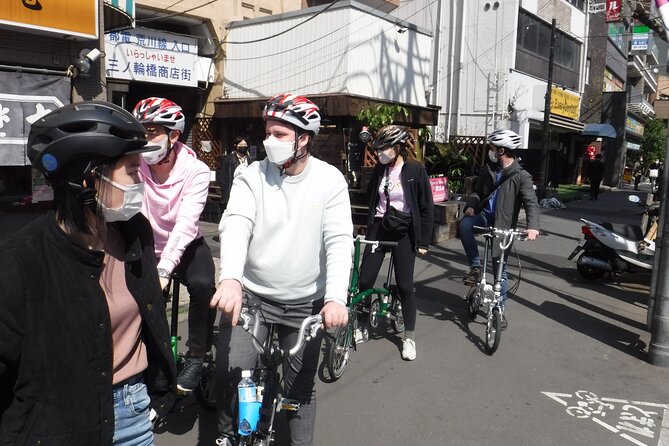
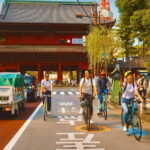
Senso-ji is the headline, and the tour handles it smartly. You cycle in front of the Kaminarimon gate, then leave the bikes to walk inside the temple.
This is one of those moments where you’ll feel the difference between bike travel and foot travel. From the bike you get the big approach view; on foot you can actually take your time around the sacred pathways. Even with a short stop, walking gives you a sense of how Senso-ji functions as a place people visit, not just a backdrop for photos.
Admission is listed as free, so again, your “cost” is time. The tour structure ensures you see the area without spending half your day fighting traffic and crowds on foot.
Stop 6: Kyu Yasuda Garden for calm after the crowds
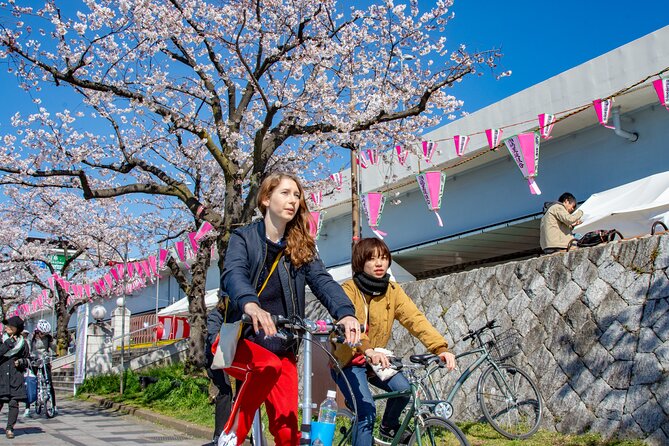
Then the route turns quieter at Kyu Yasuda Garden, a traditional Japanese garden built in the 17th century. This is where you get the visual reset. After temple gates and shrine symbolism, a garden gives your eyes—and your brain—a softer pace.
You have about 20 minutes here, so think of it as a curated walk-through rather than an all-day stroll. If gardens are your thing, pay attention to how the space frames views, even when you’re moving quickly. A good guide will point out what to notice so you don’t just “look at plants” without context.
Stop 7: Ryogoku Kokugikan for sumo-stadium photos
Ryogoku Kokugikan is the sumo stadium area, with a quick photo-and-look stop. You cycle past it, and there’s a chance to take pictures—about 5 minutes is all you get.
This is a classic “blink and you’ll miss it” stop. If you’re a big sumo fan, you might want a bit more time; if not, it still works as a way to connect Tokyo’s identity beyond neighborhoods and temples.
Stop 8–9: Oyokogawa Water Park toward Tokyo Skytree
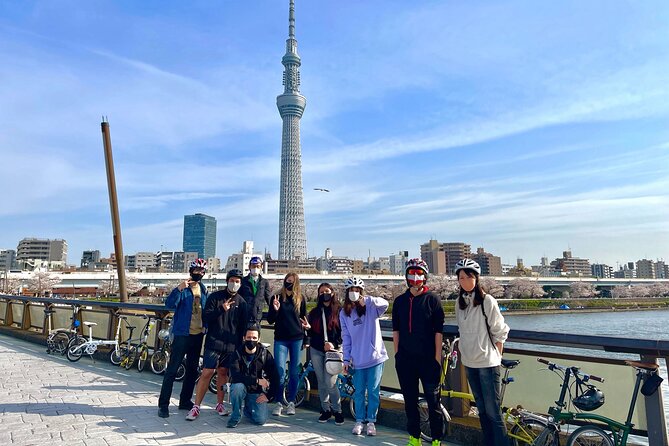
From there, you move into the Tokyo skyline direction. First, you cycle through Oyokogawa Water Park, then you head toward Tokyo Skytree. You’ll spend about 30 minutes at the water park area and then about 10 minutes cycling under the Skytree.
This pair of stops is valuable for two reasons. One, it breaks up the sightseeing with a “ride zone,” where the motion itself becomes part of the experience. Two, Skytree is such a strong landmark that reaching it by bike feels different than arriving on foot or by train.
When you’re cycling under the tower, you’re getting that scale effect with your own body in the scene. It’s the kind of moment that makes a half-day tour feel like you actually visited Tokyo, not just skimmed it.
Stop 10: Kyojima Minami Park and daily-life shopping streets
The last stop is Kyojima Minami Park, described as old-fashioned shopping malls where you can see daily life. About 30 minutes here gives you time to look around, slow down, and understand how the city feels away from big-ticket sights.
This ending matters. Too many tours race from landmark to landmark and leave you with a “great photos, empty feeling” result. This one finishes in a place where you can see people’s routine, small storefronts, and the texture of everyday Tokyo.
It’s also a great moment to ask your guide for restaurant ideas or what to try next—especially if you want to extend the day after the tour ends.
Price and value: why $65.41 can make sense in Tokyo
At $65.41 per person for about 4 hours, this tour isn’t cheap-cheap. But in Tokyo, bike time with a guide often pays off fast because it buys you three things you’d otherwise spend effort and money on:
- Route solving: The whole point is not getting lost off main roads. In a city that’s easy to ride and hard to navigate perfectly, that guidance is real value.
- Time efficiency: You cover a lot of ground without the constant backtracking that happens if you’re hopping between areas on your own.
- Interpretation: You don’t just see Senso-ji or a garden; you get context like why certain imagery matters, what a shrine is known for, and how crafts connect to local identity.
Add in the provided bike and helmet, plus water and a traditional sweet snack, and the day becomes more of an all-in experience rather than a list of separate stops you’d have to plan, book, and coordinate.
Who this tour fits best
This is a smart fit if you want a low-stress way to see Tokyo’s contrast: temples and traditional sweets on one side, Skytree-scale city views and neighborhood life on the other.
It’s especially good for:
- First-timers who don’t want to spend half a day figuring out routes.
- People who like photos but also care about meaning.
- Families and multi-generational groups, since the pace and group size are set up for comfort. A past family group included a 9-year-old on a tandem bike setup, and the ride was described as easy.
If you’re a hardcore cyclist looking for speed, this is probably not your day. This tour is about culture, sights, and manageable riding. That’s not a complaint. It’s the point.
Weather, timing, and how to get the most out of your ride
The tour requires good weather. If conditions are poor, the experience may be canceled, with the option of a different date or a full refund. That matters because the route includes outdoor riding and walk-through stops.
Timing tip: if you can, plan your schedule so you’re not stuck with only one possible time slot. Because it’s weather-dependent, having flexibility makes your life easier.
On the day, keep it simple:
- Bring water if you like, even though water is provided.
- Wear comfortable shoes for the stops where you leave the bike.
- If you’re unsure about bike size, say it upfront; the folding bike fit is part of comfort and safety.
Should you book Tokyo Backstreets Bike Tour?
If your ideal Tokyo day includes quiet streets, meaningful stops, and that payoff of reaching Tokyo Skytree by bike, then yes, book it. The route is built to make sense: sweetness at the start, temples and shrine symbolism in the middle, craft and garden culture when you need a break, and neighborhood streets to finish feeling grounded.
Pass on it only if you hate any chance of rain ruining plans, or if you’re looking for a long, deep museum-style visit at each location. This tour works best as a well-paced half-day that turns transportation into part of the sightseeing story.
FAQ
How long is the Tokyo downtown bicycle tour?
It runs about 4 hours.
What is the price per person?
The price is $65.41 per person.
How many people are in a group?
The tour has a maximum of 6 travelers.
What’s included in the tour?
Bikes and helmets are provided, along with water and a snack from a traditional sweet shop.
Are helmets mandatory?
No. Helmets are provided, but they are not mandatory.
What kind of bike do you use, and what height range fits?
The bikes are folding bikes with 14–20 inch wheels, suitable for people between 140–180 cm tall. If you’re over 180 cm, you should inform them in advance.
Can I ride a tandem bike?
Yes, but you need to inform the provider 3 days before the day you booked if you want to cycle with a tandem bike.
Can the itinerary be customized?
Yes. The itinerary can be customized to suit your needs.
Where does the tour start and end?
It starts at Tokyo Backstreets Bike Tour in Sumida City, Higashimukōjima (inside the Synapse shared office at 2-chōme 24-14). It ends back at the meeting point.
What happens if the weather is bad or I need to cancel?
This experience requires good weather. If it’s canceled due to poor weather, you’ll be offered a different date or a full refund. You can also cancel for a full refund up to 24 hours in advance.