REVIEW · ROME
Rome:Appian Way E-bike Tour, Catacombs, Aqueducts & Transfer
Book on GetYourGuide →Operated by Bicycle Roma · Bookable on GetYourGuide
Pedal back in time on Appia Antica. This e-bike tour layers Appian Way ruins, an expert-led catacombs visit, and up-close Roman aqueduct sights into one smooth half-day. A private shuttle cuts the hassle of Roman traffic, so you spend your energy on cycling, not stress.
I love that the route is built around quiet, low-stress riding. The plan favors car-free stretches on the old Via Appia paving, with only a couple of crossings when you switch from the Appia Antica Regional Park to the aqueduct area. Guides like Emanuele and Alessandro tend to set a calm pace, make bike fit adjustments early, and keep the stories coming.
One thing to think about: you do need basic-medium bike skills. The e-bikes are comfortable and powerful enough for most people, but the classic Roman paving can feel bumpy, and you’ll be riding mostly on uneven ground.
In This Review
- Key things I’d plan around on this tour
- Rome’s Appian Way by e-bike: why it feels so different
- Where you meet, how the shuttle works, and what to bring
- Baths of Caracalla and the move from city noise to history
- The Catacombs of Rome: your underground reset
- Circus of Maxentius and the Tomb of Cecilia Metella: quick stops, big visuals
- The Appian Way ride: 90% on ancient paving, mostly car-free
- Aqueducts Park and the outer Rome parks: Roman engineering on your route
- Bike riding level, group size, and who this tour suits
- Safety and comfort: helmets, quiet routing, and guide control
- Price and value: what $86.66 buys you in real terms
- Tips to make the day go smoother
- Final verdict: should you book this Appian Way e-bike tour?
- FAQ
- How long is the Rome: Appian Way e-bike tour?
- Do I need to have bike experience?
- Is a helmet and lock provided?
- What’s included in the catacombs stop?
- How does the private transfer work?
- Where does the tour end?
- What should I bring?
- Are there age and height limits?
- Are refreshments included?
Key things I’d plan around on this tour

- Private shuttle from Circus Maximus area: a 9-seater minivan ride that saves you from traffic and gets you into the history faster.
- Guided Catacombs of Rome: ticket + guided visit included, about 45 minutes underground.
- Appian Way on ancient paving: roughly 90% of the ride happens on Via Appia Antica with no car traffic along the main sections.
- Aqueduct Park ruins and photo stops: planned breaks at spots like Torre Fiscale Park and Caffarella Park for aqueduct views.
- Guide-led navigation and bike setup: you get helmet + lock, route selected for quiet roads, and you ride with a guide.
- Photo help is part of the experience: guides often help take pictures and can send shots the same day.
Rome’s Appian Way by e-bike: why it feels so different
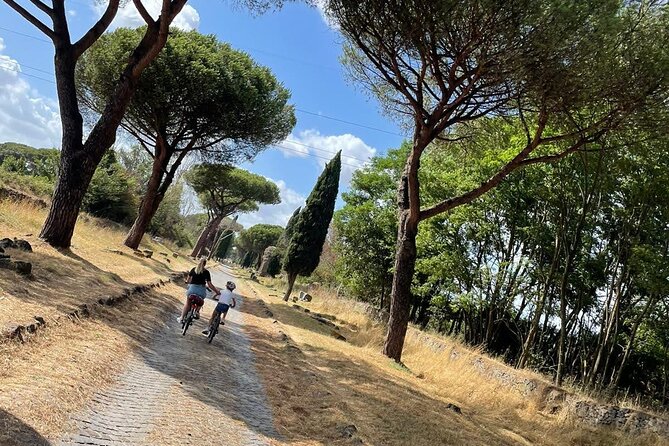
Rome has ruins everywhere. The difference here is pace and access. When you cycle the Via Appia Antica, the city’s noise falls away fast, and the day starts to feel like Roman history moved outdoors and gave you two wheels.
The e-bike matters because it changes how much you can enjoy the day. You still get the physical sense of moving through the landscape, but you’re not draining yourself before the best viewpoints and the catacombs. I also like that the tour doesn’t treat the ride like a warm-up; it’s the main event.
Then there’s the “story mode” factor. The tour is guided, and the guide’s job is to connect what you’re seeing—tombs, ruins, aqueduct structures—with what those places meant in their original setting. That’s where the day stops being a checklist.
You can also read our reviews of more tours and experiences in Rome.



Where you meet, how the shuttle works, and what to bring
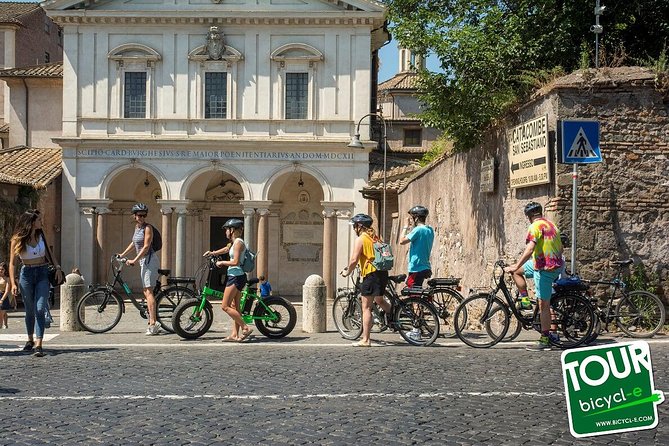
You’ll meet at the start point near Viale Aventino, 46. The private transfer component uses a 9-seater minivan with a Bike Adventure sign; your guide welcomes you and you head out from the pizzeria area (in front of RUVER Teglia Frazionata pizzeria is where the shuttle waits per the tour instructions).
Plan for about 20 minutes each way on the shuttle. That time is part of the value because you’re not negotiating public transit, and you’re not stuck in stop-and-go traffic before you even start riding.
Bring a passport or ID card, since it’s required for participation. Also bring weather sense: this is Rome, and you should expect sun or sudden cool air, especially with an underground catacombs stop.
Baths of Caracalla and the move from city noise to history
Early on, you pass the Baths of Caracalla. It’s not a long visit, but it’s a useful “big Rome” warm-up: grand scale, Roman engineering, and a clear shift from modern streets toward the outskirts.
The day’s flow then makes sense. You’re transferred out, you get briefed, and you start riding without wasting time on trial-and-error navigation. That’s one of the quiet wins of a guided e-bike tour: less decision fatigue, more attention on the places that matter.
The Catacombs of Rome: your underground reset
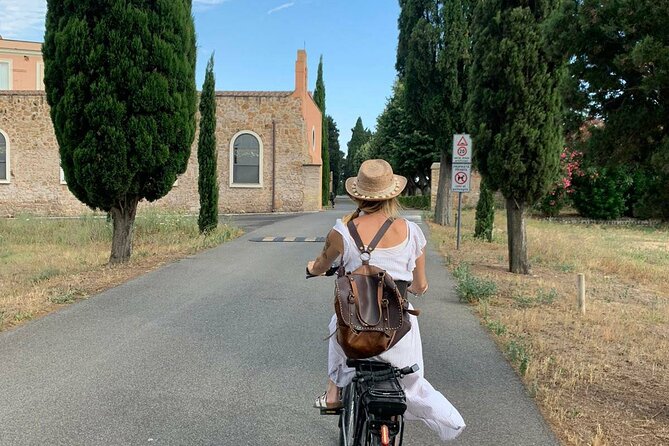
The Catacombs of Rome stop is your main indoor/underground moment. You’ll get a guided visit for about 45 minutes, plus the catacombs entrance ticket is included.
Practical note: catacombs are cooler than you expect. Even on warm Rome days, that underground temperature can feel like a reset button. It also helps that the guide is there to orient you—catacombs can be hard to picture unless someone gives you a map in words.
Why it’s valuable on this day: it breaks up the cycling with a very different type of Roman “realm.” One part is open-air, sunlit ruins; the other is dark passages and the sense of Roman life stretched over centuries.
Circus of Maxentius and the Tomb of Cecilia Metella: quick stops, big visuals
After the catacombs, the tour gives you short photo and walking breaks at eye-catching landmarks. Two of the best-known are the Circus of Maxentius (photo stop plus a short walk) and the Tomb of Cecilia Metella (photo stop plus a short stretch).
These breaks are brief by design. In 4.5 hours, the tour has to keep the ride moving so you can cover the Appian Way and reach the aqueduct areas. The upside: you get landmark-level moments without spending the day standing in queues.
The downside, if you hate quick stops, is that you won’t linger the way you might on a dedicated walking tour. But if you like variety—underground, then tombs, then a long ride—the pacing works.




The Appian Way ride: 90% on ancient paving, mostly car-free
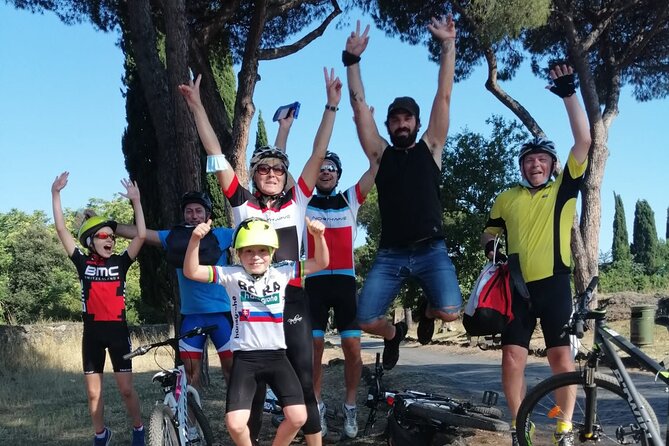
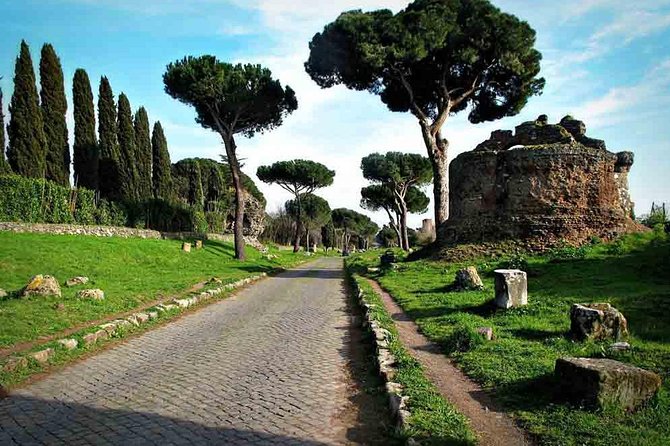
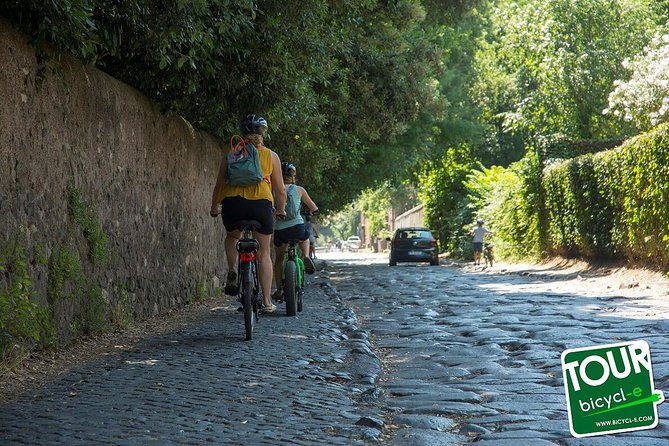
This is the heart of the experience: cycling along the Via Appia Antica. The tour is designed so that about 90% of it happens on Roman paving, and you’ll avoid most car traffic. The key detail is that only residents’ cars have access in those stretches, so the ride stays calm.
There are only two crossings when you leave the Appia Antica Regional Park to enter the Aqueduct Park, and when you move from Torre Fiscale Park to Caffarella Park. That’s a big deal because it means the tour can stay focused on the scenery and not on constant traffic awareness.
One reality check: the paving can be bumpy. Some guides and riders adjust with e-bike assistance, but you should still expect uneven ground and gravel-type sections. If you’re the type who gets annoyed by discomfort, you’ll want to go in with patience.
Crowd timing is also smart. One note I’d take seriously: weekends can be busy on the Appian Way, with more foot traffic and strollers. If you want breathing room, consider riding on a less crowded day when you can.
Aqueducts Park and the outer Rome parks: Roman engineering on your route
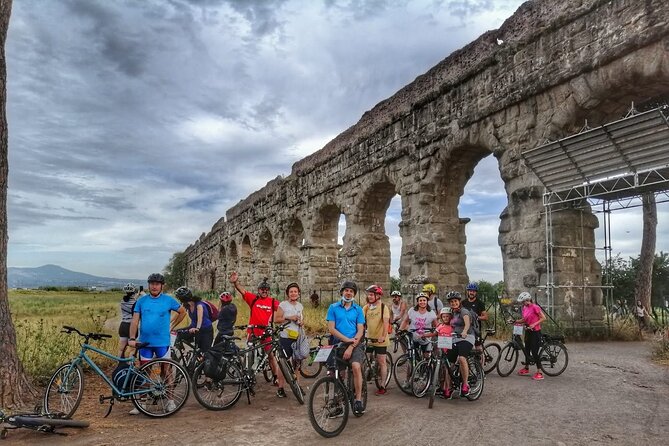
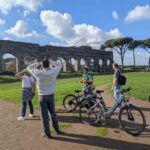
Once you reach the aqueduct area, the tour keeps weaving in viewpoints. You’ll spend time in Parco degli Acquedotti and also pass through park areas like Torre Fiscale Park and Caffarella Park, with photo stops built in along the way.
This is where the engineering payoff happens. Aqueducts look good in photos, but when you cycle near them, you get a different sense of scale and purpose. The structure isn’t just a ruin; it’s part of a system that moved water and shaped how Rome worked.
I also like that these parks give you a sense of space. Even though you’re still in Rome, the ride feels like you’re outside the city rhythm. It’s a practical way to get fresh air without giving up major sights.
Bike riding level, group size, and who this tour suits
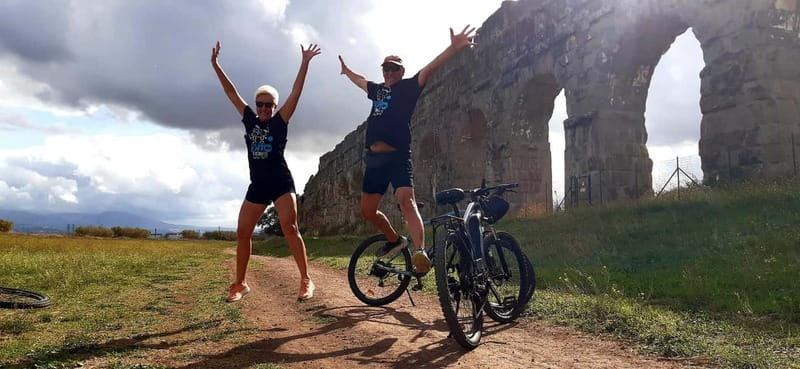
You’ll need basic-medium bike riding skills. That doesn’t mean you need to be a road cyclist, but it does mean you should be comfortable balancing, starting and stopping smoothly, and riding on uneven surfaces.
The tour includes an e-bike, helmet, and a lock, and you’re guided the whole way. There’s also a bike fit moment early on, and a guide has the right to refuse participation if someone isn’t suitable due to skills or health concerns.
Group size depends on what you book:
- Small group tours run with a minimum of 4 and a maximum of 8 participants.
- Private tours are available if you want your day to feel more personalized.
Family reality check: children up to 20 kg can travel for free in a child seat, children up to 139 cm join with a trailer bike, and kids can ride their e-bike from 12 years old. Pregnant women aren’t recommended for this activity, and people under 140 cm aren’t suited based on the provided guidance.
Who it’s best for: people who want real motion plus real history in half a day. It’s also great if you’ve already “done Rome” on foot and want a different angle—without the hassle of organizing bike rentals and transport yourself.
Safety and comfort: helmets, quiet routing, and guide control
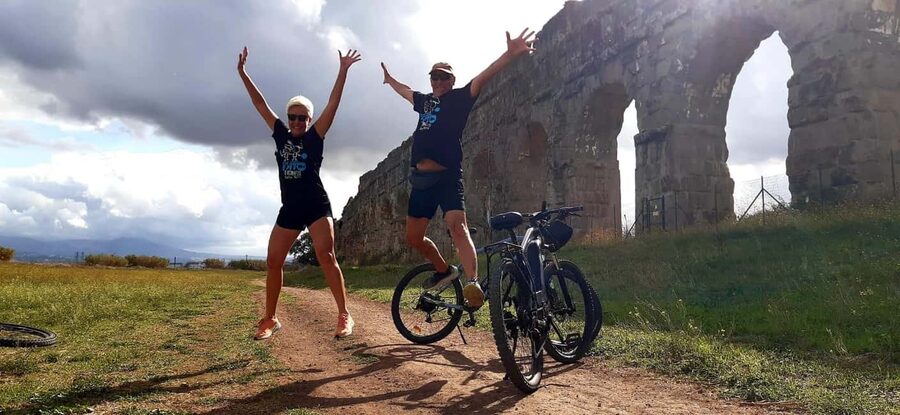
Safety is handled in a few practical ways. Routes are selected for quiet and safe roads, and you’re never on your own; the guide accompanies the group and provides information as you go. After a briefing, the guide manages the ride, including the bike setup and admission suitability if something doesn’t feel safe.
Comfort is more than just the e-bike. Helmets are included, and a lock means you can store gear at stops. You’re also riding mostly on the Roman paving that limits car traffic, which helps reduce stress.
Weather-wise, I’d be ready for a quick shift. One small comfort reported in the tour experience: ponchos can be supplied if rain shows up. That’s the kind of detail that saves a lot of misery mid-tour.
Price and value: what $86.66 buys you in real terms
At $86.66 per person (for this 4.5-hour experience), you’re paying for more than bike rental. You’re getting:
- an e-bike with helmet and lock
- a local guide
- a catacombs ticket and guided tour
- planned stops along the Appian Way and aqueduct parks
- private shuttle transfer to reduce Rome traffic friction
- a Roma ’n Bike card discount circuit for cycle tourists
That bundle matters because the catacombs piece alone isn’t just a sightseeing moment—it’s a full guided underground block with admission included. Add the shuttle and the guided ride, and the price starts to look fair compared to piecing everything together.
What’s not included: refreshments. So if you get snacky later in the ride, plan ahead with water and a light bite before you start.
Tips to make the day go smoother
A few things that help you enjoy the tour more:
- Wear shoes you trust on uneven paving.
- Don’t overpack. Your day is mostly ride-time plus short photo stops.
- If you’re unsure about your ability, tell the guide. They’ll adjust how the group handles the ride based on suitability.
- Bring ID. It’s required.
- If you’re picky about crowds, consider booking a day with fewer weekend walkers.
And a nice bonus: guides often help with photos, including action shots. It’s one less thing you need to worry about while you’re enjoying the ride.
Final verdict: should you book this Appian Way e-bike tour?
I’d book it if you want a strong mix: catacombs + Appian Way cycling + aqueduct park stops in one guided half-day, with less traffic stress thanks to the shuttle. It’s especially attractive when you want to see parts of Roman history that feel far from the usual city bustle.
I would hesitate if:
- you’re not comfortable on bumpy surfaces and uneven paving,
- you prefer long museum-style time at each site,
- or you’re in the categories noted as not suitable (like pregnancy, or the height threshold).
If your goal is to get out of the core crowds and still hit the big-ticket Roman icons, this tour is one of the most practical ways to do it without turning your day into logistics.
FAQ
How long is the Rome: Appian Way e-bike tour?
The duration is listed as 4.5 hours, though starting times vary, so you’ll want to check availability for your preferred slot.
Do I need to have bike experience?
Yes. The tour requires basic-medium bike riding skills. You should be comfortable riding an e-bike over uneven surfaces.
Is a helmet and lock provided?
Yes. Helmet and lock are included, along with the e-bike.
What’s included in the catacombs stop?
The Catacombs of Rome ticket entrance and a guided tour are included, with the catacombs visit listed at 45 minutes.
How does the private transfer work?
There’s a private transfer by a 9-seater minivan with a Bike Adventure sign. The shuttle is about 20 minutes each way.
Where does the tour end?
The tour ends back at the meeting point area (the same place used for pickup/transfer return).
What should I bring?
Bring a passport or ID card, since it’s required. The tour data also notes that no pets are allowed.
Are there age and height limits?
The guidance says children up to 139 cm ride with a trailer bike, children can ride their own e-bike from 12 years old, and it is not suitable under 140 cm. Pregnant women are not suitable.
Are refreshments included?
No. Refreshments are not included, so plan for water and a snack if you need one during the ride.