REVIEW · PARIS
Paris: Eiffel Tower and Notre Dame Night Tour by E-Bike
Book on GetYourGuide →Operated by XL Tour Paris · Bookable on GetYourGuide
Moonlit Paris is made for an e-bike. You glide past major landmarks with that glowing-night feeling, then the Eiffel Tower lights start to sparkle as the route keeps things calm on the streets. I also like the live guide style here: Tomas (often spelled Thomas in the materials) keeps the ride moving, shares stories along the way, and takes photos for you at the big stops.
If you’re short or have mobility limits, this isn’t your plan. Adults need to be at least 155 cm (5’01”), and the tour also isn’t suitable for wheelchair users, people with mobility impairments, or pregnant women.
E-bike night riding that feels manageable
Guide-led photo stops at the key sights, not just a quick pass-by
Mostly bike lanes and sidewalks, so you’re not stuck in stop-and-go traffic
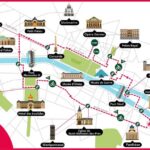
A tight 2-hour route built around the most famous downtown views
Rain or shine means you get the ride you booked, even when the weather misbehaves
In This Review
- Getting Set Up With Tomas: Helmets, Bike Fit, and a Real Safety Briefing
- Louvre to Tuileries: Fast Starts and the Best “First Look” Views
- Pont Neuf to Pont des Arts: Bridges That Explain Paris
- Sainte-Chapelle and Notre-Dame: Gothic Details You Can Actually See
- Institut de France to Orsay Docks: Small Stops With Clear Payoff
- Pont Alexandre III, Grand and Petit Palais: The Paris of Scale
- Eiffel Tower at Night From the Trocadéro Area: The Moment You Came For
- Alexandre III to Concorde: Squares, Bridges, and a Calm Route Home
- Price and Value for $116: Why This Works in 2 Hours
- What to Wear and Bring for a Comfortable Night Ride
- Best Fit: Who This Tour Suits (and Who Should Skip It)
- Should You Book This Eiffel Tower and Notre-Dame E-Bike Night Tour?
- FAQ
- How long is the Paris Eiffel Tower and Notre-Dame night e-bike tour?
- What’s included in the price?
- Are attraction tickets included?
- What languages are available for the live guide and audio?
- Does the tour run in bad weather?
- What should I wear or bring?
- Is there a height requirement for adults?
- Can I cancel and pay later?
Getting Set Up With Tomas: Helmets, Bike Fit, and a Real Safety Briefing
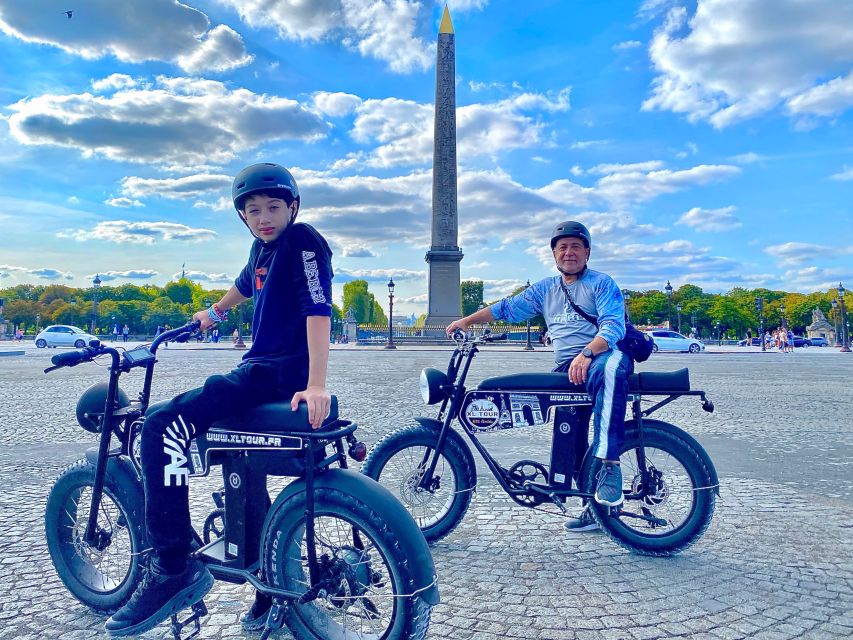
Your night starts at 10 Rue de la Paix, at the technical area inside the car park. Don’t worry if you don’t spot your guide or bikes right away: the guide comes upstairs to meet you once you arrive. It’s a small detail, but it matters because the meeting point is inside a car park, so you’ll avoid that awkward hunt.
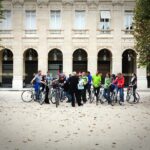
Before you ride, you get a 15-minute safety briefing, then a quick test drive so you can get comfortable on the electric assist. That’s the difference between Paris feeling like a cycling adventure and Paris feeling like you’re trying to multitask on a scooter. The reviews I’ve seen put extra weight on this part: first-time e-bike riders felt safe because Tomas explained how to handle the bike through busy areas.
Once you’re geared up with a helmet and your bike is dialed in, the tone becomes easy. You’re not spending your energy fighting the city; you’re saving it for the sights and the photos.
Louvre to Tuileries: Fast Starts and the Best “First Look” Views
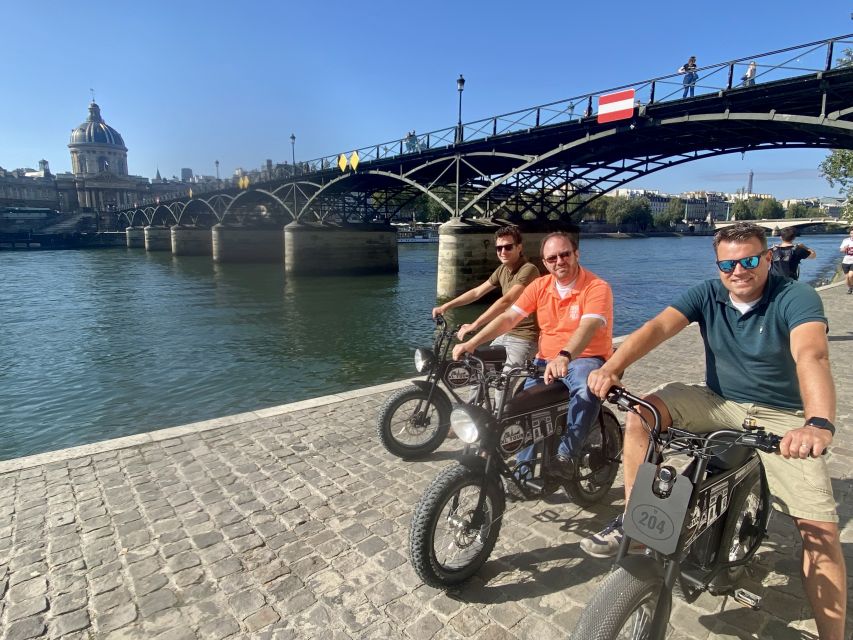
You’ll head out with a guided stop around the Louvre Museum for about 10 minutes. The fun here is that it’s quick but not random: you’re riding through the area where you can wave at the Mona Lisa as you pass, plus you’ll catch the Carrousel shopping center nearby. Even if you never step inside, this gives you a sense of where the museum sits in the city’s geometry.
Then you roll into the Tuileries Gardens for a short guided moment (about 5 minutes). At night, the gardens feel less like a daytime walkway and more like a calm corridor between big sights. You’ll also get that classic Paris “green break” before the bridges, which helps the ride feel less like a checklist and more like a flowing route.
One practical upside: because the route favors bike lanes and sidewalks, you’re not constantly stopping to regroup. That keeps the pace friendly, especially if you’re traveling with someone new to cycling.
You can also read our reviews of more tours and experiences in Paris.


Pont Neuf to Pont des Arts: Bridges That Explain Paris
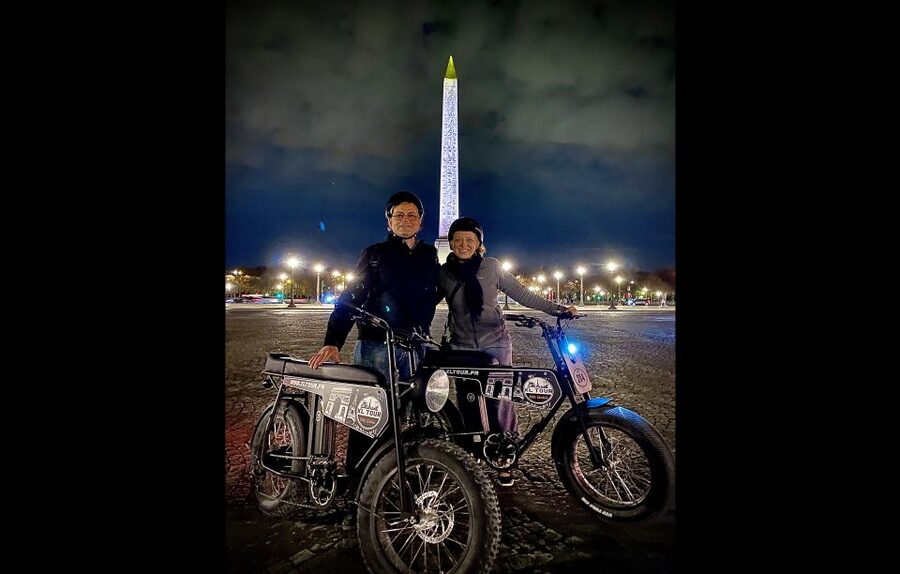
After the gardens, you get to Pont Neuf (about 5 minutes). As one of the city’s oldest bridges, it’s a natural anchor point: the architecture reads differently at night, and you’ll appreciate how it connects neighborhoods rather than just looking like a postcard photo.
Next is Pont des Arts for another 5-minute stop. This is where the tour leans into character: you’ll see the love locks tied to the bridge. Even if you’re not sentimental, it’s a visual detail that makes the bridge feel like a living tradition rather than a stone structure from the 1800s.
Then you pass by the Conciergerie with a brief guided moment (about 5 minutes). This stop is short, but it adds context to what you’re seeing—Paris looks like a museum city during the day, but at night it’s more like a stage, and places like this help you understand the scenery.
Sainte-Chapelle and Notre-Dame: Gothic Details You Can Actually See
The tour hits Sainte-Chapelle (about 5 minutes). The big draw is the Gothic architecture, and the rose-window focus helps you look at the building like an observer, not just a moving rider. When you’re in the dark, light creates the shape, so knowing what to look for makes a real difference.
Then you reach Notre-Dame Cathedral for about 10 minutes. This is your main sacred-sight stop of the ride, and you’ll get guided pointers on the Gothic façade and the rose window. From a comfort angle, 10 minutes works well on an e-bike tour: enough time to absorb a few details and get photos without turning the night into a long waiting game.
There’s also a quieter vibe here at night. The general idea is that daytime traffic can make the city feel like it’s rushing you; this tour’s nighttime routing keeps things more controlled, so you’re not fighting the flow.
Institut de France to Orsay Docks: Small Stops With Clear Payoff
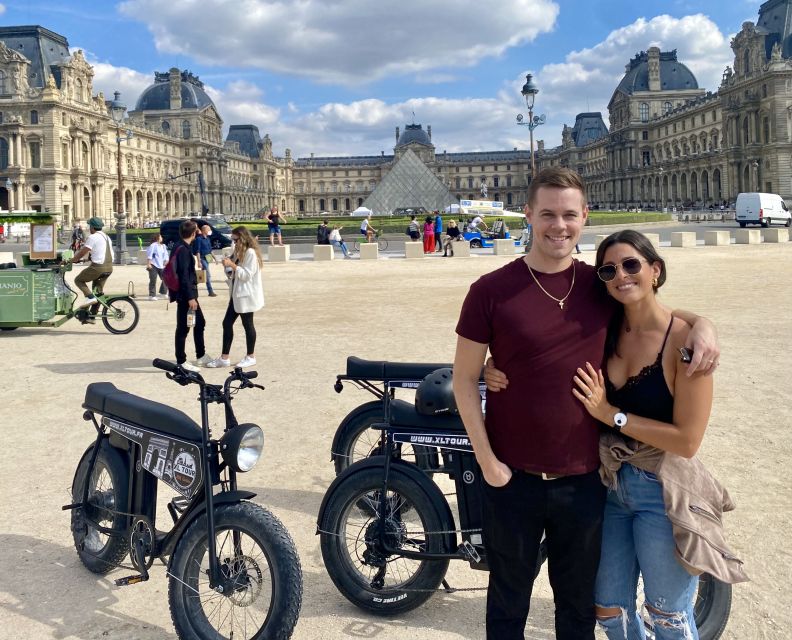
At the Institut de France (about 2 minutes), you get a quick guided look. It’s the kind of stop that might feel minor on a normal itinerary, but on this ride it helps the city feel connected rather than just a line of separate monuments.
Then you go to Musée d’Orsay for about 5 minutes. The neat context here is that Orsay was once a train station, so the building carries a different kind of power than a typical museum box. Night lighting makes the architecture easier to spot too, and the timing fits because you’ll still be fresh before the biggest photo moments.
As you move toward Orsay Docks, you’ll also get to watch ships pass by the docks. It’s one of those simple sensory moments that makes Paris feel alive beyond the big-name landmarks.
Pont Alexandre III, Grand and Petit Palais: The Paris of Scale
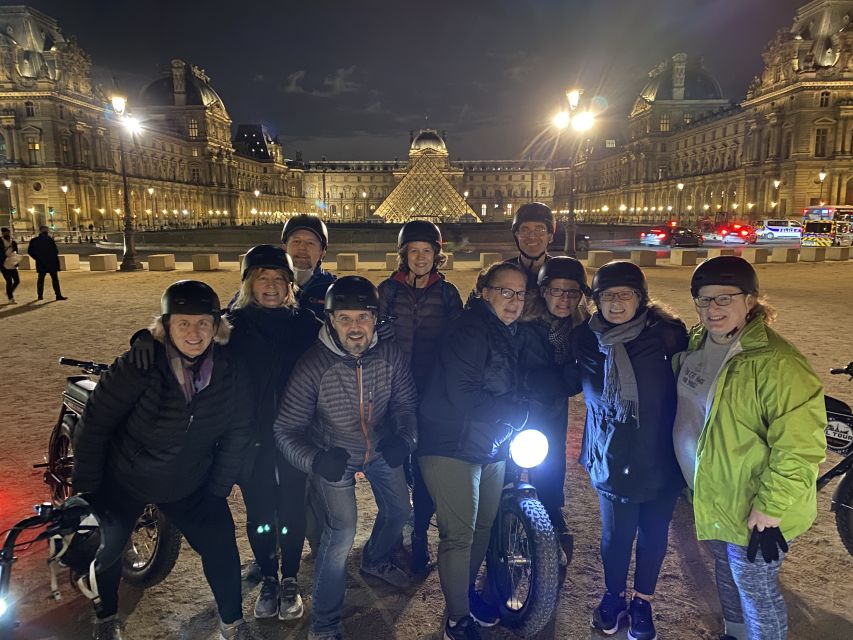
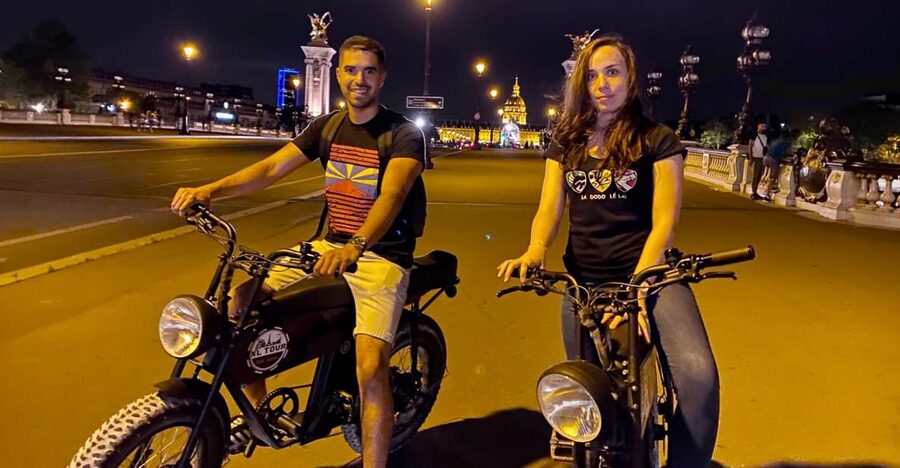
Now you roll into a stretch built for spectacle: Pont Alexandre III (about 5 minutes). This is an arched bridge, and the guide’s framing helps you appreciate it as more than a bridge—think of it as a statement piece in the way Paris manages space.
After that comes Grand Palais (about 5 minutes) and Petit Palais (about 2 minutes). The tour leans into a playful contrast: you’ll hear about the connection between the big and the small palaces, and it gives the area a “why it looks like this” story. The modern edge also appears here when you pass by Palais de Tokyo later in the route, so you’re not stuck in one era’s style.
If you like architecture, this portion is where the city stops feeling like a set of famous stops and starts feeling like planning and design. You’re moving between spaces that were built to impress, and night makes those lines easier to see.

Eiffel Tower at Night From the Trocadéro Area: The Moment You Came For
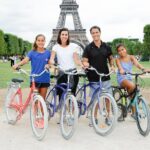
You’ll arrive at the Eiffel Tower for about 5 minutes, followed by quick guided looks at Palais de Chaillot (about 2 minutes). This is where the tour earns its name. You’ll get an up-close view of the Eiffel Tower and also see it from across the water area by Trocadero Gardens (that view is specifically part of the experience).
For many people, it’s the lighting that does the heavy lifting. The tour’s advantage is that you’re there when the tower feels cinematic. And because you’re still on an e-bike, you avoid the stress of trying to cross the city on foot while everyone else crowds the same viewpoints.
You’ll also pass Palais de Tokyo (about 2 minutes). That short stop adds a modern-arts contrast to the older stone around it, which helps keep the ride from feeling like it’s only about one theme.
Then you continue along toward Place Diana (about 5 minutes). Here the guide points out the Liberty Flame in Lady Diana square, including the connection between the US and France. It’s a small section of the route, but it adds meaning instead of just adding photos.
Alexandre III to Concorde: Squares, Bridges, and a Calm Route Home
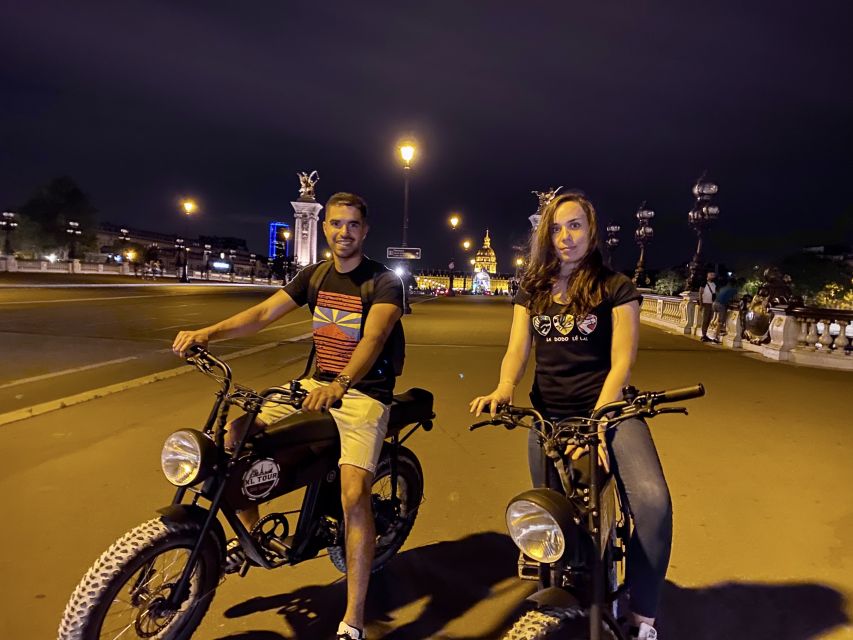
After Place Diana, you ride through Les Invalides (about 5 minutes). Big monuments at night have a way of feeling even more solid, and the short guide time is enough to give you context without pulling you away from the ride.
Then it’s on to Place de la Concorde (about 5 minutes) and Place Vendôme (about 5 minutes). You’ll also appreciate how the tour handles space around these squares—Paris can feel huge when you’re watching it from the right angle, and riding through gives you that “I’m not just looking at buildings” feeling.
The route also includes the arched Alexandre III bridge earlier and references Vendôme and Concorde square as a way to appreciate the city’s layout. Even when your stops are short, the guide’s framing helps you notice patterns you’d otherwise miss.
As you head back, the tour keeps the pace consistent: you’re finishing where you began at 10 Rue de la Paix, so you don’t end up solving a logistics puzzle at the end of your night.
Price and Value for $116: Why This Works in 2 Hours
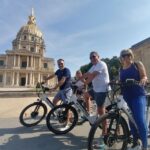
At $116 per person for 2 hours, the best value isn’t that you see everything—it’s that you see a lot of the most famous downtown sights with less friction than walking. You get a live guide, an electric bike, and a helmet and equipment. That trio matters, because it turns Paris at night into a supported experience instead of a self-directed scramble.
A key trade-off: entry to attractions isn’t included. That’s normal for a short night ride, but it means you’re touring the sights from the outside (with guided time in key areas) rather than doing museum tickets or long indoor visits. If you’re hoping for full museum hours, plan a separate day for that.
For many first-time visitors, this is an efficient way to get orientation fast. You come away with a mental map of how the city’s major riverside neighborhoods connect—so your next day on foot makes more sense.
What to Wear and Bring for a Comfortable Night Ride
This tour is built around movement, so you want clothing and shoes that work with pedaling and stopping.
Bring comfortable shoes and comfortable clothes. Skip high-heeled shoes, sandals/flip-flops, and open-toed shoes. Keep it practical so you’re not thinking about your feet every time you stop for a photo.
Also plan for weather: it runs rain or shine. If you hate riding when it’s wet, you’ll want to bring layers that you can move in and that won’t soak through instantly.
And there’s one more behavior note that keeps the vibe safe: no alcohol and drugs, and no alcoholic drinks in the vehicle.
Best Fit: Who This Tour Suits (and Who Should Skip It)
This is a strong choice if you want a family-friendly route that’s mainly on bike lanes and sidewalks. It’s also ideal if you want guided storytelling without losing most of your night to long museum lines. The short guided stops make it easier to manage attention, especially if you’re traveling with someone who gets tired fast.
It’s less suitable if you:
- need wheelchair access or mobility assistance (the tour isn’t suitable)
- are pregnant
- are under 155 cm for the adult height requirement
If you’re new to e-bikes, it’s still doable because you’ll get that safety briefing and bike test ride before you take off. That point shows up strongly in the positive feedback.
Should You Book This Eiffel Tower and Notre-Dame E-Bike Night Tour?
Yes, if your goal is to see the downtown highlights—Louvre area, bridges like Pont Neuf and Pont des Arts, Sainte-Chapelle, Notre-Dame, and the Eiffel Tower viewpoint—without spending half your trip crossing the city on foot. For the price, what you’re really buying is time saved plus guided clarity, and the ride format helps you stay calm instead of stressed.
Maybe not, if you want deep museum time or indoor tickets. This tour keeps things moving and keeps stops short, which is great for orientation, but it won’t replace a full day of sightseeing.
If you do book, lean into what makes it work: wear proper shoes, arrive ready to ride, and take advantage of Tomas’s photo moments at the major locations so you don’t have to juggle stopping, framing, and biking at the same time.
FAQ
How long is the Paris Eiffel Tower and Notre-Dame night e-bike tour?
It lasts 2 hours.
What’s included in the price?
You get a live guide, an electric bike, and a helmet and equipment.
Are attraction tickets included?
No. Entry to any attractions isn’t included.
What languages are available for the live guide and audio?
The live guide is offered in French, English, Portuguese, and Spanish. Audio guide options are listed for Dutch, Japanese, German, Hebrew, Arabic, Chinese, and Italian.
Does the tour run in bad weather?
Yes. It takes place rain or shine.
What should I wear or bring?
Bring comfortable shoes and comfortable clothes. High-heeled shoes, sandals/flip-flops, and open-toed shoes are not allowed.
Is there a height requirement for adults?
Yes. Adults need to be at least 155 cm (5’01”) to ride.
Can I cancel and pay later?
You can cancel up to 24 hours in advance for a full refund. You can also reserve now & pay later.