REVIEW · ROME
Rome Bike and eBike Rentals
Book on GetYourGuide →Operated by Fat Tire Tours - Italy · Bookable on GetYourGuide
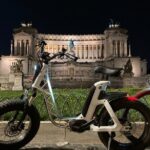
Two wheels beat Rome traffic. This rental-style setup is a self-guided way to connect postcard sights with everyday Rome, including the banks of the River Tiber and the area around the Colosseum. I like that it’s built for cruising between stops without constant planning, plus it includes practical gear like a helmet (optional for adults) and a bike lock. One thing to consider: you can’t bring luggage or large bags, so pack light.
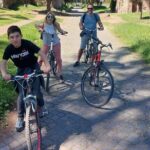
The sweet spot here is flexibility. You choose your time window (from 2 to 8 hours, depending on availability), then pedal your own route around famous landmarks, scenic parks, and local streets where you’ll find markets and everyday life. It’s also not for everyone, since you must be able to ride on your own (unless using attachments), and it’s not suitable for wheelchair users or pregnant women.
In This Review
- Key highlights to plan around
- Why biking Rome feels faster than it looks
- Starting at Via dei Delfini, 35: what you need for a smooth pickup
- Building your own route with 2 to 8 hours of self-guided time
- Cruising the River Tiber: where the pace often feels best
- Pedaling around the Colosseum: famous sights without the bottleneck feel
- Markets and local tastes: using the bike like a local
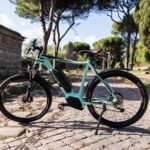
- What’s included: the gear that actually matters
- Who can ride, and who should sit this one out
- Price and value: what $11 per person gets you
- Practical things to plan before you go
- Should you book Rome Bike and eBike Rentals?
- FAQ
- How much is Rome Bike and eBike Rentals?
- How long is the rental experience?
- Is the tour guided or self-guided?
- Where do I pick up the bike?
- What’s included with the rental?
- Do I need to bring ID or a credit card?
- Can I bring luggage or large bags?
- Do I need to be able to ride a bike already?
- What is the cancellation policy?
- Is it suitable for everyone?
Key highlights to plan around
- Cycle the Tiber’s riverside banks for a calmer stretch of Rome time
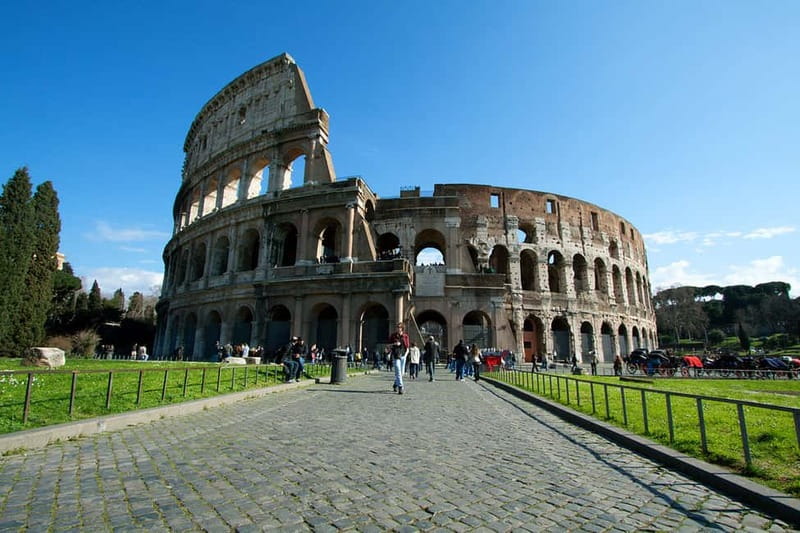
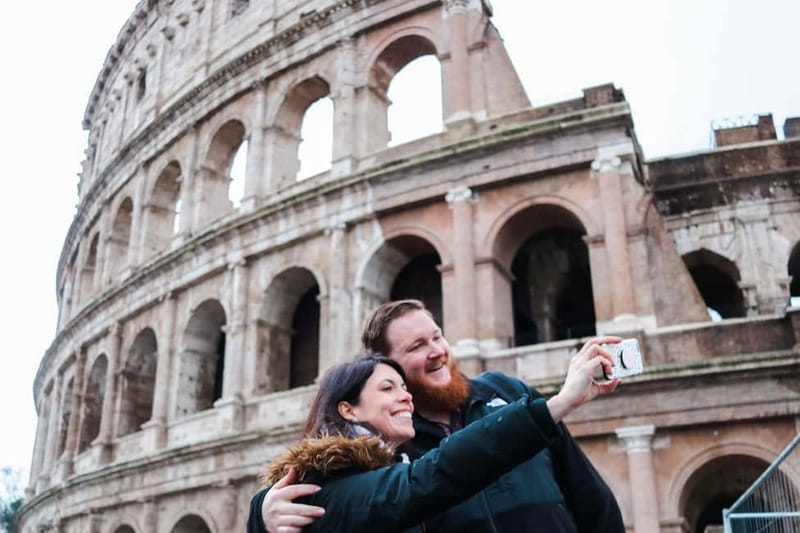
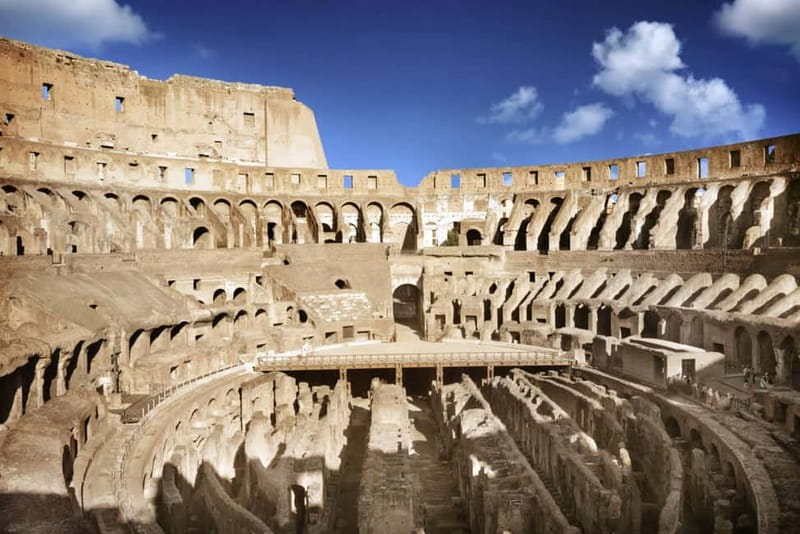
- Ride around the Colosseum to see the gladiator-era centerpiece up close
- Link multiple sights without long breaks thanks to bike-friendly mobility
- Use your ride time for markets and local tastings as you pass through neighborhoods
- Helmet and lock included so you start prepared, not improvising
- Self-guided freedom that works best when you’re comfortable navigating independently
Why biking Rome feels faster than it looks
Rome is perfect for bikes because distance and variety stack up so quickly. You can move from major monuments to parks and quieter streets in a way that feels more personal than hopping from one stop to another.
I like how the experience is designed around momentum. Instead of treating Rome as a checklist you tick off slowly, the bike turns the city into a connected route: ride, stop, look, and then ride again. That’s the real value of going on two wheels—your sightseeing rhythm stays your own.
The best parts to aim for are the ones that change the mood fast. The Tiber riverside tends to feel like a breather between big sights, while riding near the Colosseum puts you right in the thick of Rome’s most famous arena energy. If you want the “wow” moments without feeling stuck in crowds the whole time, biking is a smart match.
You can also read our reviews of more tours and experiences in Rome.


Starting at Via dei Delfini, 35: what you need for a smooth pickup
Your adventure begins at Via dei Delfini, 35. Plan to arrive ready to identify yourself and pay attention to the basics so you can roll out quickly.
Bring your passport or ID card and a credit card. You won’t want to be scrambling at the last minute, especially in a city where time disappears fast when you’re waiting on paperwork.
Also, come light. Luggage or large bags aren’t allowed, so think carry-on only for this day. If you’re traveling with a lot of stuff, you’ll need a different plan for storage before you head out on the bike.
For rider comfort and safety, the rental includes a bike lock, and helmets are part of the setup (adults have the option). That matters because you’ll likely pause to take photos and browse along the way, and you’ll want a secure place for the bike when you step away.
Building your own route with 2 to 8 hours of self-guided time
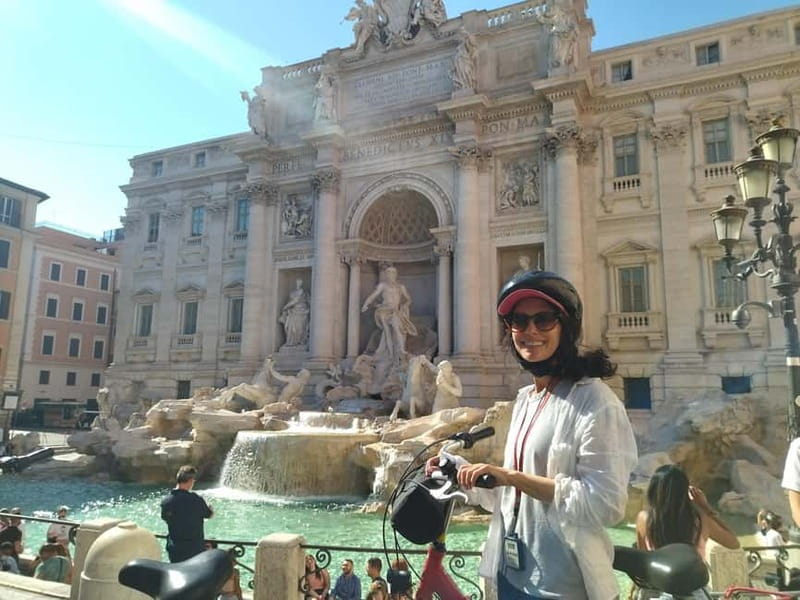
This is a self-guided experience, so your “tour” is really your route. The good news is that your time is flexible: you can choose a window from 2 to 8 hours, based on what’s available.
Here’s a practical way to think about it. Use the shorter windows if you want the highlights—Tiber banks and a loop around the Colosseum area. Choose the longer windows if you also want to wander through markets and spend more time stopping for food and sights you find along the ride.
A common mistake with self-guided days is trying to do everything without a pace. Instead, pick a focus. If you care most about scenery and flow, build your route around the Tiber first, then add landmark time. If you care most about the big monument moments, do the Colosseum area earlier in your day, when you’re fresh and your photo stops feel easier.
Because it’s self-guided, your route will depend on how comfortable you feel riding in Rome. The operator expects that you can ride a bicycle on your own.
Cruising the River Tiber: where the pace often feels best
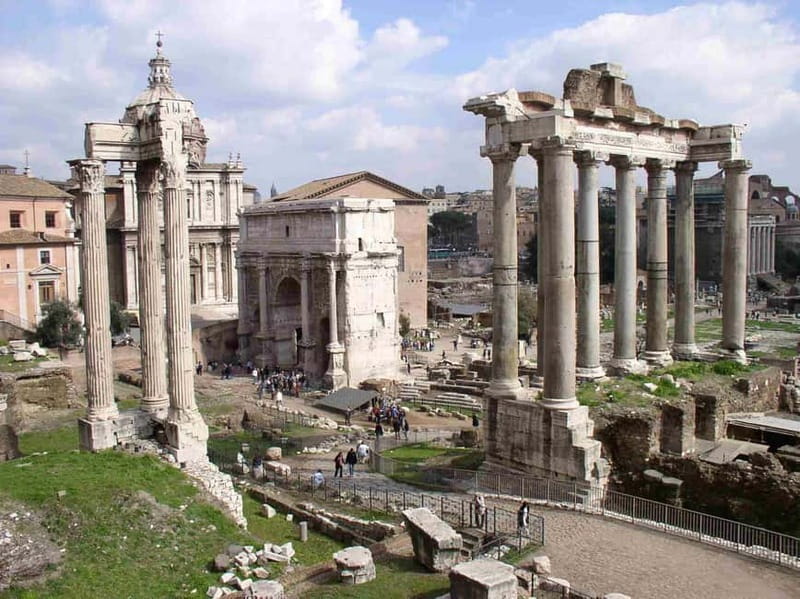
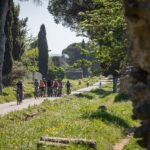
One of the most appealing parts is that the riding isn’t only about monuments. The route concept includes cycling along the banks of the River Tiber, and that’s a big deal for how the day feels.
Riverside paths tend to create a different vibe than tighter streets. Even without planning every turn, having a “spine” like the Tiber gives your day structure. You can ride, look over the water, then stop and get your bearings when you want a break.
I also like that this stretch works for different styles of travel. If you want views and relaxed pacing, the Tiber helps. If you want quick movement between stops, it helps too, because you’re not constantly backtracking.
If you’re the type who likes to photograph cities from more than one angle, aim to spend some uninterrupted time here. The best photos often come from slowing down long enough to notice what’s alongside the water—not just from riding past it.
Pedaling around the Colosseum: famous sights without the bottleneck feel
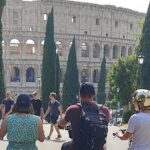
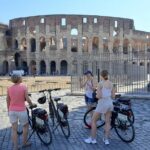
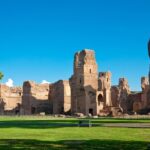
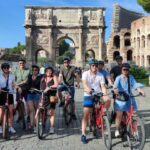
Cycling around the Colosseum area is one of the most meaningful highlights. It’s a landmark that can feel overwhelming on foot if you’re stuck in lines or surrounded by tour groups. With a bike, you can shape your own viewing schedule more easily.
What makes this part work best is the combination of proximity and freedom. You’re not relying on a bus schedule or squeezing between stop-and-start traffic. You can ride into the area, take your time with the views, and then continue when it feels right.
There’s also a fun, slightly cinematic theme to cycling around it: it’s often described as the battleground of gladiators. You don’t need a script or a guided lecture to feel the scale. You can just ride the perimeter of the moment and let the setting do the talking.
One caution: because it’s a must-see area, don’t assume you’ll breeze through without slowing down. Give yourself a little buffer so you’re not stressed when you park, get off, and take photos.

Markets and local tastes: using the bike like a local
This experience is also built around getting between places, not just around monuments. One of the listed highlights is riding between markets and taking in the sights, sounds, and tastes of Rome.
That’s where biking starts to feel less like transportation and more like a strategy. On foot, you can spend a lot of time weaving through busy areas. On a bike, you cover more ground, which makes it easier to reach multiple neighborhoods in a single outing.
To get value out of this part, plan for food as part of your riding time, not a separate event. When you see markets or lively street scenes along your route, stop briefly and sample something you can eat while standing or walking. Keep it simple: you’re using the bike to reach places, then using your time on the ground to enjoy them.
If you tend to get overwhelmed by menus, a practical approach is to treat the market stroll as your “decision time.” Ride past, pick a short stop, and commit. That way you’re not spending half the day deciding what to try.
What’s included: the gear that actually matters
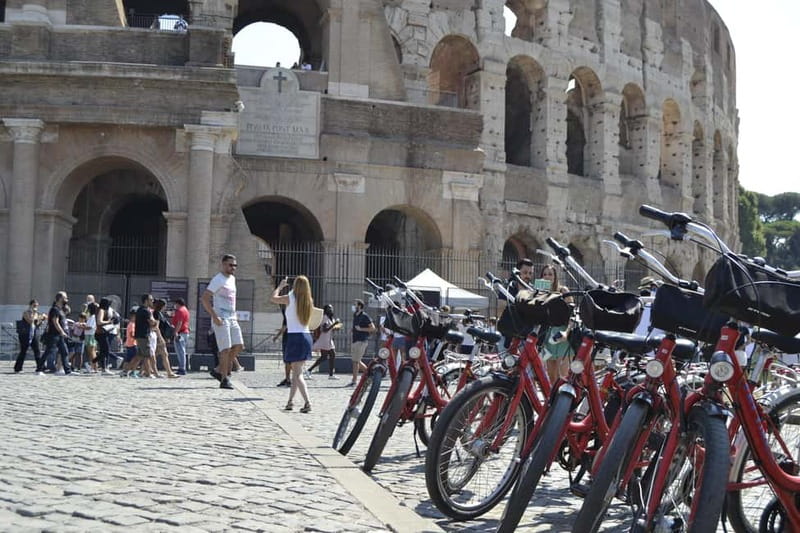
Here’s what you’re getting with your rental:
- Bike rental
- Helmet (optional for adults)
- Bike lock
This is exactly the kind of inclusion that saves time. A lock matters because you will stop for photos, gelato, and quick errands. If you had to find your own lock or buy a helmet last minute, the whole day would get more complicated.
At the same time, it’s wise to understand what isn’t mentioned as included. There’s no stated guide with you during the ride, and it’s not positioned as a fully guided experience. You’re paying for the bike and the practical riding setup, then using self-guided time to explore.
So if you love structured explanations and museum-style storytelling, you might want to pair this with another activity later. But if you want independence and movement, the included essentials fit the format.
Who can ride, and who should sit this one out
The operator has clear requirements, and they matter for safety and enjoyment.
You must be able to ride a bicycle on your own unless you’re using attachments. If you’re not fully confident on two wheels, this won’t be the easiest way to learn in the middle of Rome.
Double trailers for toddlers and tag-a-long attachments for young children are available at an additional cost upon request. That’s useful if you’re traveling with kids who need support, but it also means you’ll want to ask ahead so the setup matches your family.
Age rules are also specific: no guest under 18 gets a bike without an adult over 18 present.
And then there are clear “not suitable” categories: it’s not suitable for pregnant women and not suitable for wheelchair users. If either applies, look for another way to cover Rome.
Price and value: what $11 per person gets you
At $11 per person, this can be a strong deal if you use the freedom well. The value comes from turning time into distance: you’re not spending your day stuck waiting for transport or slow-walking between far-apart stops.
But the real question is not just cost. It’s how much you’ll actually ride. If you’re the kind of traveler who likes to stop often, browse markets, and take photos, a bike pays off because you can keep moving without burning hours on transit.
If you only want one quick monument photo and then you’re done, you might not use the full benefit of a multi-hour rental. In that case, a shorter window could make more sense than setting your day around a long time block.
Also remember the no-luggage rule. If your travel style requires carrying a lot of gear, the restrictions can reduce value because you’ll need alternatives for storage.
In short: the price looks excellent when you plan to ride, stop, snack, and ride again.
Practical things to plan before you go
This is where you avoid friction and get more joy out of the day.
Bring the items required for check-in: passport or ID card and a credit card. If you forget either, you risk losing your time window.
Plan your packing style around the no luggage or large bags rule. Think about what you need for a few hours outside—water, a light layer, and a small personal item—then keep it compact.
Finally, be realistic about riding confidence. The requirement that all guests can ride on their own isn’t just fine print. If you feel shaky on a bike, this can quickly shift from fun sightseeing to stress.
Should you book Rome Bike and eBike Rentals?
I’d book it if you want a flexible Rome day where the city’s landmarks and local life connect by bike. The highlights—the Tiber, the Colosseum area, and markets with stops for tastes—fit together well for travelers who like to steer their own schedule.
Skip it if you can’t comfortably ride a bike on your own, need wheelchair access, or you’re traveling with a situation where luggage storage is hard for you. Also, if you want a fully guided, narration-heavy experience, you may find the self-guided format less satisfying.
If you do book, one small tip based on what people say: the staff support can be a big part of the first minutes, and there’s been specific praise for Mattia’s kindness. That’s a nice bonus when you’re starting fresh and want to get going without hassles.
If you’re ready for independent exploring on two wheels, this is a solid value way to see Rome.
FAQ
How much is Rome Bike and eBike Rentals?
The price is listed as $11 per person.
How long is the rental experience?
It runs for 2 to 8 hours, depending on available starting times.
Is the tour guided or self-guided?
It’s self-guided. You ride at your own pace during the rental window.
Where do I pick up the bike?
The starting location is Via dei Delfini, 35.
What’s included with the rental?
Included items are the bike rental, a bike lock, and a helmet (optional for adults).
Do I need to bring ID or a credit card?
Yes. Bring passport or ID card, and a credit card.
Can I bring luggage or large bags?
No. Luggage or large bags aren’t allowed.
Do I need to be able to ride a bike already?
Yes. All guests must be able to ride a bicycle on their own (unless using attachments).
What is the cancellation policy?
The activity is non-refundable.
Is it suitable for everyone?
It’s not suitable for pregnant women and wheelchair users. Also, riders under 18 must be with an adult over 18.