REVIEW · BUDAPEST
Budapest: Historic Downtown Bicycle Ride with Scenic Views
Book on GetYourGuide →Operated by Bike Tour Kft · Bookable on GetYourGuide
Budapest looks different at bike speed. This 3.5-hour ride links the grand UNESCO-worthy sights with quick photo moments, so you get the big story of the city without spending your whole day in transit. You’ll cover both Buda and Pest, glide along the Danube area, and hop between neighborhoods that feel worlds apart.
I like how the tour gives you clear highlights with photo stops, not just pedal time. Heroes’ Square, St. Stephen’s Basilica, the Parliament area, and the Chain Bridge views are timed so you can actually step off and look around. I also really respect the guide style, since guides such as Oliver and Karol have been singled out for making the history easy to follow while keeping the ride calm and safe.
One consideration: this is a bike tour first. It’s not suitable if you can’t ride comfortably, and the route expects you to handle traffic and city streets at an easy pace but still with real riding involved.
In This Review
- Key things that make this ride work
- Why a 3.5-hour Budapest bike loop is the best kind of sightseeing
- Starting in the Jewish Quarter: nightlife streets, then straight into the story
- Andrássy Avenue to Heroes’ Square: grand boulevard energy and photo-perfect pauses
- Városliget and the thermal-bath stops: castles, bathhouses, and city pride
- Parliament, the Danube Bank, and the Shoes: seeing the memorial area without rushing
- Chain Bridge to Buda viewpoints: cross the river, then soak in the angles
- Back into Pest via Market Hall and museums: where the ride ends
- The ride itself: pace, safety, and how the guide keeps things smooth
- Price and value: is $45 for 3.5 hours a fair deal?
- Who should book, and who should skip
- Should you book this Budapest bicycle ride?
- FAQ
- How long is the Budapest bicycle ride?
- Where is the meeting point?
- Is this a private tour?
- How big is the small group?
- What’s included in the price?
- Is it suitable for people who can’t ride a bike?
Key things that make this ride work
- A tight 3.5-hour loop that hits both sides of the Danube and the downtown icons
- Photo stops at major sights so you get moments, not just views from the saddle
- A small group capped at 10 for a smoother ride and quicker questions
- World Heritage sights in one route like Heroes’ Square, Andrássy Avenue, and the Danube Bank area
- You start in the Jewish Quarter and end there, which makes it easy to keep exploring after
- Friendly pace with a real guide (English) who steers you through Buda and Pest
Why a 3.5-hour Budapest bike loop is the best kind of sightseeing
Budapest is big on drama: river angles, sweeping buildings, and neighborhoods that change mood fast. On a bike, you get the best version of that drama without doing the slow, stop-and-start thing you get on foot. In 3.5 hours, you cover a wide stretch—from the Jewish Quarter through Andrássy Avenue and down toward the Danube—then you return with your bearings straight.
This tour is also good value because it’s not just “see stuff.” You’re riding with a guide who connects what you’re looking at to what shaped the city. That matters in Budapest, where the same street can hold layers from medieval times, 19th-century grand projects, and 20th-century tragedy.
The guide plus the photo-focused timing is the sweet spot. You’re not sprinting between stops. You’re moving efficiently, then pausing long enough to actually enjoy the view.
You can also read our reviews of more tours and experiences in Budapest.

Starting in the Jewish Quarter: nightlife streets, then straight into the story
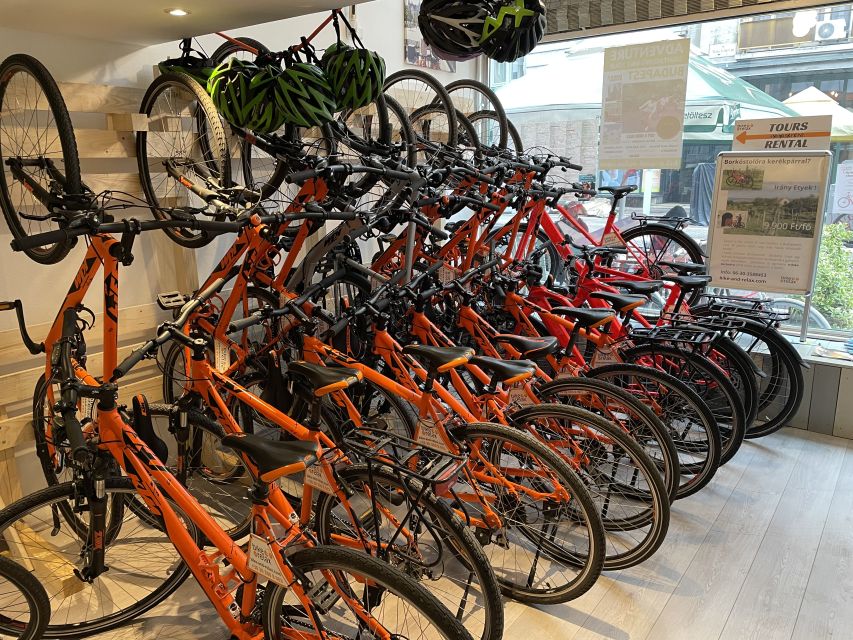
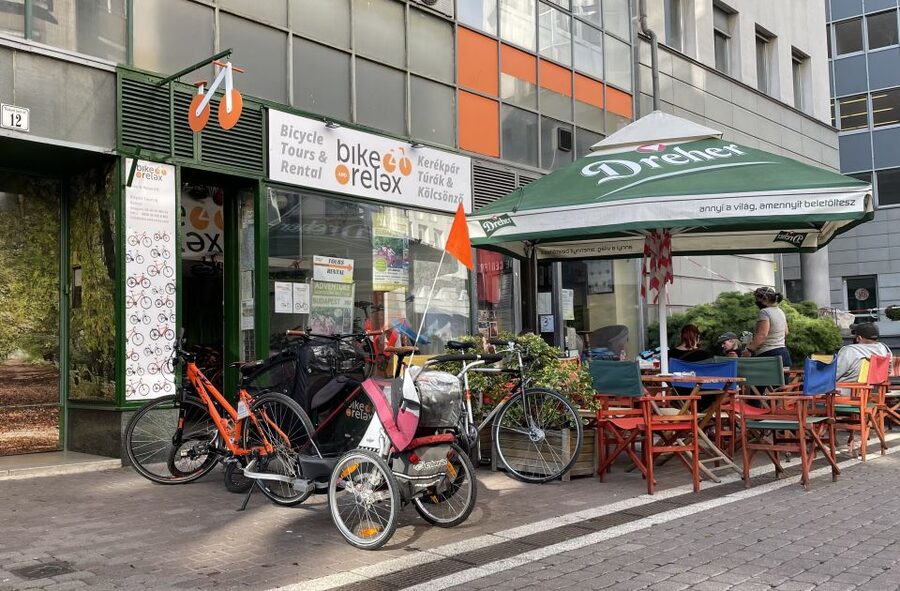
The meeting point is in the middle of the Jewish district, at Madach Imre ut 12, near Cafe Hivatal and the area connecting Madach Square and Gozsdu Court. It’s a smart start zone because this neighborhood is lively and central. You don’t end your day somewhere isolated—you roll back into the Jewish Quarter and can keep eating and drinking afterward.
The tour begins with an intro at the Jewish Quarter, then you ride toward the famous boulevard connection: Andrássy Avenue. Along the way, you’ll pass the Franz Liszt Academy of Music, with a dedicated photo stop. That stop is small on time but big on payoff: it’s one of those landmarks you recognize once you’re in front of it.
What I like about beginning here is that it frames Budapest as more than postcards. The Jewish Quarter isn’t just a backdrop—it’s a key part of the city’s identity, and the route builds that context before you head into the more monumental spaces.
Andrássy Avenue to Heroes’ Square: grand boulevard energy and photo-perfect pauses
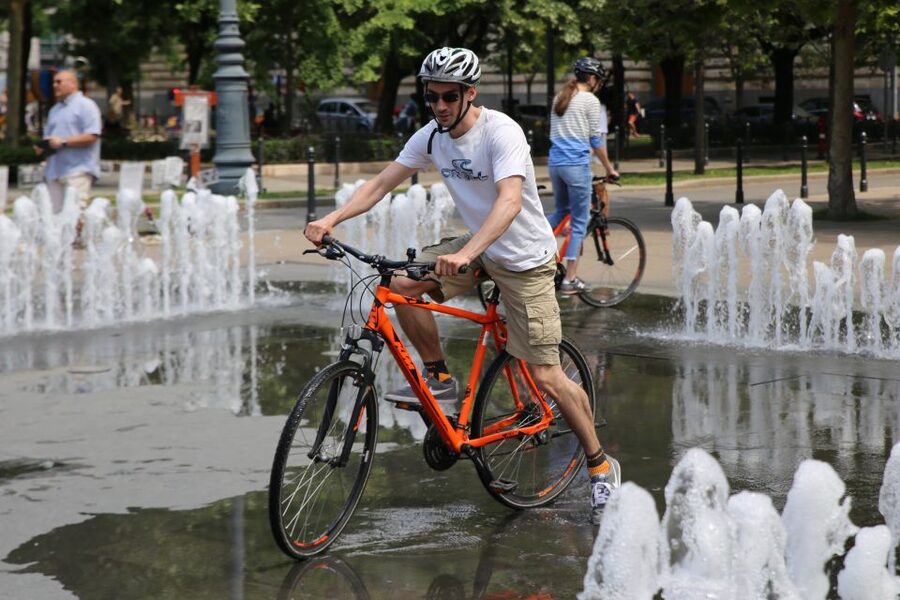
Once you hit Andrássy Avenue, the ride shifts into “major Budapest” mode. This stretch is known for its iconic elegance, and the tour gives you a guided run along it so you understand what makes the avenue special rather than just racing through it.
Then comes Heroes’ Square—a must-see, and not just because it’s famous. You get a photo stop long enough to take in the scale. It’s one of those places where your brain goes quiet for a second because everything looks intentionally built to impress.
Right after Heroes’ Square, you’ll stop at the House of Terror area. That’s not a light stop. It’s part of the city’s more recent history, and even if you don’t go inside, standing near it and hearing context changes how you read what you’ll see later.
The pacing through this middle section works because the stops are spaced to match attention. You get grandeur, then you get seriousness, then you transition into the park-and-baths part of the day.
Városliget and the thermal-bath stops: castles, bathhouses, and city pride
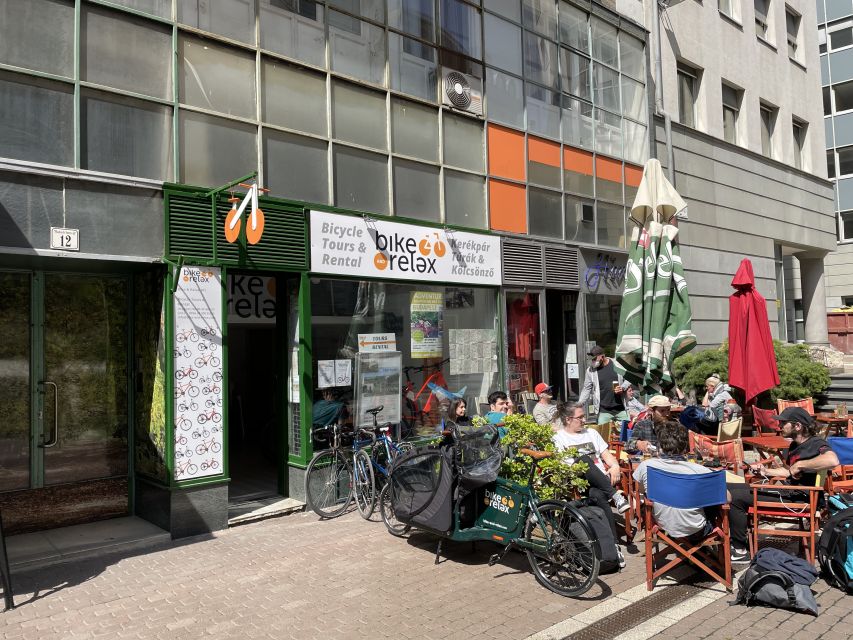
After Heroes’ Square and the House of Terror area, the route heads toward Városliget (City Park). This is a great shift in feel: you leave the dense downtown core and move into a greener, more open section of Budapest.
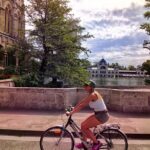
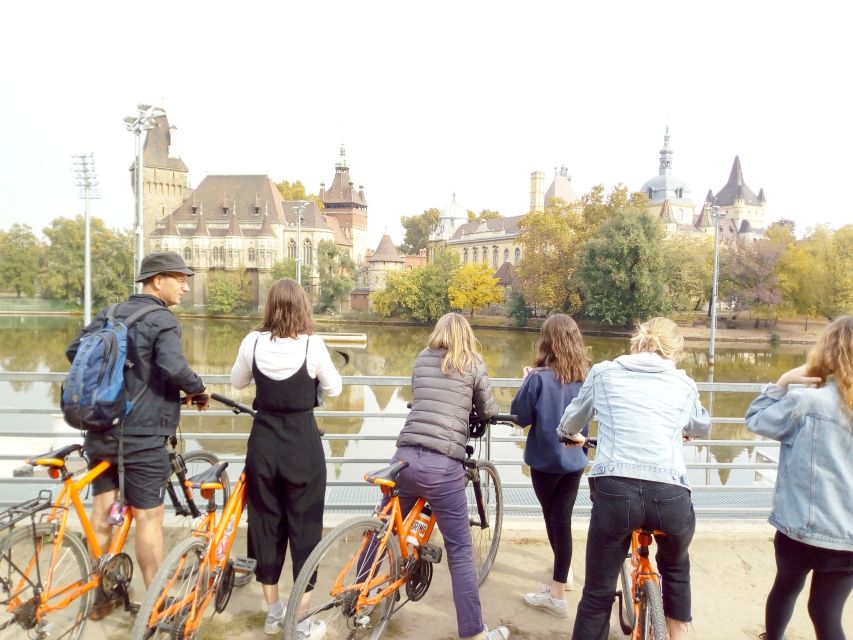
In City Park, you’ll see Vajdahunyadi Castle and get time to enjoy the view. The castle is especially memorable from outside—because it looks like it belongs in a storybook, but it’s very much tied to Budapest’s identity and public-life ambitions.
Next up are the thermal bath icons. You’ll have a photo stop at Széchenyi Thermal Bath, and later you’ll see Rudas Thermal Bath and Gellért Baths as you work your way through Buda and back. Even if you don’t go inside, these stops are valuable because they show Budapest’s signature obsession: turning everyday leisure into an architectural event.
One practical detail: bath façades are best seen in person. Photos don’t capture the massing well. From the bike, you get close enough for your camera to do its job, without eating up your entire day waiting in line.
Parliament, the Danube Bank, and the Shoes: seeing the memorial area without rushing
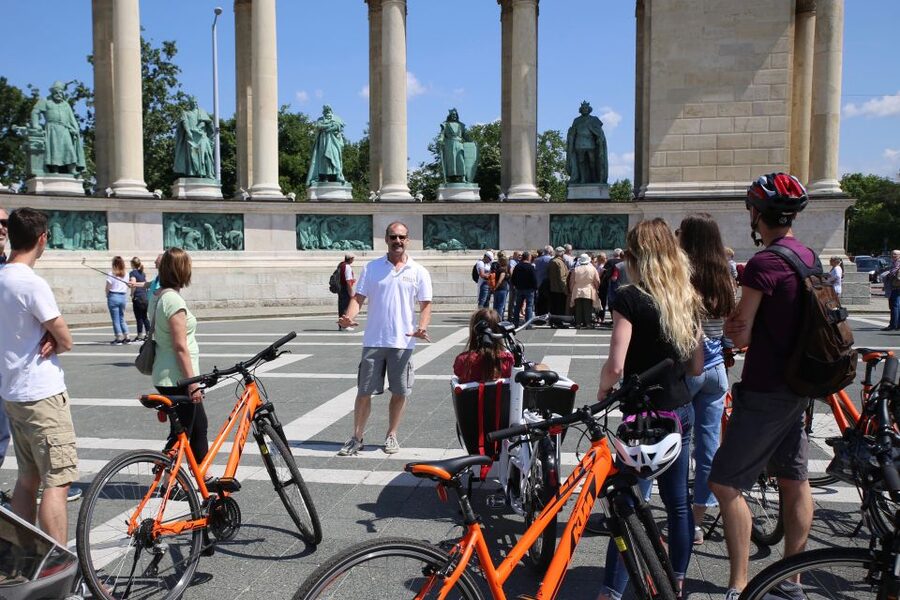
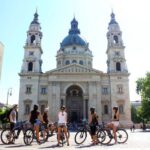
As the tour moves closer to St. Stephen’s Basilica and Szabadság Square, you’ll start to feel the city tightening into its national-power zone. St. Stephen’s Basilica gets a photo stop, and it’s worth the time because it visually anchors the skyline. Then Liberty Square comes into play as you learn about Hungary’s more recent history in that part of town.
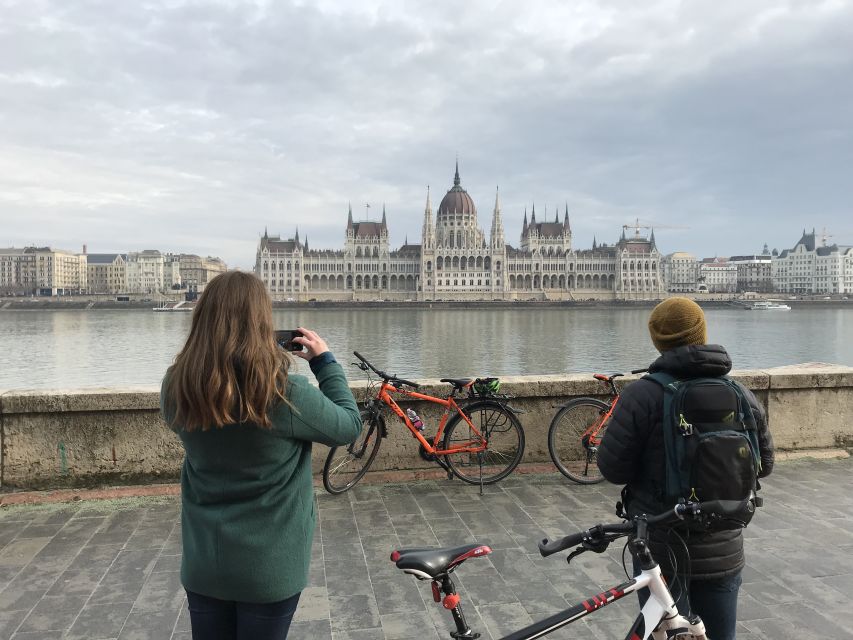
After that, you reach the area around Hungarian Parliament. You’ll have a photo stop before moving onward toward the Danube. From there, you’ll head to the Danube Bank and the Monument of the Shoes. Important note: direct access isn’t granted, so don’t expect to stand right next to the memorial in the way you might imagine. You’ll view it from the nearby roadway/photo area, which still works—just be prepared for the limitation.
This section can be the most emotionally heavy part of the route, depending on what you know before you arrive. The guide’s context is what turns it from a quick photo to a meaningful stop. And yes, you can still take pictures—just try to pause and actually absorb what you’re seeing instead of treating it like a checkbox.

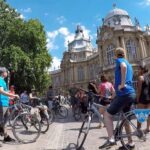

Chain Bridge to Buda viewpoints: cross the river, then soak in the angles
Crossing the Chain Bridge is one of those Budapest moments that feels instantly real. The tour includes a guided portion around the crossing, and you also get the view effects you came for: the river line, the skyline angles, and that classic Hungarian city look that only makes full sense when you’re moving through it.
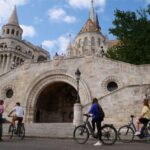
Once you’re on the Buda side, you’ll see Matthias Church and get a photo stop at Fisherman’s Bastion. These are high-impact stops. Fisherman’s Bastion is all about viewpoint angles and postcard geometry, and you’ll feel why people keep returning for sunset photos—even if your stop time is just a photo moment, you still get the big impression.
Then the route keeps the bathhouse theme going with Rudas Thermal Bath (photo stop) and Gellért Baths (photo stop). This is a strong contrast against the Parliament and Danube memorial segment. You’re moving from heavy history and national icons to Budapest’s daily-life legend: thermal baths as a kind of public culture.
Back into Pest via Market Hall and museums: where the ride ends
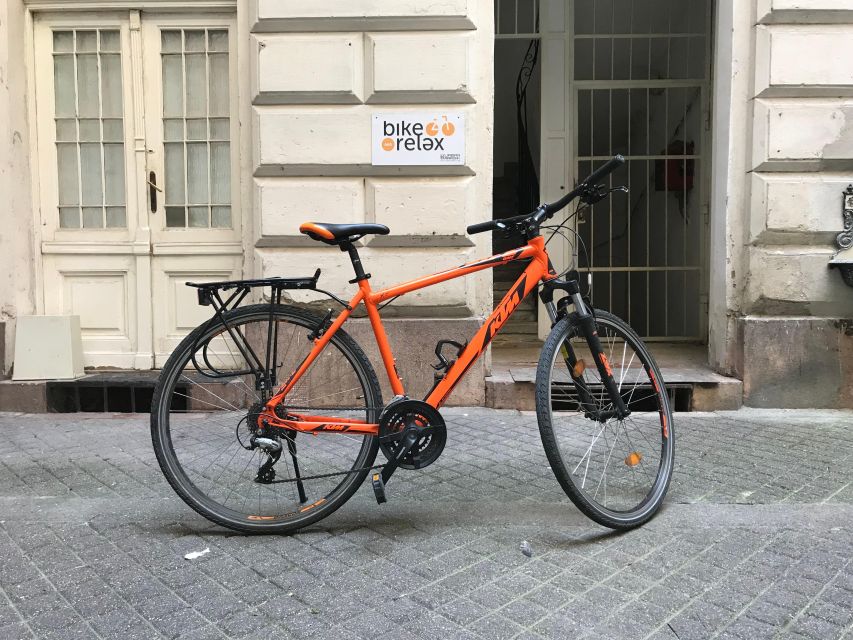
After the Buda sights, the tour returns over Liberty Bridge to the Pest side, then heads toward the inner-hub area of the Jewish Quarter again.
You’ll have photo stops at Central Market Hall and the National Museum area as you move back. These aren’t just random “we passed it” moments. Market Hall, in particular, is a Budapest magnet. Even from outside or while taking photos, you get the sense of a place people actually go to eat, shop, and linger.
The ride ends back at the Jewish Quarter, with the Grand Synagogue area included as a welcome moment before you finish at the starting point near Madach.
If you’re thinking ahead: this ending is practical. You’re close to restaurants and bars in an area that stays interesting after the tour. So the bike day doesn’t end with you stranded in a quiet zone.
The ride itself: pace, safety, and how the guide keeps things smooth
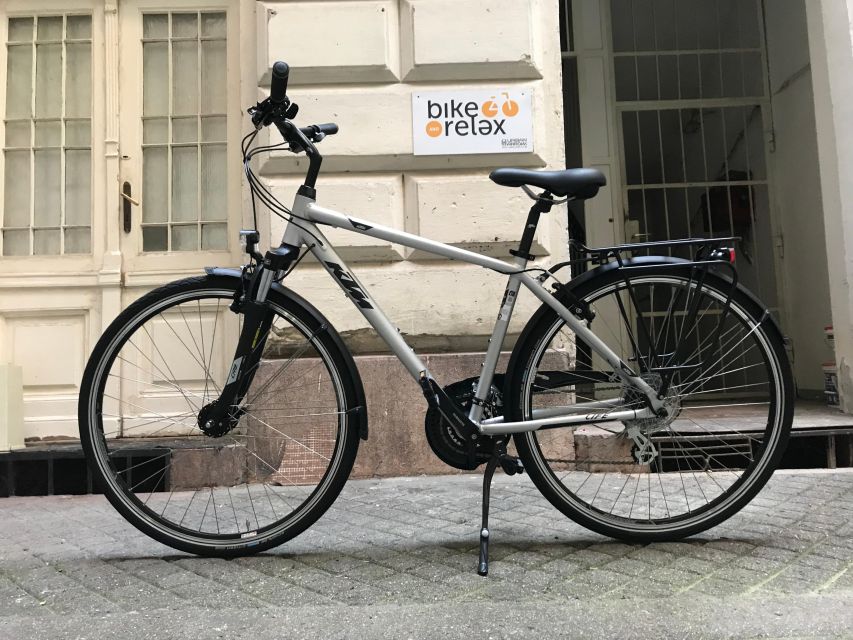
The tour is built around a relaxed pace. You’ll spend time guided between major blocks, and you’ll also have photo stops that break the ride up into manageable segments. The small group size (limited to 10 participants) helps a lot here. It’s easier to regroup. It’s easier to ask a question. And it generally keeps the ride from turning into a chaotic conga line.
Guides for this route have been praised for being fun, professional, and quick to answer questions. Names that have come up in English-guided sessions include Oliver, Karol, Joel, Naomi, Esther, and Baliant. What you should expect from that style is not just facts, but explanations tied to what you’re seeing: why a building exists, what a square meant, and how a neighborhood’s past shows up in the present.
You’ll also get a refreshing drink included. That’s a small thing, but it helps because the tour doesn’t include meals. Build your day around snacks and water before or after, not during.
Price and value: is $45 for 3.5 hours a fair deal?
For $45 per person and about 3.5 hours, you’re paying for three main things: guided context, efficient sightseeing coverage, and small-group handling.
Here’s the value math in real terms. On foot, getting from the Jewish Quarter to Andrássy Avenue, then on to Heroes’ Square, City Park, the Parliament area, across the Chain Bridge, and back across town would eat up a huge chunk of your day. By bike, you compress that into one ride without sacrificing the chance to stop and look. You also get photo pauses at key spots rather than just “passing by.”
You’re not paying for meals, and you don’t want to treat this as a full-day outing with lunch included. But as an orientation tour—especially if it’s your first day in Budapest—it does a lot of work for the time you spend.
If you like history with context and you enjoy moving between neighborhoods, this price feels fair.
Who should book, and who should skip
This tour is a good match if you:
- can comfortably ride a bike (and you’re okay with city riding)
- want a big overview of Budapest in 3.5 hours
- like photo stops at major sights rather than long museum time
- want to understand what you’re seeing, with an English-speaking guide
It’s not a match if you:
- can’t ride a bike or feel nervous about riding in traffic
- have mobility impairments or need wheelchair access (not suitable)
- are pregnant (not suitable)
- have epilepsy (not suitable)
- have motion sickness (not suitable)
- are traveling with luggage or large bags (not allowed)
- need kid bikes or child seats without planning ahead (child gear is limited)
There’s also a weight limit listed at 110 kg / 243 lbs.
And if you’re traveling with little ones: there are limited child seats and bikes, and you’re expected to contact the local partner in advance if someone is under 1.50m.
Should you book this Budapest bicycle ride?
Book it if you want the city’s main layers in one smooth afternoon. The route makes sense, the stops are timed for actual looking, and the small group size keeps the experience easy to manage. It’s especially smart as a first-day activity because it helps you decide what to revisit later—and it shows you where you’ll want to return for longer time.
Skip it if you’re mainly a walker who prefers slow pacing, or if biking isn’t comfortable for you. This tour is efficient by design, so it rewards people who can handle city streets even at a relaxed speed.
If you want a practical one-liner decision: if you can ride a bike comfortably and you want a guided overview of Budapest’s icons, this is an easy yes.
FAQ
How long is the Budapest bicycle ride?
The tour runs for 3.5 hours.
Where is the meeting point?
Meet at Bike & Relax in the Jewish district at Madach Imre ut 12, near Cafe Hivatal, between Madach Square and Gozsdu Court.
Is this a private tour?
You can choose between a private option or a small-group tour.
How big is the small group?
The small group is limited to 10 participants.
What’s included in the price?
The price includes the 3.5-hour bike tour, a guide, and a refreshing drink.
Is it suitable for people who can’t ride a bike?
No. The tour is not suitable for people who can’t ride a bike. It’s also listed as not suitable for wheelchair users and people with mobility impairments.