REVIEW · ROME
Rome: Early Morning E-Bike Tour
Book on GetYourGuide →Operated by Roma STARBIKE · Bookable on GetYourGuide
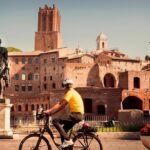
Rome looks different when you ride early. This 3-hour e-bike tour pairs city highlights with 3D viewers that recreate ancient scenes right where you’re standing. I like the way the guide turns scattered ruins and vanished buildings into a clear picture of what stood here 2,000+ years ago.
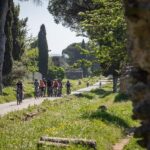
I also love the format: you cover a lot of ground without getting wiped out. With the early start, you tend to find quieter streets, and the ride feels easy thanks to the e-bike assist (even on hills like Capitoline Hill).
One consideration: it’s not a slow, flexible walking tour. Photo stops can be brief, and the ride has weight limits and specific child-bike options, so it’s not for everyone.
In This Review
- Key highlights I’d build a Rome plan around
- Why an early-morning e-bike tour works so well in Rome
- Getting set up at Roma STARBIKE and learning the 3D visor trick
- Colosseum photo moment, then Arch of Constantine: the route finds its rhythm
- Piazza Venezia to Trajan Forum and the Pantheon: “classic Rome” in one loop
- Piazza Navona, Campo de’ Fiori, and Trastevere: piazzas, color, and a quick coffee break
- Circus Maximus in 3D: the part most visitors miss
- Capitoline Hill: the walk that turns views into story
- Price and value: why $81 can feel fair for what you get
- Pace, safety, and what to wear (and who should skip it)
- Should you book this Rome early-morning e-bike tour?
- FAQ
- How long is the Rome early-morning e-bike tour?
- Where do I meet the tour?
- What’s the price per person?
- What’s included in the tour?
- Do kids ride on the tour?
- Is there a weight limit?
- Is the tour suitable for pregnant women?
- What should I wear or bring?
- What if I need to cancel?
Key highlights I’d build a Rome plan around
- 3D VR moments at the Colosseum and Circus Maximus, shown through wearable 3D visors
- Capitoline Hill on foot, including a walk at the top to connect views with emperors and power
- A guided loop that strings together major classics plus lesser-known corners
- Trajan Forum, Pantheon, Piazza Navona, Campo de’ Fiori, and Trastevere in one morning flow
- Small, practical breaks, including a short coffee stop in Trastevere
Why an early-morning e-bike tour works so well in Rome
If you’ve only got a day or two, Rome can feel like drinking espresso through a fire hose. This tour cuts the noise. You get a guided route that hits big names like the Colosseum and Pantheon, but you also cover the connective tissue—forums, hills, and neighborhoods that make the city make sense.
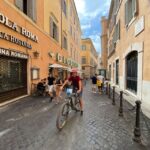
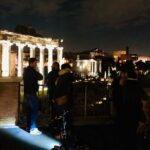
I like that it’s scheduled early. That timing matters because you’re moving while the city is waking up. Less time stuck behind crowds means more time seeing details, and the e-bike makes “Rome hills” feel manageable rather than miserable.
And the guide doesn’t treat this like a checklist. The whole point is interpretation. You’re told what you’re actually looking at now, then you get a 3D view of how it likely looked back in the day—especially where parts are gone or altered. That’s what turns a photo stop into something your brain can keep.
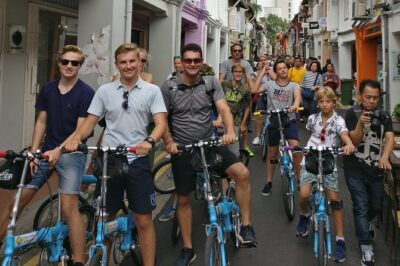
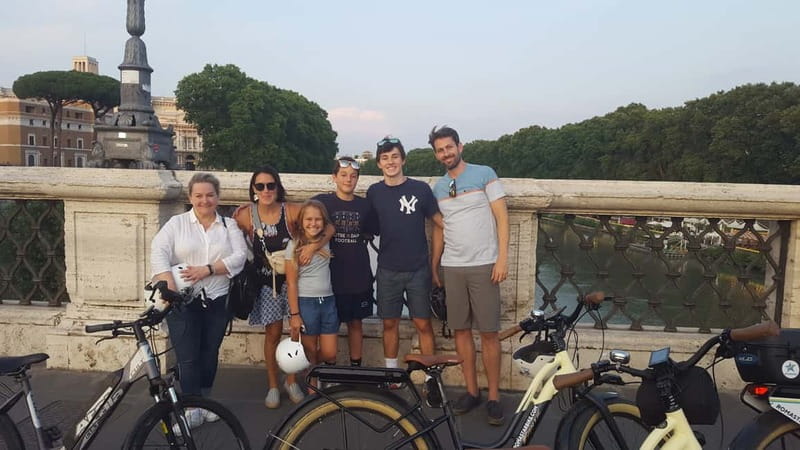
The vibe also feels family-friendly on paper. The tour explicitly includes child seats and uses a trailer bike for smaller kids, so it’s designed for mixed groups—not just athletic adults.
You can also read our reviews of more tours and experiences in Rome.


Getting set up at Roma STARBIKE and learning the 3D visor trick
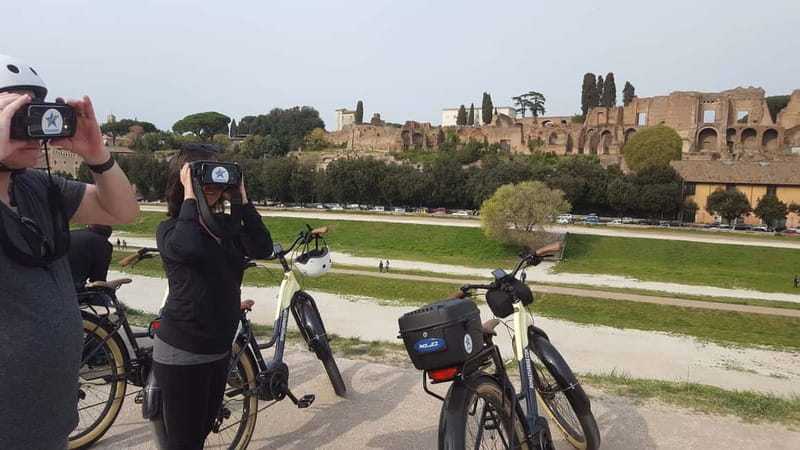
You meet at Roma STARBIKE on Via dei SS. Quattro, 58. It’s a short walk from Colosseo Metro (Line B) and right next to a Carrefour supermarket, which is handy if you’re trying to stay oriented without guessing.
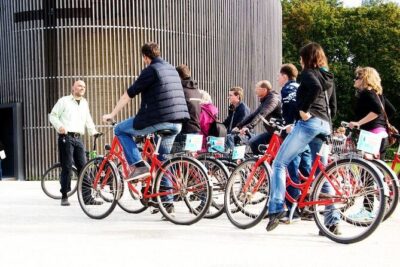
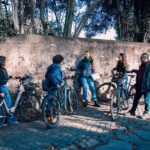
Before you roll, you get the gear: a high-quality e-bike, a helmet, and the system that makes the tour special. You also get holders for a mobile phone and on the handlebar, which is great for quick photos and not having to juggle your stuff while riding.
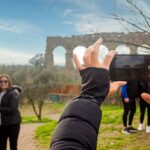
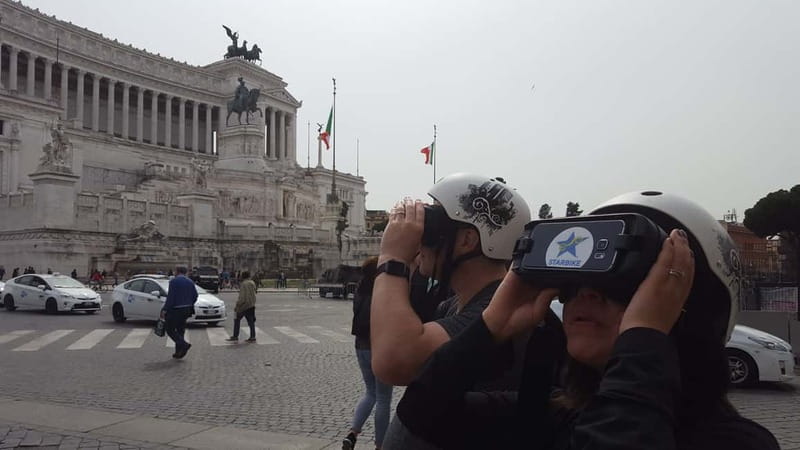
The 3D viewers take a minute to learn, but you’ll use them multiple times on the route. The basic idea is simple: your guide cues you at certain stops, then the visor shows reconstructions that overlay or replace what’s missing today. It’s not just a gimmick. Used well, it helps you understand scale and layout, not just the existence of a landmark.
If you’re the type who likes to understand why a place matters, this is the right setup. If you’d rather just wander freely, you’ll still enjoy the visuals—but you may feel the ride moves at a set pace.
Colosseum photo moment, then Arch of Constantine: the route finds its rhythm
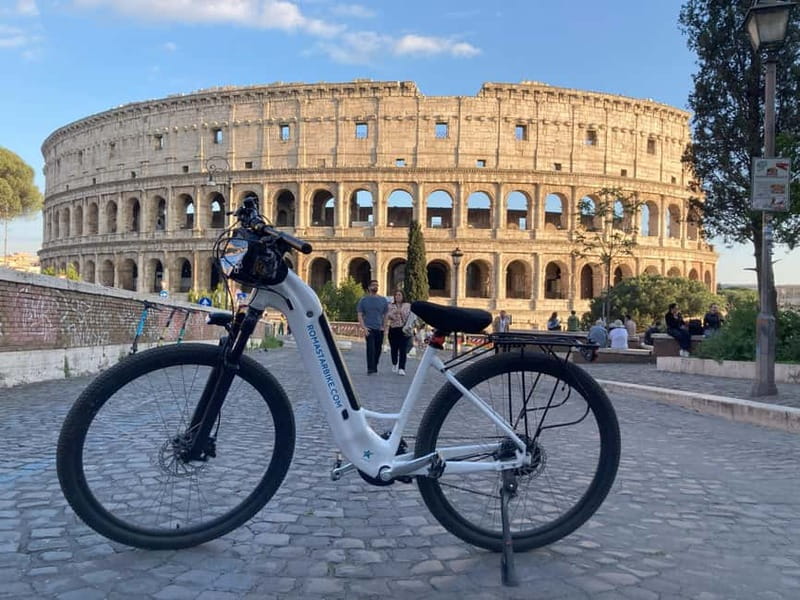
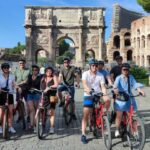
Your first real sight is the Colosseum. You’ll get a guided tour plus a photo stop, and you’ll do it early enough that the area can feel less chaotic than it does later. The standout here is the 3D Colosseum VR moment, using the visors to show the ancient structure as it once was.
Even if you’ve seen the Colosseum in pictures before, the 3D view changes the way you read it. From street level, ruins can feel like a pile of stone. With the reconstruction, your eyes start mapping the building’s original mass and intent.
From there, the tour moves to the Arch of Constantine for another photo stop and short guided look. It’s a good step in the flow because it’s close enough to connect visually, and it keeps the story moving from arena spectacle to imperial display.
A practical plus: this leg gives you momentum. You’re not learning the whole route from scratch while also trying to look at Rome’s most famous monument. The early sequence builds confidence—ride first, then see.
Piazza Venezia to Trajan Forum and the Pantheon: “classic Rome” in one loop
Next you cycle through Piazza Venezia with a photo stop and guided context. This is one of those Rome spots where you can quickly orient yourself toward the city’s center, and the guide helps you understand what you’re looking at instead of just pointing at buildings.
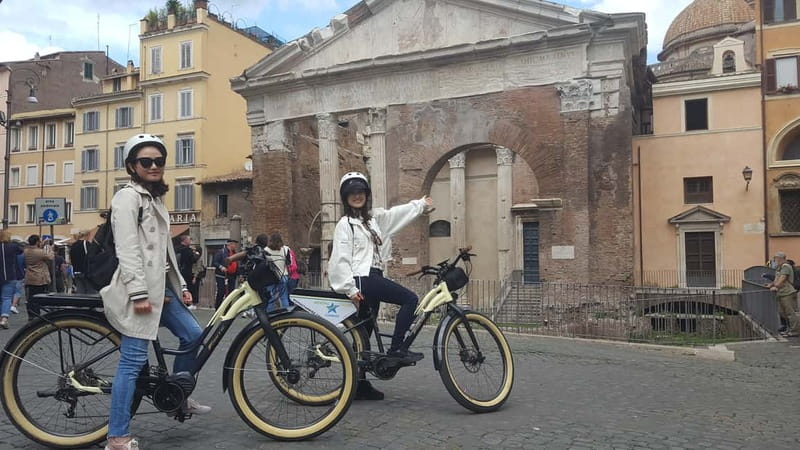
Then comes Trajan Forum. You’ll stop, get guided interpretation, and roll on after a short visit. The Forum matters because it explains how power displayed itself through architecture and urban planning—something Rome does better than most cities.
After Trajan Forum, you head to the Pantheon for a photo stop and guided tour. The Pantheon is one of the places where even a quick stop feels loaded. You get a chance to appreciate the building’s presence in the city, and your guide adds the why behind the what—how it fits into the larger Roman world you’re seeing through 3D reconstructions elsewhere.
One small drawback of this approach: stops are planned and timed. If you’re the type who wants long, quiet staring sessions, you’ll need to save extra time for these monuments after the tour. The payoff is that you learn what to look for when you come back later.
Piazza Navona, Campo de’ Fiori, and Trastevere: piazzas, color, and a quick coffee break
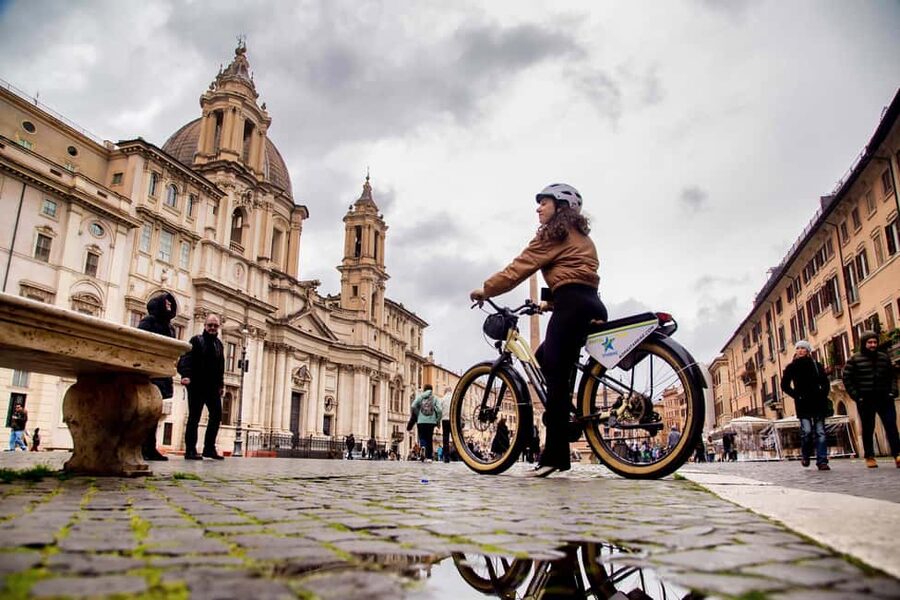
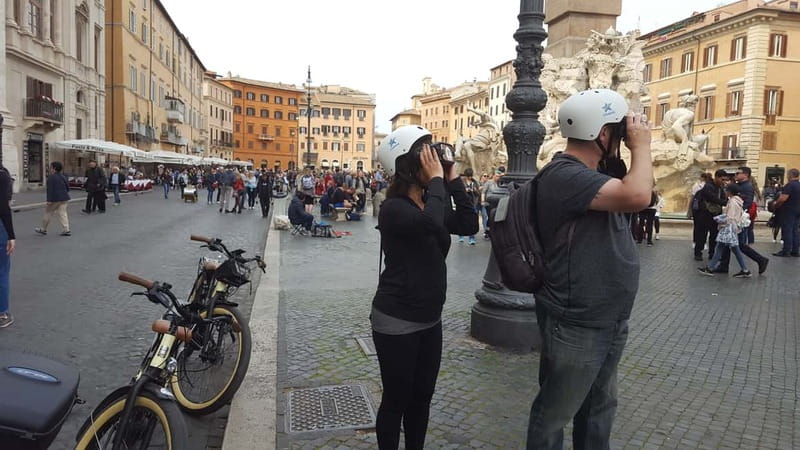
Piazza Navona comes next. You’ll have a guided stop and time for photos, then move on. This is a good pause in the route because Navona is visually rich and walkable even if you’re riding an e-bike for most of the morning. The guide’s commentary helps you connect the square’s layout with the city that surrounds it.
From there you roll to Campo de’ Fiori. You’ll get another photo stop and guided tour. Campo de’ Fiori is the kind of place where Rome feels real—street-level, not postcard-only. Your guide’s background makes it more than just a scenic corner.
Then you reach Trastevere, again with a photo stop and guided portion. This part of the route is especially useful if you’re short on time and want a taste of the neighborhood feel without spending hours mapping your own path. There’s even a brief coffee break in Trastevere (about 5 minutes).
Keep your expectations honest here: coffee is a quick reset, not a café experience. But it’s timed well—enough to cool off, hydrate, and regroup before you tackle the bigger ancient set pieces toward the end.

Circus Maximus in 3D: the part most visitors miss
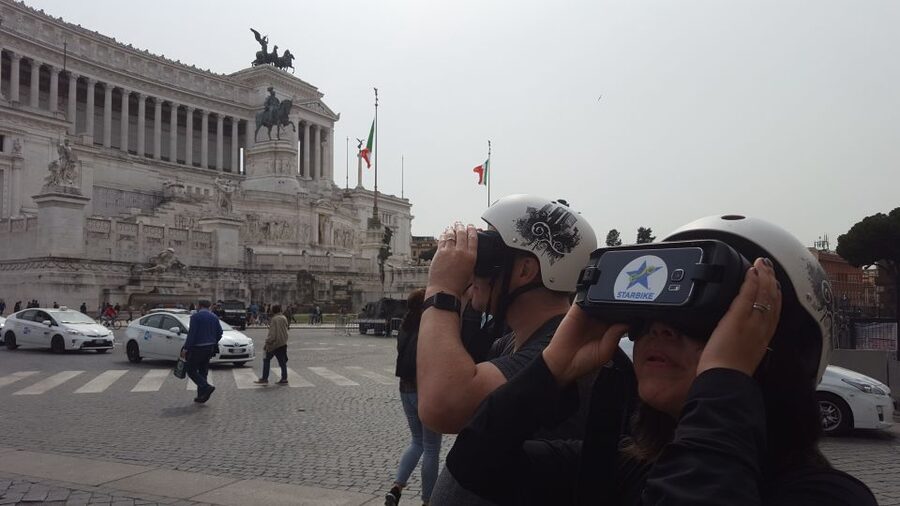
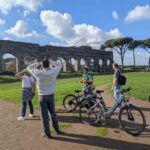
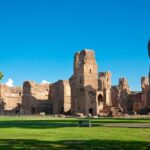
Circus Maximus is where the tour really shows off. You’ll have a photo stop and guided tour, and the 3D visor experience gives you the virtual reconstruction of the Circus Maximus like never before.
This is a major value moment. Many Rome highlights are photographed constantly. Circus Maximus often gets attention only if you already know it matters. Seeing it in 3D helps you understand the scale and purpose of the ancient venue—why this stretch of space mattered for crowd life and spectacle.
And it connects neatly to what you’ve already seen. After the Colosseum’s arena energy and the forum’s power display, Circus Maximus rounds out the story by showing how Rome entertained and organized people through mass events.
If you love seeing a place go from flat to three-dimensional in your head, this is the payoff stop.
Capitoline Hill: the walk that turns views into story
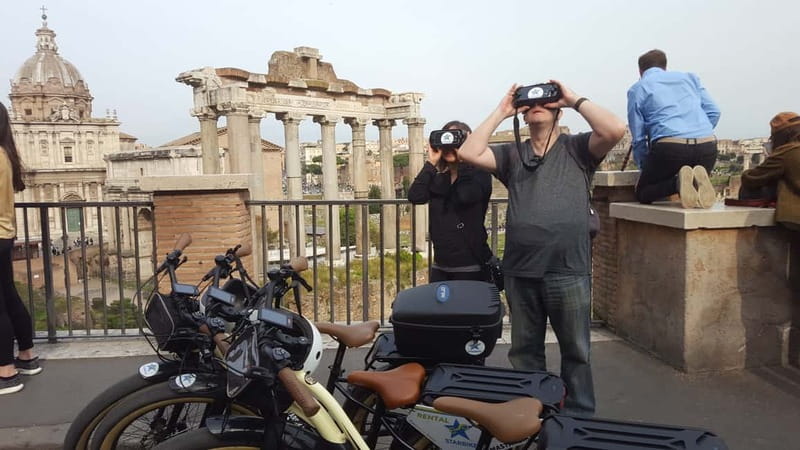
After Circus Maximus, you head to Capitoline Hill. This is one of the few places on the tour where you actually walk—your guide leads you around at the top for views tied to Roman power and rulers from 2,000+ years ago.
The best part of this section is the physical change. You go from riding to walking, from cruising streets to standing in a spot where the city opens up. That shift helps you absorb the lesson. Rome isn’t only buildings; it’s sight lines and geography.
The tour also includes a guided photo stop here. You’ll get context while you’re still fresh from the earlier 3D moments, which matters. It’s easier to understand what you’re seeing when your brain already has the ancient reconstructions switched on.
Price and value: why $81 can feel fair for what you get
At about $81 per person for a 3-hour experience, this isn’t a budget walking tour price. But you’re not just paying for movement and a guide.
You’re paying for:
- a high-quality e-bike (with practical phone and handlebar holders)
- the 3D viewers used during key ancient stops
- guided interpretation in English (Italian too)
- a route design that strings together Colosseum area, central classics, Trastevere, and the Circus Maximus/Capitoline Hill end sequence
If you’re trying to see Rome efficiently—without exhausting yourself—this can be strong value. You get a guided overview plus visual reconstructions that make the ruins easier to understand later when you explore on your own.
If you hate set itineraries or want long, silent time at monuments, you may feel the price is harder to justify. This tour works best as a morning “brain setup” for the rest of your trip.
Pace, safety, and what to wear (and who should skip it)
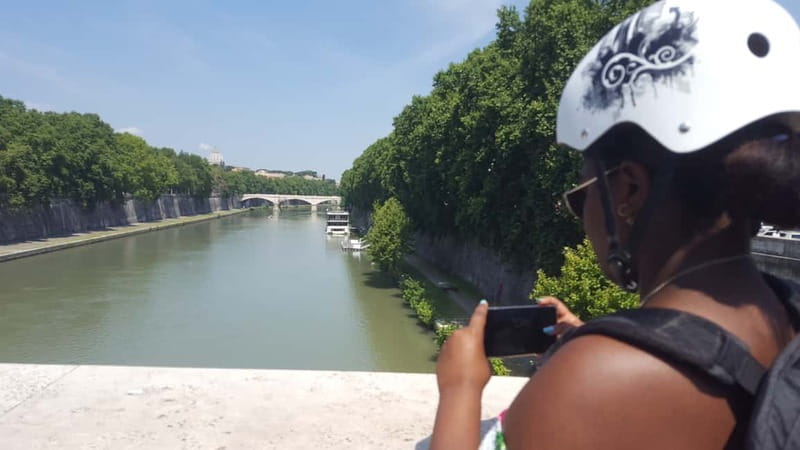
The route is built around short guided stops and bike riding between them. That means you should be comfortable staying alert in traffic-adjacent city areas, even if the ride is aided by the motor.
Plan to wear comfortable clothes and shoes. Cobblestones and old paving can be unforgiving, even when the e-bike tires help grip and soften the ride.
Safety and limitations are clear:
- Max rider weight is 120 kg / 265 lb
- It’s not suitable for pregnant women
- Children under about 6–10 years old or under about 4–7 feet tall use a trailer bike
- Child seats are included for up to 25 kg
If you’re within those limits, you’ll likely find the e-bike makes this doable for a wider range of fitness levels than standard cycling tours.
Should you book this Rome early-morning e-bike tour?
Book it if you want a smart first pass through Rome. You’ll cover major landmarks, plus you’ll see places like Circus Maximus with an added layer of 3D context that makes them easier to picture later.
I’d also book it if your trip is short and you want help navigating what you’re seeing. The guide’s storytelling and the visor-based reconstructions turn the city into something you can actually remember.
Skip it if you want total freedom, long monument time, or you’re outside the stated rider limits (especially the weight limit or pregnancy). And if you’re emotionally attached to slow, meandering walks, this format may feel too structured.
If your goal is to get your bearings fast and leave Rome understanding it better, this tour is a very sensible place to start.
FAQ
How long is the Rome early-morning e-bike tour?
It lasts 3 hours.
Where do I meet the tour?
You meet at Roma STARBIKE, Via dei SS. Quattro, 58, next to a Carrefour supermarket. It’s about 0.03 miles from Colosseo Metro station (Line B).
What’s the price per person?
The price is $81 per person.
What’s included in the tour?
You get a high-quality e-bike, 3D viewers, a helmet, and phone/handlebar holders. A tour guide leads the group in English and Italian (French/German upon request).
Do kids ride on the tour?
Child seats are included (up to 25 kg). Children who are under about 6–10 years old or under about 4–7 feet tall ride using the trailer bike.
Is there a weight limit?
Yes. The maximum is 120 kg / 265 pounds.
Is the tour suitable for pregnant women?
No, it is not suitable for pregnant women.
What should I wear or bring?
Wear comfortable shoes and comfortable clothes.
What if I need to cancel?
You can cancel up to 24 hours in advance for a full refund.