One pedal-free shortcut through Rome’s biggest sights.
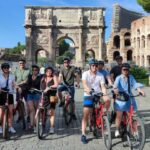
This tour is built for covering a lot of ground fast on a Cannondale e-bike, then slowing down just enough to learn what you’re seeing. I also love the small-group feel, with a real guide at the ready and time for photos at major landmarks.
The only real consideration: you need to be comfortable cycling. Even with electric help, the ride can be too much if you’re not confident on a bike, and you may hit busy crowds around the most famous squares.
In This Review
- Quick take: what makes this e-bike tour work
- First, the big idea: why Rome clicks faster on an e-bike
- Where you meet (and how the tour actually runs)
- Getting set up: helmets, bags, and the e-bike you’ll trust
- Stop 1: Piazza del Colosseo and that first Colosseum view
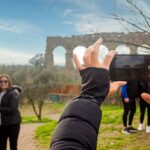
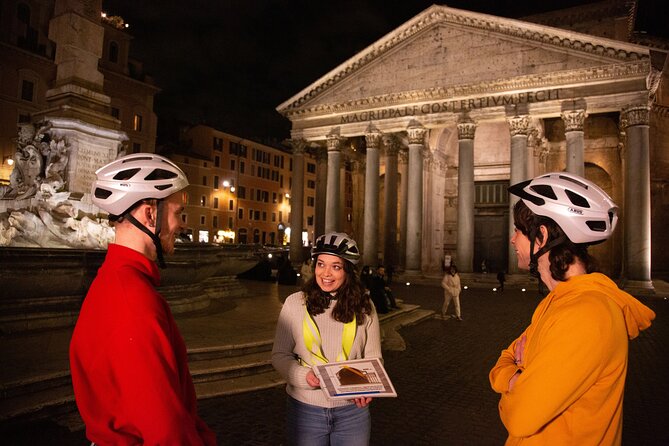
- Stop 2: Via dei Fori Imperiali through the heart of Ancient Rome
- Stop 3: Piazza Venezia—Trajan’s Column, Vittoriano, and Palazzo Venezia
- Stop 4: Trevi Fountain—history in the middle of the hype
- Stop 5: Spanish Steps and Piazza di Spagna
- Stop 6: Piazza del Popolo—approach Rome from the north
- Stop 7: Villa Borghese Gardens—camera time in a park break
- Stop 8: Piazza Navona—cycle around the Baroque fountains
- Stop 9: Pantheon—old Rome you can actually stand in front of
- Stop 10: Antico Quartiere Ebraico—quieter layers in a lived-in area
- Stop 11: Teatro di Marcello—an ancient prototype for the Colosseum
- Stop 12: Piazza del Campidoglio—Michelangelo’s square and forum views
- How hard is the ride on this 14 km loop?
- Value check: is $102.84 worth it?
- Who should book—and who should skip
- A quick note on guides and real-day energy
- Should you book this Rome e-bike tour?
- FAQ
- How long is the tour?
- How much does it cost?
- What’s included with the e-bike tour?
- Do I need a helmet?
- How far do you ride, and what’s the difficulty level?
- Is the tour safe?
- Where do you meet, and where does the tour end?
- How many people are in the group?
- Are children allowed, and what bike setup do they need?
- What’s the cancellation and refund policy?
Quick take: what makes this e-bike tour work
- Cannondale e-bike with anti-puncture tires helps you glide between stops with less stress
- Small group (max 10) keeps the experience personal and manageable in tight areas
- A 14 km loop in ~4 hours is a practical way to see Rome efficiently
- Traffic is limited on planned routes, with sections designed for easy riding
- Family-friendly setups include a child extension for ages 5–8
- You get helmet, water, and a handlebar bag, so you arrive ready to ride
First, the big idea: why Rome clicks faster on an e-bike
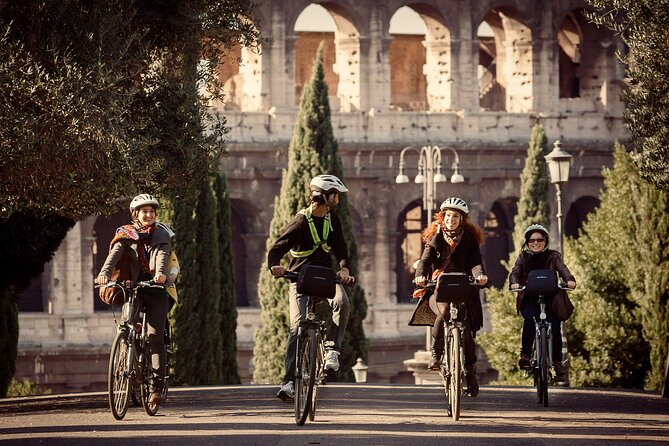
Rome is one of those cities where the distance on a map feels smaller than it really is once you’re walking uphill, dodging scooters, and waiting for your turn at crowded viewpoints. This tour’s main value is simple: you use an e-bike to move, then you use short stops to understand.
You’re looking at about 8.5 miles (14 km) over roughly 4 hours. That balance matters. Too-short bike tours feel like a drive-by. Too-long walking tours drain you before you get to the good stuff. Here, you get a concentrated route that lets you build a mental map of the center quickly.
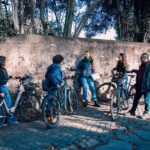
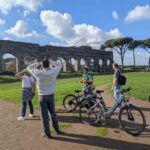
And because it’s a small group with a professional guide, you’re not stuck with silence and a download of facts. You can ask questions, and the guide can adjust the pace so you don’t spend the whole time worrying about keeping up.
You can also read our reviews of more tours and experiences in Rome.


Where you meet (and how the tour actually runs)
You start at Via Labicana, 49, 00184 Roma RM, and the tour ends back there. It’s near public transportation, which is handy if you’re mixing this with other plans.
The schedule gives you a choice: morning or afternoon departure times. In Rome, that choice isn’t just about convenience. Morning is often less chaotic for moving between big sights, while afternoons can feel better if you want a slower start.
You’ll receive a mobile ticket, and confirmation comes at booking. The company also notes that public celebrations or happenings in the city center may cause one or more included highlights to be swapped for alternatives. That’s normal for Rome, and it’s worth remembering so you don’t feel blindsided if the route changes on the day.
Getting set up: helmets, bags, and the e-bike you’ll trust
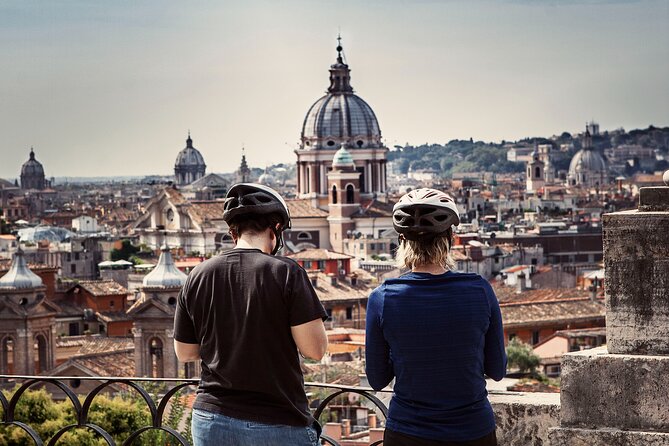
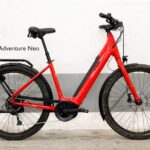
This isn’t “rent a bike and go freestyle.” You get a top-quality e-bike with anti-puncture tires, plus a professional guide. A helmet is mandatory and provided for free, and you also get a handlebar bag and a water bottle.
That sounds small, but it changes the experience. A helmet means you don’t have to worry about carrying one or hunting for a rental. A handlebar bag means your essentials are close at hand when you stop for photos. Water matters more than you’d think when you’re moving around Rome in spurts.
There are also practical limits you should be aware of:
- Bike equipment has a weight limit of 300 lbs (136 kg).
- The ride is rated leisure, or intermediate with a child seat/extension.
- It’s not recommended if you’re not self-confident on a bike, even with electric assistance.
Stop 1: Piazza del Colosseo and that first Colosseum view
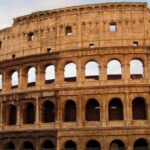
You begin at Piazza del Colosseo, where the guide frames the Colosseum’s 2,000-year history. Even if you’ve seen photos, that first view works differently in real life because your brain finally connects the monument to the street-level reality around it.
Why it’s a good start: it sets the theme of the day—Rome as layers, not one era. And because you’re arriving by bike, you’re not starting the trip in the middle of the heaviest foot-traffic crush.
The drawback? This area can be busy, and the tour may be threading through crowd zones near major attractions. The good news is the route planning is designed to keep your riding relaxed.
Stop 2: Via dei Fori Imperiali through the heart of Ancient Rome
Next comes Via dei Fori Imperiali, described as a spectacular avenue running right through the core of Ancient Rome. This is one of those stretches where the setting does some of the explaining. You’re not just hearing about “the forums”—you’re seeing the idea of a corridor through time.
From a practical standpoint, this stop is also about momentum. It’s short, so you don’t lose the group rhythm, but it’s long enough to orient yourself and picture how people would have moved through this district.
Stop 3: Piazza Venezia—Trajan’s Column, Vittoriano, and Palazzo Venezia
At Piazza Venezia, the tour brings together Trajan’s Column, the Vittoriano Monument, and Palazzo Venezia. That mix is a big part of Rome’s charm: monumental eras sitting next to each other, so you can’t treat history like a museum wing.
This stop is also a good example of how the guide’s job matters. You get quick context on why these landmarks sit where they do and what their presence signals across centuries.
Stop 4: Trevi Fountain—history in the middle of the hype
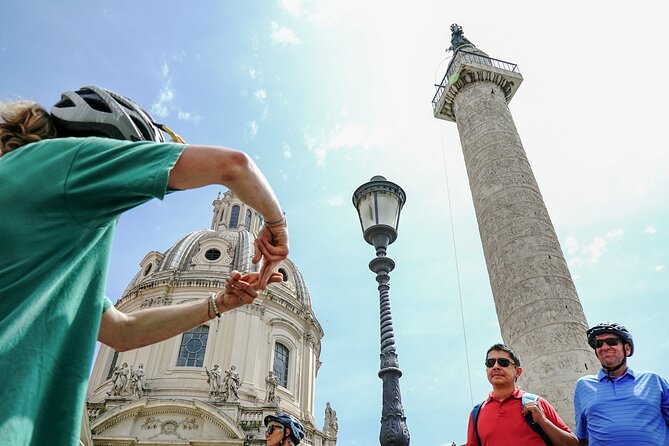
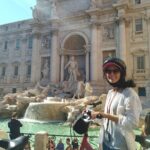
At Trevi Fountain, you learn about the story behind this legendary fountain. The practical challenge is that Trevi is Trevi—expect crowds. The advantage of the tour format is that you don’t spend your entire day wrestling with foot traffic. You get in, you learn, you take photos, and you move on.
If you’re hoping for solitude, this stop may not deliver that. If you want a first-row look plus the meaning behind the landmark, it’s a strong trade.
Stop 5: Spanish Steps and Piazza di Spagna
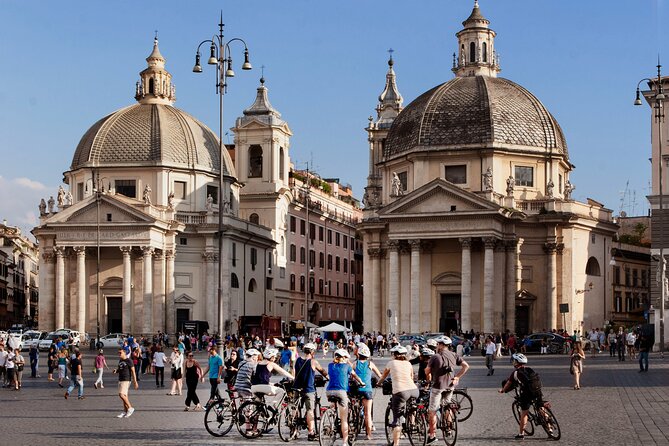
The tour then heads to Spanish Steps and Piazza di Spagna, including the view down from the Trinità dei Monti church. The staircase is one of those classic Rome visuals that’s hard to appreciate fully until you’re standing at the angle where it actually frames the city.
The stop is short (about 5 minutes), so treat it as a moment to lock in the perspective and take photos. Don’t plan on reading every detail—this is a snapshot tour style.
Stop 6: Piazza del Popolo—approach Rome from the north
At Piazza del Popolo, the guide explains why this square became the first sight of Rome for visitors and pilgrims arriving from the north over the Via Flaminia.
This is a smart kind of stop: it changes how you “read” the city. Instead of landmarks being isolated, you understand how arrival routes shaped what people experienced first.
Like the Spanish Steps, expect a quick stop designed to keep the day flowing.
Stop 7: Villa Borghese Gardens—camera time in a park break
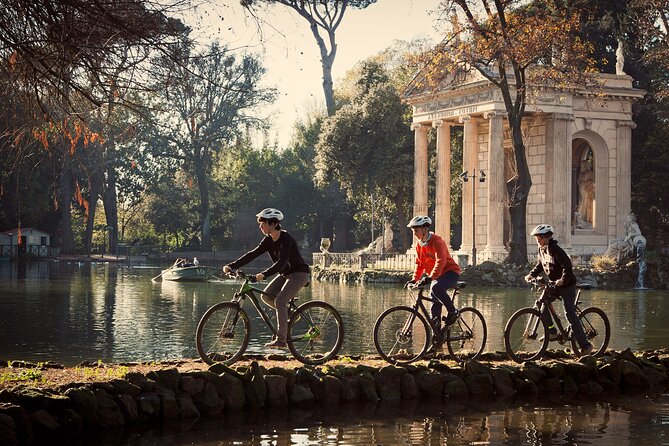
Now you get a breather at Villa Borghese Gardens. This is where the tour’s pacing pays off. After dense city highlights, the park setting gives you a scenic pause and a chance to reset your energy.
You’re allowed about 15 minutes here, enough time to step off the e-bike, catch better light, and take photos with less pressure than the major squares.
Stop 8: Piazza Navona—cycle around the Baroque fountains
At Piazza Navona, you cycle around the oblong square for a first-row view of the central Baroque fountain. The “cycle around” part is key. It helps you see the layout without spending time stuck trying to inch your way through a crowd in only one direction.
The short stop time (about 10 minutes) means you’ll get the iconic view and then move—ideal if you want variety more than lingering.
Stop 9: Pantheon—old Rome you can actually stand in front of
The next stop is the Pantheon, with the tour highlighting it as one of the oldest and best-preserved buildings from Antiquity. Standing in front of it is one of those Rome moments where the scale hits you fast.
Expect a short break (about 10 minutes). The value here is that your guide frames what you’re seeing so you don’t walk away with only “cool building” in your notes.
Stop 10: Antico Quartiere Ebraico—quieter layers in a lived-in area
Here’s where the tour earns its “see more than the obvious” style—at Antico Quartiere Ebraico, described as a small neighborhood rich in archaeological, cultural, and religious heritage.
You get about 5 minutes here, so it’s not a full neighborhood stroll. But it’s long enough to notice the change in vibe and to understand you’re in an area where history isn’t only in monuments—it’s in community and place.
Stop 11: Teatro di Marcello—an ancient prototype for the Colosseum
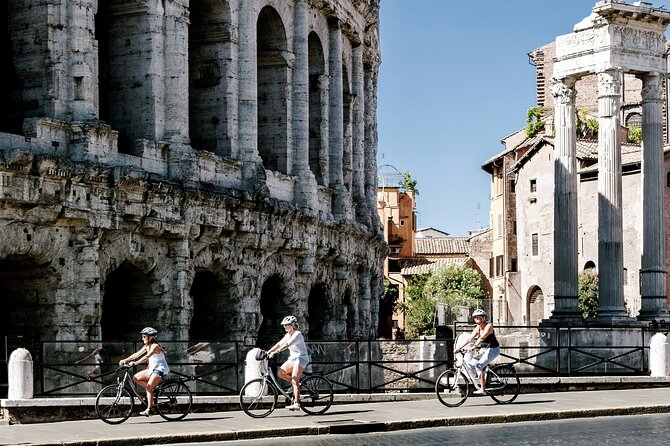
At Teatro di Marcello, you learn that this ancient theater served as a prototype for the Colosseum. That kind of connection is exactly why a guided loop works better than just bouncing between top sights on your own. You start linking structures and ideas across time.
This is another short stop (about 5 minutes), built for context and photos rather than deep exploration.
Stop 12: Piazza del Campidoglio—Michelangelo’s square and forum views
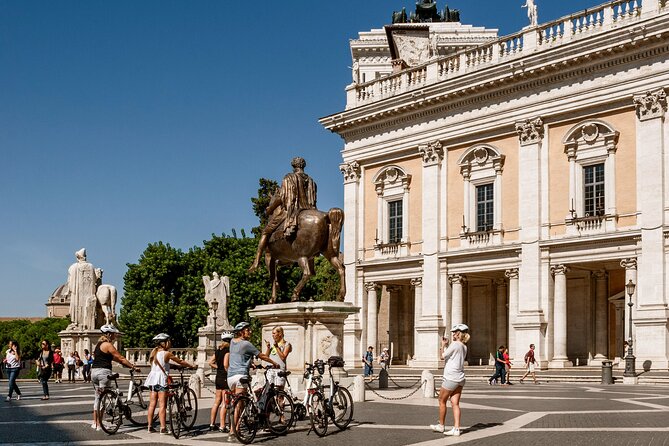
Finally, you end at Piazza del Campidoglio, on top of Capitol Hill, with views over the Roman forum. The tour also points out the 16th-century Piazza del Campidoglio, designed by Michelangelo.
This last segment is a payoff moment. You’ve spent the day moving through landmarks; now you get a viewpoint that ties the whole mental map together. It’s also a good place for a few final photos before you roll back to the meeting point.
How hard is the ride on this 14 km loop?
The tour difficulty is labeled leisure (or intermediate with child support). That makes sense with an e-bike: you’re not tackling Rome like it’s a training ride.
Still, there are a few realities to plan for:
- You’ll be cycling for stretches between stops, not just pausing.
- Some riders will find faster start/stop moments around crowded areas.
- If you don’t ride confidently, the e-bike helps—but it doesn’t replace balance and awareness.
The good news is that the company emphasizes safe routes with limited access to traffic, and in some sections, no traffic at all. That’s the difference between a relaxing city spin and a stressful commute.
Value check: is $102.84 worth it?
At $102.84 per person for about 4 hours, this is priced like an experience aimed at convenience and time-saving. The value comes from four things you don’t get when you DIY it:
1) E-bike support (including anti-puncture tires) reduces friction
2) A guide to explain what you’re seeing at each stop
3) Small-group size so you’re not lost in the shuffle
4) A tight route that covers major sights and selected quieter areas
You also get key ride essentials: helmet (required), water bottle, and a handlebar bag. Gratuities are optional, but the tour gives you enough support that you likely won’t feel like you’re constantly paying attention to logistics.
In plain terms: if you want a strong day-1 orientation to central Rome without spending half your time figuring out transit and walking routes, this is a solid use of money.
Who should book—and who should skip
This tour is a great fit if:
- You want a fast overview of central Rome with guided context
- You prefer a structured loop instead of random wandering
- You’re traveling with limited time and want to see more than the “one neighborhood per hour” approach
- You like photo stops but don’t want to spend the whole day standing still
It may not be ideal if:
- You’re not comfortable on a bike and prefer walking
- You’re expecting long stops at every landmark
- You have very specific accessibility needs not mentioned in the tour details
For families: children ages 5–8 get a child extension, while kids 9 and above can ride independently on appropriately sized e-bikes.
Also worth noting: the tour runs with a minimum of 4 participants, max 10. In some cases, if the number is too low after confirmation, you may be offered an alternative or a full refund.
A quick note on guides and real-day energy
The guides clearly influence how the day feels. In particular, I saw praise for guides named Arina and Aaliyah, both described as excellent, with strong knowledge and a fun pace. That matches what you want from a tour like this: someone who can keep the day moving while still answering questions when you stop for photos.
Should you book this Rome e-bike tour?
If you want a smart first day in Rome plan—big monuments, quick context, and a ride that helps you stay sane—yes, I’d book it. The route covers the classics you’ll hear about everywhere, plus stops that add texture like the Antico Quartiere Ebraico and Teatro di Marcello.
If you’re the type who enjoys slow walking and wants long museum-style stops, this may feel rushed. And if you’re not confident on a bike, I’d skip it and choose a guided walk instead.
My bottom line: for most people, especially on a time-tight trip, this is a practical way to get your bearings fast and still feel like you saw the real Rome, not just the outline.
FAQ
How long is the tour?
The tour runs for about 4 hours.
How much does it cost?
It costs $102.84 per person.
What’s included with the e-bike tour?
You’ll get a top quality e-bike (with anti-puncture tires), a professional guide, a helmet (mandatory), plus a handlebar bag and a water bottle.
Do I need a helmet?
Yes. A helmet is mandatory and is provided for free.
How far do you ride, and what’s the difficulty level?
You’ll cover about 8.5 miles (14 km), and the difficulty is listed as leisure (or intermediate with a child seat or child extension mounted on the bicycle).
Is the tour safe?
The tours follow carefully planned routes with limited access to traffic, and some sections have no traffic at all, designed for a relaxed and safe ride.
Where do you meet, and where does the tour end?
You meet at Via Labicana, 49, 00184 Roma RM, Italy and the tour ends back at the meeting point.
How many people are in the group?
There’s a maximum of 10 travelers on the tour, and a minimum of 4 participants applies.
Are children allowed, and what bike setup do they need?
For children 5–8 years, a child extension is provided. Children 9 and above can ride independently on an appropriately sized e-bike.
What’s the cancellation and refund policy?
You can cancel for a full refund if you do it up to 24 hours in advance. If you cancel less than 24 hours before the start time, the amount you paid isn’t refunded.