REVIEW · ROME
Rome’s Ultimate Bike Tour
Book on Viator →Operated by Rome's Ultimate Free Walking Tours · Bookable on Viator
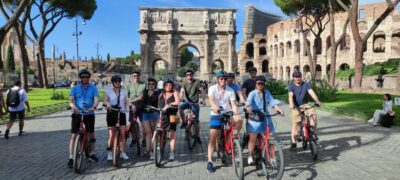
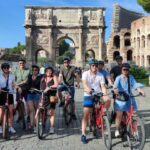
Rome looks different from a bike seat. I love the small group feel and the way Dimitri turns each stop into a story you can actually follow while you pedal, not just stand and read. You’re also getting scenic views as part of the sightseeing, so the ride feels like the point, not just the transport.
My other favorite part is how the route blends city landmarks with outdoor Roman landscapes, with short stops that still include sights like Circo Massimo, the Baths of Caracalla, and the Appian Way. One thing to consider: it’s weather-dependent, and the tour moves at a steady pace, so don’t expect long museum wandering or slow, linger-all-day time.
In This Review
- Key things to know before you go
- Why This Small-Group Rome Bike Tour Feels Personal
- Getting Started at Via dei Serpenti and Getting Your Bearings
- Circo Massimo: The Stadium That Proved Rome Had Scale
- Baths of Caracalla: How Public Life Worked
- Museo delle Mura and the Aurelian Walls: Rome’s Boundary Story
- Via Appia Antica: The Appian Way Ride That People Remember
- Catacombe di San Callisto: Panoramic Views and Big Numbers
- Parco degli Acquedotti and Parco Archeologico dell’Appia Antica: Aqueduct Views Outside the Center
- Parco Della Caffarella: Where Urban Life Meets Green Space
- Parco di Torre Fiscale and Fiscal History: A Strange Place With a Clear Purpose
- Via Cristoforo Colombo: Linking Historic Rome to the Sea
- Price and Value: What $96.12 Buys You
- Who This Tour Suits Best (and Who Might Not)
- Should You Book This Rome Bike Tour?
- FAQ
- Is this tour in English?
- How long is the Rome’s Ultimate Bike Tour?
- How many people are in the group?
- Where do we meet and where does it end?
- Do we need a ticket on our phone?
- Are admissions included at the stops?
- What happens if the weather is bad?
Key things to know before you go
- Max 10 travelers means more personal attention and easier question time
- English-speaking guidance with a strong focus on Roman history told clearly
- A mix of monuments and nature: city streets plus parks and viewpoints outside the center
- Free admission tickets at every stop listed on the route
- 4 hours 30 minutes total, with lots of short photo-and-lecture moments
Why This Small-Group Rome Bike Tour Feels Personal
This tour is built around the idea that Rome is easier to understand when you’re not stuck in a crowd. With a maximum of ten guests, you get that rare chance to ask follow-up questions while things are fresh, instead of waiting for a big-group pause.
The guide name that pops up again and again is Dimitri, and that matters. You’ll see the difference between someone who recites facts and someone who helps you connect the dots. Here, the stories are tied to what you’re seeing right then—stadium scale, street planning, and why these places were important beyond the postcard view.
And because you’re moving on bikes, you get a constant rhythm: pedal, look, listen, then roll on. That flow is a big part of why this feels like sightseeing with momentum instead of sightseeing with lineups.
You can also read our reviews of more tours and experiences in Rome.


Getting Started at Via dei Serpenti and Getting Your Bearings
You meet at Via dei Serpenti, 89 (00184 Roma RM), and the tour starts at 10:00 am. It also ends back at the meeting point, which is handy when you’re trying to plan the rest of your day in Rome.
One practical bonus: it’s described as near public transportation, which is useful if you’re arriving from another part of town and don’t want to wrestle with parking or long walks. Also, you’ll use a mobile ticket, so plan to have it ready on your phone.
Because the ride lasts about 4 hours 30 minutes, you’ll want to treat it like an active afternoon. Wear comfortable shoes for any short dismount moments and bring sun protection. You won’t want your day in Rome to be cut short by an avoidable comfort issue.
Circo Massimo: The Stadium That Proved Rome Had Scale
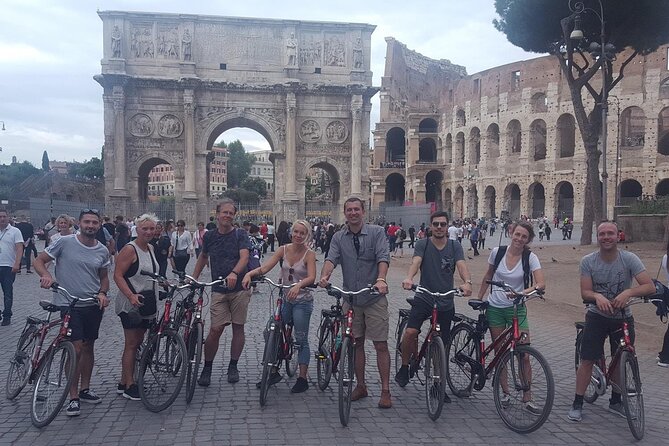
You begin with Circo Massimo, the Circus Maximus, described as the biggest stadium ever built in the history of the world. Even if you’ve seen photos of the Colosseum, this is a different kind of monument—built for spectacle at massive scale.
What I like about starting here is that it sets the theme for the ride: Rome wasn’t just about buildings. It was about entertainment, engineering, and controlling movement across the city.
The stop is about 10 minutes, with admission ticket free. That short time is intentional. You get the big picture, enough context to recognize what you’re seeing, then you move on instead of spending the whole tour waiting around.
A small consideration: because the stop is brief, you’ll get the clearest value if you listen closely during the explanation. If you drift off for photos only, you’ll miss the connection that makes this site click.
Baths of Caracalla: How Public Life Worked
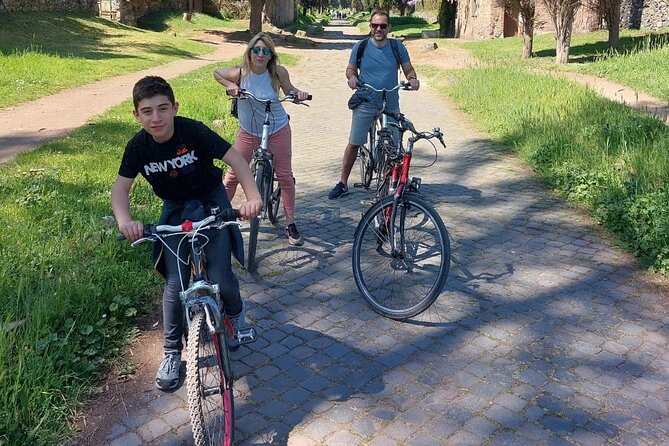
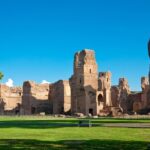
Next up is Terme di Caracalla, the Baths of Caracalla. It’s described as the second largest public bathroom complex built in Ancient Rome—so yes, it was a serious operation, not a quick wash.
This is a great stop for learning how Romans used public architecture. A site like the Baths isn’t only about water. It’s about social routine, space planning, and the idea that daily life could happen in monumental buildings.
Again, the stop is about 10 minutes and admission ticket is free. That makes it ideal for travelers who want historical context without committing to a long indoor museum experience.
Museo delle Mura and the Aurelian Walls: Rome’s Boundary Story
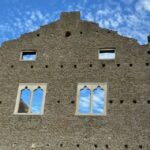
Then you hit Museo delle Mura, tied to the Aurelian Walls and the contemporary historical centre of Rome. This shifts the theme from spectacle and daily life to protection and boundaries.
Even in a short stop, walls like this can change how you read Rome on the map. They explain why the city’s layout makes sense and why certain neighborhoods feel like they’re arranged around old lines of movement and defense.
You’ll spend about 10 minutes here, with admission ticket free. Since it’s a museum stop, even a brief one can be meaningful if you pay attention to the guide’s framing. Ask questions if something clicks in your head, because that’s where these short stops start to feel like mini-classes.
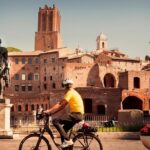

Via Appia Antica: The Appian Way Ride That People Remember
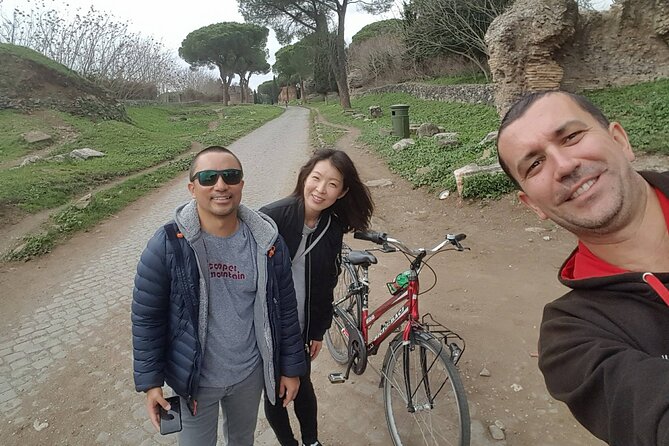
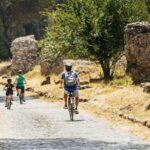
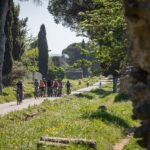
If you only keep one part of the tour in your memory, make it the ride on Via Appia Antica, described as the Queen of all the Roman roads. This is the long stretch in the schedule at about 40 minutes, and it’s the part that many people call their highlight.
Why it’s so good on a bike: you experience the road as a road, not as a postcard. You’re moving along a corridor of history, and the landscape around it gives you a sense of scale—how far-reaching Roman roads were, and how people traveled.
There’s also a psychological effect. Standing still lets you admire stone. Riding it makes you imagine the flow of people and supplies. That’s the difference between seeing history and feeling how history moves.
The stop here is listed with admission ticket free, which keeps the value strong. The drawback is simple: it’s a longer segment, so expect it to be the most physically focused part of the tour. If you’re comfortable riding, you’ll love it. If you’re prone to sore legs, bring water and keep a steady pace.
Catacombe di San Callisto: Panoramic Views and Big Numbers
Next is Catacombe di San Callisto. The tour frames it as the largest catacomb complex of Rome, and the time here is about 15 minutes with admission ticket free.
This is where the tour leans into variety. You get Roman engineering and infrastructure in the road segment, then you switch to a site linked with underground history and panoramic viewing moments.
With a stop this short, you won’t get a slow, do-everything exploration. You’re getting a guided orientation: where you are, what the place represents, and how it fits into Rome’s story.
If you have strong interest in religious or burial history, you may want to plan a longer follow-up visit later. As part of this bike tour, the value is context and perspective, not an all-day catacomb session.
Parco degli Acquedotti and Parco Archeologico dell’Appia Antica: Aqueduct Views Outside the Center
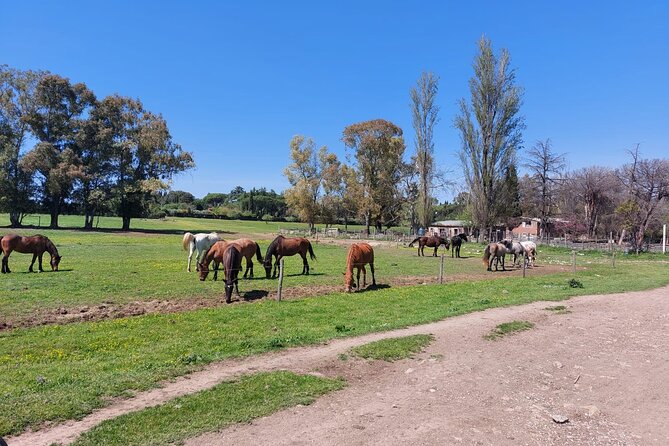
After the catacombs, you shift into the outdoors with Parco degli Acquedotti – Parco Archeologico dell’Appia Antica. This segment is about 30 minutes, and it’s described as an aqueduct park with stunning views plus ancient architectural and engineering wonders.
This is one of the smartest parts of the tour for first-timers. Central Rome can be a bit intense—traffic, crowds, and nonstop monuments. Here you get space to breathe and look across viewpoints while the guide connects the dots between aqueducts, water supply, and Roman infrastructure.
The time allocation is meaningful: 30 minutes is long enough to actually enjoy the scenery without dragging your whole day. It also keeps the tour’s promise to explore both city and nature in one go.
A small consideration: parks can mean uneven ground or changing sun exposure. You’ll be happier if you dress for the outdoors and keep an eye on weather.
Parco Della Caffarella: Where Urban Life Meets Green Space
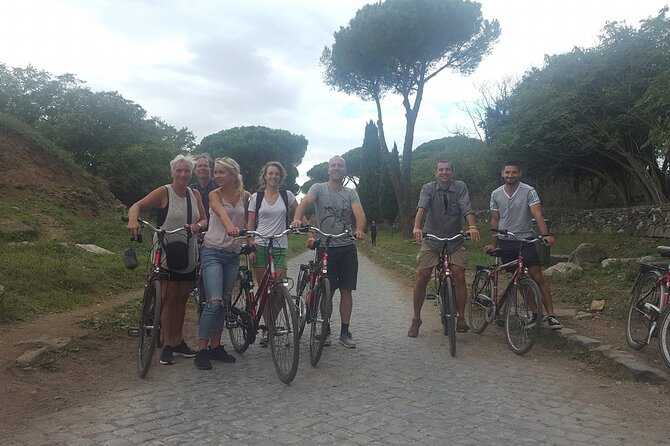
Then comes Parco Della Caffarella, another 30-minute stop. The tour describes it as the place where urban and nature meet.
This stop works because it balances everything else. After roads, walls, and underground history, you get an environment that helps your brain reset. It also reinforces a point you’ll feel throughout the tour: Rome doesn’t always stay neatly inside the famous center. A lot of the city’s story extends outward into parks and corridors.
If you like taking photos, this is a good place to do it without rushing. Just don’t let the photos replace listening entirely; the guide’s explanations are what make these quick stops add up.
Parco di Torre Fiscale and Fiscal History: A Strange Place With a Clear Purpose
Next is Parco di Torre Fiscale, described with history about the Fiscal Tour and its purposes. You’ll spend about 10 minutes here, with admission ticket free.
This is the kind of stop that makes bike tours better than basic hop-on sightseeing. A name like Torre Fiscale might sound niche, but the payoff is context: Rome had systems, and infrastructure had roles. You’re not just seeing random ruins. You’re learning what parts were used for and why they mattered.
Since the time is short, focus on the guide’s explanation rather than trying to read everything on your own. When you understand the purpose, you can spot the significance in the landscape quickly.
Via Cristoforo Colombo: Linking Historic Rome to the Sea
To close out the sightseeing loop, you ride along Via Cristoforo Colombo, described as a street linking the historic center to Ostia, the gateway of the Eternal City to the Tyrrhenian Sea. The stop is about 10 minutes with admission ticket free.
This part may feel more modern than the ancient sites, but that’s exactly why it helps. Rome isn’t frozen in time. Roads and routes keep evolving, and today’s connections often mirror old patterns of movement.
It’s also a nice transition: after the rural and park segments, you’re reminded you’re still in Rome, still surrounded by routes that guide daily life and travel.
Price and Value: What $96.12 Buys You
At $96.12 per person for about 4 hours 30 minutes, this is priced like a guided experience that leans on value. The big reason it feels fair is that it lists free admission tickets at each stop you visit.
You also get a small group limit of ten travelers, which usually costs more than the larger-group tours. Instead of a rushed, crowded feel, you’re paying for personal pacing and time to ask questions.
The ride-heavy format is another value factor. You’re covering a lot of ground in a half-day. That’s not just convenience. It’s how you see the city’s range—monuments, roads, underground history, and park landscapes—without chaining multiple separate tickets and transfers.
If you like structure and want someone to connect the dots, this price makes more sense than it might at first glance.
Who This Tour Suits Best (and Who Might Not)
This tour fits well if you want Roman history explained while you’re actually moving, and if you enjoy outdoor scenery as part of your sightseeing.
You’ll probably love it if:
- you prefer a small group over a big bus vibe
- you want a single half-day that covers both major sites and the countryside edge of Rome
- you like road-and-scenery experiences as much as museums
You might want to skip or choose a different style if:
- you want lots of standalone time inside sites
- you’re sensitive to weather changes, since the tour requires good weather
- you dislike active travel and prefer a slower, mostly walking pace
Should You Book This Rome Bike Tour?
I’d book it if you’re the type who gets more out of history when it’s connected to what you can see on the street. The structure is ideal for first-time visitors who want Rome to feel coherent: start with monumental scale, shift into daily life, ride the road everyone talks about, and end with the city’s broader connections.
One last practical tip: because stops are brief, show up ready to listen. Bring water, protect your skin, and keep your questions ready—this is a tour where the guide’s explanations and your engagement actually matter.
If your goal is a memorable Rome day that mixes the famous with the less obvious, this is a strong choice.
FAQ
Is this tour in English?
Yes. The tour is offered in English.
How long is the Rome’s Ultimate Bike Tour?
It lasts about 4 hours 30 minutes.
How many people are in the group?
The tour has a maximum of 10 travelers.
Where do we meet and where does it end?
You meet at Via dei Serpenti, 89, 00184 Roma RM, Italy, and the activity ends back at the meeting point.
Do we need a ticket on our phone?
Yes. You get a mobile ticket.
Are admissions included at the stops?
The stops listed include admission ticket free.
What happens if the weather is bad?
The experience requires good weather. If it’s canceled due to poor weather, you’ll be offered a different date or a full refund.