REVIEW · ROME
Appian Way Aqueducts Bike Tour (Catacombs & Lunch Option)
Book on Viator →Operated by Roma STARBIKE · Bookable on Viator
The best Rome escape ride starts on two wheels. I love how e-bikes make the long day feel manageable, and I love the quiet stretch of the Appian Way where the city noise drops away fast. The one catch: this is still real biking for hours, with cobblestones and some uneven ground, so you need solid bike control and moderate fitness.
From a small shop near the Colosseum, you’ll roll out with a guide and a tight group (up to 12). Then it’s ancient walls, aqueduct ruins, big green parks, and—if you choose the longer option—San Callisto catacombs plus lunch and an afternoon aperitif.
In This Review
- Key highlights I’d plan around
- Why the Appian Way Aqueducts Ride Feels Different
- Getting Set Up at Roma Starbike (Near the Colosseum)
- Porta San Sebastiano: The City Gate That Sets the Tone
- The First Real Escape: Parco della Caffarella
- Via Appia Antica: Aqueducts, Ruins, and the Road’s Real Scale
- Ninfeo di Egeria and the Mausoleum Detour
- Ninfeo di Egeria (about 20 minutes)
- Mausoleo di Cecilia Metella and Castrum Caetani (about 20 minutes)
- Parco degli Acquedotti: Where the Aqueducts Take Over
- Catacombs of San Callisto: The Optional Spooky Add-On
- Circus of Maxentius and the Baths of Caracalla Finish
- Circus of Maxentius (about 20 minutes)
- Terme di Caracalla (about 15 minutes)
- 4-Hour vs 5-Hour: What Changes (And Why It Matters)
- Price and Value: Is $78.60 a Smart Deal?
- What Makes the Guides Matter (And Who You Might Get)
- The Real Talk: Who This Tour Suits Best
- Should You Book This Appian Way Aqueducts Bike Tour?
- FAQ
- How long is the Appian Way Aqueducts Bike Tour?
- What’s included in the 5-hour version?
- What’s the difference between the 4-hour and 5-hour tours?
- Where does the tour start and end?
- Does this tour require prior biking experience?
- What gear is provided?
- Is the tour offered in English?
- Is weather important?
Key highlights I’d plan around
- E-bike with helpful power so you can enjoy the sites, not just survive the pedaling.
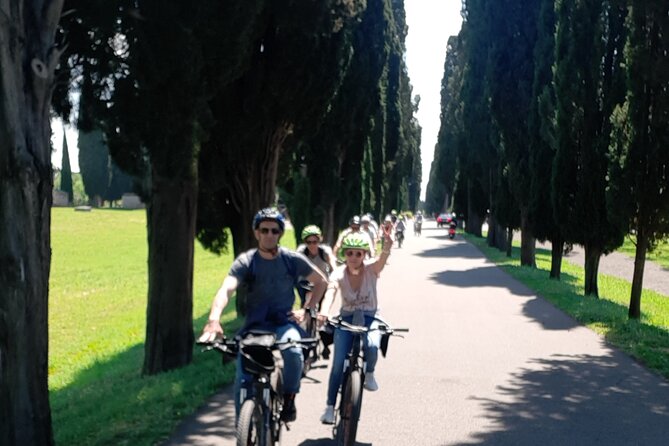
- Via Appia Antica scenery: aqueducts, villas, and mausoleums along the ancient roadway.
- Optional Catacombs of San Callisto (included only in the 5-hour version).
- Big park time in Parco della Caffarella and Parco degli Acquedotti, away from most crowds.
- Small-group feel (max 12) and frequent guided stops for photos and context.
Why the Appian Way Aqueducts Ride Feels Different
Rome is great on foot, but it can also feel like a long line of sights. This tour gives you a change of pace. You get moving through the outskirts and parks, so you’re not just hopping from one landmark to the next in heavy foot traffic.
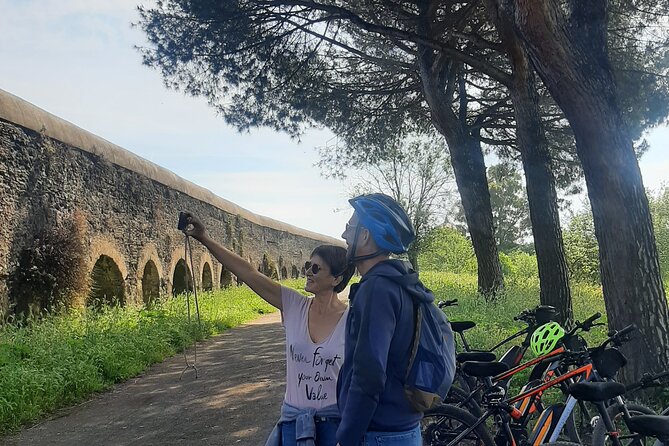
The “aha” moment for me is how quickly the atmosphere shifts once you’re headed down the ancient corridor. The Appian Way isn’t a museum hallway. It’s a real route through space that still feels vast. And when you add the aqueduct parks nearby, you get that rare mix of big ruins and open air.
The e-bike matters here. This isn’t a gentle stroll; it’s several hours on mixed surfaces. But the assist helps you stay in the moment, taking in the ruins and countryside without turning the day into a workout you hate.
You can also read our reviews of more tours and experiences in Rome.



Getting Set Up at Roma Starbike (Near the Colosseum)
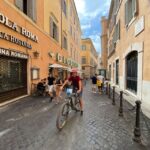
Your tour starts at Roma STARBIKE at Via dei SS. Quattro, 58 (a short ride from the Colosseum area). The meeting point is a practical one: you’re close enough to central Rome to reach easily, but you’re not starting in the middle of the loudest chaos.
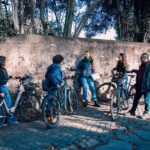
Once you arrive, you’ll get fitted with an e-bike and a helmet. You also get gear built for convenience, like a phone holder and handlebar holder. That sounds small, but it makes a big difference when you want to snap photos or check your location without juggling everything in your hands.
One important note: you must already ride a bike well. The tour data is very direct about that, and it matches the feel of the route. You’ll be navigating city streets at the beginning, then switching to cobblestones and dirt segments as you move toward the ancient road and parks.
Porta San Sebastiano: The City Gate That Sets the Tone
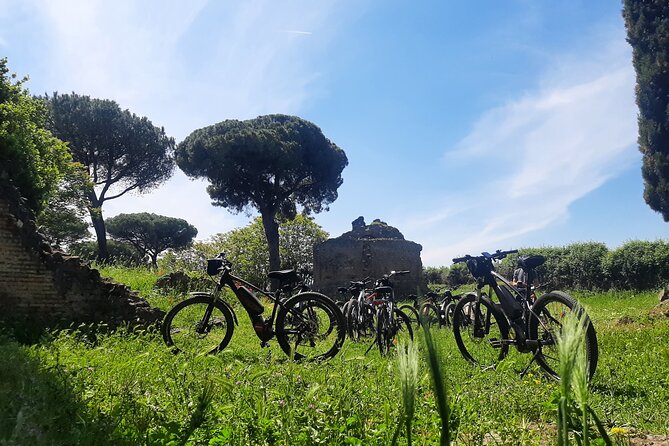
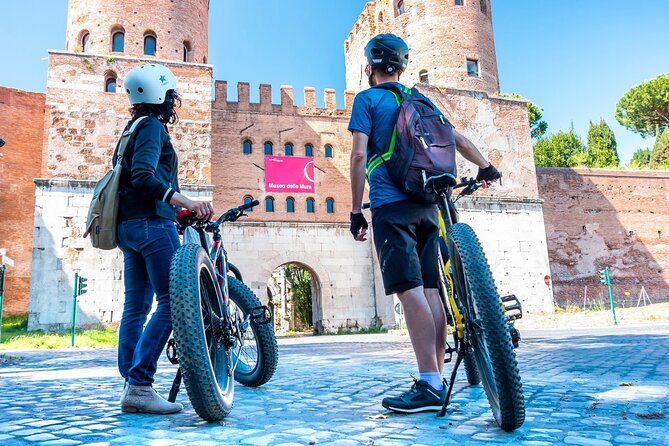
The first major stop is Porta San Sebastiano. It’s a dramatic gateway in the Aurelian Walls, built around 275 AD. This is where the tour does a smart job of giving you context before you start rolling deeper into Rome’s history.
You also pass through the area associated with the start of Via Appia Antica. That matters because the guide isn’t just pointing at stones. You’ll hear how this route was built for moving troops south and how the road grew over time.
There’s also a modern layer here: medieval graffiti that hints at the flow of pilgrims across the centuries. It’s a reminder that even in ancient places, humans keep leaving marks.
Expect around 15 minutes here. It’s not a long stop, but it’s a strong setup before the ride changes gears.
The First Real Escape: Parco della Caffarella
After the gate, you pedal into Parco della Caffarella, a huge green area tied to the Appia Antica Regional Park. This is where the ride starts to feel like a countryside outing instead of a sightseeing mission.
I like this segment because it doesn’t just look pretty on a map. It changes how your body feels. You’re out from dense streets, the air feels lighter, and you can settle into a steady pace.
You get about 50 minutes in this park zone. The guide uses the time to explain the layers of history around the park paths and groves, including ancient building remnants still visible in the area.
If you’re the type who gets tired of constant crowds, this is the part that helps the whole tour click.
Via Appia Antica: Aqueducts, Ruins, and the Road’s Real Scale
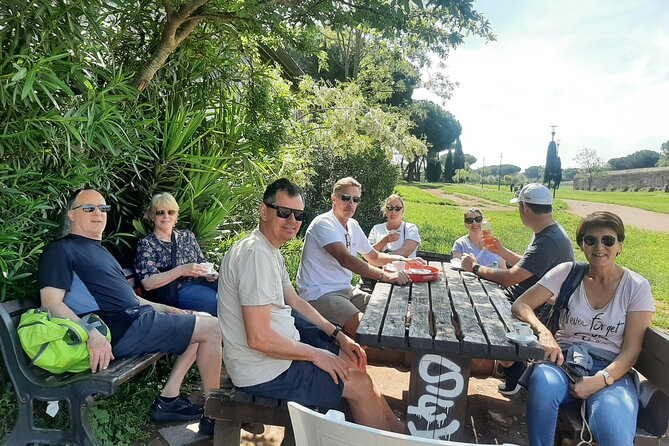
Now you’re on the heart of it: the Appian Way. This is the stretch that gives the tour its name and its real payoff.
Via Appia Antica has a nickname in Roman terms, Regina Viarum, the queen of roads. The guide typically connects the engineering to the bigger Roman story: how routes shaped power, movement, and daily life. And you’ll see that engineering power in the surrounding ruins, including towering aqueduct remains.
This stop is about 50 minutes, and it’s the right length for slow looking without turning into a long bus tour. You’ll have time to take photos and to appreciate the ground-level feel of the route.
Practical heads-up: the surface can be rough. Even with e-bikes, you’ll want good control and a calm riding mindset. The Appian Way is historic, so it isn’t designed for smooth, modern comfort.


Ninfeo di Egeria and the Mausoleum Detour
This tour doesn’t only do huge-famous monuments. It also slips in smaller, story-driven stops that make the ride feel alive.
Ninfeo di Egeria (about 20 minutes)
You’ll visit Ninfeo di Egeria, tied to a love story between the nymph Egeria and Numa Pompilius. It’s the kind of stop that’s short, but memorable. You get myth, place, and atmosphere in one stop, and then you’re back on the bike.
Mausoleo di Cecilia Metella and Castrum Caetani (about 20 minutes)
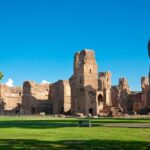
Next is Mausoleo di Cecilia Metella, a 1st-century BC pagan tomb, and the surrounding remains tied to the Castrum Caetani complex. This is one of those structures where your sense of scale clicks immediately. The mausoleum still has strong presence, and it helps anchor the route’s “ancient power” theme.
You’ll also see remnants of medieval structures connected to the Caetani family and the church of San Nicola, with only perimeter walls remaining. These bits matter because they show how old Rome kept being reused, repurposed, and reinterpreted.
Parco degli Acquedotti: Where the Aqueducts Take Over
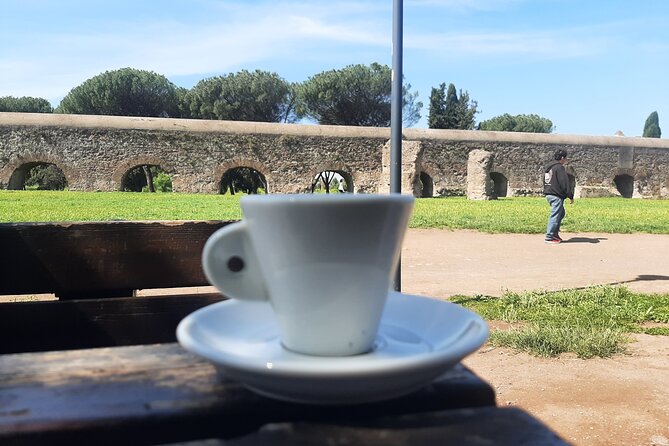
The aqueduct parks are the big visual reason to book this tour. The stop at Parco degli Acquedotti (included only in the 5-hour option, in a specific lunch window) sets up a longer stretch through the aqueduct landscape.
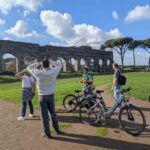
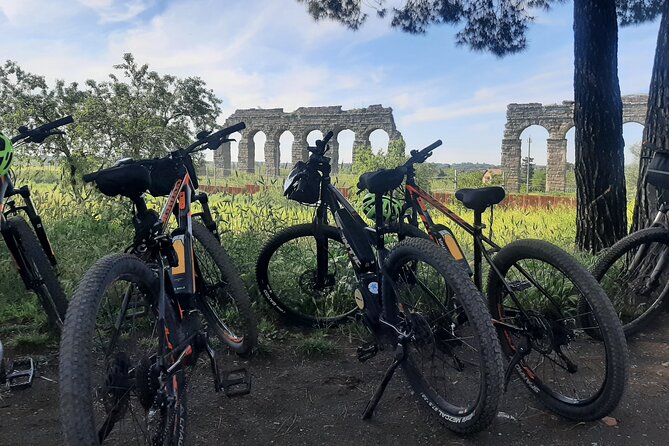
Here’s what I love about this part: it feels like you’re riding through a live system of ruins. The guide points out where ancient water networks ran and what remains still show that engineering.
You’ll also notice a mix of open space and ruin lines that make it easier to understand how aqueducts shaped the city. This is Roman history you can see from the bike, not just read about on a sign.
Time-wise, you’ll get breaks across this zone. In the 5-hour version, lunch and an aperitif happen right in this area, which keeps the whole day from feeling like you’re rushing between distant stops.
Catacombs of San Callisto: The Optional Spooky Add-On
If you book the 5-hour version, you get a guided visit to Catacombe di San Callisto (about 50 minutes for the stop).
This is the big underground cemetery complex, with long corridor systems reaching roughly 20 km. It also has deep ties to early Christian history. The stop includes details on martyrs and popes associated with the site, including the name Callixtus and the deacon Callixtus I.
The practical takeaway: the catacombs tour is a pace change. You’ll be switching from open-air riding to a tighter, darker experience. It’s a good balance with the bike portion, because the day doesn’t feel like only one kind of activity.
Also, since it’s included only in the 5-hour tour, it’s worth deciding early. If you want both outdoor aqueduct time and underground history, pick the longer option.
Circus of Maxentius and the Baths of Caracalla Finish
As you head back toward the city, you’ll hit two major ruins that help close the loop nicely.
Circus of Maxentius (about 20 minutes)
The Circus of Maxentius on Via Appia Antica is one of the best-preserved Roman circus remnants. The spina is still visible, and the guide connects it to later movement of an obelisk that ended up in Piazza Navona’s Fountain of the Four Rivers.
This is a history stop that feels tangible. You can picture how crowds gathered and how the circus shaped public life.
Terme di Caracalla (about 15 minutes)
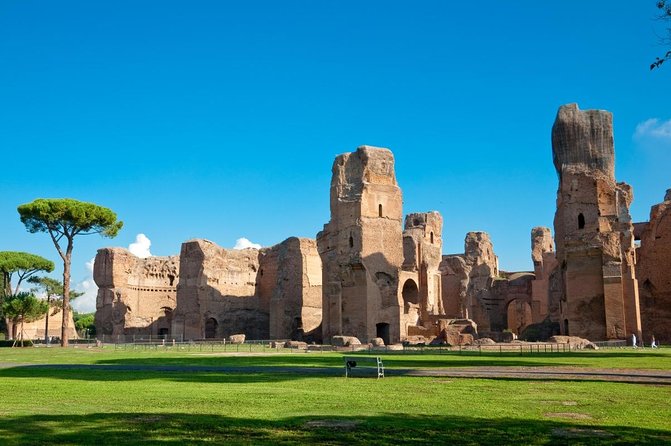
Then comes the Baths of Caracalla, built under Emperor Caracalla. This is a huge public bath complex that still preserves a lot of its structure today. You’ll hear how water reached the baths through the Aqua Marcia delivered via the Antoninian aqueduct.
Even with a shorter stop, this finish gives you a final hit of Roman scale before you head back and drop off the e-bike and helmet at the meeting point.
4-Hour vs 5-Hour: What Changes (And Why It Matters)
The tour comes in two main lengths: about 4 hours and 5 hours.
In the shorter version, you’ll get the core outdoor Appian Way ride and the key stops above, plus the aqueduct park time where the tour keeps moving toward the ruins.
In the longer version, you add two major elements:
- Guided catacombs visit (Catacombe di San Callisto)
- Lunch and an afternoon aperitif in the aqueduct park area
For me, that extra hour is only worth it if you truly want both the catacombs and the full food experience. If underground history doesn’t interest you much, the 4-hour option can be a smarter fit. If you’re craving variety—bike ride plus underground site plus a proper meal—go for the 5-hour.
Price and Value: Is $78.60 a Smart Deal?
At $78.60 per person, this tour is priced like an activity that includes real logistics, not just a guided walk. What you’re paying for is the e-bike itself plus the guided route and time with multiple high-value sites.
You’re also getting practical gear included: helmet, and the tour provides a setup for your phone on the bike. For families, there’s a child seat up to 25 kg, which can save you the hassle of renting or managing extra equipment elsewhere.
And if you choose the 5-hour version, the value improves further because lunch and an aperitif are included along with the catacombs guide.
What you should weigh against the price:
- This is not a “sit and see” day. You need bike competence and comfort with a few tough surfaces.
- If you’re uneasy riding, you might spend energy worrying instead of enjoying. The power assist helps, but it doesn’t remove the need for good control.
When it matches your comfort level, it becomes one of the most cost-effective ways to see outer-Rome ruins without losing the day to traffic or crowding.
What Makes the Guides Matter (And Who You Might Get)
The tour runs with small groups, and the guide is a huge part of the experience. In the ride you’ll want someone who explains the sites and also keeps your group safe through streets that can feel chaotic.
In the feedback I’m basing my expectations on, names like Lorenzo, Alex, Chris, Ava, Iman, Ricardo, and Paolo show up again and again. The consistent praise pattern is about clear instructions, patience, and a calm attitude when riders need help adjusting.
If you’re thinking about booking, this is a good sign. It suggests the company takes group management seriously and not just the sightseeing.
The Real Talk: Who This Tour Suits Best
This tour is for you if you want:
- a serious Rome history route with movement, not a slow walking tour
- quiet green space plus major monuments in a single day
- an e-bike that helps you handle hills and long distances
It’s also a great fit for families who have a confident rider and want the Appian Way experience together. Just note the child details: the tour includes a trailer setup for children 6–10 if they are under 4/7 feet (143 cm), and there’s a maximum weight limit of 120 kg / 265 pounds.
It’s not ideal if:
- you don’t know how to ride a bike well
- you’re hoping for smooth pavement the entire time
- you want a relaxed pace with lots of long museum-style stops
One more real-world note: even with e-bike help, expect a sore seat and a tiring day if you’re not used to riding. The better prepared you are, the more you’ll enjoy the views.
Should You Book This Appian Way Aqueducts Bike Tour?
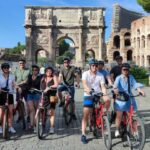
Book it if you want Rome with a change of scenery and you’re comfortable riding for several hours. The combination of Porta San Sebastiano, the Appian Way, aqueduct parks, and the optional Catacombs of San Callisto is a strong package for people who like seeing cities from outside the crowd.
Skip or consider another option if you:
- haven’t ridden a bike in a long time
- dislike uneven surfaces like cobblestones and dirt paths
- need a very gentle pace
If you’re on the fence, the best decision rule is simple. Choose the 4-hour option if you want the outdoor ruins focus. Choose the 5-hour option if catacombs and a real meal are part of your dream day.
FAQ
How long is the Appian Way Aqueducts Bike Tour?
It runs about 4 to 5 hours depending on the option you choose.
What’s included in the 5-hour version?
The 5-hour version includes a guided visit to the Catacombs of San Callisto plus lunch (morning) and an aperitif (afternoon).
What’s the difference between the 4-hour and 5-hour tours?
The catacombs visit and the lunch plus aperitif are included only in the 5-hour option. The 4-hour tour does not include those parts.
Where does the tour start and end?
It starts at Roma STARBIKE (Via dei SS. Quattro, 58, 00184 Roma RM, Italy) and ends back at the same meeting point.
Does this tour require prior biking experience?
Yes. You must know how to ride a bike well and have a moderate physical fitness level.
What gear is provided?
You get a high-quality e-bike, a helmet, and a mobile phone holder/handlebar holder. A child seat is also included for children up to 25 kg.
Is the tour offered in English?
Yes, the tour is offered in English.
Is weather important?
Yes. The experience requires good weather, and if it’s canceled due to poor weather, you’ll be offered a different date or a full refund.