REVIEW · ROME
Rome by Night PRIVATE Bike Tour
Book on Viator →Operated by Roma STARBIKE · Bookable on Viator
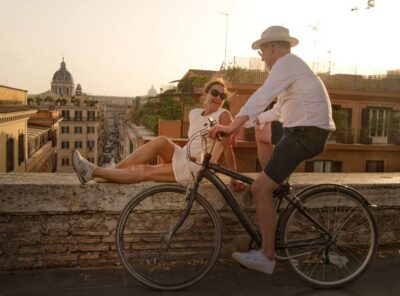
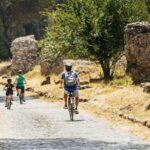
Rome after dark moves faster. This Rome by Night private e-bike tour turns major landmarks into a smooth, guided loop, so you can cover central Rome without spending your whole trip shoulder-to-shoulder on foot. I like the idea of a private group too, since you’re not getting shoved around by strangers.
What I really appreciate is the blend of structure and flexibility: a real guide gives commentary at each stop, and you still get time to grab photos and ask for practical local tips. The main catch is simple: you must ride a bike well (it’s not a casual “learn as you go” setup), plus the tour has a max weight limit of 120 KG / 265 lb.
In This Review
- Key highlights before you go
- Why Rome by Night feels like the smart way to tour
- Price and value: what $130.97 really buys you
- Included gear that makes an e-bike tour easier (and safer)
- The meeting point: start near Via dei SS. Quattro
- How the 3-hour route is paced for real sightseeing
- Roman Forum and Fori Imperiali: ancient scale, quick grounding
- Piazza Venezia / Vittoriano: a classic view moment
- Trevi Fountain: the postcard stop with a guided rhythm
- Spanish Steps: where you rest your eyes (and your legs)
- Castel Sant’Angelo: stone, river energy, and a strong photo anchor
- Piazza Navona: geometry, statues, and lively space control
- The Pantheon: the stop where everything clicks
- Piazza del Campidoglio: a smart closer for your final understanding
- Safety and comfort: what to expect on an e-bike in central Rome
- Who should book this private night ride (and who might not)
- Should you book Rome by Night with Roma STARBIKE?
- FAQ
- How long is the Rome by Night PRIVATE Bike Tour?
- Where does the tour start and end?
- Is the tour admission-free at the stops?
- What’s included with the e-bike tour?
- What isn’t included in the price?
- Do I need to know how to ride a bike?
- Is this a private tour?
- What is the cancellation window?
Key highlights before you go
- Night timing + e-bike speed: see the classics while you avoid some daylight crowds and slow walking
- Private ride with your group: family and friends stay together, and the guide can tailor pacing
- Helmet and bike gear included: helmet, phone holder, handlebar holder, and child seat options
- Straightforward, classic route: Roman Forum, Trevi, Spanish Steps, Castel Sant’Angelo, Pantheon, and more
- Reliable guide energy: Alex and Fabrizio come up in reviews for their safety-minded, fun commentary
Why Rome by Night feels like the smart way to tour
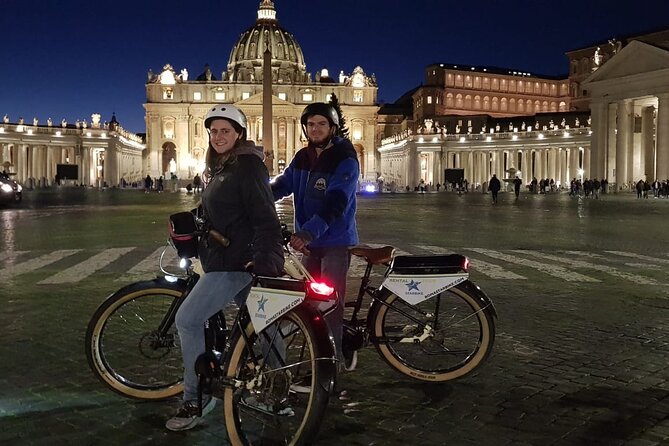
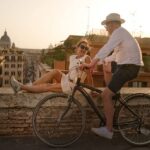
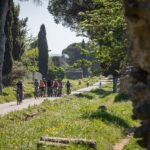
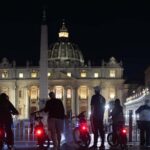
Rome at night has a different tempo. Street noise, shop lights, and that warm glow on old stone can make the city feel more human and less like a checklist. The big advantage here is transportation. Instead of treating every stop like a mini endurance event, you’re on an e-bike designed to help you glide between places you’d normally reach only after a lot of walking.
The route is also built around short, focused moments at each landmark (about 15 minutes per stop). That matters in Rome because attention spans get tired fast. You don’t need hours staring at the same view. You get enough time to orient yourself, hear context from your guide, and still move on to the next highlight while your legs are holding up.
And yes, the tour stays practical. It’s not just “look, photo, next.” You’re guided with safety in mind and given support like a helmet plus phone-handling gear so you’re not fumbling while trying to ride.
You can also read our reviews of more tours and experiences in Rome.


Price and value: what $130.97 really buys you
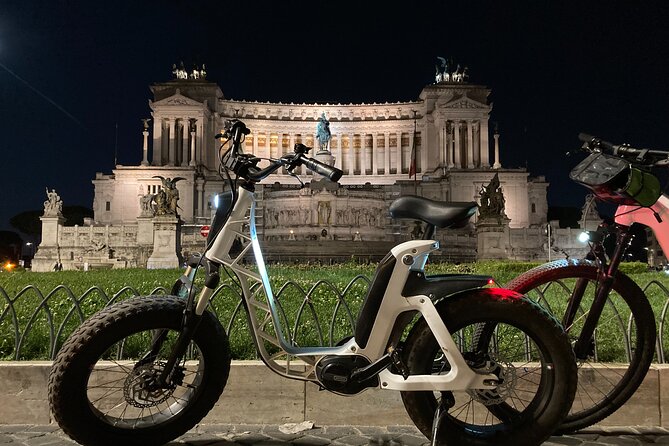
At $130.97 per person for about 3 hours, this tour isn’t meant to be the cheapest way to see Rome. It’s priced for convenience: a guided private experience plus a high-quality e-bike, safety gear, and a tight route that hits the key central sights.
Here’s how I judge the value:
- You’re paying for time you don’t have to spend “figuring it out.” A guide helps you understand what you’re looking at and where to stand.
- You’re paying for the e-bike. That’s the difference between “I walked a ton” and “I saw a lot.”
- You’re paying for private pacing. Your group rides together. You’re not stuck waiting for strangers or forced into someone else’s schedule.
- You’re paying for a guided night experience. Reviews mention the night ride as a bucket list bonus, and the theme really fits the landmarks on this route.
If you want an experience that feels efficient without feeling rushed, this price can make sense. If you’re the type who loves roaming freely with no structure, you might prefer a do-it-yourself walk. But if you’d rather trade planning stress for guided sightseeing, this one is a strong deal.
Included gear that makes an e-bike tour easier (and safer)
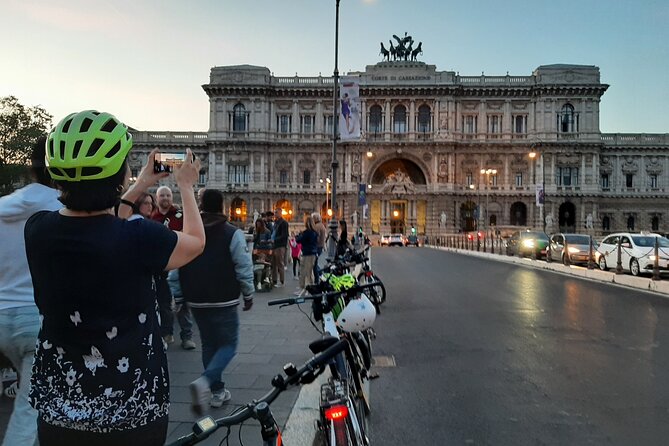
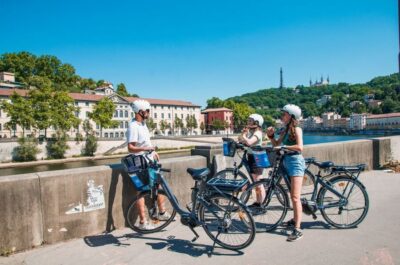
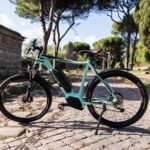
This is the kind of tour where the small details matter. You get a high quality e-bike and a helmet, plus practical extras like:
- mobile phone holder
- handlebar holder
Those sound minor until you’re actually riding. They help you keep your eyes on the road and avoid awkward phone handling.
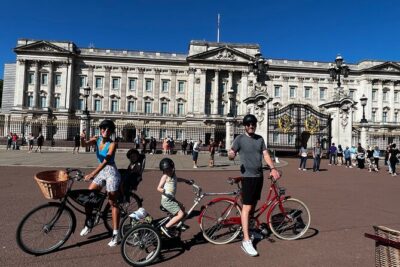
Families get specific support too. There’s a child seat until 25 kg, and there’s a child option for ages 6–10—but it’s strict: the child must be under 4/7 feet / 143 cm because they’ll ride in a trailer bike rather than on a bike alone. There’s also a max weight of 120 KG / 265 lb.
One more requirement that you should take seriously: you must know how to ride a bike well. That doesn’t mean you need to be an Olympian, but it does mean you should feel comfortable balancing, starting, stopping, and turning while seated.
The meeting point: start near Via dei SS. Quattro
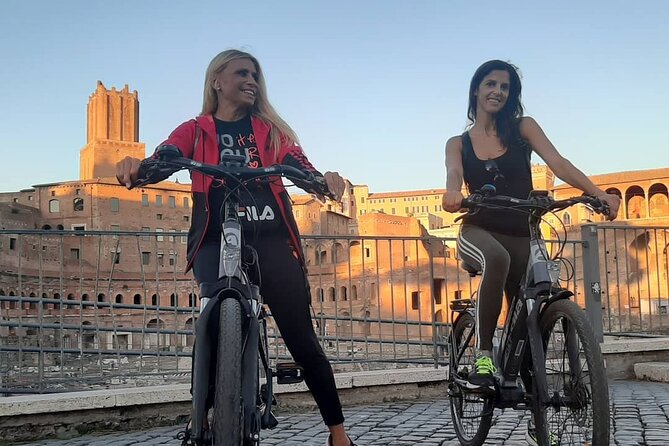
The tour starts at Via dei SS. Quattro, 58, 00184 Roma RM, Italy and ends back near the same spot. Starting near public transportation is helpful in Rome, because getting across town on your own can take longer than you expect.
You’ll want to show up ready for a short orientation. Even if you’ve never ridden an e-bike, the first minutes are about getting comfortable with the feel and speed. The good news is the pacing is designed so you can settle in quickly, and guides in reviews highlight that they keep safety at the top of the list.
How the 3-hour route is paced for real sightseeing
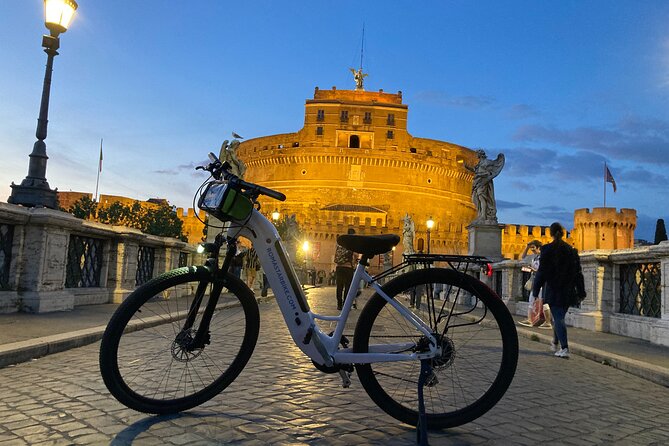
The schedule is built as an efficient hop-through route with about 15 minutes at each stop. That approach works well for a night tour because:
- you get context without losing momentum
- photo opportunities are time-boxed
- you spend more of your limited evening actually seeing things instead of walking between them
Because it’s a private tour, you also get some room for questions and small adjustments. That’s where guides earn their keep. In reviews, Alex and Fabrizio are singled out for commentary and for helping with practical ideas like where to go next for stores or restaurants and the best way to move around.
The route also keeps to classic central Rome hits, so you can connect your mental map fast. By the end, you’ll likely feel like you finally understand where everything sits relative to each other.
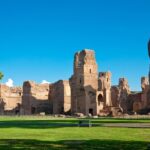
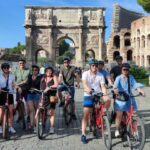
Roman Forum and Fori Imperiali: ancient scale, quick grounding
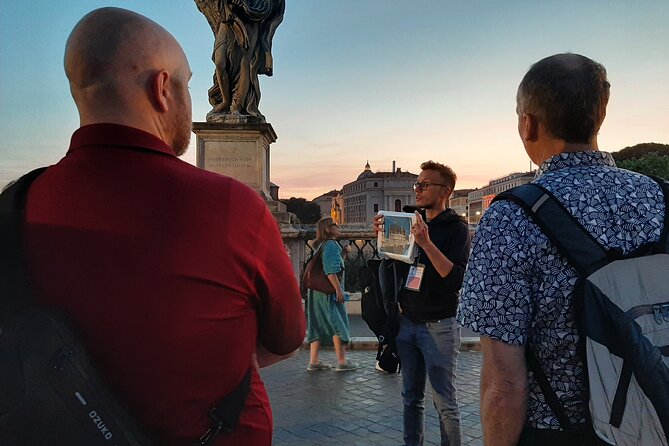
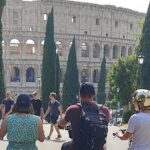
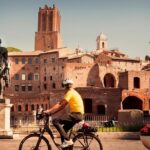
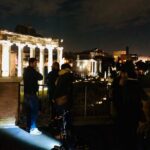
Stop 1: Roman Forum (Fori Imperiali)
Time on this stop: about 15 minutes. Admission is listed as free.
This is the kind of place where it helps to have a guide, even for a short visit. The Roman Forum can look like a beautiful pile of stone if you don’t know what you’re seeing. A good guide helps you pick out what matters first: how the space functioned, why this area mattered, and what you should pay attention to as you walk.
A practical tip for this stop: plan on standing, looking, and moving. Since your time is limited, resist the urge to treat it like a slow museum stroll. Get the big-picture view, then let the guide point out the details you’d miss on your own.
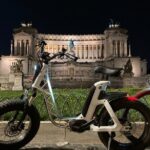
Piazza Venezia / Vittoriano: a classic view moment
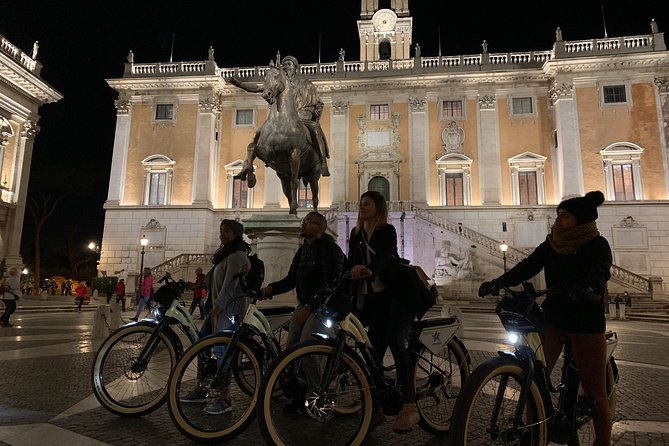
Stop 2: Piazza Venezia (Piazza Venezia / Vittoriano)
Time: about 15 minutes. Admission listed as free.
This stop works as a contrast jump. You move from ancient ruins to a major square tied to Rome’s modern identity. It’s a smart pivot point in the itinerary because your brain benefits from variety: change in architecture, change in atmosphere, and a wider city perspective.
Your guide can also help you connect what you saw earlier with what comes later. In night conditions, the square and surrounding buildings often look extra dramatic, so it’s a strong place for quick photos and orientation.
Trevi Fountain: the postcard stop with a guided rhythm
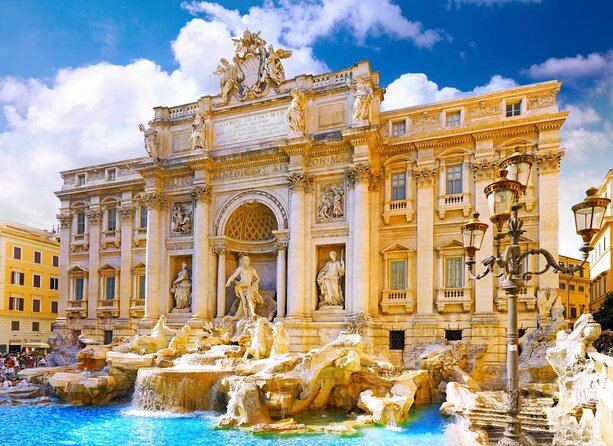
Stop 3: Trevi Fountain (Fontana di Trevi)
Time: about 15 minutes. Admission listed as free.
Trevi Fountain is famous for a reason: it’s visually intense and instantly recognizable. The drawback is that it can also feel like chaos if you show up without a plan. In a guided e-bike format, you’re better positioned for a short visit that actually feels productive.
What you can do with your 15 minutes:
- pause long enough to take a proper photo
- listen for the context from your guide (not just facts, but how to read the monument)
- move on before you lose time to crowd friction
Also, if you’re traveling with family, Trevi is one of those stops where kids and teens usually engage right away because it’s iconic and easy to react to.
Spanish Steps: where you rest your eyes (and your legs)
Stop 4: Spanish Steps (Piazza di Spagna)
Time: about 15 minutes. Admission listed as free.
The Spanish Steps are basically a Rome greeting card made real. At night, the steps feel less like a daytime rush and more like a place to slow down for a moment. This stop fits the pacing because it gives you a breath between heavier classics.
One practical note: it’s still a high-traffic area. You’ll want your group to stay close and follow your guide’s instruction about where to position. The time-boxed format helps you avoid lingering in the wrong spot and missing the rest of the route.
Castel Sant’Angelo: stone, river energy, and a strong photo anchor
Stop 5: Castel Sant’Angelo
Time: about 15 minutes. Admission listed as free.
This stop is a favorite for people who like landmarks with presence. Castel Sant’Angelo has that “you can’t miss it” silhouette, and it offers a real sense of Rome’s layered timeline—ancient and medieval vibes in one view.
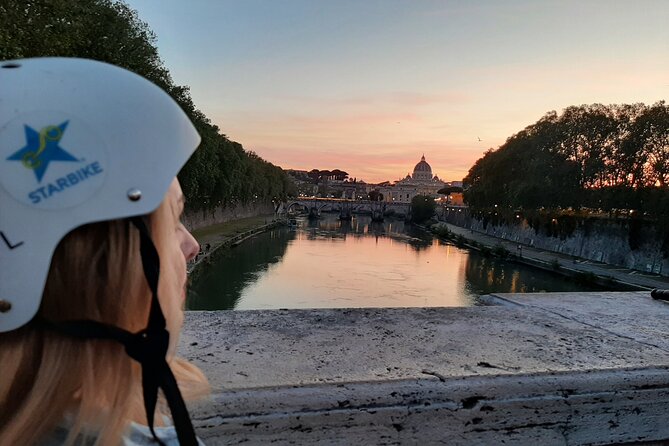
Even with only 15 minutes, you’ll likely leave with a better mental picture of how this area relates to the rest of central Rome. At night, the mood shifts again, and the fortress-like form can look even more cinematic in photos.
Piazza Navona: geometry, statues, and lively space control
Stop 6: Piazza Navona
Time: about 15 minutes. Admission listed as free.
Piazza Navona is one of those squares where you feel the city’s personality. It’s not a quiet stop. It’s a place made for movement—watching people, spotting details, and taking in the overall layout.
A good guide can help you avoid getting stuck looking at the obvious. In a short stop, the difference between a quick glance and a satisfying visit is often just knowing what to notice. With the time limit, you’ll benefit from following the guide’s suggested photo spots and paying attention to any historical or artistic context they share.
The Pantheon: the stop where everything clicks
Stop 7: Pantheon
Time: about 15 minutes. Admission listed as free.
If there’s a “wow” stop on this route, it’s usually the Pantheon. It’s one of Rome’s most powerful buildings, and even a short visit can still feel meaningful because the architecture does a lot of the talking.
What I like about seeing it on this tour is the pacing. After Trevi and the Spanish Steps, you get a change in vibe—then the Pantheon hits like a reset button. You’re in a classic, central Rome spot where your guide can help you understand why it’s so important, and you get enough time to take in the space without feeling trapped.
Since your visit is brief, focus on the main exterior impression and a quick orientation. If you want deeper exploration, you can always come back later on your own, when you’re not on a fixed route.
Piazza del Campidoglio: a smart closer for your final understanding
Stop 8: Piazza del Campidoglio (Campidoglio)
Time: about 15 minutes. Admission listed as free.
This ending stop is a clever way to wrap up. Campidoglio gives you a higher, more composed feeling than some of the earlier squares. It helps the route “click” in your mind: where you’ve been, what types of spaces you’ve seen, and how Rome shifts from one landmark zone to the next.
It’s also a good place to end a ride because you’re finishing with a clear visual anchor rather than another tight, crowded spectacle. You can take a final set of photos and soak in the last bit of night atmosphere before heading back to the start point.
Safety and comfort: what to expect on an e-bike in central Rome
A night e-bike tour in a historic city is about more than speed. It’s about managing traffic, keeping your line, and riding smoothly around pedestrians. The tour includes a helmet and uses a quality e-bike, which helps a lot.
Still, your own comfort matters. Since you must know how to ride well, you should:
- practice basic bike control beforehand if you’re rusty
- wear comfortable shoes that handle uneven pavement
- keep your phone and photos quick, not frantic
Also, pay attention to the “private” nature of the tour. In a private setup, your group stays together, and that usually means fewer surprises about pacing and where the guide wants you.
Who should book this private night ride (and who might not)
This tour is a great match if you:
- want to see major central Rome landmarks in about 3 hours
- like the idea of a guided plan but still want time for photos
- have a group that prefers staying together without mixing with strangers
- are comfortable riding a bike and can handle short stops and quick transitions
It may be less ideal if you:
- don’t ride bikes well yet (the requirement is explicit)
- want a relaxed, unstructured “wander and get lost” style
- need long museum-style time at a single site, because each stop is about 15 minutes
For families, it can be a strong first impression of Rome because the route hits recognizable highlights. Just remember the child height rule tied to the trailer bike option.
Should you book Rome by Night with Roma STARBIKE?
If you want the practical sweet spot—major sights, guided context, and a night atmosphere—this is an easy yes. The best reasons to book are the ones that keep showing up in real feedback: safety-minded guidance, solid storytelling at each stop, and the simple fact that the e-bike lets you see far more than walking would in the same time.
I’d book it if your goal is central Rome highlights with a plan that respects your energy. I’d think twice if you’re not confident on a bike or if you’re expecting long stops like you’d get with a museum ticket day.
If that describes you, do it. Book the private spot, bring your bike comfort level with you, and let the route do what it’s designed to do: get you oriented fast, then send you back to explore with a clearer sense of where everything sits.
FAQ
How long is the Rome by Night PRIVATE Bike Tour?
The tour is listed at about 3 hours.
Where does the tour start and end?
It starts at Via dei SS. Quattro, 58, 00184 Roma RM, Italy, and ends back at the meeting point.
Is the tour admission-free at the stops?
Each listed stop shows admission ticket free.
What’s included with the e-bike tour?
You get a high quality e-bike and a helmet, plus a mobile phone holder and handlebar holder. A child seat is included until 25 kg, and there are specific child rules for ages 6–10.
What isn’t included in the price?
An optional tip is not included.
Do I need to know how to ride a bike?
Yes. You must know how to ride a bike well.
Is this a private tour?
Yes. It’s private, and only your group participates.
What is the cancellation window?
You can cancel for a full refund up to 24 hours in advance of the experience start time.