REVIEW · ROME
Highlights of Rome Bike Tour (Including Jubilee Sights)
Book on Viator →Operated by Fat Tire Tours Holdings LLC - Italy · Bookable on Viator
Rome by bike cuts your sightseeing time. In just about three hours, you roll through the center and get clear stories behind the Jewish Ghetto, Pantheon, Trevi Fountain, and the imperial ruins. It’s a great way to get your bearings fast if Rome is new to you, and it also works well alongside any Jubilee sights you’ve got planned.
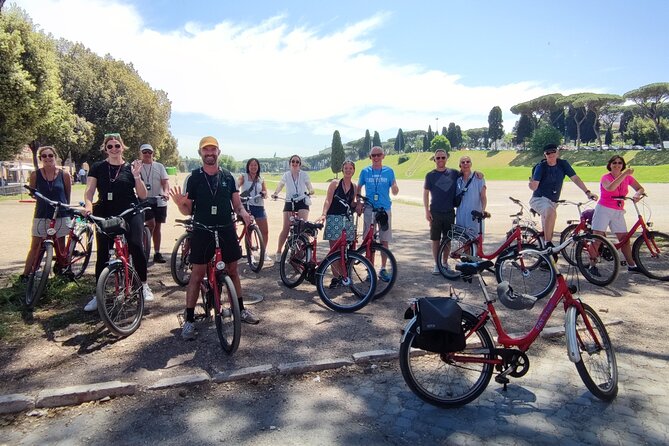
Two things I really like are the small group setup (max 14) and the sense that the guide can keep everyone together without turning it into a race. Another big plus is the practical gear: you get a bike that fits your pace, plus a helmet and bike storage (front pouch and back rack), so you can keep your phone, wallet, and layers close at hand.
One consideration: Rome’s streets include cobbles, and the ride can feel bumpy when the streets are slick or crowded. Pregnant women are strongly discouraged, and if you’re not comfortable riding on uneven surfaces, this may not be the easiest first activity.
In This Review
- Key highlights at a glance
- A short Rome bike tour that still feels like a real introduction
- Picking the right bike, then relaxing through cobblestones
- Jewish Ghetto to Campo de’ Fiori: where Rome shows its layers
- Piazza Navona and the Stadium shape you can feel
- Pantheon: the one stop that changes how you look at Roman buildings
- Sant’Ignazio di Loyola: outside views with just enough story
- Hadrian’s Temple to Trevi: how water and power shaped the city
- Trajan’s Forum and the Imperial Forums: big ruins, tight time
- Piazza Venezia, Constantine’s Arch, and Circus Maximus
- Small group pace, clear guidance, and real comfort wins
- Value and who should book this bike tour
- Should you book Rome Bike Tour with Jubilee Sights?
- FAQ
- How long is the Rome bike tour?
- How much does the tour cost?
- What language is the tour offered in?
- What’s included in the price?
- Are drinks included?
- Where do we meet, and where does the tour end?
- What’s the arrival time recommendation?
- Is it suitable for kids?
- Is the tour recommended for pregnant women?
Key highlights at a glance
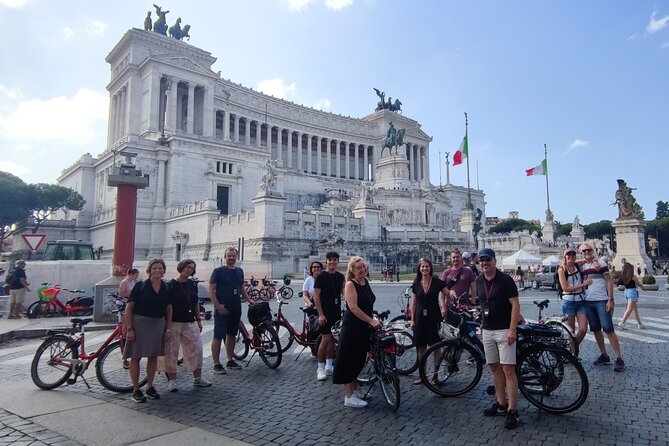
- Easy overview loop through ancient, baroque, and modern Rome in about three hours
- Small group (max 14) for a more personal pace and more attention from the guide
- Bike storage that actually helps (front pouch + back rack) for valuables
- Major landmarks in the right order, from the Jewish Ghetto to Trevi and Imperial Rome
- Good picture-and-walk time at each stop, not just a quick drive-by
A short Rome bike tour that still feels like a real introduction
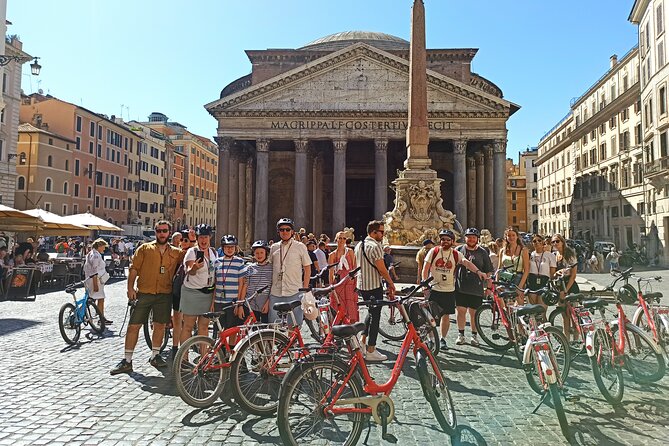
If you only have a day or two in Rome, this kind of tour does something special: it turns “I’ve heard of that” into “I know where I am and what I’m looking at.” In roughly three hours, you cover a tight ring of sights in central Rome, so you can return later for the deeper stuff that grabs you.
You start at Via dei Delfini, 35 (00186 Roma RM). The tour ends back at the same spot, which keeps logistics simple after a morning (or afternoon) on the move. Expect a mobile ticket and confirmation at booking, plus a quick reminder to arrive 15 minutes early. That little buffer matters in Rome, where walking from one corner to another can feel longer than it should.
The ride itself is built for ordinary visitors, not hardcore cyclists. One big reason people love this format is that it mixes biking with short pauses. You get time to look around, take photos, and read the street-level details that you’d miss if you were just rushing between metro stops.
You can also read our reviews of more tours and experiences in Rome.


Picking the right bike, then relaxing through cobblestones
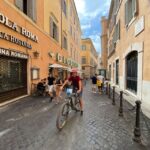
Rome is flat in the leg-work sense, but it’s not flat under your tires. Cobblestones, narrow streets, and thick traffic are part of the experience here. That’s why this tour leans into the “right tool for your pace” idea: you choose a bike to suit how much effort you want to put in and how comfortable you feel.
You’ll have bike rental included, along with a helmet and a front bike pouch plus a back rack. The tour also highlights a handy bike bag for valuables. I like this because it solves a real problem in Rome: what do you do with your day stuff while you’re pedaling and stopping for quick photos? Having a secure place right on the bike beats digging through a backpack every five minutes.
Some guests also mention preferring e-bikes because they make the ride more relaxed, even if Rome’s hills aren’t extreme. If you want maximum comfort, it’s worth asking ahead of time what bike options are available on your date.
Dress for real street conditions. The tour suggests hats and sunscreen when it’s sunny, and warm layers with gloves and scarves in cooler weather. If rain is possible, bring waterproof gear. Also, because drinks aren’t included, plan to carry water if you’re out in warm weather—there are plenty of stops for photos, but not necessarily long breaks designed around snacks.
Safety-wise, pregnant women are strongly discouraged because of the cobbled streets. Kids are welcome, but they need to be comfortable riding in a group and able to navigate different surfaces. And if anyone is under 18, an adult must accompany them.
Jewish Ghetto to Campo de’ Fiori: where Rome shows its layers
The tour starts in the Antico Quartiere Ebraico, the Jewish Ghetto of Rome. This neighborhood is one of the capital’s places where history isn’t tucked away in museums—it’s part of the streets and the community identity. The ghetto is often described as among the oldest in the world (second only to Venice), created in 1555 by order of Pope Paul IV. At the time, people inside had the obligation to live there and carry a distinctive sign of belonging. Even with the short stop, you’ll get a grounded sense of how laws, religion, and daily life shaped the space.
Timing is tight here—about 7 minutes—and that’s exactly the point. This isn’t meant to replace a focused visit. It’s meant to help you place the Jewish Ghetto on your Rome map so you can understand what you’ll see later if you come back.
From there, you move toward Campo de’ Fiori, passing through one of the main squares of Rome. During the day, it’s known for markets (flowers, fruit, vegetables). At night, you feel the shift as terraces fill up. The stop is around 10 minutes, with time to look, breathe in the atmosphere, and spot the “this is Rome” energy that you’ll hear about from everyone who visits.
Then you roll into Piazza Navona, another stop that’s short (about 7 minutes) but visually loud. It’s one of the most characteristic squares of Baroque Rome, and it sits on the remains of the Stadium of Domitian. The shape of the current square follows the ancient stadium perimeter from 86 AD, when the emperor built it for athletics and horse racing. Seeing this in person makes the scale feel real, even if you only pause briefly.
A practical note: these central squares can get crowded, especially later in the day. If you want an easier ride and clearer photos, consider going earlier rather than later.
Piazza Navona and the Stadium shape you can feel
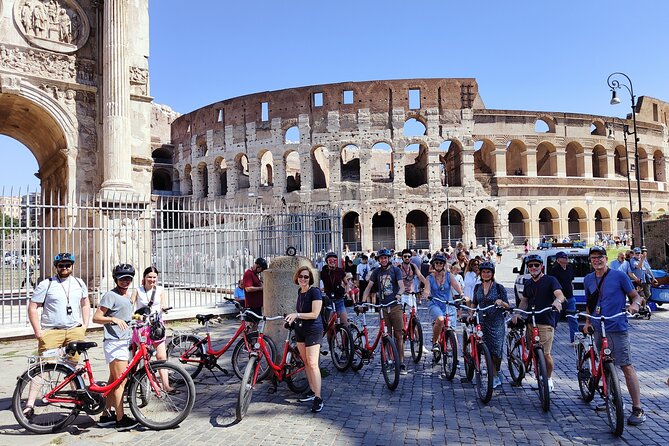
Piazza Navona is one of those places where Rome’s past shows up like it never left. The reason the square feels so distinctive is that it’s not just a pretty piazza—it’s a geometry problem solved by time. You can see the stadium outline in the way the buildings and open space wrap around the square.
On this tour, you don’t just look at it—you also get a quick explanation that ties the Baroque design to the ancient footprint. That’s a huge win for first-time visitors. Without context, you’d probably file Piazza Navona as a great photo spot. With context, you’ll start noticing why it looks the way it does.
The tour doesn’t include admission at Piazza Navona (it’s primarily an exterior stop), which is perfect when you want a quick break without committing to a ticketed attraction. It also helps keep the overall pace smooth, so you’re not stuck in a long line while the rest of Rome keeps happening around you.
If you’re traveling in peak crowds, be ready for busier sidewalks and slower movement around the square. The tour guide’s job here is keeping everyone together, and good guides know how to do that without making the stop feel rushed.
Pantheon: the one stop that changes how you look at Roman buildings
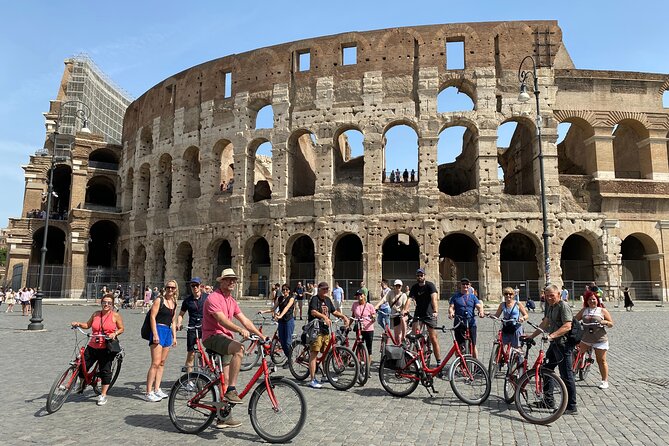
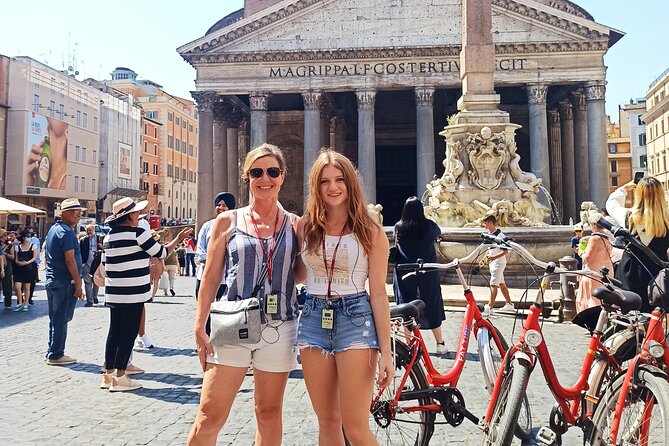
Next comes the Pantheon, one of the world’s best-preserved examples of Roman monumental architecture. The tour stop is about 15 minutes, and admission isn’t included. That matters because you’ll likely need to decide on whether to enter based on your interest and timing. Even if you’re only viewing from outside (or doing a quick look), the Pantheon’s harmony hits fast.
The story starts in 27 BC, when Marcus Vipsanius Agrippa commissioned a temple in the area dedicated to “all the gods.” That simple description is a reminder that this building wasn’t made for a single purpose or a single era. It was a centerpiece for belief and civic life—then later it became something else, while keeping the same sense of scale and proportion.
I like that this tour treats Pantheon as more than a postcard. The guide’s explanation focuses on why the architecture feels so controlled: the lines, the symmetry, and the geometry that still work today. If you’re the kind of traveler who thinks buildings are just old walls, a stop like this can flip that mindset in one hour.
Sant’Ignazio di Loyola: outside views with just enough story
You also visit Chiesa di Sant’Ignazio di Loyola, but the stop is designed as an exterior viewing and explanation. That’s about 10 minutes, and admission isn’t included.
So what do you do with a church stop without tickets? You pay attention to what you can see from street level: the façade details, the way it sits within the surrounding buildings, and what the guide points out. For many visitors, a quick outside church moment is the best way to add depth without turning the tour into a long queue day.
This stop also helps the route feel varied. After major ancient landmarks, you get a touch of religious architecture and another layer of Rome’s visual language.
Hadrian’s Temple to Trevi: how water and power shaped the city
A standout practical quick stop is Tempio di Adriano (Temple of Hadrian). Admission is free, and the stop is about 5 minutes. The guide frames the building through the personal politics of empire: it was likely commissioned by Emperor Hadrian, who intended it for his wife Vibia Sabina, who died and was later deified in 136. Construction finished around 145 A.C., completed by Hadrian’s son and successor, Antoninus Pius.
Even though you’re not standing there long, this is the kind of stop that sticks because the reason behind the monument feels human. It’s not just “a building from Roman times.” It’s a story about leadership, memory, and status.
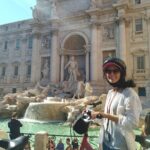
Then you hit Trevi Fountain, with about 7 minutes to take it in. Admission is free to view. Trevi is fed by the Vergine aqueduct and is the terminal part of that system—the only ancient aqueduct still continuously in use. That’s one of those details that turns the fountain from a tourist magnet into a piece of living infrastructure.
A tip for Trevi: plan to keep your expectations realistic. It’s famous for a reason, but it’s also one of the places where you’ll feel the crowd. Use your minutes efficiently: get your photos early in the stop, then stay long enough for the guide’s explanation and the vibe.
Trajan’s Forum and the Imperial Forums: big ruins, tight time
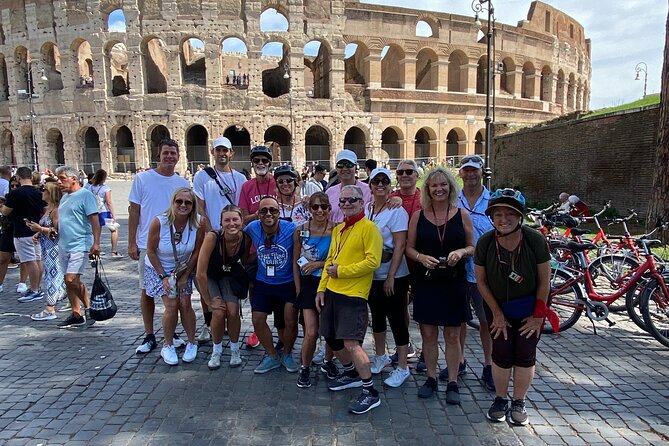
The route then connects you to Trajan’s Forum and the Imperial Forum area. The stop is about 15 minutes, and admission is listed as free.
This is where your first-time Rome advantage really kicks in. Walking through these spaces is visually impressive, but the layout can feel confusing without a bit of structure. A good guide helps you understand what you’re looking at: where power was displayed, how the forums functioned, and why these sites mattered to public life.
Because the time is limited, it won’t replace a deeper archaeological day. Instead, it sets up your next steps. After this stop, you’ll know what terms and landmarks to search for when you come back for museums, guided walks, or self-guided reading.
Piazza Venezia, Constantine’s Arch, and Circus Maximus
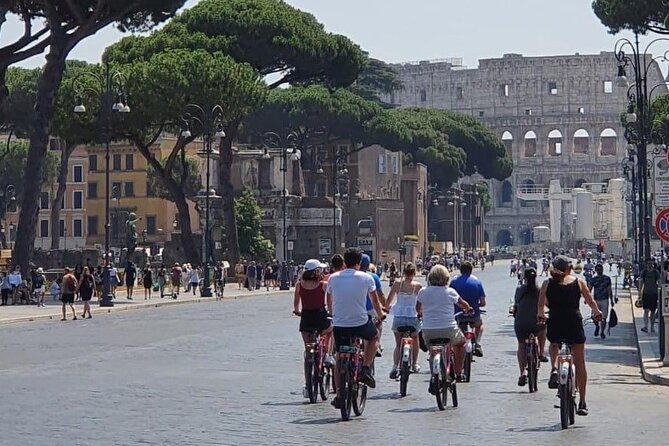
The tour continues through the kind of Rome you don’t fully appreciate until you ride past it: monumental views and street-level scale.
You’ll see Piazza Venezia / Ancient City with about 5 minutes and free admission. Piazza Venezia stretches between Via del Corso and Via dei Fori Imperiali, and its current form comes from 19th- and 20th-century renovations tied to the Monumento a Vittorio Emanuele II. So even the modern layout carries ancient intent and political weight.
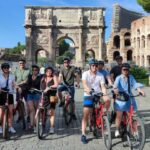
Next is the Arch of Constantine, also about 5 minutes and free admission. The arch sits along the route taken by triumphs, between the Circus Maximus and the Arch of Titus. It’s described as the largest surviving honorary arch and tied to Constantinian propaganda, celebrating Constantine’s victory over Maxentius on 28 October 312 A.D. Seeing it in context helps you understand Roman monuments as messaging devices, not only historical artifacts.
Finally, you reach Circus Maximus, about 8 minutes and free admission. This is the largest public entertainment building in antiquity, roughly 600 meters long and 140 meters wide. There’s also a legend linking it to Rome’s origins (including the Rape of the Sabine Women). Even if you don’t get to “feel” its original crowd size in a short stop, you’ll gain enough perspective to imagine the scale.
Small group pace, clear guidance, and real comfort wins
A lot of the praise for this tour comes down to the human factor: guides who keep things moving, but not in a way that leaves people behind. You may encounter guides including Daniele, Nico, Niko, Stefano, Marika, Sahrah, Elena, Arvin, Matt, and Alessandro—names that show up again and again alongside comments about humor and strong storytelling.
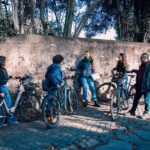
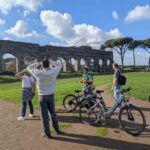
What you should expect day-of is a bike group that stays together, with stops that allow short walks and photos. Several guests note it feels safe even in tricky traffic, and that the pace balances riding with enough time to explore.
The headset can make audio a little tricky at points if the street noise rises, so if you care about every detail, keep your attention up during transitions and ask the guide to repeat if needed. Also, keep your own pace steady. If you lag and the group pulls ahead, it can get hard to rejoin cleanly.
Value and who should book this bike tour
At $54.44 per person for about three hours, you’re paying for more than just bike time. You’re paying for a local guide who stitches together what you’d otherwise see as separate attractions. You also get helmet + bike + storage gear, and you cover major stops across multiple eras of Rome.
A practical way to think about value: this tour is excellent if your goal is orientation. It helps you decide what to revisit. If your goal is deep specialization—like long-form museum study or hours inside multiple ticketed sites—you’ll still want to add other experiences. This tour is tuned for breadth.
This is also a strong match for:
- First-time visitors who want a fast overview
- Travelers who prefer moving through the city rather than sitting in transit
- Families with kids who can ride comfortably and handle group riding
- People who like history framed through stories and visuals, not long lectures
It may be a less ideal match for:
- Anyone who struggles with uneven cobblestones
- Pregnant travelers (strongly discouraged)
- Anyone who wants long time inside major ticketed buildings, since some stops have admission not included
One timing consideration matters: if you’re choosing between days, be cautious about very crowded periods. A smoother route usually means a better ride and easier photo time.
Should you book Rome Bike Tour with Jubilee Sights?
I’d book it if you want a compact, high-impact Rome intro. You’ll leave with a map in your head: the Jewish Ghetto area, the Piazza Navona zone, Pantheon context, Trevi’s water history, and the imperial sites that anchor so much Roman storytelling.
If you’re sensitive to uneven streets or you’re traveling with someone who can’t handle cobbles, skip it. If you’re comfortable riding and you want your first day (or first afternoon) to feel productive, this is one of the better-value ways to do it in central Rome.
Finally, go into it with one simple mindset: this is for getting your bearings, not for replacing a full ticketed day of indoor attractions. If you plan your follow-ups based on what grabs you, you’ll squeeze more joy out of Rome overall.
FAQ
How long is the Rome bike tour?
It lasts about 3 hours.
How much does the tour cost?
The price listed is $54.44 per person.
What language is the tour offered in?
The tour is offered in English.
What’s included in the price?
Included are a local tour guide, bike rental, a helmet, and a front bike pouch and back rack (plus a bike bag for valuables).
Are drinks included?
No. Drinks are not included.
Where do we meet, and where does the tour end?
You start at Via dei Delfini, 35, 00186 Roma RM, Italy and the tour ends back at the same meeting point.
What’s the arrival time recommendation?
Please arrive 15 minutes prior to the tour departure.
Is it suitable for kids?
Kids are welcome if they’ve been riding for a while, are comfortable riding in a group, and can navigate various surfaces. Children under 18 must be accompanied by an adult. It is not recommended for child aged 1 and under, and you should include your child’s height to reserve the correct bike size.
Is the tour recommended for pregnant women?
Pregnant women are strongly discouraged from joining bike tours due to cobbled streets.