REVIEW · ROME
Rome: Appian Way, Catacombs & Roman Aqueducts Top EBike Tour
Book on GetYourGuide →Operated by TopTours · Bookable on GetYourGuide
Ancient Rome, without the crowds. This e-bike tour takes you out from central Rome to the 2300-year-old Appian Way, then threads you through big archaeological hits and open-air countryside. Two things I really like: the route is built for cycling comfort and safety (including anti-puncture tires and a helmet), and the scenery delivers big “wow” moments without needing museum lines.
Claudia and Fabio are the kind of guides people bring up by name, and the reason is simple: they keep the group together and explain what you’re seeing without turning it into a lecture. The one thing to keep in mind is that this is intermediate riding over 27 km, with some city traffic mixed in before the parks take over.
In This Review
- Key things to know before you pedal
- An E-Bike Escape Along the Appian Way
- Price and value: why ~$100 can work
- Meeting at Via Labicana 49 and getting rolling fast
- From the Aurelian Walls to the Appian Way: the best kind of “first hour”
- Catacombs on the 6-hour tour: worth it, but know your audience
- Circus of Maxentius, Cecilia Metella, and Villa dei Quintili: the “great hits” run
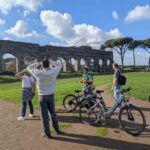
- Parco degli Acquedotti: the aqueduct arches that steal your focus
- Caffarella Valley and a return toward the Baths of Caracalla
- Safety, traffic, and why the small group size matters
- How hard is it, really? (And who should choose which option)
- Best time to go: heat and how long the day feels
- Should you book the Rome Appian Way e-bike tour?
- FAQ
- How long is the tour?
- What does the tour include?
- Are the catacombs part of every departure?
- Where is the meeting point?
- How much of the ride is off-road?
- Does the route include city traffic?
- Is the tour suitable for children?
- Is food included?
- What’s the cancellation policy?
Key things to know before you pedal
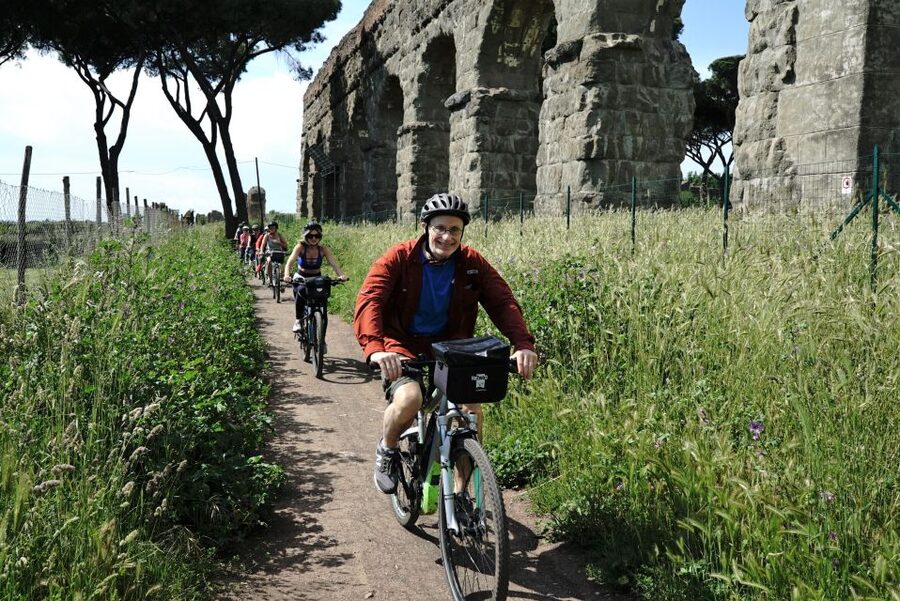
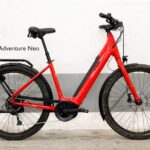
- New Cannondale e-mountain bikes with anti-puncture tires and a comfortable saddle
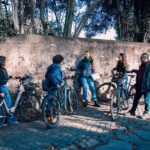
- Small groups (max 10), so you actually stay with your guide at intersections
- 27 km total, about 60% off-road, with a mix of park trails and some city streets
- Catacombs are only in the 6-hour option, with a guided 45-minute descent
- Aurelian Walls + Appian Way + Aqueducts Park in one efficient route
- No food included, but you can stop for purchases along the way
An E-Bike Escape Along the Appian Way
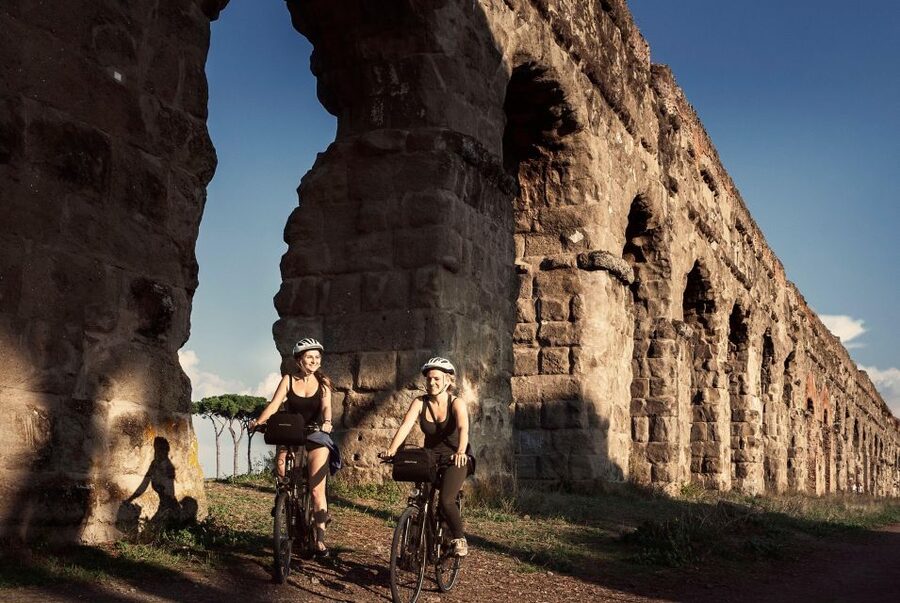
If you only see Rome from buses and sidewalks, you miss the scale. This tour gets you rolling like a local (just with more rules and fewer wrong turns) and shows how the ancient Romans moved people and water through the same corridors.
I love that the experience is designed around real travel movement, not just stopping for photos. You cycle out through key historic zones, then you slow down when the scenery demands it—especially around the aqueduct area, where the arches feel tall enough to swallow an afternoon.
The e-bike part matters more than you’d think. Yes, it’s fun. But it also means you can spend your energy on paying attention—on the stonework, the road layers, and the way parks make you feel like you’re not trapped in the city.
You can also read our reviews of more tours and experiences in Rome.


Price and value: why ~$100 can work
At about $100 per person for a 4–6 hour guided ride, you’re paying for three things that add up quickly in Rome:
- a quality bike (not a beat-up rental bike)
- a guide who manages route and safety
- access to the special experience of the Appian Way area (and catacombs on the longer option)
What makes the value better is that the tour isn’t just “bike + sights.” It’s an actively managed route. People cite how the guide handled busy street moments, and that’s exactly where a guided plan pays off.
If you’re considering the 6-hour version, the extra time is not wasted. It swaps a shorter ride for a guided underground stop—45 minutes in the catacombs—so you get both the daylight history and the quieter, darker side of Early Christian Rome.
Meeting at Via Labicana 49 and getting rolling fast
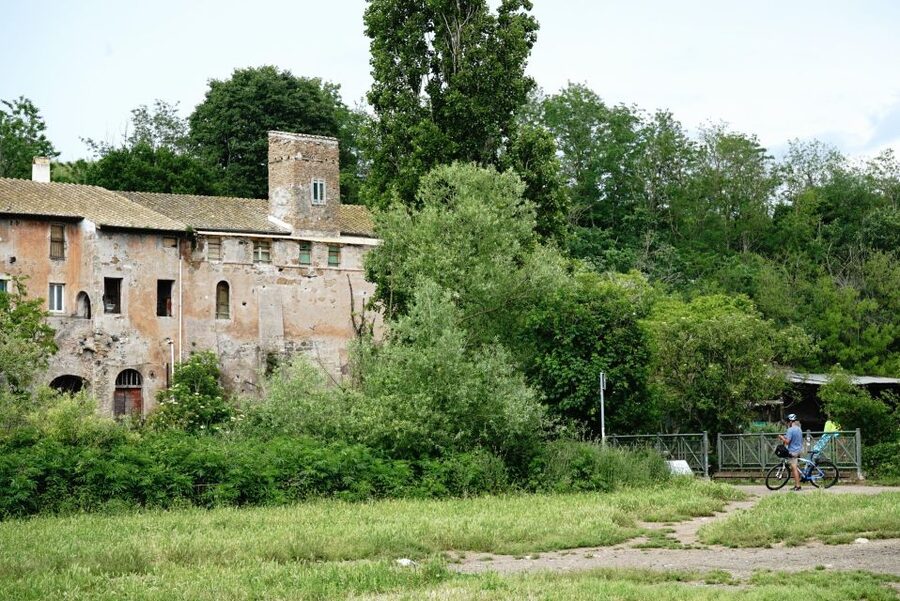
You meet at Via Labicana 49, a short walk from the Colosseum area. The group size is small, and that helps on day one. You spend less time waiting around and more time riding before Rome gets hot or busy.
Bikes are Cannondale e-mountain bikes with anti-puncture tires and a comfortable saddle. Helmet use is mandatory, and you also get a bottle of water included. That combination is practical. Anti-puncture tires reduce the chance of a mid-route problem, and the saddle matters when you’re covering 27 km.
One more practical point: the tour doesn’t include food or drinks. You’ll want to plan a snack strategy—either something you bring or a purchase opportunity along the route.
From the Aurelian Walls to the Appian Way: the best kind of “first hour”
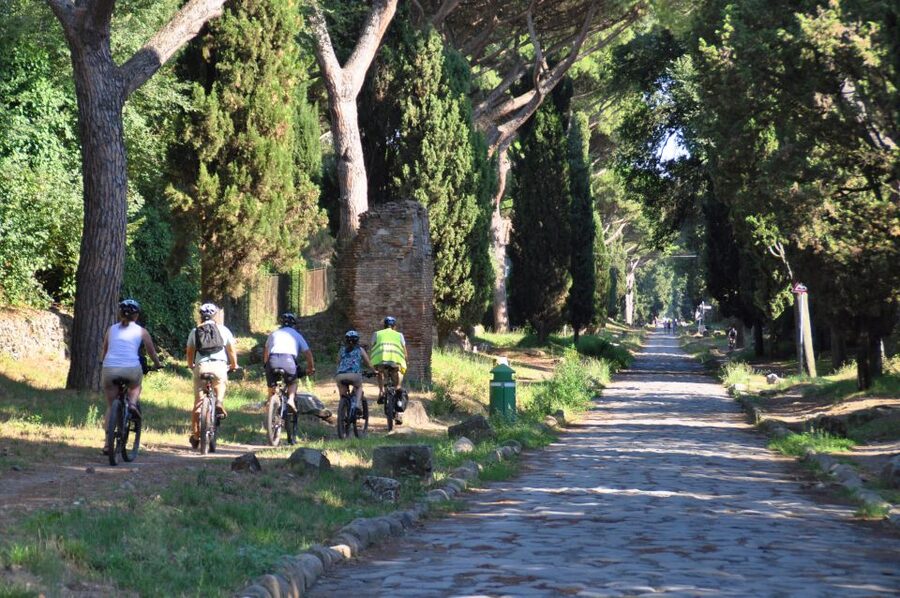
The day starts with you moving through the Aurelian Walls area, then you push onward toward the Appian Way itself. This is where you feel the tour’s main idea: get you out of the dense center and into a road that still tells a story.
The Appian Way is famous because it was built for distance. Cycling it, even with an e-bike assist, gives you a sense of the long, purposeful stretch—especially as you pass mausoleums and villas that line the route like chapters.
What’s smart here is the pacing. The route begins with enough structure to help you feel confident, then it ramps up into more open space. If you’re new to e-bikes, this is the part where you’ll learn how the assist changes your effort.
Catacombs on the 6-hour tour: worth it, but know your audience
In the longer option, you get a guided catacombs visit with a 45-minute descent and time underground with the guide.
This stop is the biggest “personality check” of the day. Some people love underground history; others find it slower going. One family in a past group felt the catacombs were less engaging for kids and suggested skipping that portion—so be realistic about attention spans and comfort levels.
Still, the value of the catacombs stop is that it adds contrast. You go from sunlit Roman roads to corridors carved into the earth. If you’re the kind of traveler who likes setting and atmosphere—stone, echoes, and guided context—it can be a highlight.

Circus of Maxentius, Cecilia Metella, and Villa dei Quintili: the “great hits” run
After the Appian Way stretch, you hit a trio of big landmarks that work well together because they show different sides of ancient power and burial culture.
- Circus of Maxentius: You see the scale of imperial entertainment and Roman urban planning. It’s not just a ruin; it’s a reminder that Rome built for crowds even when the crowds moved on foot.
- Tomb of Cecilia Metella: This one is visually dramatic and easy to understand. It’s a burial monument that still reads as monument-first.
- Villa dei Quintili: Here, you get a sense of elite residential life—where wealth wasn’t subtle. It’s a good stop for anyone who wants the Appian Way story to include more than tombs.
These stops come with the kind of guide explanation that helps the shapes make sense. Instead of seeing random walls and slabs, you start connecting function to form. And because you’re already on a bike, you’re not wasting half the day in transit between distant areas.
A small note on expectations: some landmarks are more “look and learn” than “hands-on.” If you want touchy-feely experiences, you’ll get more from the guide story than from physical interaction.
Parco degli Acquedotti: the aqueduct arches that steal your focus
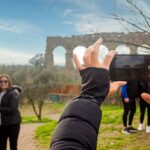
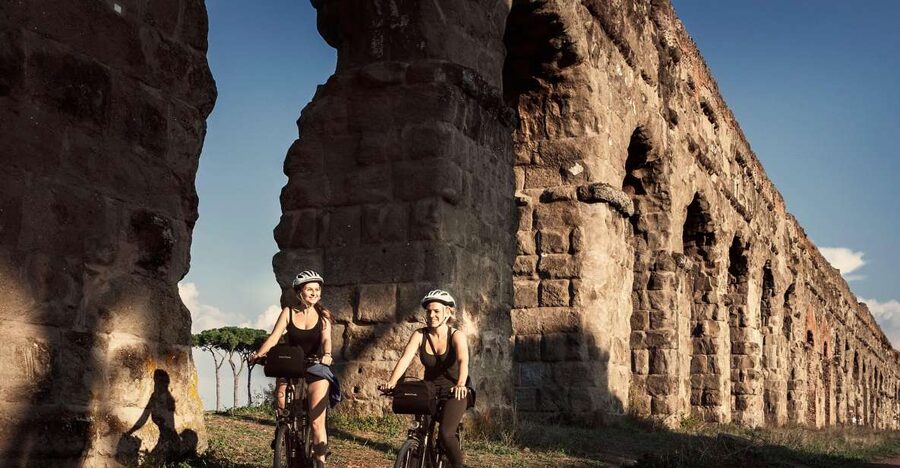
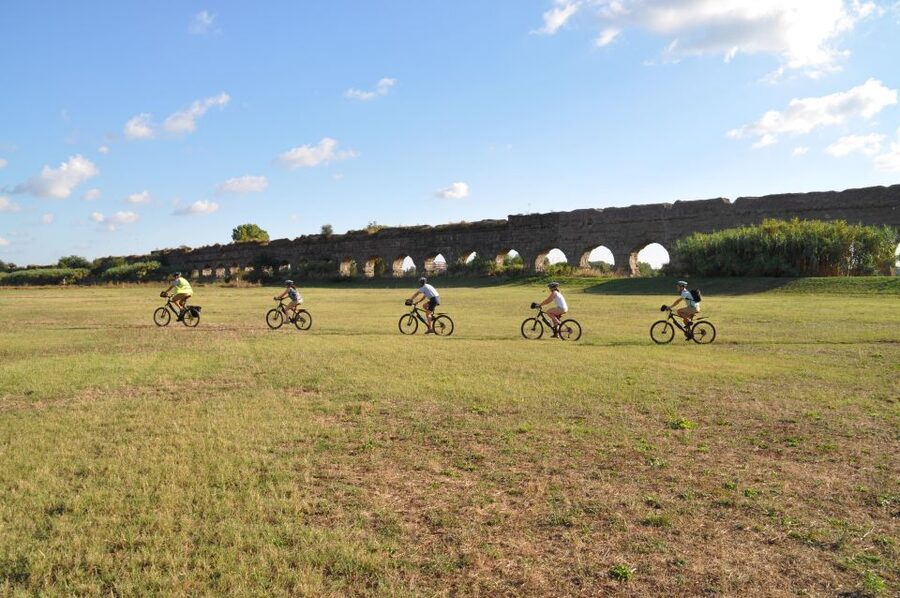
This is the area a lot of people remember most. Parco degli Acquedotti brings you to the monumental arches that once carried huge quantities of water into Rome. Standing near those arches, it hits you that Rome’s greatness wasn’t only in emperors and roads. It was in infrastructure.
The afternoon glow can make the stone look warmer and more architectural. Even if you’re not a history buff, water systems have a universal appeal: they’re engineering you can still read with your eyes.
From a cycling perspective, this section is also calming. Reviews and the route design point to the idea that park riding has less traffic pressure, so you can focus on the view instead of the road.
Caffarella Valley and a return toward the Baths of Caracalla
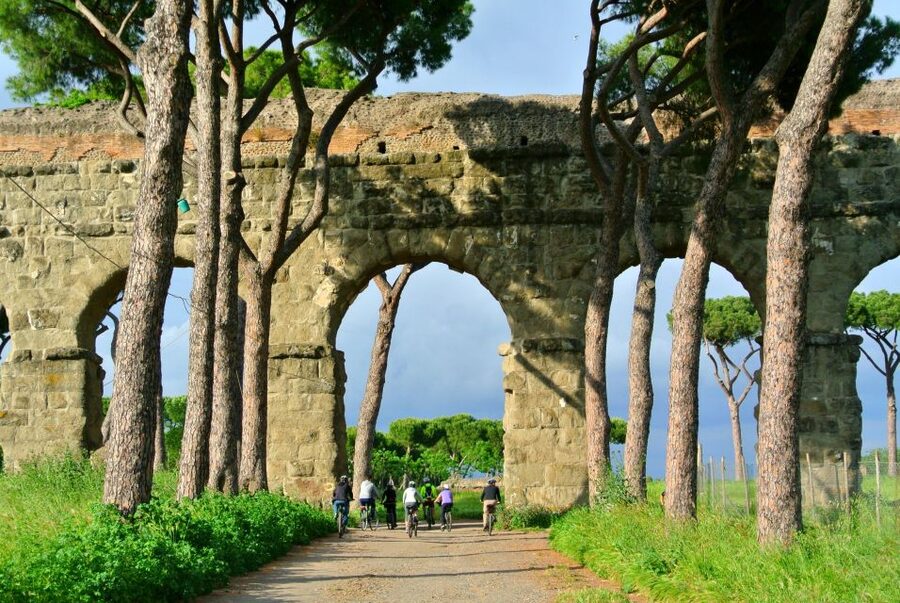
Once you leave the aqueduct park area, you ride back through Caffarella Valley, a patch of countryside inside Rome’s orbit. It’s the kind of moment that makes the whole day feel like more than a checklist. You shift from monuments to a greener sense of space.
Then the route finishes with Baths of Caracalla before returning to Via Labicana 49. The baths stop is a good closer because it ties back to daily Roman life—public life, water, and spaces where people gathered.
If you’re tired, this ending still works. You’ve already gotten the big skyline archaeology earlier, and now you’re using your last energy to land the story rather than chase another major “first-time” feeling.
Safety, traffic, and why the small group size matters
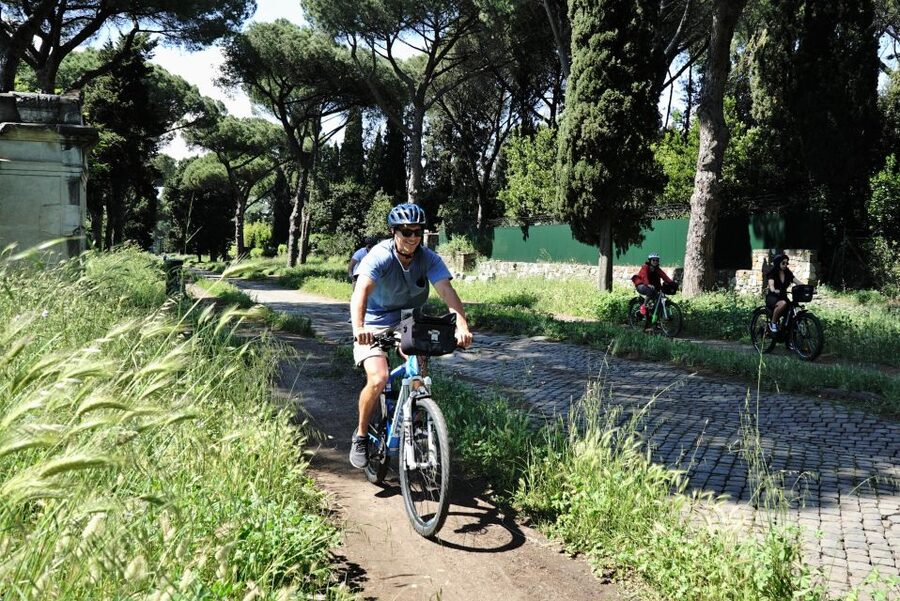
This tour is built around safety choices, and you can feel it when you’re moving through Rome on wheels.
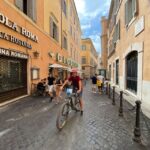
About 40% of the ride happens in the city on carefully chosen streets, and there’s unavoidable traffic when connecting between zones. The remaining 60% is in parks with no traffic. That mix is what makes the route doable for more people than a fully city bike plan.
The small group size (up to 10 participants) isn’t just marketing. It makes it possible for the guide to manage crossings, pace, and spacing. In past groups, guides such as Claudia and Areia have been specifically praised for making busy moments feel controlled.
Also, the bikes help you stay calm. The e-bike assist reduces stress on hills, and the anti-puncture tires reduce the worry factor. You’ll still ride 27 km, but you’re not fighting your bike the whole time.
How hard is it, really? (And who should choose which option)
You’re covering 27 km total, and about 60% is off-road. The tour level is listed as intermediate, and that fits people who can handle longer rides but don’t want to be wrecked by steep climbs.
The e-bike changes the equation. Even so, some parts can feel taxing. One review noted that parts could be challenging even for a less frequent rider, but the assist helped enough to complete the day.
If you’re bringing kids: the tour is intermediate and not suited for babies under 1 year. Infants aged 1–4 travel on a child seat and ride for free. Children 5–8 use a child extension. Children 9 and above (over 140 cm) can ride an e-bike.
Who this fits best:
- couples and friends who want a guided day outside the museum circuit
- travelers who like history but also want fresh air and actual movement
- people who want the aqueduct experience without joining a long, exhausting walking tour
Who might want a rethink:
- anyone who hates underground spaces (catacombs are optional via the 6-hour plan)
- anyone who’s not comfortable with an intermediate cycling day, even with e-bike help
Best time to go: heat and how long the day feels
It can get warm in Rome, and timing matters. One tip that came up clearly: doing this earlier helps. The ride includes parks and open-air stretches, so you’ll want to bring your usual heat habits—water, steady pace, and not treating the first big hill like a race.
Also, Wednesdays can run up to 30 minutes longer. That matters if you’re stacking plans afterward.
Should you book the Rome Appian Way e-bike tour?
I’d book this if you want Rome history with breathing room. The combination of Appian Way road archaeology, major burial and imperial sites, and the Parco degli Acquedotti aqueduct power makes this a strong value compared with doing similar stops one by one.
I’d be cautious about booking if you’re expecting an easy, short ride. This is not a gentle “sit and glide” stroll. It’s a real cycling day—27 km—with an intermediate level and some city traffic.
And if catacombs are high on your list, choose the 6-hour version. If they’re not, the shorter option can still deliver a satisfying day of aqueducts, parks, and iconic ancient remains.
FAQ
How long is the tour?
It runs about 4 to 6 hours, depending on the option you choose.
What does the tour include?
You get a Cannondale e-mountain bike, a helmet, a guide, and a bottle of water. A guided catacombs visit is only included in the 6-hour tour.
Are the catacombs part of every departure?
No. The catacombs guided visit is included only in the 6-hour version.
Where is the meeting point?
The meeting point is at Via Labicana 49, about a 5-minute walk from the Colosseum area.
How much of the ride is off-road?
The total route is 27 km, with about 60% off-road.
Does the route include city traffic?
About 40% of the route is in the city on carefully chosen streets, and some traffic is unavoidable for connections. The remaining 60% is in parks with no traffic.
Is the tour suitable for children?
Babies under 1 year aren’t suitable. Infants 1–4 can ride on a child seat for free. Children 5–8 use a child extension. Children 9 and above (over 140 cm) can ride an e-bike.
Is food included?
No. The tour doesn’t include any food or drinks.
What’s the cancellation policy?
Free cancellation is available up to 24 hours in advance for a full refund.