REVIEW · ROME
Rome E-Bike Tour – Premium Small Group with Local Guide
Book on Viator →Operated by Rex-Tours · Bookable on Viator
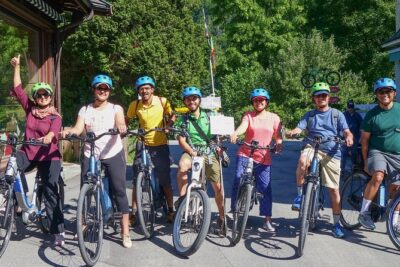
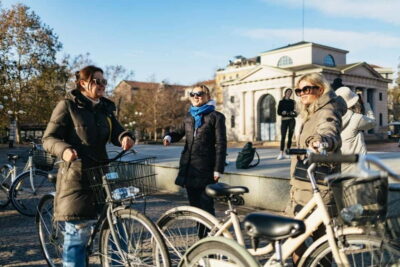
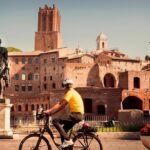
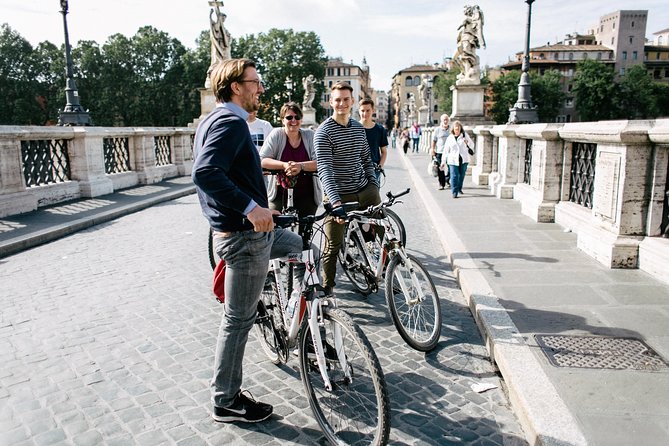
Rome looks like a movie on wheels. An e-bike with a local guide lets you cover huge ancient stops in a few hours.
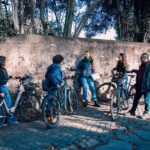
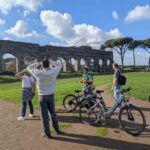
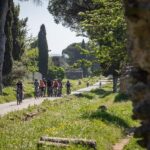
I especially like the way you roll through quieter side streets instead of only being trapped in foot-traffic lines. And I love the stop-and-go pacing, where the guide shares practical tips, including where to eat and what to do next.
One consideration: this is a highlights tour with no monument entry, and the admission tickets for places like the Colosseum and Pantheon are not included.
In This Review
- Key takeaways before you book
- Why an e-bike tour makes sense for Rome’s ancient center
- Getting started at Via dei Soldati and staying comfortable on the ride
- Roman Forum and the Colosseum: seeing the big names without the ticket gamble
- Circo Massimo and Teatro di Marcello: the quieter side of ancient Rome
- The square stops: the wedding-cake monument and Trajan’s scale
- Piazza del Campidoglio and Colle Capitolino: Michelangelo views in a hill-happy city
- Piazza Navona with Bernini’s Four River Fountain and street-artist time
- The Pantheon stop: best preserved, but plan for a separate ticketed visit
- Price and value: is $83.48 worth it for 3 hours?
- Who should book this e-bike tour, and who should skip it
- Small-group vibe: why max 8 travelers matters
- The practical stuff: weather, time, and tickets
- Should you book this Rome e-bike tour?
- FAQ
- FAQ
- How long is the Rome E-bike tour?
- What sights do you visit?
- Are entrance tickets included for the Colosseum and Pantheon?
- Do we enter monuments during the tour?
- Do I need to know how to ride a bike?
- How many people are in the group?
- Is the tour offered in English?
- What is the cancellation policy?
Key takeaways before you book
- Small group (max 8) means you’re not just another number
- E-bikes make hills feel manageable, even when the route climbs
- You get fast orientation to the ancient center plus calmer photo angles
- Iconic stops without ticket time: you see, you learn, you don’t queue inside
- Guides like Marco, Leo, Luigi, and Luca keep things safe and organized on busy roads
- Good weather matters, because the tour runs best outside
Why an e-bike tour makes sense for Rome’s ancient center
Rome can be a lot on your legs. Yes, you can walk everywhere, but then you end up sprinting between ticket lines, sidewalks packed with strollers, and random detours. This e-bike format solves a simple problem: you move fast enough to see major landmarks, but slowly enough to actually understand what you’re looking at.
The biggest advantage is how you travel between sites. Instead of treating Rome like a single long sidewalk, your guide routes you along calmer streets and controlled crossings. That’s what lets you spend time at stops rather than wrestling with logistics.
You’re also not stuck with an all-or-nothing approach. You get repeated brief viewpoints and context—Forum, Colosseum area, Campidoglio, Piazza Navona—so the city starts to click. Then you can choose what deserves your full, ticketed visit later (or what you skip). For a short trip, it’s a smart way to get your bearings fast.
You can also read our reviews of more tours and experiences in Rome.


Getting started at Via dei Soldati and staying comfortable on the ride
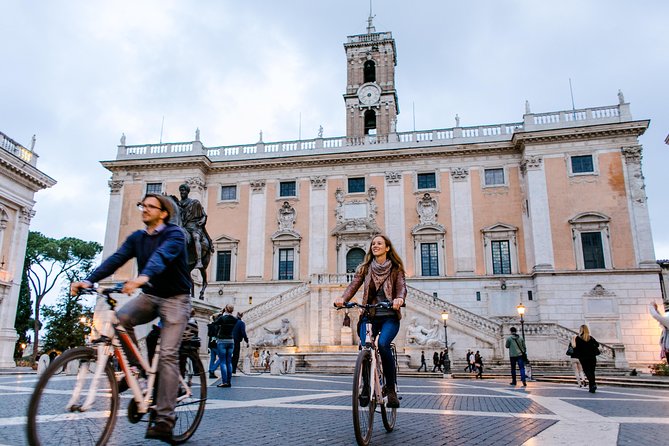
Your tour meets at Via dei Soldati, 27, 00186 Roma RM and returns back there. Expect around 3 hours of guided riding and stops. The tour is in English, uses a helmet, and includes e-bike rental, so you’re not hunting for gear once you arrive.
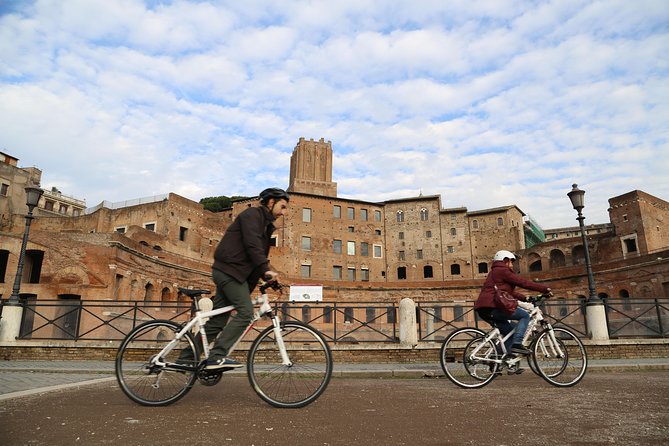
Here’s the practical part: you need to know how to ride a bike. This isn’t a first-time biking class, and the streets can be busy with cars and pedestrians. The good news is that the guides clearly manage safety with patience. Many guides (like Marco and Leo in particular) keep directions clear and choose routes that reduce stress.
Also note the “time reality” of Rome: you’ll be riding through areas with crowds, road changes, and city events. One guest described a difficult day with road closures due to Good Friday, and the guide still kept things moving. You should show up dressed for weather and wear comfortable walking shoes—you’ll step off the bike at several places.
Roman Forum and the Colosseum: seeing the big names without the ticket gamble
Two of the loudest headlines in Rome are the Roman Forum and the Colosseum. On this tour, both are handled like a quick, high-impact orientation: you get time to look around, hear how they fit into the bigger story of ancient Rome, and then move on.
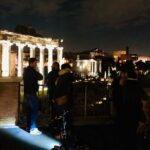
At the Roman Forum stop, the focus is the Forum as the center of political, economic, cultural, and religious life. You don’t go inside here (admission isn’t included), and you’re not meant to spend hours lingering. But that’s exactly why this works. You get a sense of scale and layout from the street and viewpoints available on the route, which makes a later ticketed visit feel less like guessing.
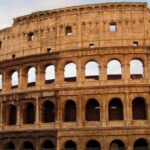
Then you hit the Colosseum area. The tour frames it as the largest amphitheater of Ancient Rome. Again, think overview rather than entry. If you’re the type who wants to walk the corridors, see the full interior, and settle in for longer explanations, you’ll still need a separate ticketed visit. But for many people, the value is that you see the icon early and learn enough to appreciate what you’d be looking at later.
Circo Massimo and Teatro di Marcello: the quieter side of ancient Rome
After the main headline sites, the route shifts into a more relaxed rhythm. This is where you often feel the difference between a Rome that’s only “famous” and a Rome that actually feels lived in.
Circo Massimo is framed around chariots racing and naval battles—an angle that helps you picture the Forum and Colosseum era as entertainment and spectacle, not just ruins. This stop is listed as free, with about 10 minutes on site. That’s enough time to orient yourself and understand why this location mattered, without turning it into a long detour.
Next is Teatro di Marcello, described as an inspiration for the Colosseum. The stop is short—about 5 minutes—but it’s a meaningful one. The architecture lesson here is the point: Rome didn’t invent one style and stop. It reused ideas, improved them, and scaled them up.
The payoff is psychological. After the big two, you start noticing patterns. You’ll find yourself thinking, Oh, so that’s why it looks like that. That makes the rest of your trip easier, because you recognize connections as you explore.
The square stops: the wedding-cake monument and Trajan’s scale
Rome’s center is full of wide squares, and this tour takes advantage of that. You’ll pass through one of the city’s biggest squares, then see the National Monument, nicknamed the wedding cake—the kind of landmark you notice from far away and can’t miss up close.
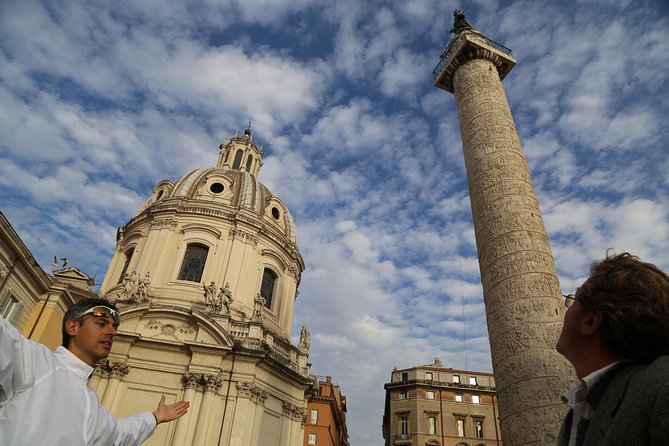
Right after that, there’s a stop tied to Trajan, described here as having had the biggest empire in Ancient Rome. Even with the limited time, it gives you a useful anchor. Trajan wasn’t just another ruler; his reign is often part of why Rome’s power and building projects feel so expansive. When your guide connects that to what you’re seeing in the modern city, it turns a random monument sight into a thread you can follow later.
One caution: because these are brief photo-and-look stops, don’t expect deep museum-style explanations. This tour is designed to keep momentum and keep you safe and moving, so you’re seeing a broad overview rather than treating each site like a half-day event.
Piazza del Campidoglio and Colle Capitolino: Michelangelo views in a hill-happy city
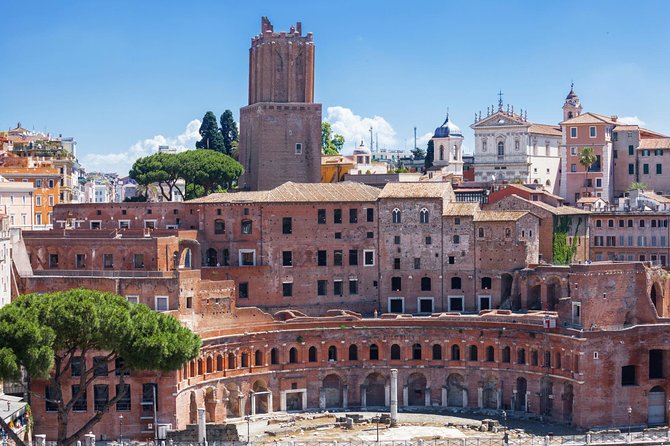
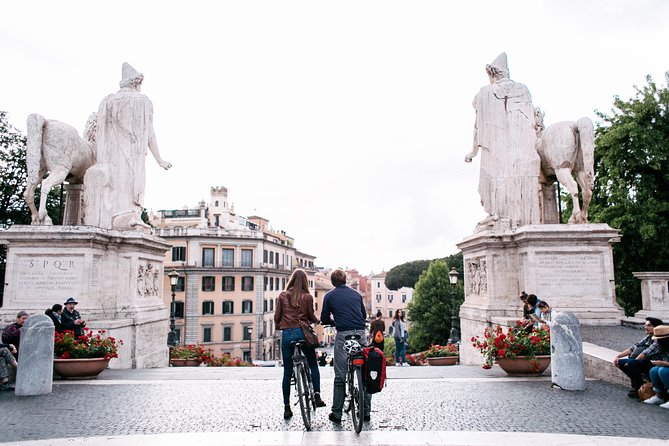
If you want one moment on this tour that feels like a reward, it’s the climb to viewpoints. The tour heads to Piazza del Campidoglio, designed in the High Renaissance by Michelangelo. Even with only about 5 minutes here, the setting matters: Campidoglio is where the city starts showing you how planning and power shaped the landscape.
Then you get Colle Capitolino with around 15 minutes, positioned as scenic views. This is a great place to slow down your pace, take photos, and just look. It’s also a moment where the e-bike makes a difference. Rome has hills and steep pulls, and on a regular bike you might turn this leg into a struggle. On an e-bike, you can focus on the view instead of on effort.
If you like architectural order, symmetry, and the feeling that a city was designed, not just grown, these stops will land well. And if you don’t, it still works because you’re seeing Rome from a perspective that walking tours often can’t replicate efficiently.
Piazza Navona with Bernini’s Four River Fountain and street-artist time
Piazza Navona is one of those places where the crowd is part of the experience. Here you’ll see Bernini’s 4 River Fountain, and the tour connects the square with the Angels and Demons vibe. This is also where the tour turns social: you’ll have time that’s perfect for photos, people-watching, and a quick breather.
Street artists get their own time window, about 10 minutes in the provided schedule. That pause isn’t random. It helps you reset after riding and helps you remember Rome isn’t just stone—it’s performers, conversations, and daily life.
Also, Piazza Navona is a strong planning point for your next moves. Once you see it on the tour, it’s easier to decide if you want to linger on your own, grab a drink nearby, or map out how you’ll tackle your remaining sightseeing. That’s one reason the local tips from the guide are so valuable here; you’re not only learning history, you’re learning how to live through the neighborhood for a few hours.
The Pantheon stop: best preserved, but plan for a separate ticketed visit
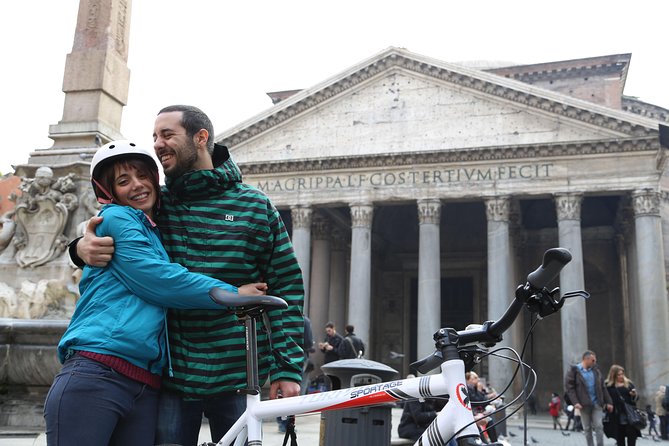
The tour ends with a Pantheon stop, described as the best preserved ancient monument in Rome. You’ll get about 10 minutes here, but admission isn’t included.
So what should you do with this information? If you want the full Pantheon experience—time inside, paying attention to details, and going at your own pace—plan to return on another day with tickets. If you mostly want the overall look and the feel of the space from a quick visit window, this tour gives you a strong snapshot that helps you decide whether a deeper visit is worth it for you.
Because it’s the final major icon on the route, you’ll also leave with a clearer sense of what your trip still needs. Often, people realize they don’t just want more sightseeing. They want better priorities. This tour helps you set those priorities because you see enough to know what you actually care about.
Price and value: is $83.48 worth it for 3 hours?
At $83.48 per person for roughly 3 hours, the price can look steep until you compare it to the real cost of time and fatigue in Rome.
Here’s where the value comes from:
- You cover a lot of ground in a single afternoon, including major sites like Roman Forum, Colosseum area, Campidoglio, Piazza Navona, and Pantheon.
- Your legs get a break because the e-bike handles hills for you.
- The guide’s routing helps you spend less time stuck and more time seeing.
- You get insider advice on where to eat, drink, and explore—so you don’t just tour, you plan.
Where it’s not value is if you’re expecting full entry into major monuments in one shot. This tour explicitly doesn’t enter monuments due to time limits, lines, closing days, or entrance tickets. Admissions for several sites are marked as not included. In plain terms: you’re buying a guided highlights ride, not a bundled museum ticket package.
If you treat it as an orientation tool plus a taste of what matters, it’s strong value. If you want deep time inside multiple ticketed landmarks, you’ll still need additional reservations.
Who should book this e-bike tour, and who should skip it
This tour fits best if you:
- Have only a short time in Rome and want major sites in one organized loop
- Like learning from a guide while moving through the city
- Want to avoid hours of walking and still see a lot
- Feel comfortable riding a bike in traffic conditions
You should think twice if you:
- Want guaranteed monument entry during the same tour (this one gives overviews, not inside visits)
- Don’t feel confident riding in busy streets
- Are hoping to rely on an app-based component for guidance, since one guest reported English/app issues on Android
The good news: multiple guides in practice (Marco, Leo, Luigi, Luca) came through in the safety and pacing categories. The guides repeatedly focus on careful navigation and making you feel steady, which is exactly what you want when Rome traffic feels chaotic.
Small-group vibe: why max 8 travelers matters
A cap of 8 travelers changes the experience. In a big group, you’d often wait at stops and rush to keep up. Here, the pacing feels more flexible. You can ask questions, get clarification, and actually hear the guide’s stories rather than just catching them through road noise.
That also helps with photography. Quick stops become useful instead of frustrating. You have time to look, take a few photos, and then move on without the sense that you’re holding up everyone behind you.
The practical stuff: weather, time, and tickets
This experience requires good weather. If it gets canceled due to poor weather, you’ll be offered another date or a full refund. Also, the tour can substitute highlights during official public celebrations in the city center—so don’t build your entire day around one single monument being guaranteed in the exact same way.
Plan for admission tickets on your own for sites that require them, including the Roman Forum, Colosseum, and Pantheon as described here. The tour gives you the context so your ticketed visits later feel more meaningful, not more confusing.
Should you book this Rome e-bike tour?
Yes, I’d book it if you want an efficient, organized first look at Rome’s ancient core and you’re comfortable riding a bike. The mix of major icons plus calmer routes is exactly what makes it work, especially if you’re packing your sightseeing into a tight schedule.
I’d skip or at least add a backup plan if you’re counting on monument entry during the ride, or if busy streets would stress you out. In those cases, you might still enjoy the guide and viewpoints, but only if you’re okay treating the tour as orientation rather than a substitute for ticketed museum time.
FAQ
FAQ
How long is the Rome E-bike tour?
The tour lasts about 3 hours.
What sights do you visit?
You’ll see the Roman Forum, the Colosseum, Circo Massimo, Teatro di Marcello, a major national monument nicknamed the wedding cake, Piazza del Campidoglio, Colle Capitolino viewpoints, Piazza Navona with Bernini’s 4 River Fountain, and the Pantheon.
Are entrance tickets included for the Colosseum and Pantheon?
No. Admission tickets are not included for the Roman Forum, Colosseum, and Pantheon.
Do we enter monuments during the tour?
No. The tour does not enter monuments or sights due to time restrictions, waiting lines, closing days, and entrance tickets. You’ll still visit the sights, but the tour provides overviews rather than inside time.
Do I need to know how to ride a bike?
Yes. Participants must know how to ride a bike.
How many people are in the group?
The group size is capped at a maximum of 8 travelers, with a minimum of 2 people per booking.
Is the tour offered in English?
Yes, the tour is offered in English.
What is the cancellation policy?
Free cancellation is available up to 24 hours in advance for a full refund. If you cancel less than 24 hours before the start time, you won’t receive a refund. If it’s canceled due to poor weather, you’ll be offered a different date or a full refund.