REVIEW · ROME
Rome Highlights Bike Tour 3 Hour City Cycling Experience
Book on Viator →Operated by Bici&Baci srl · Bookable on Viator
Rome feels bigger on two wheels. This 3-hour cycling tour strings together Rome’s best-known sights with focused stops and a local guide, so you cover a lot fast while still understanding what you’re seeing.
I like that the pace is set for real life: an easy ~10 km route that works for a wide range of ages and abilities. I also love the mix of famous squares and major monuments—Trevi, Piazza di Spagna, Piazza Navona, and the Pantheon area—so your first day doesn’t turn into nonstop walking.
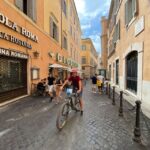
One consideration: Rome’s streets can get tight with traffic and crowds, and on busier stretches the riding can feel more crowded than you’d expect, especially near popular photo stops.
In This Review
- Key Highlights to Know Before You Ride
- Why a 3-Hour Rome Bike Loop Works for First-Timers
- Getting Started at Via Cavour (and What That Means for Your Timing)
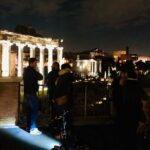
- Foro Romano and Mercati di Traiano: Seeing Rome’s “Layers” Up Close
- Trevi Fountain and Piazza di Spagna: Famous Stops, Practical Timing
- Piazza del Popolo and Palazzo di Montecitorio: A Nice Break from the Postcard Route
- Piazza Navona: Ancient Stadium Bones to Bernini’s Fountain
- The Pantheon Area: A Key Stop Where Admission Matters
- Bicycles, Helmets, and the Small-Group Advantage
- Price and Value: What $60.34 Gets You (and What It Doesn’t)
- Who This Tour Suits Best (and Who Might Want a Different Day)
- Should You Book the Rome Highlights Bike Tour?
- FAQ
- How long is the Rome Highlights Bike Tour?
- What is the meeting point for the tour?
- What time does the tour start?
- What sights are included on the route?
- Is the route easy?
- Are admission tickets included?
- What’s included in the price?
- Is food or drinks included?
- What language is the tour offered in?
- What’s the cancellation policy?
Key Highlights to Know Before You Ride
- Easy ~10 km loop that’s built to be manageable in about 3 hours
- Iconic landmarks in a single sweep, including Trevi, Spanish Steps, Navona, and the Pantheon area
- Short, meaningful stops (often around 10 minutes each) to keep you moving without rushing
- Helmets and bicycle included for a safer, more comfortable ride
- Small group size (max 15) helps the guide keep an eye on everyone
Why a 3-Hour Rome Bike Loop Works for First-Timers
Rome can overwhelm you fast. This is the kind of tour that helps you get your bearings quickly, without turning your day into a long slog of soles-on-stone.
You’re on a bike for most of the time, so you’ll glide between neighborhoods that would take a lot of walking to stitch together. The best part is that the guide doesn’t just point. You get context for what you’re seeing, which makes the landmarks feel less like random postcards.
And because it’s only about 3 hours, it leaves breathing room afterward. You’ll still have energy to explore independently—grab a gelato, wander a street you notice from the saddle, or pop into a church you spot along the way.
You can also read our reviews of more tours and experiences in Rome.


Getting Started at Via Cavour (and What That Means for Your Timing)
The tour meets at Via Cavour, 302 (00184 Roma) at 9:30 am, and it ends back at the meeting point. Morning matters in Rome. You’re more likely to hit manageable crowds early, and the route feels smoother when streets haven’t fully locked up with afternoon foot traffic.
Dress code is smart casual, so plan for comfortable clothing and a practical day. Since you’ll be pedaling, you’ll want to keep things simple: layers for changing weather and clothing you can move in.
Also, this is an English-language tour with a mobile ticket. If you prefer having things set before you arrive, that’s a plus. Confirmation happens at booking time, so you’re not scrambling the day of.
Foro Romano and Mercati di Traiano: Seeing Rome’s “Layers” Up Close
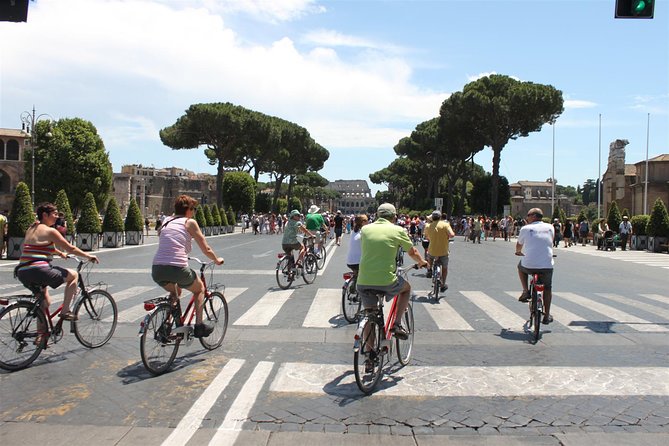
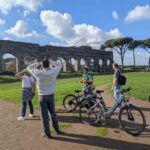
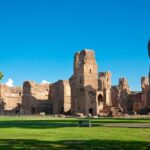
Right away, you move into the heart of ancient Rome. You’ll stop at Foro Romano, where the big idea is that ancient buildings didn’t all belong to the same era. Rome changed hands, rulers changed, and new structures built over older ones—so you get a sense of political and religious shifts stacked on top of each other.
What makes this stop work on a bike tour is the pacing. You’re there long enough to notice the layout and understand the bigger story, but not so long that you lose the thread. It’s a good setup for the rest of the tour, because it trains your eye for what comes later: squares, forums, and monumental civic spaces.
Next is Mercati di Traiano – Museo dei Fori Imperiali, a major administrative building tied to the Imperial Forums. Even if you’re not going in deep, you’ll come away with the sense that these weren’t just “cool ruins.” They were part of how the empire ran—law, government, and the daily machinery behind power.
A nice detail: admission for these first stops is free, so you spend your time looking rather than worrying about tickets for every segment.
Trevi Fountain and Piazza di Spagna: Famous Stops, Practical Timing
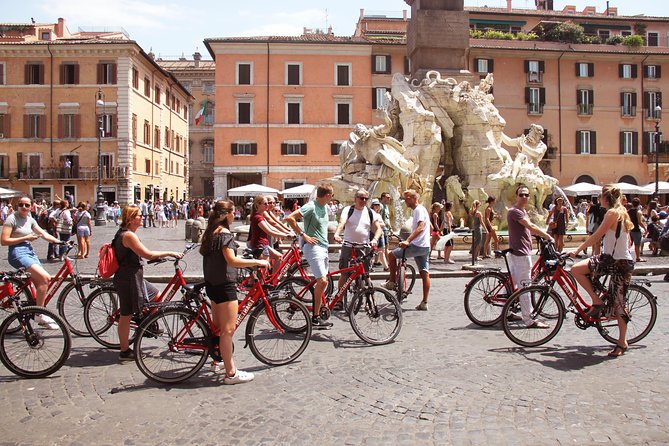
From ancient power centers, you pivot to the Rome people dream about. You’ll reach Trevi Fountain, one of the city’s biggest and most famous fountains. It’s famous for a reason—scale, sculptural drama, and that unmistakable “Rome” feeling the minute you see it.
The tradeoff with Trevi is the tradeoff you always get in Rome: crowds. Bike tours help because you’re moving between sights rather than spending your day navigating on foot. You’ll still want to be patient and expect people everywhere, but the tour keeps you from losing your whole morning stuck in one spot.
Next comes Piazza di Spagna, with its monumental stairway of 136 steps. This is one of those places where your brain instantly recognizes the shape, even if you can’t name it. It’s also a great place to pick up visual cues: the street energy around the square, the way Rome funnels people through small lanes, and how the city’s famous elevations make walking routes feel different block by block.
These stops are brief—about 10 minutes each—which is perfect if your goal is an overview. If you want to linger, you’ll likely want to plan a return later on your own.
Piazza del Popolo and Palazzo di Montecitorio: A Nice Break from the Postcard Route
After the big hits, the tour adds a bit of variety with stops that feel more “city lived-in” than “only famous landmark.” You’ll pass through Piazza del Popolo, known as the starting point for Via del Corso, the main shopping street that feeds into central Rome.
This stop is useful because it connects landmark Rome to real street geography. Once you understand where Via del Corso begins, you’ll have an easier time walking back into the city’s retail spine later, without feeling like you’re constantly guessing.
Then you’ll see Palazzo di Montecitorio, a baroque-style building that houses the Italian Parliament. That contrast is fun: you go from fountains and squares to the building that represents modern governance.
What I like about including a stop like this is the balance. Not every stop is meant for a selfie. It’s a reminder that Rome isn’t just ancient stone. It’s an active capital.
Both of these are quick stops, which keeps the tour on schedule and preserves the “overview” feel instead of turning it into a long, tiring sightseeing marathon.
Piazza Navona: Ancient Stadium Bones to Bernini’s Fountain
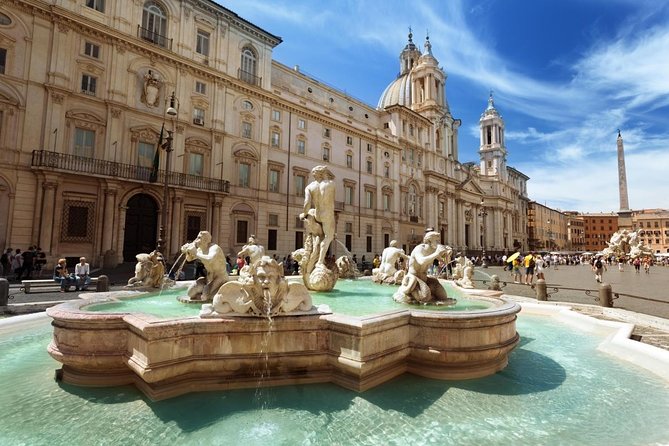
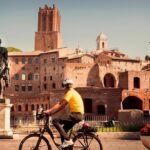
If you’re hoping for one of the most satisfying moments on the ride, Piazza Navona usually delivers. The square sits on the remains of an ancient Roman stadium, so the space has a built-in sense of scale and crowd-energy.
You’ll see the grand Bernini-designed fountain, which is exactly the kind of payoff that makes the earlier biking worth it. The guide’s explanations help you notice how this isn’t just pretty architecture—it’s a continuation of how Rome has always organized public life around spectacle and gathering.
One bonus of reaching Navona by bike is that you’re arriving with your day already “warm.” You’ve seen enough landmarks that the fountain isn’t just decorative. It feels like the end of a story you’ve been following.
That said, expect crowds. Navona is popular, and even with a short stop, you’ll feel the foot traffic. Keep your patience on standby. The ride helps you move around it, but the square itself remains a magnet.
The Pantheon Area: A Key Stop Where Admission Matters
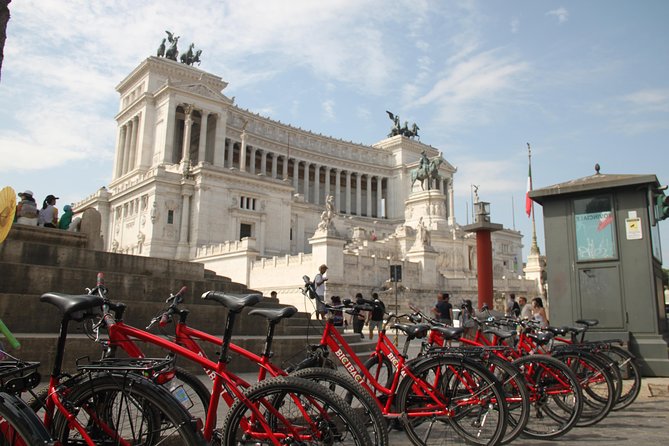
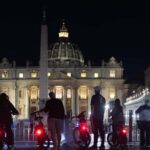
The tour finishes with the Pantheon area. In Roman times, it was a temple dedicated to all gods. Today it operates as a basilica where mass is regularly celebrated, which gives the building a living, daily-life rhythm beyond tourism.
Here’s the practical part: Pantheon admission isn’t included. That doesn’t make the stop less valuable; it just means you should be ready to handle any entry situation separately. If you know your visit style, plan accordingly—some people are happy with the exterior and surroundings, while others want interior time.
The Pantheon is also one of those sights where the atmosphere changes the moment you arrive. Even in a short time, you’ll likely feel why this building has survived while so many others didn’t.
Bicycles, Helmets, and the Small-Group Advantage
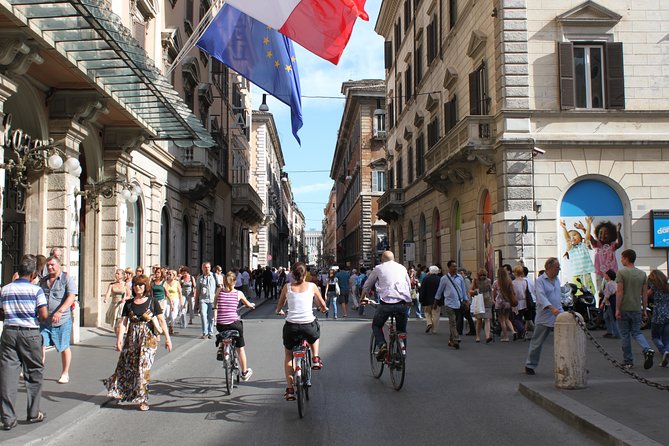
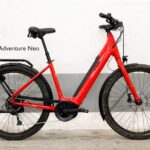
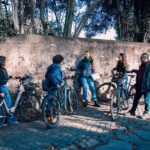
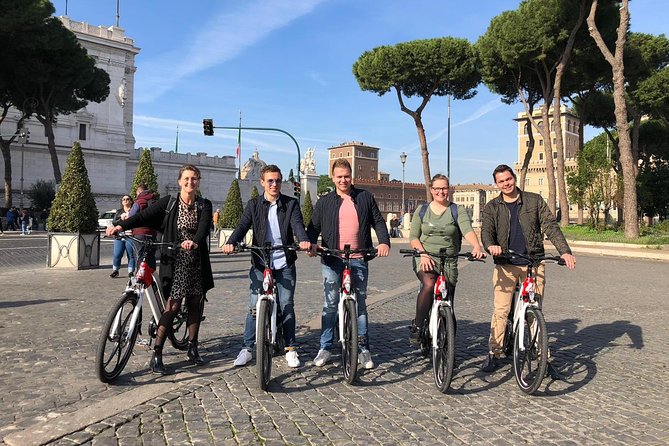
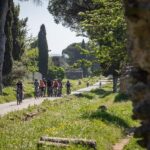
This is a bike tour with bicycle and helmet included, which is exactly what you want for a city ride. You’re not negotiating rentals, and you don’t have to wonder what the equipment will be like.
The group size helps a lot. With a maximum of 15 travelers, the guide can keep eyes on everyone and manage the flow through busier intersections and crowded areas. In one set of feedback, the guide was praised for constantly watching out for the group and keeping the ride safe—no frantic pace, no feeling of being herded.
In another note, a family mentioned enjoying the overall experience even when they felt they’d had better options elsewhere. That’s a good reminder to set expectations: this is an overview tour. If you want deep, monument-by-monument history, you’ll likely prefer a longer dedicated visit for the places that hook you most.
Also, there’s been a mention that the bike experience can vary with the specific bikes used and how crowded the area gets. So if you’re the type who gets tense in tight spaces, mentally prepare for slow, human-density moments near major attractions.
Price and Value: What $60.34 Gets You (and What It Doesn’t)
At $60.34 per person for about 3 hours, the key value isn’t the bike itself. You’re paying for a guided loop that bundles major sights into one day, with equipment handled and a route designed to keep your time efficient.
You get:
- a local guide
- bicycle and helmet
- taxes and fees handled
- a route that’s described as easy and around 10 km
- sights with free admission tickets at several stops
You don’t get:
- food and drinks
I’d plan to bring a bit of water (and a snack if you’re prone to getting hungry). This tour can save you lots of walking energy, so you’ll still want fuel.
One more value note: some stops are free admission, while the Pantheon is not included. That means you’ll have an easier time budgeting for the tour if you’re okay with handling Pantheon entry on top of the base price.
Finally, one negative comment flagged an advertised ice-cream inclusion that didn’t happen. I can’t confirm the overall policy for every departure, but it’s smart to check what’s explicitly included at the time you book. For most people the main experience is the route and guide, but it’s still worth verifying anything that’s marketed as an add-on.
Who This Tour Suits Best (and Who Might Want a Different Day)
This bike tour is ideal if you:
- are in Rome for the first time
- want a quick overview that shows you where major landmarks sit relative to each other
- prefer cycling over long, exhausting walking routes
- like having a guide explain the “why” behind the sights rather than just seeing them
It also works well as a family-friendly outing, since the route is described as suitable for all ages and abilities, and children must be accompanied by an adult.
If you’re the type who hates crowds, you’ll still feel crowds at Trevi and Navona because those places are naturally packed. The tour helps you get through efficiently, but it doesn’t change the fact that these are top-tier attractions.
And if you’re a history superfan, you might want to treat this as day-one orientation, then book a deeper tour on the monuments that truly grab you. One of the best Rome strategies is to use the first day to find your interests, then go back with focus.
Should You Book the Rome Highlights Bike Tour?
Book it if you want a structured introduction to Rome that mixes big names with a manageable pace. The itinerary flow makes sense: ancient Rome for context, then the modern Rome icons that shape the city’s image—Trevi, Spanish Steps, Navona—and then a finale that lands at the Pantheon area.
Skip or switch if you need lots of time at each landmark. The stops are short by design, and the city’s crowds can make quick photo moments feel more rushed than you’d like. If you’re hoping for hours inside one place, you’ll likely be happier with a longer, single-site plan.
If you do book, I’d also keep two practical things in mind:
- Choose this for a day when you still have energy to explore after the ride.
- Look carefully at what’s included beyond the bike and guide, especially any optional add-ons you see mentioned during booking.
FAQ
How long is the Rome Highlights Bike Tour?
The tour lasts about 3 hours.
What is the meeting point for the tour?
The tour starts at Via Cavour, 302, 00184 Roma RM, Italy and ends back at the same meeting point.
What time does the tour start?
The start time is 9:30 am.
What sights are included on the route?
You cycle past and stop near major landmarks including Foro Romano, Mercati di Traiano – Museo dei Fori Imperiali, Trevi Fountain, Piazza di Spagna, Piazza del Popolo, Palazzo di Montecitorio, Piazza Navona, and the Pantheon area.
Is the route easy?
Yes. It’s described as an easy route of about 10 km, suitable for all ages and abilities.
Are admission tickets included?
Admission is free for several stops, and Pantheon admission is not included.
What’s included in the price?
The tour includes taxes and fees, a local guide, use of a bicycle, and use of a helmet.
Is food or drinks included?
No. Food and drinks are not included.
What language is the tour offered in?
The tour is offered in English.
What’s the cancellation policy?
You can cancel for a full refund if you cancel at least 24 hours before the experience starts.