REVIEW · NEW ORLEANS
New Orleans Creole Odyssey Small-Group Bike Tour
Book on Viator →Operated by Flambeaux Bicycle Tours · Bookable on Viator
Bike through Creole New Orleans, no map needed. I like that this tour is led by guides such as Eric or Gomez, who feel personable and genuinely tuned in to the city’s details as you pedal.
You’ll love the mix of neighborhoods and stops, from St. Louis Cemetery No. 3 and City Park to Congo Square, with a final watery push to Bayou St. John. One consideration: this is a real bike ride for about three hours, and the footwear rules are strict, so bring closed-toed shoes and skip anything flip-flop shaped.
In This Review
- Key Highlights at a Glance
- First Pedals: Why This Tour Feels Like Real New Orleans
- Meeting Point at Flambeaux Bicycle Tours: Quick Start, Minimal Stress
- French Quarter to Mid-City: Creole Beginnings on Flat, Oak-Lined Streets
- Faubourg Marigny: Music, Streets, and the Heartbeat You Can Ride Through
- St. Louis Cemetery No. 3: A Creepy Stop With Real Structure
- City Park and the Cafe du Monde Break: Breather Time in the Middle of the Ride
- Congo Square: Where the Story Shifts Toward Jazz
- Bayou St. John: The Waterway Ending That Changes the Whole Mood
- Price and Value: Paying $55 for a Lot of Ground
- Pace, Fitness, and What to Expect in the Real World
- Practical Tips That Actually Matter: Shoes, Gear, and Timing
- Should You Book This Creole Odyssey Bike Tour?
- FAQ
- How long is the New Orleans Creole Odyssey Small-Group Bike Tour?
- What does the tour cost?
- Where does the tour start?
- What’s included in the price?
- Is food included?
- What’s the minimum age and height requirement?
- Are there rules about shoes?
- How big is the group?
- What is the cancellation policy if weather is bad?
Key Highlights at a Glance
- Small group cap (10 people) makes it easier to ask questions and stay together.
- Flat, easy route helps most riders handle the full 3-hour loop without drama.
- Creole storytelling stops at places like Faubourg Marigny, Congo Square, and the cemetery.
- City Park + Cafe du Monde break gives you a simple reset in the middle of the ride.
- Bayou St. John at the city edge adds a surprisingly different New Orleans vibe.
First Pedals: Why This Tour Feels Like Real New Orleans
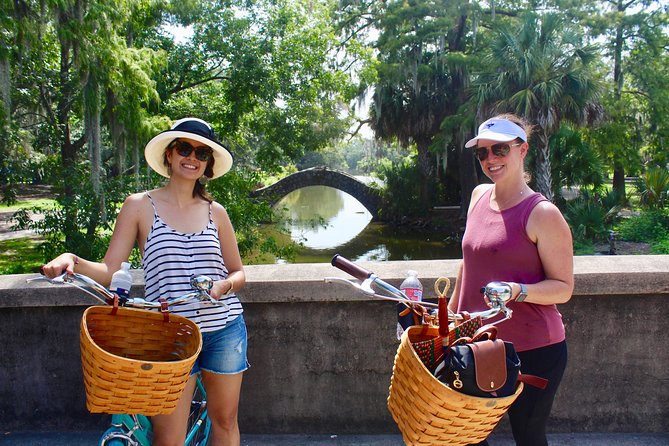
New Orleans can be loud and confusing fast, especially in the French Quarter. This is a bike tour that helps you get bearings without forcing you into a bus schedule or a checklist. You’re riding through neighborhoods in the same direction people actually live their lives, then ending at the waterline where the city thins out.
What I like most is that the tour treats the city as a set of linked neighborhoods, not just a list of famous postcards. You start in the French Quarter, roll into Mid-City, then hit places that connect Creole roots to the sound of the city—before you coast toward Bayou St. John. It’s a simple format, but it helps the story stick.
The group is also small, so the guide can slow down when you need it and answer questions as they come up. That matters in a city where one wrong turn can send you on a long detour—or a long tangent.
You can also read our reviews of more tours and experiences in New Orleans.

Meeting Point at Flambeaux Bicycle Tours: Quick Start, Minimal Stress
Your tour begins at 626 N Rampart St at the Flambeaux Bicycle Tours location. Practically speaking, this is a good setup because you’re not starting far away from where most people are already hanging out. If you’re doing other French Quarter things that morning or afternoon, this keeps the planning easy.
Once you arrive, you’ll get your bike and helmet rental and get a quick orientation. The bike experience is intentionally straightforward—one-speed style is mentioned in feedback—so you’re not juggling gears while you take in street scenes. That makes the ride feel more like transportation with guidance than like a complicated cycling class.
If you want coffee first, Twelfth Night Coffee is right next door. That’s not a small detail here. A three-hour ride is much more pleasant when you’re fueled and ready to pedal.
French Quarter to Mid-City: Creole Beginnings on Flat, Oak-Lined Streets
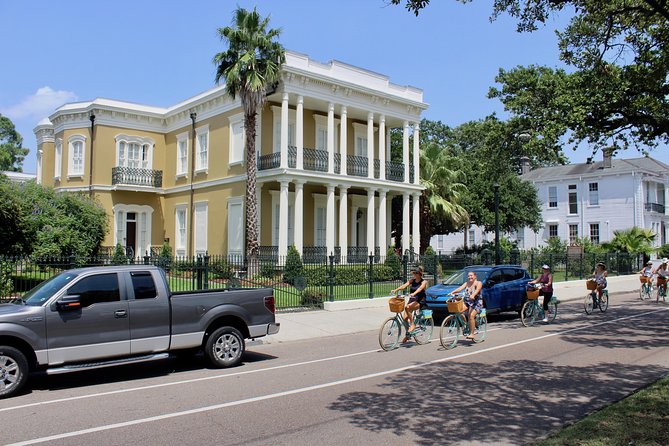
After the check-in, you head out from the French Quarter, where the guide points out the area’s oldest building. Even if you’ve walked the Quarter already, it’s a different feeling seeing it from the street level at biking pace. You’re not just passing the landmark—you’re getting context for how the city grew into what you see today.
Then it’s on to Mid-City, which takes up a big chunk of the ride. This matters because it shifts you away from the most tourist-saturated blocks and into a more everyday New Orleans rhythm. Mid-City has room to breathe: wider streets, parks, and long stretches where you can settle into the cadence of pedaling.
The route is described as flat and leisurely, and that checks out in a practical way. You’re not racing hills. You’re covering ground smoothly enough to look around without constantly bracing yourself.
Faubourg Marigny: Music, Streets, and the Heartbeat You Can Ride Through
Faubourg Marigny is one of the stops where the tour starts to feel like a neighborhood visit instead of a sightseeing sprint. You’ll spend time along Frenchmen St., a street closely tied to the city’s music culture. The guide connects what you’re seeing here to the wider Creole heritage story, so the area doesn’t feel like it’s just about venues and nightlife.
You’ll also get history framed through place. In other words, you’re not just hearing that the culture is important—you’re seeing the streets and blocks where that culture has room to live.
This stop works well if you want your New Orleans experience to include more than architecture and cemeteries. It’s also a good energy reset if the French Quarter feels crowded or loud in a way that drains you.
St. Louis Cemetery No. 3: A Creepy Stop With Real Structure
Cemeteries in New Orleans aren’t just spooky for tourists. They’re part of the city’s burial practices and community history, and this tour explains it at St. Louis Cemetery No. 3.
You’ll stop long enough to learn about the district burial practices there, not just to snap a photo and move on. That extra context makes the cemetery feel less like a gimmick and more like a window into how New Orleans thinks about family, memory, and the afterlife.
One practical note: you’ll likely be standing and looking around for part of the stop. Wear shoes that are comfortable to walk in for a bit, not just for biking. Also, the tour environment is outdoors, so dress for weather even if the biking portion is easy.
If you’re the type who prefers history with atmosphere, this is a highlight. If cemeteries aren’t your thing, it’s still brief enough to keep moving without derailing the rest of your afternoon.
City Park and the Cafe du Monde Break: Breather Time in the Middle of the Ride
Next up is City Park, described as the largest urban park in the city. Riding through it gives you a different kind of New Orleans view—more trees, more open space, less density than the Quarter.
You’ll stop for a short break at the Cafe du Monde location in City Park for about 10 minutes. This is a smart pause built into the schedule. It’s not a long meal. It’s a chance to refill, stretch your legs, and make sure you’re comfortable for the final leg.
If you plan to grab something, keep it light and fast. You don’t want to spend the last hour feeling like you’re dragging a full stomach uphill. The ride is easy, but you still want to stay loose and ready to pedal.
Congo Square: Where the Story Shifts Toward Jazz
Congo Square is the stop where you learn about the origins of jazz in that sacred location. This is one of those moments where the tour’s pacing helps. You’ve already been building a mental map of neighborhoods and history, so when the guide connects the dots to music, it doesn’t feel random—it feels like a natural continuation.
Even if you think you know jazz history, this kind of place-based explanation tends to land differently than a museum label. You’re hearing about origins while standing where those cultural threads are tied to the physical city.
It’s also a nice balance against the cemetery stop. One leans into memory and burial practices. The other leans into sound and cultural creation. Together, they give you a broader sense of what people meant to this city, not only what they built.
Bayou St. John: The Waterway Ending That Changes the Whole Mood
The final stretch to Bayou St. John is what turns this into more than a neighborhood loop. You’re riding along a natural and historic waterway that was traversed by Native Americans and early French settlers. That adds depth right when most tours would be wrapping up with one last famous spot.
At this point, you’ve moved away from the densest tourist areas and ended at the edge of the city’s more watery side. The mood shifts. You get a New Orleans that feels less like performance and more like place.
You’ll get time along Bayou St. John, then the tour returns to the Flambeaux shop to end. It’s a clean finish: you know where you started, you know where you’re going, and you don’t end up stranded without a simple next step.
Price and Value: Paying $55 for a Lot of Ground
At $55 per person, this tour sits in the value zone if you want guided context plus real movement. You’re getting a professional guide, bike and helmet rental, and bottled water—so you’re not adding rentals or basic supplies on top.
The big value piece is that it’s a 3-hour format that covers multiple neighborhoods you’d otherwise have to stitch together with Uber or lots of walking. New Orleans is spread out in the way it develops, not just in distance. Getting across different parts of town efficiently is the whole point.
It also helps that the group size is limited. With a max of 10 travelers, you’ll spend less time waiting around and more time actually riding and hearing the story.
If you’re traveling with teens or older kids, the tour minimum age is 13, and feedback shows teenagers enjoying it. That’s a useful sign for families who want something that’s not just a long sit-down activity.
Pace, Fitness, and What to Expect in the Real World
The route is described as flat and suitable for most fitness levels. Still, you should go in assuming you’ll be pedaling on and off for about three hours total. That’s not a stroll. It’s manageable for many people, but it’s not a couch-to-culture experience.
The tour also sets boundaries: minimum age 13, and participants must be over 4’11”. There’s also a strong physical fitness level requirement listed in the tour info. I read that as practical cycling comfort: you should feel steady on a bike and able to keep going at a relaxed pace.
Weather matters too. The tour requires good weather, and if it’s canceled due to poor conditions, you’ll be offered a different date or a full refund. That’s worth noting because New Orleans weather can change quickly, and this tour runs outdoors.
Practical Tips That Actually Matter: Shoes, Gear, and Timing
This is where most bike tours get fussy, and this one is clear. Flip-flops are prohibited because they’re considered hazardous while riding. Sandals with heel straps are the suggested alternative, and closed-toed shoes are preferable.
That footwear rule is the difference between a comfy pedal day and a day spent thinking about your feet instead of the city. Bring something you can walk in briefly at stops like the cemetery and the park.
You’ll also want to dress for weather. New Orleans can swing between sunny and sticky, or sudden rain bands. Layers help, and a light rain layer can save your afternoon.
If you’re a coffee person, you’ve got the option right next door to start the tour. If you’re hungry, plan a proper snack before you bike, because the tour isn’t built around meals. It’s built around short breaks and steady motion.
Should You Book This Creole Odyssey Bike Tour?
Book it if you want a guided New Orleans experience that goes beyond the French Quarter but doesn’t demand intense cycling. This is a great match for first-timers who want context—Creole history, the city’s neighborhood shape, cemeteries, and the music story at Congo Square—while also getting out to Bayou St. John.
Skip it or reconsider if you hate riding bikes for extended stretches, even if the route is flat. Also think twice if your shoe options are limited to flip-flops, because the tour won’t allow them. And if you can’t meet the minimum age or height rule, you’ll need to find a different activity.
If you’re deciding between staying strictly in the Quarter versus seeing the wider city, this tour gives you a structured, easy way to do the second option with real city flavor—and you end at the water, not back in a crowded street.
FAQ
How long is the New Orleans Creole Odyssey Small-Group Bike Tour?
It runs about 3 hours.
What does the tour cost?
The price is $55.00 per person.
Where does the tour start?
The meeting point is 626 N Rampart St, New Orleans, LA 70116, USA.
What’s included in the price?
You get a professional guide, bike use, helmet use, and bottled water.
Is food included?
No. Food and drinks are not included.
What’s the minimum age and height requirement?
The minimum age is 13. All participants must be over 4’11”.
Are there rules about shoes?
Yes. Flip-flops or slippers are prohibited because they are hazardous on a bicycle. Closed-toed shoes are preferable, and sandals with heel straps are the better alternative.
How big is the group?
The tour has a maximum of 10 travelers.
What is the cancellation policy if weather is bad?
You can cancel for free up to 24 hours in advance for a full refund. If it’s canceled due to poor weather, you’ll be offered a different date or a full refund.