REVIEW · NEW ORLEANS
New Orleans History and Sightseeing Small-Group Bike Tour
Book on Viator →Operated by Buzz Nola Tours · Bookable on Viator
New Orleans looks different from a bike. This 3-hour small-group ride maps the city beyond the usual postcard stops, with pauses in neighborhoods and parks that shaped Creole culture, jazz, and local music.
I really like the way the tour keeps things personal, with a maximum of 10 riders and guides such as Chip, Guy, and Betsy who turn the street scenes into stories. I also like that most planned stops are free, so you spend your money on time and views, not entry fees.
One heads-up: the bikes can feel a bit heavy, and the braking system takes a few rides to get used to.
In This Review
- Key highlights worth planning for
- Why this bike route is a smart way to see New Orleans fast
- Price and what you get for $55 in 3 hours
- Getting to 223 Dauphine St and what the ride is like
- French Quarter start: Jackson Square and the riverfront story
- Faubourg Marigny: oldest outside the Quarter and a music engine
- St. Louis Cemetery No. 3: above-ground history you can actually see
- City Park in the shade: live oaks that can be 850 years old
- Treme and Louis Armstrong Park: roots of free people of color and jazz
- Riding the old streets back toward Buzz Nola
- Who this tour is best for (and who should think twice)
- Practical tips that make the whole 3 hours easier
- Should you book this New Orleans History and Sightseeing Small-Group Bike Tour?
- FAQ
- How long is the New Orleans History and Sightseeing Small-Group Bike Tour?
- What is the group size?
- Where does the tour start and end?
- Are there morning or afternoon departures?
- What stops are included on the route?
- Is admission required for the stops?
- What’s included with the tour price?
- What should I wear for the bike tour?
- What is the minimum age?
- What if the weather is bad?
Key highlights worth planning for
- Max 10 riders for a more relaxed pace and easier questions along the way
- Morning or afternoon departures so you can match your day (and heat)
- French Quarter plus the “next neighborhoods” like Marigny and Treme
- Above-ground cemetery visit at St. Louis Cemetery No. 3, with time to look slowly
- City Park under huge live oaks that can be 400 to 850 years old
- Comfort basics included: a comfortable bike with basket plus bottled water
Why this bike route is a smart way to see New Orleans fast
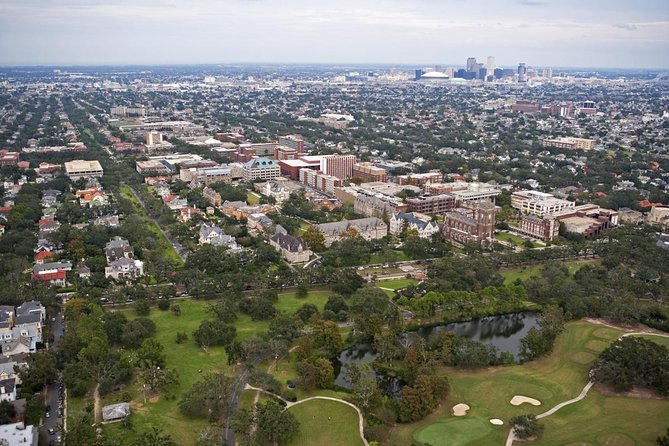
New Orleans is one of those cities where you can walk a lot and still miss the bigger story. This tour solves that problem by doing what bikes do best: you cover ground quickly, but you move slowly enough to read the streets as you go.
The best part for me is the mix. You start in the French Quarter, then roll outward to areas that give context for what you’re seeing. You’re not just checking boxes. You’re getting a sense of where each era of the city took root, from Creole beginnings near the river to music-making neighborhoods farther out.
It also helps that it’s a small group. With a max of 10 riders, you’re not fighting for attention at every stop. You can ask real questions, and the guide can adjust the conversation to what your group cares about.
You can also read our reviews of more tours and experiences in New Orleans.

Price and what you get for $55 in 3 hours
$55 for about 3 hours sounds simple, but the value comes from the package. You get a local guide, bottled water, and a comfortable bike with a basket. That means you’re not paying extra for basics, and you can show up ready to ride.
Then there’s the low-friction cost of the stops. The tour’s listed stops are free entry places (like Jackson Square, City Park, and major parks/streets), so you’re not constantly scanning your budget mid-tour.
Also, the time efficiency is real. For a similar amount of time, many people only see the French Quarter properly on foot. This ride adds multiple neighborhoods plus City Park and a major cemetery stop, without turning the day into an all-day effort.
Getting to 223 Dauphine St and what the ride is like
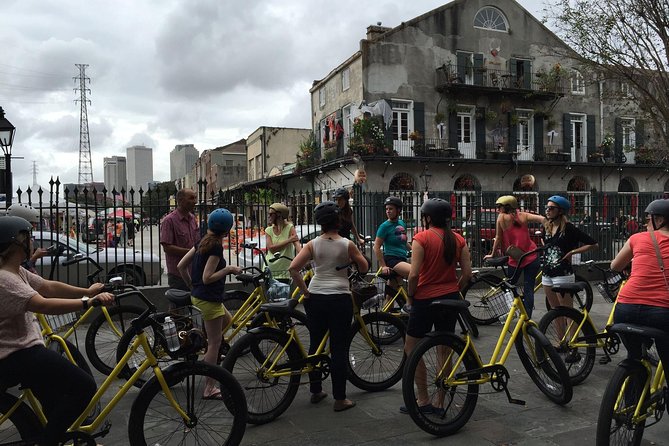
The tour meets at 223 Dauphine St in New Orleans, and it ends back at the same spot. If you’re using public transit, the location being close to it is a practical win.
The bikes come with a basket, and there’s bottled water included. In hot months, that little detail matters more than it sounds. You also get a ride that’s described as flat and easy, with plenty of time spent at stops so you’re not just sprinting from one corner to another.
That said, listen to the caution from the experience itself: the bikes can be heavy, and the braking mechanism may take a few minutes to get comfortable with. If you don’t ride often, plan to arrive with enough time to do a slow first stretch and get the feel of the bike before you settle into the group pace.
French Quarter start: Jackson Square and the riverfront story
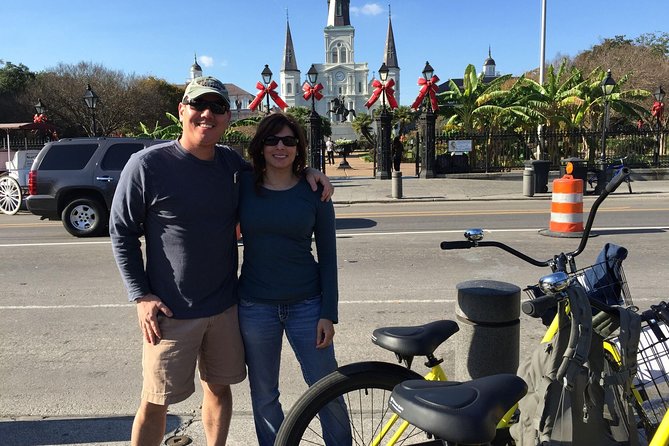
You begin in the French Quarter area with Jackson Square and the Mississippi River front. This is the part of New Orleans people recognize instantly. But the tour focus makes it more than a quick photo stop.
Jackson Square is a good “orientation anchor.” From there, the riverfront helps explain why New Orleans became the cultural mix it is today. The tour frames this as the area where Creole history began, and that context sticks as you move farther through the city.
Expect about 15 minutes here. That’s enough time to look around, reset your legs, and absorb what your guide is connecting to later stops. If your schedule is tight, this is also a smart first move: it helps you understand what you’re seeing before the ride becomes a series of neighborhood reveals.
Faubourg Marigny: oldest outside the Quarter and a music engine
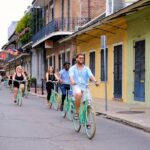
After the French Quarter, you roll into Faubourg Marigny, described as the oldest neighborhood outside the Quarter and known for a big music scene.
Marigny is where the tour starts to feel less like sightseeing and more like city reading. The streets and the architecture don’t just look different. They hint at how the city grew beyond its original core, and why music culture became such a powerful local identity.
Plan for about 10 minutes here. It’s a short stop, but it sets you up for the next layers of New Orleans. If you like hearing how people lived, worked, and created community, this is the kind of stop where your guide’s stories do most of the heavy lifting.



St. Louis Cemetery No. 3: above-ground history you can actually see
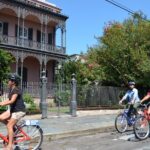
Next comes St. Louis Cemetery No. 3 in the Bayou St John neighborhood. This is an above-ground cemetery, and that detail is key to understanding why New Orleans burial traditions look the way they do.
The stop is about 15 minutes. That’s usually enough time to walk at a respectful pace, look at the structures, and listen to the explanation without turning it into a rushed “in and out” photo mission.
If you’re squeamish about cemeteries, you can still get value here by focusing on the architecture and the cultural reasoning. If you’re curious about how places shape people, this stop adds weight to everything else on the route.
City Park in the shade: live oaks that can be 850 years old
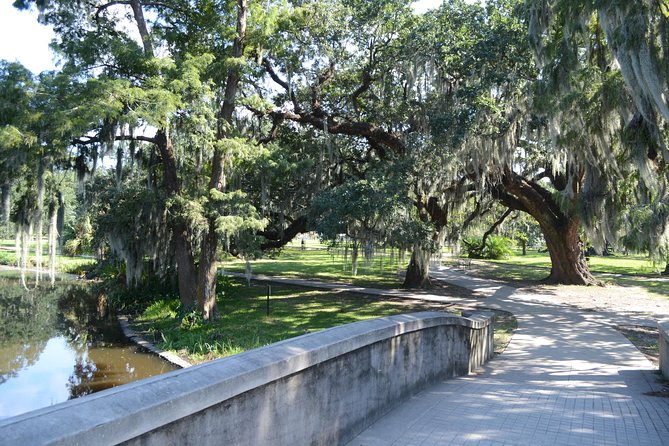
Then you shift into nature with New Orleans City Park. This stop is short on paper (about 10 minutes), but it’s big on visual impact.
City Park is known for its mature live oaks, including trees estimated to be 400 to 850 years old. For a visitor, this is one of the easiest ways to understand New Orleans as a place with deep time, not just short-term nightlife.
Even if you only have a short window, stepping under those trees changes your pace. You slow down without forcing it. And you’ll probably notice the difference right away compared with the street heat and building density you just cycled through.
A practical note: if the day is warm, this is also where water and shade help you stay comfortable for the rest of the ride.
Treme and Louis Armstrong Park: roots of free people of color and jazz
Two stops capture New Orleans’ creative spine: Treme and Louis Armstrong Park.
In Treme, you learn about it as the original neighborhood of free people of color. That framing matters. It turns the area from a name you’ve heard into a place with real social history, and it helps you understand how culture kept growing even when power structures were unfair.
Then comes Louis Armstrong Park, described as the place that jazz began, plus a park filled with New Orleans music and culture history. This stop is about 10 minutes, which means your guide will likely focus on key stories tied to what you’re seeing in front of you rather than trying to cover everything at once.
This part of the tour is ideal if you want more than architecture and street views. It’s where the city’s identity becomes easier to explain back to your group, like you can say why jazz fits here, not just that you heard of it.
Riding the old streets back toward Buzz Nola
You end with another portion of the French Quarter ride, about 15 minutes, as you make your way back to Buzz Nola.
That “closing ride” is underrated. It gives you a final look at the streets and sights you already started with, but now your brain has context. You’re not just passing them again. You’re connecting details you noticed earlier to the broader neighborhood story you picked up on the way out.
For a first-time visit, that looping effect is gold. You come away with an overall map of what each area contributes to the city’s identity, not just a list of landmarks.
Who this tour is best for (and who should think twice)
This bike tour is a strong fit if you want:
- A short, efficient way to see more than the French Quarter
- Low-walking sightseeing thanks to the bike
- A neighborhood-focused history route with plenty of guide talk at stops
- A safe, guided pace with a small group
It’s also a good option for groups with mixed energy levels, since the ride does the distance work for you and the stops handle the exploring.
The main “think twice” category is anyone who struggles with bike control or who gets nervous about street riding. The route is described as safe and relatively easy, with mentions of bike lanes and quiet areas. But the bikes are heavy and the braking takes practice. If you’re brand new to riding, consider arriving ready for a slow start and a little coaching.
Finally, note the minimum age is 12, so it can work well for teens who can ride reliably.
Practical tips that make the whole 3 hours easier
A few small things can make or break comfort on a bike tour in New Orleans:
- Wear comfortable, weather-appropriate footwear built for riding, not thin flip-flops.
- Bring a water plan even though bottled water is included, especially in warm months.
- If you’re sensitive to pacing, pay attention early to the ride start so you get used to the bike’s weight and brakes.
- Consider booking when your schedule is predictable. The tour is often booked about 21 days in advance, which tells me it’s popular enough to plan ahead.
And yes, rain can happen. One group experienced heavy rain, and they still got through the experience. If weather looks rough, keep your expectations flexible and be ready for the tour to adjust for conditions.
Should you book this New Orleans History and Sightseeing Small-Group Bike Tour?
If you want a smart New Orleans overview that goes past the obvious, I think this is a great buy. The small group size (max 10), the free-to-enter stops, and the route that strings together French Quarter, Marigny, Treme, City Park, and major cultural landmarks make it feel like a real introduction, not a quick hit-and-run.
Book it especially if:
- You have only a few days and want one activity to give you context fast
- You’d rather ride than walk all morning
- You like history tied to neighborhoods, not just dates
Skip it or adjust expectations if:
- You’re not comfortable on a bike yet, given the bike weight and braking learning curve
- You prefer deep, long museum-style stops rather than short, story-based viewing windows
FAQ
How long is the New Orleans History and Sightseeing Small-Group Bike Tour?
It runs for about 3 hours.
What is the group size?
The tour has a maximum of 10 travelers.
Where does the tour start and end?
It starts at 223 Dauphine St, New Orleans, LA 70112 and ends back at the meeting point.
Are there morning or afternoon departures?
Yes. You can choose between a morning or afternoon departure.
What stops are included on the route?
The tour includes stops at Jackson Square and the Mississippi River front, Faubourg Marigny, St. Louis Cemetery No. 3, New Orleans City Park, Treme, Louis Armstrong Park, and a return ride through the French Quarter.
Is admission required for the stops?
The stops listed for the tour include free admission (per the tour details for each stop).
What’s included with the tour price?
Included are a local guide, bottled water, and a comfortable bike with basket.
What should I wear for the bike tour?
Wear comfortable, weather-appropriate footwear for riding a bike.
What is the minimum age?
The minimum age is 12.
What if the weather is bad?
The experience requires good weather. If it’s canceled due to poor weather, you’ll be offered a different date or a full refund.