REVIEW · NEW ORLEANS
Beyond the French Quarter Bike Tour
Book on Viator →Operated by Paved Paradise Bike Tours New Orleans · Bookable on Viator
Pedal past New Orleans you usually skip. This 3.5-hour bike tour takes you through calmer Creole neighborhoods and major landmarks on a low-traffic route, with small-group energy and free guided stops. I especially like how the route threads together street scenes, historic homes, and City Park greens, all while keeping the ride moving. I also love that the guide, often mentioned as Tonya, turns each stop into something you can picture fast—architecture here, cemetery rituals there, neighborhood stories in between.
One catch: you do need moderate physical fitness for a steady ride and watch for real-world road stuff like potholes. The ride is flat, but New Orleans streets can be bumpy in spots.
In This Review
- Key things to know before you ride
- Beyond the French Quarter Bike Tour: What You’re Really Signing Up For
- Price and logistics: $60 that covers the hard parts
- Start at 3027 Chartres St: the morning setup that keeps things smooth
- The ride itself: pace, safety, and what flat really means
- Esplanade Avenue: Creole Millionaires Row by bike
- Degas House and Luling Mansion: charming homes that stop you
- Seventh Ward: neighborhood stories you can picture
- St. Louis Cemetery No. 3: learning the burial rituals of the Cities of the Dead
- City Park: live oaks, Spanish moss, and the best kind of break
- Bayou St. John and Bayou Road: where the city’s story runs
- The guide matters: why Tonya gets so much credit
- Who should book this (and who should skip it)
- Should you book Beyond the French Quarter Bike Tour?
- FAQ
- How long is the bike tour?
- What does the tour cost?
- Where is the meeting point, and what time does it start?
- Is the tour offered in English, and do I get a mobile ticket?
- What’s included in the price?
- Are beignets included?
- What fitness level do I need?
- Do they run the tour in bad weather?
- Is there free cancellation?
Key things to know before you ride
- You’ll bike about 9 miles through parts of town most people skip when they only see the French Quarter
- Small group, max 10 travelers, so you actually get to ask questions and hear the guide clearly
- City Park is a star stop, with live oaks, Spanish moss, and a break at Café du Monde (beignets optional, not included)
- Cemetery No. 3 fits the theme with guided learning about burial rituals in the Cities of the Dead
- You get a complete kit: bicycle, helmet, bottled water, and a poncho if it rains
- Tonya-style storytelling is a recurring highlight, with clear neighborhood context at every turn
Beyond the French Quarter Bike Tour: What You’re Really Signing Up For
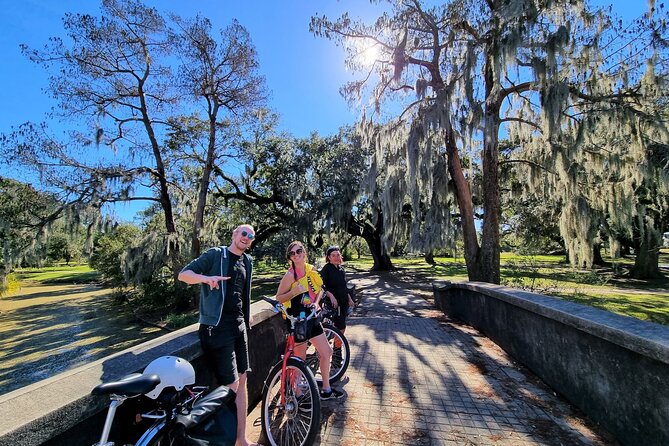
If you think New Orleans is only about balconies and late-night music, this ride corrects that quickly. You’re out on two wheels for roughly 3 hours 30 minutes, covering about 9 miles (some riders note slightly different distance depending on the exact route and how turns land). The point isn’t speed. It’s scope: you see a lot of the city in one morning without feeling like you’re sprinting from door to door.
What makes this tour feel different is how it balances three things: movement, stories, and scenery. You bike through long stretches (good for getting your bearings), then you pause at meaningful places where the guide connects what you’re seeing to how New Orleans works—neighborhood by neighborhood. It’s also the kind of outing where you end up chatting with other people who actually like biking, history, and walking off the usual path.
The value is strong if you want guided context without paying for a private car or stacking up multiple separate tours. For $60, you get the bike, helmet, water, and guide time. Food is mostly on you (more on that at Café Du Monde), but the “getting there and back” part is handled for you.
You can also read our reviews of more tours and experiences in New Orleans.

Price and logistics: $60 that covers the hard parts
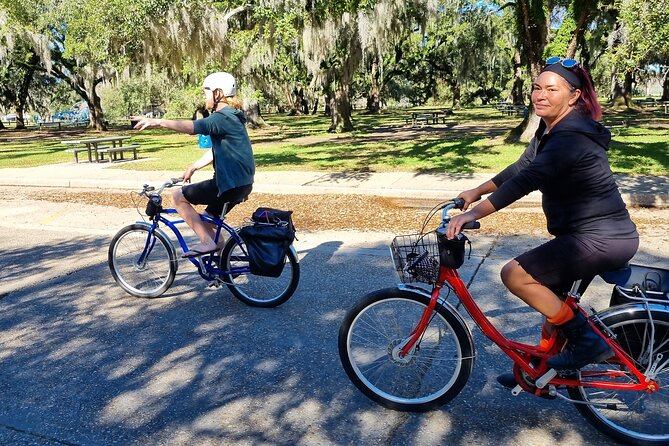
Let’s talk money in a practical way. $60 per person sounds simple, but what you’re buying is the setup: the bicycle, helmet, and bottled water, plus a local guide steering you through streets and stops you might miss on your own.
This is not a “just ride around” deal. You get planned pauses at major sights—think Esplanade Avenue, City Park, and St. Louis Cemetery No. 3—each with guided interpretation. When a tour includes the bike and safety basics, you save time and effort. You don’t have to hunt for rentals, figure out routes, or negotiate where to pause for photos.
A couple details to keep in mind:
- Beignets and café au lait at Café Du Monde are not included in the price.
- Since this runs rain or shine, you’ll want the poncho the tour provides, and you’ll enjoy the ride more if you dress for damp weather.
Start at 3027 Chartres St: the morning setup that keeps things smooth
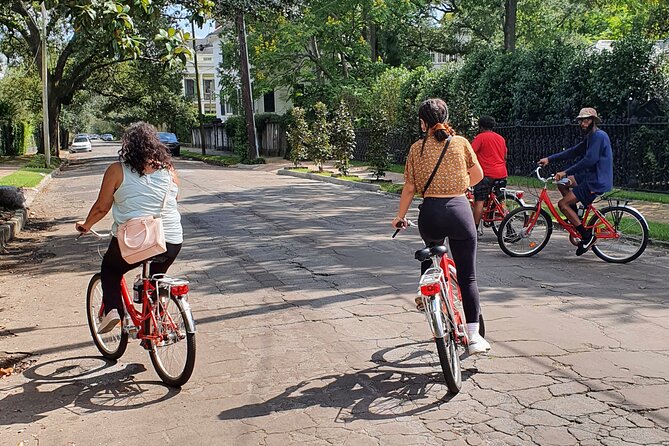
You’ll meet at 3027 Chartres St, New Orleans at 9:30 am. The tour ends back at the meeting point, so you don’t have to worry about coordinating a second pickup.
A nice touch here is the way the experience is designed to start fast: you’ll have a mobile ticket, and the tour operates in English. If you’re traveling with kids, the operator asks for children’s heights so they can determine the correct bike size. That’s the kind of small planning step that can make the difference between a smooth ride and a last-minute scramble.
Group size matters too. This is limited to 10 travelers max, which means you’re not fighting for attention at stops, and the guide can keep an eye on the group as you move.
The ride itself: pace, safety, and what flat really means
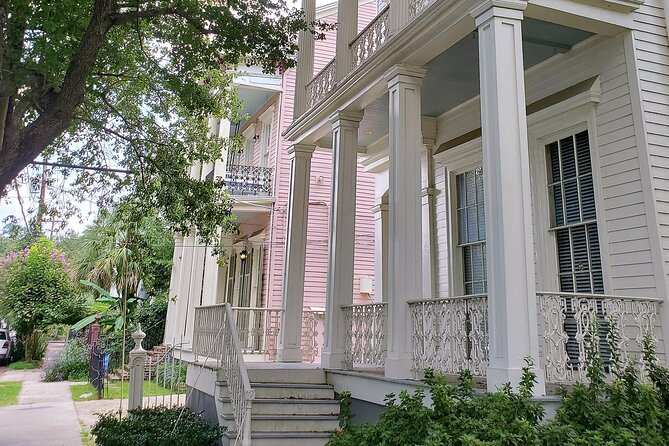
The streets here are generally flat, which is why this works for people who don’t want a hilly workout. Reviews emphasize that the pace feels steady and manageable, and that the route tends to stay on lower-traffic roads. That’s important in New Orleans, where the streets can feel busy even when you’re not near the biggest tourist clusters.
Now for the reality check: you should expect the street surface to be imperfect. One rider called out potholes as the main issue. Even if you’re comfortable on a bike, you’ll enjoy the tour more if you stay alert on turns and ride lines.
Fitness-wise, plan on a moderate effort level. The tour is long enough that you’ll feel it in your legs, but it’s not an all-out endurance test. If you can handle an easy-to-steady neighborhood bike ride for a few hours, you’re in the right zone.
Esplanade Avenue: Creole Millionaires Row by bike
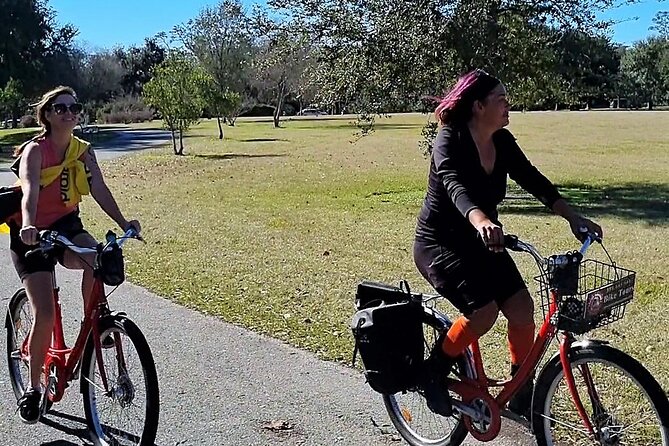
Your first major stretch is Esplanade Avenue, a road once known as Creole Millionaires Row. This section works on bikes because it’s built for viewing: you glide along an oak-lined avenue where the architecture and the streetscape do the talking.
You’ll pass through Faubourg Treme and into Faubourg St. John, and the guide uses that movement to explain how older New Orleans neighborhoods developed. This is one of those rides where you feel like you’re learning the geography in real time—what’s nearby, what changed, and how the city’s design creates different moods block by block.
The main benefit of starting here is momentum. Instead of easing into the day with a short loop, you begin with a street that sets the visual tone fast: shaded, historic-looking, and made for slow rolling.



Degas House and Luling Mansion: charming homes that stop you
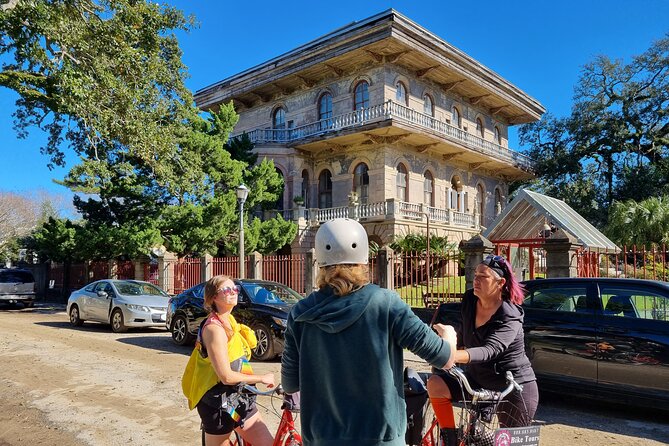
After the broad avenue views, you shift to smaller-scale scenery at homes like Degas House and the Luling Mansion. These stops are brief, but that’s actually smart. You get a quick hit of atmosphere and architectural detail without turning the tour into a long waiting game.
What makes this portion valuable is how it anchors the stories to physical places. When you later hear about neighborhoods and cultural patterns, you’ve already seen examples of the kind of homes and streets the guide is describing.
If your travel style is more about “I want to see it, then move on” than “I need museum time,” this stop-to-stop pacing fits.
Seventh Ward: neighborhood stories you can picture
In the Seventh Ward, the tour focuses on the lived experience of older New Orleans—riding through Creole neighborhoods like Faubourg Treme and Faubourg St. John again, but with more interpretation tied to how people lived and what shaped the area.
This is where you’ll appreciate the small-group format. You can hear the guide clearly, and you can also ask quick questions when a story connects to something you see in front of you. The guide’s goal here is to help you spot hidden local spots worth knowing, even if you’re not stopping for long at each one.
A consideration: because this section is story-heavy, it helps if you’re the kind of person who likes listening while moving. If you want a silent ride with minimal explanations, this may feel more talk-and-ride than quiet-photo time.
St. Louis Cemetery No. 3: learning the burial rituals of the Cities of the Dead
Then comes a stop that always changes how people see New Orleans: St. Louis Cemetery No. 3. The tour frames the cemetery through burial rituals and the idea of the Cities of the Dead—a concept that can sound abstract until you’re standing there and hearing it explained.
Even with a short window (about 10 minutes), this stop works because the guide focuses your attention. You’re not trying to read every plaque or research everything on the spot. Instead, you get the main context that makes cemetery design and practices understandable.
If cemeteries aren’t your thing, don’t worry—you’re not stuck there. It’s one focused visit within a larger ride, and the tour keeps moving so the day doesn’t stall.
City Park: live oaks, Spanish moss, and the best kind of break
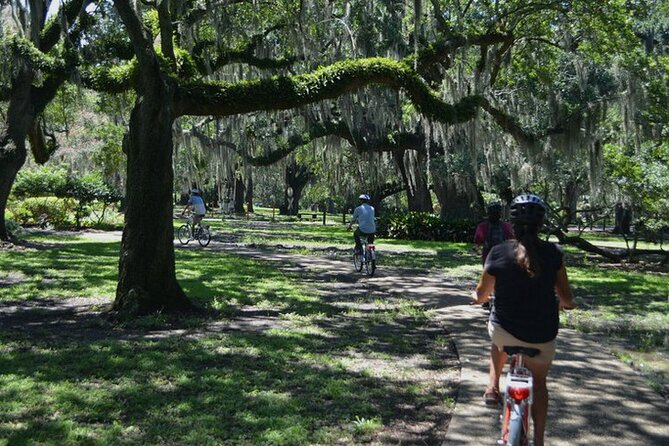
City Park is one of the highlights you should plan around. You’ll pedal through live oak groves with Spanish moss, and the guide points out major park areas—museums, botanical and sculpture gardens, and other attractions.
This isn’t a rushed sprint through a famous landmark. The timing gives you room to actually notice details. Expect around 45 minutes here, which is long enough to feel the park’s different atmosphere compared to the street sections.
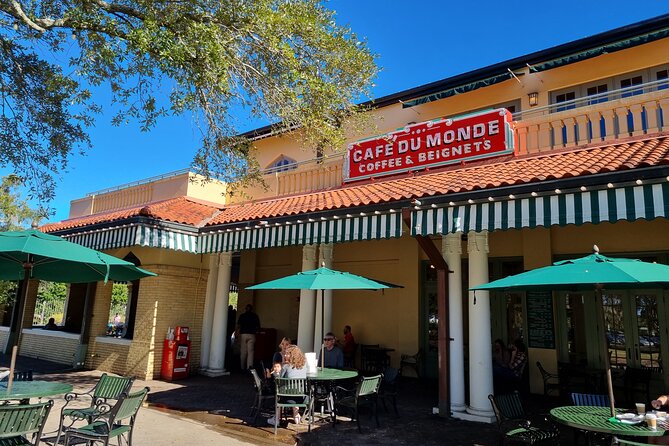
Then you get the most useful food moment of the whole tour: a stop near Café Du Monde – City Park. You’ll have about 25 minutes for a break and the option to buy beignets and café au lait. Since this isn’t included, you can adjust based on appetite and budget—grab something sweet if you want the classic New Orleans moment, or just take a quick break and sip something.
This is also the best point in the tour to regroup. If you’ve been pedaling and listening for a while, City Park is where your body and brain catch up.
Bayou St. John and Bayou Road: where the city’s story runs
After the park, the tour heads to Bayou St. John and follows the trail of Bayou Road, described as one of the oldest roads in the US—and tied to why New Orleans exists. This segment is a good reminder that the city isn’t just built on streets and buildings. It’s also built on waterways and routes that shaped settlement.
Because you’re biking, this stop feels less like a quick photo and more like a guided walk you can cover without losing energy. About 30 minutes here gives the guide time to connect the landscape to the city’s development logic.
Then you roll back through the French Quarter and Faubourg Marigny on the return. The contrast is interesting: you saw these areas earlier as part of the larger city map, and now you experience them with more context. Even if you still want to spend time in the Quarter later, you’ll have a better sense of where it sits in relation to everything else.
The guide matters: why Tonya gets so much credit
One name shows up again and again: Tonya. The praise isn’t vague. People specifically highlight her friendliness, her street-and-neighborhood knowledge, and her ability to explain history in a way that makes the ride click.
That’s a big deal on a bike tour. When you’re moving through different neighborhoods, the guide’s job is to turn what could be random scenery into a set of “oh, I get it” moments. Tonya’s described style seems to do exactly that: plenty of information, good pacing between stops, and an easy, supportive vibe.
If you’re choosing a tour mainly for the guide, this is a strong option. A good guide can also adjust to real conditions—like keeping the group together on rougher pavement—so you feel safe rather than rushed.
Who should book this (and who should skip it)
This tour is best for you if:
- You want to see New Orleans in a different shape than a Quarter-only walk
- You like history that points to visible places, not just dates
- You want a small-group feel without paying for a private tour
- You can handle a steady bike ride at a moderate fitness level
You might want to choose something else if:
- You hate riding for a few hours, even on flat routes
- You’re very sensitive to bumps and potholes
- You prefer longer stops at a single site over a mix of several places
Should you book Beyond the French Quarter Bike Tour?
Yes, if your goal is smart, efficient sightseeing with real local storytelling. For $60, you’re getting the bike setup, safety gear, and a guided loop that goes beyond the postcard areas into neighborhoods, City Park, and St. Louis Cemetery No. 3. The small group size makes it feel personal, and the pacing gives you both movement and breaks.
If you’re on the fence, use this quick test: can you comfortably ride a bike for about 3.5 hours with brief stops? If yes, this is one of the better ways to get a fuller sense of New Orleans without stacking up separate tours.
FAQ
How long is the bike tour?
It runs for about 3 hours 30 minutes.
What does the tour cost?
The price is $60.00 per person.
Where is the meeting point, and what time does it start?
You meet at 3027 Chartres St, New Orleans, LA 70117, and the start time is 9:30 am.
Is the tour offered in English, and do I get a mobile ticket?
Yes. The tour is offered in English, and it uses a mobile ticket.
What’s included in the price?
The tour includes a bicycle, helmet, bottled water, a poncho if it rains, and a local guide.
Are beignets included?
No. You can buy beignets at Café Du Monde, but food is not included in the tour price.
What fitness level do I need?
The tour is listed for travelers with moderate physical fitness. It’s a steady bike ride, with a generally flat route.
Do they run the tour in bad weather?
Yes, it operates rain or shine. In dangerous weather, they will work with you to reschedule or refund.
Is there free cancellation?
Yes. You can cancel up to 24 hours in advance for a full refund.