REVIEW · ROME
Rome: Highlights Bike Tour
Book on GetYourGuide →Operated by Fat Tire Tours - Italy · Bookable on GetYourGuide
Rome is easier on two wheels. This 3-hour highlights bike tour turns big sights into a simple, guided route, with cruiser bikes and headset audio to keep you in sync with the story. I love how fast it gets you your bearings, especially with expert guiding through real Roman streets and photo stops. I also love the mix of old-world landmarks in one loop, from the Pantheon to the Colosseum area. One drawback to plan for: you’re riding over Rome’s uneven ground and into crowded traffic zones, so you need to feel comfortable on a bike.
The route also covers more than the postcard view. You’ll see the Pantheon, Trevi Fountain, Circus Maximus, and Roman Forum-adjacent viewpoints, plus the Vatican area is part of the broader scope of the tour. Heads up if you hate active travel: it’s not a sit-and-sip sightseeing bus day.
In This Review
- Key Things I Think You’ll Care About
- How This 3-Hour Bike Route Gets You Oriented Fast
- Getting Set Up at Fat Tire Tours Rome (and What to Wear)
- From the Jewish Ghetto to Campo de’ Fiori: Rome’s Daily Life on Wheels
- Pantheon Stop: Classic Roman Architecture at Street-Level Pace
- Piazza Navona and Sant’Ignazio: Baroque-Era Looks You Can See Fast
- Temple of Hadrian, Trevi Fountain, Trajan’s Column: Where the City Turns Up the Volume
- Piazza Venezia to the Arch of Constantine: Quick Stops, Big Roman Scale
- Colosseum Time Without Waiting in a Long Line
- Circus Maximus: A Change of Pace for Your Roman Brain
- Safety, Comfort, and the Cobblestone Reality
- Value for Money: What You Get for About $51.24
- Who This Tour Fits Best (and Who Should Rethink It)
- Should You Book This Rome Highlights Bike Tour?
- FAQ
- How long is the Rome Highlights Bike Tour?
- Where does the tour start and end?
- Is the tour guide available in English?
- Does the tour include visits inside monuments or museums?
- Do I need to wear a helmet?
- What footwear is allowed?
- What happens if it rains?
Key Things I Think You’ll Care About
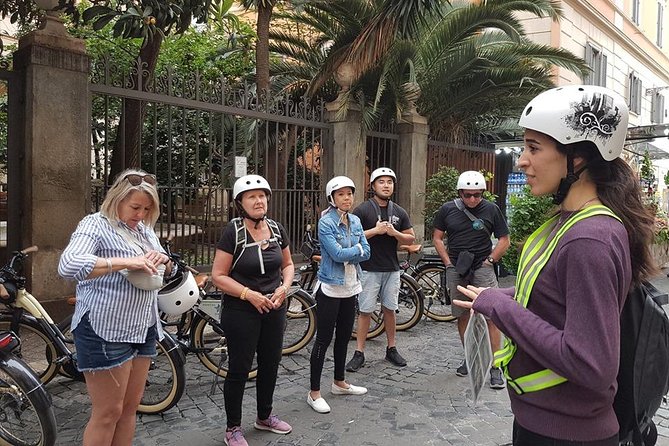
- Headset audio so you can actually hear the guide while you move.
- Cruiser bikes and mostly easy riding, even through busy streets.
- No museum or interior visits, so you get motion + views instead of line time.
- Photo-friendly stops timed for lingering, especially around Trevi.
- Safety matters: the guide keeps the group together where roads get hectic.
- Cobblestones are real, so closed-toe shoes help a lot.
How This 3-Hour Bike Route Gets You Oriented Fast
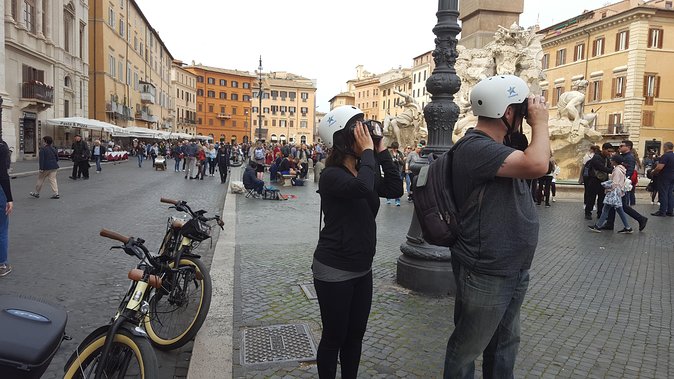
This is the kind of Rome tour that helps you stop feeling lost. In just three hours, you see a lot of the city’s top “where do I start” landmarks, and you do it in a way that doesn’t require you to plan an entire day of logistics. The guided format matters here: you’re not just biking around randomly, you’re getting a clear story as you pass each site.
The pacing is also smart. You’ll have short ride segments between stops, plus set time at key viewpoints so you can look up, take pictures, and understand what you’re seeing before you roll on. That combination is perfect if you only have a couple of days in Rome or if you want a first-day overview before you go back on foot.
You can also read our reviews of more tours and experiences in Rome.


Getting Set Up at Fat Tire Tours Rome (and What to Wear)
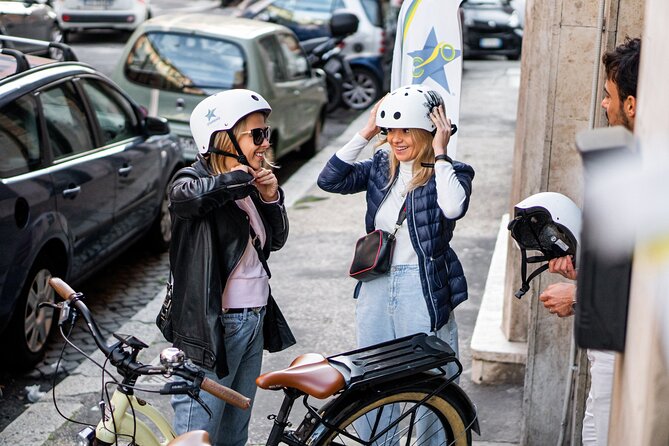
You meet at Fat Tire Tours Rome, Via dei Delfini 35/36 (about a 5-minute walk from Piazza Venezia, and roughly 15 minutes on foot from the Colosseum). Arrive about 15 minutes early so you don’t feel rushed while you get your bike and gear sorted.
The tour gives you:
- Cruiser bike
- Local guide
- Headset
- Helmet optional
Helmet optional is fine, but I still recommend you bring a good helmet if you have one. More important than gear is footwear. Open-toed shoes aren’t allowed, and Rome’s cobblestones mean your feet will feel every bad decision you make.
One more practical note: the tour runs rain or shine. You’ll have rain ponchos available, and you’re encouraged to dress comfortably for weather.
From the Jewish Ghetto to Campo de’ Fiori: Rome’s Daily Life on Wheels
The ride begins at the shop and quickly puts you into the parts of Rome where the city feels lived-in. You’ll pass through the Jewish Ghetto area first, then head toward Campo de’ Fiori.
What I like about this opening stretch is the contrast. Instead of starting with only the famous monuments, you start with the neighborhood texture. Campo de’ Fiori is a great place to notice how street life and historic layers sit side by side. Even if you don’t plan to go inside anything, you’re learning how Rome’s center actually works.
Your watch-outs here: busy street conditions and intersections. A few reviewers highlight that Rome traffic can make bike handling feel tricky at first. The good news is the guide’s job is to keep the group moving smoothly, and that’s exactly what you want in these early minutes when you’re still figuring out your comfort level.
Pantheon Stop: Classic Roman Architecture at Street-Level Pace
Next up is the Pantheon. It’s one of those places where your brain instantly switches to awe mode when you see it in real life. The big point on this stop is the architecture: you’ll see what makes this building so influential across centuries, including its famous massive concrete dome and its carefully designed classic proportions.
This tour doesn’t go inside monuments, so don’t build your day around museum vibes. Instead, think of the Pantheon stop as a visual master class from the outside, at a pace that lets you connect details to the bigger Roman story the guide is telling.
If you’re the type who likes to take slow photos, plan for it. The stop time gives you enough chance to step back, look up, and frame the building without feeling like you’re being herded.
Piazza Navona and Sant’Ignazio: Baroque-Era Looks You Can See Fast
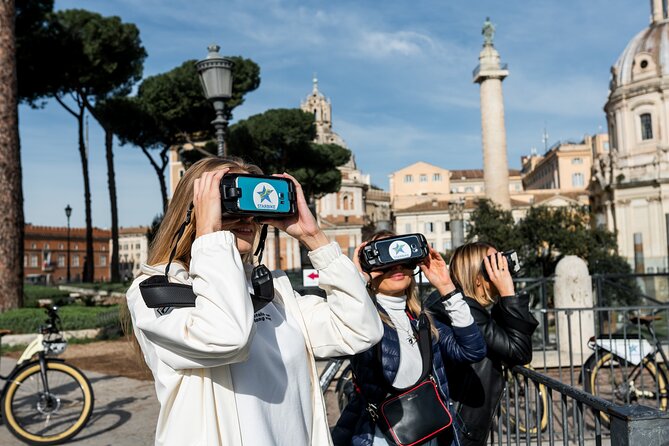
From the Pantheon, you roll into Piazza Navona, one of Rome’s most photogenic squares. The value here isn’t only the view. It’s the way the square’s shape and buildings help you understand how Roman city planning creates drama at street level.
Then you pass by the Church of Sant’Ignazio di Loyola. This is the kind of stop that’s worth doing even if you don’t go inside, because the church’s presence changes how you read the neighborhood around it. It’s a quick checkpoint for the religious and artistic influence shaping Rome’s look.
What to expect: short viewing windows. You’ll want to keep your camera ready, but also keep your head up. This part of the tour works best when you treat each stop like a clue, not a final destination.
Temple of Hadrian, Trevi Fountain, Trajan’s Column: Where the City Turns Up the Volume
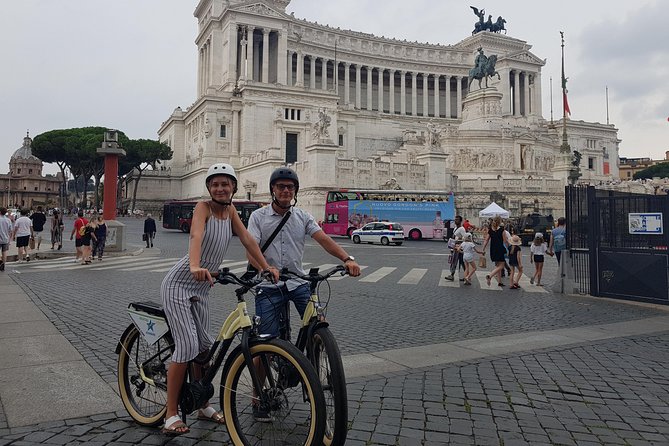
After Navona, you ride to the Temple of Hadrian area. This stop is brief, but it helps connect the city’s “ancient bones” to what you’re seeing everywhere else. Rome loves to reuse its own materials and references, and seeing these smaller, nearby pieces helps the big icons make more sense.
Then comes the biggest showpiece of the middle of the tour: Trevi Fountain. You get a longer visit here, and that’s the right call. Trevi isn’t just about the famous photo. The craftsmanship and design are the point. The fountain is also one of the busiest places in the city, so the bike timing matters. You’re better off having a set window with a guide who knows how to keep the group together than trying to fight for your moment alone.
Next is Trajan’s Column, a site that rewards people who like history that you can see. Columns like this are visual storytelling machines—busy and detailed—so your time here is best used by focusing on what you can actually make out at normal human walking distance.
Piazza Venezia to the Arch of Constantine: Quick Stops, Big Roman Scale
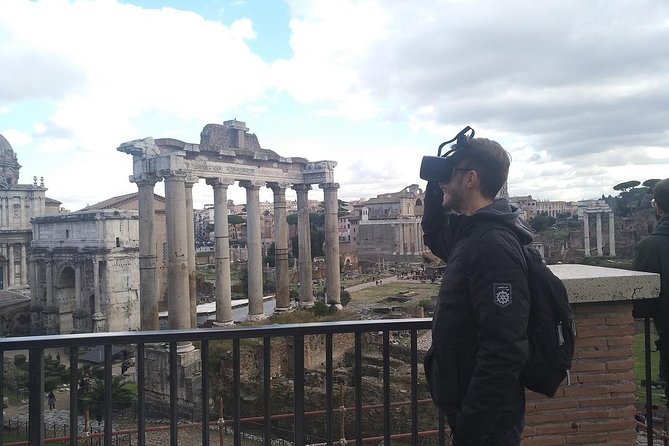
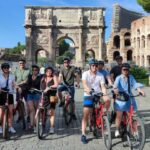
You’ll pass Piazza Venezia and then the Arch of Constantine. These are short bike stops, but they matter because they set scale. Rome’s monuments aren’t just pretty. They’re political statements made in stone.
This is also a stretch where traffic is likely to feel intense. Reviews often credit the guide for keeping everyone safe in the flow of cars, scooters, and pedestrians. Guides like Marco and Stefano are repeatedly praised for handling crowded streets with calm instructions and group control, which is exactly what you want here.
Colosseum Time Without Waiting in a Long Line
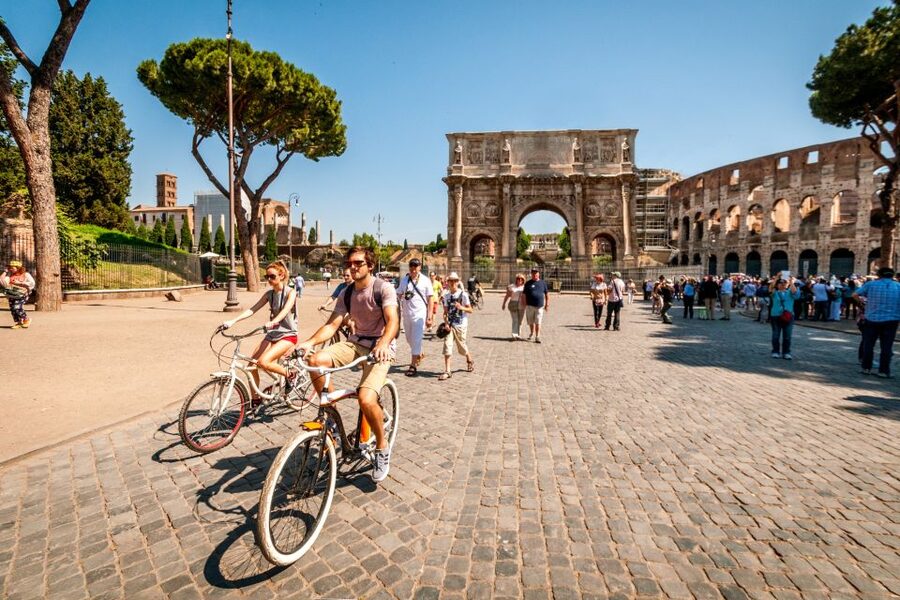
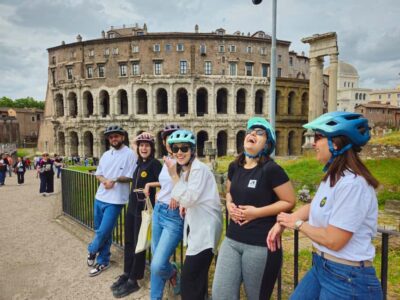
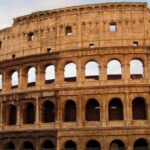
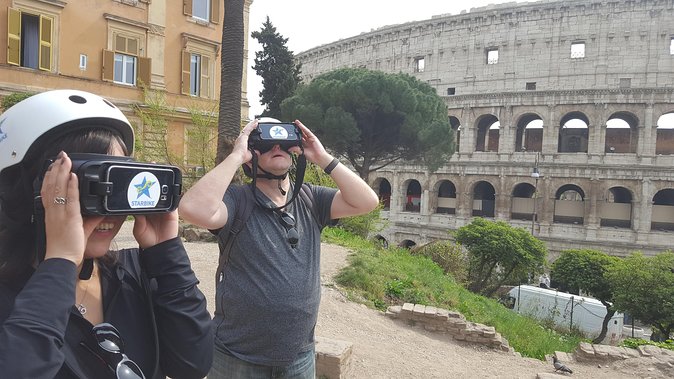
The ride continues toward the Colosseum, where you’ll spend one of the longer stops on the route (about 25 minutes). Even though you’re not going inside, this is still a powerful moment. Seeing the Colosseum in its real setting does something a photo can’t. It tells you how huge it is, how it dominates the surrounding blocks, and why it still feels central to Rome even now.
This stop works especially well if you’re doing Rome as a first-time visit. The guide’s job here is to connect what you’re seeing to the Roman world—how this type of structure functioned and why it was built.
Practical tip: take a few minutes before you shoot your main photo. Walk a small circle, find a good angle, then shoot. You’ll get a better composition and you won’t feel rushed.
Circus Maximus: A Change of Pace for Your Roman Brain
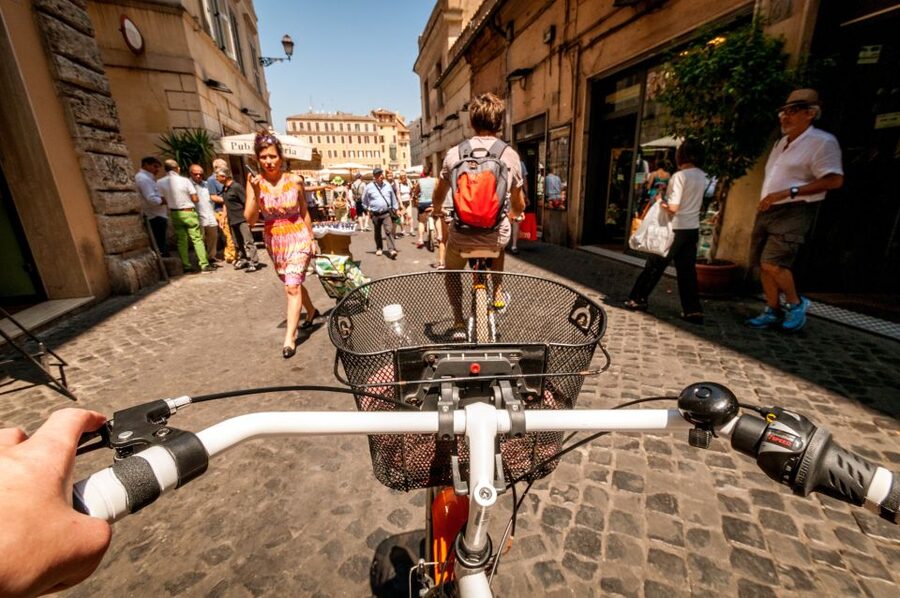
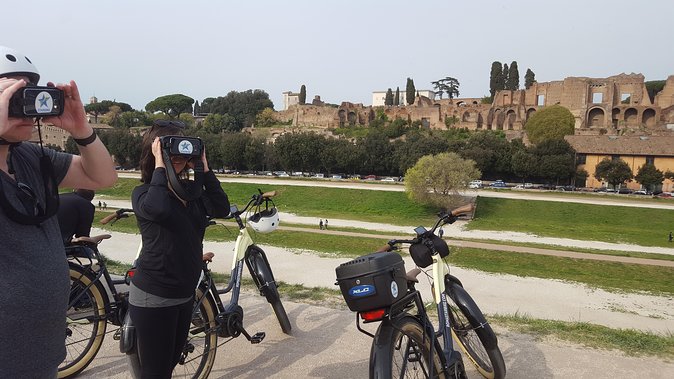
Finally, you’ll ride to Circus Maximus, the former arena for major chariot-racing spectacle. This stop feels different from the Colosseum area. You’re shifting from an iconic stone monument to a broad space tied to Roman entertainment and public spectacle.
What I like about this ending viewpoint is that it helps close the story arc. After seeing political and religious Rome in the center and ancient monuments up close, Circus Maximus gives you another angle on how Romans spent their time and used public space.
You’ll also get good “final photos” energy here. It’s a solid way to end the tour because you’re leaving with not only pictures, but a clearer mental map of Roman civic life.
Safety, Comfort, and the Cobblestone Reality
Rome on a bike sounds easy. Rome traffic is not. The good news is the tour is set up for group cycling with a guide who actively manages the ride.
A few recurring points from the experience:
- The group stays together, even when streets get crowded.
- Guides repeatedly get praised for safety instructions and pacing.
- You’ll hear the commentary clearly thanks to the headset.
- Riding is described as mostly flat and not strenuous.
Still, take the cobblestones seriously. If you’re sensitive to uneven surfaces, or if you’re not confident on a bike, this may feel harder than the word highlights suggests. The tour is not recommended for pregnant women, and it’s also flagged for children who are uncomfortable riding over cobbles.
If you wear closed-toe shoes and keep a calm, steady pace, you’ll be in a much better place to enjoy the sights.
Value for Money: What You Get for About $51.24
At $51.24 per person for about 3 hours, you’re paying for more than transportation. You’re buying a guided route that bundles together:
- a cruiser bike
- a local guide
- headset audio
- time at major exterior landmarks
You’re also not paying for interior museum admissions because the tour does not visit inside monuments and museums. That might sound like a downside, but it’s also the reason the tour can cover so many highlights in such a short window.
For me, the value is strongest if you want the fast orientation. You’ll see the big names—Pantheon, Trevi Fountain, Colosseum area, Circus Maximus—and you’ll understand why they matter while you’re still in the middle of your Rome trip, not weeks later from memory.
Who This Tour Fits Best (and Who Should Rethink It)
This bike tour is a great match for:
- first-timers who want a quick “Rome overview”
- people who like active sightseeing more than bus rides
- anyone comfortable riding a bike in busy streets
- families with older kids who can ride independently
It’s less ideal if:
- you’re pregnant (cobblestones and cobbled street conditions are the issue)
- you have very limited bike comfort
- you need fully accessible, smooth-surface routes
- you’re traveling with a child who can’t ride on their own
Rules are clear about minors. Unaccompanied minors aren’t allowed, and children under 18 must be accompanied by an adult (18+). For kids under 10, the operator requires an excellent level of biking and may decline participation without refund if the child can’t ride independently.
Should You Book This Rome Highlights Bike Tour?
Book it if you want a practical Rome win: big sights, guided context, and a route that helps you stop guessing where to go next. The headset makes a difference, and the cruiser setup plus guide control makes it feel manageable even in busy streets. Guides like Mattia, Marco, Stefano, Sergio, and Mary are repeatedly praised for keeping groups safe and making history feel like a story you can follow while you ride.
Skip it (or choose a different style of tour) if you’re not comfortable on a bike or if cobblestones will make the day miserable. Also, if you specifically want to go inside major sites, you’ll need another plan, because this tour keeps things outside only.
If your goal is to get your bearings fast and see Rome’s greatest hits with less walking stress, this is an easy yes.
FAQ
How long is the Rome Highlights Bike Tour?
It lasts about 3 hours, with starting times that depend on availability.
Where does the tour start and end?
It starts and ends back at Fat Tire Tours office at Via dei Delfini 35/36, 00186 Rome.
Is the tour guide available in English?
Yes. The tour is provided in English only.
Does the tour include visits inside monuments or museums?
No. The tour does not visit inside monuments and museums.
Do I need to wear a helmet?
A helmet is provided, but it’s optional.
What footwear is allowed?
Open-toed shoes are not allowed. You’re encouraged to wear comfortable, closed-toe shoes.
What happens if it rains?
Tours run rain or shine. Rain ponchos are available.