REVIEW · NEW ORLEANS
New Orleans: Buzz the Crescent Guided Bike Tour
Book on GetYourGuide →Operated by Buzz Nola Bike Tours and Rentals · Bookable on GetYourGuide
New Orleans has a different rhythm on a bike. I really like how this tour handles the city’s storytelling in a practical way, with stops that make you slow down for the details—especially the above-ground cemetery and the architecture walk-by moments in the French Quarter and Faubourg Marigny. One thing to keep in mind: you’re on a bike for about 3 hours, and the ride runs in rain or shine unless severe weather hits at the start time.
I also like the small-group feel. With a limit of just 10 people, the guide can keep the pace easy and still steer you to the right corners. Guides like Chip and Adam are named in feedback, and the common thread is clear: they talk to you, not at you.
Finally, there’s a big practical bonus if you love iconic New Orleans treats. You’ll get the chance to stop at Cafe Du Monde for beignets, but plan for the stop to run longer if lines are slow-moving. Food isn’t included, so come hungry—but also come ready to grab what you want and get back on the bike.
In This Review
- Key highlights worth your time
- Meeting on Dauphine Street: easy to find, easy to miss
- The pace and how you’ll actually experience the city
- French Quarter architecture and Faubourg Marigny’s character
- Esplanade Avenue: shade, oak trees, and long views
- Armstrong Park and Congo Square: where the music connection lands
- City Park live oaks and a beignets pause that can run long
- The Mississippi River viewpoint over Jackson Square
- Bayou of St. John: turtles and tropical birds on the edge of the city
- Above-ground cemeteries: learning the why behind the look
- Practical value: what you’re getting for $52
- Who this tour suits best
- Should you book Buzz the Crescent Guided Bike Tour?
- FAQ
- FAQ
- How long is the Buzz the Crescent Guided Bike Tour?
- Where do I meet the guide and start the bike tour?
- How much does the tour cost?
- What’s included in the price?
- Is food included?
- How large is the group?
- Does the tour run in bad weather?
- What should I bring with me?
- Is the tour suitable for children or anyone who can’t ride a bike?
- Are alcohol or drugs allowed during the tour?
Key highlights worth your time
- Above-ground cemetery traditions: You’ll learn why burial practices look the way they do in New Orleans.
- Mississippi views near Jackson Square: You get a rare river perspective with a clear sense of where you are in the city.
- Esplanade Avenue under old oaks: Shade first, then those long rows of historic homes.
- City Park’s huge live oaks: A pause that makes the whole ride feel different and calmer.
- Bayou of St. John wildlife spotting: Keep your eyes open for turtles and colorful tropical birds.
- Helmeted, guided riding on a small group: Smooth logistics so you can focus on the sights.
Meeting on Dauphine Street: easy to find, easy to miss
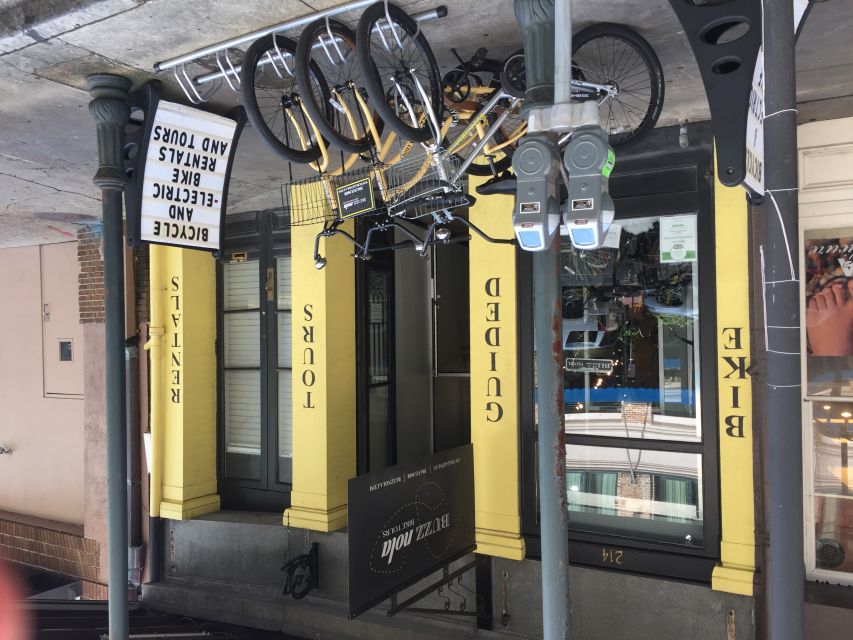
This tour starts in the French Quarter at a bike shop on Dauphine Street, about one block from Bourbon Street. The shop is next to the Museum of Death, so you’re not hunting around blind. When you walk up, it’s a pretty classic New Orleans check-in moment: you’re close to the action, but your ride is about to take you out of the loudest strip.
Here’s my practical advice: arrive early. You want to be there at least 15 minutes before departure so you’re fitted with a helmet and ready to roll. The tour notes that late arrivals may miss the departure, and there are no refunds if you’re not ready when scheduled to depart.
You’ll be set up with a rental bike and helmet, then given bottled water. That matters because this isn’t a “one quick loop” situation—you’re moving around several neighborhoods, and water keeps the ride comfortable.
You can also read our reviews of more tours and experiences in New Orleans.
The pace and how you’ll actually experience the city
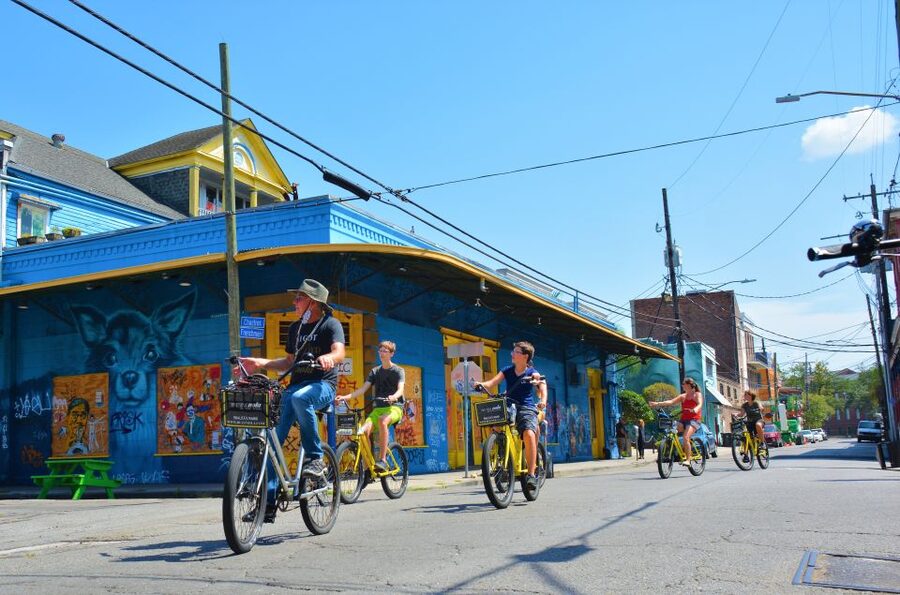
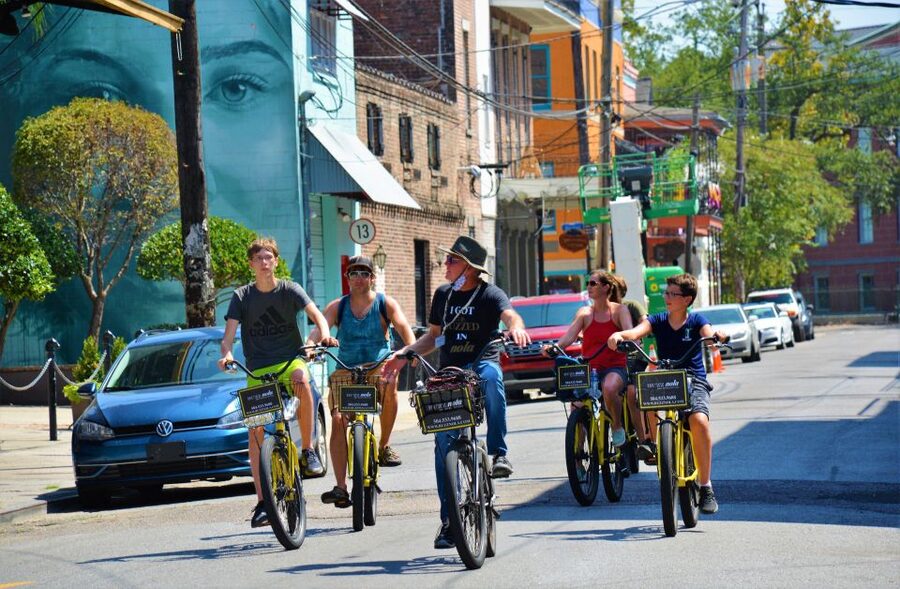
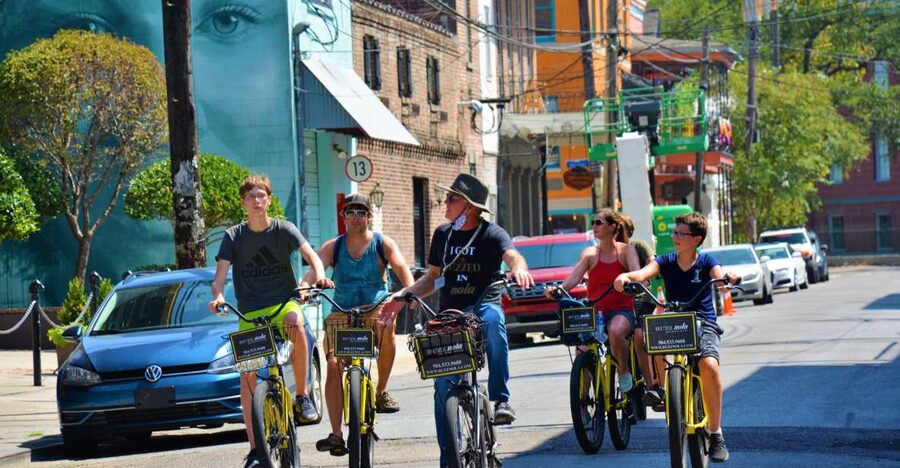
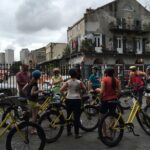
The tour runs for 3 hours with a live guide in English, and it’s built around steady, manageable cycling rather than sprinting between landmarks. With a small group (up to 10 people), you’ll typically get enough space to enjoy the view without constantly feeling like you’re threading through crowds.
What makes the pacing work is the mix of “pedal and look” moments and “stop and learn” moments. You’re not just blasting past things. You’ll get brief pauses at key locations—then roll on again so you don’t lose the rhythm of the ride.
The route also includes a mix of New Orleans textures:
- denser French Quarter streets and nearby streetscapes
- the more residential, historic vibe of Faubourg Marigny
- park and bayou scenery that slows everything down
If you’re comfortable riding and staying alert for a few hours, this is one of those tours that lets you feel the city’s variety without spending your whole day doing logistics.
French Quarter architecture and Faubourg Marigny’s character
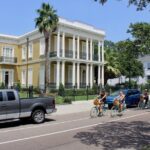
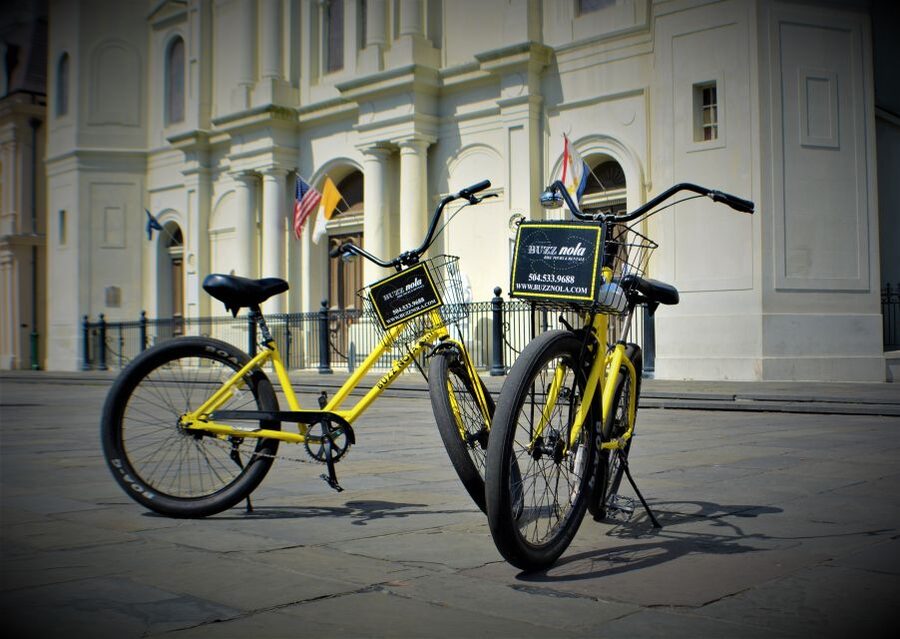
A big part of the appeal is how the guide steers your attention. In the French Quarter, you’re not just seeing famous streets—you’re learning to read the built environment. Expect to look at architecture styles and talk about the people and influences that shaped New Orleans culture.
Then you’ll shift toward Faubourg Marigny, a district dating back to the early 1800s. This area is closely associated with Frenchman Street, and the feeling changes as you move from the Quarter’s tighter tourist energy into a more local neighborhood rhythm.
This combination is smart. The French Quarter gives you the headline identity. Faubourg Marigny adds the personality. Together, they make the city feel less like a postcard and more like a place where history and daily life sit side by side.
Esplanade Avenue: shade, oak trees, and long views
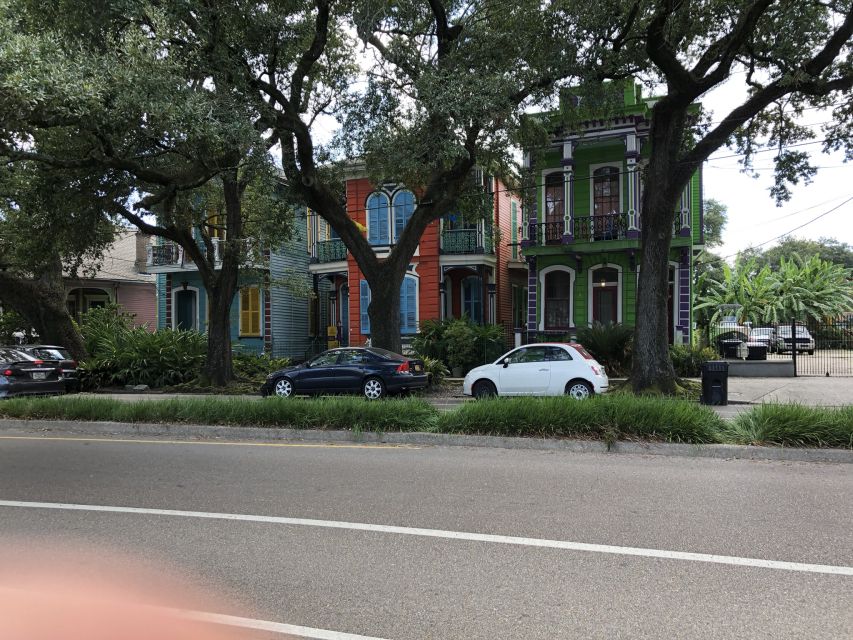
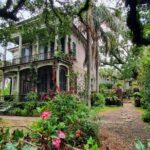
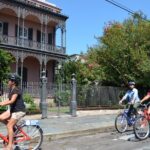
One of the most satisfying stretches is Esplanade Avenue. You’ll ride down it while taking in the shade from old-growth oak trees and the sightline of historic mansions along the way.
This is the part of the tour where you can breathe. In many New Orleans tours, you spend a lot of time weaving through traffic-heavy areas. Here, the emphasis feels more like cruising—still guided, still purposeful, but with the atmosphere doing some of the work.
I like this segment because it gives you what a good bike tour should: movement plus perspective. You see the city’s scale. You notice how neighborhoods line up. And you get that quiet moment where the ride feels like it’s giving you a lesson, not just transport.
Armstrong Park and Congo Square: where the music connection lands
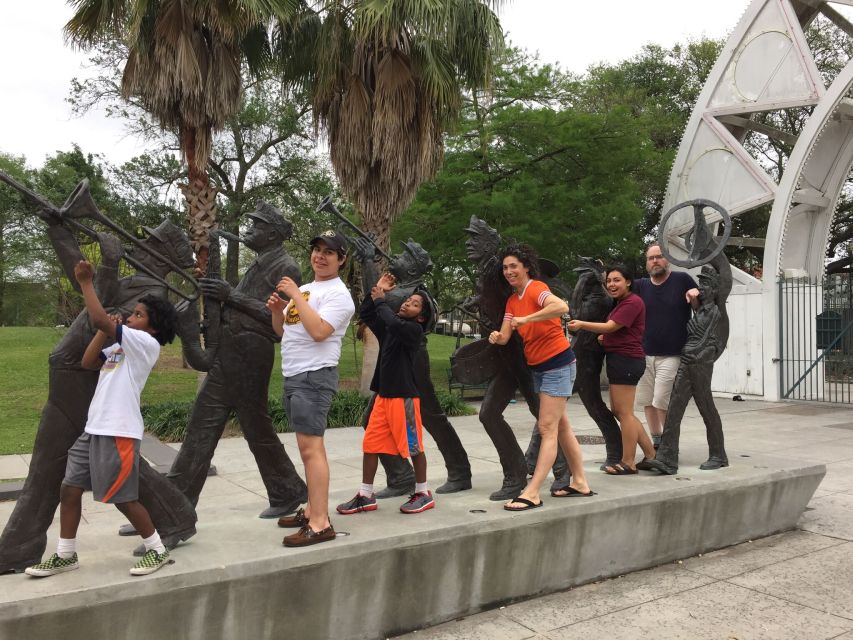
After the ride’s more scenic stretches, the tour continues into Armstrong Park and then reaches Congo Square, described as the heart of New Orleans’ jazz traditions.
This stop works because it connects place to sound. You’re not listening to music on the tour, but you’re visiting a setting tied to the city’s musical identity. It gives you a chance to step out of pure sightseeing mode and instead think about how culture gets anchored in real neighborhoods.
If you’re the type who likes to understand why a place matters—not just what it looks like—this is the part that tends to click.

City Park live oaks and a beignets pause that can run long
Later, you roll through City Park. One highlight here is getting near one of the largest mature live oak trees in the world. It’s the kind of thing that’s hard to fully appreciate from photos because your body needs the scale—bike pace helps. You move around the area, feel the shade, and understand why this park is such a big part of New Orleans outdoors life.
Then there’s a short stop at Cafe Du Monde inside the park area. The point is simple: you can buy beignets if you want them. Food isn’t included, so you’re making the choice yourself.
One heads-up from real-world experience: lines can be slow. In one case, the stop added 30 to 35 minutes. The good news is that the guide may keep things flexible so everyone can still enjoy the Cafe Du Monde moment, even when the line situation is less than ideal.
If you care about the beignets, it’s worth it. Just build patience into your expectations and avoid a tight schedule afterward.
The Mississippi River viewpoint over Jackson Square
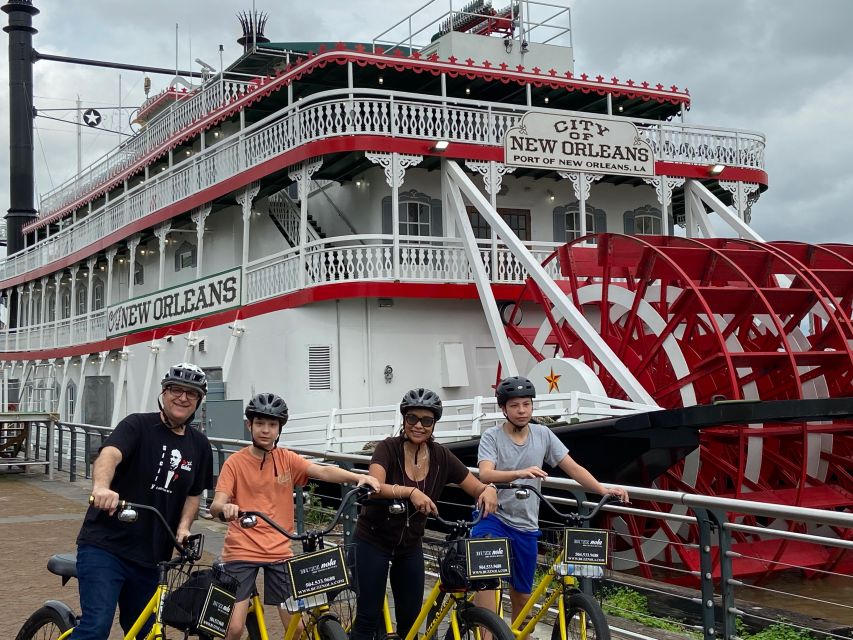
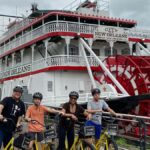
The tour also includes a memorable perspective: a point in the Mississippi River that overlooks Jackson Square.
This is a smart add-on because it makes you re-map the city in your head. Jackson Square is one of those anchor points you think you know. Then you see it from the water and the whole layout feels different. It’s the kind of view that helps you connect neighborhoods to geography instead of treating them as separate stops.
Even if you’re familiar with the Quarter, this river angle brings a fresh view and a nice change in scenery—especially after the park segments.
Bayou of St. John: turtles and tropical birds on the edge of the city
Not every part of the tour is urban. You’ll ride through the tranquil Bayou of St. John, which helps break up the day so it doesn’t feel like a nonstop history class on wheels.
The tour encourages you to watch for wildlife. You might spot turtles and colorful tropical birds along the way. I love stops like this on a guided ride because it gives you a task that isn’t just listening. You glance, scan, and suddenly the bike ride turns into a light nature hunt—something that feels very New Orleans without turning the tour into a swamp excursion.
If you want a little softness in the middle of a city-heavy day, this is it.
Above-ground cemeteries: learning the why behind the look
One of the most meaningful stops is the visit to an above-ground cemetery. New Orleans has burial traditions that look unusual if you’ve never seen them in person, and a guided stop helps you understand what you’re looking at and why it exists.
This is the type of moment that can be emotionally intense, but it’s also one of the most informative ways to understand the city’s culture. The guide’s job here is to connect tradition to place, not scare you off with details.
If you’re curious about how communities remember their people—how they handle history, family, and loss—this is a big reason to choose a guided bike tour over a quick self-walk.
Practical value: what you’re getting for $52
At $52 per person for 3 hours, the price is reasonable if you look at what’s handled for you: a live guide, bike rental, helmet, and bottled water. You’re also getting access to multiple neighborhoods and a mix of views (urban streets, river perspective, park shade, and bayou scenery) without needing to arrange transportation between them.
Is it the cheapest way to see New Orleans? No. But it’s good value for anyone who wants structure and context in a short time window, especially when you’re weighing the cost of doing multiple separate activities and trying to coordinate them on your own.
Also, the small-group limit makes a difference. When you’re up to 10 people, the guide has more flexibility to manage the pace and deal with real-life issues like beignets line timing.
Who this tour suits best
This tour fits best if you:
- can ride a bike comfortably for about 3 hours
- like guided context, not just sightseeing photos
- want to mix French Quarter landmarks with more varied scenery like parks and bayou areas
- enjoy learning about traditions, including New Orleans funeral customs
It’s not the right match if you’re under 12, can’t ride a bike, or are over 300 lbs (136 kg). The tour also doesn’t allow intoxication, alcohol, or drugs, so keep that in mind if you’re planning your day around nightlife.
Should you book Buzz the Crescent Guided Bike Tour?
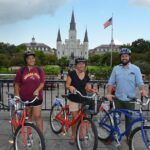
If you want a New Orleans day that feels both practical and story-driven, I’d book it. The strongest reasons are the above-ground cemetery stop, the city-to-nature mix (City Park and the Bayou of St. John), and that memorable Mississippi River view of Jackson Square.
I’d skip it if your schedule is fragile, since the ride runs in rain or shine unless severe weather starts the tour wrong. And if beignets matter, go in with patience—lines can add time, even when the guide keeps things moving.
FAQ
FAQ
How long is the Buzz the Crescent Guided Bike Tour?
The tour lasts 3 hours.
Where do I meet the guide and start the bike tour?
You meet at the bicycle shop in the French Quarter on Dauphine Street, next to the Museum of Death and about one block from Bourbon Street.
How much does the tour cost?
It costs $52 per person.
What’s included in the price?
Included are the guided bike tour, bicycle rental, helmet, and bottled water.
Is food included?
No. Food is not included, though you can purchase beignets during a stop at Cafe Du Monde.
How large is the group?
The group is limited to 10 participants.
Does the tour run in bad weather?
It runs in rain or shine unless severe weather occurs at the tour start time.
What should I bring with me?
Wear comfortable clothes and weather-appropriate clothing.
Is the tour suitable for children or anyone who can’t ride a bike?
It is not suitable for children under 12. You also need to be able to ride a bike, and there’s a weight limit of 300 lbs (136 kg).
Are alcohol or drugs allowed during the tour?
No. Intoxication and alcohol and drugs are not allowed.