REVIEW · BERLIN
Berlin: Guided Bike Tour to Explore the Highlights
Book on Viator →Operated by FREE BERLIN Bike Tours · Bookable on Viator
Berlin can be a lot on day one. This bike tour gives you fast bearings. In about 3 hours, you’ll glide between Berlin’s biggest icons and learn what connects them, from the city’s old core to the Cold War and reunification—on an easy, city-ready ride.
I especially like two things: first, how the stops mix famous sights with real context (you’ll understand why places like Bebelplatz and the Holocaust Memorial matter). Second, the guides bring the whole route to life—names like Rufus, Luka, Jake, and Simone pop up again and again for their humor and clarity. One thing to consider: the exact route can vary by language option, so you might miss certain stops depending on whether you book the English version or the German one.
In This Review
- Key highlights you’ll pedal past
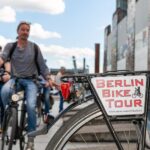
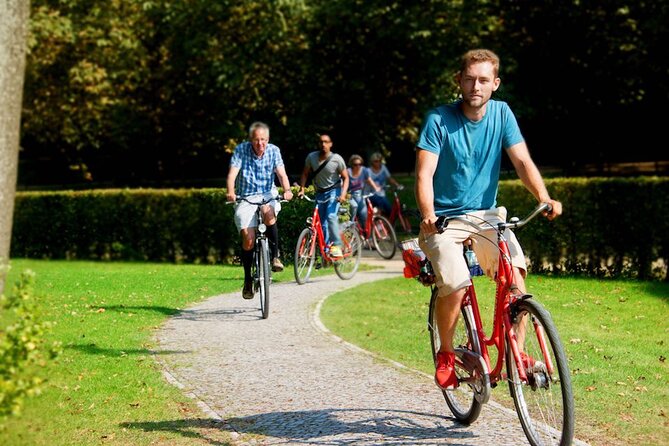
- Fast bearings in 3 hours on a real city bike
- Where the tour starts: Poststraße 11, then back again
- The route’s storyline: Berlin from old core to political center
- Nikolaiviertel: old-town atmosphere you can actually picture
- The Berlin TV Tower: a 1969 icon on the skyline
- Bebelplatz and the Book Burning Memorial: Berlin’s moral turning point
- Checkpoint Charlie: Cold War theater in real city space (English version)
- Potsdamer Platz to the Roaring Twenties and no-man’s-land
- The Holocaust Memorial: why time and tone matter
- Tiergarten’s Garden of the Animals: a park with a twist
- Brandenburg Gate and the Reichstag dome: Berlin’s icons, explained
- Prenzlauer Berg or Museum Island: language choices change the ending
- How to get the most out of your 3-hour ride
- What you’re actually paying for (and what’s not included)
- Who this Berlin bike tour fits best
- Should you book this Berlin bike tour?
- FAQ
- FAQ
- How long is the bike tour?
- What is the price per person?
- Where do I meet the tour?
- What languages are offered?
- Are bikes and helmets included?
- What’s included in the tour besides the bike?
- Are there any stops that depend on the language option?
- Is this tour family-friendly?
- What should I bring since food isn’t included?
- Can I cancel for a full refund?
- Does the tour run in all weather?
Key highlights you’ll pedal past
- A tight 3-hour loop through the center, with a comfortable pace and frequent photo chances
- Small groups (max 15), so you can actually hear your guide and ask questions
- Free-Berlin concept routes, meaning each guide designs their own path to keep tours from feeling cookie-cutter
- Big landmarks, linked by story, from Bebelplatz to Checkpoint Charlie and on to the Reichstag
- Holocaust Memorial time built in, not just a quick pass-by
- Guide energy matters, and this tour consistently gets praise for personable, funny guiding
Fast bearings in 3 hours on a real city bike
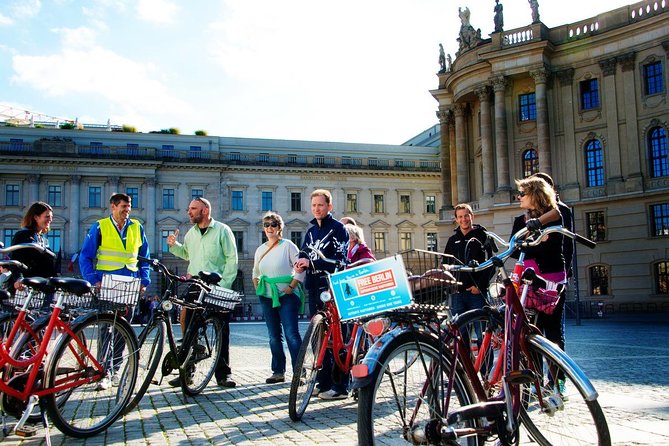
Let’s talk value first. At $42.34 per person for about 3 hours, you’re paying for something that’s hard to replicate on your own: a guided line through Berlin’s key eras. You’re also getting the bike and helmet included, which removes two little planning headaches before you even start.
This tour is built for people who want to see a lot without turning the day into a sprint. The ride is paced so you can take in what’s around you—statues, government buildings, and whole squares—without feeling like you’re glued to a sidewalk.
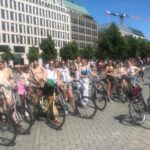
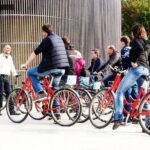
Group size is kept to 4–15, which is a sweet spot. Big enough to get a fun group vibe, small enough that questions don’t get swallowed.
You can also read our reviews of more tours and experiences in Berlin.
Where the tour starts: Poststraße 11, then back again
You meet at Free Berlin Bike Tours & Rental, Poststraße 11 (10178 Berlin). The tour ends back at the same meeting point, so you don’t have to re-plan transportation or worry about getting across town at the end.
You’ll also use a mobile ticket, which is handy if you’re already juggling maps, reservations, and a camera battery you’re trying to keep alive.
The route’s storyline: Berlin from old core to political center
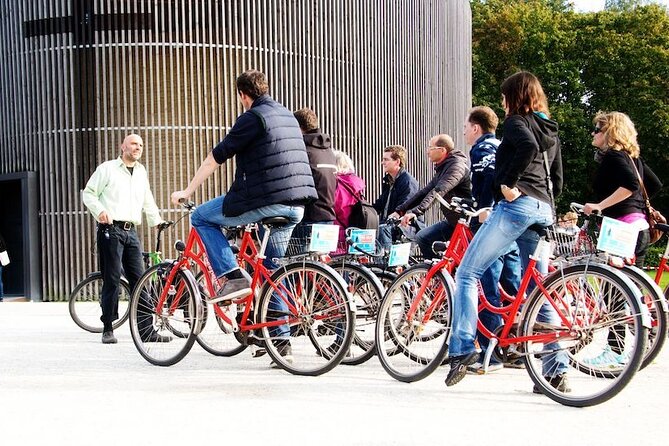
What makes this tour work is the order. You don’t just hit landmarks; you move through a timeline. Early stops set the scene for how Berlin looks and feels when you peel back the layers. Then the route tightens around the political heart of the city and the places tied to Germany’s 20th-century turning points.
You’ll get a practical overview of the layout too: where the “classic center” sits, where the Cold War scars show up, and where modern government life now runs through the same streets.
Nikolaiviertel: old-town atmosphere you can actually picture
The tour begins at Nikolaiviertel, described as a place where things feel like they “all began.” It’s a lovely old-town atmosphere created in the late 1980s, but the payoff is how quickly you can picture Berlin’s roots.
This is a good warm-up stop. You’ll get rolling while the guide sets tone and explains what you’re about to see. If you’re new to Berlin, this is where the whole experience starts clicking—streets, canals-ish vibes, and the sense of a real neighborhood rather than just monuments.
The Berlin TV Tower: a 1969 icon on the skyline
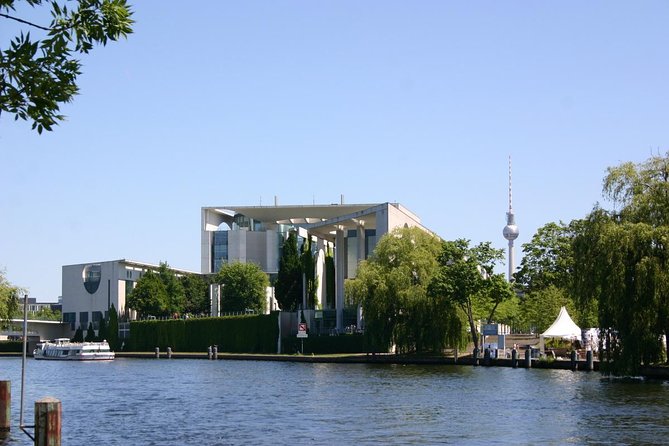
As you move from Nikolaiviertel, you’ll also run into the visual gravity of the TV Tower. It’s noted as the second tallest in the world when it opened in 1969—and in a tour that spans decades, that detail matters.
Even if you don’t go up (nothing here is about ticketed viewpoints), seeing it from street level helps you understand why Berlin’s skyline became a symbol of a particular era. It’s one of those reminders that architecture isn’t neutral—it carries meaning.
Bebelplatz and the Book Burning Memorial: Berlin’s moral turning point
Next up: Bebelplatz, where the Book Burning Memorial stands. This spot hits hard for good reason. It’s framed as a stunning panorama of classic central landmarks, and it also marks the place where the Nazis publicly burned thousands of books.
The guide’s narration matters here. You’ll connect the memorial to what’s around it: the presence of Berlin’s oldest university, the old opera, a Catholic cathedral, a hotel that once served as a bank, and a guard’s house described as looking like a temple. All of that helps you see Bebelplatz as a real living center, not just a plaque on a sidewalk.
If you like history that has emotional weight and clear stakes, this stop is a standout.
Checkpoint Charlie: Cold War theater in real city space (English version)
Checkpoint Charlie is included only in the English version. This is the most famous border station symbol of the Cold War, and the city keeps using it as shorthand for a painful divide.
The stop is brief, but it’s the kind of location where you can’t help reading the “context layers.” Your guide’s job is to connect the present-day streets to what border life meant when the city was split.
Practical tip: if this stop is a must for you, double-check you’re booking the English option.
Potsdamer Platz to the Roaring Twenties and no-man’s-land
Then you roll into Potsdamer Platz, one of the best places in Berlin for seeing contrasts at street speed. You’ll hear how the area once looked and felt like the Roaring Twenties, before it turned into the very definition of no man’s land during division.
Around the millennium, the area was also described as Europe’s biggest construction site—so you’re watching Berlin’s efforts at repair and reconnection in physical form. This stop feels more “city planning” than museum, which is why it works so well on a bike.
If you enjoy urban change stories, you’ll likely find Potsdamer Platz one of the most memorable segments.
The Holocaust Memorial: why time and tone matter
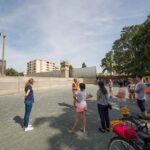
Next: Memorial to the Murdered Jews of Europe. The tour frames the question directly—how does Germany deal with crimes that are basically indescribable? The message is that you don’t erase the past; you learn from it.
You’re given around 10 minutes, which isn’t a long visit in a memorial of this scale, but it is enough to slow down and absorb the mood if you don’t rush. My advice: don’t treat this like another photo stop. Take a moment, stand still, and let the space do what it’s designed to do.
Tiergarten’s Garden of the Animals: a park with a twist
A short segment takes you into one of Berlin’s biggest parks—the Tiergarten—mentioned with the detail that the name (Garden of the Animals) has no relation to its former use as a zoo.
That’s a great example of why a guide helps. On your own, you might just see green space. With narration, you get a quick “how names and land use shift over time” lesson.
This is also a mental reset between heavy stops. It adds variety without breaking the flow of the tour.
Brandenburg Gate and the Reichstag dome: Berlin’s icons, explained
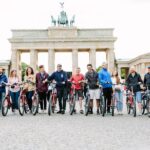
After the quieter park moment, you hit two of Berlin’s biggest symbols: Brandenburg Gate and the Reichstag Building.
The Brandenburg Gate is called the icon of Berlin for multiple reasons, and that’s exactly how it feels once you’re there. It’s famous for a reason, but your guide’s context keeps it from turning into empty sightseeing.
Then comes the Reichstag, Germany’s parliament. The tour highlights its transparent dome—an architectural choice that visually signals modern transparency. You also get a bit of light myth-busting too, with stories about the so-called Germany White House and the note that most of them aren’t true.
If you like political landmarks, this section is where the tour shifts from “past” to “how power now shows itself.”
Prenzlauer Berg or Museum Island: language choices change the ending
Here’s the part you’ll want to plan around: the route can differ based on language.
In the German version, you’ll include Prenzlauer Berg for about 30 minutes. This district is presented as an example of Berlin’s transformation since reunification, with a “fancy bohemian” feel that helps you see what people mean when they talk about Berlin becoming livable again in a new way.
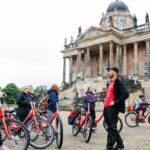
In the route elements shown for the highlights, Museum Island also appears, with its architecture compared to Spree Athens. Expect a quick but satisfying look at the grand, classic museum complex that anchors the Spree river scene.
How to get the most out of your 3-hour ride
A bike tour succeeds when you show up with the right expectations. This isn’t a slow countryside pedal. It’s a city highlights run where the goal is coverage with meaning.
A few practical moves that help:
- Bring a camera you can grab fast. There are multiple major photo moments close together.
- Ask questions as you roll. If you wait until you stop, you might lose some time.
- If you’re sensitive to English clarity, choose the language option carefully and don’t hesitate to raise a question early—then you’ll know whether you’re getting the narration level you want.
One pattern to watch: some people found they didn’t get enough time at every stop for photos. Your best strategy is to speak up at stops if you want extra minutes for pictures or if the group needs a breather.
What you’re actually paying for (and what’s not included)
The price covers the core essentials: bicycle, helmet, and a professional guide. It also includes the Free-Berlin concept, where each guide designs their own route, keeping the experience from feeling identical every time.
Also important: the major sights on this tour are tied to free admission stops in the itinerary, so you’re not paying entry fees on top of the tour.
What you should plan for separately: food and drinks are not included unless stated otherwise. Berlin bike days can run longer than you expect once the stories and photo stops add up, so having a snack and water before you start is smart.
Who this Berlin bike tour fits best
This is a strong match if you:
- Want a quick, guided overview of central Berlin on day one (or day two)
- Like history that connects places to events rather than listing facts
- Enjoy being outside and moving at a comfortable pace
- Prefer guided storytelling, especially around the city’s political turning points
It may be less ideal if you:
- Want lots of time sitting with fewer stops
- Are booking specifically for small kids who need shorter pauses (the timing at each location can be significant, according to how the experience is described)
- Need guaranteed detailed language delivery in English without any uncertainty—one booking issue was tied to English being hard to follow, so pay attention to your comfort level with the language option you choose
Should you book this Berlin bike tour?
If you’re thinking, Yes, I want the highlights, but I don’t want to spend my day bouncing between places trying to piece the story together, this tour is an easy yes. It gives you major landmarks—Brandenburg Gate, Reichstag, and the Holocaust Memorial—and wraps them in context you can carry into the rest of your trip.
I’d book it if:
- You only have half a day to learn Berlin’s “why”
- You want the freedom of a bike without the hassle of figuring out the best route yourself
- You enjoy guides who use humor to make heavy topics easier to understand (names like Rufus, Luka, and Jake show up for that reason)
I’d think twice (or switch approach) if:
- You’re chasing long photo sessions or deep, slow museum time
- You’re traveling with very young children who may struggle with extended stop-by-stop narration
- You’re very strict about language clarity and need the tour to land perfectly in English
FAQ
FAQ
How long is the bike tour?
The tour runs for about 3 hours.
What is the price per person?
The price is $42.34 per person.
Where do I meet the tour?
You meet at Free Berlin Bike Tours & Rental, Poststraße 11, 10178 Berlin, Germany, and the tour ends back at the same meeting point.
What languages are offered?
The tour is offered in English, German, and French depending on the option chosen.
Are bikes and helmets included?
Yes. Bicycle and helmet use are included.
What’s included in the tour besides the bike?
You get a professional guide, and the route can differ because of the Free-Berlin concept (each guide designs their own route).
Are there any stops that depend on the language option?
Yes. Checkpoint Charlie is included only in the English version, and Prenzlauer Berg is included only in the German version.
Is this tour family-friendly?
Yes. Children are welcome, and infant seats can be provided on request. Children must be accompanied by an adult.
What should I bring since food isn’t included?
Food and drinks are not included unless specified, so you’ll want to bring or plan your own.
Can I cancel for a full refund?
Yes. You can cancel for free up to 24 hours before the experience’s start time for a full refund.
Does the tour run in all weather?
Yes, it operates in all weather conditions, so dress appropriately for conditions.