REVIEW · ROME
Taste of Rome by quality E-Bike
Book on Viator →Operated by Topbike Rental & Tours Di Ciro Muratori Societ Societa' Inaccomandita Semplice · Bookable on Viator
Rome rewards you when you ride, not just walk. This e-bike tour strings together Rome’s top landmarks with quick stops and solid guide storytelling, so you get a fast, clear sense of the city without doing 20,000 steps. You cover about 12 km (7.5 miles) with quality Cannondale e-bikes and an easy pace that still feels like you did something real.
I especially like the short, focused stop style. Each highlight is brief, so you stay moving and your brain stays sharp instead of waiting around. I also like the team setup: helmets provided, a comfortable saddle, and guides such as Cas, Ximena, Sina, Fabio, Aaliyah, and Carmen who are praised for making the history understandable and fun.
One thing to consider: this is a “see it fast” loop. If you want long wandering time inside buildings, this won’t be that kind of day, and you’ll be on Rome’s busy streets for parts of the ride.
In This Review
- Key highlights to know before you go
- A fast, fun way to get your bearings in Central Rome
- Your bike and safety setup: helmet, tires, and real comfort
- Route flow: from Colosseum views to the Pantheon front
- Piazza del Colosseo: the Colosseum without the headache
- Via dei Fori Imperiali: the straight line through the Forum world
- Trajan Column: reading power in stone
- Trevi Fountain: iconic, but you’ll learn what you’re looking at
- Spanish Steps: a staircase that tells a story
- Piazza Navona: the Baroque centerpiece from the bike lane perspective
- Pantheon: exterior admiration at its best-preserved scale
- Area Sacra di Largo Argentina: ruins, temples, and the Caesar connection
- Antico Quartiere Ebraico: the quiet neighborhoods you’d miss on a walking loop
- Teatro di Marcello: an ancient prototype in plain sight
- Piazza del Campidoglio: the view that makes the whole loop pay off
- How hard is it really? Effort, pacing, and what the e-bike changes
- Price and value: what $86.74 buys you in Rome time
- Who should book this Rome e-bike ride?
- Should you book Taste of Rome by quality E-Bike?
- FAQ
- How long is the Taste of Rome e-bike tour?
- How far do you ride?
- What bike is provided?
- Do I need to bring a helmet?
- Is this tour mostly outside, or do you enter major sights?
- What languages are guides available in?
- Can kids join?
- Where is the meeting point?
- What if the weather is bad or the tour is canceled?
- What’s the group size?
Key highlights to know before you go
- Top Cannondale e-bikes with anti-puncture tires and a comfortable saddle, plus a handlebar bag
- Helmet provided and required, so you can travel without scrambling for gear
- 11 major stops from the Colosseum area to Capitoline Hill, all in about 2.5 hours
- City driving route designed to keep things efficient and safe through central Rome
- Small-group feel with a maximum of 10 travelers for a more relaxed pace
- Great sightline stops at outdoor icons like Trevi Fountain, Spanish Steps, Piazza Navona, and the Pantheon facade
A fast, fun way to get your bearings in Central Rome
If Rome is your first stop in Italy, you’ll feel the city’s scale right away. Streets are crowded, ruins are scattered, and landmarks look close on a map but aren’t close on foot. This e-bike format fixes that. You move under your own power, but with assist when hills, distance, or traffic slow you down.
The route is built around a simple idea: hit the big visual anchors first, then tie them together with short explanations. You’ll start near the Colosseum and finish back at the same meeting spot, working your way through the Roman core: Forum-and-empire streets, fountains, and major church and civic landmarks. It’s a “taste,” not a full lecture, and that works well when you want context without burning the whole day.
You cover around 12 km at a leisure pace. That’s enough distance to feel like you explored, but not so much that you’ll feel wrecked after. And because you’re on a bike, you’re not stuck staring at ticket lines or negotiating wheelbarrow-worthy crowds for every photo.
You can also read our reviews of more tours and experiences in Rome.


Your bike and safety setup: helmet, tires, and real comfort
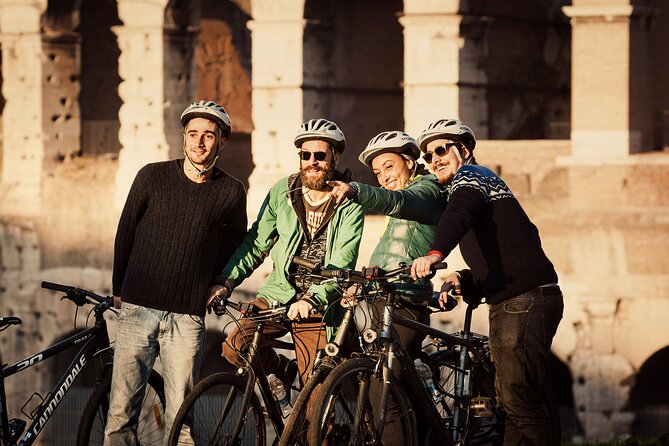
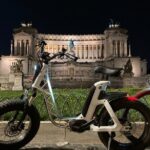
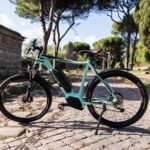
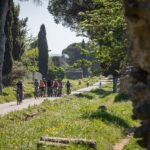
The included e-bike setup is one of the biggest reasons this tour works for so many people. You’ll ride a top-quality Cannondale e-bike, and the details matter: anti-puncture tires and a comfortable saddle reduce the chance of tiny problems becoming big annoyances. That alone is worth it on a city route where you’d rather not think about tire pressure or comfort every few minutes.
You also get a helmet (mandatory), plus a handlebar bag for your essentials. Bottled water is included too, in a biodegradable bottle. This is the practical side of making a sightseeing tour actually feel easy.
A couple more “check this before you book” items:
- There’s a weight limit for equipment of 300 lbs (136 kg).
- You’ll be riding in traffic conditions common to central Rome, so you’ll want to be comfortable following guide instructions and staying aware.
The tour says most travelers can participate, and the difficulty is leisure (with a note that it can become more “intermediate” if there’s a child seat/extension). Translation: if you can handle a moderate, controlled riding pace, you’re in the right zone.
Route flow: from Colosseum views to the Pantheon front
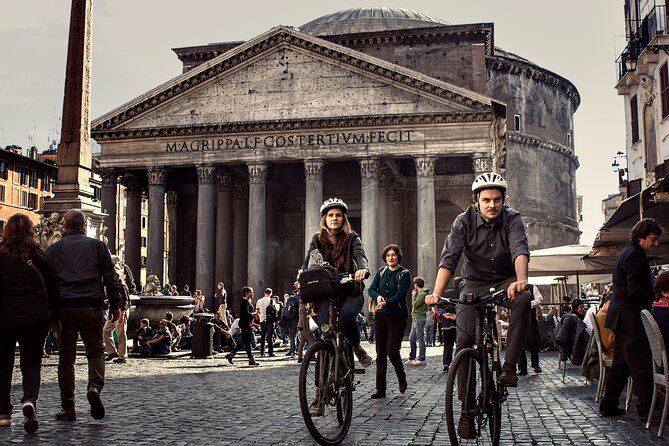
The itinerary is built as a sequence of “see it, then understand it” moments. The stops are short (about five minutes each), which means you’ll get orientation fast and then roll on.
Here’s how the route plays out in real life, stop by stop.
Piazza del Colosseo: the Colosseum without the headache
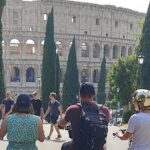
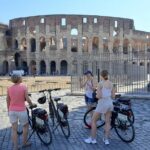
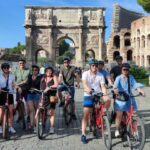
You begin at Piazza del Colosseo, where you get a strong view of the Colosseum and a guide explains why this landmark mattered for Rome’s political power and public life. It’s a good first stop because it gives you a visual anchor. Once the Colosseum is in your mind, the rest of the route clicks into place.
Since this is a view-and-stories moment, you’re not stuck in a ticket-and-entry plan here. You’re getting the big-picture background so you can look at the ruins later with more meaning.
Via dei Fori Imperiali: the straight line through the Forum world
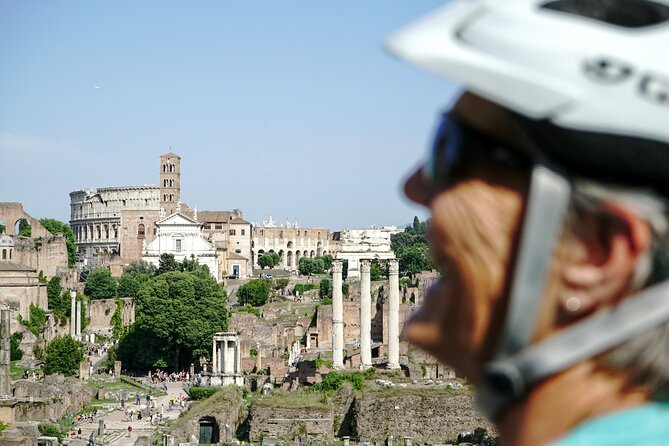
Next is Via dei Fori Imperiali, a major road that cuts straight through the Roman Forum and the Imperial Fora. This is one of the most “worth it” rides on the whole trip because it lets you cover a long stretch quickly and understand how the space relates to power, ceremony, and urban design.
The potential drawback: busy road conditions. The advantage: the guide can keep the route smooth and efficient, so you’re not zig-zagging for every landmark.
Trajan Column: reading power in stone
At Trajan Column, you’ll see multiple historic layers around you: the monument itself, the Vittoriano area, and Palazzo Venezia nearby. The guide uses this cluster to explain how Rome’s story spans nearly 2,000 years in one view.
This stop is where you start noticing something important about Rome: it’s not just ancient ruins. It’s a city where later eras constantly re-used, rebuilt, and reframed earlier ones. That’s why this stop works so well on a bike tour. You can scan what’s around you without losing time.
Trevi Fountain: iconic, but you’ll learn what you’re looking at
At Trevi Fountain, you’ll get the fountain’s history and context. Trevi is one of those places people either sprint through or obsess over. A short guide explanation helps you avoid the “photo, move on” mode and instead understand what makes Trevi more than a famous picture.
Practical note: it’s a crowded area, so the bike ride and the quick stop format can actually be an advantage. You can see it without getting bogged down in the densest parts of the crowd.
Spanish Steps: a staircase that tells a story
Then you roll to Spanish Steps and Piazza di Spagna. This stop highlights the monumental staircase descending from Trinità dei Monti church. On foot, you often spend time just trying to find your place in the flow. Here, you’re guided to a point where you can take in the geometry and the setting fast.
This is also a nice “break” stop. After ruins and imperial streets, Spanish Steps feels like a livelier city square. It changes the mood without losing the sightseeing momentum.
Piazza Navona: the Baroque centerpiece from the bike lane perspective
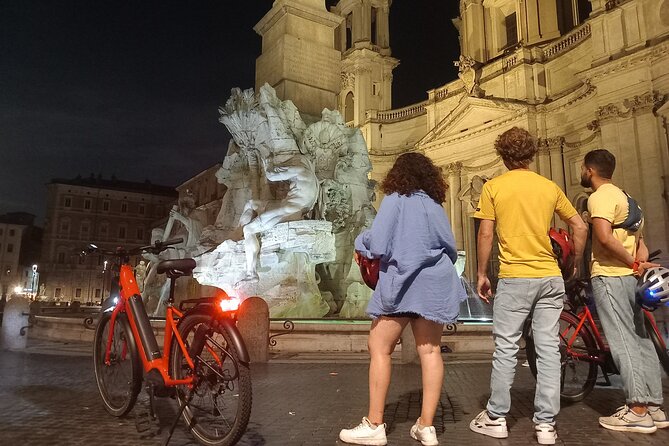
Next is Piazza Navona, where you’ll cycle around the oblong square and get a first-row look at the central Baroque fountain. Navona has a different energy than Trevi. It feels like a living public space, with artwork and architecture surrounding you in a way that’s easy to absorb from a moving perimeter.
The quick stop format works here because you’re mainly taking in shapes, facades, and the fountain’s presence rather than entering anywhere.
Pantheon: exterior admiration at its best-preserved scale
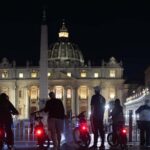
At Pantheon, you’re there for the front facade and one of the oldest, best-preserved buildings from Antiquity. Even without going inside, this stop is powerful because the building’s proportions are the whole show.
This is another “right at the start” kind of moment. Seeing the Pantheon from close range gives you a feel for Roman engineering and how later Romans treated ancient architecture as something to keep, not just replace.
Area Sacra di Largo Argentina: ruins, temples, and the Caesar connection
At Area Sacra di Largo Argentina, you’ll see an ancient Roman site with four Republican-era temples. The area is famous as the spot near where Julius Caesar was assassinated, and today it’s also known for its cat sanctuary.
This stop tends to land well because it has two layers: serious political history and an everyday, modern reality. That mix makes it memorable, and it’s exactly the kind of moment where a short guide explanation helps you appreciate what you’re looking at.
Antico Quartiere Ebraico: the quiet neighborhoods you’d miss on a walking loop
Next is Antico Quartiere Ebraico, a smaller neighborhood rich in archaeological, cultural, and religious heritage. The tour treats it as a “check it out” moment, which is exactly right when you’re balancing many landmarks in a single ride.
If you’ve only got one day in Rome and you don’t want your schedule to be all big ticket sites, this neighborhood stop gives you a more human feel. You’re not just collecting photos; you’re seeing how the city’s past and present overlap.
Teatro di Marcello: an ancient prototype in plain sight
At Teatro di Marcello, you’ll spot an ancient theater used as a prototype for the Colosseum. This is a smart stop because it explains Rome’s design evolution. Instead of treating each monument like a one-off, you start to notice patterns.
This is also the kind of place where the guide matters. Without guidance, you might see “another old structure.” With guidance, it becomes a clue about how Romans repeated what worked.
Piazza del Campidoglio: the view that makes the whole loop pay off
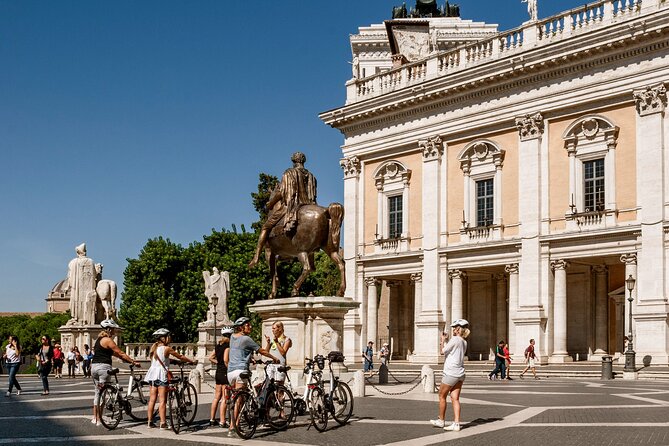
Finally, you reach Piazza del Campidoglio on Capitoline Hill. You’ll get a breath-taking view of the Roman Forum, plus see the 16th-century Piazza designed by Michelangelo.
This is the payoff stop. All the earlier sites connect here visually. You’re high enough to see the forum area in context, and Michelangelo’s involvement ties the Renaissance to what Rome was already doing for centuries: turning old power into new meaning.
How hard is it really? Effort, pacing, and what the e-bike changes
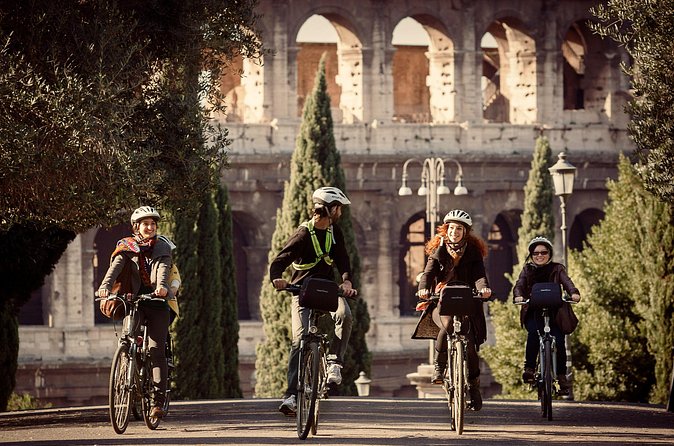
The tour is rated leisure, with the idea that most people can participate. The e-bike matters most in two ways.
First, it reduces fatigue. You still pedal and move, but assist helps you keep a comfortable rhythm even if you’re not a cyclist. That’s especially helpful on a route that’s short enough to feel time-efficient but long enough to test your legs if you tried to walk.
Second, it keeps you in the “tour rhythm.” With an e-bike, you can maintain spacing, follow the guide, and avoid turning every stop into a long debate about which street to take next. That’s why the whole format tends to feel efficient: you’re not spending your mental energy on logistics while you’re trying to look at monuments.
If you’re traveling with kids: ages 5–8 get a child extension (child streamliner), while age 9 and above can ride autonomously on a correctly sized e-bike. If you’re bringing a family, plan on following the guide’s pacing guidance closely.
Price and value: what $86.74 buys you in Rome time
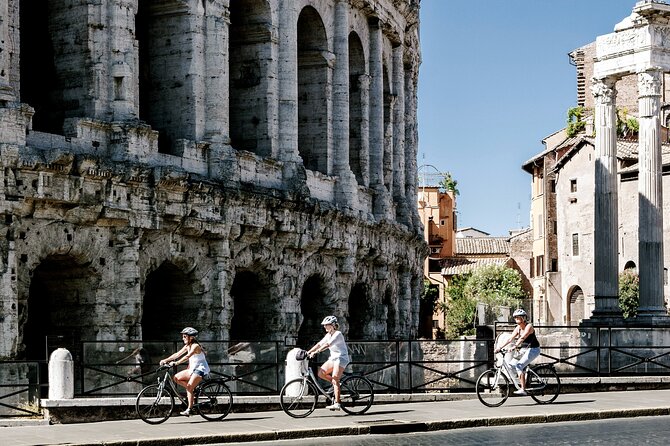
At $86.74 per person, you’re paying for three things that matter a lot in Rome:
- A top e-bike and safety gear, not a rental you manage on your own
- A professional guide in multiple languages (and the experience is offered in English)
- Fast access to many major sights in a single ride
If you were to do this solo, the cost often becomes hidden: bike rental, helmet, your own route planning, and time lost figuring out which streets connect best to the next landmark. Here, the tour compresses that work into a guided loop.
The other value angle is the small-group size. With a maximum of 10 travelers, you’re not stuck in a herd. That makes it easier to hear the guide, take photos without constant squeezing, and feel more relaxed on busy streets.
One practical note: gratuities are optional. So you’re not forced into an extra fee, but it’s good to remember that guides depend on tips in many service industries.
Who should book this Rome e-bike ride?
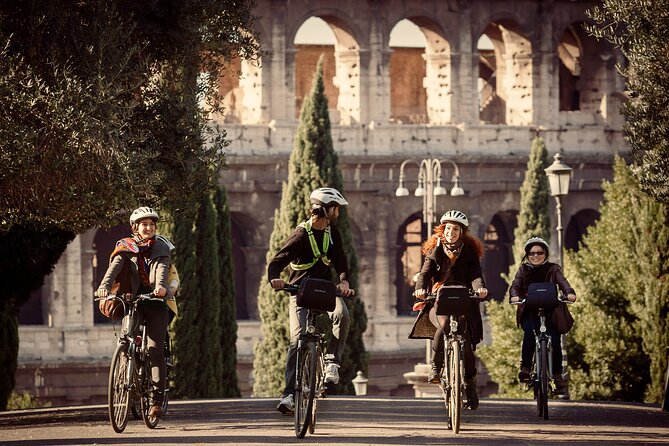
This is a great fit if you want:
- A 2.5-hour highlight loop that covers major landmarks without exhausting walking
- Clear historical context delivered in short segments
- A practical way to see Rome’s center while still enjoying the sites, not just passing them
It’s also a good choice for first-timers who need to build mental geography quickly. Starting at the Colosseum, then moving through the Forum streets, and ending on Capitoline Hill gives you a structure your future Rome days can build on.
On the other hand, if you want hours of wandering, interior museum time, or deep archaeological immersion with long stops, you’ll likely want a different kind of tour. This one is designed for momentum and smart orientation.
Should you book Taste of Rome by quality E-Bike?
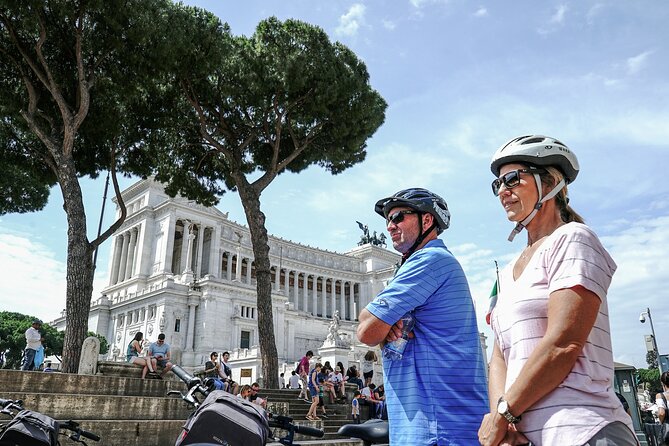
Yes, if you want a high-value Rome sampler that’s practical, guided, and time-friendly. The mix of top-condition bikes, helmet safety, and a route that ties together the Colosseum-Forum-Pantheon-Capitoline arc makes it a smart way to get your bearings quickly.
I’d pass or consider another option only if you’re easily overwhelmed by traffic flow, you need long indoor time at major sites, or you’re expecting a slow-paced neighborhood stroll. Otherwise, this is the kind of tour that leaves you with a sense of Rome that you can build on for the rest of your trip.
FAQ
How long is the Taste of Rome e-bike tour?
It runs for about 2 hours 30 minutes.
How far do you ride?
You’ll cover about 7.5 miles (12 km).
What bike is provided?
You ride a top quality Cannondale e-bike with anti-puncture tires and a comfortable saddle, plus a handlebar bag.
Do I need to bring a helmet?
No. A helmet is provided for free and it’s required for all participants.
Is this tour mostly outside, or do you enter major sights?
The tour focuses on admiring major landmarks at each stop (for example the Colosseum view area, Pantheon facade, and outdoor squares). Each stop is listed with admission ticket free in the itinerary.
What languages are guides available in?
The guide is available in English, German, French, Dutch, Spanish, and Italian.
Can kids join?
Yes. Ages 5–8 can use a child extension (child streamliner). Ages 9 and above can ride autonomously on an appropriately sized e-bike.
Where is the meeting point?
Meet at Via Labicana, 49, 00184 Roma RM, Italy. The tour ends back at the same meeting point.
What if the weather is bad or the tour is canceled?
The tour requires good weather. If it’s canceled due to poor weather, you’ll be offered a different date or a full refund. Also, there’s a minimum of 4 participants, and if there are only 3 passengers or less after confirmation, you’ll be offered an alternative tour or a full refund. You can cancel for free up to 24 hours in advance for a full refund.
What’s the group size?
The tour has a maximum of 10 travelers, with the minimum being 4.