REVIEW · BERLIN
Berlin: Guided Bike tour of the Berlin Wall and Third Reich
Book on Viator →Operated by FREE BERLIN Bike Tours · Bookable on Viator
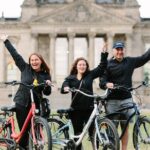
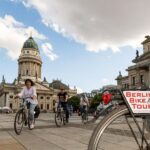
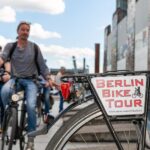
Berlin on two wheels makes history stick. This guided bike tour threads you through Berlin landmarks tied to the Wall, the Holocaust, and the Third Reich era, with a local guide calling the shots and helping you stay oriented while you ride. You get a comfortable city bike and helmet, and you cover real places instead of just hearing about them.
My favorite part is how the stops are built like a story. You start in Nikolaiviertel, then move through Jewish history, deportation and Holocaust memorials, and actual Wall remnants like the section at the Berlin Wall Memorial site. The tour also works for families, with kids welcome and infant seats available on request, but it is still a fast-paced overview, so if you want to linger at one memorial for a long time, you’ll need to plan a follow-up visit.
In This Review
- Key highlights you should care about
- Getting started in Berlin: bikes, safety, and what your first minutes feel like
- A quick reality check on the riding level
- Why this Wall and Third Reich route is different from a bus tour
- Stop 1: Nikolaiviertel, Berlin’s old core, with a blunt question about how it survived
- Stop 2: Centrum Judaicum and the story behind civil courage
- The deportation-and-Holocaust memorial contrast you might not expect
- Stop 3: The Berlin Wall Memorial, where separation stops being abstract
- Stop 4: Mauerpark, now a place for free expression
- Stop 5: Humboldthain Flak Tower, Nazi architecture plus a city’s survival
- Stop 6: The preserved watchtower for Günter Litfin
- Stop 7: Invalidenfriedhof, graves split by the Wall
- Stop 8: Spreebogenpark and Hitler’s architect Albert Speer’s Great Hall vision
- Stop 9: The Reichstag from the outside, with a focus on power and democracy
- Stop 10: The Holocaust Memorial to the Murdered Jews of Europe, big scale and heavy meaning
- Stop 11: Fuhrerbunker, now mostly gone, with the reality reduced to a parking lot
- Stop 12: Checkpoint Charlie, English-only on this version
- One important caveat: “overview” is part of the deal
- Who should book this bike tour?
- Price and value: what $42.34 buys you in real terms
- Practical packing tips for a Berlin all-weather ride
- Should you book this tour?
- FAQ
- How long is the Berlin Wall and Third Reich bike tour?
- How much does the tour cost?
- What’s included in the price?
- Is the tour offered in English?
- Are there admission tickets included for the stops?
- Is this tour family-friendly?
- What group size should I expect?
- What weather conditions does the tour handle?
- Where do I meet the guide, and where does it end?
- Is food and drinks included?
Key highlights you should care about
- Bike + helmet included, so you can focus on the route, not equipment shopping
- Local guide routing under the Free Berlin concept, so you may get a slightly different path each time
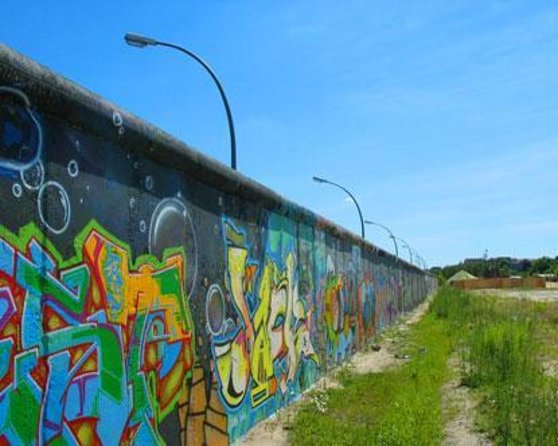
- Wall remnants where it hits hardest, especially the section that lets you truly grasp what separation meant
- Powerful memorial stops, including the Holocaust Memorial to the Murdered Jews of Europe
- Family-friendly pace, with breaks built in and optional infant seating
Getting started in Berlin: bikes, safety, and what your first minutes feel like
The ride starts at Free Berlin Bike Tours & Rental, Poststraße 11 (10178 Berlin), and it loops back to the same place at the end. Since you’re close to public transport, it’s easy to slot this into a travel day without a complicated transfer plan.
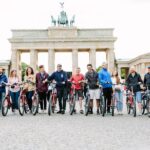
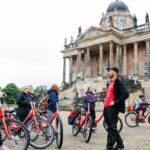
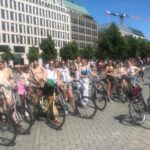
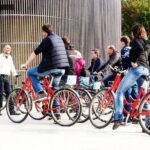
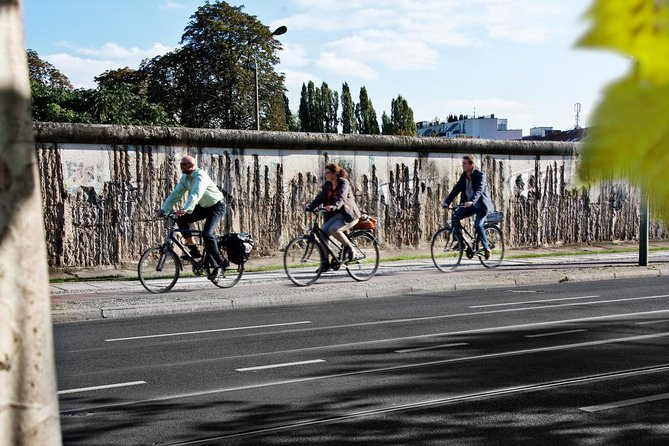
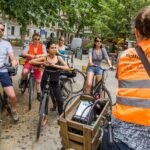
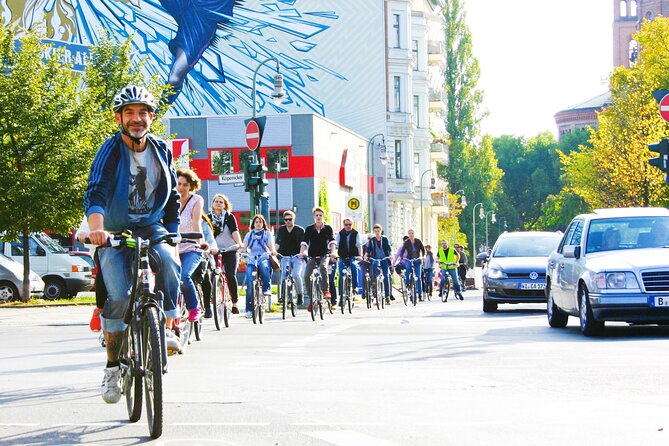
What you’ll notice right away is the basic setup: you’re on a city bike, you wear a helmet, and the guide keeps the group together through traffic and crossings. Cycling in Berlin is mostly manageable because the city is flat and bike lanes exist, but your confidence still depends on how your group rides and how the guide manages the timing.
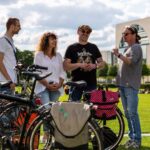
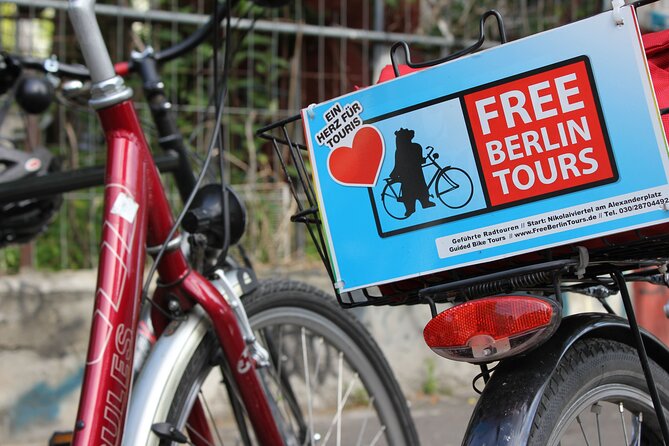
Also, one practical detail: some bikes come with a basket for bags and coats, which makes the whole experience feel less like you’re carrying your life on your back. This matters when you stop often for photos and short walks.
You can also read our reviews of more tours and experiences in Berlin.
A quick reality check on the riding level
This is designed as a city bike tour, not mountain biking. Berlin is flat, and the stops are frequent, so the pace stays friendly even if you’re not training for a race.
You should still expect a bit of “attention riding.” A rider once noted the main roads can feel daunting at first, but the guide provided clear help, stayed attentive, and waited for people at stops. If you’re comfortable on a bicycle, you’ll likely be fine; if not, plan to take it slow and follow the group closely.
Why this Wall and Third Reich route is different from a bus tour
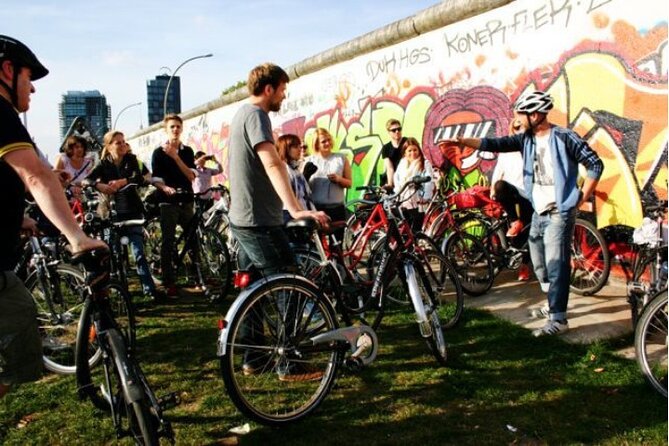
A bus tour can cover a lot, but bike tours do something buses can’t: you move at street level. You feel the distance between neighborhoods, you see the shape of places where borders divided daily life, and you get quick, normal-city context around extraordinary sites.
This tour’s theme is big: Berlin Wall history alongside Nazi-era power and Holocaust remembrance. The value is not just in what you see, but in how the guide connects the dots, from separation and escape attempts to the collapse of the Nazi regime and the way the city remembers now.
You also get the Free Berlin concept, meaning each guide can design a route along the topic. That keeps tours from feeling copy-paste, but it also means you should treat it as a guided route with a theme, not a guarantee that every named stop will happen in the exact order you expect.
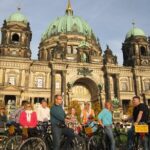
Stop 1: Nikolaiviertel, Berlin’s old core, with a blunt question about how it survived
You begin in Nikolaiviertel, often described as Berlin’s old town core. The interesting part here is the contrast: the area feels historical, but Berlin’s modern wounds are never far from the story. Even with the “old town” setting, the guide prompts you to think about what happened during the bomb raids and how destruction shaped what survived.
This is a smart opener because it gives you bearings fast. You start close to the center of Berlin’s story, before you start tracking the long arc toward division and genocide.
Stop 2: Centrum Judaicum and the story behind civil courage
Next comes Stiftung Neue Synagoge Berlin – Centrum Judaicum. The tour frames the site through the lens of civil courage, including the account of a police officer who protected the building during the night of broken glass.
Even if you’ve read about Kristallnacht, seeing the place matters. You connect dates to architecture and to the idea that the fight for human dignity happened in real moments, not just in textbooks.
You’re also reminded that the Nazi story isn’t only about leaders and war plans. It’s also about how ordinary people, including people in uniform, sometimes chose to resist or to protect.
The deportation-and-Holocaust memorial contrast you might not expect
The route includes a memorial for victims of deportation and the Holocaust, designed in GDR times and set in stark contrast to the more famous memorial close to Brandenburg Gate. That wording is a clue to what you’re meant to feel: Berlin’s memory is not one uniform style.
This is the kind of stop that benefits from pausing and reading slowly. The guide’s job is to help you understand why the memorial looks the way it does and what that reveals about the era that produced it.
If you tend to rush through memorials, ask the guide for a few key lines to start with. It’ll change how you interpret what you’re seeing.
Stop 3: The Berlin Wall Memorial, where separation stops being abstract
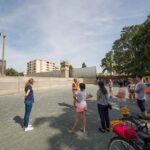
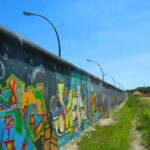
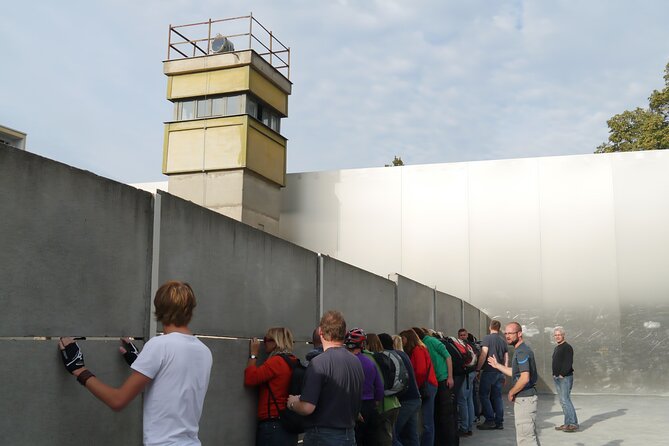
This is one of the main anchors of the day: the Berlin Wall Memorial, at a spot where the Wall is still present in a way that lets you really understand what it meant.
The wording from the tour is basically the point: here you don’t just learn about the Wall, you experience what the Wall did. That’s the difference between seeing a marker and understanding a physical barrier that shaped movement, family life, and even thoughts about the future.
One practical tip: take a few minutes longer than you think you need. The guide will handle the main explanation, but you’ll get extra value if you let your eyes adjust to the scale and placement in the neighborhood.
Stop 4: Mauerpark, now a place for free expression
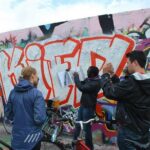
Mauerpark today is widely known for its Sunday flea market. On this tour, it becomes a way to talk about how the city healed after decades of division.
It’s also a reminder that “history” in Berlin doesn’t sit behind fences only. People live around it. Markets, music, and everyday life eventually take over the spaces that were once restricted.
If you’re visiting on a day when the flea market is not running, that’s still okay. The lesson is about the transformation of the area after the Wall fell.
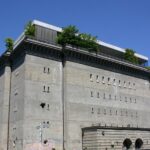
Stop 5: Humboldthain Flak Tower, Nazi architecture plus a city’s survival
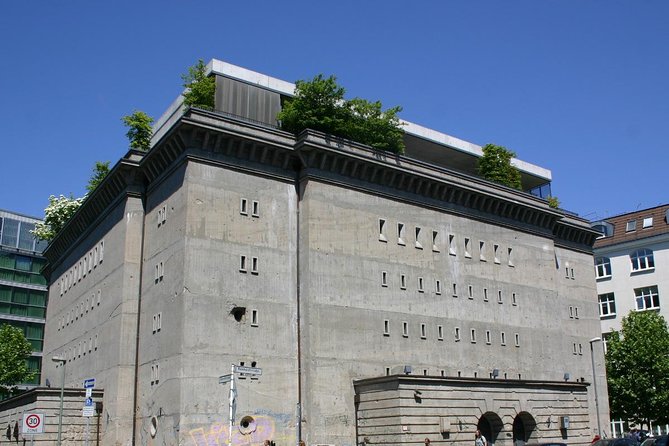
At Humboldthain Flak Tower, you get both a technical and a human story. This former air-raid shelter is described as a fortress-like structure, and it also becomes a way to discuss Nazi architecture in a tangible form.
You’ll likely notice how a building that looks like raw engineering can still carry political meaning. It’s a reminder that regimes leave behind more than documents; they leave behind physical shapes.
And because the stop includes a panoramic view, it also gives you a way to connect what you see from above to the geography that helped define the city’s conflict zones and escape routes.
Stop 6: The preserved watchtower for Günter Litfin
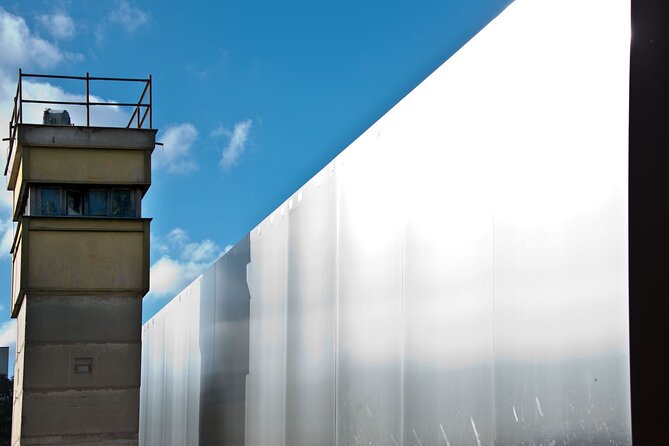
The tour includes the Gunter Litfin Memorial, built around a preserved original watchtower. It marks the story of Günter Litfin, the first person shot at the Wall.
This stop hits hardest if you let the guide slow you down. A preserved watchtower is not just a symbol; it’s an instrument of surveillance. It helps explain why the Wall wasn’t only a wall—it was a system.
If your group moves quickly here, ask your guide to point out what’s preserved and why, so you leave with more than a photo.
Stop 7: Invalidenfriedhof, graves split by the Wall
Then you ride to Invalidenfriedhof, a burial place cut in the middle by the Wall. The tour frames it as a cemetery for Prussian heroes tied to German military history, but the emphasis shifts to escape stories because the cemetery sits near former checkpoints and a canal that acted as a natural border between East and West Berlin.
This is one of those places where the map matters. When a Wall slices through a cemetery, it turns the political into the personal in seconds. You’re not imagining separation; you’re seeing it.
If you’re the type who likes context, ask the guide how the nearby checkpoints and the canal shaped movement attempts. That connection makes the “why” behind the route click.
Stop 8: Spreebogenpark and Hitler’s architect Albert Speer’s Great Hall vision
At Spreebogenpark, the tour gives you an overview of the governing district and the kind of grand building dreams Nazi planners had. The guide talks about plans by Albert Speer, including a Great Hall concept that would have held 180,000 people.
This matters because it puts power into a scale you can feel. It’s easy to talk about ambition; it’s more sobering to hear what those ambitions would have required in space, resources, and human lives.
Because this is also an overview spot, it works as a reset between the heavier stops. You get to look out, take it in, and then continue.
Stop 9: The Reichstag from the outside, with a focus on power and democracy
You stop at the Reichstag building to discuss Hitler’s grab of power and Germany’s democratic history. The tour does not go inside, but the external setting still gives you plenty to work with: the building’s prominence makes it easy to talk about political turning points.
If you only have limited time in Berlin, this kind of “outside-only but explained” stop is a good compromise. You get the storyline without losing hours waiting to go in.
Stop 10: The Holocaust Memorial to the Murdered Jews of Europe, big scale and heavy meaning
The ride includes the Holocaust Memorial – Memorial to the Murdered Jews of Europe, described as the biggest genocide memorial in the world. The striking note here is that it was created by people connected to the killing, which the tour uses to discuss responsibility and memory.
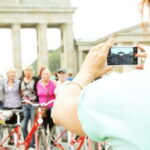
This is not a quick photo stop. Give yourself a moment to walk among the structures, even if you only do a short loop. The memorial’s scale can affect how you interpret it, so don’t rush your first steps.
In one shared experience, people talked about how the site prompted personal interpretations, and that’s exactly what you should expect here: the guide will ground you in context, then you’ll experience it in your own way.
Stop 11: Fuhrerbunker, now mostly gone, with the reality reduced to a parking lot
The tour includes the Fuhrerbunker site, the place where Hitler hid during the last weeks of the war and later committed suicide. All you see today is described as a parking lot, and the guide explains why.
That contrast is the point. The place of immense historical horror does not look like a movie set. It looks like ordinary modern life, which forces you to think about how cities overwrite the past while the past still shapes everything.
If you find yourself wanting more detail, this is where a longer independent visit can help later. The bike tour gives you the entry point.
Stop 12: Checkpoint Charlie, English-only on this version
Checkpoint Charlie is only included in the English version. The tour presents it as the Cold War border station that was shared between the USA and USSR, and it notes that at one point the situation was so tense that a third world war almost started right there.
If you’re booking specifically to see Checkpoint Charlie, make sure you choose the English option. In Germany, the same landmark can get handled differently based on language and routing, and this tour explicitly calls out that difference.
One important caveat: “overview” is part of the deal
A few practical notes that will help you enjoy the day more:
- The tour is about three hours, and stops are typically timed. You’ll get explanations, but you won’t have a slow, spend-the-afternoon pace at every site.
- Because of the Free Berlin concept, guides may adjust the route along the theme. So you should go in expecting a themed path through Wall and Third Reich sites, not a guaranteed checklist of every single named stop.
- If cycling on busier streets makes you nervous, stick close to the guide. One rider specifically mentioned feeling better after the guide helped with traffic instructions and waited when needed.
Who should book this bike tour?
This is a strong choice if you want:
- A bike-friendly way to cover major memorials and Wall remnants without driving a car
- A guide who connects stories to places, so the Nazi and Wall eras feel less like separate topics
- A day plan that works for families, including kids and possible infant seats
It’s less ideal if you prefer:
- Long, quiet time at a single memorial without moving on
- A rigid itinerary where every landmark is guaranteed in a fixed order
Price and value: what $42.34 buys you in real terms
At $42.34 per person for about three hours, the value comes from what’s included: bike, helmet, and a professional guide. You’re paying for expertise plus a car-free method to link multiple key stops without spending time on transit between them.
You’re also not paying entry fees at the listed stops, since the tour’s timing notes include free admission ticket status at each location. That means your budget stays predictable, aside from food and drinks, which are not included.
Bottom line: if you want a guided orientation tour of Berlin’s hardest history sites, this price is reasonable because it bundles transportation and interpretation together.
Practical packing tips for a Berlin all-weather ride
The tour operates in all weather conditions, so dress for rain and wind. Berlin can feel colder than you expect once you’re moving on a bike, especially near open areas and memorial sites.
Bring:
- A jacket that cuts wind and handles light rain
- Comfortable shoes for short walks at each stop
- A small bag or daypack you can secure (your bike may have a basket, which helps)
Also, the meeting point is near public transportation, which makes it easier to regroup if you get slightly off schedule.
Should you book this tour?
I think you should book it if you want a high-impact Berlin history day that uses bikes to connect Wall sites, Jewish history, and Holocaust remembrance in one flow. The best reason is simple: seeing the Wall remnants and major memorials on a bike tour gives you spatial understanding you won’t get from a quick stop-and-go bus ride.
Skip it or be cautious if you need guaranteed, slow time at specific locations or if you’re expecting a strictly fixed checklist. The Free Berlin concept and the timed stop structure mean you’re buying an overview plus guided storytelling, not a full-length, museum-style visit.
FAQ
How long is the Berlin Wall and Third Reich bike tour?
It runs for about 3 hours.
How much does the tour cost?
The price is $42.34 per person.
What’s included in the price?
You get a bicycle, a helmet, and a professional guide.
Is the tour offered in English?
Yes, it’s offered in English (and also in German depending on the option you choose).
Are there admission tickets included for the stops?
The tour notes free admission ticket status for the listed stops.
Is this tour family-friendly?
Yes. Children are welcome, and infant seats can be provided on request.
What group size should I expect?
The tour has a minimum and maximum of 4 to 15 participants, with a maximum of 15 travelers.
What weather conditions does the tour handle?
It operates in all weather conditions, so you should dress appropriately.
Where do I meet the guide, and where does it end?
You meet at Free Berlin Bike Tours & Rental, Poststraße 11, 10178 Berlin, and it ends back at the same meeting point.
Is food and drinks included?
Food and drinks are not included unless specified.