REVIEW · BERLIN
Berlin: 3-hour bike tour – A journey through time in the capital
Book on GetYourGuide →Operated by CityRiders · Bookable on GetYourGuide
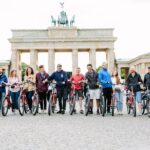
Berlin’s past rolls by on two wheels. This 3-hour CityRiders ride links major Cold War landmarks to the moments that still shape Berlin today, with insider stories that make the streets feel less like sightseeing and more like a living timeline. You’ll cover a lot fast, yet you still move at a leisurely pace so you can actually look.
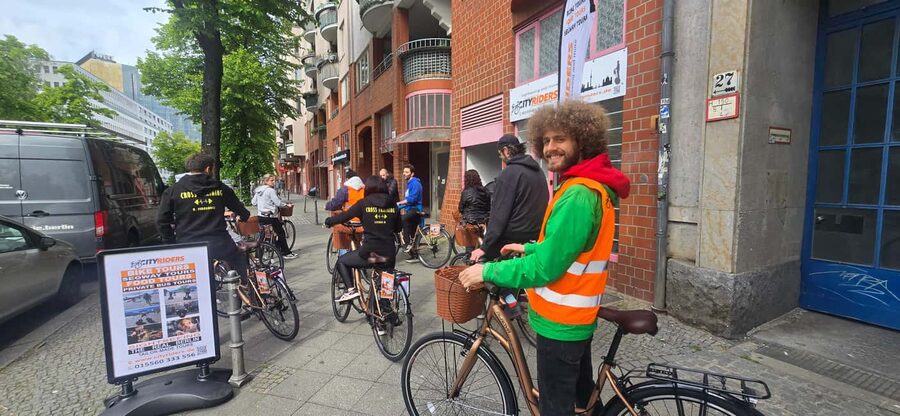
Two things I really like: the guides keep the ride readable and human, not textbook. Names like Fais and Gio show up in the feedback, and it’s clear they’re the kind of guides who help you get photos without rushing you. Second, the route is planned for great sightlines and stops, from the Holocaust Memorial to the skyline view from Victory Column.
One possible drawback: the content is heavy. You’re cycling past sites tied to National Socialism and the Holocaust, including the Topography of Terror area and the former Nazi control center. If you’d rather avoid emotionally intense history, plan your mindset (and take breaks when you need them).
In This Review
- Key highlights worth knowing
- Why this 3-hour bike tour is a smart first choice for Berlin
- Cold War and Nazi-era sites: Topography of Terror to the former Führer bunker area
- The Holocaust Memorial stop: making the symbolism make sense
- Tiergarten break and the shift to calmer Berlin
- Victory Column and Berlin’s skyline moments: views worth the pedals
- Bellevue Palace, the Spree, and the government district transition
- Reichstag to Brandenburg Gate: past and present in one bike line
- Museum Island (without museum doors): architecture and UNESCO focus
- Gendarmenmarkt finish: a beautiful square to close the story
- Price and value: what $44 covers in real terms
- Who this tour is for (and who should skip it)
- Practical tips before you pedal
- Should you book this CityRiders Berlin bike tour?
- FAQ
- How long is the bike tour?
- How much does the tour cost?
- Where do I meet the tour?
- What’s included in the tour price?
- Is the bike helmet included?
- Are food and drinks included?
- Which languages are the live guides available in?
- Do you go inside Museum Island museums?
- What should I wear for the tour?
- Are there payment flexibility and cancellation options?
Key highlights worth knowing
- Cold War focus that feels organized, not scattered
- Topography of Terror and the former bunker area bring context to the era
- Holocaust Memorial stop with clear explanation of significance
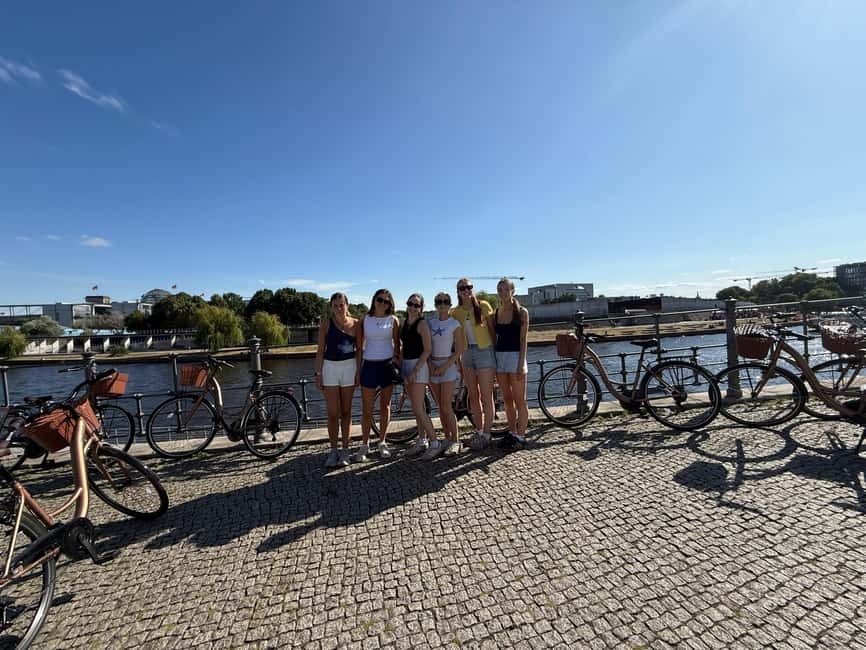
- Tiergarten reset with a 30-minute break for a drink or snack
- Big photo moments on bike: Brandenburg Gate and Victory Column views
- Museum Island without museum lines since you won’t go inside the buildings
Why this 3-hour bike tour is a smart first choice for Berlin
Berlin is big, and your first day can turn into a blur if you rely only on transit or slow walking. This tour is built for the sweet spot: enough time to connect key places, but not so long that you feel fried. The bike is the reason it works. You travel quickly from site to site, then you pause long enough to take it in at your own speed.
The format also helps you understand the city’s story. Berlin history can feel disconnected when you visit landmarks one by one. Here, the ride creates a thread: Cold War tensions, the Nazi regime’s grip, then the modern government and democratic Germany. Even when you’re not going inside museums, you still get the why behind the buildings and memorials. That’s what makes it more useful than a random loop around town.
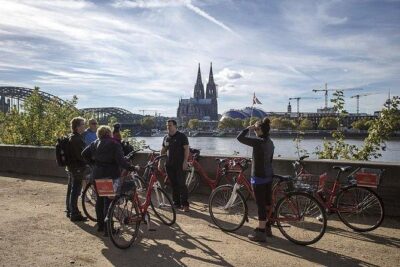
You also get the practical bonus of a guide who handles the rhythm. In the feedback, people specifically praised how guides didn’t mind stopping for pictures. That matters, because Berlin’s best views are rarely one-and-done. You want a moment to frame the photo, look around, and then move on.
You can also read our reviews of more tours and experiences in Berlin.
Cold War and Nazi-era sites: Topography of Terror to the former Führer bunker area
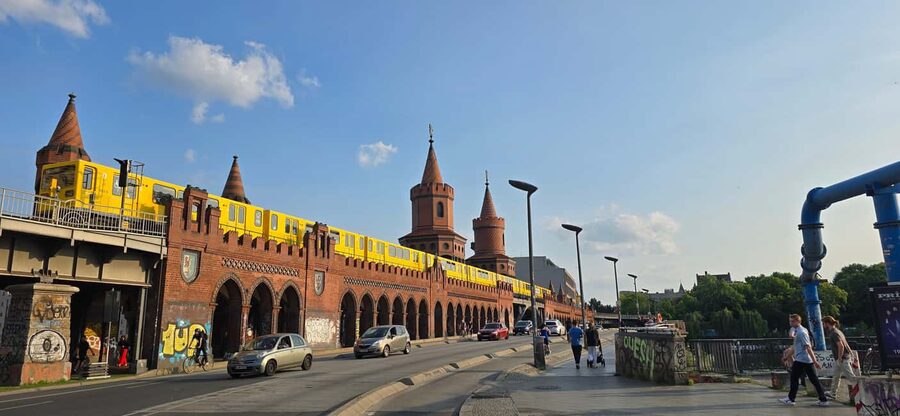
The tour starts by turning the city into a timeline, and the Cold War era is the main storyline from early on. You’ll head into the kind of Berlin you don’t fully grasp from photos, because the locations have weight. The guide sets the stage so the places don’t feel like random memorials stuck on a map.
A few minutes further on, you reach the Topography of Terror. This is one of those sites where the architecture and setting do part of the teaching. Even if you’re just getting outside perspectives and orientation, you’ll walk away with a clearer sense of how the Nazi machinery worked and how that era left marks on Berlin.
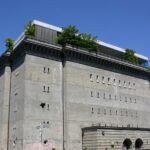
Next comes a place that’s almost invisible today, but was once a command center: the former Führer’s bunker. That contrast—major power housed in something that can disappear into the city—creates a very eerie kind of understanding. It’s the kind of stop where a good guide matters, because you’re looking for meaning, not just a monument.
One thing I’d flag: you’re likely to feel the atmosphere here. This isn’t meant to be a casual ride. The tour’s pace stays leisurely, but the content is serious. If you get overwhelmed, you can slow your attention and focus on the guide’s key points rather than trying to process everything at once.
The Holocaust Memorial stop: making the symbolism make sense
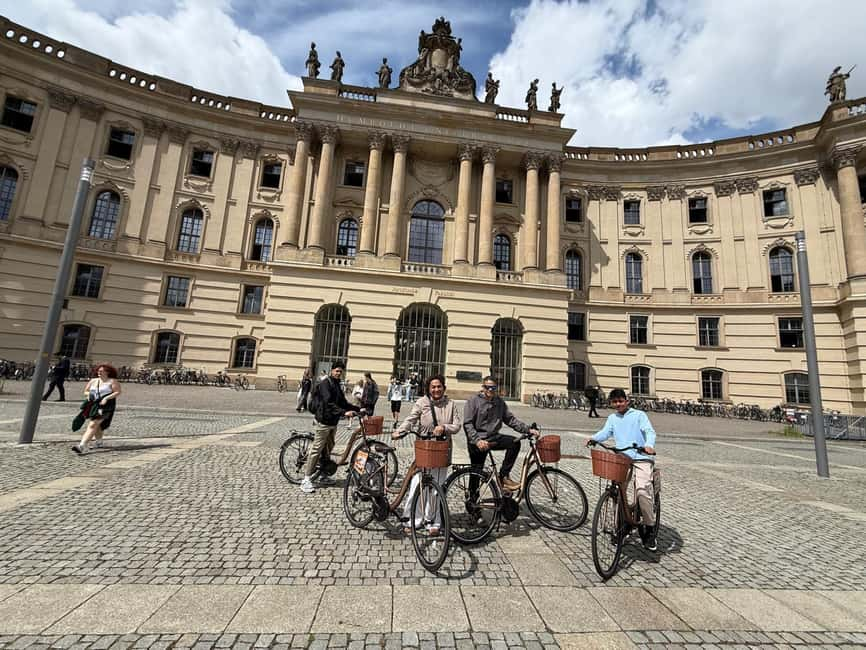
After the darker regime-related stops, you’ll stand at the Holocaust Memorial. This is one of the most moving places in Berlin, and the guide’s job is to give you clarity: what it represents and why its design matters. Without explanation, this memorial can feel like an artsy landmark you’re supposed to photograph. With explanation, it becomes something else—an experience with a message.
What I like about this stop within the tour is the balance. It doesn’t get treated like a checkbox. The guide helps connect the historical context to the emotional weight of the site, so you’re not just moving through. And since the tour is paced, you’re not being herded through on a sprint.
Afterward, the ride becomes a practical breather, which is smart. You’re about to cycle into Berlin’s green heart, and that mental shift matters. You’ll need it.
Tiergarten break and the shift to calmer Berlin
Then you roll into Tiergarten, Berlin’s green heart. It’s one of the largest city parks, and it gives you what the earlier parts didn’t: space to breathe. The tour takes a 30-minute break here, so you can refresh with a drink or snack.
This kind of break isn’t just convenience. It’s also emotional pacing. After sites tied to persecution and state terror, you shouldn’t feel guilty for wanting a reset. Tiergarten is a real “move your body, lower your pulse” moment.
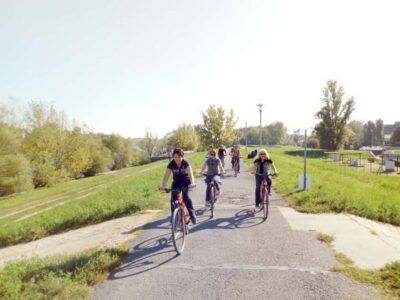
On the ride through the park and afterward, the bike makes the experience feel effortless. You’re not stuck standing in one spot while your legs cool down. You move, you stop, you look. It’s an efficient way to keep momentum without losing the chance to enjoy Berlin’s calmer side.
Victory Column and Berlin’s skyline moments: views worth the pedals
After Tiergarten, you cycle to the Victory Column. This is one of Berlin’s most famous landmarks, and it works well on a bike tour because you can approach from different angles. The views and framing feel better when you’re not limited to one exact vantage point.
A fun detail tied to the column: the golden Else. That name alone makes the monument feel more personal and less like a distant statue. The guide’s orientation helps you understand why this kind of landmark became part of Berlin’s identity.
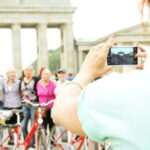
If you’re the type who likes photos, this section is where you can slow down a bit. You’ll have time to take pictures and get a sense of the surrounding area so the monument doesn’t feel like a standalone object.
Bellevue Palace, the Spree, and the government district transition

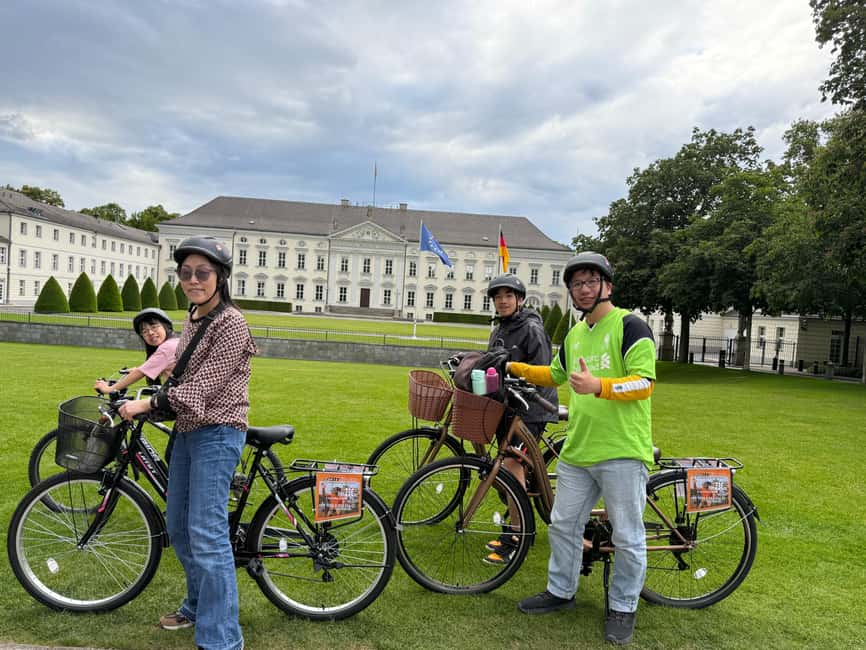
From there, the tour tracks you toward the Spree and the government district. You’ll pass Bellevue Palace, the official residence of the Federal President, which adds a “living state” layer to the sightseeing. It’s not just old architecture; you’re seeing where modern Germany operates.
Then comes the stretch along the Spree riverbank to the government district. Cycling near a major waterway changes how the city feels. Berlin seems wider, airier, and less confined than the streets alone suggest.
You’ll also pass the modern Chancellery with its striking architecture. This contrast—modern design beside the memory-heavy older parts of the city—is part of why Berlin feels like Berlin. The past is never far away, but the city still moves forward.
Reichstag to Brandenburg Gate: past and present in one bike line
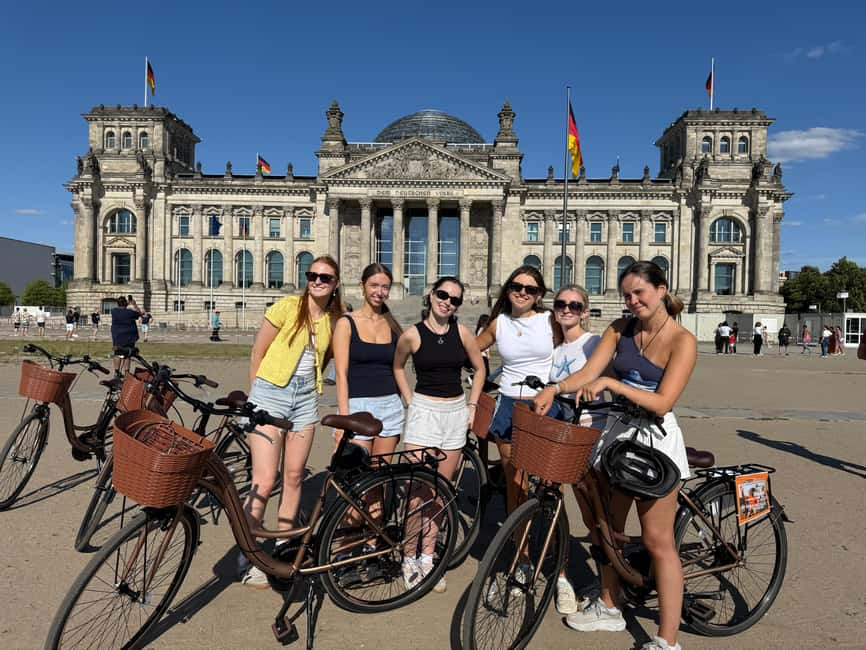
Now you reach a core sequence: the historic Reichstag building, then the Brandenburg Gate.
The Reichstag stop is powerful because the guide frames German democratic history from the German Empire through the modern Federal Republic. Even if you don’t go inside, the location still communicates a lot. You’re standing in a place associated with major shifts in how Germany governs itself.
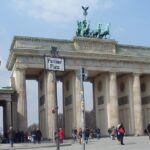
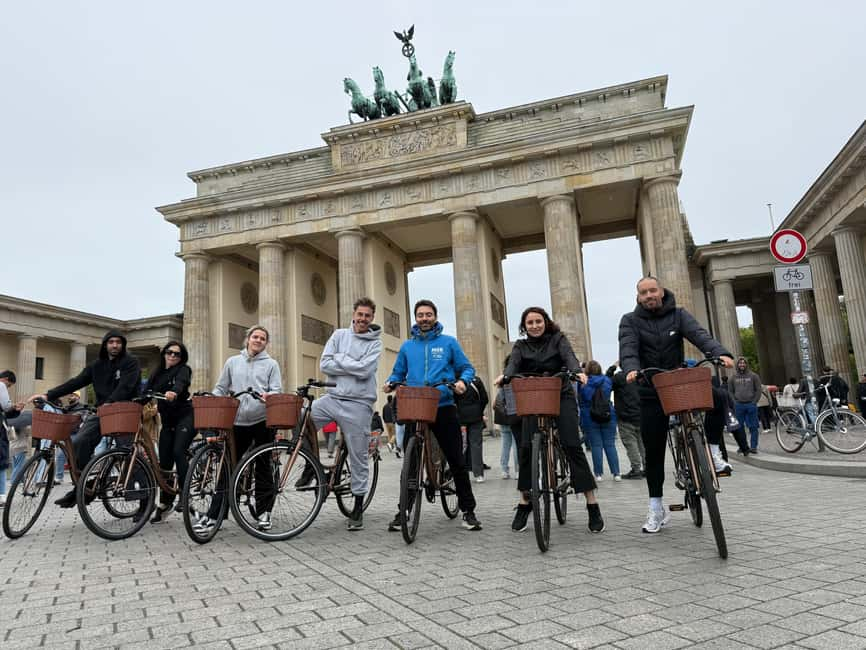
Then you ride to Brandenburg Gate, arguably the most famous photo spot in Berlin. It can be crowded at times, but the tour’s pacing helps. You’ll take your time here, absorb the atmosphere, and get the landmark context you need so it’s more than a postcard.
I also like how this section connects smoothly to the next part. The Gate makes a natural transition into the cultural and architectural spine of Berlin around Museum Island.
Museum Island (without museum doors): architecture and UNESCO focus
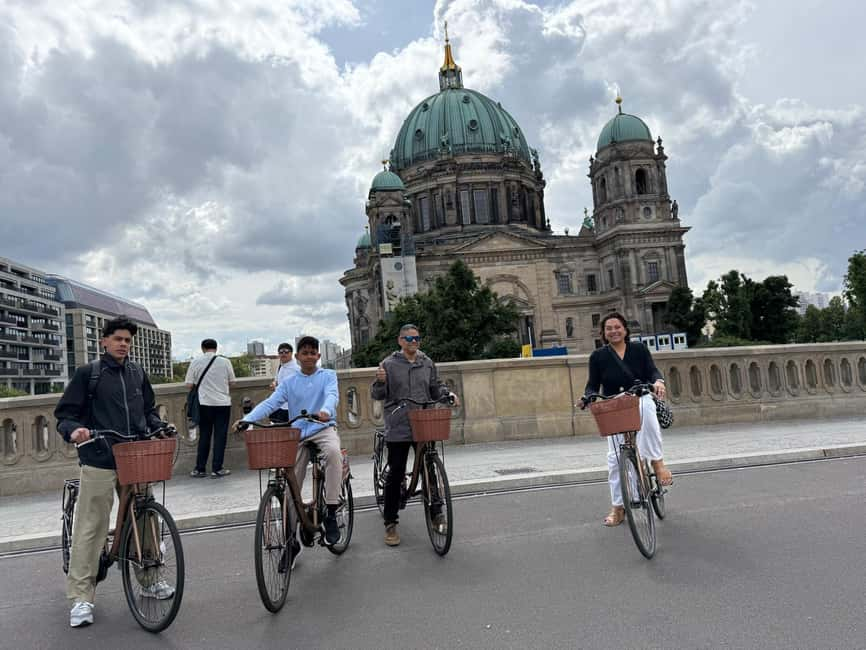
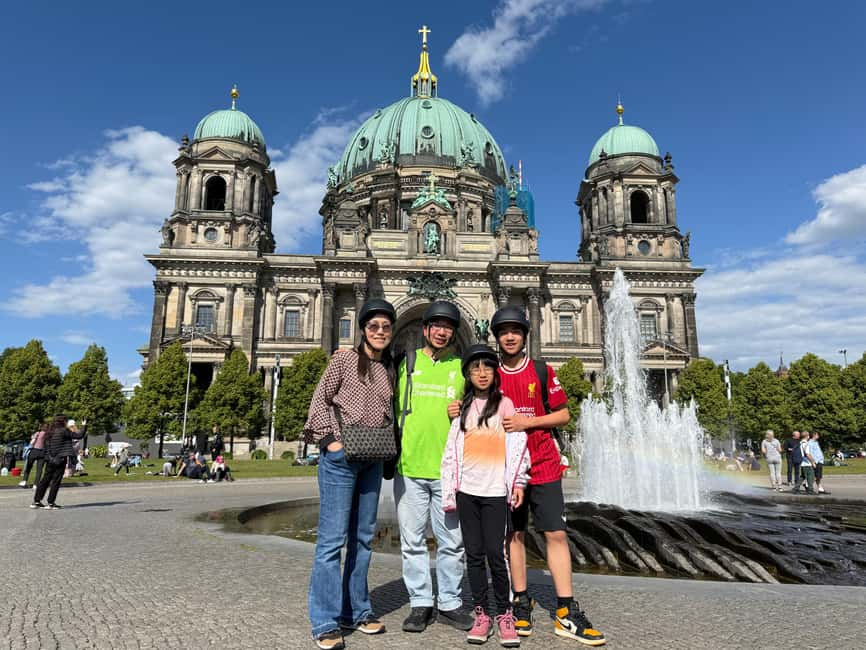
You’ll continue to Museum Island, a UNESCO World Heritage Site in the middle of the Spree. This is one of those places where you can learn a lot even without entering the museums. The tour doesn’t go inside, but you’ll gain insight into why this ensemble matters, and how the buildings relate to Berlin’s cultural identity.
There are five of Germany’s most important museums located here. The tour keeps it external for a reason: you get the big picture without turning your 3 hours into a queue and ticket hunt. If you’re the type who prefers to choose museum entrances later, this approach is a win.
The drawback is also obvious: if you were hoping for inside time, you won’t get it. But for many first-timers, this is a smarter use of limited time.
Gendarmenmarkt finish: a beautiful square to close the story
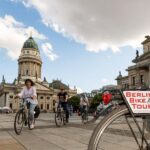
To wrap up, you roll on to Gendarmenmarkt, widely considered one of Europe’s most beautiful squares. It’s a great finish because it shifts the mood into something elegant and lighter after the heavy historical stops.
You’ll see the German and French Cathedrals and the Concert Hall from the square’s perspective. The architecture makes more sense when you’ve built context through the earlier parts of the tour. Berlin isn’t only memorials and politics. It’s also culture, ceremony, and public life.
And as a practical matter, this final zone is a good place to continue on your own after the tour ends. You’ll have an easier time plotting your next walk or transit hop because it’s visually clear and central-feeling.
Price and value: what $44 covers in real terms
At $44 per person for 3 hours, this tour is priced like a serious city experience, not a quick whim. What you get matters: a personal local guide, a rental bike, and optional helmet. You also get photo spot planning, plus optional rain ponchos and gloves if the weather turns.
The value isn’t just the bike. It’s the stop-by-stop context: Cold War sites, Nazi-era history, a Holocaust Memorial explanation, then modern government and major landmarks. If you tried to recreate this route yourself with no guide, you’d probably spend more time figuring things out, and you’d lose the story thread that ties the locations together.
Also, because you’re on a bike, you’re not wasting time constantly switching transit. That’s part of the value you feel immediately.
One practical note: food and drinks aren’t included, and souvenirs aren’t included either. The tour does include that 30-minute break in Tiergarten where you can refresh. So budget a small amount for snacks and plan water, especially in warmer months.
Who this tour is for (and who should skip it)
This is ideal if you want a first orientation to Berlin that connects history to geography. You’ll like it if you enjoy walking away with a narrative, not just a list of sights. It’s also a solid choice if you prefer learning from a real guide and want help finding the best photo moments.
It’s also a good fit for people who want active sightseeing without going too hard. The pace is described as leisurely, and the bike helps you cover distances quickly without feeling like you’re sprinting.
You might want to consider another option if you’re sensitive to emotionally heavy sites. The tour includes places tied to National Socialism and the Holocaust, including Topography of Terror and the Holocaust Memorial. The guide explains significance, but it’s still serious subject matter.
Practical tips before you pedal
A bike tour is only fun when your body cooperates. Wear comfortable, weather-appropriate clothing and sturdy shoes for cycling. You’ll be in the elements, so plan layers if the day looks changeable.
If rain threatens, take advantage of the optional rain ponchos and gloves. It’s a small thing, but keeping your hands and clothing comfortable can make the difference between a good ride and a miserable one.
Finally, bring a bit of cash in euros. The tour doesn’t include food, and it’s wise to be ready for snacks during the Tiergarten break.
Should you book this CityRiders Berlin bike tour?
If you want a 3-hour Berlin intro that actually teaches you something—without turning your day into a stressful schedule—this is a strong pick. The guide-led storytelling, the photo-friendly stop planning, and the way the route links Cold War and Nazi-era sites to modern Berlin make the tour feel worth the time.
Book it if you like history but also want a break from museum fatigue. The plan includes major landmarks like the Brandenburg Gate and the Reichstag area, plus the calm reset of Tiergarten and a beautiful finish at Gendarmenmarkt.
Skip or reconsider if heavy historical topics would throw off your day. Otherwise, grab your bike helmet if you want one, wear comfortable shoes, show up 10 minutes early at CityRiders, and let Berlin’s timeline roll past you at a pace that lets you think.
FAQ
How long is the bike tour?
It runs for 3 hours.
How much does the tour cost?
The price is listed at $44 per person.
Where do I meet the tour?
Meet at CityRiders. The meeting point is close to public transportation and is easy to find.
What’s included in the tour price?
Included are a personal local guide, rental bike (and optional bike helmet), the City tour, best photo spot stops, and optional rain ponchos and gloves in cold or wet weather.
Is the bike helmet included?
A bike helmet is optional, and you can rent one if you want it.
Are food and drinks included?
No. Food and drinks are not included.
Which languages are the live guides available in?
Live guides are available in English, German, Spanish, and Portuguese.
Do you go inside Museum Island museums?
No. You will not go inside the museums, but you’ll get insights about the architectural history and significance of Museum Island.
What should I wear for the tour?
Wear comfortable, weather-appropriate clothing and sturdy shoes for cycling.
Are there payment flexibility and cancellation options?
Yes. There is free cancellation up to 24 hours in advance for a full refund, and you can reserve now and pay later (pay nothing today).