REVIEW · BERLIN
Best of Berlin E-Bike Tour
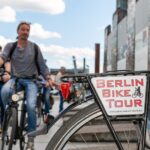
Book on Viator →Operated by Fat Tire Tours - Berlin · Bookable on Viator
Cold War Berlin rolls past on two wheels. This 3-hour e-bike route is an efficient way to see major sights around Mitte without tiring out, and the guides (from Sam to Thor) turn each stop into a clear story you can actually remember.
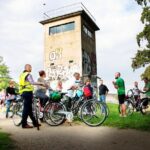
I especially like how stops are concentrated into one morning ride, with commentary that focuses on the Cold War and modern Berlin. The ride itself is built for real people, not fitness models. One consideration: you do need to be comfortable riding on your own for the whole tour, and Berlin traffic takes attention even when the pace is relaxed.
In This Review
- Quick hits you’ll care about
- Where the Best-of Berlin Ride Starts: Alexanderplatz First, Alexanderplatz Last
- E-Bike Reality Check: Easy Pedaling, Still Some Effort
- Reichstag Stop: Hitler’s Rise and How Berlin Talks About the Nazi Era
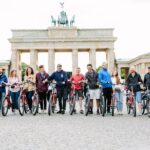
- Brandenburg Gate: A Prussian Monument with Cold War Resonance
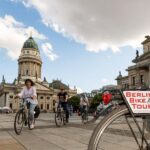
- Gendarmenmarkt and Bebelplatz: Refugees, Rebuilding, and the Memory of Propaganda
- Alexanderplatz: The Center Where Berlin Keeps Changing
- Holocaust Memorial: A Stop with Purpose, Not Just Impact
- Checkpoint Charlie: East Meets West, Explained Clearly
- The Ride Back and the Extra Biking Time
- How the Guides Change the Experience (Sam, Thor, Michelle, and More)
- Pacing for Beginners: Why 3 Hours Feels Manageable
- Price and Value: Is $65.90 a Good Deal?
- Practical Stuff You Should Know Before You Go
- Should You Book This Best-of Berlin E-Bike Tour?
- FAQ
- How long is the Berlin e-bike tour?
- How much does the tour cost?
- Where does the tour start and end?
- Is the tour offered in English?
- Are helmets and the e-bike included?
- How big is the group?
- Do I need to know how to ride a bike?
- Are food and drinks included?
- What if the weather is bad?
- Can I cancel for a refund?
Quick hits you’ll care about
- Starts and ends at Alexanderplatz (at the Unlimited Biking shop by the TV Tower), so you don’t get lost.
- Small group size (max 15) keeps the ride from feeling chaotic.
- Helmets and e-bikes are included, which makes the tour feel less like logistics and more like sightseeing.
- Cold War focus built into the commentary, not just a list of landmarks.
- Major stops include Reichstag, Brandenburg Gate, Holocaust Memorial, and Checkpoint Charlie, all in one flow.
- All planned stops are listed as admission free, so you can spend your time on the streets and at viewpoints.
Where the Best-of Berlin Ride Starts: Alexanderplatz First, Alexanderplatz Last
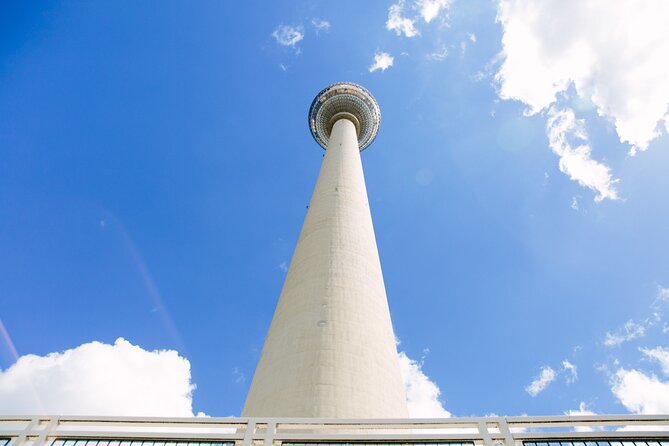
You meet at Unlimited Biking at Panoramastraße 1A, right by Alexanderplatz and the TV Tower. That’s a smart choice for a “best of” tour because it keeps the route in the center. You don’t waste energy on transfers. You also finish in the same easy-to-find place, which matters in a big city.
The ride is designed as a morning outing. That timing helps you see Berlin with better light and usually more comfortable temperatures than later in the day. If you’re planning the rest of your trip, this tour also works well as a first-day orientation: it gives you a mental map for where things are and why they’re there.
You can also read our reviews of more tours and experiences in Berlin.
E-Bike Reality Check: Easy Pedaling, Still Some Effort
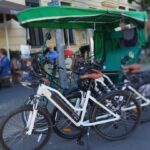
This is an electric bike tour, but it’s not a motor scooter. You’ll still pedal, just with help when you need it. In practice, that means you can keep a steady rhythm without feeling wrecked, even if you’re not a regular cyclist.
The biggest practical win is how the e-bike stretches your legs and time. On foot, you’d have to choose between covering distance and stopping to understand what you’re looking at. Here, the bike does the heavy lifting so the guide can spend more time explaining events like the Nazi period and the Cold War division of the city.
One thing to take seriously: you must be able to ride a bike alone. No child seats, no tag-alongs. If you’re nervous about balance or you’ll need an assistant, this isn’t the right format. Berlin’s streets can be busy, but the guide leads the group and keeps everyone together, which helps you feel more secure.
Reichstag Stop: Hitler’s Rise and How Berlin Talks About the Nazi Era
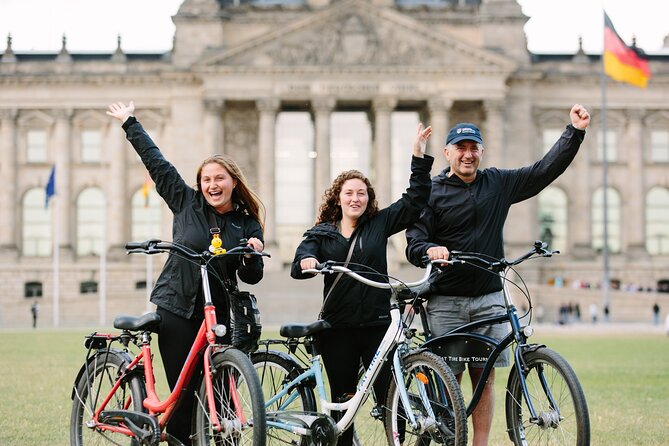
The route begins with a stop at the Reichstag Building. Even if you only spend a few minutes there, it sets the tone for the whole tour. The guide connects the story of Hitler’s rise to power with how modern Berlin discusses the Nazi era today.
Why that matters: if you come to Berlin with only names and dates in your head, the history can feel abstract. This stop gives you a framework before you move on to other symbols of power and rebuilding. You’ll be listening for context as you ride, not just snapping photos.
A small heads-up: because the stop is short, you won’t absorb everything if you’re looking for a deep, inside-the-building experience. This is a street-level history tour focused on what you can see from where you are.
Brandenburg Gate: A Prussian Monument with Cold War Resonance
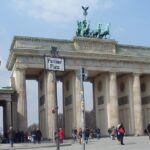
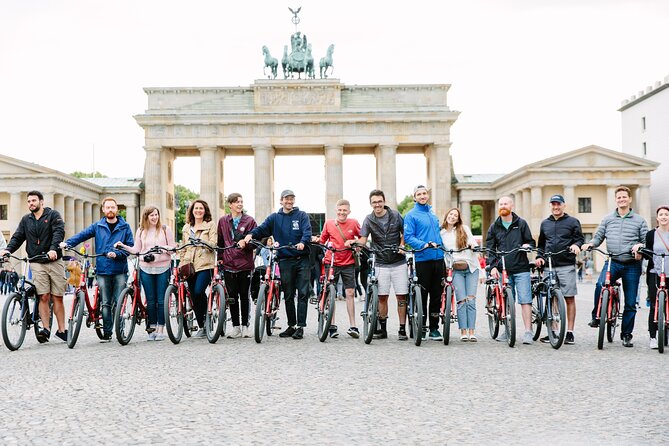
Next comes the Brandenburg Gate, the famous “Berlin picture” that you’ve probably already seen on postcards. But the tour keeps it from being just a photo stop. You learn about the monument’s roots and the idea of Berlin’s resilience, not in a patriotic way, but in the sense of a city that gets repeatedly transformed by major political eras.
The guide’s Cold War angle helps you notice something important: Berlin isn’t one story. It’s layers. The Brandenburg Gate sits in the middle of those layers, so you get a sense of how power and symbolism move from one regime to another.
Time is brief here too, so treat it like a landmark moment rather than a full sightseeing session. The value is that it plugs into what you’re learning as you ride.
Gendarmenmarkt and Bebelplatz: Refugees, Rebuilding, and the Memory of Propaganda
At Gendarmenmarkt, you get a snapshot of how Berlin recovered after a catastrophic population loss following the Thirty Years’ War. The story turns to Protestant Huguenot refugees invited from France to help rebuild the city. This is the kind of detail you rarely catch if you only walk the “top attractions” list.
Then you roll to Bebelplatz, tied to Frederick the Great and home to major cultural and educational buildings. More importantly, this square also holds a stark reminder of how the Nazis used propaganda. The guide helps you connect ideology with the physical spaces where it played out.
What I like about these two stops together: they show Berlin’s “then and now” rhythm. You’re not stuck on the darkest parts of the 20th century. You see how the city’s identity formed through both migration and political rupture.

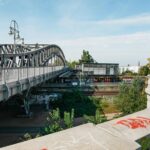
Alexanderplatz: The Center Where Berlin Keeps Changing
The tour includes Alexanderplatz as a stop for a reason. This square sits in the center of Mitte, and it’s a good place to understand what makes Berlin feel like Berlin. Here, you notice remnants of different eras in the same view, which is exactly what you want from a short introduction.
I find this stop helpful for two reasons:
- It helps you understand the city’s layout while you still have fresh context.
- It gives you a mental reset between the heavier stops like the Holocaust Memorial and Checkpoint Charlie.
Also, because you started here, the stop makes the route feel like a loop you’re actively completing—not a random series of landmarks.
Holocaust Memorial: A Stop with Purpose, Not Just Impact
Then you reach the Memorial to the Murdered Jews of Europe. This is one of the most powerful places in Berlin, and the tour approach is to talk about more than what happened. The guide discusses how Berlin and Germany remember the atrocity into the 21st century.
That matters because remembrance isn’t just a plaque and a moment of silence. It’s public space, education, and ongoing choices about how future generations understand what took place. With a guide, you don’t have to guess at what to look for or what to consider.
A practical note: this stop is listed as a 10-minute stop. You won’t have hours here, so if you’re someone who wants to sit with a place for a long time, treat the tour time as the start. You can always come back later under your own pace.
Checkpoint Charlie: East Meets West, Explained Clearly
Finally, you get to Checkpoint Charlie, the famous former crossing between Soviet- and American-occupied sectors. Here the guide focuses on how Berlin was divided and why this crossing became a focal point of Cold War tension.
This is often where the tour clicks for first-timers. You’ve seen symbols of power earlier. Now you’re seeing a literal border space, even if you’re viewing it from today’s city streets. It’s a reminder that the Cold War wasn’t just propaganda and speeches—it shaped how people moved, lived, and feared.
Time is still limited, but the guide keeps the story clear. You walk away knowing what the checkpoint represented, not just that it’s a famous location.
The Ride Back and the Extra Biking Time
After the history stops, you finish back at Alexanderplatz. There’s also a short segment called Unlimited Biking before you wrap up. Think of it as a little breathing room—time to get comfortable on the bike and enjoy the ride without constantly stopping.
This is also where you’ll notice how much the route covers. Berlin is big, and on a bike you can move farther between stops than you can on foot. That’s the practical advantage of e-biking: it gives you structure and speed at the same time.
How the Guides Change the Experience (Sam, Thor, Michelle, and More)
E-bike tours can turn into a shuffle of landmarks. This one tends to avoid that because the guide experience drives the pace and the storytelling.
From the guides named in the experience feedback, a few themes show up clearly:
- Sam is praised for calm delivery and patience with questions.
- Thor gets credit for handling traffic smoothly while keeping the group safe.
- Michelle is mentioned for pacing that works even for beginners.
- Neil stands out for making Berlin history easy to follow, especially for first-time visitors.
- Several guides are repeatedly praised for being fun and informative without rushing you.
Even if you don’t know your guide in advance, you can still look for a few signs once you meet them: do they explain what you’ll see before you arrive, and do they keep the group together in traffic? In Berlin, that’s not optional—it’s how you get a relaxed ride instead of a stressed one.
Pacing for Beginners: Why 3 Hours Feels Manageable
The tour runs for about 3 hours total. With a sequence of short stops (some around 5 minutes, and the major emotional sites at around 10 minutes), the time stays light. You’re constantly moving, but you also get enough pauses to take photos and absorb the story.
I also like that the terrain and route are often described as easy to handle. One reason e-biking works so well in this format is that it reduces the fatigue barrier. You can keep up without “paying for” history with sore legs.
Still, plan a simple strategy: wear comfortable shoes, sip water, and don’t treat the bike like an adrenaline ride. The sweet spot is steady and relaxed. If you take that approach, the “best of” format will feel like a highlight reel instead of homework.
Price and Value: Is $65.90 a Good Deal?
At $65.90 per person for around 3 hours, this tour sits in the “worth it” category for a specific reason: you’re paying for three things at once.
- A guide who explains what you’re seeing (history context that a map can’t provide).
- An e-bike and helmet, which saves you time and rental hassle.
- A tightly planned route through central Berlin, letting you cover key sights without spending the day walking between them.
If your day in Berlin is limited, the value is easier to feel. You can’t “see everything” on foot in three hours. On the bike, you do more, and you do it with a narrative that helps your brain connect the dots.
If you have lots of time and you love slow independent wandering, you might question the price. But if you want an efficient introduction plus context, this is the kind of deal that usually pays off.
Practical Stuff You Should Know Before You Go
A few details from the tour info help you show up ready:
- You’ll get a helmet and an e-bike, so you don’t need to bring gear.
- Bring a bottle of water.
- The tour is offered in English and uses a mobile ticket.
- It’s near public transportation, so getting to the meeting point is straightforward.
- Food and drinks are not included, so plan where you’ll eat after.
Weather matters. The experience notes that it requires good weather. If conditions are poor, you’ll be offered a different date or a full refund.
One more tip: Berlin can change quickly in the morning. If you’re going to bring a jacket, bring a one that you can still wear while riding comfortably.
Should You Book This Best-of Berlin E-Bike Tour?
Book it if you want a structured, history-focused ride that hits major Cold War landmarks in a single morning loop. It’s especially good for first-timers who want to get oriented fast, and it works well if you don’t want to trade off learning for physical effort thanks to the e-bike.
Skip it if you can’t ride a bike confidently on your own, or if you’re looking for a quiet, slow walking experience where you can disappear into side streets for long stretches. This is a guided, time-boxed route where the best results come from staying alert and enjoying the ride.
If that sounds like you, this is a strong way to see central Berlin and understand why these places matter.
FAQ
How long is the Berlin e-bike tour?
It’s approximately 3 hours.
How much does the tour cost?
The price is $65.90 per person.
Where does the tour start and end?
It starts at Unlimited Biking (Panoramastraße 1A, 10178 Berlin) near Alexanderplatz and ends back at the same meeting point.
Is the tour offered in English?
Yes. The tour is offered in English.
Are helmets and the e-bike included?
Yes. Helmet use and the electric bike are included.
How big is the group?
The tour has a maximum of 15 travelers.
Do I need to know how to ride a bike?
You must be able to ride a bike alone. There are no child seats or tag-alongs.
Are food and drinks included?
No. Food and drinks are not included.
What if the weather is bad?
This experience requires good weather. If it’s canceled due to poor weather, you’ll be offered another date or a full refund.
Can I cancel for a refund?
Yes, free cancellation is available. You can cancel up to 24 hours in advance for a full refund.