REVIEW · BERLIN
Berlin: Alternative Bike Tour of Kreuzberg & Friedrichshain
Book on GetYourGuide →Operated by Berlin on Bike BoB Fahrradtouren GmbH · Bookable on GetYourGuide
Berlin clicks into focus on two wheels. This 3-hour alternative bike tour strings together Prenzlauer Berg’s DDR-era vibe, Friedrichshain’s creative edge, and Kreuzberg’s colorful streets, with the East Side Gallery in the mix. You also get the kind of neighborhood context that turns names on a map into real places you can picture.
I especially like how it hits both sides of the city in one ride: Karl-Marx-Allee and DDR reminders in Friedrichshain, then straight into today’s street art and alternative culture. The other big win is the small group feel (max 15), where guides such as Oli, Joost, Emma, Anna, Patricia, Phillip, Andy, and Angus can keep the pace relaxed and the questions coming.
One consideration: snacks and drinks are not included, so plan a stop or bring something small.
In This Review
- Key points before you pedal
- Berlin by Bike: What you cover in about 3.5 hours
- Start at Kulturbrauerei: Prenzlauer Berg’s DDR-era texture
- What to watch for
- Friedrichshain loop: from DDR boulevards to Boxhagener Platz
- Daytime version of nightlife
- East Side Gallery and Oberbaumbrücke: the Wall, up close and moving
- Why this segment is so valuable
- Kreuzberg back courtyards and SO36: the alternative Berlin side
- A useful way to think about SO36
- River Spree + Görlitzer Park: where the pace turns scenic
- Photo-and-rest strategy
- Guides, pace, and group size: why the best part is the storytelling
- What the included gear suggests about the experience
- Price and value: is $41 fair for a 17 km guided ride?
- What to bring (and one thing to plan around)
- Who should book this Kreuzberg & Friedrichshain alternative bike tour
- Should you book this tour?
- FAQ
- FAQ
- How long is the tour?
- What distance will I ride?
- What’s included in the price?
- Are snacks and drinks included?
- Where does the tour start?
- How big is the group?
- What languages are offered?
- Is the route mostly on bike paths?
- What kind of bike will I use?
- What should I bring and wear?
Key points before you pedal
East Side Gallery by bike: Ride along the biggest remaining stretch of the Wall, then keep rolling toward Kreuzberg.
Small groups up to 15 people: Personal atmosphere, less waiting, more time to look around.
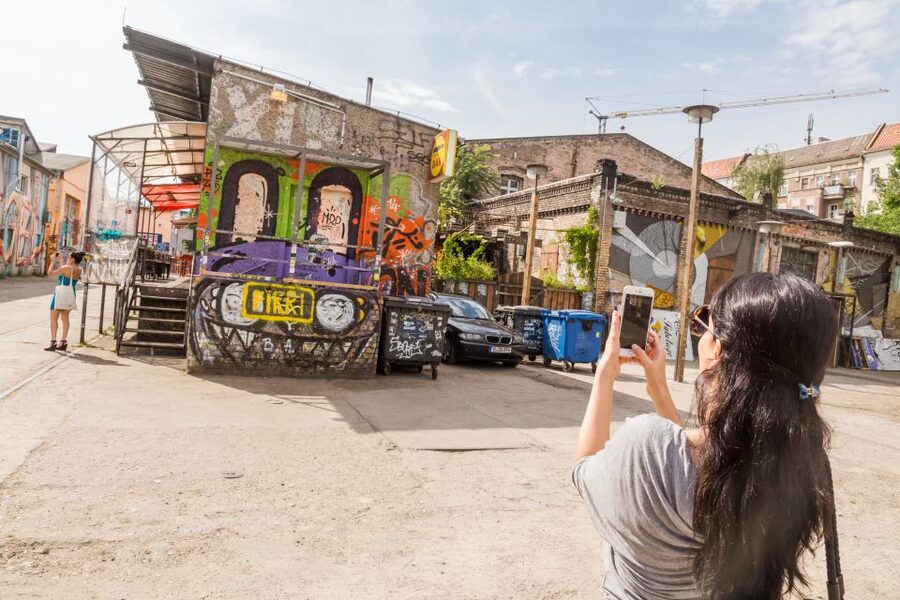
Alternative Berlin, not just monuments: Kreuzberg back courtyards, SO36 street life, and creative stops like RAW Tempel.
River Spree scenery: You get parks, river views, and photo time without turning it into a marathon.
Practical comfort extras: Helmets and gloves on request, plus sunscreen, trouser clips, and rain ponchos if the weather turns.
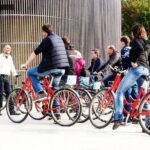
Reliable rental bikes: Comfortable bikes from a large fleet, with baskets for light bags.
Berlin by Bike: What you cover in about 3.5 hours
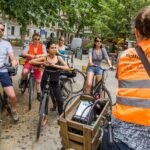
This tour is built around a simple idea: the easiest way to understand Berlin is to move through it. You’ll ride a relaxed pace for about 3 hours (listed as 210 minutes), and you’ll cover roughly 17 kilometers. That distance is long enough to feel like you saw a lot, but short enough that you don’t spend the day worn out.
The route is designed for easy getting-around. You’ll usually be on bike paths and safe, quieter roads, with time to stop for photos and questions. Translation for your legs: you’re not doing a training ride, and you’re not speed-dodging through the busiest streets the whole time.
If it’s your first day, this kind of tour helps you build a mental map fast. You’ll learn how Berlin’s districts relate to each other, not just what they’re called.
You can also read our reviews of more tours and experiences in Berlin.
Start at Kulturbrauerei: Prenzlauer Berg’s DDR-era texture
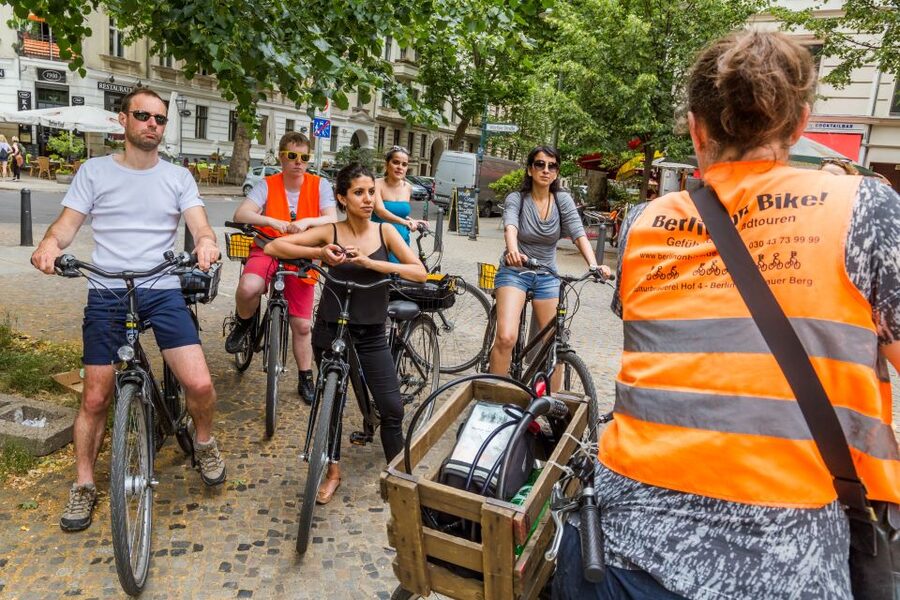
The ride begins at Kulturbrauerei in Prenzlauer Berg. This starting point matters because Prenzlauer Berg often feels like the “between past and present” district. You get streets and architecture that still carry hints of the old East Berlin story, but with modern life clearly layered on top.
From here, you head toward Volkspark Friedrichshain and Karl-Marx-Allee. Even if you’ve read about these places, seeing them from a bike changes the rhythm. Instead of just looking at façades from a distance, you feel how wide boulevards and park edges shape how people move and meet.
What to watch for
You’ll likely notice how the city’s layout affects the vibe:
- big street geometry near Karl-Marx-Allee
- green edges and calmer walking-bike life near Volkspark Friedrichshain
A practical tip: Prenzlauer Berg can feel more “kept” than you expect for an alternative tour. That contrast is the point.
Friedrichshain loop: from DDR boulevards to Boxhagener Platz
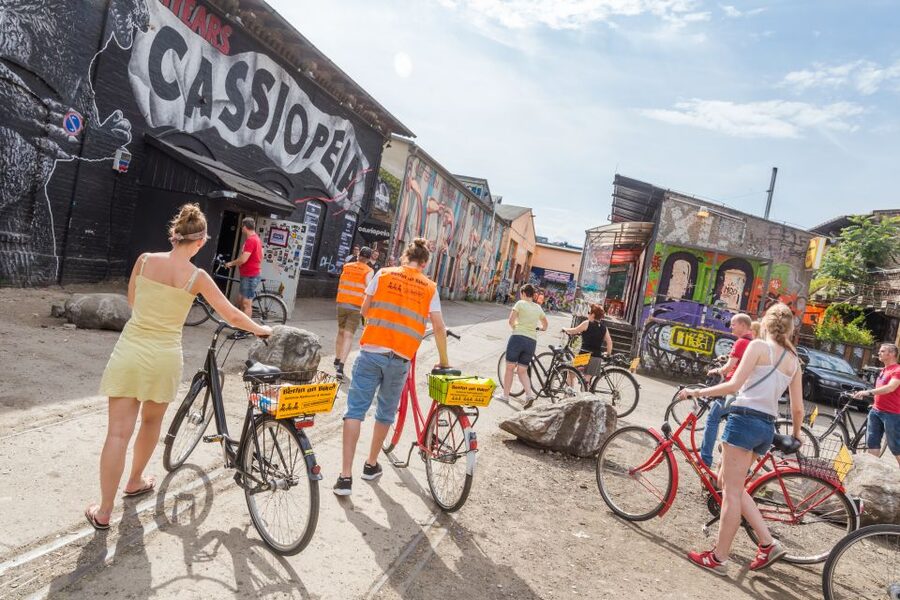
Friedrichshain is where the tour starts turning into the version of Berlin most visitors want to experience. You’ll bike around Boxhagener Platz and the RAW Tempel area.
Boxhagener Platz is one of those locations where the neighborhood mood reads fast. You’ll pass through streets that feel like daily life is happening right on the sidewalk, and it’s a good place to feel the scale of Friedrichshain’s social energy.
Then RAW Tempel brings you into a creative zone. This is the kind of stop that helps you understand that Berlin’s alternative culture isn’t a museum exhibit. It’s tied to spaces that got used, repurposed, and kept alive through changing decades.
Daytime version of nightlife
The tour notes that the area is known for nightlife, but you’ll still see plenty during the day. That’s useful if you’d rather not wait for evening to start exploring. You’ll get the atmosphere without the late-night chaos.
East Side Gallery and Oberbaumbrücke: the Wall, up close and moving
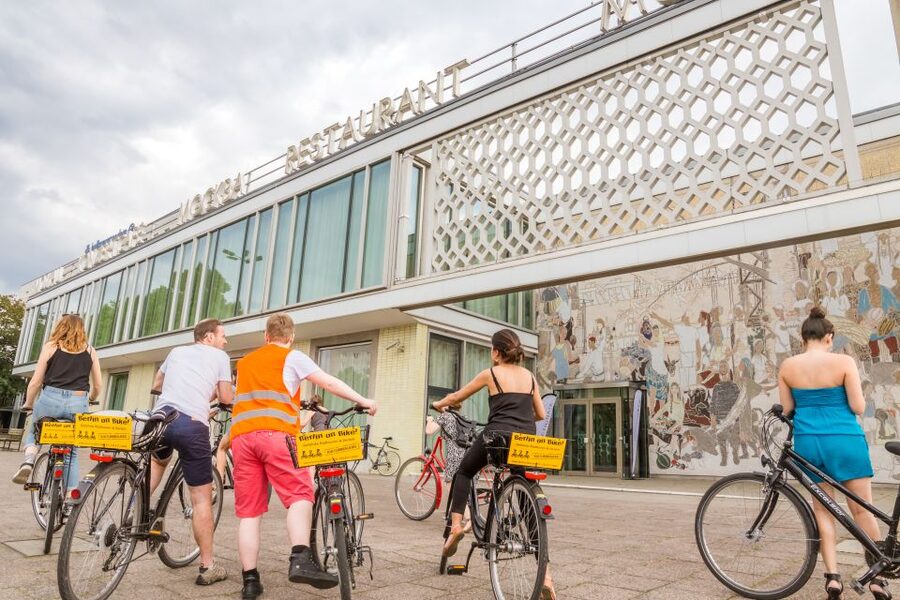
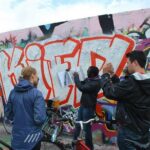
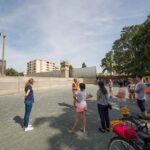
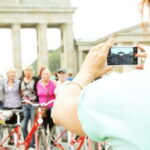
Here’s the headline moment: you ride along the East Side Gallery, described as the largest remaining piece of the Berlin Wall. Cycling here is a smart choice, because it slows your attention to the details. You’re not rushing through a single viewing point; you’re moving beside the artwork while your guide gives context.
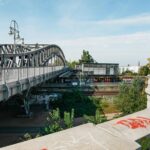
After that, you cross over Oberbaumbrücke. Crossing a bridge by bike turns into its own little “how Berlin works” lesson. You can see how the river divides space, how streets align, and how neighborhoods connect across water.
Why this segment is so valuable
The Wall is often treated like a fixed landmark. On a bike tour, it becomes part of the city’s flow. You feel the contrast between the physical barrier of the past and the connections of today.
If you’re the type who likes photos, this is where you’ll spend time framing shots. You’ll have motion, angles, and river context all at once.
Kreuzberg back courtyards and SO36: the alternative Berlin side
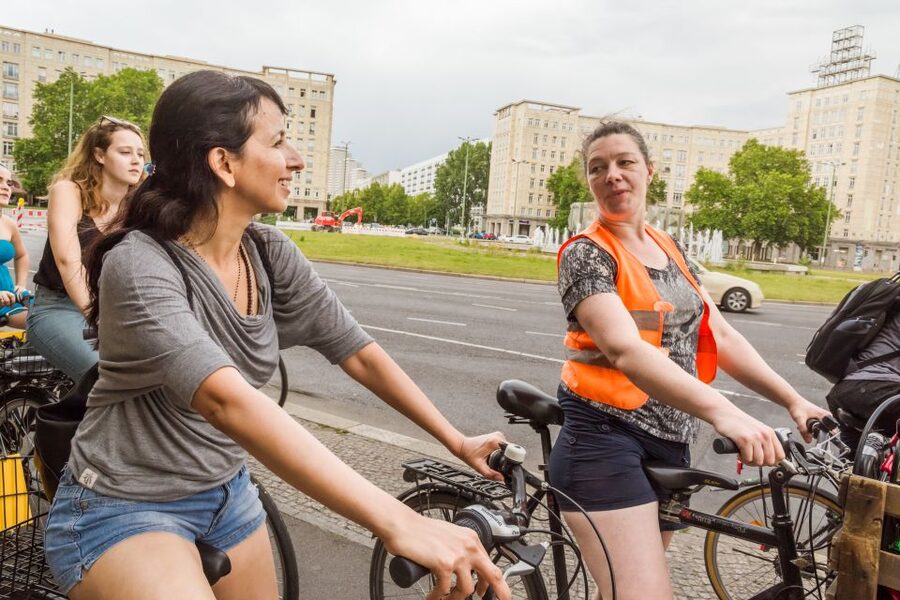
Once you reach Kreuzberg, the tour shifts toward what many people come to Berlin for: alternative culture that’s easy to miss if you only stick to postcard sights.
You’ll explore back courtyards and pass through parks, which gives the day a nice rhythm break after the big monuments and iconic Wall stretch. Courtyards are where you start to notice details like how buildings face each other, where life happens out of view from the main street.
Then comes the colorful SO36 district. This part is about lived-in identity, not just art on a wall. It’s a district where the creative, non-mainstream energy is part of the neighborhood’s personality.
A useful way to think about SO36
SO36 often represents Berlin’s countercultural side. On this tour, you’re learning how that energy formed, survived, and changed over time as the city evolved.
River Spree + Görlitzer Park: where the pace turns scenic
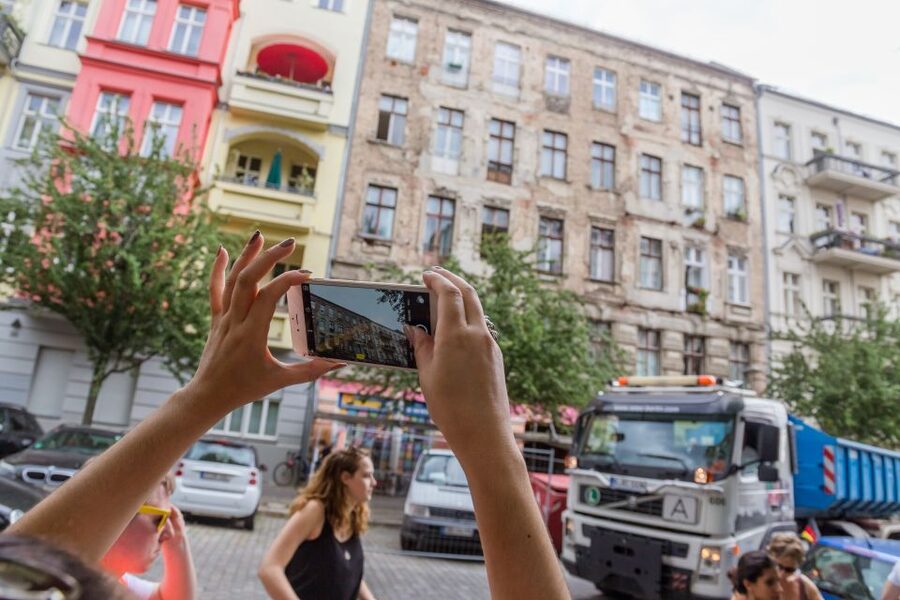
After Kreuzberg’s inner textures, you roll along the banks of the River Spree. This is one of those segments that feels simple on paper but pays off in real life. River routes give you constant light and wide sightlines, and your speed stays relaxed enough that you actually look.
You’ll also see Görlitzer Park. Parks in Berlin can range from calm green spaces to social hubs, and this one fits the tour’s overall theme: a place where daily life and city culture overlap.
Photo-and-rest strategy
Don’t treat the river segment like a “just get through it” stretch. Build in small stops for:
- river views
- street art glimpses
- quick questions to your guide
The tour length is set up so you can do that without falling behind.
Guides, pace, and group size: why the best part is the storytelling
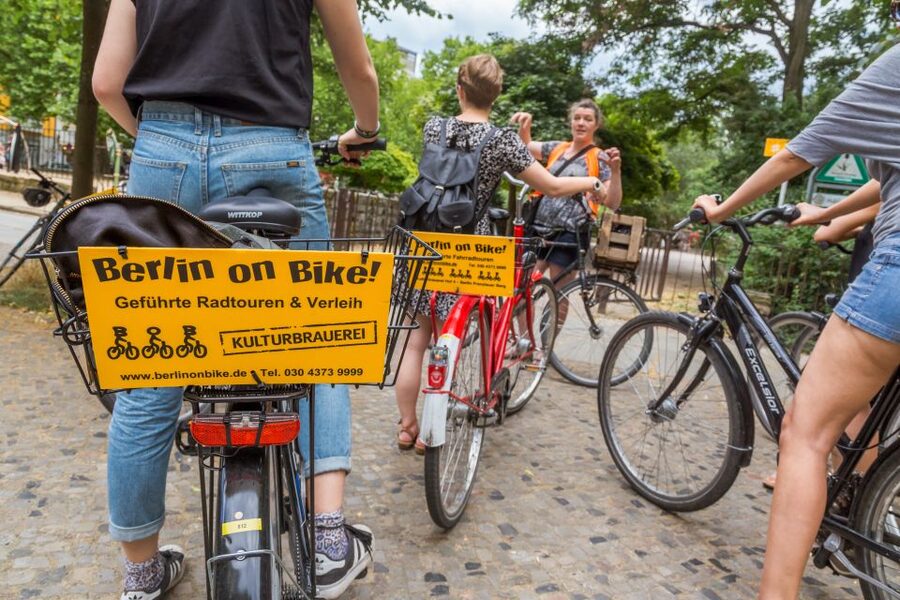
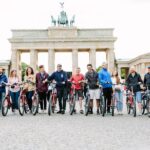
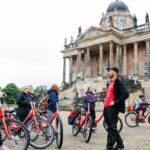
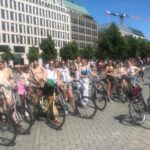
This tour runs with a personal atmosphere and a max of 15 participants. That number is doing real work for you. Smaller groups mean fewer people calling for attention, so your guide can spend more time explaining what you’re seeing instead of rushing through the facts.
The reviews also make one thing clear: guide quality is a major strength. I’m seeing repeated praise for guides like Oli, Joost, Emma, Anna, Patricia, Phillip, Andy, and Angus—often for turning local history and neighborhood change into stories you can actually hold onto.
What the included gear suggests about the experience
The details in what’s provided tell you the tour is set up for comfort:
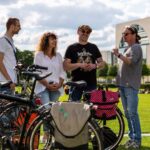
- Reliable rental bike with baskets for light bags
- Helmet and gloves on request
- Sunscreen and trouser clips
- Rain ponchos in bad weather
That’s a thoughtful mix. Sunscreen and trouser clips are small items, but they’re exactly the kind of thing that makes you feel less “tourist task” and more “I can handle this day.”
Price and value: is $41 fair for a 17 km guided ride?
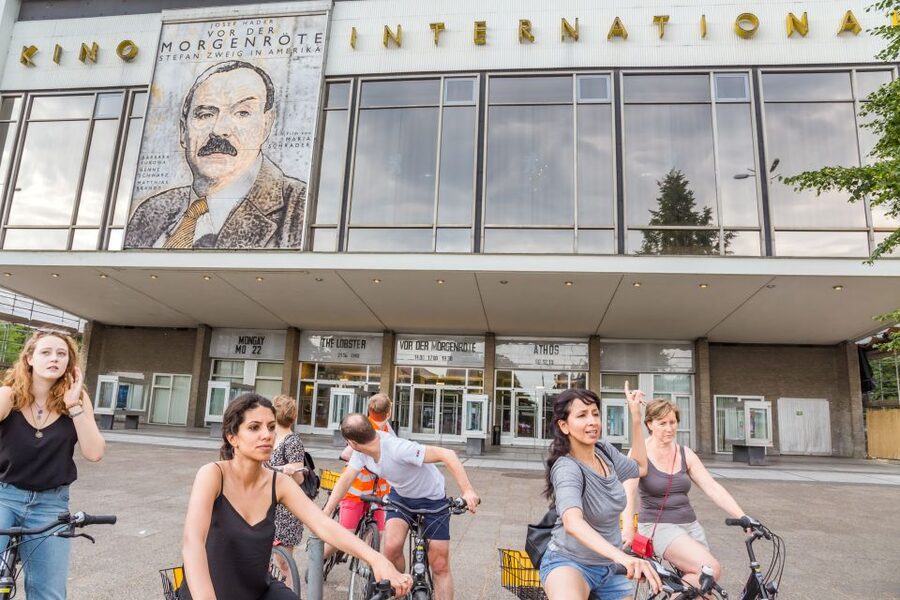
At $41 per person, this tour is priced like a solid, no-fuss city experience. The value comes from the mix of things you don’t get when you bike on your own:
- a structured route across multiple districts
- stops at major touchpoints like the East Side Gallery and Oberbaumbrücke
- a guide to connect DDR-era streets, alternative culture, and today’s neighborhood feel
- gear support (helmet/gloves on request, sunscreen, trouser clips, rain ponchos)
- a relaxed pace with time for photos and questions
You’ll still be riding on a rental bike that’s meant to feel comfortable and easy. With only 17 km total, you’re not committing to hours of navigation or route planning.
If you’re someone who hates spending vacation time figuring out where to start, this price starts to look like a practical shortcut.
What to bring (and one thing to plan around)
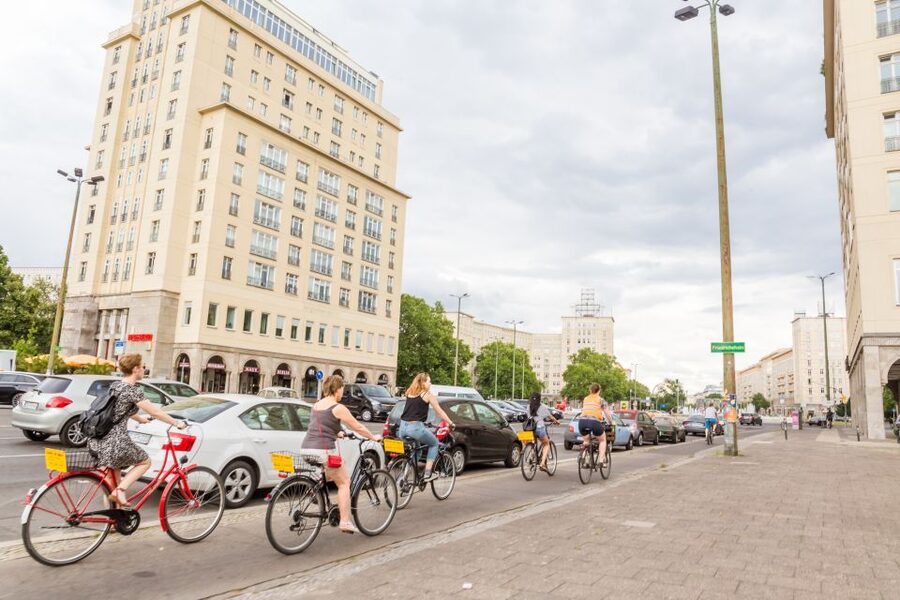
Bring comfortable clothes. Beyond that, think like you’re biking around your own neighborhood for a few hours.
One important planning detail: snacks and drinks are not included. If you tend to get hungry after movement, carry a small snack and a bottle so you can stay relaxed during stops.
Also note: alcohol and drugs aren’t allowed. Simple rule, and it helps keep the tour comfortable for everyone.
Who should book this Kreuzberg & Friedrichshain alternative bike tour
This is a great fit if you want:
- a first-day orientation that goes past the obvious sights
- neighborhood texture: DDR-era sites plus today’s alternative culture
- an active way to cover ground without feeling like you need to train
It’s also a good choice for people who like small-group travel and prefer asking questions instead of reading plaques at each stop.
If you’re expecting a quiet, purely nature-focused ride, this might feel more urban and cultural than you want. But if you want city energy on two wheels, you’ll likely enjoy it.
Should you book this tour?
Yes, if you want a guided bike day that balances iconic Berlin (the East Side Gallery and Wall-era context) with the lived-in alternative side of Kreuzberg and Friedrichshain. The small-group size, relaxed pace, and guide support make it a smart way to see a lot without getting lost or overthinking transportation.
If you hate cycling, choose another plan. If you’re comfortable riding for a few hours, this is a strong value at $41 for the distance, the major stops, and the neighborhood stories.
FAQ
FAQ
How long is the tour?
It lasts about 3 hours, listed as 210 minutes (with a relaxed pace and time for photos and questions).
What distance will I ride?
You’ll cover around 17 kilometers during the tour.
What’s included in the price?
A reliable bike for the tour is included, plus optional helmet and gloves (upon request), sunscreen and trouser clips, and rain ponchos if weather is bad.
Are snacks and drinks included?
No. Snacks and drinks are not included.
Where does the tour start?
The meeting point may vary depending on the option booked, but the tour route begins at Kulturbrauerei in Prenzlauer Berg.
How big is the group?
It’s a small group with a maximum of 15 participants.
What languages are offered?
The live guide is available in English, Dutch, and German.
Is the route mostly on bike paths?
The tour usually runs on bike paths and safe, quiet roads.
What kind of bike will I use?
You’ll get a comfortable rental bike from a large fleet, and the bikes have baskets for lightweight bags. You can select a bike that fits you best.
What should I bring and wear?
Bring comfortable clothes. The tour also provides items like sunscreen and rain ponchos if needed.