REVIEW · BERLIN
Berlin: Cold War Era History Guided Bike Tour
Book on GetYourGuide →Operated by Berlin on Bike BoB Fahrradtouren GmbH · Bookable on GetYourGuide
Berlin’s Cold War past feels real when you move at street speed. This guided bike tour strings together the Berlin Wall story across major landmarks, so you see how East and West collided in everyday places.
Two things I love: you get big-photo stops like Brandenburg Gate and Checkpoint Charlie, and you also get the lived-in, street-level details that are hard to spot on your own. I also like that the tour moves at a relaxed pace with gear included for comfort.
One consideration: you’ll cover around 15 kilometers and spend a few hours riding through city streets, so you need basic bike comfort. If you’re expecting a mostly flat, leisurely roll with zero tension, plan on paying attention to traffic and route timing.
In This Review
- Key things I’d plan around
- Why riding beats walking for Berlin Wall context
- Getting to the Berlin on Bike depot from Alexanderplatz
- 3–3.5 hours and ~15 km: pacing, bike comfort, and what to expect
- Start at Kulturbrauerei: the ride begins in Prenzlauer Berg
- Along the former border: Wall remnants, crossings, and how the story unfolds
- Bernauer Straße moments: where the Wall becomes personal
- Brandenburg Gate: ending with an 18th-century landmark in Cold War light
- Checkpoint Charlie and Cold War symbols you can spot fast
- Mauerpark and the route back: mixing memory with modern Berlin
- Guides, languages, and how the tour lands emotionally
- What’s included (and what you should bring yourself)
- Price: why $35 can be good value here
- Who should book this bike tour, and who might want a different option
- Should you book this Cold War Era History Guided Bike Tour?
- FAQ
- FAQ
- How long is the Berlin Cold War history guided bike tour?
- How far will we ride?
- Where do we meet for the tour?
- What’s the easiest route to the meeting point from Alexanderplatz?
- What language options do guides offer?
- What’s included with the bike tour price?
- What should I bring for the ride?
- Are helmets provided?
- Does the tour have rules about alcohol?
- Is the tour suitable for children?
Key things I’d plan around
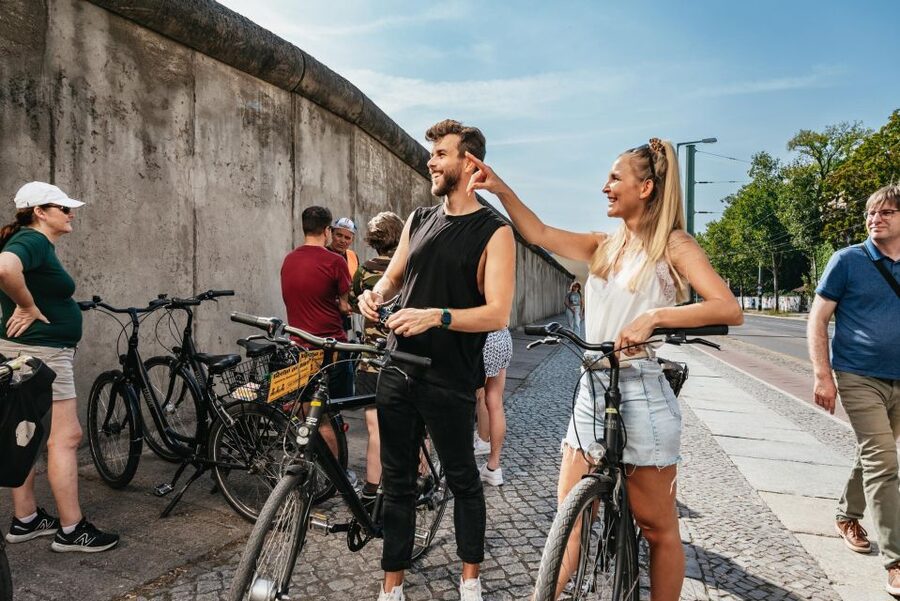
- Prenzlauer Berg start at Kulturbrauerei: a historic brewery complex sets the tone before you hit the former border.
- Wall fragments you can actually see: not just distant memorials, but places tied to crossings and escapes.
- Cold War symbols in one loop: Checkpoint Charlie and a last watchtower are part of the same story arc.
- Guides who bring the facts with humor: named guides in the tour’s reviews include Paul, Oleg, Geoff, Lauren, Ana/Anha, Almar, Andy, and James.
- Comfort gear included: helmet and gloves on request, plus trouser clips, sunscreen, and rain ponchos if needed.
Why riding beats walking for Berlin Wall context
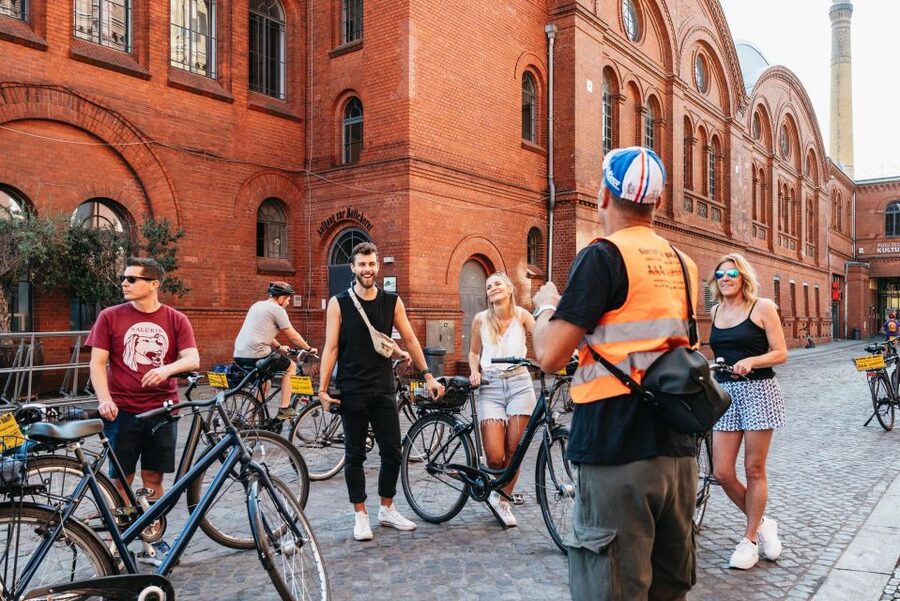
You can read about the Berlin Wall until your eyes go cross-eyed. But the Wall was built for movement control, border crossings, and pressure points. Cycling makes that logic click.
As you pedal, you’re not just looking at plaques. You’re passing the kinds of spaces where decisions happened: wide approaches, side streets, viewpoints that would matter for escape attempts, and major landmarks that became Cold War symbols. The guide’s job is to connect those dots in real time as you ride.
And you cover a lot without feeling rushed. At about 3 to 3.5 hours and roughly 15 kilometers, it’s enough distance to feel the city scale, but not so much that you’re too tired to follow the story.
You can also read our reviews of more tours and experiences in Berlin.
Getting to the Berlin on Bike depot from Alexanderplatz
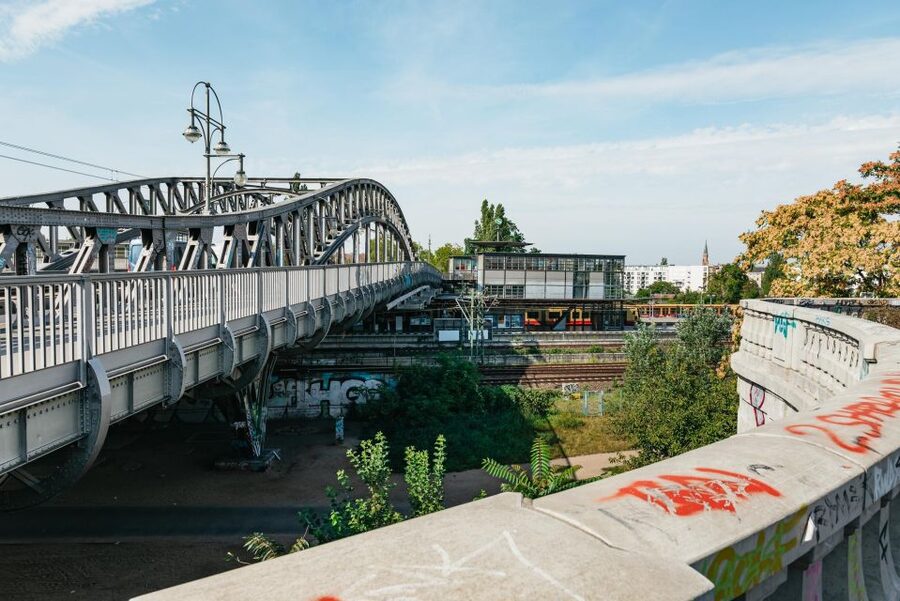
You’ll meet at the Berlin on Bike depot near the Kulturbrauerei complex. If you’re starting from Alexanderplatz, here’s the simplest route spelled out:
- Take the U2 (red line) toward Pankow.
- Get off after 3 stops at Eberswalder Straße.
- Exit from the side opposite the direction you traveled (follow signs for Kulturbrauerei).
- Walk along Danziger Straße for about 150 meters on the right-hand side of the street under the elevated railway line.
- Turn right onto Knaackstraße.
- After about 50 meters, turn right through the large doorway into the Kulturbrauerei complex.
- Follow the yellow signs to the bicycle depot.
This is one of those meet-and-attach moments that goes smoother if you arrive a bit early. Berlin transit is easy, but finding the right doorway in a big complex is exactly the kind of tiny delay that makes tours start to feel chaotic.
3–3.5 hours and ~15 km: pacing, bike comfort, and what to expect

The tour is designed for a relaxed pace, with the full route covering approximately 15 kilometers. That matters because the “Cold War” part isn’t just dates and names. It’s context tied to distance and layout. A slower pace gives the guide room to explain why a specific spot mattered.
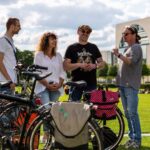
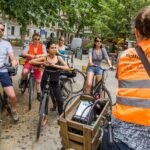
Bike setup is part of the experience. You choose from a wide fleet, so you can usually find a bike that fits you. A few practical tips to keep it comfortable:
- Wear comfortable shoes. The tour guidance specifically calls this out.
- Dress for moving outdoors. Comfortable clothes beat fashion.
- If you’re offered the option of different brake types, pick what you’re fully comfortable riding. One review warns to avoid selecting a bike with a coaster brake unless you know how it works.
If the weather is ugly, you’re not left stranded with wet jeans. Rain ponchos are available in bad weather, and sunscreen is included.
Start at Kulturbrauerei: the ride begins in Prenzlauer Berg
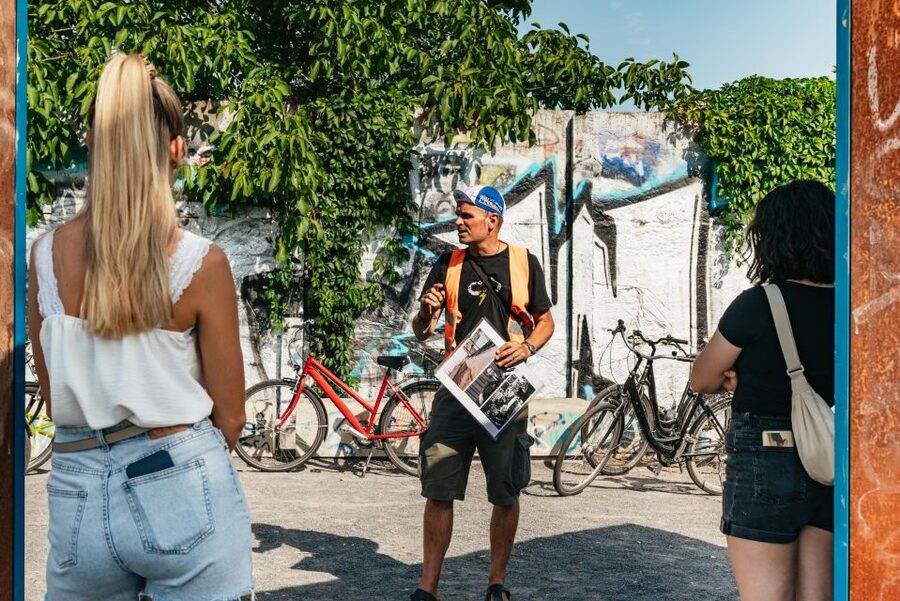
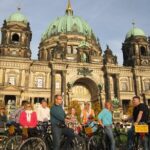
You begin at Kulturbrauerei, a 19th-century brewery in Prenzlauer Berg. Starting here is smart. It puts you in the “old Berlin” mood first, then transitions you toward the border story.
After you’re mounted and the group is organized, you’ll head out from the brewery area toward the former border line. This is where the tour starts turning from sightseeing into geography. The guide points your attention to how the Wall shaped movement and what Berliners had to live with.
One practical perk: because the meeting point is a known complex and the team has gear ready, you’re not wasting the first chunk of the tour figuring out what bike fits and where to stand. That buys you time for the story.
Along the former border: Wall remnants, crossings, and how the story unfolds
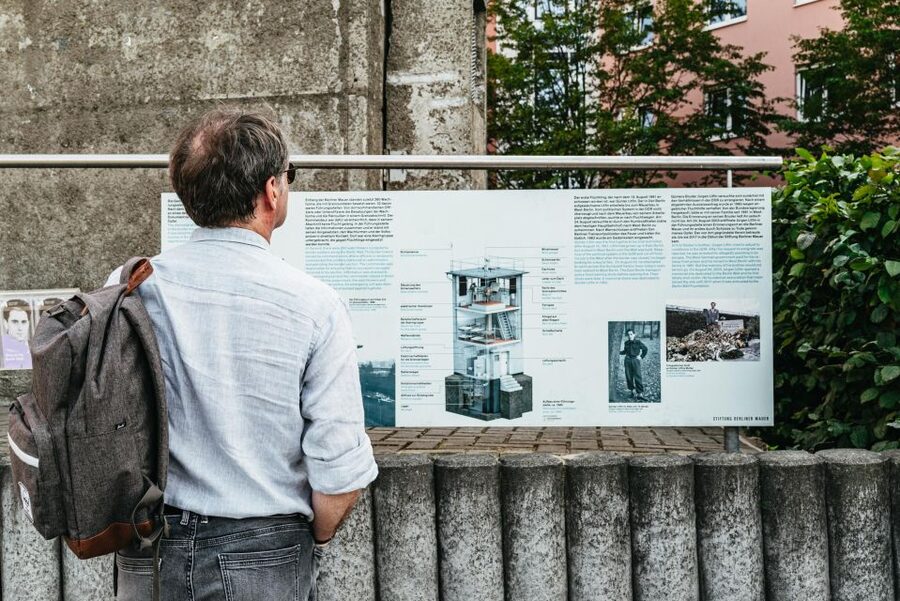
The backbone of the tour follows the former border that separated East and West Berlin. You’ll see remains of the Berlin Wall and former border crossings, including places like Bornholmerstraße and the area linked with Checkpoint Charlie.
What I like about this approach is that it avoids making the Wall feel like a single monument. Instead, the guide treats it as a system: watch points, crossings, and escape pressure. That’s why you’ll hear stories that include both successful escape attempts and tragic ones. You’re also learning how the Wall came down overnight after almost 30 years, and how that shift still affects Berliners.
A street-bike tour can feel slightly surreal because normal city routines continue alongside the border history. That’s the point. You’re not in a museum room. You’re in the kind of streets where history was forced into daily life.
Bernauer Straße moments: where the Wall becomes personal
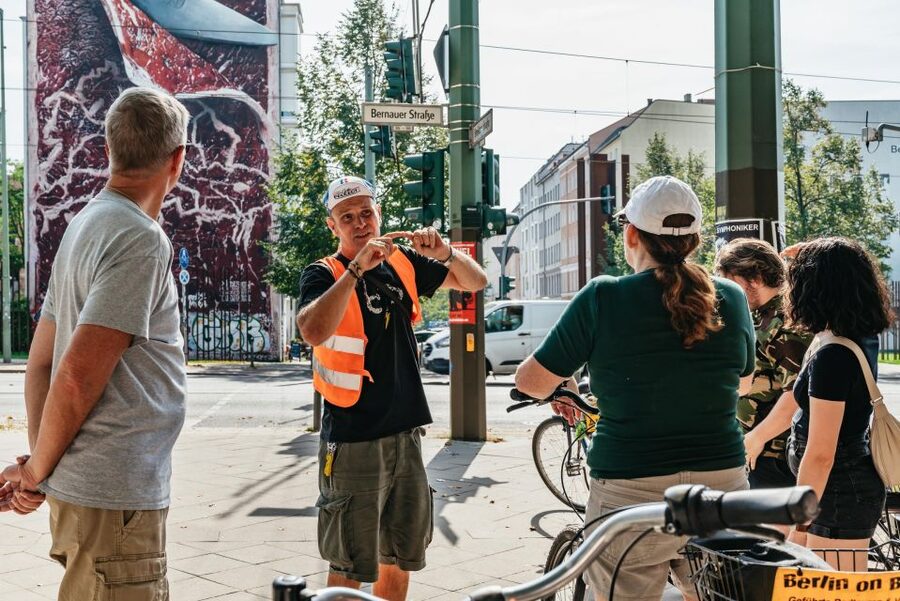
One of the key segments runs through Bernauerstraße. This is a standout kind of stop because it’s tied to the Wall’s most human-facing consequences—separation, risk, and the desperate calculations people had to make.
Even if you’ve heard the Wall story before, a guided ride changes how you understand it. You can better grasp why certain vantage points mattered and why specific routes were dangerous or monitored. The guide’s explanation helps you translate what you see into what it would have meant for someone at that time.
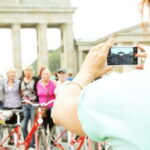
Photo stop reality check: you’ll likely want a few longer minutes at certain points to absorb the details. The relaxed pace helps, and you can ask questions as the group pauses.
Brandenburg Gate: ending with an 18th-century landmark in Cold War light
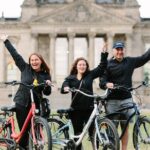
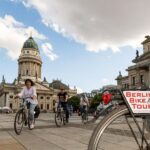
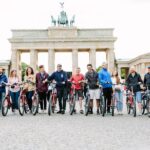
After hitting the Cold War symbols and Wall-linked areas, you ride toward Mauerpark and then along the route that brings you to Brandenburg Gate. The guide explains the Brandenburg Gate’s 18th-century origins, which keeps your timeline balanced.
Then the story shifts again. The Gate isn’t just an architectural icon. In Berlin’s modern memory, it’s also a stage for Cold War symbolism and the idea of reunification. Ending here gives you a clean “before and after” contrast as you wrap up the ride.
It’s a great moment to look back over what you’ve just cycled through. Seeing the Wall’s line and then reaching a landmark that represents a different kind of openness helps you feel the transformation instead of just reading about it.
Checkpoint Charlie and Cold War symbols you can spot fast
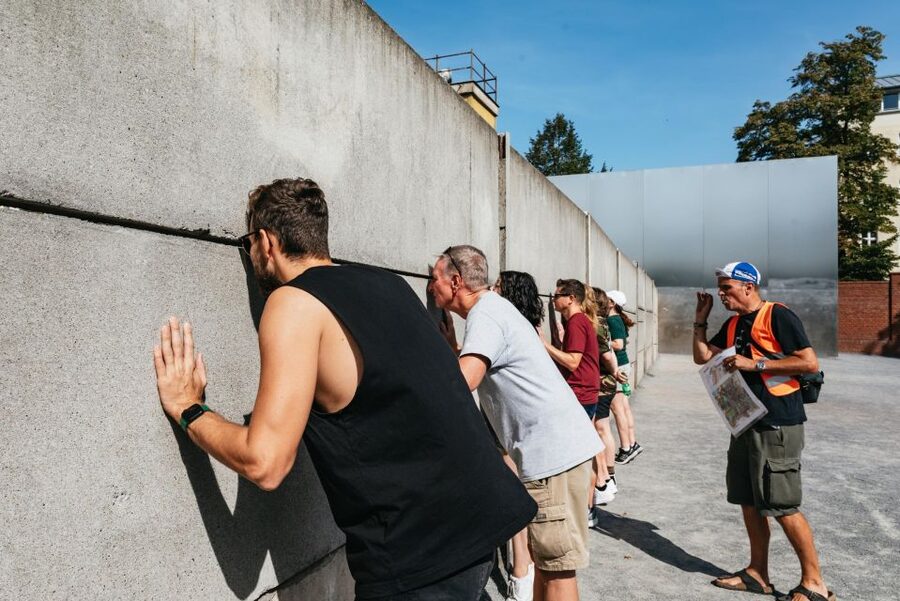
Checkpoint Charlie is famous for a reason, and the tour uses that recognition wisely. You get an iconic stop without it becoming shallow.
This segment also works because it helps you anchor the Cold War in plain visual cues: the kinds of border markers and public-facing symbols that foreign media attention made into icons. With a guide explaining what you’re looking at, it clicks more quickly than if you arrive alone and only know the headline version.
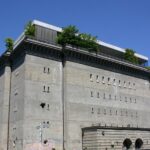
In the same sweep, you’ll also see symbols like the last watchtower. That’s the kind of detail you might miss on your own because it’s easy to treat as background unless someone points out what it meant and what it represented in the border system.
Mauerpark and the route back: mixing memory with modern Berlin
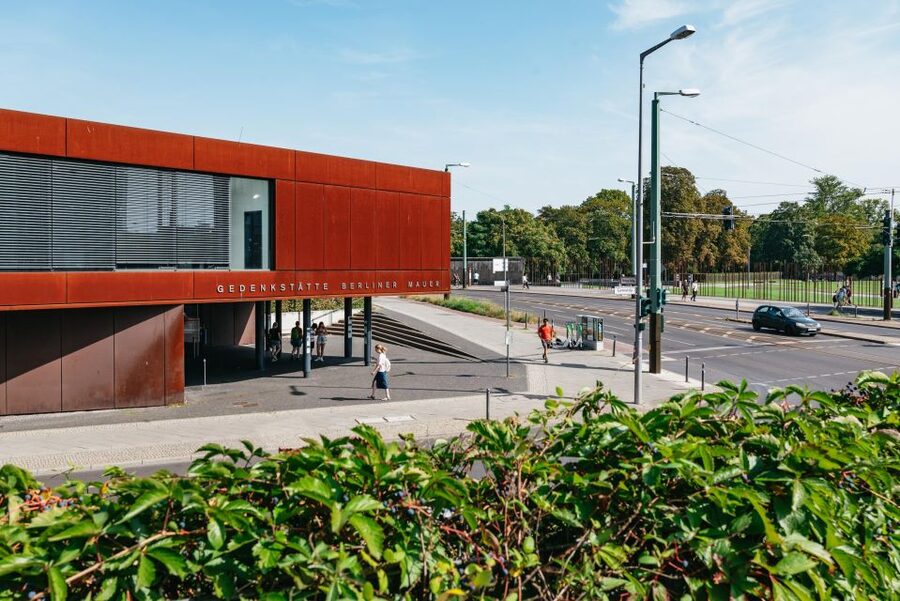
As you approach Mauerpark and ride toward the Brandenburg Gate, the tour’s emotional tone tends to shift from grim separation toward the way Berlin remakes itself.
Mauerpark itself is part of that “after” story. Even though you’re still in a history-focused ride, it’s reassuring to notice how normal life has layered back over the past. That’s not denial. It’s Berlin doing what cities do: living, rebuilding, and reusing space.
If you’re traveling with friends or family, this portion is also where the ride feels most social. People take breaks for photos, compare notes, and ask follow-up questions that earlier stops triggered.
Guides, languages, and how the tour lands emotionally
This tour runs with live guides in French, German, English, and Dutch. That matters because the Wall story is dense, and having it explained clearly in a language you understand turns the ride from confusing to meaningful.
The reviews for this experience emphasize something very consistent: guides who can tell the story with humor while still handling the tragic parts respectfully. Named guides included Paul, Oleg, Geoff, Lauren, Ana/Anha, Almar, Andy, and James. The common thread is strong storytelling and patient answers, especially for groups that ask lots of questions.
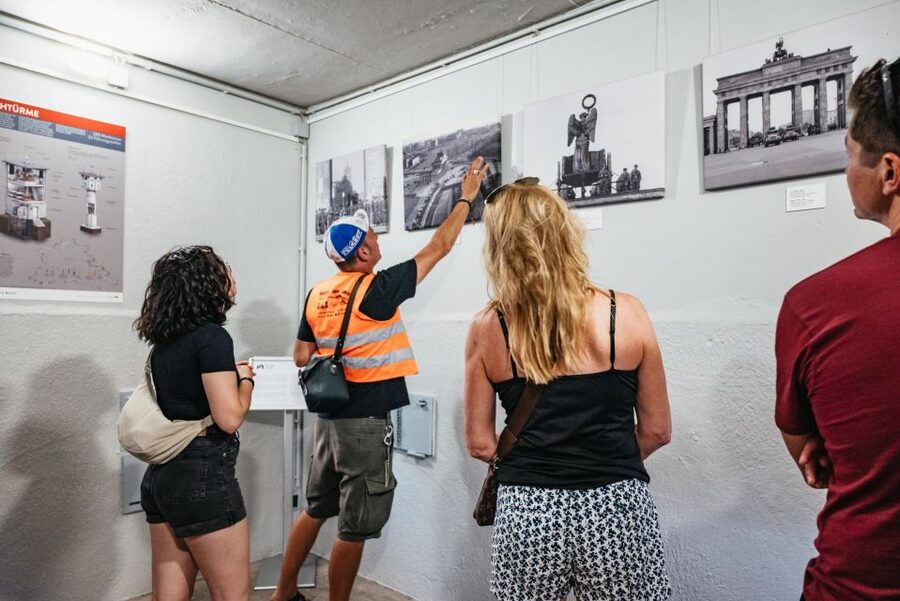
One more detail that I think helps: guides often use visual aids and diagrams during stops. That turns what could be purely observational into something you can follow even if you’re not a history buff.
What’s included (and what you should bring yourself)
Included in the tour:
- Bicycle
- Guide
- Helmet and gloves on request
- Sunscreen
- Trouser clips
- Rain ponchos if weather turns
Not included (so you should plan):
- Comfortable shoes and comfortable clothes
A quick note on the trouser clips: if you’re new to bikes, they’re a small thing that can make a big difference. They help keep pant legs from catching or flapping while you ride.
Also, the tour has a clear behavior rule: no alcohol and no drugs. It’s the kind of policy that helps keep the ride safe and focused.
Price: why $35 can be good value here
At $35 per person for about 3 to 3.5 hours, the value is strong if you care about more than just seeing a few famous facades.
You’re getting:
- A guide who connects multiple sites into one coherent Cold War story
- A bike you don’t have to rent, figure out, or return
- Comfort gear that reduces common travel annoyances (helmet availability, optional gloves, rain ponchos)
If you’ve already planned to spend a chunk of time in Berlin’s central districts anyway, paying for a guided ride often beats piecing it together yourself with separate transit plus museum tickets plus random walking. It’s one ticket that turns “Wall sightseeing” into a route-based understanding.
Who should book this bike tour, and who might want a different option
This tour is a great fit if:
- You want a practical way to see a lot of Cold War landmarks in one go
- You enjoy guided storytelling more than self-guided reading
- You’re comfortable riding a bike for a few hours
- You want to cover iconic stops like Brandenburg Gate and Checkpoint Charlie, plus lesser-seen border details
It may not be ideal if:
- You’re not confident cycling in city traffic conditions
- You’re traveling with kids under 8 (the tour is not suitable for children under 8)
- You need an ultra-flexible schedule with minimal walking and stopping
One timing note: Berlin has major events. One review mentions the Berlin Half Marathon affecting the experience. If your travel dates overlap with big races, plan for possible route changes or crowding. The guide will handle it as best they can, but it’s smart to keep expectations adaptable.
Should you book this Cold War Era History Guided Bike Tour?
I’d book it if you want the Wall story connected across real locations, not split into a bunch of scattered stops. The route covers the major symbols you came for—Brandenburg Gate and Checkpoint Charlie—while also aiming for the border mechanics that explain why those symbols mattered.
Book with confidence if you’re comfortable biking about 15 kilometers at a relaxed pace and you value a guide who can mix clear facts with human stories. Skip it only if cycling for a few hours sounds like a headache.
FAQ
FAQ
How long is the Berlin Cold War history guided bike tour?
It runs about 3 to 3.5 hours. Starting times vary, so you’ll want to check availability for the times offered.
How far will we ride?
The tour covers approximately 15 kilometers at a relaxed pace.
Where do we meet for the tour?
You meet at the Berlin on Bike depot. The nearest metro station is Eberswalder Straße, about 3 stops from Alexanderplatz.
What’s the easiest route to the meeting point from Alexanderplatz?
Take the U2 red line toward Pankow, get off at Eberswalder Straße after 3 stops, exit toward Kulturbrauerei, walk toward Danziger Straße and Knaackstraße, enter Kulturbrauerei, then follow the yellow signs to the bike depot.
What language options do guides offer?
Guides are available in French, German, English, and Dutch.
What’s included with the bike tour price?
The price includes a bicycle and a guide, plus helmet and gloves upon request, sunscreen, trouser clips, and rain ponchos if weather is bad.
What should I bring for the ride?
Wear comfortable shoes and comfortable clothes.
Are helmets provided?
Yes. Helmets are provided, and gloves are available upon request.
Does the tour have rules about alcohol?
Yes. Alcohol and drugs are not allowed on the tour.
Is the tour suitable for children?
No, it’s not suitable for children under 8 years old.