REVIEW · BERLIN
Berlin: Private Bike Tour of the Berlin Wall and Third Reich
Book on Viator →Operated by FREE BERLIN Bike Tours · Bookable on Viator
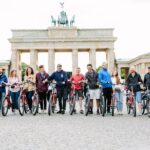
The Wall hits different when you pedal past it. This private bike route strings together Berlin Wall remains, Third Reich sites, and major Holocaust memorials so you can get your bearings fast and see how events shaped real streets. I love the customized Free-Berlin routing (your guide designs the plan), and I also like how efficiently you cover big ground in just about three hours instead of shuffling along on foot. The tone stays human and practical, not textbook-only, with stops like Checkpoint Charlie and the kind of Wall sections you can still really feel.
Two more things that stand out for me: I like that it’s a private tour (only your group), and the guide’s English is clear and easy to follow when you pick the English version. One consideration: you move at bike speed between short stops, so if you want long museum-style time or slow wandering, this format may feel rushed.
In This Review
- Key highlights you’ll care about
- Why a Berlin Wall bike tour works better than walking
- Starting in Nikolaiviertel, Berlin’s old core (and wartime reality)
- The synagogue story at Stiftung Neue Synagoge and the night of broken glass
- Memorials you’ll remember: deportation victims and the Wall’s sharp contrast
- The Berlin Wall memorial moments: where the Wall feels real
- Mauerpark and the Sunday flea market that grew out of control
- Humboldthain Flak Tower: panoramic views and Nazi architecture
- Günter Litfin Memorial: the first shot, and why it matters
- Invalidenfriedhof: a cemetery cut by the Wall
- Spreebogenpark and the view of Hitler’s unrealized plans
- Reichstag from the outside: power grabs and democracy
- Holocaust Memorials: the role of design, and multiple victim narratives
- Fuhrerbunker: what remains is a parking lot
- Checkpoint Charlie: Cold War tension at a famous border crossing
- How private bike logistics shape your experience (and your comfort)
- Price value: what you’re really paying for
- Should you book this Berlin Wall and Third Reich bike tour?
- FAQ
- How long is the private bike tour?
- What does the tour cost per person?
- Is this a private tour or a shared group?
- What’s included with the tour price?
- What languages are offered?
- Does the tour operate in bad weather?
- Is it family-friendly?
- Where do I meet and where does it end?
- Can I cancel for free?
Key highlights you’ll care about
- Private group, private pacing: only your group rides together, so you can ask questions as you go
- Free-Berlin concept routing: each guide designs their own route, making the experience feel less cookie-cutter
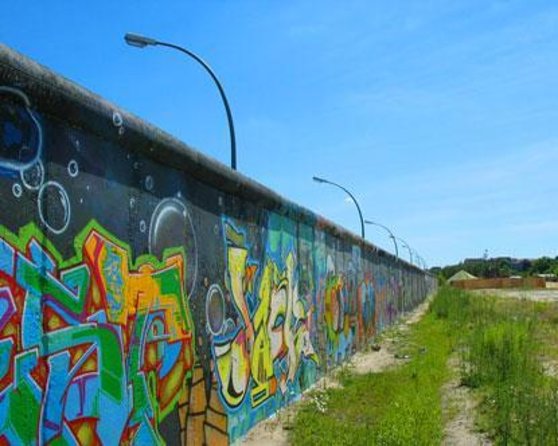
- Wall access that helps you understand: you visit a Wall section that lets you grasp what the barrier meant in practice
- Serious stops, no filler: memorials and Nazi-era sites are brief but intentional
- Helmet and bike included: you can focus on the sights instead of logistics
Why a Berlin Wall bike tour works better than walking
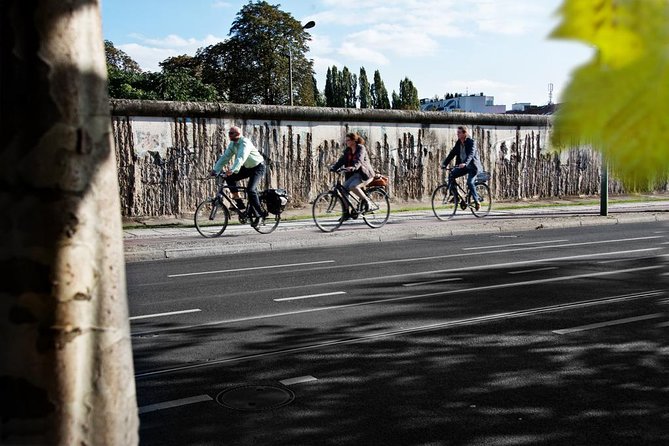
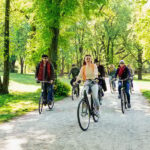
Berlin’s 20th-century story sprawls across neighborhoods. A bike tour is the practical fix: you cover ground quickly, and you spend your limited time at the stops that matter. Instead of trying to piece together locations on your own, you follow a planned route that links the Wall’s physical reality to the political machinery behind it.
I also like the tone of a route like this. It doesn’t just point at plaques. It turns locations into a story you can track street by street. That’s especially helpful in Berlin, where the city can look calm even when you’re standing on top of events that were anything but calm.
The other big upside is that it’s private. You’re not stuck waiting for a big group to catch up, and the guide can slow down when you want context. In one simple 3-hour window, you can get a strong framework of what happened and why it mattered, without turning it into a lecture that drains the fun out of the ride.
You can also read our reviews of more tours and experiences in Berlin.
Starting in Nikolaiviertel, Berlin’s old core (and wartime reality)
You start in Nikolaiviertel, and the guide sets up a smart question right away: how “old” is this really, especially after Berlin’s war experience. It’s a useful opening because it reminds you that even what looks historic may be shaped by rebuilding after destruction.
This stop is short, but it serves a big purpose. It gives you a baseline for how Berlin changed. You’re not only learning about the Wall; you’re also learning how the city’s fabric was reshaped by conflict and recovery. That matters later when you see contrasts between preserved pieces, rebuilt streets, and memorial landscapes.
Practical note: since the tour is bike-based, the start helps you get comfortable with the ride before the route turns heavier. You’re getting your legs under you, and you’re getting the guide’s voice and pacing.
The synagogue story at Stiftung Neue Synagoge and the night of broken glass
Next comes Stiftung Neue Synagoge Berlin – Centrum Judaicum. The point here isn’t just architectural appreciation. The story is about civil courage and how a police officer helped save the building during the night associated with mass destruction of Jewish sites.
That kind of moment lands well on a bike tour because it’s real and specific. You’re not just absorbing “Kristallnacht happened.” You’re standing near a building that embodies the human choices made when everything around it went wrong.
The stop is brief, but it gives you a moral compass early in the tour. It also helps you later when the route moves into deportation, victims’ memorials, and the Holocaust. You’ll notice how often the tour returns to the same theme: ordinary systems and ordinary people, for good or for harm.
If you prefer a tour that focuses more on buildings than politics, this stop still works because it connects the two. Architecture becomes a witness.
Memorials you’ll remember: deportation victims and the Wall’s sharp contrast
The route includes a memorial designed in GDR times for victims of deportation and the Holocaust. What I like about this choice is the perspective shift. It’s in harsh contrast to the more famous memorial nearby in the city’s sightseeing orbit, so you don’t just get one “standard” version of memory.
Berlin can feel like it’s curated for remembrance, but memorial design matters. Different periods made different design choices, and those choices shape what you feel when you stand there. By including both Wall-era framing and Holocaust remembrance framing, the tour teaches you to read Germany’s memory landscape, not just acknowledge it.
A quick heads-up: memorial stops here are timed. You’ll have enough time to orient and absorb, but not so much time that you lose the thread of the overall storyline. If you’re the type who likes to stand quietly and read every line, go a touch slower when the guide allows it.
The Berlin Wall memorial moments: where the Wall feels real
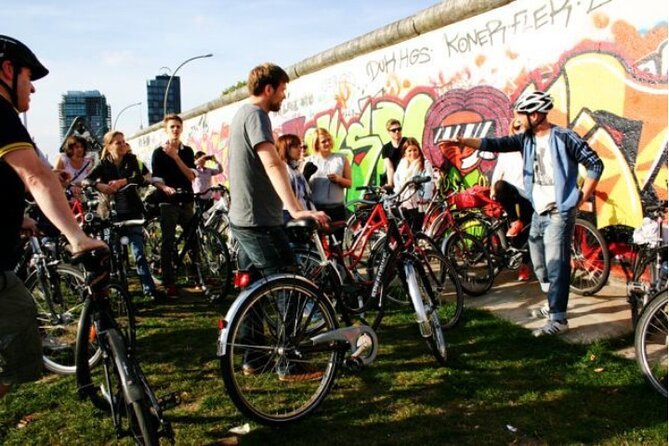
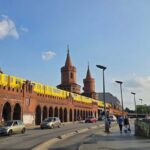
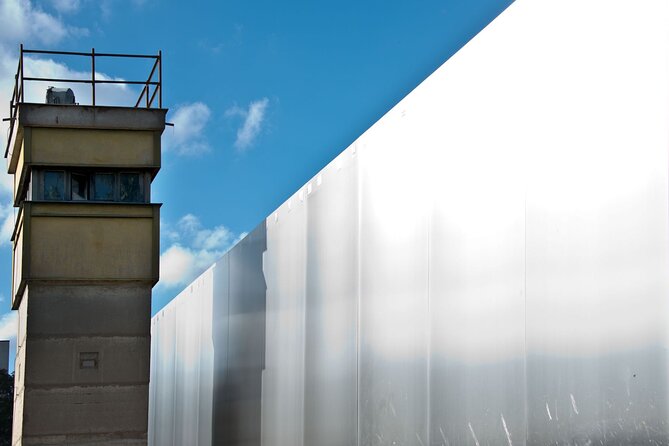
This is the centerpiece. The tour’s Wall stop focuses on a segment where the Wall is still alive, and the guide explains why it’s the only part where you can really understand what the Wall meant and did to Berlin. The phrasing matters: you’re not just seeing remnants; you’re getting a sense of how it functioned as a barrier.
The route also uses nearby spots to show how policies and borders weren’t abstract concepts. They were built into the everyday rhythm of the city, even in places that later became different kinds of public space.
One practical plus: because you’re on a bike, the “Wall story” doesn’t stay trapped in one location. You keep moving, and the context keeps widening. That’s how the Wall stops make emotional sense rather than turning into isolated photo spots.
Mauerpark and the Sunday flea market that grew out of control
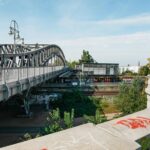
Mauerpark is famous now for its Sunday flea market, but the tour frames it through a different lens: the place shows attempts by East Germany’s rulers to establish the perfect border. That’s a clever way to teach, because you’re watching today’s life unfold over yesterday’s control.
You’ll likely appreciate the contrast more than you expect. On one side, there’s a lively public space. On the other, there’s the idea that rulers tried to define movement and belonging with fences and rules. Berlin has a talent for turning hard history into normal daily life, and this stop helps you see both layers at once.
Stop length is short, so this isn’t a hangout stop. It’s a story stop. You’ll get the meaning quickly, then move on while the context is still fresh.
Humboldthain Flak Tower: panoramic views and Nazi architecture
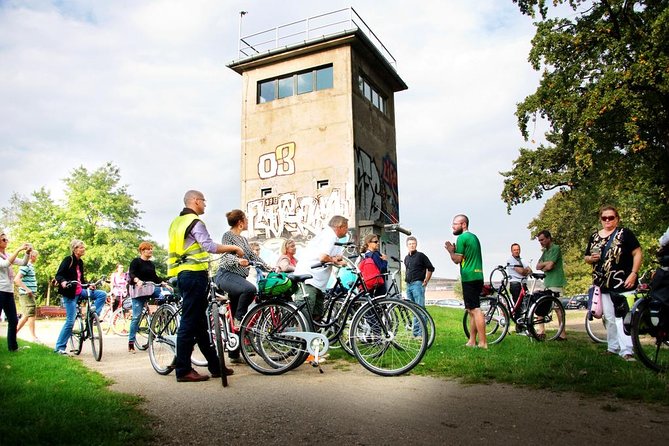
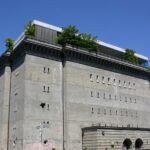
At Humboldthain Flak Tower, you get two things at once: a fantastic panoramic view and insights into Nazi-era architecture. The building once acted as a giant fortress and air-raid shelter, so standing near it shifts your thinking from politics to physical protection and mass fear.
This is a stop where you’ll probably want a moment to look around. Even if you don’t go inside for a long visit, the position helps you connect the architecture to Berlin’s layout. The tour’s focus on Nazi architecture makes it more than a war object. It’s a lesson in how regimes used concrete, planning, and design.
Because you’re on bikes, you also get a practical angle. You can reposition quickly and see the tower’s scale from different angles, depending on where you stop.
If your interests lean toward how power worked through design and infrastructure, this stop will feel like a highlight.
Günter Litfin Memorial: the first shot, and why it matters
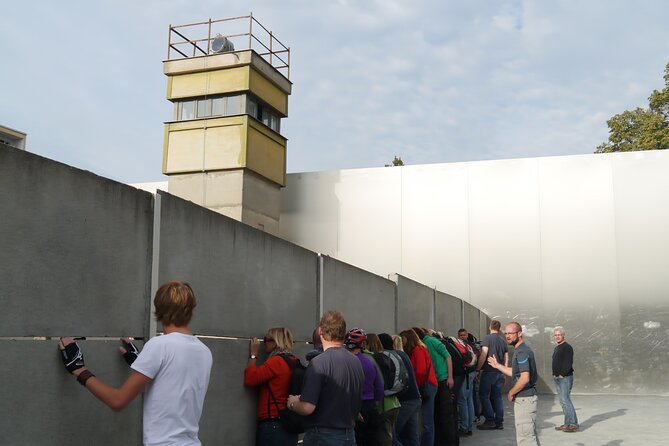
You’ll also stop at the Gunter Litfin Memorial, with the preserved tower structure used to remember Günter Litfin, the first person shot at the Wall. It’s one of those moments that turns the Wall from an idea into a sequence of choices that cost lives.
This kind of stop is short, but it’s emotionally heavy, so keep a little space for it in your head. The guide’s job here is to connect the name to the larger story—when force became policy, and how quickly the Wall environment turned lethal.
If you’re visiting Berlin with family, this is also a good stop to ask the guide questions that match your group’s comfort level. You’ll likely get the clearest explanations here because the topic is specific.
Invalidenfriedhof: a cemetery cut by the Wall
Invalidenfriedhof is another stop where the location does the teaching. The Wall cuts through this burial place, and the cemetery was made for the heroes of German military history. The guide doesn’t sugarcoat the moral complexity, pointing out that some people remembered as heroes are also people worth remembering for far darker reasons.
I like cemeteries like this for a specific reason: they’re quiet spaces where political narratives become visible in how bodies were arranged, how memory was framed, and how borders reached even into burial grounds.
The route treats this as part of the same story you’re building at every other stop: who gets honored, who gets erased, and how power keeps working long after the events.
Spreebogenpark and the view of Hitler’s unrealized plans
Spreebogenpark gives you an overview of Germany’s governing district, and the guide uses that vantage to talk about Hitler’s architect Albert Speer and a vision for a Great Hall that would have held 180,000 people.
This stop can be a turning point. Up until now, you’ve been dealing with the Wall, memorials, and direct physical evidence. Here, you shift to the future that never happened—massive, propaganda-driven planning that aimed to rearrange the country’s sense of scale and importance.
Even from a bike, you can connect the dots. The view helps you understand how the regime imagined Berlin as a stage. It’s not just history; it’s how rulers used space to sell their worldview.
If you like architecture and planning as political tools, you’ll probably enjoy this moment more than you’d expect.
Reichstag from the outside: power grabs and democracy
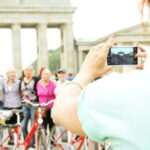
You stop at the Reichstag Building for the outside story. The guide connects Hitler’s grab of power to Germany’s democratic history, keeping it tight since there isn’t time to go inside.
This is a smart use of time. The building is already loaded with symbolism, and the outside view gives you a sense of scale and positioning without forcing a rushed interior visit. You get the narrative, and you’re still free to move.
If you’re someone who plans museum time separately, this stop actually helps. It gives context so that any later visit feels more meaningful, and you’re not stuck guessing why the building matters.
Holocaust Memorials: the role of design, and multiple victim narratives
The tour includes major Holocaust remembrance, including the Holocaust Memorial to the Murdered Jews of Europe. The stop is described as the biggest genocide memorial in the world, and it’s framed in a way that highlights the size and historical importance.
You’ll also see another memorial that is one of three memorials for three biggest victim groups during the Holocaust. The point here is coverage: the Holocaust isn’t treated as one single category. Multiple victim groups are acknowledged through design choices across sites.
A quick reality check: memorial time on a bike tour is not the same as a full-day remembrance visit. You’ll get a focused visit and guidance, and then you’ll move on. If you want longer reading time, plan to return on your own with more hours.
The tour’s strength is that it places Holocaust remembrance right inside the same Berlin story that includes the Wall, the regime, and the aftermath. That structure keeps the tour from feeling like a checklist.
Fuhrerbunker: what remains is a parking lot
You’ll reach Fuhrerbunker, where Hitler hid during the last weeks of the war and later committed suicide. Today, all you can see is a parking lot, and the guide explains why.
This stop is unsettling, and it works because it’s honest about absence. Not every history site is preserved as you’d expect. Sometimes the physical trace is minimal, and the meaning comes from knowing what happened there and why nothing looks like a fortress anymore.
I like this stop because it forces you to think about denial and forgetting. A plain modern surface doesn’t mean the past isn’t there. It means memory lives through explanation and context.
Even if you’re not a big fan of dark history tours, this one tends to land because it’s tied to a clear story and a clear location.
Checkpoint Charlie: Cold War tension at a famous border crossing
Checkpoint Charlie is included as a stop, and it’s noted as part of the English version of the tour. The guide frames it as the most famous border station of the Cold War because it was a shared point between the USA and USSR. The story isn’t just trivia. It’s the idea that at one moment, a third world war could have started right there.
You’ll get a real sense of how Berlin became the pressure point for rival systems. From a bike, you also get the advantage of seeing the surrounding neighborhood quickly rather than only picturing it as a museum-like set piece.
This stop is short, but it adds dramatic weight to everything before it. You can connect the Wall’s physical barrier to the Cold War’s political standoff.
How private bike logistics shape your experience (and your comfort)
This tour runs about 3 hours, and it’s designed to be family-friendly. Children are welcome, and infant seats can be provided on request. Bikes and helmets are included, and the meeting and ending point are the same location near Poststraße 11 (you meet at Free Berlin Bike Tours & Rental and the tour ends back there).
That matters because bike tours depend on smooth movement. When bikes and helmets are handled for you, your energy goes to the story instead of the gear. Also, the route operates in all weather conditions, so dress for rain or chilly wind if Berlin’s doing its thing.
Group size is capped by the private nature of your departure, but the tour operator notes it operates from 4 persons minimum. That’s worth knowing if you’re traveling in a small group.
Finally, departures happen throughout the day, so you can pick a time that fits your energy level. If you like mornings, start earlier. If you’re sighted-out by then, choose a later slot so the tour doesn’t hit during your first post-jet-lag haze.
Price value: what you’re really paying for
At $107.42 per person for roughly 3 hours, you’re not paying for a long, ticket-heavy museum day. You’re paying for transportation, a professional guide, and a tight route that links multiple serious sites without you having to map them yourself.
That value gets better because the tour is private and designed as a one-of-a-kind plan under the Free-Berlin concept. Instead of paying to see random points you picked on a map, you pay for someone to connect the dots: Wall remnants, memorials for victims, Nazi-era architectural context, and the Cold War tension of Checkpoint Charlie.
If you’re a history buff or you just want a structured way to understand Berlin’s 20th-century hinge points, the price-to-time ratio feels fair. If you’re mostly looking for casual sightseeing with lots of free time, you might prefer a longer self-guided approach.
Should you book this Berlin Wall and Third Reich bike tour?
Book it if you want a focused, guided Berlin Wall experience that also connects to the Third Reich and major Holocaust remembrance sites—without spending the whole day in lines or fighting transit routes. I especially think it’s a strong fit if you enjoy architecture, political power, and how public spaces carry memory.
Skip it if you need long quiet time at memorials or you prefer purely independent exploring with lots of room to roam. The stops are intentionally brief, and the bike format keeps you moving.
If you can handle a short, serious tour day with a clear guide voice and you’re excited to cover major sites efficiently, this is the kind of tour that helps Berlin click into place fast.
FAQ
How long is the private bike tour?
It runs for about 3 hours.
What does the tour cost per person?
The price is listed as $107.42 per person.
Is this a private tour or a shared group?
It’s a private tour. Only your group participates.
What’s included with the tour price?
You get a professional guide, use of a bicycle, and use of a helmet.
What languages are offered?
English and German are available. Dutch, French, and Spanish may be possible on request.
Does the tour operate in bad weather?
Yes, it operates in all weather conditions, so dress appropriately.
Is it family-friendly?
Children are welcome, and infant seats can be provided on request. Children must be accompanied by an adult.
Where do I meet and where does it end?
You meet at Free Berlin Bike Tours & Rental, Poststraße 11, 10178 Berlin. The tour ends back at the meeting point.
Can I cancel for free?
Yes. Free cancellation is available up to 24 hours in advance for a full refund.