REVIEW · BERLIN
Berlin: Experience the Alternative Kreuzberg on a Bike Tour
Book on Viator →Operated by FREE BERLIN Bike Tours · Bookable on Viator
Berlin can feel like two cities at once.
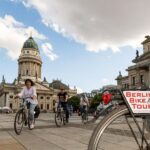
This bike tour takes you into Kreuzberg and nearby neighborhoods with real stories, street-level architecture, and Wall-adjacent art. I love that the route is designed for the alternative side of Berlin, not just the postcard hits, and I also like the stop-and-explain pacing that makes the city feel understandable fast. One consideration: you’ll spend part of the time listening at frequent stops, so it’s not a pure pedal-all-the-way ride.
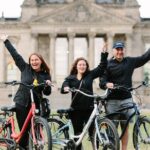
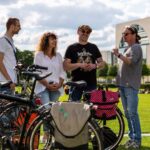
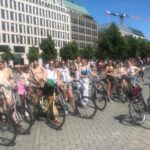
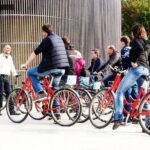
What makes it work so well for you is the format: a small group (up to 15), a professional guide, and equipment provided. From the first spin near Nikolaiviertel to the long wall section at the East Side Gallery and the Spree river edges, you get a guided map of how Berlin’s history still shows up in daily life. Just remember to dress for weather, because the tour runs in all conditions.
In This Review
- Key things that make this Kreuzberg bike tour worth it
- Pedaling off the postcard map: the Nikolaiviertel start
- Kreuzberg and Engelbecken: how neighborhoods explain themselves
- Das Baumhaus by the Wall: stories you can ride past
- From squats to artists’ rooms: how Berlin makes room for art
- YAAM and the skyline view: club culture with river-breath
- East Side Gallery: when the Wall turns into street art
- Oberbaumbrücke: crossing borders in architecture form
- Osthafen and the Spree break: understanding the GDR fixation on borders
- A sculpture with multiple interpretations: Berlin’s habit of the weird
- Falckensteinstraße and Gorlitzer Park: diversity you can feel
- Liegnitzer Straße: car-loft capitalism at street level
- Waterfront time: Turkish market days and the “good life” pause
- Do you actually need the anarchist label?
- Admiralbrücke and Kottbusser Tor: sunset contrast, then the hard edges
- Price and pace: is $42.33 a good value?
- Who should book this Kreuzberg bike tour
- Should you book? My honest take
- FAQ
- How long is the bike tour?
- What does the tour cost?
- Where does the tour start and end?
- Is the tour offered in English?
- What’s included in the price?
- Is food included?
- Does the tour operate in bad weather?
- Is this tour family-friendly?
- How big are the groups?
- What happens if the tour gets canceled?
Key things that make this Kreuzberg bike tour worth it
- Off-the-tourist-track neighborhoods built into the route, not added as a last-minute detour
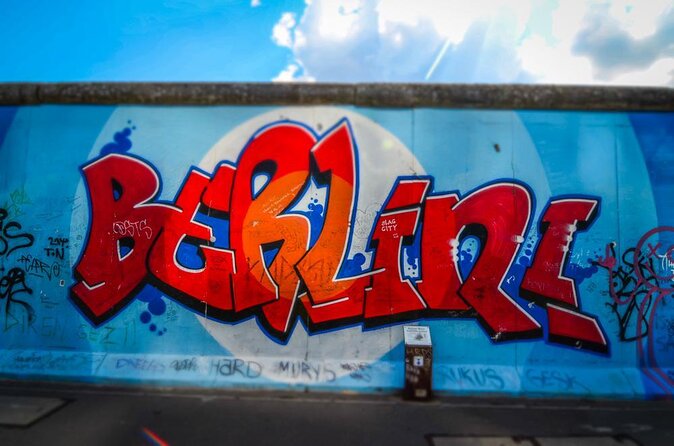
- Wall-era landmarks plus street-level change, from the East Side Gallery onward
- Multiple perspectives on Kreuzberg, including the squatting-and-art thread and everyday city routines
- Bike-and-helmet included, so you can focus on the ride and the explanations
- Guides with real personality and humor, with riders praising safety and lively storytelling
Pedaling off the postcard map: the Nikolaiviertel start
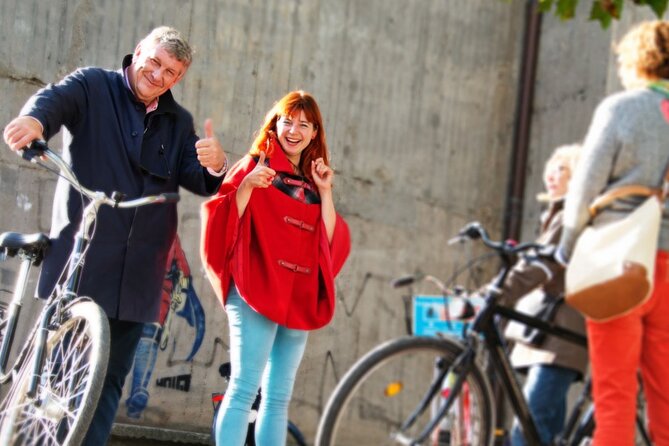
Most Berlin tours start with monuments. This one starts with Nikolaiviertel, a place that can feel like an introduction zone—kind of familiar, kind of staged. That’s exactly why it’s a strong first stop. It gives you a baseline, then the route quickly moves into areas that feel closer to how people actually live, work, and hang out.
You’ll get a quick taste of how Berlin’s past gets reinterpreted, then the guide sets you up to notice what changes block by block. Even if you already know the major sights, this opening helps you see the city’s contrast more clearly as you roll onward.
You can also read our reviews of more tours and experiences in Berlin.
Kreuzberg and Engelbecken: how neighborhoods explain themselves
After Nikolaiviertel, you push into Kreuzberg proper—one of Berlin’s most talked-about districts, but also one that can be misunderstood if you only see the headlines. Here, the tour leans into the district’s mix: different communities, different eras, and lots of layered city life.
Then comes Engelbecken: an unexpected pocket of calm between pre-fab buildings, older structures, and modern architecture. That contrast matters. It teaches you how to read Berlin visually—how industrial or utilitarian housing and more personal, human-scale spaces can sit right next to each other.
What to watch for: look for the details that explain the big picture—how courtyards feel, how people use the space, and how the architecture shifts. The stops are short, but the goal is to train your eyes.
Das Baumhaus by the Wall: stories you can ride past
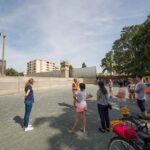
Das Baumhaus is described as a treehouse by the Wall, tied to a guest worker story and a distinctly Kreuzberg mindset. The point isn’t just that it’s unusual. It’s that the site represents how people adapt, claim space, and build community in the middle of political boundaries.
This is one of the emotional stops on the route, because the Wall isn’t just presented as a line on a map. You start connecting the dots between everyday adaptation and the larger historical forces that shaped the city.
From squats to artists’ rooms: how Berlin makes room for art
After the Wall-side treehouse story, the tour moves into an area where multiple squattings helped create a place for artists. You get the idea that the city’s alternative scene wasn’t a single moment—it was an ongoing cycle of occupation, survival, and creativity.
One of the most practical things this does for you: it helps you stop treating Berlin’s counterculture like a museum exhibit. Instead, you understand it as something that formed under pressure, then kept evolving when the pressure changed.
YAAM and the skyline view: club culture with river-breath
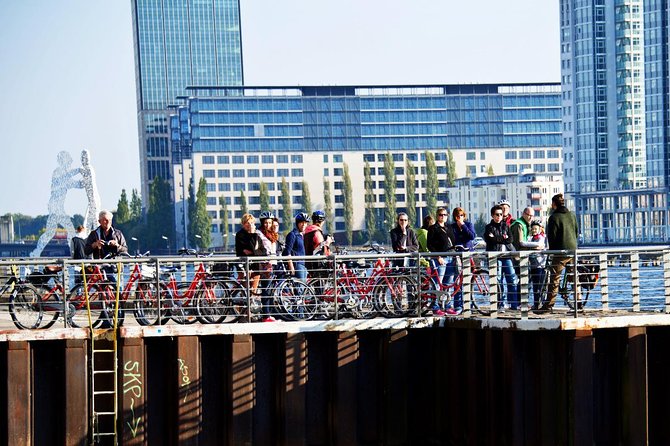
The route includes the YAAM area, famous as a club, but the tour’s angle here is the view from the outside. You get sight lines toward the TV Tower, the Holzmarkt, the Oberbaumbrücke, and the Spree.
This stop is a good “reset” moment. You’re on a bike, but you pause long enough to let the city landmarks sink in. It also breaks up the heavier history stops with something lighter: the feel of Berlin as a living city where nightlife and art sit beside old infrastructure.
East Side Gallery: when the Wall turns into street art
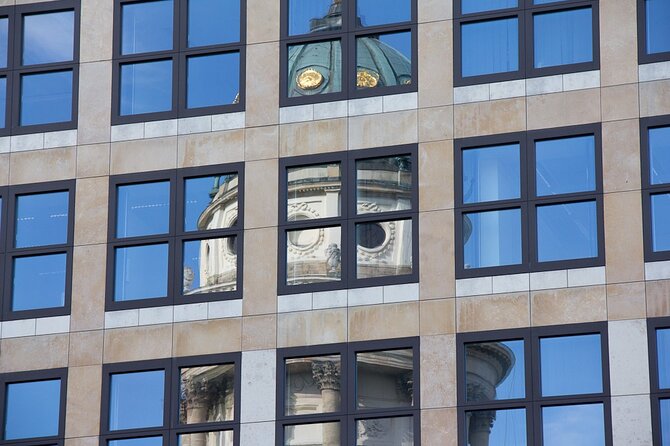
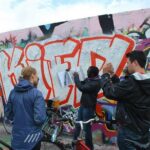
The East Side Gallery is next, and the tour frames it the way it should be framed: as the longest remaining Wall section packed with art, inside a now-redesigned business quarter.
The value here is context. You’re not just looking at painted images—you’re noticing how the Wall’s physical presence has been turned into a cultural object. And because you arrive by bike, you can also understand how the area functions today, not just what it represents.
Time tip: take a moment to stand still and read what you can. The art is visually strong, but the meaning gets deeper once you connect it to what you’ve heard at earlier Wall-related stops.
Oberbaumbrücke: crossing borders in architecture form
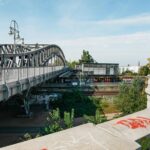
Oberbaumbrücke is a landmark for crossing borders in any meaning. That’s a simple line, but it’s a useful lens. You’ll see the bridge as a literal crossing, yes—but also as a metaphor you’ve been building since the treehouse and the Wall-adjacent stories.
This is a classic example of why a guided bike tour beats a photo-only stop. You walk away thinking, not just remembering.
Osthafen and the Spree break: understanding the GDR fixation on borders
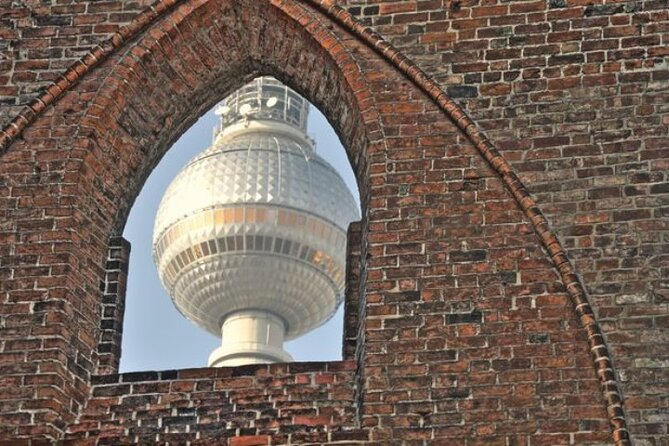
Osthafen shifts the story again. You learn it was once restricted borderland and is now associated with young urban creatives. Sitting near the Spree, it’s also where you get the idea of water as a release valve—an easy place for a short break.
The tour ties the spot to the GDR obsession with the Wall, borderland, and restricted freedom. In other words, you start seeing how the city’s geography shaped political behavior—and how that same geography later became a place for people to gather.
A sculpture with multiple interpretations: Berlin’s habit of the weird
At one point, the tour stops at a very unique sculpture that has led to multiple interpretations, with an official explanation that the guide jokes is the least sensible one.
This is a small moment, but it’s a good reminder of Berlin’s tone. Not everything needs a single correct story. Sometimes a city’s meaning comes from argument, symbolism, and what people project onto it.
Falckensteinstraße and Gorlitzer Park: diversity you can feel
Falckensteinstraße is pitched as another way to understand Kreuzberg’s diversity of buildings, people, and history—big-city life plus a bit of escapism. This is one of those segments where the best skill you can bring is patience. You’re not just sightseeing; you’re learning the rhythm of the district.
Then you stop at Gorlitzer Park, where a former train station was transformed into a park. It’s a symbol of the thin line between alternative life and anarchy, according to the tour’s framing.
Even if you don’t think of yourself as an alternative-scene person, this stop helps you understand how Berlin reuses structures. Old infrastructure gets repurposed, and the result is a city that feels creative even when it’s not trying to be.
Liegnitzer Straße: car-loft capitalism at street level
Liegnitzer Straße is where the tour gets sharply specific: a car-loft building where you can take a car up to a balcony. It’s described as the peak of capitalism in the middle of the melting pot, surrounded by authentic Berliners, anarchists, and political activism.
That contrast is the whole lesson of Kreuzberg. The district isn’t one story. It’s a collision of ideologies, housing types, and “how people live” strategies.
Waterfront time: Turkish market days and the “good life” pause
The route includes a waterfront stop with what’s described as Dolce Vita vibes, plus a Turkish market that runs on Tuesdays and Fridays. If you happen to be there on one of those days, you’ll see daily culture that feels real, not curated for visitors.
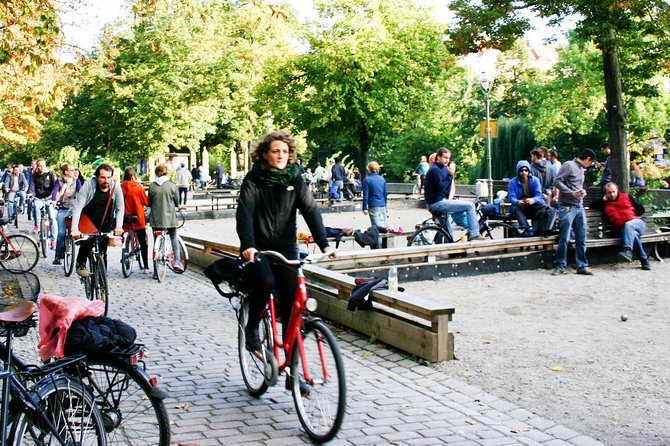
Then there’s a bohemian neighborhood break where the itinerary mentions people playing boule. Even if you don’t join in, watching is useful. It shows how leisure and community occupy the public spaces here.
Do you actually need the anarchist label?
One of the stop descriptions directly challenges the stereotype: is Kreuzberg really the home of anarchists, slobs, and survival artists? The guide’s take is that it’s much more—and the complete opposite in many ways.
This matters because it keeps the tour from becoming a single-note lecture. You walk away with a broader picture: Berlin’s alternative scenes exist, but the district doesn’t boil down to a caricature.
Admiralbrücke and Kottbusser Tor: sunset contrast, then the hard edges
Admiralbrücke is framed as a place to start a night in a bar or simply watch the sunset with hundreds of strangers. Come as you are is part of the vibe. It’s social without being performative.
After that warm glow, the tour shifts to Kottbusser Tor. The contrast is intentional: brutal 1970s architecture, heavy traffic, and a drug scene that’s part of how the area operates. The stop doesn’t try to sugarcoat the reality, but it also doesn’t turn it into fear. It’s about seeing the full spectrum of the city.
If you’re sensitive to street-life details, keep your expectations honest: this tour shows Berlin as it is, not a filtered postcard.
Price and pace: is $42.33 a good value?
At about $42.33 per person for roughly 3 hours, you’re paying for three main things: time with a guide, a bike (and helmet), and a route that strings together historically meaningful sites with neighborhood texture.
You’ll usually feel the value most if you would otherwise spend money on bike rental or a second activity just to justify getting around. Here, the bike is part of the learning tool, and the stops are frequent enough to keep the city from blurring into one long ride.
Pace-wise, plan for “ride, stop, listen, move.” One review noted that the bike chain can get your trousers dirty if they’re loose around the moving parts—so tight-ish pants or something you don’t mind getting smudged is a smart call. Another consideration: you might come in hoping for more pure cycling and less explanation. If that’s your style, you’ll still enjoy it—you just need to know the tour is built around stories.
Who should book this Kreuzberg bike tour
Book it if you:
- Want Wall-adjacent Berlin without repeating the same top-5 itinerary
- Like city history that shows up in buildings, courtyards, and daily spaces
- Prefer a guided route over trying to piece together neighborhoods on your own
- Enjoy a mix of architecture, art, and street-level culture in one run
Skip it if you want:
- A workout-only ride with minimal stops
- A strictly monument-focused itinerary
- A tour that avoids areas with more challenging street realities
Should you book? My honest take
If your goal is to understand Berlin’s alternative side in a short, efficient window, this is a strong choice. The combination of Kreuzberg neighborhoods, Wall-era stops like the East Side Gallery, and Spree views gives you a clear storyline without feeling like you’re stuck in a classroom.
I’d book it early in your Berlin trip, so you can use what you learn to spot details on your own. And if you’re the type who appreciates humor and personal stories from your guide—people have named guides like Rico, Rufus, Bjorn, Jake, Vincent, and Karl for exactly that—this tour fits your style.
FAQ
How long is the bike tour?
It runs about 3 hours.
What does the tour cost?
The price is $42.33 per person.
Where does the tour start and end?
It starts at Free Berlin Bike Tours & Rental, Poststraße 11, 10178 Berlin, Germany, and ends back at the meeting point.
Is the tour offered in English?
Yes, it’s offered in English (and in German depending on the option selected).
What’s included in the price?
You get a bicycle and helmet, plus a professional guide.
Is food included?
No. Food and drinks are not included unless specified.
Does the tour operate in bad weather?
Yes. It operates in all weather conditions, so dress appropriately.
Is this tour family-friendly?
Children are welcome, and infant seats can be provided on request. Children must be accompanied by an adult.
How big are the groups?
The group size is typically 4 to 15 participants.
What happens if the tour gets canceled?
There is free cancellation, and you can cancel up to 24 hours in advance for a full refund. If it’s canceled because the minimum number of travelers isn’t met, you’ll be offered a different date/experience or a full refund.