REVIEW · BERLIN
Small-Group Historical Bike Tour in Berlin
Book on Viator →Operated by I Love Berlin Bike Tours · Bookable on Viator
Berlin history is easier to feel from a bicycle.
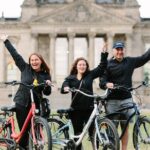
This small-group tour strings together the city’s most important Cold War and WWII-era landmarks—Berlin Wall Memorial, the Holocaust Memorial, Checkpoint Charlie—so you get the story, not just the photo spots. You’ll pedal between major squares and monuments like Brandenburg Gate, plus classic center sights around Alexanderplatz and Gendarmenmarkt.
I like two things a lot: first, the stops are paced so you can actually absorb what you’re seeing, and your guide keeps it moving without rushing. Second, the service feels personal—on some departures, guides even adjust the route or add extra context based on what you care about (Jerry and Pablo are both mentioned often for this kind of attention). One consideration: the biking is generally easy, but the bikes use a back-pedal braking setup, so if you’re not used to that, do a quick practice at the start.
In This Review
- Key Highlights You Should Know Before You Go
- How This Berlin Bike Tour Feels On the Ground
- The Morning Start: Meeting at Panoramastraße and Getting Oriented
- Stop 1: Berliner Fernsehturm for Alexanderplatz’s Big-Sky View
- Stop 2: Oranienburgerstraße and the Jewish New Synagogue Area
- Stop 3: Berlin Wall Memorial at Bernauer Strasse (The Moment You Really Feel It)
- Stop 4: Reichstag Building and the Weimar-to-Nazi Story
- Stop 5: Brandenburg Gate as Division and Unification Symbol
- Stop 6: The Holocaust Memorial (Walk Around It, Let It Work on You)
- Stop 7: Topography of Terror for the Gestapo Headquarters Site
- Stop 8: Checkpoint Charlie in Passing (Short, but Visually Instant)
- Stop 9: Gendarmenmarkt for Square Photos and Architecture Talk
- Stop 10: Book Burning Memorial at Bebelplatz
- Stop 11: Back Near Berliner Fernsehturm and a Ride Past Museum Island
- Bikes, Safety, and the One Tech Detail You Should Practice
- The Guides: Jerry, Pablo, and Demetrios Bring the City to Life
- Price and Value: Why This Feels Like More Than an Hour-Plus Tour
- Who This Tour Fits Best
- Should You Book This Berlin Historical Bike Tour?
- FAQ
- What time does the tour start, and how long is it?
- Is this tour offered in English?
- Where do I meet the guide?
- Does the tour include bicycles and safety gear?
- Is hotel pickup or drop-off included?
- Are food and drinks provided?
- Is this a private tour?
- Can children join?
- Are there admission fees at the main stops?
Key Highlights You Should Know Before You Go
- Easy riding in a mostly flat city, with frequent stops for photos and explanations
- A strong “story chain” through division, dictatorship, and postwar rebuilding
- Free entry to the main stops, based on what’s listed for each location
- Small-group feel and guides who work to answer questions clearly
- English-guided experience with a mobile ticket
- Two passes of the Fernsehturm area, giving you a natural rhythm to the tour
How This Berlin Bike Tour Feels On the Ground
Berlin can be overwhelming fast. Lots of famous sights, lots of museums, and often too little time to connect the dots. This tour solves that by building a tight route through themes—where Berlin was split, what the borders meant in daily life, and how the city remembers what happened here.
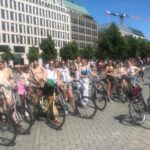
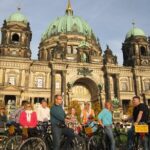
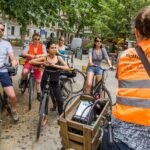
Cycling is the secret sauce. Walking can make you hit “checklist mode.” Bike time makes it easier to keep context. You glide from one era-marker to the next, and your guide can explain how one place relates to the next—like the difference between a symbol (Brandenburg Gate) and the physical reality of division (the Wall Memorial area).
And yes, Berlin is famous for being bike-friendly. In the reviews, people repeatedly mention that riding felt safe and simple, helped by the city’s bike lanes and the fact that the terrain is flat. If you’re even mildly comfortable on a bike, you’re likely to be fine.
You can also read our reviews of more tours and experiences in Berlin.
The Morning Start: Meeting at Panoramastraße and Getting Oriented
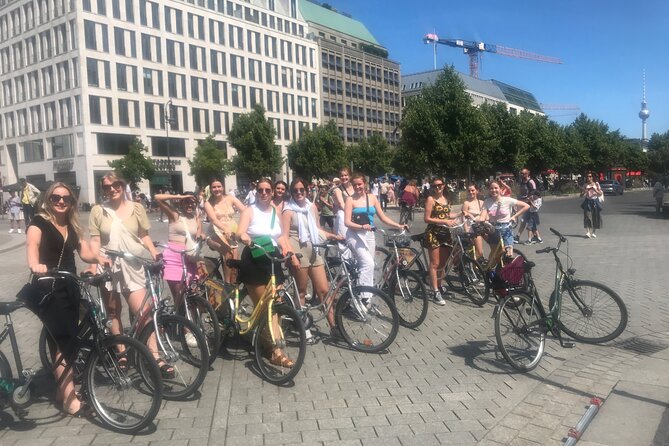
The tour meets at Panoramastraße 1, 10178 Berlin, and it ends back at the meeting point. The scheduled start time is 11:00 am. You’ll get a mobile ticket, and the whole thing runs in English.
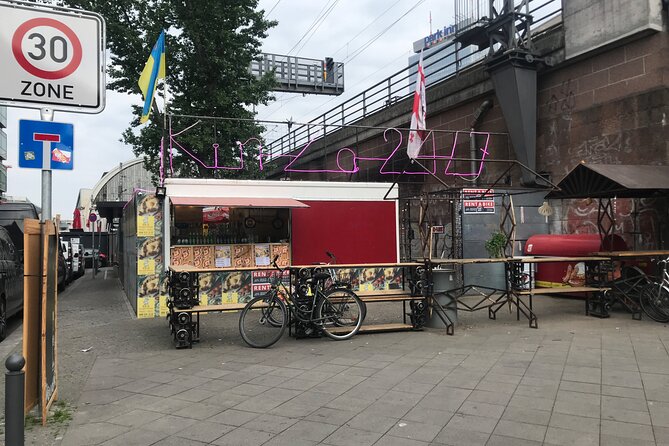
One small, practical tip: the meeting area is near Alexanderplatz / Berliner Fernsehturm. A review specifically warned that there are multiple sides to the TV tower entrance area, and it’s easy to wait on the wrong side. So when you arrive, take 30 seconds to confirm you’re at the correct entrance-side before you settle in.
If you’re the type who hates running late, I’d show up a bit early, especially if you’re using maps on a phone. Even short delays can feel longer in Germany’s big central squares.
Stop 1: Berliner Fernsehturm for Alexanderplatz’s Big-Sky View
You start close to the Berliner Fernsehturm (the TV tower) for about 10 minutes. Even without paying for an extra ticket here, this is a smart opening stop because it gives you a strong visual anchor. Your guide will tie the tower area to the stories of Alexanderplatz—history you can later connect when you’re walking around the square on your own.
This first segment works well for first-timers. It’s early in the tour, so your brain is still fresh for orientation: Where are we in Berlin? What direction are we moving? And why do people treat this part of the city as a hub?
Stop 2: Oranienburgerstraße and the Jewish New Synagogue Area
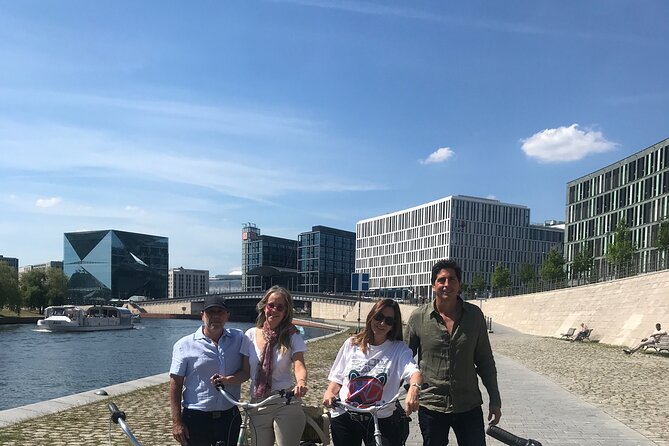
Next is Oranienburgerstraße for about 15 minutes. This is where the tour turns more explicitly toward Jewish history in Berlin, with the Jewish new synagogue mentioned as the focus.
This stop matters because it balances the story. Berlin’s WWII and Cold War history is central here, but the tour doesn’t only talk about tragedy and division—it also places you in neighborhoods where Jewish community life shaped Berlin long before the darkest chapters.
Expect a guide who talks about what you’re seeing now and what stood here before—so the street feels like a timeline, not a random row of buildings.
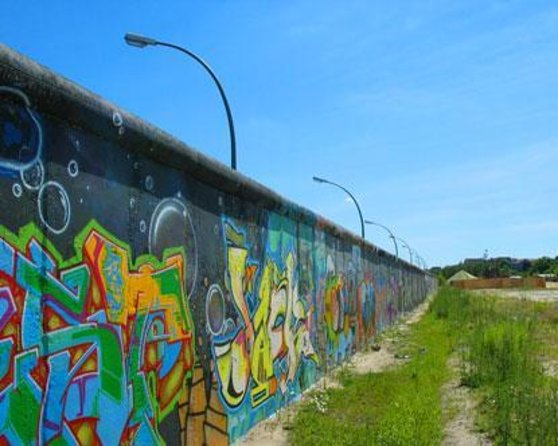
Stop 3: Berlin Wall Memorial at Bernauer Strasse (The Moment You Really Feel It)
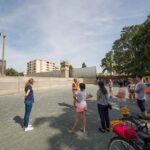
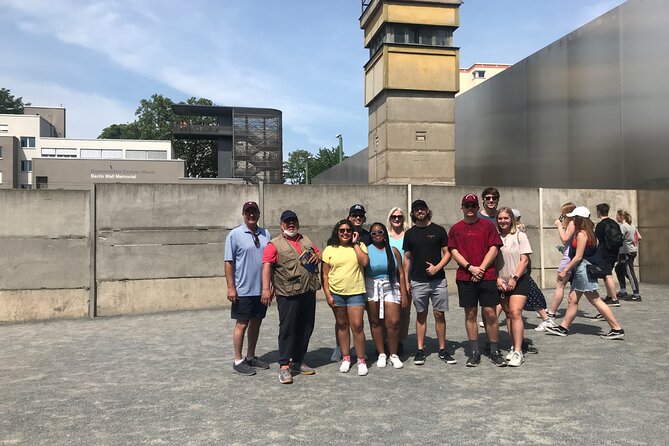
Then you’ll ride to the Memorial of the Berlin Wall, on Bernauer Strasse, for around 25 minutes.
This stop is the heavyweight of the tour. It stretches along about 1.4 kilometers of the former border strip and preserves key evidence of how the fortifications evolved up to the late 1980s. The memorial includes the last piece of Berlin Wall and preserved grounds behind it, which is crucial: it helps you picture separation in physical terms, not only as a headline.
It also connects to how Germany’s division is remembered today. The memorial is part of the Berlin Wall Foundation, which includes the Marienfelde Refugee Center Museum—a detail your guide can use to point you toward what to explore if you want to go deeper later.
One practical thing I like here: the tour gives you time. You don’t just glide past. You stand, look, and let the meaning catch up.
Stop 4: Reichstag Building and the Weimar-to-Nazi Story
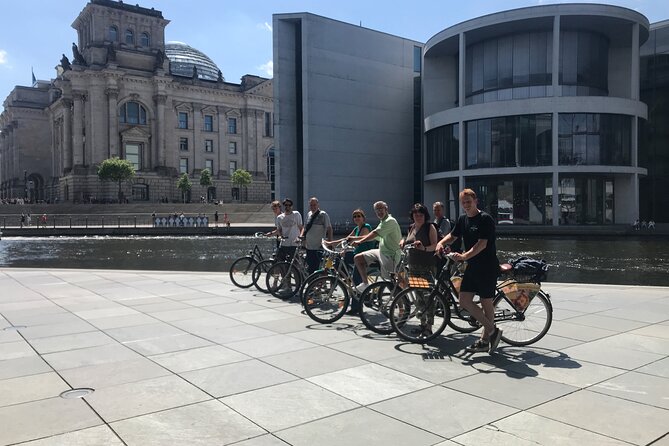
You’ll see the Reichstag Building for about 10 minutes. It’s located just north of the Brandenburg Gate area in the core tourist zone, and it’s packed with political meaning.
Your guide will point out that the Reichstag was the seat of the Weimar Republic government until it was seized by the Nazis in 1933, and you’ll also hear the story connected to the Reichstag fire and what followed.
Even if you’ve read about it before, hearing it while you’re standing near the building makes the story stick. The building’s symbolism isn’t abstract; you’re watching history live in stone and placement.
Stop 5: Brandenburg Gate as Division and Unification Symbol
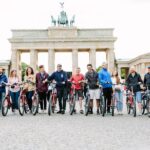
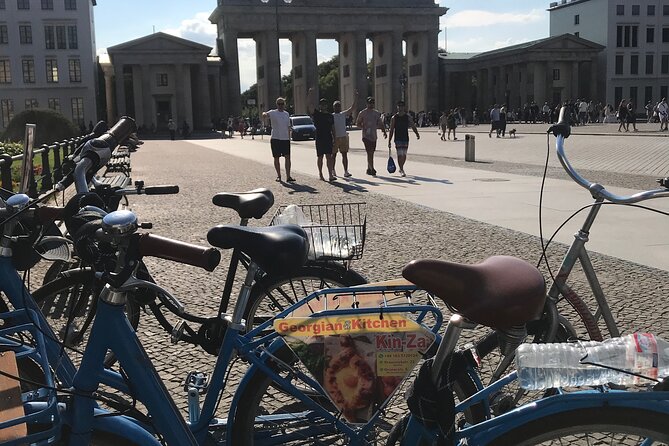
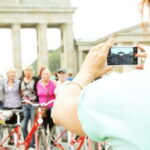
After Reichstag, the tour heads toward the famous monument built during the reign of Friedrich Wilhelm II—the Brandenburg Gate—for a quick photo-and-talk moment (the stop timing is brief in the schedule, but the meaning is big).
This is a classic Berlin scene, but it’s not just a photo backdrop. The tour frames it specifically as a symbol of both division and unification—two different meanings that you can actually “feel” once you’ve already visited the Wall Memorial.
If you only have a few hours in Berlin, this is one of those places where the tour helps you understand what you’re seeing before you move on.
Stop 6: The Holocaust Memorial (Walk Around It, Let It Work on You)
Next is the Holocaust Memorial – Memorial to the Murdered Jews of Europe for about 15 minutes. You can walk around the memorial and take pictures, which is important because it’s designed for movement and personal perspective.
This stop isn’t a trivia stop. It’s reflective. A short visit still gives you time to pause and look from different angles, which is the difference between seeing it once and really encountering it.
I appreciate that the tour doesn’t try to rush past it as a checkbox. With a guided stop, you also get the context that makes the memorial’s shape and placement mean more than a set of stones.
Stop 7: Topography of Terror for the Gestapo Headquarters Site
You’ll then spend around 10 minutes at Topography of Terror, with a brief stop and photo time at where Gestapo Headquarters once stood.
This part of Berlin can feel like a wall of information. The tour keeps it focused: a short explanation, a chance to orient yourself, and then you’re off again.
If you want to go deeper later, this is a place you’ll probably feel pulled toward. For now, the tour gives you the anchor point so your later reading makes sense.
Stop 8: Checkpoint Charlie in Passing (Short, but Visually Instant)
Checkpoint Charlie comes next with a very short stop (about 5 minutes). It’s one of those locations where the photos are easy, but the story needs the right framing.
The big value of a guided bike stop here is that you learn what it represented in the Cold War system and how it fits into the broader pattern of border control you already saw at the Wall Memorial.
Stop 9: Gendarmenmarkt for Square Photos and Architecture Talk
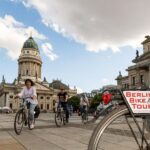
You’ll ride through Gendarmenmarkt and take photos, with a bit of explanation, for around 10 minutes.
Riding through a square like this is a nice reset after heavy historical stops. It gives your mind a breather while still keeping the tour moving through the city’s center.
If you enjoy architecture and urban design, you’ll likely like this portion. If you don’t, it still works as a calm visual moment before the memorial stops continue.
Stop 10: Book Burning Memorial at Bebelplatz
Next is the Book Burning Memorial at Bebelplatz, with a brief stop and explanation for about 15 minutes.
It’s the kind of site that’s easy to miss if you were walking casually because it doesn’t always look like a huge “structure.” Guided time helps here: you get the meaning, and suddenly the place makes sense.
Even on a short tour, this is the sort of stop that can spark good follow-up questions—about censorship, ideology, and what happens when culture is attacked.
Stop 11: Back Near Berliner Fernsehturm and a Ride Past Museum Island
You end the active sightseeing cycle with another Berliner Fernsehturm moment for about 10 minutes, riding back to the meeting point.
Then you’ll also ride through Museum Island for around 15 minutes, with the guide showing museums and explaining their history.
This portion is perfect for people who know they want to return to Berlin for museums later. You get enough context to choose what to research next, instead of wandering with no plan.
Bikes, Safety, and the One Tech Detail You Should Practice
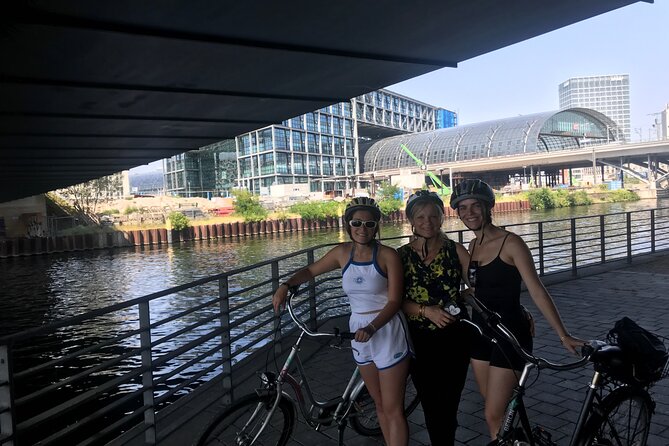
In the reviews, the most repeated reassurance is that the cycling felt easy and safe, with simple routes and frequent stops. Berlin’s flat terrain helps, and bike lanes make the ride less stressful than in many other European cities.
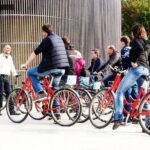
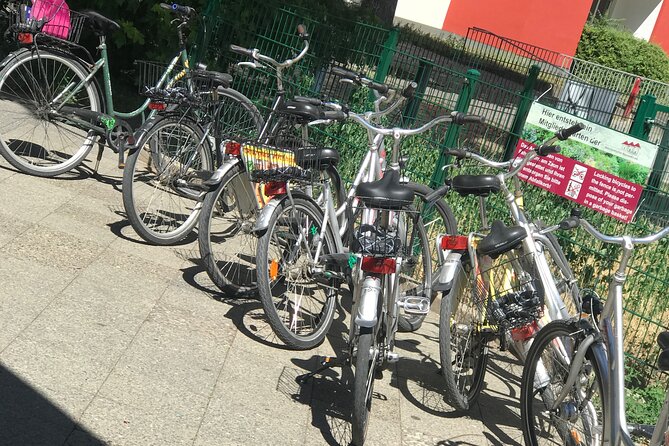
Still, one practical bike note came up clearly: some bikes use back-pedal braking, where pushing the pedals backward applies the rear brake. If you’ve never used that before, it can take a minute to get comfortable.
My advice: at the very beginning, ask your guide to show you how the brakes feel, then do a tiny “test stop” in a safe spot before you ride with confidence.
Most departures seem to run smoothly, but there’s value in going in aware of how your specific bike works, not just how it looks.
The Guides: Jerry, Pablo, and Demetrios Bring the City to Life
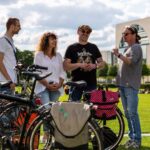
This tour’s reputation is strongly tied to the human factor. Names like Jerry and Pablo show up repeatedly in the reviews for the same reasons: storytelling that sticks, patience with questions, and the ability to keep groups engaged.
One review specifically called out Demetrios as a mine of information and praised how clearly he explained Berlin’s background. Another highlighted that Jerry answered a wide range of questions and kept things moving without losing clarity.
A pattern I really like: the good guides don’t just recite dates. They connect the setting to the topic—what this site meant, what changed over time, and how Berlin’s past shapes what you see today.
Price and Value: Why This Feels Like More Than an Hour-Plus Tour
At $54.42 per person for about 3 to 4 hours, the price works out as good value if you’re doing Berlin for the first time or you want a fast but meaningful orientation.
Here’s why it feels fair:
- You get a local professional guide for the whole route.
- Bicycle use is included, and that saves you time versus renting and figuring out bike logistics.
- You’re seeing multiple major sites in a single morning window, including heavy hitters like the Wall Memorial and Holocaust Memorial.
- The listed stops show admission tickets as free, which helps keep the experience from turning into a pay-as-you-go day.
You still need to cover food and drinks on your own, so plan a snack or a café stop afterward. The good news is the route covers central areas, so finding lunch options is usually easy.
Who This Tour Fits Best
This bike tour fits best if you want:
- A first-time Berlin orientation that doesn’t stay superficial
- A structured way to understand WWII and Cold War impacts without museum fatigue
- Low-stress movement across town, especially if you don’t want to deal with trains between far-flung stops
It may be less ideal if you want long, sit-down time at museums or if you hate bikes entirely. Also, if you’re very sensitive to reflective sites (Holocaust Memorial), you’ll want to bring your own pacing mindset—even though the tour gives reasonable time.
For families: children can join if an adult accompanies them, and the minimum age is 2.
Should You Book This Berlin Historical Bike Tour?
If you only have a half-day and you want the big Berlin story—division, resistance, repression, remembrance—this is a strong pick. The route hits essential landmarks without making you choose between them. And the combination of small-group pacing plus guides like Jerry, Pablo, and Demetrios is exactly what turns the tour from sightseeing into understanding.
I’d book it if you’re comfortable on a bicycle and you appreciate guided context. I’d think twice if you’re extremely new to bikes and the back-pedal braking detail feels intimidating—though you can usually solve that with a quick brake practice at the start.
If you want Berlin to make sense fast, this tour is one of the most practical ways to get there.
FAQ
What time does the tour start, and how long is it?
It starts at 11:00 am and runs about 3 to 4 hours.
Is this tour offered in English?
Yes, it’s offered in English.
Where do I meet the guide?
The meeting point is Panoramastraße 1, 10178 Berlin, Germany.
Does the tour include bicycles and safety gear?
Yes. Bicycle use is included, along with the necessary biking equipment.
Is hotel pickup or drop-off included?
No. Hotel pickup and drop-off are not included.
Are food and drinks provided?
No. Food and drinks are not included.
Is this a private tour?
Yes. It’s private, meaning only your group participates.
Can children join?
Children must be accompanied by an adult, and the minimum age is 2 years.
Are there admission fees at the main stops?
The tour lists admission tickets as free for the stops included in the route.