Kyoto’s alleys can feel like a secret. This afternoon bike tour connects you to the city’s old districts through quiet lanes and short, well-timed stops—then brings you back to the Kyoto you’ve been picturing. I especially like the focus on local etiquette and traffic-aware cycling, and the way the route mixes calm backroads with more recognizable Kyoto sights.
Two standouts: you get guided context (not just photos), and you ride on e-bikes that make stop-and-go streets easier. One guide name that comes up in people’s accounts is Yuichi, praised for being personable, funny, and informative—exactly the vibe you want when you’re threading through narrow lanes.
One consideration: this is a cycling tour, so it’s not the best fit if you’re uncomfortable on roads, even at a relaxed pace. Also, the tour runs in rain, with a backup plan, so plan to dress for wet weather.
In This Review
- Key Points to Know Before You Go
- Why Kyoto Back Alleys Are Worth 3 Hours of Your Day
- E-Bike Ride Plan: Timing, Meet Point, and What the 3 Hours Feels Like
- Miyagawacho Kaburenjo: Old Wooden Streets and a Quieter Kyoto Mood
- Gion: Geisha-District Refined Charm Without the Full-Time Tourist Chaos
- Tatsumi Bridge: A Stream Walk That Resets Your Brain
- Kyoto Imperial Palace Gardens: Gravel Paths and Seasonal Garden Vibes
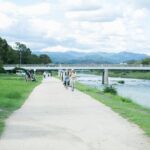
- Kashiwayacho and the Kamo River: A Local-Style Break You Can Actually Feel
- Guide Training and Group Size: The Difference Between Stress and Flow
- Price and Value: Is $102.47 Fair for 3 Hours in Kyoto?
- Rain Plan, Timing, and Who This Tour Fits Best
- Should You Book This Afternoon Bike Tour of Kyoto’s Back Streets?
- FAQ
- How long is the Afternoon Tour with a Local Expert?
- Where does the tour start?
- What time does the tour begin?
- Is there a mobile ticket?
- What happens if it rains?
- How many people are in each group?
- Is this a private tour?
- Are there age or height requirements?
- What is the cancellation policy?
Key Points to Know Before You Go
- Small group setup (max 6 per guide) keeps things manageable on narrow streets.
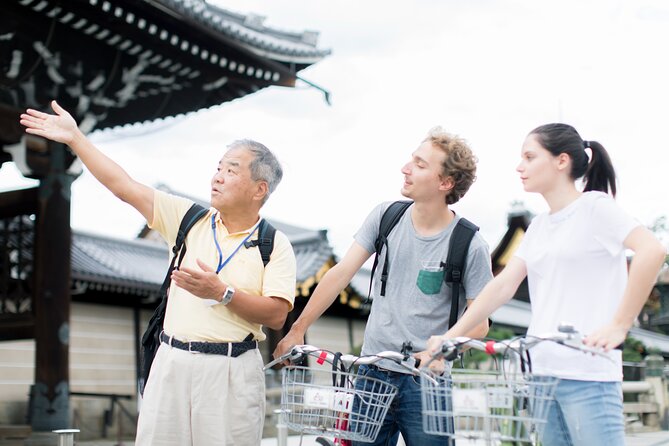
- Professional guide training covers local manners plus group cycling and traffic safety.
- E-bike friendly riding makes the route doable without feeling cooked.
- Short time in each highlight works well if you’re on a tight Kyoto schedule.
- Rain plan included so your afternoon doesn’t get wiped out.
Why Kyoto Back Alleys Are Worth 3 Hours of Your Day
Kyoto’s best scenes rarely line up neatly on a big, obvious street. This tour is built around the way the city changes as you move: you’ll trade wide views for tight alley walls, then pop out into more open streets, and the atmosphere shifts again.
I like that it’s not just a checklist. You get quick stops where you can actually look—wooden townhouse lanes in old districts, a stream-side moment that softens the whole day, and then a big “breather” area at the Kyoto Imperial Palace gardens. The route also makes practical sense: you’ll cover several key areas without spending your whole afternoon fighting transit or walking.
The other big value is the guide’s role as a translator. Kyoto is full of small rules—how to behave near residential lanes, what to watch for on streets, and how to understand what you’re seeing. That’s why this feels more like moving through a real neighborhood than touring from one landmark to the next.
You can also read our reviews of more tours and experiences in Kyoto.
E-Bike Ride Plan: Timing, Meet Point, and What the 3 Hours Feels Like
The tour runs about 3 hours and starts at 2:00 pm. You’ll meet at 552-13 Higashiaburanokōjichō, Shimogyo Ward, Kyoto, 600-8235. It ends back at the meeting point, which is handy when you’re trying to plan dinner afterward.
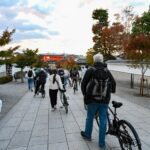
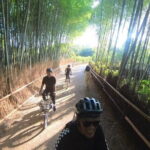
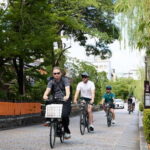
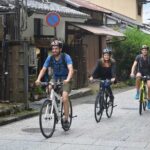
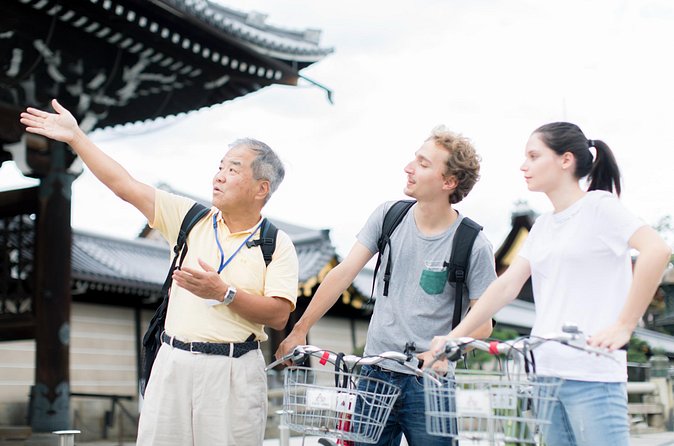
You’ll want to be ready for a ride that mixes gliding and stopping. Even if the pace is comfortable, Kyoto streets can be stop-and-start, especially around traditional districts. This is where the e-bikes matter. In people’s feedback, the e-bike part gets a special callout—because it helps you keep your energy for sightseeing instead of burning it all on the ride.
Two practical tips before you go:
- Wear shoes you can walk in for short museum/garden-style walking stretches.
- Bring light rain gear if the weather looks iffy, because the tour can run in rain.
Miyagawacho Kaburenjo: Old Wooden Streets and a Quieter Kyoto Mood
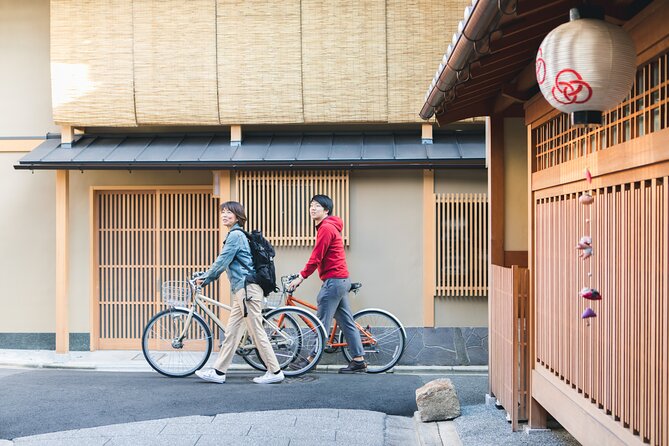
Your first stop brings you to Miyagawacho, Kyoto’s second-biggest of the five major geisha districts. The big draw here isn’t a single statue or one photo angle. It’s the alley feel: a street lined on both sides with traditional wooden houses, where the whole place slows down.
This is where you start to understand why a bike tour works. On foot, you’d likely stop too often or spend too much time repositioning. By riding through, you get a sequence of views—then the stop lets you breathe and look closely.
A realistic expectation: this area is calm, and that’s part of the point. If you’re hoping for constant action and crowds, you might feel like you’re in a quieter pocket than central Gion. But if you care about atmosphere and old-street texture, this is a strong first anchor.
Gion: Geisha-District Refined Charm Without the Full-Time Tourist Chaos
Next you head to Gion, one of Kyoto’s best-known geisha districts. This is where the mood shifts toward the classic Kyoto many people imagine: refined old-times atmosphere, plus the presence of maiko and geiko culture in the area.
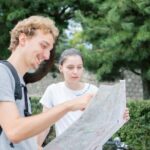
Your guide’s value shows up here. Without context, Gion can turn into a blur of storefronts and people watching. With context, you start noticing the signals—how the district is structured, what’s meaningful about the old-town setting, and how to navigate respectfully in an area that’s still tied to daily life.
One consideration: this part of Kyoto can be more active than the backstreets. You’ll likely still get plenty of time to look, but it helps to keep your expectations set. Think of Gion here as a cultural stop inside a broader route, not a long, slow amble where you can linger for hours.
Tatsumi Bridge: A Stream Walk That Resets Your Brain
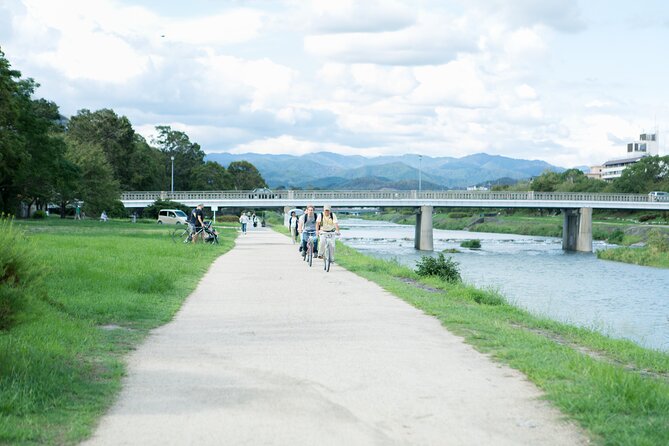
A short pedal and then you’re at Tatsumi Bridge, where the experience turns gently scenic. The path runs alongside a limped stream, and the willow trees are the star—swings in the breeze that make the area feel airy and softer than the streets you were just riding.
This is the kind of stop that works because it gives you contrast. After alleyways and district streets, a water-and-willow moment is a reset button. It also helps break up the ride so you don’t feel like you’re just stacking monuments.
Drawback to keep in mind: this stop is time-limited (around 15 minutes). So it’s best if you arrive ready to look for a few key angles, take your photos, and then move on without expecting a long stroll.


Kyoto Imperial Palace Gardens: Gravel Paths and Seasonal Garden Vibes
Then you cycle through the Kyoto Imperial Palace grounds. This used to be home to Japan’s Imperial Family, and now it’s open to the public as a national garden.
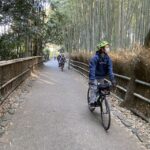
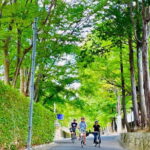
What makes this stop special for a bike tour isn’t just the location—it’s the way you get to move through garden space by bike, then pause in a setting that feels different from the street corridors. You’ll cycle along gravel paths, which changes the feel of riding compared with city pavement and backstreet lanes.
Season matters here. The palace gardens are described as having beautiful seasonal flowers, so if you’re visiting during a peak blossom window, this stop can be a highlight. Even outside peak bloom, it’s still a major change of scenery and a good place to cool down from the earlier district walking and riding.
Practical note: garden time is still brief, so if you’re the type who wants to wander every path, use this stop to orient your later independent exploring.
Kashiwayacho and the Kamo River: A Local-Style Break You Can Actually Feel
The last sightseeing stop focuses on Kashiwayacho and a chance to relax by the Kamo River. This is described as a river that local residents love, and it’s easy to see why this works as a finale.
Instead of finishing with another rigid landmark, you end with something Kyoto is famous for: a calm outdoor space that makes the city feel liveable. You’ll have a 20-minute window here, and the stop includes something practical—an admission ticket included—so it’s not just a look-and-go.
A consideration: since it’s a river area, weather changes how comfortable it feels. If it’s rainy, expect the ground and air to be damp. If it’s sunny, it’s a pleasant wind-down. Either way, it’s a good ending moment before you head back to the meeting point.
Guide Training and Group Size: The Difference Between Stress and Flow
This tour is led by professionally trained guides, with coverage for:
- Traffic safety
- Group cycling techniques
- Local etiquette
That trio matters more than you might think. Kyoto’s streets can be narrow and unpredictable, especially near traditional districts. A trained leader helps you understand where to ride, how to move as a group, and how to avoid the common mistakes tourists make in residential areas.
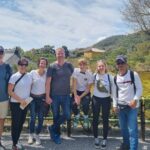
Group size is also kept intentionally small: 2 to 6 guests per guide. And it’s private for your group—meaning you won’t be mixed into a random crowd. If your group is bigger (7–12 people), an extra guide can be arranged, which helps keep the cycling manageable.
If you’re traveling with family, this setup can work well. One feedback point specifically called out that it worked nicely with family and helped people see a lot even under time pressure.
Price and Value: Is $102.47 Fair for 3 Hours in Kyoto?
At $102.47 per person for about 3 hours, the price isn’t cheap. But you’re not paying just for movement from A to B.
You’re paying for:
- Guided stops at multiple major Kyoto areas in a short window
- Professional traffic-and-etiquette trained support
- A bike ride that’s easier with e-bike assistance
- A route built to reduce your guesswork and wasted time
If you compare this to the cost of taxis or the effort of coordinating several transit segments, the value starts to make sense. It’s also a good buy when you want a guided introduction without sacrificing half a day.
Where the math gets less friendly: if you already have strong bike experience and you’re comfortable navigating on your own, you might be able to recreate parts of the route cheaper. But you’d lose the guided explanations and the safety framing that helps the ride stay smooth.
Rain Plan, Timing, and Who This Tour Fits Best
Kyoto weather can change fast, and this tour plans for it. It operates in rain and offers two options:
- Continue on bikes with a rain poncho (free of charge)
- Switch to a walking tour using public transportation, included in the tour fee
So you’re not likely to get stranded with a canceled afternoon. Still, you should dress for wet conditions and bring a jacket that you’ll actually want to wear.
This tour also has clear participant requirements:
- Most travelers can participate
- You must be able to ride a bicycle safely on the road unassisted
- Children must be at least 10 years old, 145 cm or above
- One-person bookings aren’t accepted; the tour has a minimum group size
Who I think should book:
- First-time Kyoto visitors who want a smarter first look
- People with limited time who still want atmosphere, not just icons
- Travelers who like being guided through neighborhoods, not just touring inside sites
Who might skip:
- Anyone who hates cycling on roads, even with e-bike support and a guide
- People who want a long, slow garden or museum-style day with lots of time for wandering
Should You Book This Afternoon Bike Tour of Kyoto’s Back Streets?
I’d book it if you want Kyoto’s character in a compact time window, with a guide that helps you move safely and understand what you’re seeing. The big strengths are the small-group setup, the trained guide approach, and the way the route balances calm backstreet atmosphere with recognizable Kyoto districts.
If you’re comfortable riding a bike and you’re open to rain-day logistics, this is a very practical way to spend an afternoon. And if your priority is making the most of limited time in Kyoto without feeling rushed by transit, it fits that goal well.
FAQ
How long is the Afternoon Tour with a Local Expert?
The tour lasts about 3 hours.
Where does the tour start?
It starts at 552-13 Higashiaburanokōjichō, Shimogyo Ward, Kyoto, 600-8235, Japan.
What time does the tour begin?
The start time is 2:00 pm.
Is there a mobile ticket?
Yes, the tour uses a mobile ticket.
What happens if it rains?
The tour will operate in rain. You can either continue on bikes with rain poncho (free of charge) or switch to a walking tour using public transportation, which is included in the tour fee.
How many people are in each group?
The minimum is 2 guests, and the maximum is 6 guests per guide. If there are 7–12 people, an extra guide can be arranged.
Is this a private tour?
Yes, it’s a private tour/activity, and only your group participates.
Are there age or height requirements?
Children must be at least 10 years old, 145 cm or above, and able to ride a bicycle safely on the road unassisted.
What is the cancellation policy?
This experience is non-refundable and cannot be changed for any reason. If canceled, the amount paid is not refunded. If it’s canceled because the minimum number of travelers isn’t met, you’ll be offered a different date/experience or a full refund.