REVIEW · KYOTO
South Kyoto in a Nutshell: Gentle Backstreet Bike Tour!
Book on Viator →Operated by Cycle Kyoto · Bookable on Viator
South Kyoto looks busy from the map. On a bike tour, it feels manageable and even fun. I like two things right away: the bikes and helmet are included, and you get a guide to steer you through the best sights without turning your day into map math. The route also focuses on photo-friendly highlights like Fushimi Inari-taisha while keeping you moving through calmer backstreets. One thing to consider: the stops are short, so if you want long photo sessions at every location, you’ll need to choose your moments.
This is a half-day format that works well for first timers and returnees who want a faster sweep than walking. I also appreciate that the tour is built around spots that are important to Kyoto, but not all of them are the loud, line-filled versions of the same story. Still, with limited time at each stop, you’ll likely leave wishing you had a little more at Gion or Fushimi Inari if you’re the type who likes to linger.
Guides matter here. In my notes, I’ve seen names like Kevin, Sam, Jaime, Jay, Julian, Indra, Juan, and even Paul come up for calm pacing, safety instructions, and clear storytelling. If you’re hoping for a slow, sit-down sightseeing day, this is more “ride, see, learn” than “wander all on your own.”
In This Review
- Key things I’d highlight before you go
- Starting at Cycle Kyoto: your 9:00 setup for an easy ride
- Why South Kyoto by bike beats walking (and usually bus tours)
- Nishi Honganji: a massive wooden site with quieter energy
- Takase Canal by bike: history on the move
- Gion on two wheels: seeing the geisha district without the chaos
- Tofuku-ji for the views: a quick Zen pause
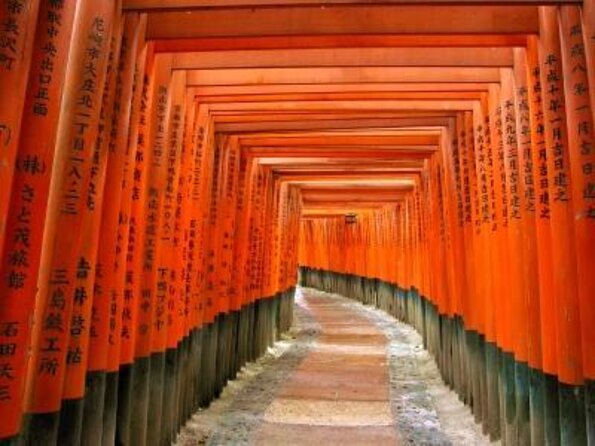
- Fushimi Inari-taisha: crowd-smart routing where it really counts
- The ride itself: pace, safety, and what guides actually do
- Bikes, water, and the real value of $79.59
- Who this tour fits best (and who should skip it)
- Quick practical notes: weather, clothing, and comfort
- Should you book the South Kyoto bike tour?
- FAQ
- How long is the South Kyoto bike tour?
- What does it cost?
- What’s included with the tour?
- Where does the tour start, and what time does it begin?
- How many people are in the group?
- What’s the minimum age to join?
- What happens if weather is bad?
Key things I’d highlight before you go
- Small group size (up to 8) means more personal attention and easier crowd adjustments
- Cannondale bikes + helmet + bottled water remove the usual rental hassle
- Free entry at every stop takes pressure off your wallet
- Backstreet riding lets you reach neighborhoods that feel awkward for big bus routes
- Fushimi Inari path planning helps you cut between crowd pockets
- Guides who tailor pace to conditions keep the ride smooth and safe
Starting at Cycle Kyoto: your 9:00 setup for an easy ride
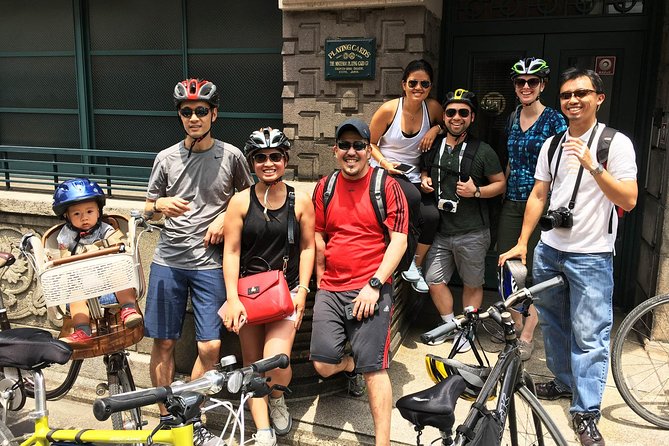
The tour begins back at Cycle Kyoto at 7 Higashikujō Nishisannōchō, Minami Ward, right around 9:00 am. Plan to arrive a few minutes early so you’re not rushing during the bike fitting. The start routine is straightforward: you meet your guide and the small group, get fitted with a high-quality Cannondale bike, put on a helmet, and you’re off.
This matters more than it sounds. Kyoto streets can be narrow and busy at odd times. Starting with a proper fit means your ride feels stable from the first turn, and that helps you stay relaxed when you’re sharing space with pedestrians.
Also, the tour uses a mobile ticket. That’s one less thing to juggle while you’re changing routes and stopping for photos.
You can also read our reviews of more tours and experiences in Kyoto.
Why South Kyoto by bike beats walking (and usually bus tours)
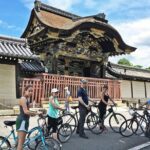
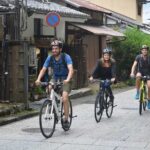
Kyoto is famous for distance, and it’s easy to burn hours doing the “walk three blocks, wait at the light, check your phone, repeat” routine. A bike tour changes the math. You cover more ground without feeling like you’re rushing through everything.
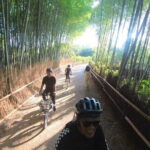
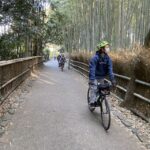
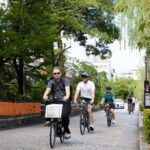
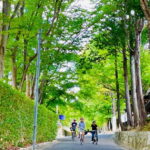
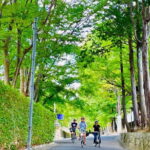
Here’s the practical advantage: the itinerary mixes famous stops with calmer stretches. You’ll ride down narrow backstreets that large group buses can’t really do. That means your day feels more local and less like you’re shepherded down the same wide lanes as everyone else.
There’s also a comfort factor. With a guide handling the route and timing, you can focus on what you’re seeing. Guides also give clear instructions for interacting with pedestrians and traffic, which is a big deal when you’re cycling in a dense city.
The ride is described as gentle, and the terrain is set up for most people who can comfortably bike. You do need to be ready for an active half-day, though. This is sightseeing on wheels, not a leisurely stroll where you stop every two minutes.
Nishi Honganji: a massive wooden site with quieter energy
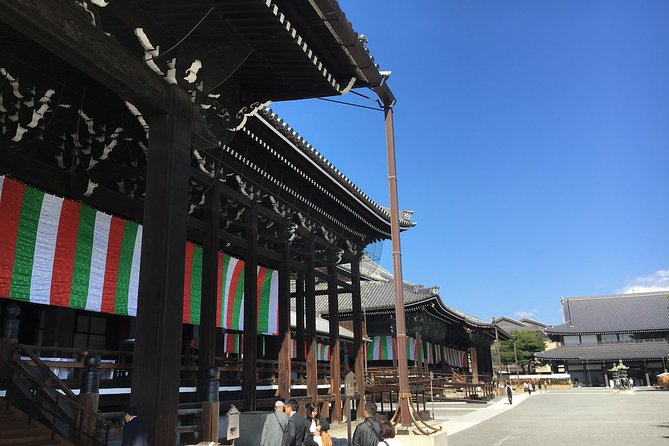
One of the first stops is Nishi Honganji, where you spend about 15 minutes. Even in a city full of temples, this one gets less attention, and that’s part of the appeal. It also includes one of the biggest wooden buildings in the world, which you’ll feel immediately once you’re close enough to see the scale.
Why it’s worth your time: Nishi Honganji gives you a different flavor than the flashier shrine-and-gate postcard stuff. It’s more about atmosphere and craftsmanship. On a bike tour, you’re not just zooming past it either. You actually get a short window to step in, look around, and understand why this place is such a cornerstone in Kyoto’s religious life.
A drawback to know: the stop is only 15 minutes. If you want to read everything slowly or wander into every corner without a watch on your shoulder, this might feel tight. But for a first sweep of South Kyoto, it’s a smart use of time.
Takase Canal by bike: history on the move
After the first temple stop, the tour follows Takase Canal. The idea here is simple: ride alongside water and let the calm rhythm do some of the work for you. You’ll get a guided explanation of the canal’s place in Kyoto’s history and you’ll have time to grab photos along the way.
This is a good segment for two reasons. First, it’s visually rewarding without needing to hunt for the perfect angle. Second, it breaks up the “temple stop, shrine stop, crowd stop” pattern.
One consideration: since this portion is moving by design, you’ll get your photography moments, but you won’t have unlimited time standing still. If you’re traveling with someone who loves slow, detailed photo work, agree in advance on a plan: take a quick set of photos during the canal segment, then decide later where to slow down more.
Gion on two wheels: seeing the geisha district without the chaos
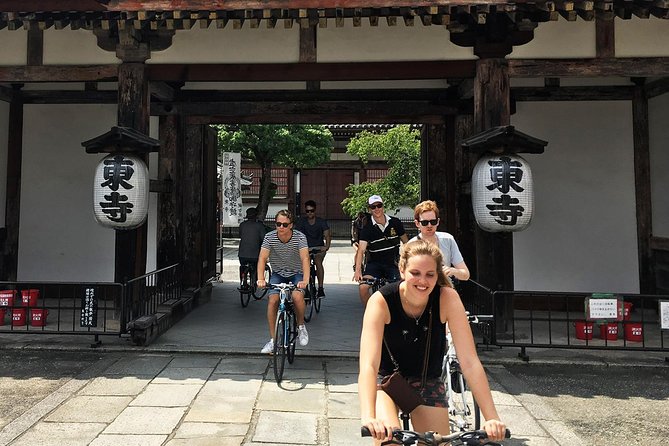
Next up is Gion, Kyoto’s famous geisha district. You’ll spend around 15 minutes here, with the chance to learn what’s going on behind the scenes and maybe even catch a glimpse of entertainers if you’re lucky.
Gion is one of those places where the vibe can change fast depending on where you stand and what time it is. Cycling helps because you can stay in the flow and reach vantage points that are hard to get if you’re stuck walking the loud main paths.
Why I like this stop on a bike tour: you’re not only chasing an image. You’re also learning how the district works and why it looks the way it does. A few guides in the tour’s orbit are known for adding extra local context and even helping with day-planning ideas, which can make Gion feel more meaningful instead of just scenic.
Possible drawback: like other stops, it’s not long. If you want to linger at specific corners for atmosphere, you may feel slightly rushed. That’s not a problem with the location, it’s just the half-day pacing. Think of Gion here as a guided introduction you can build on later.
Tofuku-ji for the views: a quick Zen pause
Then you swing by Tofuku-ji, one of Kyoto’s older and larger Zen temple complexes. The time is short, about 5 minutes, but the highlight is clear: views from the bridge and open surroundings.
A five-minute temple stop sounds almost too short on paper. But it can work, because Tofuku-ji’s most striking views are often best seen once you’re already at the right spot. A guide gets you there efficiently, and you get enough time to look, feel the scale, and move on without burning your morning.
If you’re a slow wanderer who wants to read signs and go deep into architecture, you might not “finish” Tofuku-ji here. On the other hand, if you’re balancing multiple big Kyoto sights in a short window, this kind of timed highlight is a smart trade.
Fushimi Inari-taisha: crowd-smart routing where it really counts
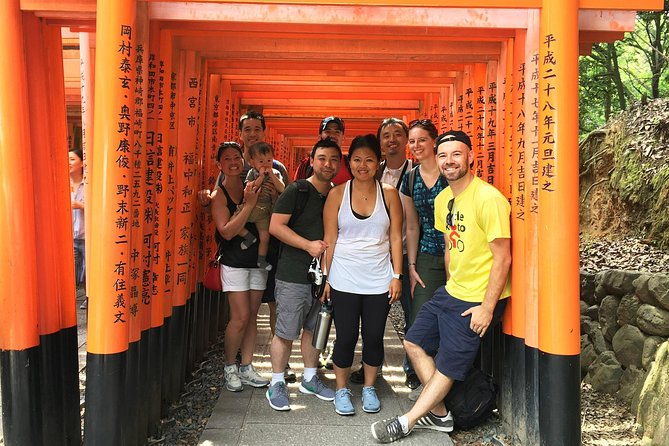
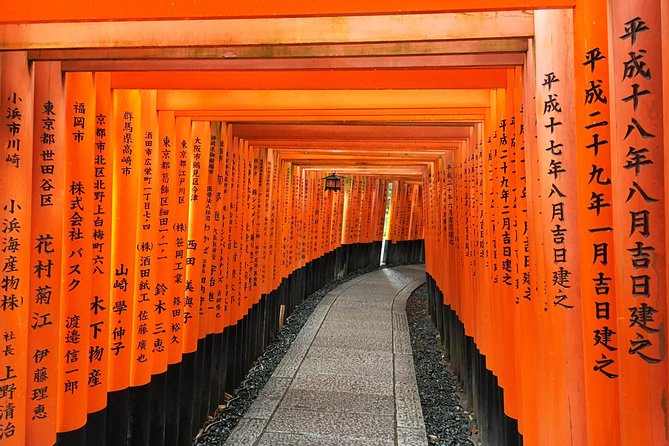
The biggest magnet in the itinerary is Fushimi Inari-taisha Shrine, with about 25 minutes. This is Kyoto’s most visited attraction, and you know what that means: crowds and everyone trying to take the same photos.
The tour’s edge is that the guide helps you find a path between crowds, so you spend less time stalled and more time seeing. You’ll also get pointed direction so you don’t waste your energy wandering in the wrong lane or missing the best views.
This is where the “guide does the thinking” value is most obvious. Inari is visually intense, and the longer you’re there, the more likely you are to get frustrated by bottlenecks. Guided route choices help you keep your momentum.
Photo tip: bring your patience. Even with crowd-smart routing, Fushimi Inari is popular. If photos are your top goal, focus on a few high-impact shots rather than trying to capture the entire shrine in one go.
The ride itself: pace, safety, and what guides actually do
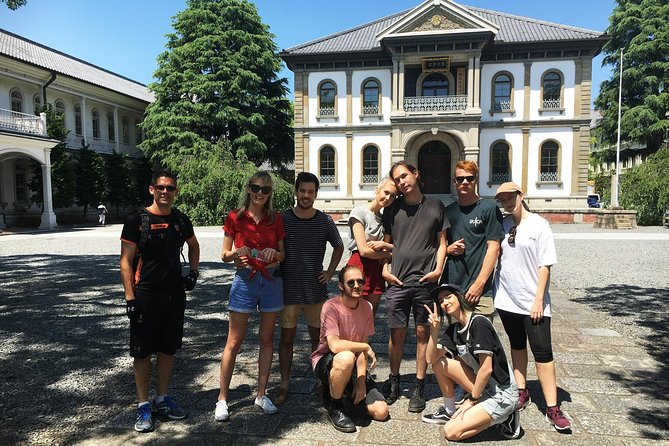
The tour is built for a 3 to 4 hour experience, so your guide is juggling two jobs: keep the group together and keep you safe and comfortable while cycling through Kyoto.
That safety part isn’t vague. Guides are known for giving clear instructions about pedestrian and traffic behavior. It’s the kind of coaching that makes you feel confident even if you’ve never biked in Japan before.
Pace is another theme in the feedback. Many people describe the day as the right amount of time for first visits, with a relaxed feel rather than a sprint. Several named guides show up in the experience history, including Kevin, Sam, Jaime, Jay, Julian, Indra, Juan, Thierry, Paul, Quin, and Carl. The common thread is not just trivia. It’s practical guidance and a calm rhythm.
One possible downside: if the group hits crowds harder than expected, you might feel the schedule tightened. That can reduce how long you personally spend on photos or atmosphere. If you’re someone who hates feeling rushed, choose your “must-capture” spots and let the rest be quick highlights.
Bikes, water, and the real value of $79.59
At $79.59 per person, this tour can look “small” compared to full-day city passes. But the value comes from what’s included and what you don’t have to coordinate.
You get:
- A high-quality Cannondale bike
- A helmet
- Bottled water
- Free admission at the listed stops
When you factor in rental bikes, helmet rental, and the stress of planning routes (especially around crowded sites), this price starts to make a lot more sense. You’re paying for the equipment and the route intelligence, which is what saves time and keeps the day smooth.
In other words: you’re not just buying entry tickets. You’re buying a guided “best-use-of-your-morning” plan.
Who this tour fits best (and who should skip it)
This bike tour is a great fit if:
- You’re comfortable riding a bike and want a gentle pace
- You want to see multiple major Kyoto sights without walking for hours
- You like backstreet experiences that are hard to do on bigger group tours
- You want a guide to help manage crowds, especially at Fushimi Inari-taisha
It may be less ideal if:
- You prefer long stops and deep solo exploration at each location
- You get uncomfortable when a schedule is time-structured (even lightly)
- You don’t want to cycle at all, even for a half-day
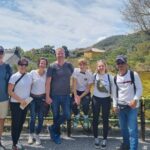
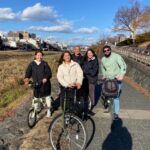
Group size is also a clue. With a max of 8 travelers, this tends to feel friendlier and easier to manage than large tours. You’ll still have other people around, but you’re not stuck in a long human chain.
Quick practical notes: weather, clothing, and comfort
This experience requires good weather. If it’s canceled due to poor weather, you’ll be offered a different date or a full refund. Kyoto mornings can be anything, so check forecasts closely.
You’ll do a lot of outdoor time, so dress for temperature. The ride includes bottled water, but it’s still smart to wear breathable layers. And since you’re cycling, comfortable closed-toe shoes are the safer bet.
Age-wise, riders must be at least 13 and be comfortable on a bike.
Should you book the South Kyoto bike tour?
I’d book it if you want a first-rate Kyoto sampler that’s faster than walking, but not frantic. The combination of included bike + helmet, free entry at major sights, and a guide who navigates crowd-heavy areas like Fushimi Inari-taisha makes this a good value for a half-day.
I’d skip it (or swap to a slower style) if your travel personality is “linger, read, take your time.” The stops are intentionally short, and that’s great for coverage but not built for hours of soaking in one location.
If you’re the kind of traveler who loves fresh air, backstreets, and a guide doing the route work while you focus on seeing Kyoto up close, this is a strong choice.
FAQ
How long is the South Kyoto bike tour?
It lasts about 3 to 4 hours.
What does it cost?
The price is $79.59 per person.
What’s included with the tour?
You get a high-quality Cannondale bike, a helmet, bottled water, and use of the bicycle.
Where does the tour start, and what time does it begin?
The meeting point is Cycle Kyoto, 7 Higashikujō Nishisannōchō, Minami Ward, Kyoto, 601-8003, Japan, and it starts at 9:00 am. The tour ends back at the meeting point.
How many people are in the group?
The tour has a maximum of 8 travelers.
What’s the minimum age to join?
Riders must be at least 13 years old and comfortable riding a bike.
What happens if weather is bad?
This experience requires good weather. If it’s canceled due to poor weather, you’ll be offered a different date or a full refund.