REVIEW · KYOTO
Kyoto: Half-day Guided Bike Tour with Fushimi Inari
Book on GetYourGuide →Operated by Cycle Kyoto · Bookable on GetYourGuide
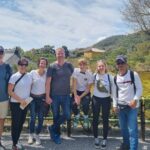
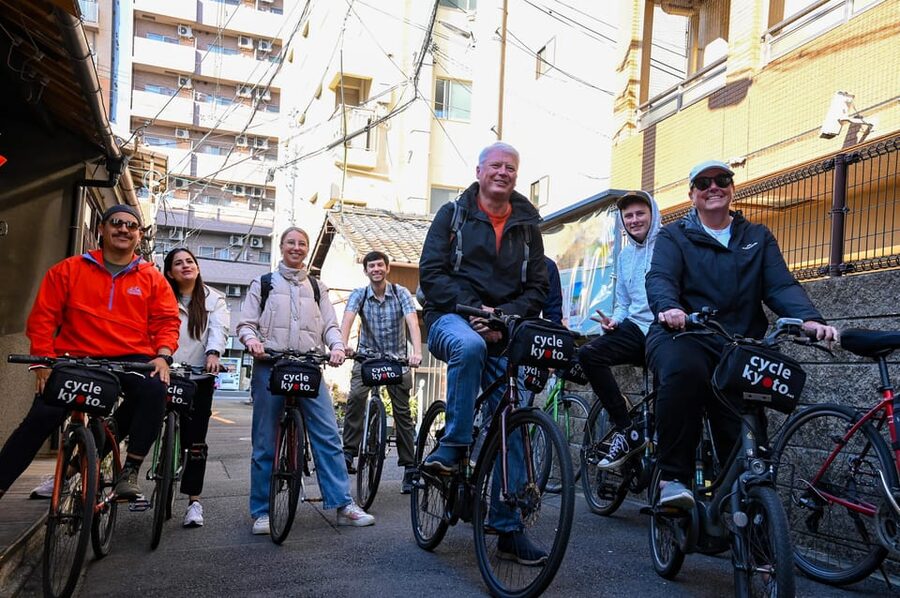
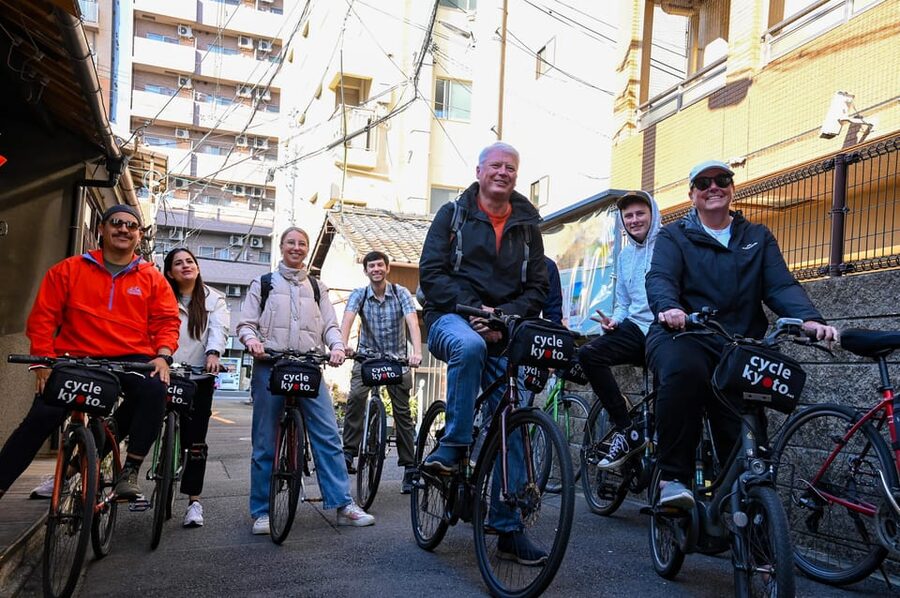
South Kyoto by bike feels like cheating. You get to move fast between major sights and still enjoy the in-between moments—riversides, narrow lanes, and temple atmospheres—without the stress of trains and taxis. I especially loved the small group feel (limited to 8) and the way the guides like Jay and Julian make Kyoto stories click, not just list facts.
My other big win was the mix of famous and slightly off-main-route: Gion’s side streets and tea-house neighborhood vibe, plus the orange torii lines at Fushimi Inari. One thing to think about first: this is real cycling. If you can’t comfortably ride a bike—or if you have back issues—you’ll likely be happier choosing a walking tour instead.
In This Review
- Key highlights you’ll feel on this ride
- A half-day plan that actually works in Kyoto
- Where you meet Cycle Kyoto (and how to find it fast)
- Safety briefing first, then you’re off
- Toji: UNESCO credibility at the start (and why starting here helps)
- Higashi-Honganji: big temple energy without the long detours
- Takase Canal and the Kamo River: the scenic reset
- Gion backstreets: where you notice the city’s texture
- Tofukuji Temple photo stop: slow down when it counts
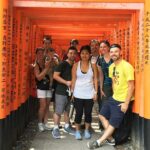
- Fushimi Inari Taisha: torii gates, guided pacing, and time to walk
- The ride itself: what biking 210 minutes actually feels like
- Price and value: $77 buys more than bike rental
- What to pack (so you don’t regret it at stop #3)
- Who this tour is for (and who should skip it)
- Should you book this South Kyoto bike tour?
- FAQ
- How long is the Kyoto bike tour?
- What does the tour include?
- Is the tour guided in English?
- What’s the group size?
- Where do I meet the tour from Kyoto JR Station?
- What’s the minimum age to join?
- Are e-bikes available?
- Are meals included?
- What should I bring for the ride?
- Is the tour suitable if I can’t ride a bike or have back problems?
- Is there any thing I’m not allowed to do on the tour?
Key highlights you’ll feel on this ride
- Toji first, with UNESCO weight early: You start at Kyoto’s oldest temple and get guided context before the ride spreads out.
- Higashi-Honganji’s scale: A major temple stop that feels bigger than you expect once you’re actually there.
- Rivers for a breather: Takase Canal and the Kamo River breaks up the day with calmer scenery.
- Gion backstreets, not just the postcard strip: You’ll cycle through the geisha district vibe in a more local way.
- Tofukuji for pictures: You get a longer photo stop when the light and views are worth slowing down.
- Fushimi Inari with time to walk the gates: Guided pacing and a 45-minute slot for the torii experience.
A half-day plan that actually works in Kyoto
Kyoto can be overwhelming in the best way—so many temples, so many districts, so little time. This tour is built to solve that problem: 210 minutes that feel relaxed, but still cover the parts of South Kyoto people remember.
The structure matters. You’re not just “seeing” Kyoto; you’re riding through it in a logical order, starting with temple-heavy hits, then shifting toward neighborhood streets, then ending with Fushimi Inari. That sequencing helps you avoid the common tourist trap of spending half your day traveling and half standing in lines.
You can also read our reviews of more tours and experiences in Kyoto.
Where you meet Cycle Kyoto (and how to find it fast)
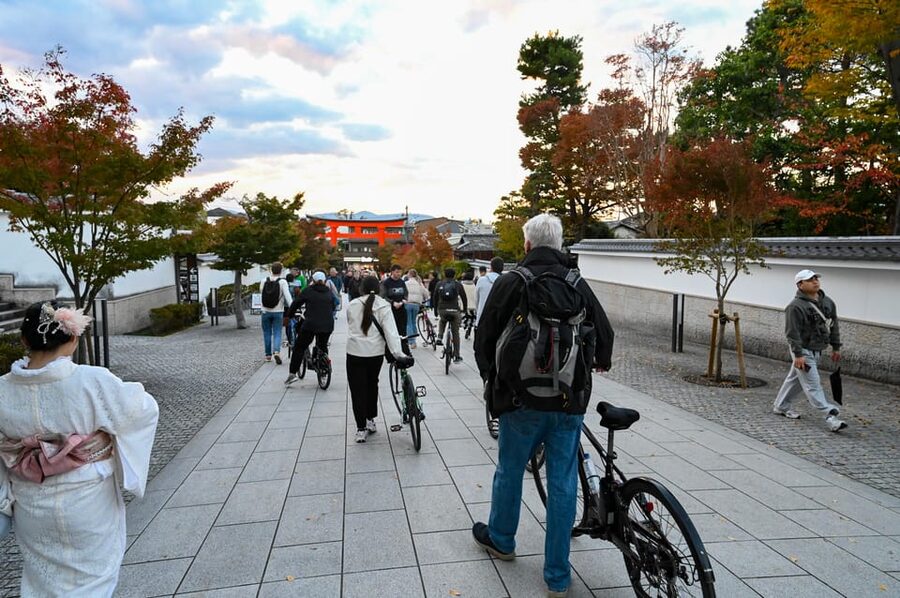
You meet at Cycle Kyoto, with directions from Kyoto JR Station that are pretty straightforward if you follow the landmarks.
From Kyoto JR Station: go past Avanti, cross one set of traffic lights. After you spot the Daily Yamazaki convenience store, take the next left.
I like this kind of meeting point because it’s easy to orient yourself. Once you’re there, the rest is smooth: bikes, helmet, water, and a guide to get everyone moving.
Safety briefing first, then you’re off
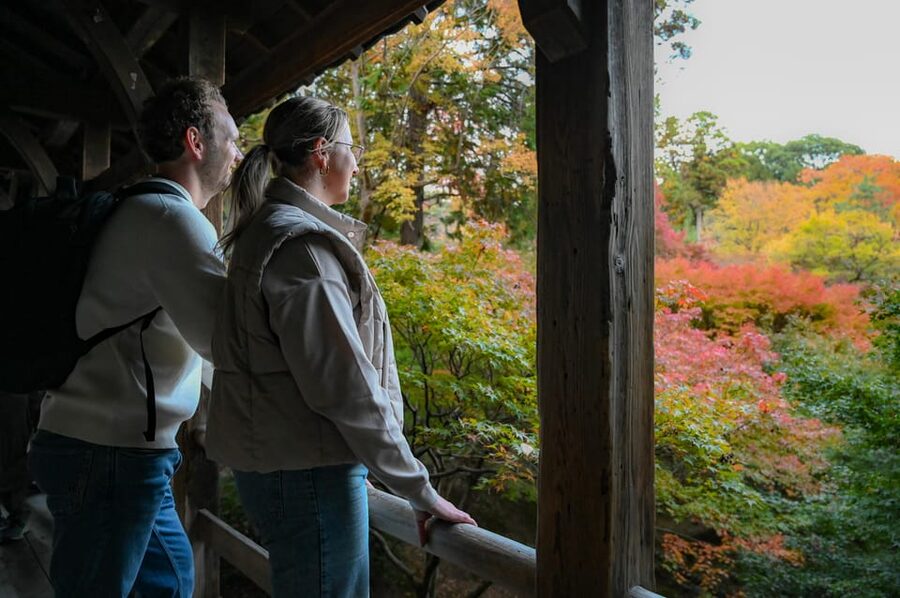
Before the sightseeing begins, you’ll get a 15-minute safety briefing. This isn’t just about rules. It’s about confidence—helping you feel comfortable riding in an active city with other road users.
You’ll also get a clear sense of how your group will move: the pace, when you’ll stop, and how the guide handles traffic and crossings. It’s the kind of setup that makes a bike tour feel more like a guided day out and less like you’re negotiating the streets on your own.
Toji: UNESCO credibility at the start (and why starting here helps)
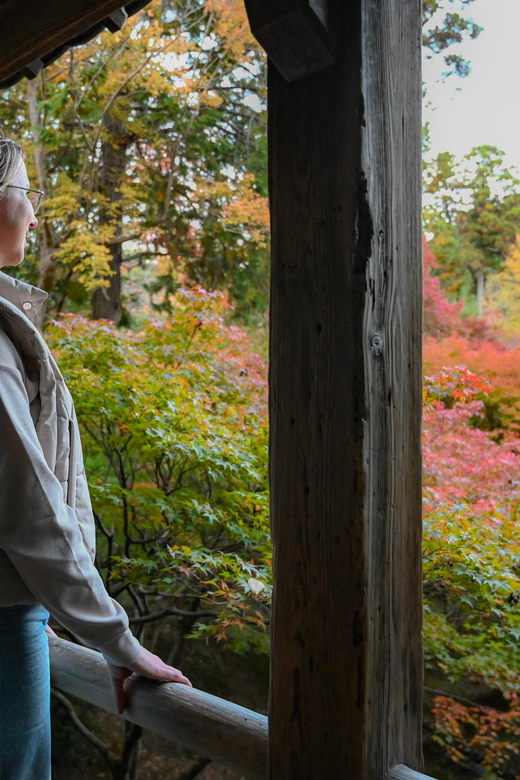
Your morning (or day) begins at Toji, Kyoto’s oldest temple and a UNESCO heritage site. Starting here is smart for two reasons.
First, temples often set the tone. Getting the historical framing early makes everything you see later feel connected, not random. Second, you’re not biking tired yet. You’ll still have the energy to enjoy the surroundings instead of rushing through because your legs are already cooked.
You’ll spend 35 minutes with the guide at this stop, which is enough time to understand what you’re looking at and still have room to wander at a comfortable pace.
Higashi-Honganji: big temple energy without the long detours
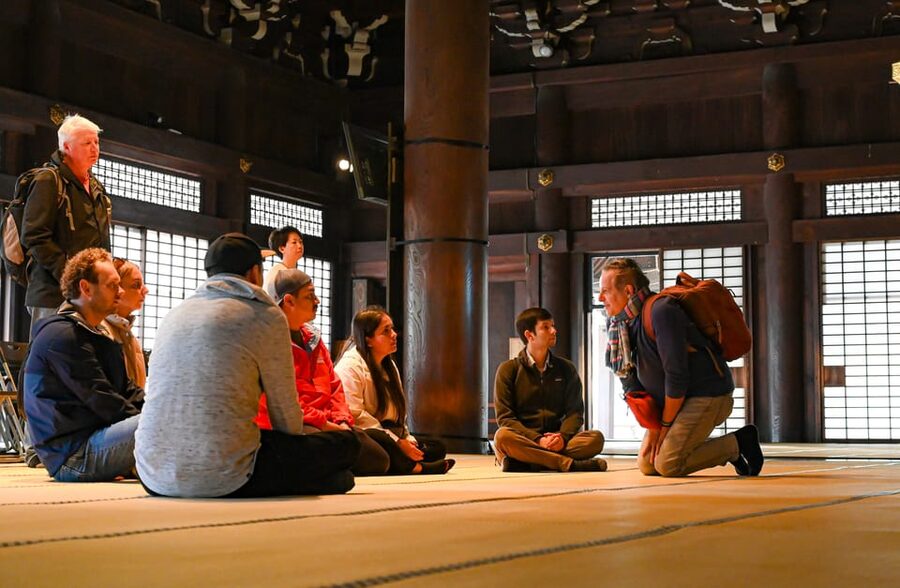
Next up is Higashi-Honganji, one of Japan’s largest temples. This is the kind of place that hits differently in person. From a distance it looks imposing; once you’re inside the grounds, you start noticing details and scale you’d miss from photos alone.
You get 35 minutes guided here too. I like that the stop is long enough for real interpretation—how the place functions, what makes it distinct, and what you should pay attention to while you’re there.
And since this is a bike tour, you get a bonus: you experience the transition from one temple atmosphere to another by riding through the city rather than hopping from building to building.

Takase Canal and the Kamo River: the scenic reset
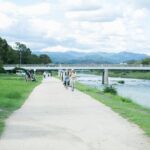
After two temple-focused stops, the tour shifts to calmer, watery scenery with the Takase River (10 minutes) and the Kamo River (15 minutes).
This is one of the quiet genius moves of the route. Temples and shrines take energy, both mentally and physically. A river segment gives you a visual reset and a chance to just ride, watch, and breathe—without feeling like you lost time.
If you’re someone who likes getting a sense of daily Kyoto life, these river stretches help you do that. It’s not just landmark hunting; it’s atmosphere.
Gion backstreets: where you notice the city’s texture
Then comes Gion, with a guided ride through Kyoto’s famous geisha and teahouse district backstreets for about 30 minutes.
The key here isn’t only seeing Gion—it’s seeing how it feels when you’re cycling through the smaller lanes and approaches. It’s the difference between staring at a single busy main street and actually moving through the neighborhood rhythm.
This is also where the guides shine. Some departures have included guides like Indra and Juan, and their value is how they connect the street layout to what people used to do there and what you can still sense today. You come away with more than photos; you learn how to read the area.
Tofukuji Temple photo stop: slow down when it counts
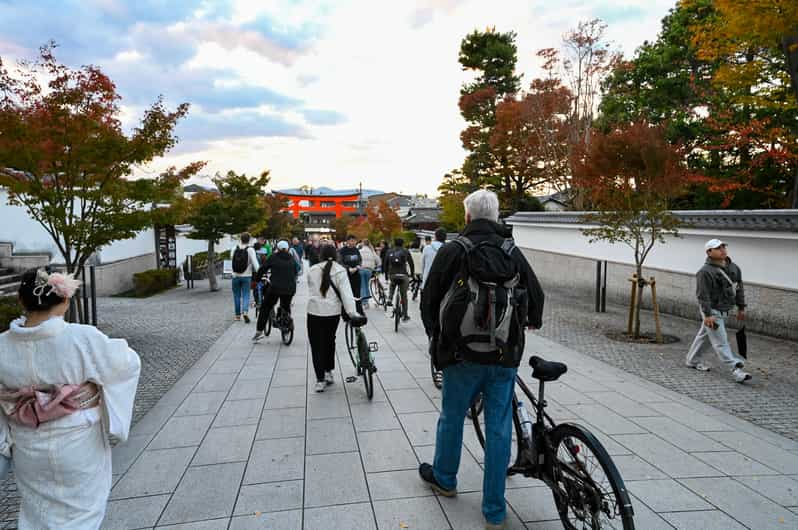
After Gion, you head to Tofukuji Temple. This portion is a photo stop with 30 minutes allocated for pictures and independent exploring.
A longer photo stop is ideal here. Temple photography often rewards patience: light shifts, angles change, and your eyes need time to decide what to frame. Having that buffer means you’re not forced into a “look once, go” situation.
If you’ve ever regretted rushing past something in Kyoto, this is the part of the day designed to prevent that.
Fushimi Inari Taisha: torii gates, guided pacing, and time to walk
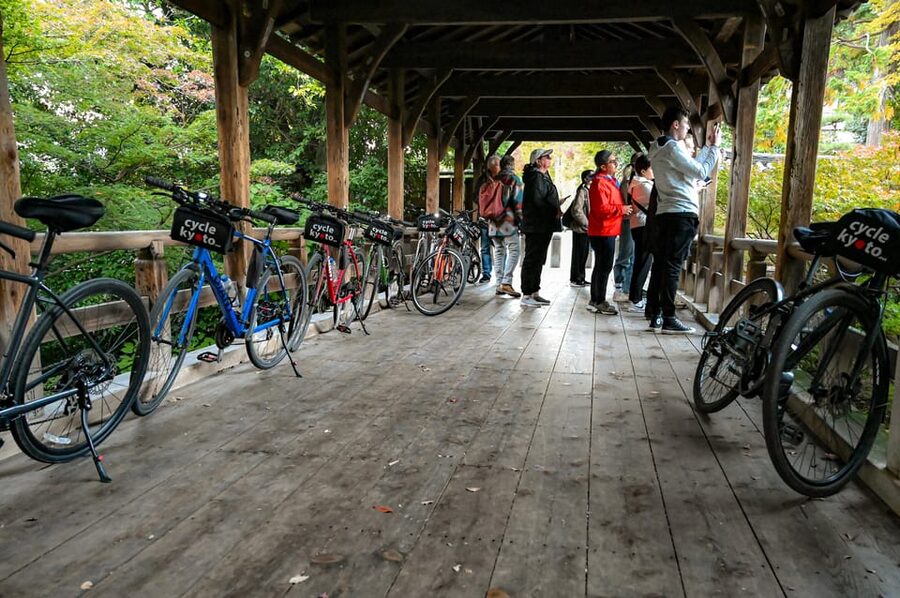
The day’s big finale is Fushimi Inari Taisha, Kyoto’s most visited attraction in Japan. You get a guided tour for 45 minutes and then you’re basically in torii-gate heaven.
Here’s why a guided format works well for Inari: it helps you pace the walk so you don’t burn out too early and so you understand what you’re seeing as the torii lines unfold. You’ll do the signature stroll through the famous orange gates, with the guide keeping you oriented and moving at a comfortable speed.
This stop is the one most people picture before booking, and it delivers. But the best part is that you’re arriving after a day that already trained your eye—so the torii aren’t just a photo wall. They feel like the end point of a full Kyoto story you’ve been building since Toji.
The ride itself: what biking 210 minutes actually feels like
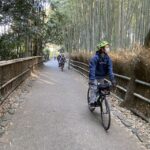
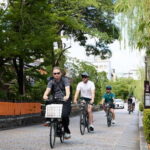
This tour is 210 minutes total, and it’s not an all-day endurance test. Still, it’s cycling, and the difference between fun and misery comes down to your comfort on two wheels.
From the experience details and how the ride is described, you should expect a solid amount of time in motion. One participant noted the ride added up to over 15 km, which gives you a realistic idea: it’s enough to get exercise, not enough to feel like a training session.
If you’re not sure, here’s the practical advice that saves people hassle:
- Wear comfortable clothes and shoes you can bike in.
- Bring warm layers. Kyoto weather can shift quickly, especially near water.
- If you want help with effort, e-bikes are available upon request for a 3000 yen upgrade.
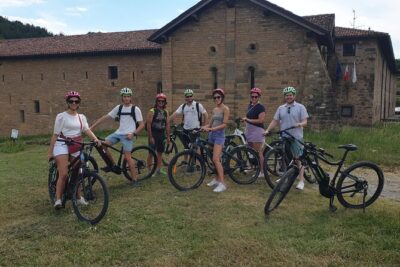
Also, if you’re in a smaller group (the tour caps at 8, and some departures can be smaller), the pace can become more flexible. That can matter if you like stopping for details or if you’re moving at your own rhythm.
Price and value: $77 buys more than bike rental
At $77 per person, this isn’t a “cheap and cheerful” option. But it’s also not overpriced for what you get.
You’re paying for:
- Bicycle rental
- Helmet
- A live English-speaking guide
- Water
- Entrance access through the day’s guided stops (the stops themselves are the main cost driver)
In a city like Kyoto, time is money. This tour helps you string together Toji, Higashi-Honganji, Gion, Tofukuji, and Fushimi Inari in a half-day without you coordinating every transfer. When you price the hassle and transport time, the value starts looking pretty fair.
The other value is the guide’s role in interpretation. Guides in past departures have included people like Jay, Julian, Indra, Sean, and Mayco, and the common thread in their work is making the day feel personal—answering questions and giving insider context so you actually understand what you’re looking at.
What to pack (so you don’t regret it at stop #3)
This tour asks you to bring the basics that matter outdoors and on a bike.
Bring:
- Comfortable shoes
- Warm clothing
- Camera
- Sunscreen
- Comfortable clothes
You’ll also have a small pouch on the bicycle for personal items. That’s handy, because you won’t want to carry a bag around temples and shrines.
If you’re traveling light, still bring enough for weather. The tour is designed to run even when conditions aren’t perfect, and having layers helps you enjoy the ride instead of shivering through it.
Who this tour is for (and who should skip it)
This fits best if you want:
- A guided route through South Kyoto’s major sights
- More local-feeling streets (especially the Gion backstreets)
- A bike-based way to see Kyoto without burning an entire day on transit
It’s not suitable for:
- Children under 13
- People with back problems
- People who can’t ride a bike
If that’s you, there are great walking options in Kyoto—but you’d be wise to choose based on comfort, not just itinerary.
Also note the simple rules: smoking, alcohol, and drugs are not allowed on the tour.
Should you book this South Kyoto bike tour?
I think you should book it if you want an efficient half-day that still feels like Kyoto, not like a checklist. The route makes sense, the stops include both big-name highlights and calmer scenery, and the small-group setup keeps the day from feeling chaotic.
I’d only hesitate if cycling isn’t your thing or if your body needs low-impact movement. In that case, the itinerary would be impressive, but the experience might feel stressful rather than fun.
If you’re comfortable riding, you’ll likely come away with the kind of Kyoto memories that are hard to manufacture with photos alone—because you’ve spent the day moving through the city, not just looking at it.
FAQ
How long is the Kyoto bike tour?
It lasts about 210 minutes (a little over 3 hours).
What does the tour include?
You get bicycle rental, a helmet, a guide, and water.
Is the tour guided in English?
Yes, the live tour guide speaks English.
What’s the group size?
It’s a small group limited to 8 participants.
Where do I meet the tour from Kyoto JR Station?
Go past Avanti, cross one set of traffic lights, then after the Daily Yamazaki convenience store take the next left to reach Cycle Kyoto.
What’s the minimum age to join?
Minimum age is 13 for a public tour.
Are e-bikes available?
E-bikes are available upon request for an upgrade fee of 3000 yen.
Are meals included?
No, meals aren’t included.
What should I bring for the ride?
Bring comfortable shoes, warm clothing, a camera, sunscreen, and comfortable clothes.
Is the tour suitable if I can’t ride a bike or have back problems?
No. It’s not suitable for people who can’t ride a bike, and it isn’t suitable for people with back problems.
Is there any thing I’m not allowed to do on the tour?
Smoking, alcohol, and drugs are not allowed.